
Lavender Blue Shih Tzu: Color and Care
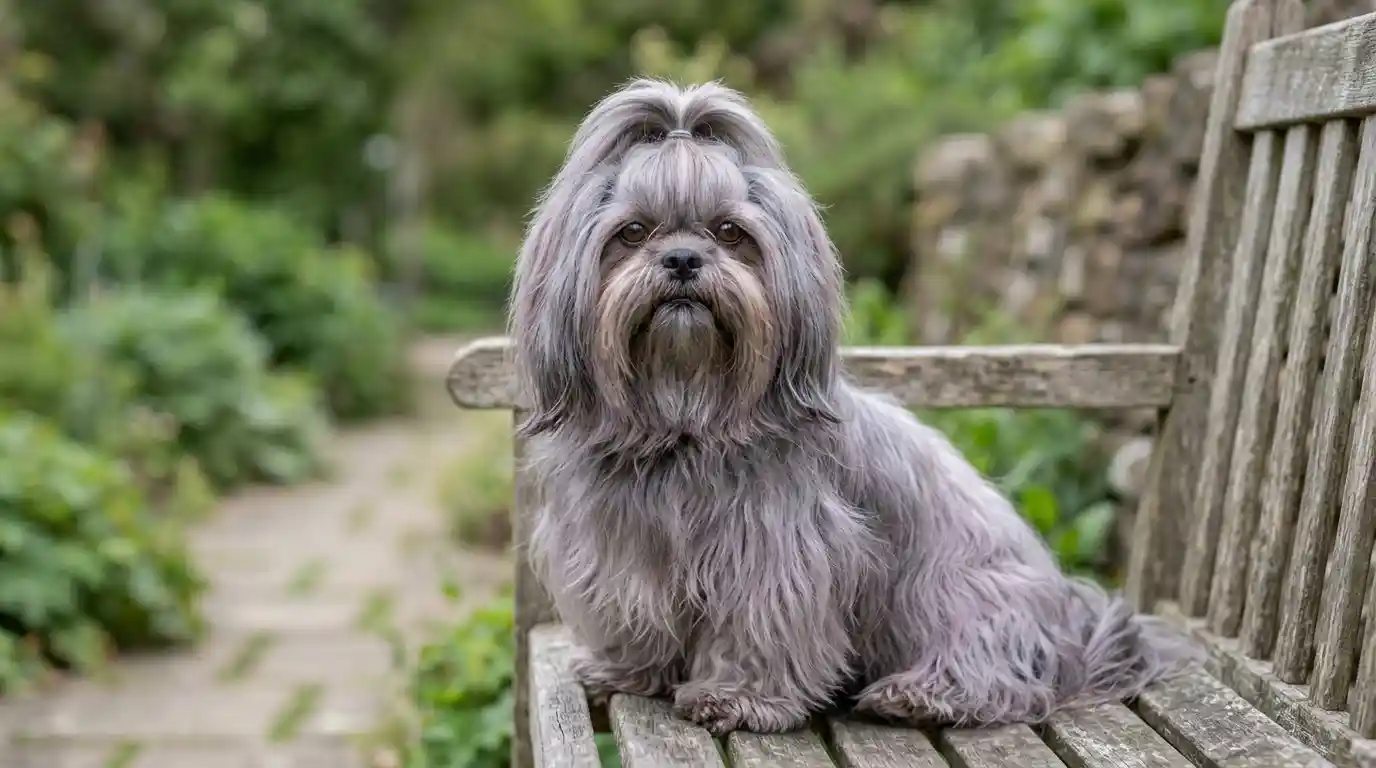
A lavender blue Shih Tzu can have a soft gray coat, a warm lilac tint, or a mixture of pale shades that seems to change with the light. The name is appealing, but it does not identify one official coat color or one genetic result. A seller might use “lavender blue” for a blue-pigmented dog, a diluted liver-colored dog, or simply a Shih Tzu whose coat photographs gray with a purple cast.
To understand what you are seeing, start with the dog’s nose, lips, and eye rims. Then compare photographs taken in natural light and, if the distinction matters, ask about coat-color DNA testing. Those steps offer more useful evidence than a color label alone. This guide explains what blue and lavender can mean genetically, why puppy coats change, how to assess health and grooming needs, and what to ask before paying a premium for an unusual-looking puppy.
Table of Contents
- What Does “Lavender Blue Shih Tzu” Mean?
- Is the Dog Blue, Lavender, or Simply Gray?
- How Do Blue and Lavender Pigment Differ Genetically?
- Will a Lavender Blue Puppy’s Coat Change?
- Is This Color Recognized or Rare?
- Does Dilute Coloring Affect Health or Care?
- What Should You Ask a Breeder or Rescue?
- Frequently Asked Questions
- Final Takeaway
What Does “Lavender Blue Shih Tzu” Mean?
The short answer—and why the label is ambiguous
“Lavender blue” is a descriptive phrase, not a single established Shih Tzu genotype. People use blue lavender Shih Tzu and similar terms to describe a cool, pale coat, but two dogs given that label may have different underlying pigment.
In dog coat genetics, blue generally means diluted black pigment. Lilac or Isabella generally means diluted brown, also called liver, pigment. “Lavender” is less precise: one person may use it as another name for lilac, while another uses it for a blue-gray coat with a purple-looking cast. A gray-looking coat can also result from other color and pattern combinations. UC Davis Veterinary Genetics Laboratory describes dilution of black pigment to blue and brown pigment to lilac or Isabella in its dog coat-color guide. Veterinary Genetics Laboratory
That distinction matters when you are comparing a blue Shih Tzu, a lavender Shih Tzu, and a liver Shih Tzu. Their coats may look similar in a photograph, but the pigment underneath can differ. Use the seller’s label as a starting description and ask what observations or test results support it.
What the coat can look like in natural light
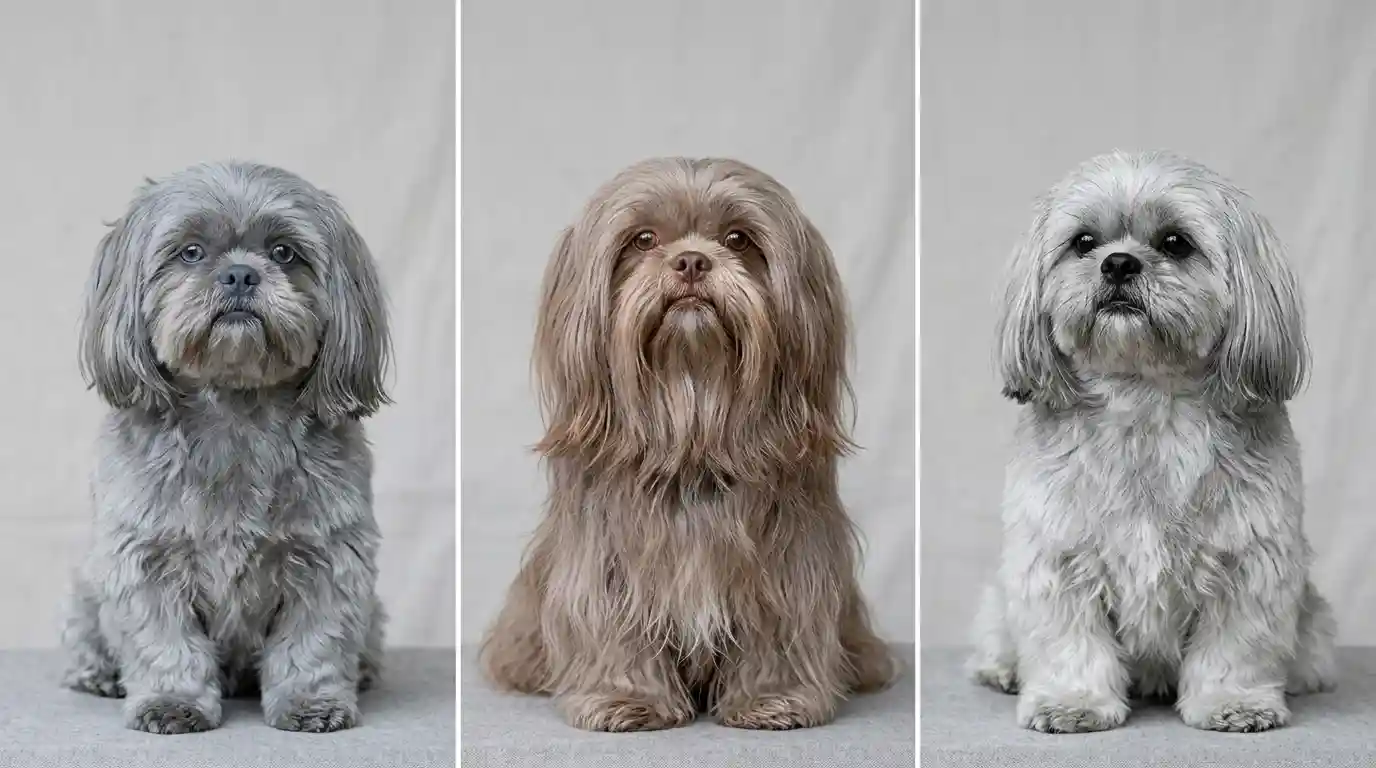
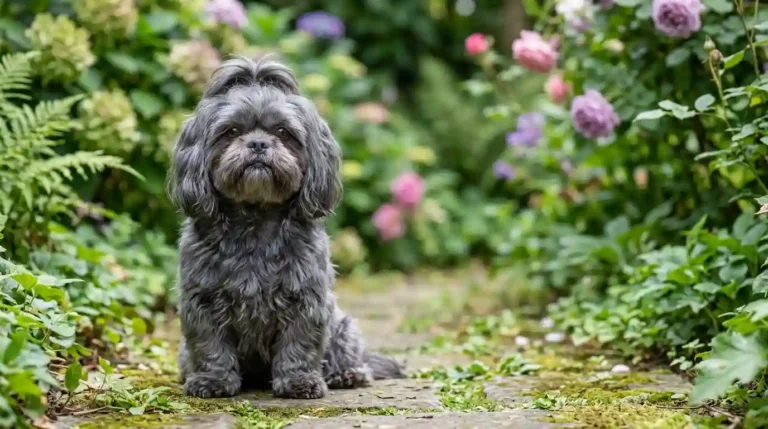
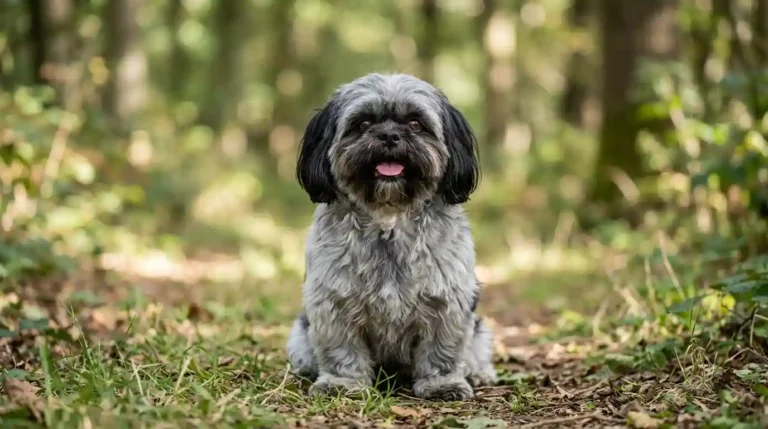
A dog described as lavender blue might appear slate gray indoors and silvery outdoors. Another may have a grayish-brown coat with a warmer, dusty tone. White markings can make the colored areas look darker by comparison, while cream hair around the face can make them appear cooler. Hair length also affects the impression: a full coat reflects light differently from a freshly clipped one.
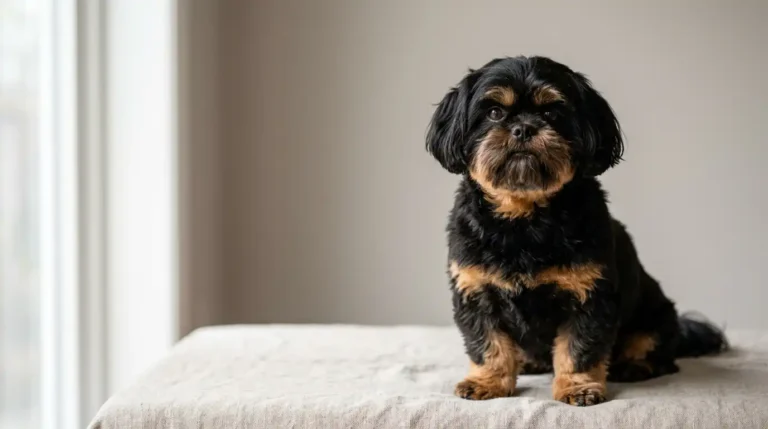
Look at the whole dog rather than one patch of hair. Are the ears darker than the body? Is there a silver coat over the back but warmer hair near the muzzle? Are apparent tan points or “Dobie” markings present above the eyes, on the cheeks, or on the legs? These observations help describe coat markings, although they do not establish the dog’s genotype.
Other Shih Tzu color guides can help you name what you see. A blue gray Shih Tzu or grey Shih Tzu may resemble a dog advertised as lavender blue. Compare the lighting and visible pigment before deciding that the names describe different colors.
Is the Dog Blue, Lavender, or Simply Gray?
Compare the nose, lips, and eye rims with the coat
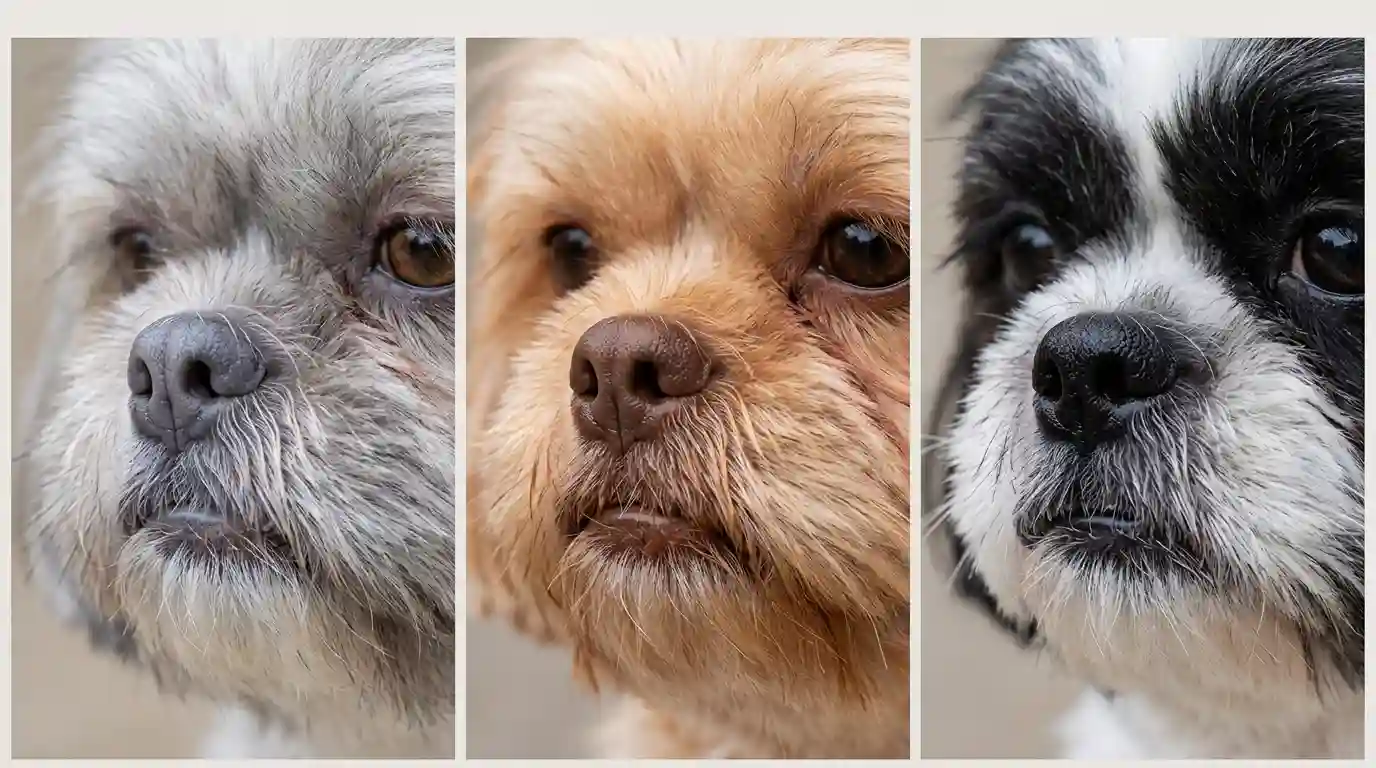
The coat is often the first feature people notice, but facial pigment gives a more useful clue. The American Kennel Club’s Shih Tzu breed standard says that the nose, lips, and eye rims are black on most colors, liver on liver-pigmented dogs, and blue on blue-pigmented dogs. It also allows lighter eyes on liver- and blue-pigmented dogs. images.akc.org
Use those features together:
| What you observe | What it may suggest | What it cannot establish alone |
| Cool gray coat; blue-gray nose, lips, and eye rims | Blue pigmentation is plausible | The exact color genotype |
| Warm lilac- or gray-brown coat; brown-toned facial pigment | Liver-based pigment, possibly diluted, is plausible | Whether the dog carries the dilute variants a test checks |
| Silver or gray coat; clearly black facial pigment | The coat may be gray or silver without blue or liver facial pigment | The full cause of the coat’s appearance |
| Pale areas mixed with white, cream, or tan | Markings and other coat colors may affect the overall impression | A single “lavender blue” classification |
Check the nose in daylight without flash. A very dark brown nose can look black in a photograph; shadow can make a blue-gray nose look darker. Examine the lips and eye rims as well. Paw pads can offer another observation, though wear and lighting make them harder to judge consistently.
If your dog has a black nose and a gray coat, that is a reason to question a claim of blue pigmentation, even if “blue” still describes how the hair looks. Similarly, a brown nose deserves a closer look at liver pigmentation rather than an automatic blue label. The guides to black Shih Tzus, silver Shih Tzus, and liver chocolate Shih Tzus provide useful visual comparisons.
A practical photo and in-person checklist
If you are identifying your own dog or assessing a puppy listing, collect comparable observations:
- Request recent, dated photographs. Ask for front, side, and full-body views, plus close-ups of the nose, lips, and eye rims.
- Choose indirect daylight. A shaded outdoor spot or a bright window gives a more reliable view than flash photography or colored indoor bulbs.
- Include a neutral reference. A plain white or gray object in the frame can reveal an unusually warm or cool color cast.
- Check several coat areas. Look at the back, ears, face, legs, and newly grown hair near the skin.
- Ask whether the coat was recently clipped. Hair tips, roots, and a short trim can appear different.
- Compare the puppy with its parents. Adult photographs may show how similar coat colors developed in that family.
- See the dog in person when possible. Check pigment and overall condition rather than making a decision from edited listing photos.
Take your own photographs from the same positions over time if you already own the dog. A grey and white Shih Tzu may look dramatically different against a bright white background, and a blue and white Shih Tzu may look darker in a dim room. Consistent photographs make changes easier to judge.
What appearance cannot confirm
A purple cast on the coat does not prove that a dog is lilac. A gray coat does not prove the dog has two dilute alleles. Light eyes do not, by themselves, confirm blue or liver pigmentation. Nor does a photograph establish that a puppy is purebred.
Appearance is a useful screening tool because it helps you ask better questions. It has limits because coat color is influenced by more than one gene, and camera settings alter the colors you see. White markings, tan points, brindling, and patterns can complicate a simple label. A blue brindle Shih Tzu, for example, has a pattern to consider as well as the appearance of its pigment; a brindle Shih Tzu should not be classified from one pale stripe.
Be especially careful with the phrase “lavender Shih Tzu with blue eyes.” A puppy’s eye color and apparent coat color should be assessed separately. Ask for clear eye photographs and have any concerning eye appearance checked by a veterinarian. The breed standard’s allowance for lighter eyes on blue- or liver-pigmented dogs is not a way to diagnose the coat from eye color alone.
How Do Blue and Lavender Pigment Differ Genetically?
Diluted black pigment
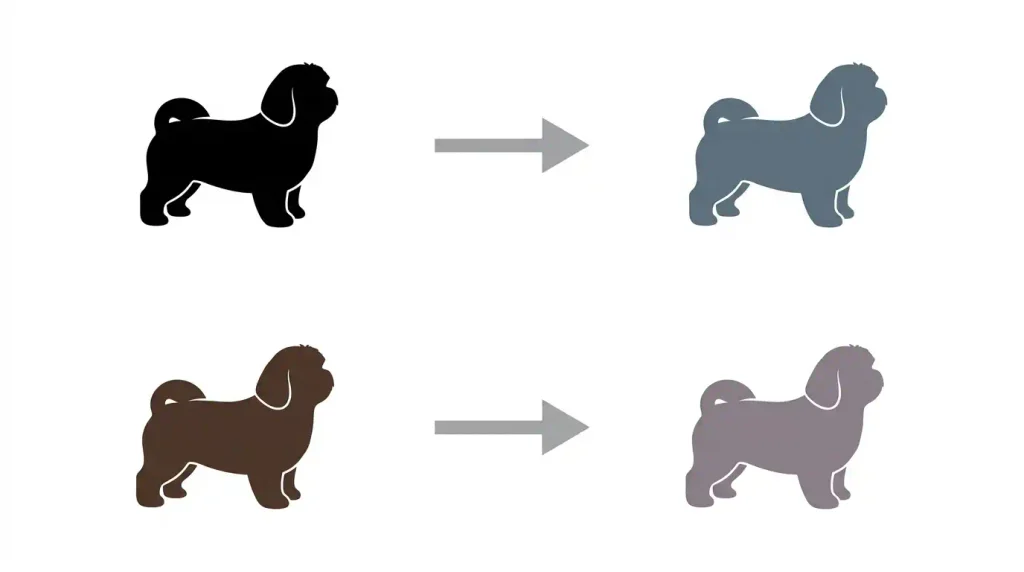
Dog coats involve two broad types of pigment: eumelanin, which can appear black or brown, and pheomelanin, which contributes red and yellow tones. Genes influence which pigment appears, where it appears, and whether it is modified. The D locus is associated with pigment dilution through variants in the MLPH gene. When the relevant recessive dilute variants are inherited from both parents, black eumelanin can appear blue-gray.
“Blue” in this context is usually a smoky charcoal or slate tone, not bright blue fur. The dog may still have white markings, warm-colored areas, or a coat that looks silver after clipping. Blue pigmentation is most meaningfully assessed across the coat and exposed pigment, especially the nose, lips, and eye rims.
A dog can also have a more complex pattern than a single solid shade. Compare a black and grey Shih Tzu with a blue-pigmented dog whose hair has faded in appearance. The first phrase describes visible colors; the second makes a claim about pigment. Likewise, a black and white Shih Tzu can develop lighter-looking areas without the words “black and white” telling you everything about its color genes.
Diluted liver pigment, also called lilac or Isabella
The B locus affects whether eumelanin is black or brown. Brown eumelanin is often called liver or chocolate in dogs. If a dog has a brown base and inherited dilute variants affecting that pigment, the result may be called lilac or Isabella. UC Davis explains the distinction as black pigment becoming blue under dilution, while brown pigment becomes lilac or Isabella. Terminology can vary between breeds and breeders.
That is why a lavender-looking dog may have a warmer grayish-brown tone than a dog with diluted black pigment. Its nose and other exposed pigment may look brown-toned rather than blue-gray. Still, real dogs do not always resemble a clean color chart: white markings, coat length, age, and photographs affect what you see.
If the dog’s coat has distinctly warm areas, compare examples of brown Shih Tzus, golden brown Shih Tzus, and liver and white Shih Tzus. A red liver Shih Tzu may also demonstrate how warm coat color and liver pigmentation can appear together. These comparisons help describe the dog; they are not substitutes for a genetic result.
Why a color DNA test may help
A coat-color test can provide evidence about the variants included in that laboratory’s panel. If a seller makes a specific claim such as “genetically dilute liver,” ask to see the report rather than a cropped screenshot or an unexplained abbreviation. Confirm that the report identifies the dog being sold and shows which loci were tested.
Interpret the result in context. A D-locus result concerns dilution; it does not alone tell you whether the dog’s underlying eumelanin is black or brown. A relevant B-locus result adds information about brown pigment. Other genes influence the visible coat, so a test of one locus is not a complete color description. UC Davis also notes that more than one known MLPH variant can cause dilution and that a single variant does not account for every dilute-looking dog.
A color test serves a narrow purpose. It does not verify breed purity, establish that a puppy is healthy, or justify a price on its own. For a broader view of breed identity, read about the purebred Shih Tzu and the different labels used for types of Shih Tzu.
Will a Lavender Blue Puppy’s Coat Change?
Puppy and adult coat differences
Yes, a Shih Tzu puppy’s visible coat can change as it grows. New hair replaces puppy hair, longer hair catches light differently, and areas that looked dark or warm at a young age may appear lighter later. Markings can also become more or less noticeable as the surrounding coat develops. A puppy advertised as lavender blue today may look silver-gray, warm gray, or patterned as an adult.
This does not mean its inherited DNA changes. It means the visible coat you use to describe the dog may develop. A breeder who promises an exact adult shade from a young puppy’s photograph is making a prediction, not presenting a certainty. Ask to see the parents as adults and, ideally, dated photographs of related dogs at puppy and adult ages.
Compare the progression with dogs described as silver and white Shih Tzus or tan and white Shih Tzus. Such labels describe what is visible at a given stage; they cannot guarantee that every patch will retain its first shade. The same caution applies to a puppy listed as a blonde Shih Tzu or white Shih Tzu when warmer or darker hair is also present.
Lighting, clipping, and dated photographs
Before concluding that your dog’s coat has changed substantially, reproduce the original viewing conditions. Photograph the dog outdoors in open shade, without flash or filters. Compare the same area of the body at a similar coat length. Hair that has grown for months may look different from newly exposed hair after a grooming appointment.
Clipping can make a mixed coat seem more uniform because it removes longer hair tips. It can also reveal a darker or lighter shade near the skin. Indoor bulbs may cast yellow, pink, or blue tones; phone software may increase contrast or saturation automatically. A warm gray dog can therefore appear “lavender” in one picture and plain gray in another.
Keep a small set of dated images: one full-body side view, one face view, and one close-up of the back coat every few months. Note grooming dates beside them. If you notice patchy hair loss, redness, scaling, or itching, treat that as a skin concern rather than an ordinary color change.
Is This Color Recognized or Rare?
Breed-standard wording versus seller labels
The American Kennel Club Shih Tzu standard states that all colors are permissible. It specifically discusses blue and liver pigmentation when describing the nose, lips, and eye rims. It does not define “lavender blue” as one separate official color in the standard.
That distinction answers a common question: a seller can use a descriptive phrase that is absent from the breed standard, but the phrase alone has no official genetic meaning. Ask the seller to explain exactly what “lavender blue” means in that listing. Do they mean a blue-pigmented dog whose coat looks lavender in some light? Do they mean dilute liver pigment, often called lilac or Isabella? Or is it simply their name for a silver-gray coat?
For context, review a broader guide to Shih Tzu colors alongside examples of black and brown Shih Tzus, brown and white Shih Tzus, and gold and white Shih Tzus. Color words are useful for describing a dog, but their precision varies. Pattern names add another layer: a black mask gold Shih Tzu describes a different visible arrangement from a solid-looking dog.
How to evaluate rarity and price claims
“Rare” is a reason to ask for evidence, not a reason to skip ordinary checks. A seller should be able to explain the color claim clearly, show consistent photographs, and provide any genetic report they cite. They should also be willing to discuss the dog’s health, behavior, and living conditions without steering every conversation back to color.
Compare the full offer, not just the shade. Are veterinary records available? Can you meet the puppy and see its surroundings? Is there a written agreement? Can the breeder describe the parents’ health and temperament? If a seller requests a large premium specifically for “lavender blue,” ask what verifiable information supports that price. An attractive coat does not tell you whether the dog is comfortable, well socialized, or likely to suit your home.
Be cautious when a listing combines multiple fashionable terms without explaining them. “Blue,” “lilac,” “Isabella,” and “merle” do not all mean the same thing. A merle Shih Tzu or a dog advertised as a blue merle Shih Tzu raises a separate question about pattern; the word blue in a pattern name should not be taken as proof of D-locus dilution. Likewise, “teacup” in a teacup Shih Tzu listing is a size marketing term, not evidence about coat genetics.
Does Dilute Coloring Affect Health or Care?
Routine brushing and skin checks
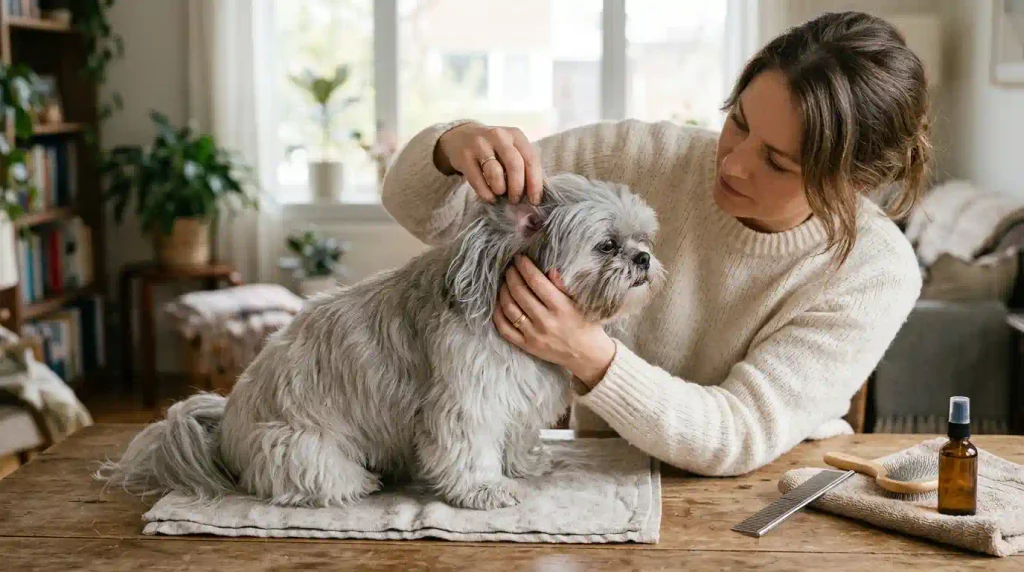
A lavender- or blue-looking Shih Tzu still needs ordinary Shih Tzu coat care. Its long double coat can tangle and mat, particularly behind the ears, around the collar, in the armpits, and near the legs. Brush through the coat gently and check that the comb can reach the skin without pulling. A shorter trim can reduce daily maintenance, but the coat still needs regular attention.
Use grooming time to inspect the skin. Part the hair and look for redness, flakes, bumps, parasites, irritation, or areas where hair seems thinner than before. Check beneath a harness and around spots that stay damp after bathing. Photograph a concerning patch with the date so your veterinarian can see whether it has spread.
Care decisions should follow the dog’s actual coat and skin condition, not the color name. A black brindle Shih Tzu, silver brindle Shih Tzu, or brindle and white Shih Tzu also needs grooming suited to its coat length and texture. Color alone does not set a brushing schedule. The same applies to a red brindle Shih Tzu or red and white Shih Tzu.
When hair loss or irritation needs veterinary attention
A dilute coat does not mean a dog will develop a skin problem. There is, however, a condition called color dilution alopecia associated with dilute-colored coats in some dogs. It may involve thinning or patchy hair loss and sometimes flaky or itchy skin. Signs can appear after a puppy initially develops a normal-looking coat.
Those symptoms have many possible causes besides color dilution alopecia. Allergies, parasites, infections, and other conditions can also cause hair loss or irritation. If your Shih Tzu develops bald areas, persistent itching, scaling, sores, or repeated skin infections, arrange a veterinary examination rather than diagnosing the problem from coat color. Your veterinarian can decide which tests or treatment are appropriate.
This is also why a photograph of a glossy puppy cannot guarantee lifelong coat health. Ask whether the puppy, parents, or related adult dogs have had recurring hair or skin problems. Record any answer, but give the dog’s current condition and a veterinary assessment more weight than an unsupported promise.
Assessing overall health and temperament
Color should be one small part of choosing a dog. Watch how the Shih Tzu moves, responds to people, rests, and breathes during normal activity. Ask about veterinary visits and any concerns already identified. If you are adopting an adult dog, ask about grooming tolerance, daily routine, and behavior around people or other pets. If you are buying a puppy, ask how it has been handled and socialized.
A DNA report for coat color is not a health screening report. Ask separately which health checks have been completed and request the actual records. A thoughtful breeder or rescue should be able to discuss an individual dog’s needs without treating a striking coat as the main measure of quality.
You can explore Shih Tzu breed information and general Shih Tzu facts while deciding whether the breed fits your home. Questions about whether a Shih Tzu is hypoallergenic concern coat and household needs, but they are separate from identifying blue or lavender pigment. A dog’s Shih Tzu origin is interesting breed context; it cannot verify an individual puppy’s color or pedigree.
What Should You Ask a Breeder or Rescue?
Photos, pedigree, and color-test reports
Begin with simple questions and ask for documents when a claim depends on them:
- “What do you mean by ‘lavender blue’?” Ask whether the term describes the visible coat or a specific genetic result.
- “Can I see the puppy in natural light?” Request dated, unfiltered views of the face, body, and exposed pigment.
- “What color are the nose, lips, and eye rims?” Compare the answer with clear photographs or an in-person visit.
- “What do the parents look like as adults?” Ask for recent photographs and, where applicable, pedigree information.
- “Was the puppy tested for coat color?” If yes, request the complete report, the testing laboratory, and the dog’s identifying details.
- “Which tests support your description?” A color label may require more than a single D-locus result to explain both dilution and the underlying black or liver pigment.
Pedigree, appearance, and DNA results answer different questions. Pedigree documents concern recorded ancestry. A coat-color report concerns the variants it tested. A current photograph documents appearance under particular conditions. Consider them together, and ask for an explanation if they seem inconsistent.
If the listing uses unfamiliar breed terms, investigate those separately. A prapso Shih Tzu describes a coat-related presentation, while discussions of Shih Tzu wolf DNA concern ancestry at a much broader level; neither term confirms that a dog is lavender blue. Even a correctly spelled breed name—see how do you spell Shih Tzu—does not replace verifiable records.
Health records and questions about the adult dog
Ask for vaccination and veterinary records appropriate to the dog’s age, along with a clear account of any diagnosed conditions or ongoing care. For a puppy, discuss the parents’ health, the puppy’s routine, and what support is available after it goes home. For an adult rescue, ask what the organization has observed about grooming tolerance, house routine, and temperament.
If the dog has a pale coat, ask whether anyone has noticed thinning hair, itching, or recurring skin irritation. Do not assume a clear answer rules out future problems, but it helps you understand its known history. Ask what food the dog currently eats and how its coat is maintained so you can make any changes gradually with appropriate advice.
Finally, meet the individual dog when practical. An agreeable temperament, suitable care needs, and trustworthy records matter much more in daily life than whether one person calls the coat blue, lavender, silver, or gray. If you want more examples of visible color combinations, compare black and tan Shih Tzus, brown black and white Shih Tzus, red Shih Tzus, and tan Shih Tzus. Those examples reinforce why a clear description beats a fashionable label.
Frequently Asked Questions
Is lavender blue one official Shih Tzu color?
No. “Lavender blue” is a descriptive seller term, not one separately defined color in the AKC Shih Tzu breed standard.
Can a blue dog look lavender?
Yes. Lighting and coat shading can give a blue-gray dog a lavender cast, but appearance alone cannot establish its genotype.
Does a gray coat prove dilution?
No. Check the nose, lips, and eye rims, and consider an appropriate color DNA test if genetic identification matters.
Can a purebred Shih Tzu have dilute pigment?
Yes. The AKC breed standard explicitly addresses blue- and liver-pigmented Shih Tzus.
Final Takeaway
A lavender blue Shih Tzu is best understood as a dog with a pale, cool-looking coat whose exact pigment needs further description. Start with its appearance in natural light and check the nose, lips, and eye rims. If someone claims a specific blue or lilac genotype, ask for a relevant coat-color test report and have its results explained. Remember that puppy coats can change in appearance and that a color report does not assess overall health.
When choosing a Shih Tzu, compare the dog’s care needs, temperament, health records, and living conditions alongside its coat. If you already own one, keep dated photographs and raise any persistent hair loss or skin irritation with your veterinarian. The most useful question for a seller is simple: “What evidence supports the color you’ve listed?”
One Comment