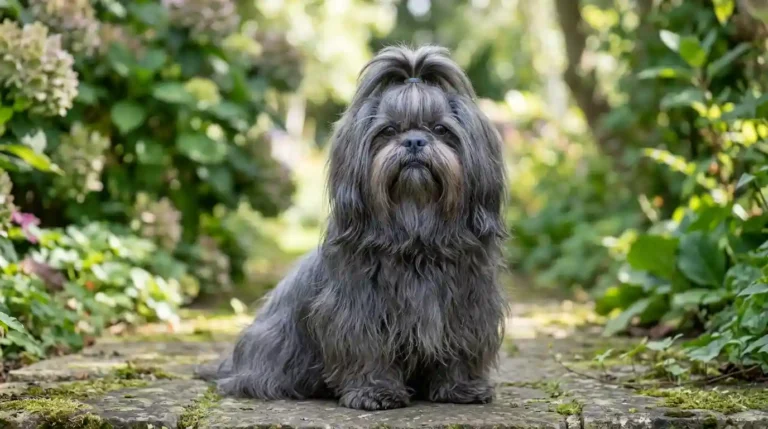

Where Did the Shih Tzu Originate? Tibet, China, and the Breed’s History
The Shih Tzu origin is best understood as a story connecting Tibet, China, and later Great Britain rather than assigning the breed to one place without explanation. The Shih Tzu’s deeper roots are associated with small Tibetan lion-type dogs, while the distinctive companion breed recognized today was developed and refined in China, particularly around the Chinese imperial court. This is why different references may describe the Shih Tzu as Tibetan, Chinese, or Tibetan-Chinese. The breed’s exact ancient ancestry is not completely documented, and popular stories involving Tibetan monks, the Dalai Lama, Lhasa Apsos, Pekingese, and palace dogs contain a mixture of historical evidence and tradition. What is much clearer is the modern history: a small number of dogs reached England and Scandinavia during the early 20th century, European breeders preserved the breed, a Pekingese was deliberately introduced in 1952, and the American Kennel Club admitted the Shih Tzu to its Stud Book in 1969. Understanding those distinctions gives a far more accurate picture of Shih Tzu history than simply calling it a “Chinese dog.”
Table of Contents
- The short answer: Tibetan roots, Chinese development
- How Tibetan dogs and Chinese court dogs shaped the breed
- The Shih Tzu in the Chinese imperial court
- How the breed reached Europe and survived
- The Shih Tzu’s recognition in the United States
- What history supports, and what remains legend
- Frequently asked questions about Shih Tzu history
- Final thoughts
The Short Answer: Tibetan Roots, Chinese Development
So, where did the Shih Tzu come from?
The most useful short answer is:
The Shih Tzu has Tibetan roots but was developed into its distinctive form as a companion dog in China.
This explains why the answer can look different depending on which organization or historical source you consult.
The Fédération Cynologique Internationale, or FCI, lists the breed’s origin as “Tibet (China)” and Great Britain as the country of patronage. Its historical summary says that the breed’s roots are in Tibet but that it was developed in China, where dogs of this type lived in imperial palaces.
The American Kennel Club similarly describes the breed as descending from Tibetan lion-like dogs while emphasizing development by breeders associated with the Chinese imperial court.
Therefore, questions such as:
- Where are Shih Tzu from?
- Where do Shih Tzu come from?
- Are Shih Tzu Chinese?
- Is the Shih Tzu from Tibet?
- What is the Shih Tzu country of origin?
cannot be answered accurately with a simple either/or.
A useful distinction is:
| Question | Best Historical Answer |
| Where are the Shih Tzu’s deeper roots? | Tibet |
| Where was the recognizable breed developed? | China |
| Where was the modern Western breed preserved and standardized? | Britain and Scandinavia played major roles |
| What was its traditional purpose? | Companion dog |
| When did AKC recognition arrive? | 1969 |
The Shih Tzu facts guide gives a broader overview of the breed, while this article focuses specifically on the historical evidence.
How Tibetan Dogs and Chinese Court Dogs Shaped the Breed
The earliest chapters of Shih Tzu history are also the least certain.
There are historical references, artistic representations, traditional stories, and later breed accounts describing small lion-like dogs in Tibet and China, but these do not provide a complete modern pedigree extending back hundreds or thousands of years.
That makes it important to separate what is plausible from what is definitively documented.
The Shih Tzu is generally placed among the Asian companion breeds with close historical connections to small Tibetan dogs.
Breeds commonly discussed in relation to Shih Tzu ancestors include:
- Lhasa Apso
- Pekingese
- Pug
- Other Tibetan lion-type dogs
- Chinese imperial companion dogs
The exact genetic recipe used centuries ago is not known.
The American Shih Tzu Club’s historical material is particularly useful here because it acknowledges that no one knows precisely what combinations the imperial breeders used while developing the palace dogs.
So statements such as:
“The Shih Tzu was definitely created by crossing a Lhasa Apso with a Pekingese.”
are more certain than the historical evidence allows.
That combination may be part of the breed’s story, and Tibetan and Chinese companion breeds clearly influenced one another, but the development was probably more complicated than one documented cross.
What “Lion Dog” Means in Its Buddhist Context
The name Shih Tzu is commonly translated as “lion dog.”
That does not mean these tiny dogs were bred to fight, hunt, or resemble a real lion anatomically.
The significance is cultural and religious.
Lions have an important symbolic role in Buddhist traditions, representing qualities such as strength, protection, and spiritual power.
Because lions were not native to China, stylized guardian lions became familiar through Buddhist art and architecture.
Small dogs with heavy coats, broad heads, confident carriage, and mane-like facial hair could evoke these lion images.
This helps explain why several Asian companion dogs were historically associated with “lion dog” terminology.
Some traditional accounts describe Tibetan holy dogs or temple dogs as symbolic companions connected with Buddhist monasteries. Other stories connect them with the Dalai Lama and gifts sent from Tibet to Chinese rulers.
These traditions are relevant to the breed’s cultural background, but they should not all be treated as independently verified records of specific dogs.
The historical evidence more securely supports a flow of small Tibetan dogs toward the Chinese court, where generations of selective breeding helped produce the Shih Tzu known today.

What Is Known—and Uncertain—About the Breed’s Early Development
It is tempting to ask, how old is the Shih Tzu breed?
The answer depends on what we mean by “Shih Tzu.”
Small lion-like dogs resembling ancestors of modern Tibetan and Chinese breeds existed for many centuries. Some references point to small dogs in Chinese art and records going back more than 1,000 years.
But that does not mean those animals were genetically or structurally identical to today’s registered Shih Tzu.
Modern dog breeds were standardized much later.
The historical picture is better understood in stages:
- Small Tibetan companion and temple dogs existed for centuries.
- Dogs moved between Tibet and China, including as valuable gifts.
- Chinese palace breeders selected small companion dogs according to imperial preferences.
- Several related short-muzzled companion types—including dogs that became associated with the Pekingese, Pug, and Shih Tzu—were kept in China.
- Western breeders eventually separated and standardized these populations as distinct breeds.
This distinction is important when discussing the original Shih Tzu.
There was probably no single moment when someone produced the “first Shih Tzu puppy” in the modern sense.
Instead, the recognizable breed developed gradually.
The FCI’s current standard captures this complexity particularly well: it places the roots in Tibet while saying the breed was developed in China.
The Shih Tzu in the Chinese Imperial Court
The Chinese imperial period is central to the history of the Shih Tzu breed.
Small companion dogs were highly valued among Chinese royalty. Their role was not to herd livestock, hunt game, pull carts, or guard borders.
The Shih Tzu original purpose was companionship.
This remains one of the most important answers to questions such as:
- What were Shih Tzu bred for?
- What is a Shih Tzu bred for?
- What was a Shih Tzu bred for?
- What are Shih Tzu bred for?
They were bred primarily to live closely with people.
Historical sources associate lion-type companion dogs with the Chinese imperial household across multiple dynasties.
The Ming Dynasty, which lasted from 1368 to 1644, is commonly mentioned in Shih Tzu histories because small companion dogs were highly prized during this period.
Later, during the Qing Dynasty, the breed’s story becomes especially connected with Empress Dowager Cixi.
Court Breeding and the Era of Empress Dowager Cixi
Empress Dowager Cixi, who lived from 1835 to 1908, maintained an important imperial kennel.
Historical breed accounts describe Pugs, Pekingese, and shaggy lion-type dogs resembling Shih Tzus within the palace population.
Accounts also connect dogs sent from Tibet with her breeding program.
The role of palace eunuchs is frequently mentioned in surviving breed histories.
Certain eunuchs were reportedly responsible for breeding dogs intended to please the imperial family. Dogs with particularly desirable appearance could become highly valued, and depictions of favored dogs appeared in paintings, tapestries, or other court artwork.
This does not mean every detail reported in later breed histories can be independently verified.
However, the broader picture is well supported: selective breeding within the Chinese court was important in forming the distinctive Shih Tzu appearance.
Desired characteristics appear to have included:
- Small companion size
- Abundant coat
- Short muzzle
- Large expressive eyes
- Tail carried over the back
- Broad head
- Lion-like appearance
- Attractive markings and colors
Modern Shih Tzu colors remain remarkably varied, including black, gold, red, silver, brindle, liver, white, and many combinations.
Examples range from a black Shih Tzu to a gold and white Shih Tzu or brindle Shih Tzu.
That variety fits a breed whose historical breeders valued visual beauty as well as companionship.

What Happened After Cixi’s Death?
Empress Dowager Cixi died in 1908.
The years that followed brought major political change.
China became a republic in 1912, the imperial system ended, and the organized palace breeding programs that had protected many of these dogs declined.
Historical Shih Tzu accounts frequently say the breed disappeared or became extinct in China during the upheavals that followed, particularly around the Communist Revolution of 1949.
The broad decline is well documented in breed histories, but claims such as “every single Shih Tzu in China was killed” should be treated more cautiously.
It is difficult to prove the fate of every individual dog across China.
The historically important point is that the survival of the modern registered breed depended heavily on dogs that had already been exported to Europe.
How the Breed Reached Europe and Survived
The international survival of the Shih Tzu began with a surprisingly small number of dogs.
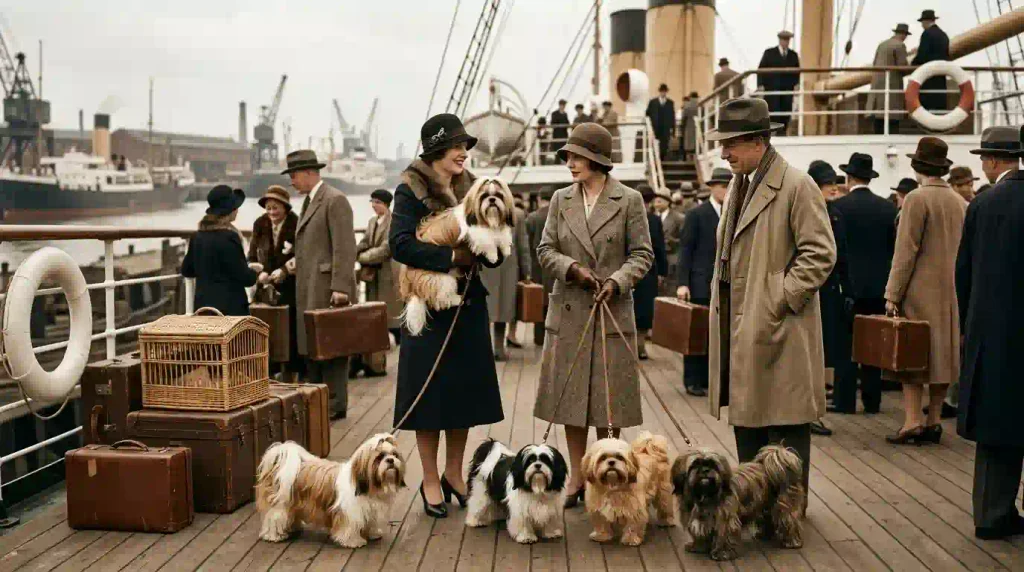
The FCI’s breed history says that the first recorded importation into Britain occurred in 1931.
Among the people closely associated with these early imports was Lady Brownrigg, an Englishwoman who had lived in China and became an important figure in establishing the breed in Britain.
Other dogs reached Scandinavia and Europe through diplomats and individuals who had obtained dogs in China.
At first, Western kennel organizations had difficulty deciding exactly how these dogs should be classified.
Shih Tzus and Lhasa Apsos were closely associated and were sometimes grouped together under broader “Apso” terminology.
Eventually, breeders and judges recognized important differences.
According to the FCI history:
- First recorded British importation: 1931
- Recognized separately from other Oriental breeds: 1934
- Separate Kennel Club register: 1940
- Challenge certificates available: 1949
These developments helped establish the Shih Tzu as the standardized breed known today.
Early Imports and the Disputed Foundation-Dog Account
You may have seen claims that every modern Shih Tzu descends from 14 dogs.
You may also have seen the number 13.
The apparent contradiction has a straightforward explanation.
The current American Kennel Club history of the Shih Tzu describes today’s population as descending from 13 Shih Tzus imported into England and Scandinavia between 1928 and 1952, plus a black-and-white Pekingese later introduced into the breeding program.
The American Shih Tzu Club likewise describes the modern gene pool as deriving from a combination of 14 foundation animals, one of which was that Pekingese.
So:
13 Shih Tzus + 1 Pekingese = 14 dogs in the modern foundation account.
This wording is more accurate than saying simply that “14 original Shih Tzus founded the breed,” because one of those 14 animals was not registered as a Shih Tzu.
The small founder population also explains why England and Scandinavia became so important to the modern Shih Tzu breed history.
These dogs preserved the population when the breed’s future in China had become uncertain.
The 1952 Pekingese Cross
One of the most surprising facts in the history of Shih Tzu dogs involves a deliberate cross made in England in 1952.
Because the breed population was extremely small, breeder Freda Evans introduced a black-and-white Pekingese into a Shih Tzu breeding line.
The dog was Philadelphus Suti-T’sun of Elfann.
This breeding was controversial among Shih Tzu enthusiasts.
Descendants were bred back into Shih Tzu lines over subsequent generations, and the Pekingese became one of the 14 animals represented in the modern foundation account.
The episode should not be used to claim that modern Shih Tzus are simply “Pekingese mixes.”
Modern purebred populations can have documented historical outcrosses within their breed-development history.
Today’s purebred Shih Tzu is defined within the modern breed population, pedigree system, and established standard.
The 1952 event is historically significant because it demonstrates how deliberately breeders sometimes managed an extremely limited gene pool while the breed was still being established internationally.
It also reinforces an important lesson:
The history of a dog breed is often more complicated than a simple list of modern breeds that supposedly created it.
The Shih Tzu’s Recognition in the United States
Shih Tzus reached America after becoming established in Britain and continental Europe.
The earliest dogs arrived in the United States before official AKC recognition.
American military personnel stationed in Europe during and after World War II became familiar with the breed, and some brought Shih Tzus home. American breeders also imported dogs from established European lines.
Interest gradually increased.
The breed entered the American Kennel Club’s Miscellaneous Class in 1955, but full recognition did not come immediately.
Several groups of American Shih Tzu enthusiasts were active, including organizations in Texas and the eastern United States.
In 1963, these groups combined their efforts to create the American Shih Tzu Club.
The club worked toward AKC recognition and standardization.
The major milestones were:
| Year | Historical Milestone |
| 1930s | Shih Tzus begin reaching Britain and other parts of Europe |
| 1931 | First recorded British importation according to FCI history |
| 1934 | Recognized separately from other Oriental breeds in Britain |
| 1940 | Separate Kennel Club register |
| 1949 | Challenge certificates available in Britain |
| 1952 | Pekingese outcross introduced in England |
| 1955 | Shih Tzu accepted into AKC Miscellaneous Class |
| 1963 | American Shih Tzu Club formed |
| March 1969 | Shih Tzu admitted to the AKC Stud Book |
| September 1, 1969 | Regular AKC Toy Group show classification began |
The Shih Tzu’s official American recognition therefore occurred relatively recently compared with the centuries of Asian history behind the breed.
This is another reason it helps to distinguish ancient ancestry from modern breed registration.
From Palace Companion to Modern Family Dog
Although the Shih Tzu’s surroundings have changed dramatically, its basic purpose has remained remarkably consistent.
This was not historically a working dog transformed into a pet.
Companionship was already the job.
In imperial China, the dog lived close to court households.
Today, it lives in:
- Apartments
- Family homes
- Urban environments
- Suburban homes
- Senior households
- Multi-pet families
That companion heritage helps explain many of the tendencies associated with the breed today, including strong interest in people and comfort living indoors.
It does not mean every Shih Tzu has exactly the same temperament.
Training, socialization, genetics, and individual personality still matter.
Modern Shih Tzus can also participate in obedience, rally, agility, trick training, and other activities even though their original purpose was not competitive dog sport.
Their historical role should therefore be understood as companion rather than inactive ornament.
Did Tibetan Monks Create the Shih Tzu?
The phrase Shih Tzu origin Tibetan monks appears frequently in online searches.
The connection is understandable because Tibetan dogs and Buddhist tradition are important parts of the breed’s background.
However, it is safer to say:
Small Tibetan lion-type dogs associated with Buddhist culture contributed to the ancestry of the Shih Tzu.
It is harder to demonstrate that a specific group of Tibetan monks deliberately created the modern Shih Tzu as a standardized breed.
Traditional accounts describe sacred or holy dogs kept around monasteries, dogs sent as gifts, and spiritual beliefs involving lion dogs.
These stories contribute meaningful cultural context.
They should not automatically be converted into precise breeding records.
Is the Shih Tzu Related to the Lhasa Apso?
Yes, the histories of the breeds are closely connected.
The Lhasa Apso is itself a Tibetan breed, and Tibetan dogs resembling the Lhasa are frequently identified as important ancestors or relatives of the Shih Tzu.
However, the modern Shih Tzu and modern Lhasa Apso are separate breeds.
Western kennel organizations had to formally distinguish them because early imports were not always classified consistently.
The Shih Tzu developed toward a shorter muzzle, broader head, different overall proportions, and a specifically companion-oriented breed identity.
The historical relationship is therefore better described as shared ancestry and influence, not as two names for the same dog.
Is the Shih Tzu Related to the Pekingese and Pug?
Pekingese and Pugs were also present in Chinese imperial dog populations and appear repeatedly in historical accounts of palace breeding.
The precise contribution of each breed or ancestral population centuries ago cannot be reconstructed confidently.
What we do know is that a documented Pekingese outcross occurred in England in 1952 during modern breed development.
The Pug’s historical relationship is less straightforward.
Pugs shared the Chinese imperial environment and short-muzzled appearance, and later breed accounts mention interactions among the palace dog populations.
That does not justify claiming that every Shih Tzu is simply the product of a clearly documented modern Lhasa Apso × Pekingese × Pug formula.
The true background is more complex.
What History Supports, and What Remains Legend
The Shih Tzu’s history becomes easier to understand when we separate well-supported conclusions from claims that remain uncertain.
What Is Well Supported
The strongest historical evidence supports these points:
- The breed has deep Tibetan roots.
- It was developed and refined in China.
- Small lion-like dogs had cultural links with Buddhist symbolism.
- Dogs resembling Shih Tzus lived within the Chinese imperial court.
- Empress Dowager Cixi’s era was important in the development and preservation of imperial companion dogs.
- European imports during the early 20th century were critical to the breed’s survival.
- Britain formally separated the Shih Tzu from related Oriental breeds.
- The modern population derives from an unusually small foundation.
- A Pekingese was deliberately crossed into a Shih Tzu line in 1952.
- The American Shih Tzu Club formed in 1963.
- The Shih Tzu entered the AKC Stud Book in 1969.
- The breed’s historical and modern purpose is principally companionship.
What Should Be Treated More Cautiously
These claims require qualification:
“The Shih Tzu was created by Tibetan monks.”
Tibetan and Buddhist connections are important, but a documented monastery breeding program producing the modern breed is harder to establish.
“The breed is exactly 2,000 years old.”
Ancient lion-like dogs existed, but modern breed standardization occurred much later.
“The Shih Tzu was definitely created by crossing one Lhasa Apso and one Pekingese.”
Related breeds contributed to the historical population, but the ancient breeding process is not documented this simply.
“Every Shih Tzu in China was killed after the Communist Revolution.”
Breed populations clearly collapsed, but proving the fate of every dog is impossible.
“Fourteen pure Shih Tzus founded today’s breed.”
The modern foundation account includes 13 Shih Tzus plus one Pekingese.
“Because the breed is Chinese, it has no Tibetan origin.”
This ignores the strong Tibetan ancestry recognized by major breed authorities.
History rarely gives us a perfectly straight line.
In the Shih Tzu’s case, the most accurate story combines Tibetan ancestry, Chinese imperial development, and European preservation.

Frequently Asked Questions About Shih Tzu History
Where did the Shih Tzu originate?
The breed has Tibetan roots but was developed into its recognizable form in China.
Is the Shih Tzu Chinese?
It is strongly associated with China and was developed there, although its deeper ancestry is Tibetan.
Is the Shih Tzu from Tibet?
Its ancestral roots are associated with Tibet, and the FCI lists its origin as Tibet (China).
What country is the Shih Tzu from?
The most accurate answer combines Tibetan origin with Chinese development rather than assigning the entire history to only one country.
What does Shih Tzu mean?
Shih Tzu is commonly translated as “lion dog.”
Why is the Shih Tzu called a lion dog?
Small lion-like dogs had symbolic connections with Buddhist guardian-lion imagery.
What were Shih Tzus bred for?
Shih Tzus were primarily bred to serve as companion dogs.
Were Shih Tzus hunting dogs?
No; their historical purpose centered on companionship rather than hunting.
Were Shih Tzus guard dogs?
They can alert owners, but the breed was not principally developed as a guard dog.
Did Shih Tzus live with Chinese royalty?
Yes, Shih Tzu-type dogs were associated with Chinese imperial households and palace breeding.
What dynasty is associated with the Shih Tzu?
The breed is frequently associated with the Ming Dynasty and later Qing imperial court.
Who was Empress Dowager Cixi?
Cixi was a powerful Qing-era imperial figure whose palace kennels are important in modern accounts of Shih Tzu development.
Did the Dalai Lama give Shih Tzus to Chinese royalty?
Breed histories describe Tibetan lion-type dogs being given to Chinese rulers, including accounts involving the Dalai Lama, though individual historical details should be treated with appropriate caution.
Were Shih Tzus bred by palace eunuchs?
Historical breed accounts describe court eunuchs managing selective breeding of imperial dogs.
Is the Shih Tzu related to the Lhasa Apso?
Yes, the breeds share Tibetan historical connections and were once difficult for Western registries to distinguish consistently.
Is the Shih Tzu related to the Pekingese?
Yes, and a documented Pekingese was deliberately introduced into a Shih Tzu breeding line in England in 1952.
Is the Shih Tzu related to the Pug?
Pugs shared the Chinese imperial-dog environment, although their precise ancestral contribution to the Shih Tzu is uncertain.
Who brought Shih Tzus to England?
Lady Brownrigg and other Europeans and diplomats associated with China were important in the early British and European breeding population.
When did Shih Tzus reach Britain?
The FCI records the first British importation in 1931.
How many dogs founded the modern Shih Tzu population?
The commonly cited modern foundation consists of 13 Shih Tzus plus one Pekingese.
Why was a Pekingese crossed with a Shih Tzu?
The 1952 cross occurred within a very small breeding population and became part of the breed’s modern foundation history.
When was the American Shih Tzu Club formed?
The American Shih Tzu Club was formed in 1963.
When did AKC recognize the Shih Tzu?
The Shih Tzu entered the AKC Stud Book in March 1969 and regular Toy Group competition began September 1, 1969.
Is the Shih Tzu an ancient breed?
Its ancestral history extends back many centuries, but the modern standardized breed was established much more recently.
What was the original Shih Tzu like?
Early imported dogs varied considerably in size, structure, coat, and type, which is why European breeders worked to standardize them.
Are today’s different Shih Tzu colors historically normal?
The breed has long shown substantial color variety; explore the full range in our Shih Tzu colors guide.
Is an unusual color a different historical Shih Tzu type?
No; coat color does not by itself create a separate historical breed or recognized variety.
Is the Shih Tzu related to wolves?
Like every domestic dog, the Shih Tzu has distant evolutionary ancestry connected with wolves; our Shih Tzu wolf DNA guide explains that relationship separately.
Final Thoughts
The Shih Tzu origin cannot be reduced accurately to either “Tibet” or “China.” The breed’s deeper ancestry lies among Tibetan lion-type dogs, while Chinese imperial breeders played the crucial role in shaping the distinctive palace companion that developed into today’s Shih Tzu. When political upheaval threatened those lines, a small European population preserved the breed, and the later 1952 Pekingese cross became part of its documented modern foundation.
By 1969, the Shih Tzu had entered the AKC Stud Book—but its essential purpose had changed very little. The little lion dog developed around palaces is still primarily a companion.
For a broader look at its appearance, personality, care, and modern characteristics, continue with our complete Shih Tzu facts and shih tzu Breed Information guides.