Blue Gray Shih Tzu: Identify the Coat and Understand Its Changes
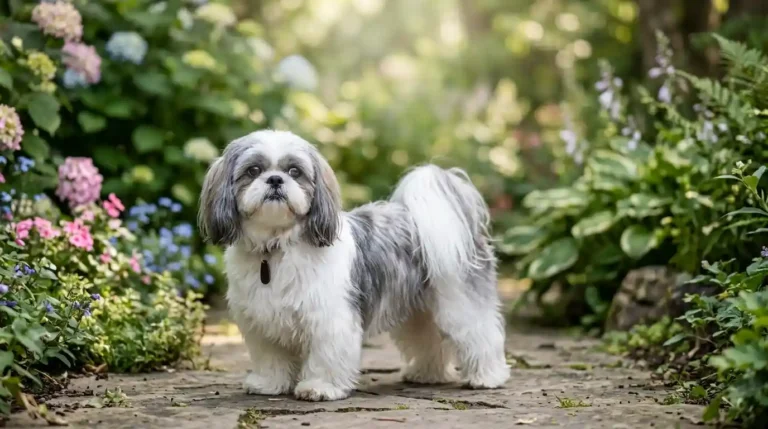
A blue gray Shih Tzu can look like a small dog wrapped in a smoky, charcoal, or silvery coat. But the name raises an important question: is the dog genetically blue, or does its hair simply look gray? In Shih Tzu color descriptions, blue generally refers to diluted black pigment, which can be visible on the nose, lips, and eye rims. Gray describes what the hair looks like. One dog may have both traits; another may have gray-looking hair and black pigmentation. A puppy’s coat can also look different after it grows or receives its first trim. The most useful starting point is an inspection in natural light, followed by a comparison with dated photos and any available coat-color test. This guide shows you where to look, how to distinguish blue gray from silver and fading black, what genetics can establish, and how to choose and care for the individual dog behind the color label. You will also learn which rarity and health claims deserve a closer look before adopting or buying.
Table of Contents
- What Is a Blue Gray Shih Tzu?
- How Can You Identify Blue Pigmentation?
- Blue Gray, Silver, or a Black Coat That Lightened?
- What Genetics Produce Blue Dilution?
- Will a Blue Gray Puppy Stay the Same Color?
- Is Blue Gray Recognized, Rare, or More Expensive?
- Does Blue Gray Coloring Affect Care or Health?
- Choosing a Blue Gray Shih Tzu Puppy or Adult
- Frequently Asked Questions
- Final Takeaway
What Is a Blue Gray Shih Tzu?
The quick answer: gray-looking hair and blue pigmentation
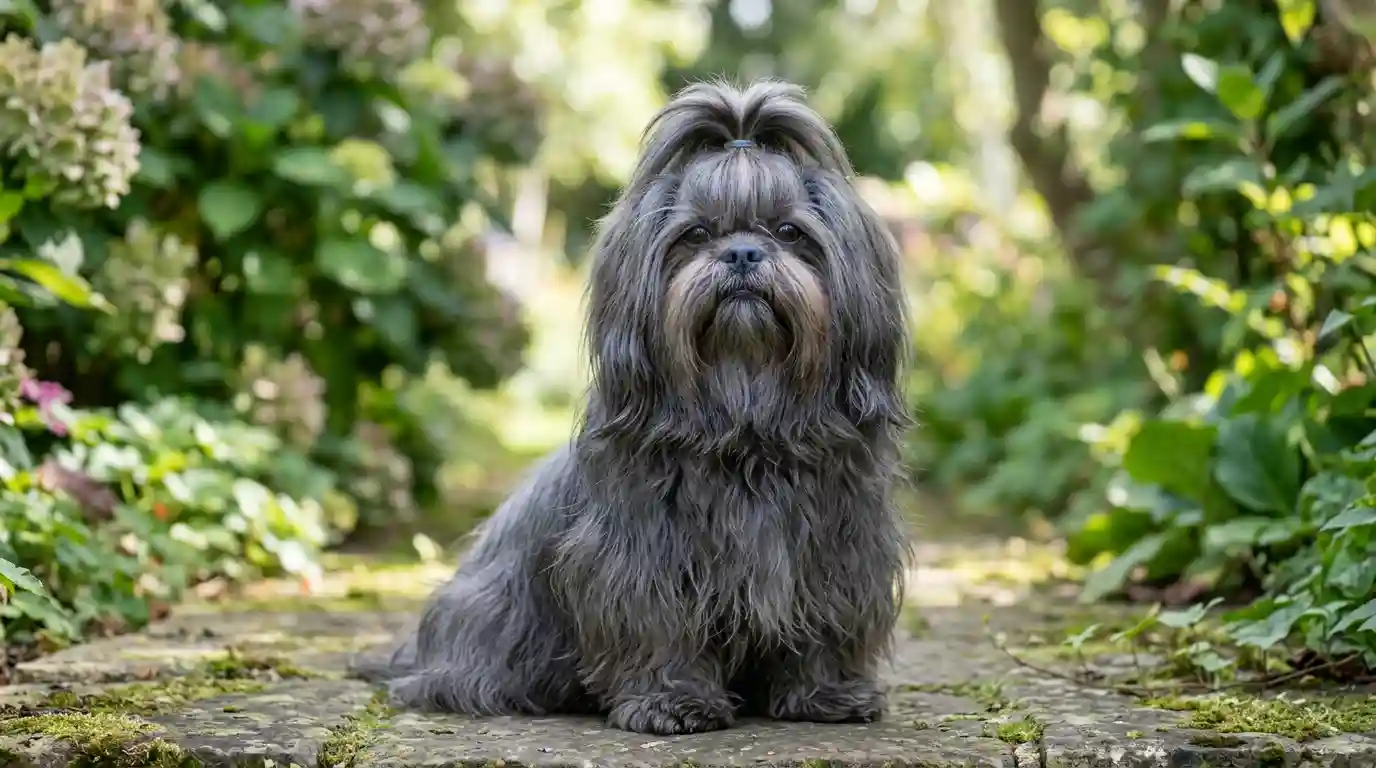
The phrase blue gray Shih Tzu often describes a dog whose hair looks charcoal, slate, or cool gray and whose dark pigment is diluted. Dog people call diluted black pigment blue, even though the dog is not blue in the everyday sense. Blue can be evident in the coat, in exposed pigmented areas such as the nose, or in both. Gray is an ordinary visual description of the hair you can see. These terms overlap, but they answer different questions.
Suppose two Shih Tzus both appear gray from across the room. The first has a slate-colored nose and eye rims. The second has a distinctly black nose and black eye rims. Both can be called gray-haired in everyday conversation. The first presents visible clues consistent with blue pigmentation; the second requires a different explanation for its gray appearance. Neither dog’s full genetic profile can be read from that comparison alone.
This distinction also explains why a blue shih tzu does not have to wear a uniformly blue-gray coat. Some blue-pigmented dogs have white or lighter colored areas. Likewise, a grey shih tzu is a description of appearance that does not automatically tell you its dilution genotype. When discussing an individual dog, describe the visible hair and the pigmentation rather than using one word to stand in for both.
Why the phrase can mean different things to owners and breeders
An owner might say “blue gray” because the puppy looks smoky in photographs. A breeder might use the same phrase to indicate a dog with gray-blue nose pigmentation. A registration record can use a third label that does not match either person’s casual description. Ask which feature the label refers to whenever an exact color matters to you.
Lighting creates further confusion. A black coat in bright sun can show a silvery sheen; a blue-gray coat in shadow can look nearly black. Hair that has lightened with age can look gray even if the dog’s nose remains black. Long hair also mixes colors visually: separate black, white, or tan strands can appear gray from a distance. The various shih tzu colors are easier to understand when you consider coat color, markings, and skin-point pigmentation as separate observations.
Nothing about the term identifies a separate variety of Shih Tzu. Coat labels describe an individual appearance within the breed. A blue gray puppy is still a Shih Tzu, with the same need for attentive grooming, socialization, exercise, and routine veterinary care as any other color.
How Can You Identify Blue Pigmentation?
Check the nose, lips, and eye rims in natural light
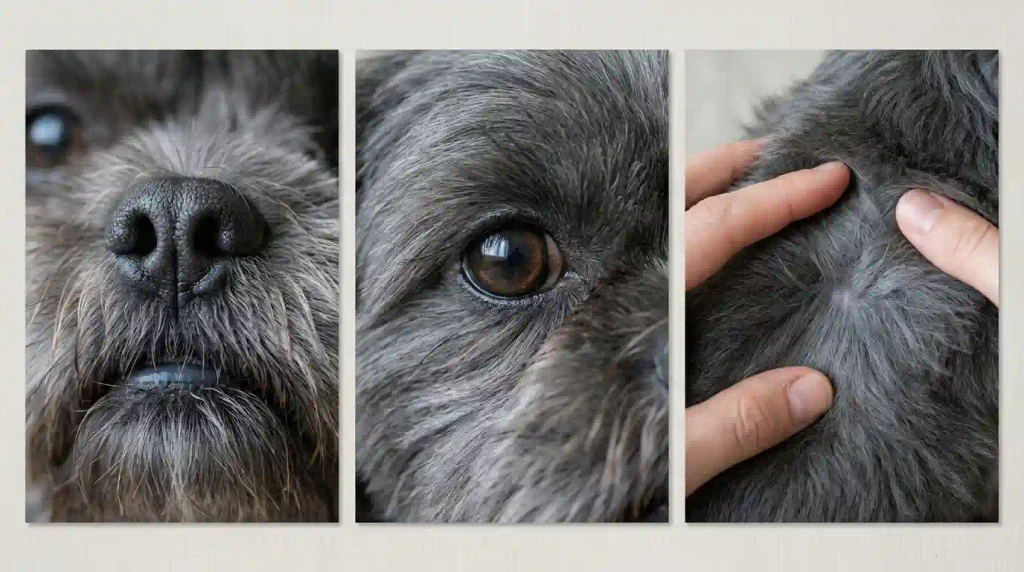
Begin with the nose leather: the exposed surface you can see without moving hair. Look outdoors in even daylight, ideally open shade rather than harsh midday sun. A blue-pigmented nose can look slate, charcoal gray, or gray-blue. Then inspect the edges of the lips and the rims around both eyes. Matching cool-toned pigment in several places gives you more useful information than a single photograph of the nose.
The American Shih Tzu Club standard specifically describes black nose, lip, and eye-rim pigmentation on most colors, with liver pigmentation on liver-pigmented dogs and blue pigmentation on blue-pigmented dogs. It also permits lighter eyes on blue- and liver-pigmented dogs. Those are breed-standard descriptions, not a do-it-yourself genetic test.
Paw pads can add context, although mixed pigmentation and the hair between the toes may make them difficult to inspect. A flash can wash out the nose; indoor bulbs can give gray a brown cast; a filter can make black look blue. If the face looks different across photographs, meet the dog or ask for an unedited daylight video before settling on a label.
A photo checklist for the coat and skin points
Use the same short checklist whether you are examining your own dog or reviewing a breeder’s listing:
- Photograph the entire dog from both sides and the front in even daylight. This shows whether gray covers most of the body or only certain patches.
- Take a close-up of the nose, lips, and eye rims. Look for a consistent slate tone rather than an impression created by shadows.
- Part the hair gently on the back, sides, and ears. Check whether gray extends through the hair or is mostly confined to older outer strands or dark tips.
- Record distinct markings. White areas, dark ear tips, brindle streaks, and a black mask can alter the impression of the whole coat.
- Save dated photos. A comparison is more informative when the lighting, distance, and grooming length are similar.
If you are buying a puppy, ask whether the displayed photographs were taken recently. Request a short video that pans from the face across the coat; still photographs may hide a different-looking nose or a significant white patch. This checklist helps you make a clear visual description. It cannot prove a particular allele or guarantee the adult coat.
What appearance cannot establish
A blue-looking nose is an important clue, but visual inspection has limits. Dirt, dryness, camera color settings, and a dog’s individual markings can complicate an assessment. Nor can you assume that a dog is genetically blue because its hair is silver or because an online listing says so. A color label on a sales page is a claim to evaluate, not the result of a laboratory test.
Appearance also cannot establish pedigree. If someone advertises a “rare purebred blue gray” puppy, the photographs can help you assess its coloring, while registration and parent records address ancestry. A coat-color test addresses selected pigment variants; it does not replace records for a purebred shih tzu. Keep those questions separate when speaking with a breeder or rescue.
Finally, pay attention to the dog in front of you. If a sudden change in the nose, skin, or hair comes with discomfort, patches of hair loss, or inflammation, a veterinarian should assess it. Color terminology cannot tell you whether a new skin change is harmless.
Blue Gray, Silver, or a Black Coat That Lightened?
Compare hair shade with nose and eye-rim pigment
The most common source of confusion is treating every gray coat as a blue coat. A dog can have gray-looking hair and retain black pigment on its nose and eye rims. Another can have blue pigmentation while large areas of its coat are white or cream. These examples show why a head-to-tail description works better than a single color word.
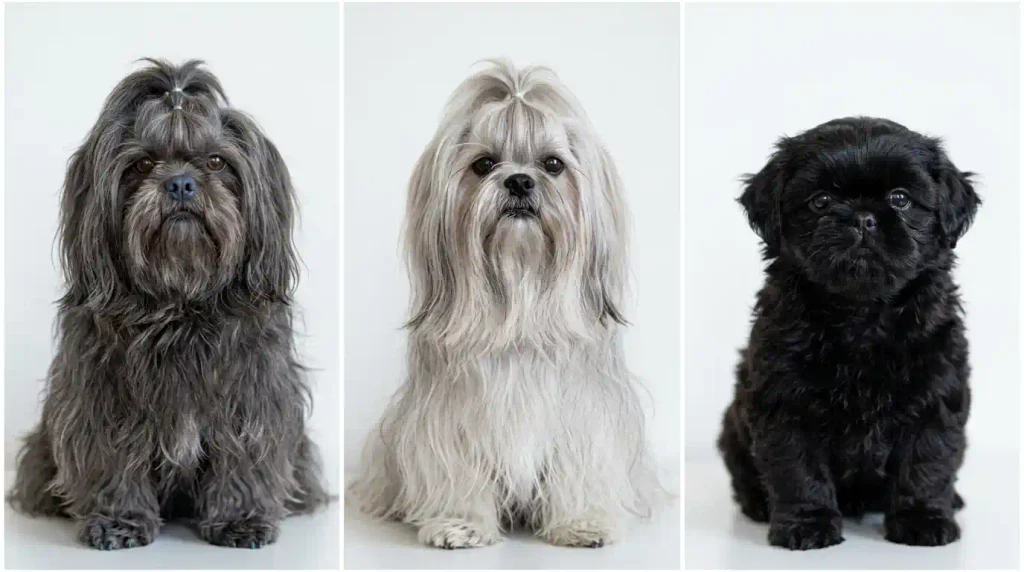
Silver is another visual label. People may use it for a pale gray, a white coat with a cool sheen, or a coat that has gradually lightened from a darker puppy shade. A silver shih tzu may look strikingly similar to a blue gray dog in a poorly exposed image. Look at the exposed pigment and several sections of hair before deciding whether you are describing a light coat, diluted pigment, or both.
A black shih tzu puppy can also develop lighter-looking areas as it grows. That change does not mean its nose automatically switches from black to blue. Check current pigmentation instead of assigning a genetic label retrospectively from an old puppy photo. In everyday conversation, “my dog turned gray” can accurately describe a change in hair color without identifying its genetic cause.
Black tips, brindle, and white markings that change the impression
Look closely at individual hairs. On some puppies, dark tips sit at the ends of lighter strands. When those tips grow out or are cut off, the coat may suddenly seem pale gray, cream, or silver. The haircut has changed what you see, even though scissors did not alter the puppy’s genes. This is one reason to inspect both the surface hair and the hair nearer the skin.
Brindle consists of darker streaks through a lighter colored area. If the dark pigment is diluted, the streaking may look smoky rather than black. A blue brindle shih tzu may therefore appear gray from a distance while showing a clear pattern up close. Sable or dark tipping produces a different arrangement of dark hairs. Avoid interpreting every patchy or streaked photo as a single solid blue-gray color.
White changes the description again. Large white areas alongside gray-blue patches might be described as blue and white shih tzu when blue pigmentation is supported. A grey and white shih tzu describes the visible hair and leaves the pigment question open. A tiny white chest marking is still worth mentioning, although it does not erase the appearance of the rest of the coat.
A concise side-by-side comparison
| Appearance or label | What you may see | What to check next |
| Blue gray | Gray-blue or charcoal hair, possibly with slate-colored points | Compare nose, lips, and eye rims in daylight; inspect any test report |
| Silver | Paler gray or a cool sheen on light hair | Check the roots, older photos, and current point pigmentation |
| Faded black | Dark puppy hair that looks lighter later | Compare dated photos and current black or slate points |
| Blue brindle | Smoky darker streaks over a lighter base | Part the coat and check for repeated streaks in colored areas |
| Gray and white | Gray-looking patches alongside distinct white areas | Record white placement; assess pigmentation separately |
These are practical descriptions, not mutually exclusive genetic categories. A dog can have white areas and brindle in the colored areas, or a light adult coat and blue pigmentation. If a seller insists that two visually similar puppies belong to fundamentally different categories, ask what records or testing support the distinction.
What Genetics Produce Blue Dilution?
Black pigment and the D locus in plain English
As the UC Davis Veterinary Genetics Laboratory explains, dog coats use two basic pigment families. Eumelanin produces black-based dark pigment; pheomelanin produces red-to-yellow shades. Several genes determine where those pigments appear. Blue dilution changes the appearance of eumelanin: black pigment can become a softer gray-blue. At the D locus, known dilute variants affect how that dark pigment is displayed. This explains the word “blue” without suggesting the dog carries a bright blue pigment.
The commonly tested dilution variants act recessively. In simple terms, a dog with one tested dilute variant and one non-dilute copy typically carries the variant without displaying dilution. A dog inheriting qualifying dilute variants from both parents may show dilute coloration. That simplified example is useful for understanding inheritance, but real testing reports can identify multiple known variants and have stated limits. A parent that looks black might carry a dilute variant. Its appearance alone cannot tell you exactly what its puppies could inherit.
The pigment in the coat and the nose is connected, but the amount of gray hair you see also depends on which parts of the body express dark pigment. White patches have no visible dark pigment to dilute. A dog can consequently have a blue-pigmented nose yet show mostly white, gold, or cream hair. The converse problem is just as important: gray-looking hair can have explanations other than confirmed D-locus dilution.
Why other genes affect the visible coat
Think of coat genetics as several instructions interacting rather than one switch marked “gray.” Variants associated with the B locus help distinguish black-based from liver or brown-based dark pigment. Variants at the A, E, and K loci affect the arrangement and expression of darker and lighter pigment. White spotting can conceal colored areas altogether. None of these observations can be compressed into a reliable diagnosis from one puppy photograph.
For example, compare a gray-blue patch on a mostly white dog with a uniformly charcoal dog. Their overall appearances differ even if dilution plays a role in the dark pigment of both. A liver-based dog with additional dilution may be described using another color term, sometimes lavender or isabella. A lavender shih tzu or liver shih tzu deserves its own pigment assessment; cool-looking photographs alone cannot distinguish those outcomes.
Some breed-color articles attribute all Shih Tzu lightening to a named “fading gene” or offer a fixed schedule for a puppy to turn gray. Those are stronger claims than a photo can support. Genetic dilution, age-related changes in visible hair, patterning, and the effect of grooming should be discussed separately. If you need to understand a particular dog’s inherited variants, work from an actual laboratory report.
What a coat-color DNA test can clarify
A coat-color test examines specified genetic variants. Before ordering or interpreting one, check which D-locus variants the laboratory includes, what each result means, and whether the laboratory notes other influences on appearance. A result may support or challenge a claim of blue dilution; it does not supply a photograph of the eventual adult coat or guarantee that every gray strand has one genetic cause.
Also distinguish a color panel from a breed ancestry test and from health screening. One may examine pigment variants; another estimates ancestry; health assessments address different questions. If you are buying a puppy, ask the breeder for the complete report, the dog’s identity on it, and an explanation of any claims being made from it. If the report and appearance seem inconsistent, ask the testing laboratory or a veterinarian experienced with genetics for help interpreting the result.
Testing can add clarity, but it does not make a blue gray Shih Tzu a different breed, certify a dog’s adult shade, or replace veterinary care. Use it to answer the specific question it was designed to answer.
Will a Blue Gray Puppy Stay the Same Color?
Puppy-to-adult coat changes
A young Shih Tzu’s short coat can show contrast that looks very different after the long adult hair grows in. Dark tips may become less prominent, patches may look softer, and the balance of light and dark hair you can see may change. Some dogs retain a similar appearance; others look noticeably lighter. This is why a photo taken when a puppy is only several weeks old should not be presented as a promise of its adult shade.
Ask for photographs of the puppy at several ages if they exist. A photograph of a parent as both a puppy and an adult may show how that individual changed, but it does not establish what every offspring will do. Puppies inherit different combinations of variants, and each coat grows on its own schedule. The best evidence for a particular dog’s current color is a recent look at that dog.
Keep pigmentation and coat change separate. A black-looking puppy that develops pale gray hair has not necessarily become genetically blue. Similarly, a dog with blue pigmentation may grow a coat that appears lighter, more patterned, or more heavily white-marked than expected. Those possibilities are particularly relevant if you are choosing between an adult Shih Tzu whose coat you can assess now and a puppy whose adult appearance is uncertain.
How grooming, lighting, and dated photos affect comparisons
Haircuts can create a sudden visual change without changing pigment production. A groomer may remove dark tips or cut away long strands that previously hid lighter hair near the skin. After a trim, the dog may appear silver even though its nose and eye rims look exactly as they did the day before. The reverse can happen as shorter hair grows out and darker areas become more visible.
For a useful photo record, take a front view and both side views outdoors in similar daylight. Note the date and whether the dog was freshly groomed. Keep one close-up of the nose and another of a consistently chosen patch of hair near the shoulder. Comparing like with like makes a gradual change easier to notice and reduces the chance that a new phone camera or warm indoor light is responsible for the difference.
A change in hair shade is one question; new hair loss, sores, itching, or a changing skin lesion is another. If the change seems sudden and comes with a skin problem, ask a veterinarian to examine the dog. Do not treat irritation as a normal stage of color development merely because Shih Tzus can change appearance as they grow.
Why no exact adult shade can be guaranteed
Even with photographs of both parents and a relevant color test, a seller cannot reliably promise the precise gray shade, pattern placement, or proportion of white on a growing puppy’s future coat. A test can identify variants it covers; it does not predict the length of individual hairs, the effect of a haircut, or every aspect of the dog’s final appearance.
If a particular look is essential, consider adopting an adult dog whose current appearance you can see. If you prefer a puppy, choose one you would be happy to live with if its gray areas become lighter or its markings look less obvious. That simple question can prevent a coat-color preference from overshadowing the long-term responsibility of owning a companion dog.
Is Blue Gray Recognized, Rare, or More Expensive?
Breed-standard acceptance versus seller color labels
The American Shih Tzu Club breed standard says all colors and markings are permissible and should be considered equally. It specifically allows blue nose, lip, and eye-rim pigmentation in blue-pigmented dogs. That establishes acceptance within the US breed standard; it does not verify that every dog advertised as “blue gray” carries a particular variant, belongs to a special Shih Tzu type, or should be registered under those exact words.
Registration labels, visual descriptions, and genetic results serve different purposes. A registration form may use a broad category even when an owner uses two words to describe the hair. Conversely, a fancy sales label cannot establish parentage. If you need proof of breed lineage, request the relevant registration and parent documents rather than relying on the color description. Resources about types of shih tzu can help put seller terminology in context.
It is also useful to look past the contrast between a breed-standard description and a photograph. Blue pigmentation is permitted, and a gray coat is possible, but the two facts do not certify a specific puppy. Clear communication from a breeder should identify what has been observed, what has been tested, and what is still uncertain.
Evaluating rarity and price claims
“Rare blue gray” may be a marketing description. There is no dependable prevalence number in the inspected material that lets a buyer calculate how uncommon this exact combination is across all Shih Tzus. Whether a color is permitted by a standard tells you nothing by itself about how often it occurs in the population. Claims about rarity deserve evidence, especially when paired with an unusually high price.
Ask the seller why the puppy is described as blue gray. Is the answer based on an observed slate nose, a color-test report, or simply a gray-looking coat? Can you see recent daylight photos and meet the puppy and its mother where practical? Does the seller share health information, explain the grooming commitment, and discuss how the puppy has been raised? Answers to those questions are more useful than an urgency-driven claim that a shade will never appear again.
Plan for ongoing costs as well. Food, routine veterinary visits, grooming supplies, and professional grooming if you use it continue long after the purchase. The puppy’s temperament and ability to fit your home matter daily; its exact color name may remain open to interpretation.
Does Blue Gray Coloring Affect Care or Health?
Brushing, bathing, and checking the skin
The Shih Tzu has a long, dense double coat that needs attention regardless of color. A full-length coat should be worked through frequently enough to stop tangles forming at the skin. Use a comfortable brushing routine and part the hair in small sections, especially behind the ears, under the collar, along the legs, and around the tail. Shorter trims can reduce the time needed, but clipped hair still needs regular checking as it grows.
Bathing depends on the dog’s coat and activities. Use a product formulated for dogs, rinse it out thoroughly, and dry the hair carefully so damp tangles are not left next to the skin. Keep hair around the eyes tidy and ask your groomer or veterinarian for guidance if handling that area is difficult. Expensive products claiming to “restore” blue color are not required to care for the dog’s coat.
Because a gray coat may hide small changes, part it during grooming to inspect the skin. Look for redness, scaling, broken hairs, bald patches, or signs that brushing hurts. Note where a problem starts and whether the dog is scratching. Regular coat checks help you spot a concern early; they do not replace an examination when a problem persists.

When hair loss or irritation warrants a veterinary visit
VCA Animal Hospitals describes color dilution alopecia as an inherited skin condition associated with some dogs that have dilute coats. It can involve thinning hair, patchy hair loss, and sometimes dry, flaky, or itchy skin. A blue-looking coat does not mean a particular Shih Tzu has the condition. Other skin problems can also cause hair loss or itching, so symptoms need veterinary assessment rather than a diagnosis based on color alone.
Arrange a veterinary visit if you find persistent hair loss, sores, crusts, noticeable itching, or a change in skin comfort. Bring dated photographs and any available test results, but let the veterinarian decide what examination or investigation is appropriate. An unusual coat shade, by itself, is not a reason to assume your dog is sick; equally, a smooth coat today is not a lifetime health guarantee.
Ask about everyday issues separately from color. A breeder’s health records, the condition of the puppy, and a veterinarian’s findings tell you more about that individual dog than a gray patch does. If you are researching the breed more broadly, shih tzu Breed Information can help you frame your questions before a visit.
Assessing temperament and health separately from color
Observe how the dog responds to people, being handled, and an ordinary home environment. An individual puppy may be playful, reserved, curious, or still learning to settle. Ask what socialization experiences it has had and what routine it follows. The seller should be willing to talk about the whole dog, including any concerns, rather than repeatedly redirecting the conversation to a rare-color label.
Prepare for a Shih Tzu’s daily needs: gentle training, age-appropriate play, opportunities to explore, and consistent coat care. A gray-looking coat does not determine personality. The same is true of black, gold, white, or any other color. Choose the companion whose care needs and behavior suit your household; then enjoy the color as one feature of that dog.
Choosing a Blue Gray Shih Tzu Puppy or Adult
Questions for a breeder or rescue
Before agreeing to bring a dog home, ask questions that reveal both what is known and what remains uncertain:
- What does “blue gray” mean for this dog? Ask whether the phrase describes hair, exposed pigmentation, a test result, or a combination.
- Can I see recent, unfiltered images or meet the dog? Request views of the nose, eye rims, coat, and markings in daylight.
- What health and veterinary records are available? Ask about the dog’s own care and, for a puppy, the relevant information available about both parents.
- How has the dog been raised and socialized? Discuss handling, household exposure, routines, and any behavioral concerns.
- What grooming will this coat need? Ask about its current length, tangles, bathing routine, and experience with a groomer.
- What support is available after placement? Confirm how questions and unexpected health concerns will be handled.
A rescue may not know the dog’s parentage or puppy coat color. An honest “we don’t know” is better than an invented explanation. You can still assess its present health, current pigmentation, behavior, and grooming needs. An adult rescue also gives you a direct view of its current coat, which may be helpful if you care about a particular appearance.
Photos, health records, and test reports to review
Compare the dog you meet with its dated photos and paperwork. If a test report is offered, check the identified dog, laboratory name, variants included, and the written interpretation. A screenshot showing “blue” without context does not answer whether the puppy has other coat patterns or how it will look as an adult. Keep pedigree, coat-color, and health documents in their own categories.
Consider the timing of the decision. A seller who promises an exact future silver-blue shade or presses you to pay immediately because it is “rare” is giving you less useful information than one who explains the uncertainty. It is reasonable to ask for clarification and review the documentation before making a commitment.
Finally, picture everyday life with the dog. Can your household manage its brushing and training? Are you comfortable with the veterinary and grooming costs? Would you still value this puppy if the hair became much lighter? For most owners, those answers are more decisive than whether the final description is blue gray, silver, or simply gray.
Frequently Asked Questions
Is every gray Shih Tzu genetically blue?
No; gray-looking hair alone does not establish inherited blue dilution.
Can a black puppy become gray?
Yes; its coat can look lighter as it grows, though that does not by itself prove blue dilution.
Can a blue Shih Tzu have white or brindle markings?
Yes; blue pigmentation can coexist with white areas or a visible brindle pattern.
Does a blue nose prove a puppy will have a gray adult coat?
No; it is a pigmentation clue, not a guarantee of the adult hair shade.
Final Takeaway
A blue gray Shih Tzu may have both a smoky gray coat and blue-diluted pigmentation, but those are separate observations. Start by inspecting the hair, nose, lips, and eye rims in natural light. Compare dated photos if the dog is still growing, and use a coat-color test only for the genetic questions it actually covers. The breed standard accepts blue-pigmented Shih Tzus; a color label cannot establish pedigree, predict an exact adult shade, or diagnose a skin condition. If you are considering a puppy, ask for current photos, records, and a clear explanation of the seller’s claims. Choose a dog whose health, temperament, and grooming needs fit your life, and you can appreciate its changing coat along the way.