Black Brindle Shih Tzu: Pattern, Genetics and Care
Summary: A black brindle Shih Tzu can look almost solid black at first glance, but parting the coat may reveal dark streaks running through gold, tan, red, or another lighter shade. Brindle describes a pattern, not a separate breed or a guarantee that the puppy will keep the same markings as an adult. The amount of visible striping varies: some dogs have widely spaced dark bands, while others have so many dark hairs that their lighter background is hard to see. White patches can appear alongside brindle, too. If you are identifying your dog or considering a puppy advertised as black brindle, look at clear photos in natural light, examine the coat near the roots, and ask how the parents’ coats changed with age. Below, you will learn how to distinguish brindle from solid black, sable, and a black mask; what coat genetics can actually explain; how to care for a long coat; and which questions matter more than a rare-color sales pitch.
Table of Contents
- What Does a Black Brindle Shih Tzu Look Like?
- How Can You Tell Black Brindle From Similar Coats?
- What Causes Brindle in Shih Tzus?
- Will a Black Brindle Puppy Keep Its Pattern?
- Is Black Brindle Rare or Recognized in Shih Tzus?
- Does Black Brindle Affect Health or Temperament?
- How Do You Care for a Black Brindle Coat?
- Finding a Black Brindle Shih Tzu
- Frequently Asked Questions
- Final Takeaway
What Does a Black Brindle Shih Tzu Look Like?
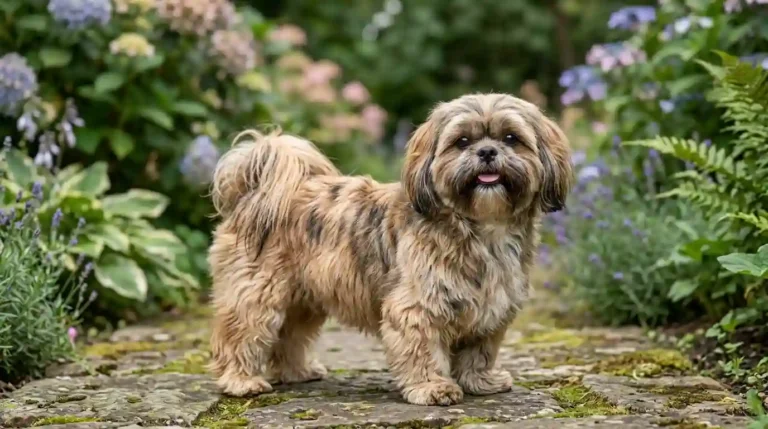
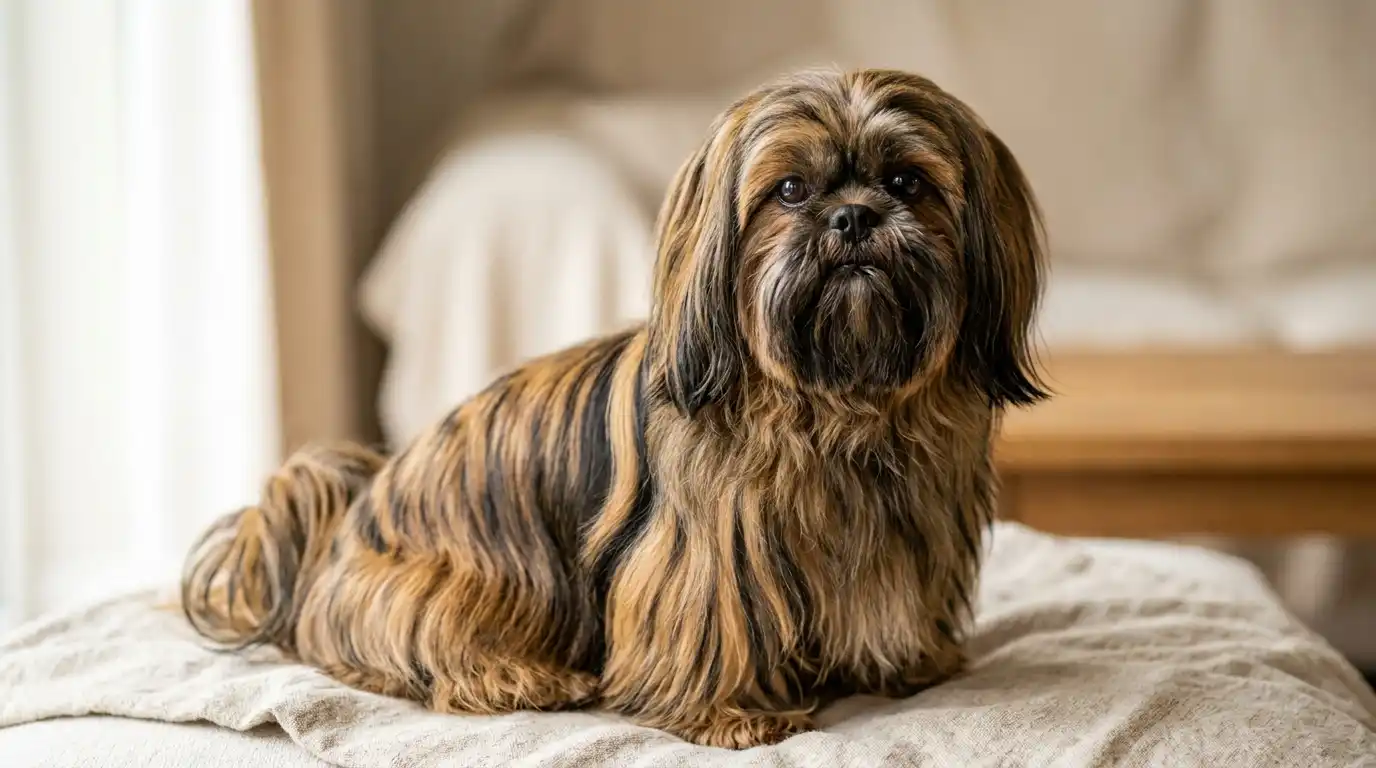
A black brindle Shih Tzu has dark, often black-looking streaks or stripes against a lighter background. Think of irregular bands woven through the hair, rather than two large blocks of solid color. A brindle coat can have gold, tan, cream, reddish, or silvery areas; the contrast and placement differ from dog to dog. The phrase “black brindle” is useful as a visual description, but it is not a promise that every hair is black or that there is one universally agreed percentage of black in the coat.
For examples, compare a brindle shih tzu with other shih tzu colors.
How dark stripes appear against a lighter coat
Brindle stripes may stand out along the sides or legs yet seem less distinct in dense hair. Examine several areas: a single black patch on a white body is a different marking.
Some Shih Tzus combine a brindled area with white spotting on the chest, paws, or body. The white does not turn the stripes into a different genetic pattern: it changes how much of the patterned coat you can see. A brindle and white shih tzu may therefore have unmistakable striped patches separated by white fur.
Heavy brindle, light brindle and the meaning of “black brindle”
With heavy brindle, closely spaced dark stripes cover much of the lighter base, making a dog appear nearly black from a distance. Light or loose brindle leaves more of the underlying color visible. “Reverse brindle” is a descriptive term often applied to especially dark-looking brindle; it does not mean that the stripe and background pigments literally trade places. Because these labels are used somewhat loosely, ask to see the coat rather than relying on an advertisement’s wording.
Compare a red brindle shih tzu with a silver brindle shih tzu. “Black brindle” may emphasize the stripes or overall darkness; a daylight photo tells you more.

How Can You Tell Black Brindle From Similar Coats?
Look for patterned lighter areas between dark streaks. A black nose, eye rims, and paw pads can be consistent with a normally pigmented Shih Tzu, but these features alone do not identify a brindle coat. The American Shih Tzu Club’s breed standard describes black nose, lip, and eye-rim pigmentation for most colors, with exceptions for liver- and blue-pigmented dogs. It also permits all coat colors and markings equally.
| Coat description | What to look for | Common source of confusion |
| Black brindle | Irregular dark stripes through lighter pigmented areas | Heavy stripes can look solid black in a small photo. |
| Solid black | Overall black coat without a visible lighter striped background | Lighting can reveal brownish highlights that are not necessarily brindle. |
| Black and white | Distinct black and white sections | The edge of a black patch is not a series of stripes. |
| Sable or black tipping | Dark tips or mixed-looking hairs over a lighter coat | Dark-tipped individual hairs can resemble distant striping. |
| Black mask | Dark fur concentrated around the muzzle and face | A facial mask does not establish brindling on the body. |
Black brindle versus solid black
A black shih tzu may look uniformly dark across the body. With heavy brindle, you should be able to find lighter-colored areas between darker bands in at least some pigmented parts of the coat. Pull a small section of hair aside gently and examine it under indirect daylight. Do not decide solely from an overexposed flash photo or from a coat that has been dyed, heavily filtered, or recently clipped.
Brownish sheen is not proof of brindling. A black and brown shih tzu may lack stripes, while a black and tan shih tzu can have localized tan rather than streaks.
Black brindle versus black and white, sable and black mask
A black and white shih tzu has separated color patches; white spotting can also coexist with brindle. Judge the pigmented patches, not just the presence of white. Sable often involves hairs that are lighter toward the base and dark at the tips, which may create a shaded effect without repeated black stripes. A black mask gold shih tzu has dark facial markings, but the mask alone does not determine whether its body coat is brindle.
Ask for close views of both sides, the back, and a parted section near the shoulder; a short video may clarify the bands.
What photos and the hair near the skin can reveal
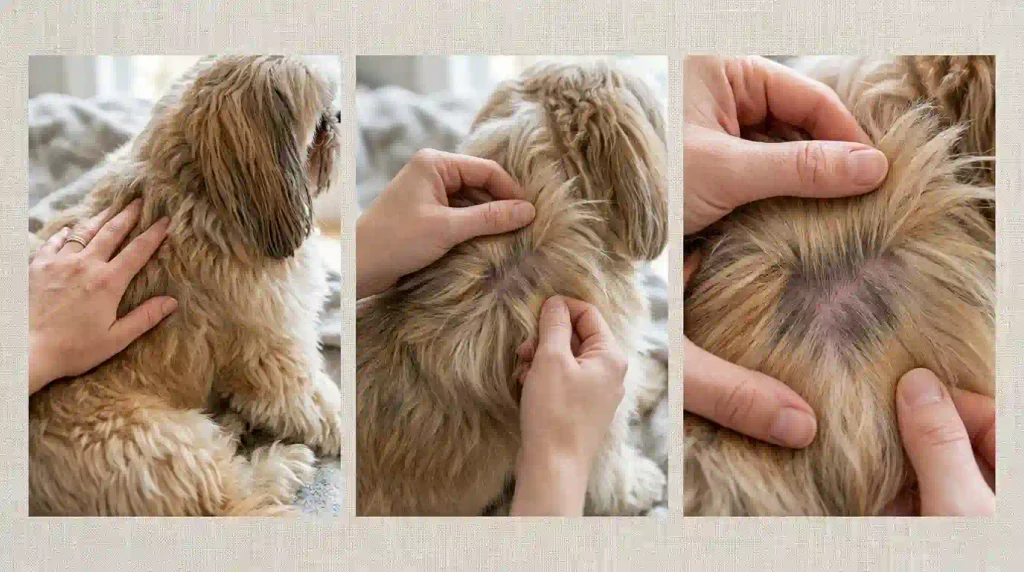
Request unfiltered photos taken outdoors in open shade, plus pictures from more than one age if the dog is older. Compare areas at the same body position. Gently part the coat in several places to see whether dark and light hair runs in adjacent bands. Parting helps reveal a pattern that long outer hair hides; it does not establish a genotype or predict the adult coat with certainty.
Use the same method with a brown black and white shih tzu or black and grey shih tzu: describe visible markings before choosing a label.
What Causes Brindle in Shih Tzus?
Coat color comes from inherited instructions that regulate where dark and lighter pigments appear. Brindle is associated with variation at the K locus, but a dog’s visible coat also reflects interactions with other coat-color genes. A striped photograph cannot reveal every allele the dog carries.
The K locus in plain English
An allele is a version of a gene-related sequence. In a foundational dog-coat study, researchers described three K-locus versions: dominant black (Kᴮ), brindle (kᵇʳ), and a version often written kʸ. Their observed dominance order was Kᴮ > kᵇʳ > kʸ. Thus, a dog can carry a brindle-associated version without showing an obvious brindle coat when a more dominant or masking genetic effect is present. The study examined dogs across breeds; it was not a count of how many Shih Tzus carry brindle.
Calling brindle simply “recessive” is misleading. A mating’s outcome depends on variants carried by both parents; photographs cannot establish an individual litter’s odds.
Why other genes can change or hide the pattern
Other loci influence the production and distribution of pigment. The A locus helps shape where lighter pigment can appear; other genetic combinations can mask stripes even when a brindle-associated K-locus allele is present. White spotting can cover areas in which the coat would otherwise show a pattern. Dilution or brown pigmentation can also change how dark the stripes look. The underlying genetics are more informative than inventing a precise “black percentage” based on appearance.
For a liver shih tzu or blue brindle shih tzu, assess skin pigmentation separately from the striped coat.
What a coat-color DNA test can and cannot establish
A reputable laboratory can report the specific variants its test covers. Before paying, ask whether the panel assesses brindle-related variants, whether it can distinguish those variants from masking effects, and how it reports uncertainty. A test can support a discussion of inherited coat traits, but one result does not guarantee that a puppy will retain the same visible stripes after the adult coat grows in.
Keep coat-color testing separate from parentage verification and breed ancestry. A color test by itself cannot prove that a dog is a purebred shih tzu, and an ancestry report does not replace pedigree records or appropriate health evaluations.
Will a Black Brindle Puppy Keep Its Pattern?
It may change noticeably. A puppy’s coat is not a permanent color sample. As adult hair grows, the balance of dark and light can appear different, and the longer coat changes how readily you see the stripes. Some brindle Shih Tzus remain clearly patterned; others look lighter, darker, or less sharply striped than their puppy photos suggested. Avoid any seller who guarantees an exact adult shade solely from a young puppy’s appearance.
Puppy coat versus adult coat
Use age-labeled photos to track one dog over time: at the time of selection, several months later, and after the adult coat develops. Shoot in similar light and from comparable angles. A small lighter streak photographed in a short puppy coat may be hidden beneath long hair later; conversely, a haircut may make the contrast easier to notice. White markings and the distribution of darker patches can remain recognizable even while the overall color looks different.
Ask for dated pictures of the parents as puppies and adults. They show possible changes; an adult rescue dog gives a clearer view of its current coat.
Fading, grooming and age-related changes
Fading refers to a change in apparent shade; graying can develop later in life. Neither means a brindle dog has become a different breed. Lighting, sun exposure, coat length, and the color of newly grown hair can all influence what a photo seems to show. Clipping removes the older outer portion of the hair and reveals shorter hair beneath; it does not rewrite the dog’s genes.
If hair loss, inflamed skin, or sudden patchy discoloration accompanies an apparent color change, ask a veterinarian to examine the dog. Those changes are different from the routine shift in how a growing coat looks.

Is Black Brindle Rare or Recognized in Shih Tzus?
Brindle is an accepted Shih Tzu coat appearance. The American Shih Tzu Club’s standard states that all colors and markings are permissible and considered equally. That makes a dark brindle dog eligible under the color provision; it does not tell us how frequently black brindle appears in the population.
Breed-standard status versus claims of rarity
“Rare” is often a sales description, not a published frequency estimate. A dark-looking brindle may stand out in photos or be uncommon in one breeder’s current litters, but those observations cannot establish a national rarity percentage. Ask a seller what they mean: uncommon in their litters, unusual in their area, or a claim backed by actual records?
The breed standard assesses much more than coat color, including structure, a dense double coat, and the companion temperament associated with the breed. A fashionable marking is only one part of evaluating a dog. Compare a dog’s practical traits with the broader shih tzu Breed Information before paying extra for a label.
Why a color label does not prove pedigree
A striped coat does not prove or disprove purebred status. Brindle appears in more than one dog breed, and photos alone cannot authenticate ancestry. Ask for pedigree information and parent identification if registration matters to you. Read a breeder’s contract closely: a color description should not substitute for a clear record of parentage, veterinary information, or honest disclosure of any uncertainties.
Labels such as “imperial” or teacup shih tzu do not establish health or authenticate a brindle coat. Assess actual size, care needs, and documentation.
Does Black Brindle Affect Health or Temperament?
You cannot infer a dog’s health history or personality from black stripes. The pattern tells you something about coat appearance, while well-being depends on a much wider set of factors. It is equally unsafe to assume that a dark brindle puppy is unusually robust or inherently fragile just because of its coloring.
What coat appearance alone can tell you
A shiny, clean coat may reflect grooming, but even excellent grooming cannot confirm the absence of inherited or acquired health problems. The breed standard describes the Shih Tzu as a companion with an outgoing, affectionate, friendly temperament; it does not assign a different temperament to brindle dogs.
Watch the individual dog interact with people and respond to routine handling. Ask how a puppy has been socialized and observe the parents when possible. If you are deciding between colors, start with a dog whose needs and personality suit your home. These general shih tzu facts can help you assess daily life beyond a coat photo.
What to check when choosing any Shih Tzu puppy
Request the parents’ identities and available health screening documentation; ask what veterinary care the puppy has received and what is still due. Observe breathing at rest and during gentle activity, comfortable movement, alertness, clean skin, and a willingness to engage. Have your own veterinarian review any concern and explain which breed-appropriate checks are relevant to the individual dog.
Ask about socialization, returns, and the written contract; a rescue should share available medical records and history.
How Do You Care for a Black Brindle Coat?
A black brindle Shih Tzu needs the same coat care as other Shih Tzus. The breed standard describes a long, dense, double coat. Whether long or trimmed, check for tangles near the skin, especially behind the ears, under the legs, around the collar, and near the tail.
Brushing, bathing and checking for mats
Use a suitable brush and comb in small sections; the comb helps reveal tangles hidden beneath a smooth outer layer. For a long coat, inspect and brush frequently enough that mats do not form. A shorter trim may reduce the time spent detangling, but it still needs routine brushing and professional upkeep as the hair grows. Ask a groomer to show you how to reach the skin gently without scraping it.
Bathe when the coat is dirty or according to a routine suited to your dog’s skin, then rinse and dry thoroughly. There is no special shampoo required solely because a coat is brindle. Dark stripes may conceal debris in photographs, so use your hands and a comb to inspect the coat rather than waiting until it visibly looks dirty. Seek veterinary advice for persistent itching, odor, sores, or hair loss.
How clipping changes the pattern’s appearance
A trim can alter what part of each hair is visible. After grooming, formerly prominent black tipping may disappear temporarily, or stripes may appear softer because the short coat reflects light differently. Take a before-and-after picture in similar daylight before deciding the color has genetically changed.
Tell the groomer if you want enough length to see the pattern. Choose a style you can maintain comfortably.
Finding a Black Brindle Shih Tzu
Start with the dog you can actually assess, not a color-filtered listing. A responsible breeder or rescue should be willing to describe the coat honestly, share recent natural-light photos, discuss known health information, and explain the transition to a new home. Prices vary by location, breeder practices, age, and individual circumstances; there is no defensible universal “black brindle price.”
Questions for a breeder or rescue
- Can I see recent, unfiltered photos of both sides and the face, plus dated earlier photos?
- Is the dog described as brindle because visible stripes occur in the pigmented coat, or because the coat looks generally dark?
- What do the parents look like now, and did their coat colors change as they matured?
- What parentage, registration, health-screening, and veterinary records are available?
- What grooming routine is the dog used to, and how does the dog respond to handling?
- What does the written contract say about health concerns, returns, and any advertised color premium?
For perspective on other patterns, compare descriptions of a red shih tzu, gold and white shih tzu, or white shih tzu. A visual comparison can help you state the marking you want without mistaking a regular two-color coat for brindle.
Comparing photos, health information and pricing claims
Put photos taken at the same age side by side. Prioritize evidence of a healthy, well-cared-for dog and clear records over dramatic saturation or a supposedly exclusive shade. Be cautious about guaranteed adult color, unsupported scarcity percentages, or prices justified only with the word “rare.” If a seller cannot supply basic documentation or reasonable answers, keep looking.
Remember that the site of shih tzu origin and the breed’s history do not confer special value on an individual coat label. The dog you take home will need years of companionship, veterinary attention, and grooming long after its puppy colors have shifted.
Frequently Asked Questions
Is a black brindle Shih Tzu purebred?
Yes, it can be; the pattern alone neither proves nor rules out purebred ancestry.
Can a black brindle puppy become lighter?
Yes; its adult coat can look lighter or show softer stripes than its puppy coat.
Is black brindle the same as reverse brindle?
“Reverse brindle” usually describes exceptionally dark-looking brindle, but sellers may use the terms differently.
Is a black brindle Shih Tzu more expensive?
Some sellers charge a premium, but coat color alone does not establish a fair price or better quality.
Final Takeaway
A black brindle Shih Tzu has dark streaks across a lighter pigmented coat, though heavy striping can make the dog appear almost black. Compare the body coat in natural light to distinguish it from solid black, isolated color patches, sable tipping, or a facial mask. Genetics helps explain why stripes occur, but a photograph, DNA panel, or puppy color cannot guarantee an exact adult appearance. Brindle is permitted under the Shih Tzu breed standard; claims that a particular dark shade is exceptionally rare need their own evidence. Give coat care the same attention you would for any long-haired Shih Tzu, and put health information and temperament ahead of a color premium. If you are choosing a dog, save several age-labeled photos, ask the breeder or rescue the questions above, and select the individual companion who fits your home.