Gold and White Shih Tzu: How to Identify the Coat and Care for It
A gold and white Shih Tzu combines warm golden hair with clearly visible white areas, creating one of the breed’s most recognizable color combinations. However, identifying the coat correctly involves more than deciding whether the colored sections look yellow, cream, tan, or gold. A Shih Tzu’s coat shade can change as the puppy grows, and the color of the nose, lips, eye rims, and other skin pigment can tell you something different from the hair itself.
If you are comparing gold and white Shih Tzu puppies, trying to identify an adult dog from photos, or wondering whether a fading puppy will stay gold, this guide explains what to look for. You will learn how gold-and-white differs from red-and-white and tricolor coats, how pigmentation affects identification, why puppy colors may lighten, whether the combination is accepted under the breed standard, and how to keep both the gold and white portions of the coat healthy, clean, and attractive.
Table of Contents
- What does a gold-and-white Shih Tzu look like?
- How do coat color and pigment differ?
- Can a gold-and-white puppy’s color change as it grows?
- Is gold and white an accepted Shih Tzu color?
- How do you care for a gold-and-white Shih Tzu coat?
- What should you ask before choosing a puppy?
- Gold-and-white Shih Tzu FAQs
- Final Thoughts
What Does a Gold-and-White Shih Tzu Look Like?
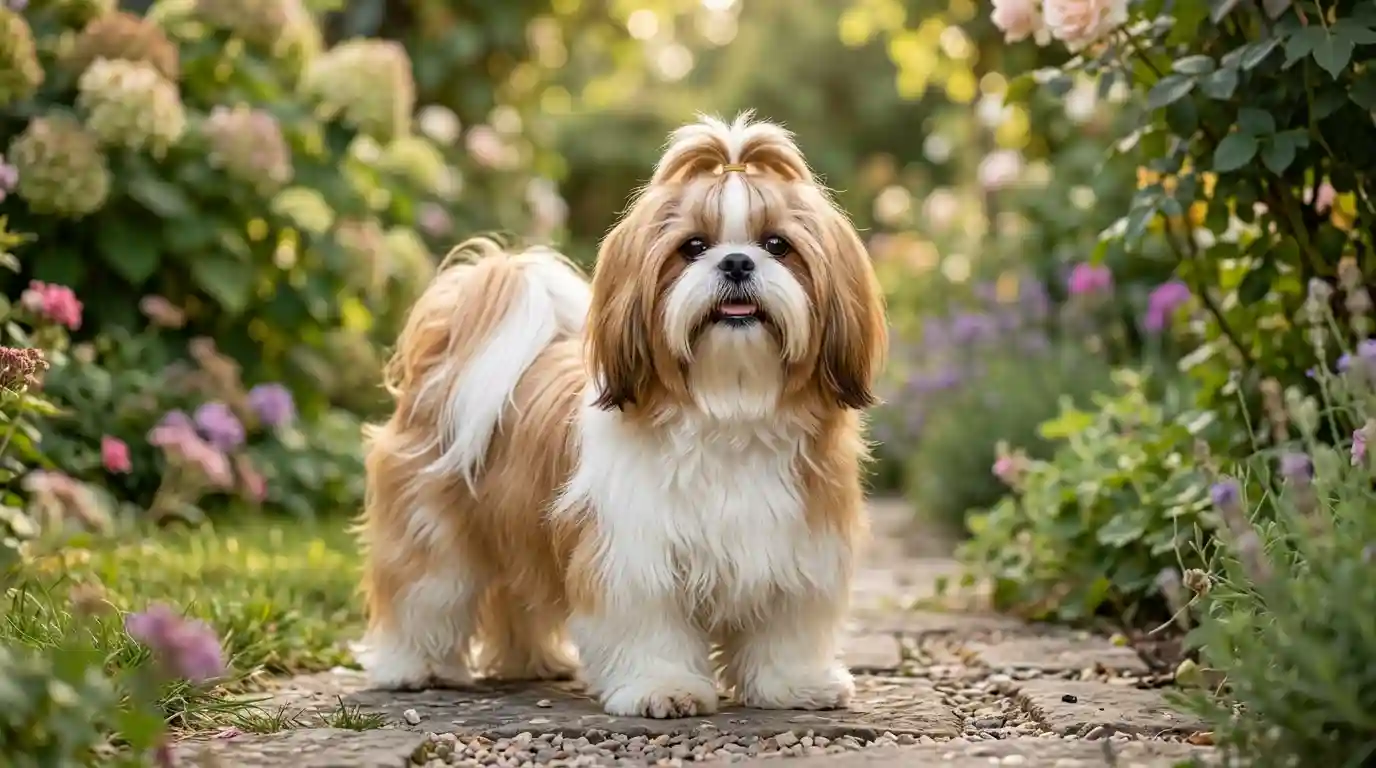
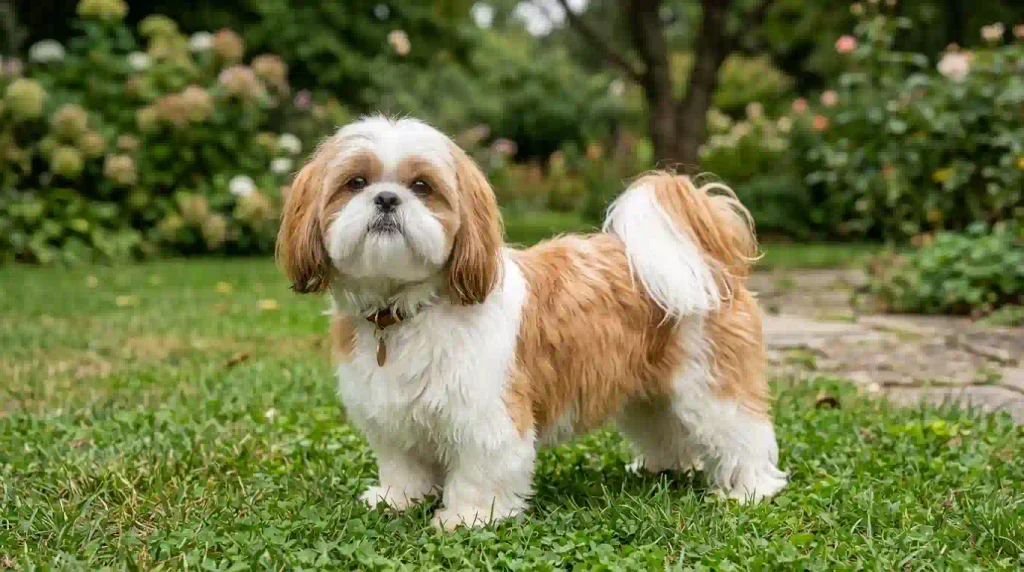
A Shih Tzu gold and white coat has areas of warm golden color combined with areas of white hair. The amount and placement of each color vary considerably from dog to dog.
One Shih Tzu may have a mostly gold body with a white chest, muzzle, forehead, and paws. Another may appear primarily white with large gold patches across the ears, head, back, or tail.
This variation is one reason it helps to become familiar with the broader range of shih tzu colors rather than identifying a dog from a single shade or photograph.
Gold and White Areas, Patches, and Common Markings
The gold portion can range from a rich honey or warm golden shade to a much lighter cream-gold. Lighting, coat length, age, and fading can all change how intense that color appears in a photograph.
White commonly appears on the:
- Chest
- Muzzle
- Forehead
- Neck
- Belly
- Legs and paws
- Tail tip
A white line running upward between the eyes may be described as a blaze or flare. Some dogs have a broad white chest combined with white paws, while others have a colored area over the back resembling a saddle marking.
Owners and breeders may also use informal terms such as parti coat when large colored patches appear against substantial white, or abstract coat pattern when a mostly colored dog carries more limited white markings. These descriptions can be useful visually, but they should not be treated as genetic diagnoses by themselves.
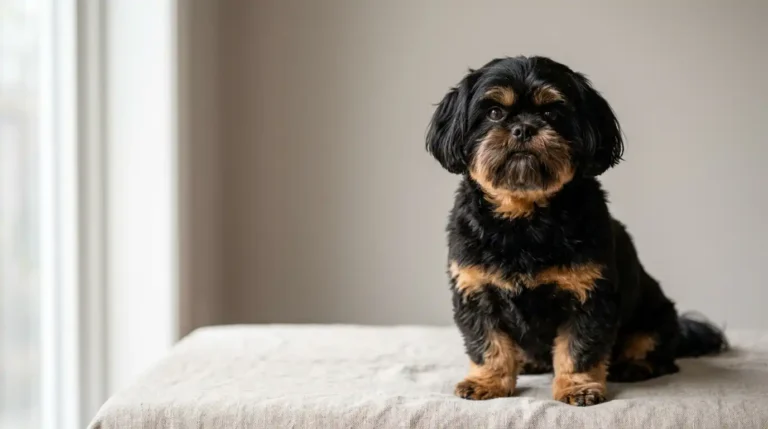
A dog with darker facial shading may resemble a black mask gold shih tzu. Black tipping in the hairs can also temporarily make a puppy’s gold coat appear darker or more complex.
Gold-and-White Versus Tricolor Coats
A true visual tricolor appearance involves three noticeable coat colors or patterns rather than simply gold and white.
For example, a dog may have:
- Gold hair
- White markings
- Black tipping or substantial black areas
However, a few dark hairs or a black facial mask do not automatically mean the entire dog should be described as tricolor. Puppy coats frequently contain dark tips that become less noticeable as the adult coat develops.
The distinction becomes easier when comparing other combinations. A black and white shih tzu has much stronger black-and-white contrast, while a brown black and white shih tzu can show three visibly distinct color areas.
A brindle shih tzu is different again because brindle involves a striped or intermixed pattern rather than simple gold patches. If white is also present, compare the dog with a brindle and white shih tzu.
The most reliable approach is to describe what is actually visible rather than trying to force every puppy into an elaborate color label.
How Do Coat Color and Pigment Differ?
One of the most important things to understand about a white and gold Shih Tzu is that coat color and skin pigment are related but not identical characteristics.
Gold describes the appearance of the hair. Pigmentation describes darker structures such as the nose, lips, and eye rims.
That distinction matters because two dogs can both have golden hair while displaying different pigmentation.
What to Check on the Nose, Lips, Eye Rims, and Paw Pads
Start with the nose.
Most gold-and-white Shih Tzus have a black nose accompanied by dark lips and eye rims. Under the American Kennel Club Shih Tzu standard, nose, lip, and eye-rim pigmentation is normally black, with liver pigment permitted on liver-pigmented dogs and blue pigment on blue-pigmented dogs.
You can review the American Kennel Club Shih Tzu breed standard for the official wording.
When examining a dog, look at the following together:
Nose: Is it clearly black, brown/liver, bluish-gray, or poorly pigmented?
Eye rims: Are the borders around the eyes black, brown, or diluted gray-blue?
Lips: Do they match the basic pigment seen on the nose?
Paw pads: These can provide another clue, although paw-pad appearance alone should not be used to classify coat color or genetic status.
Make these observations in natural daylight whenever possible. Indoor lighting, phone-camera processing, shadows, and filters can dramatically alter both gold hair and pigment.
When a Gold Coat Has Liver or Blue Pigment
A dog can visually have a gold coat without having ordinary black pigmentation.
For example, a gold-colored dog with brownish nose, lips, and eye rims may have liver pigmentation. Learn more about how that pigmentation is identified in the liver shih tzu guide.
A dog with gold and substantial white plus liver pigmentation should not be identified merely because its golden hair looks brown. Compare the pigmentation itself and, when appropriate, the characteristics described for a liver and white shih tzu.
This is also why a brown shih tzu or brown and white shih tzu should not be identified from coat shade alone. A warm gold coat can look brown in poor lighting without establishing liver pigmentation.
Similarly, diluted dark pigment can have a gray-blue appearance. Our blue shih tzu and blue and white shih tzu guides explain this distinction in more detail.

Can a Gold-and-White Puppy’s Color Change as It Grows?
Yes. A gold and white Shih Tzu puppy may look noticeably different after its adult coat develops.
The basic white areas may remain recognizable, but the intensity of the gold portion can change considerably. Some puppies become lighter, while others retain stronger golden areas.
Puppy Coat, Adult Coat, and Fading
Shih Tzu puppies begin with a puppy coat that is gradually replaced by the mature adult coat. During this transition, the dog’s appearance may change in shade, texture, length, and contrast.
Dark tipping can disappear or become less obvious. Rich golden hair may soften toward light gold or cream. A very pale mature dog can sometimes be described casually as a blonde shih tzu, although color terminology is not always used consistently outside formal registration.
Color change can also create confusion with nearby shades. A darker puppy might initially resemble a golden brown shih tzu, while a pale adult may appear closer to tan, cream, or even silver under certain lighting.
Fading does not mean that something is wrong with the coat. It may simply be part of normal coat development.
Look for actual changes in hair or skin condition separately. Sudden hair loss, redness, itching, sores, unusual thinning, or major texture changes deserve more attention than ordinary gradual color fading.
What Photos and Parent Coats Can Tell You
Puppy photos are useful for documenting how a coat develops, but they cannot guarantee the exact adult shade.
If you are selecting among gold and white Shih Tzu puppies, ask for photos taken:
- In natural daylight
- Without heavy filters
- At different ages
- From several angles
- With the nose and facial pigment clearly visible
Photos of the parents may offer context about the kinds of coats present in the breeding line, but they still cannot promise precisely how an individual puppy will look as an adult.
When comparing similar shades, studying a red shih tzu, tan shih tzu, or silver shih tzu can help you recognize why one photograph is not enough for confident identification.
Is Gold and White an Accepted Shih Tzu Color?
Yes. Gold-and-white coloring is compatible with the Shih Tzu breed standard.
The current AKC standard states that all colors and markings are permissible and considered equally.
That means a dog’s quality as a Shih Tzu should not be judged simply by whether its coat is gold, white, black, red, silver, or a combination.
Breed-Standard Guidance on Colors and Markings
Shih Tzus are known for considerable variation in coat color.
Gold may occur with white markings ranging from small areas to extensive white coverage. Other two-color combinations include the red and white shih tzu, silver and white shih tzu, tan and white shih tzu, and grey and white shih tzu.
Coat color should also not be confused with whether a dog is a purebred shih tzu. Pedigree and parentage establish breed status; simply having a particular color combination does not.
If you are new to the breed, the shih tzu Breed Information section provides broader context, while these shih tzu facts explain characteristics beyond coat color.
How to Judge “Rare Color” Claims
Be cautious when the word rare is being used primarily to increase a puppy’s price.
The AKC notes that all colors occur in the Shih Tzu and does not treat one coat color as inherently superior to another.
Rather than asking only, “How rare is this color?” ask:
- Are the parents healthy and appropriately cared for?
- What veterinary and breeding records are available?
- How are the puppies raised and socialized?
- Can you see the puppy’s actual pigment in natural light?
- Is the seller emphasizing health and temperament as much as appearance?
Marketing terminology deserves particular caution. Terms connected with size, unusual shades, or exclusivity do not automatically indicate higher quality. The same principle applies when evaluating claims surrounding a teacup shih tzu or unusually marketed coat color.
How Do You Care for a Gold-and-White Shih Tzu Coat?
The grooming requirements of a Shih Tzu white and gold coat are determined mainly by the breed’s coat type and length—not by the fact that the hair is gold and white.
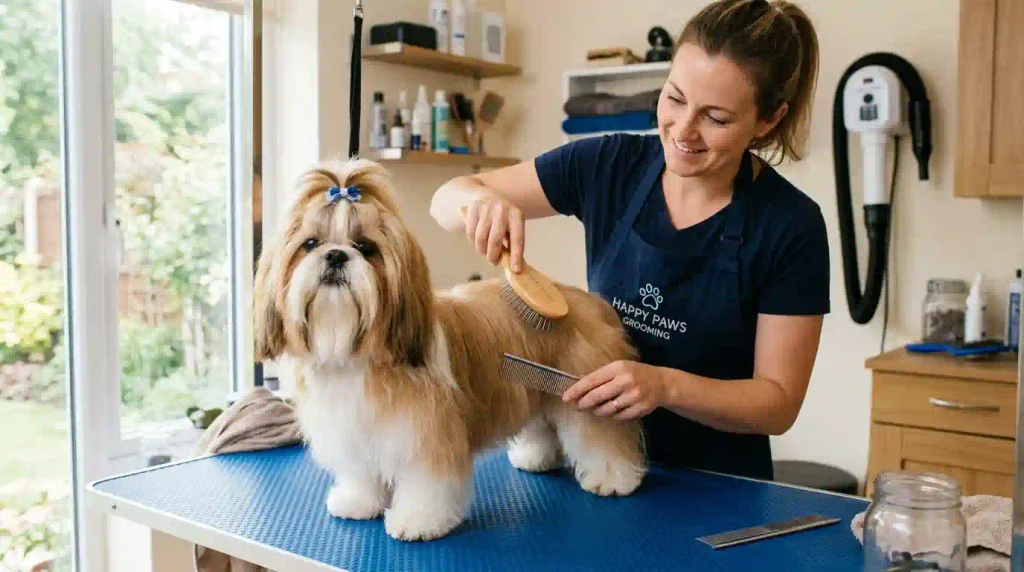
Shih Tzus have a long double coat when maintained naturally. Regular grooming is important because tangles can develop into uncomfortable mats, particularly around friction-prone areas. AKC guidance notes that long coats require frequent brushing and that the coat can also be kept in a shorter pet trim.
Brushing, Bathing, Trimming, and Preventing Mats
For a long coat, establish a consistent grooming routine.
Pay particular attention to:
- Behind the ears
- Under the front legs
- Chest
- Belly
- Inside the legs
- Tail area
- Areas beneath collars or harnesses
Brush carefully through the coat rather than only smoothing the surface. A comb can help confirm that hidden tangles have been removed.
Bathing frequency depends on coat length, activity, lifestyle, and how quickly the dog becomes dirty. Use products formulated for dogs and rinse thoroughly because residue may irritate the skin.
A shorter puppy or pet trim can make everyday maintenance easier for owners who do not want to maintain a full-length coat.
The grooming needs are broadly similar whether you own a gold-and-white dog, white shih tzu, or darker-colored Shih Tzu.
Keeping Light Areas Clean and Noticing Coat or Skin Changes
White hair shows dirt and staining more easily than gold hair.
The muzzle can become stained by food or moisture, while the paws and lower legs collect dirt from outdoor surfaces. Keep these areas dry and clean rather than repeatedly applying harsh whitening products.
The area around the eyes may also develop visible discoloration on white facial hair. Gentle routine cleaning is preferable to aggressively scrubbing the coat.
During grooming, check the skin beneath both colors of hair. Watch for:
- Redness
- Flaking
- Bald patches
- Persistent scratching
- Unusual odor
- Sores
- Sudden coat thinning
These are health observations, not normal color characteristics.
A gold-and-white dog does not need fundamentally different healthcare because of its appearance. Coat color is only one feature among the many characteristics owners should understand about the breed.
What Should You Ask Before Choosing a Puppy?
Color can understandably influence which puppy first catches your attention, but it should not be the main criterion for choosing a dog.
Before purchasing or adopting a gold white Shih Tzu, evaluate the puppy as a whole.
Health, Temperament, Records, and Breeder Practices
Ask about the health history of the puppy and its parents. Request veterinary records and information about the breeder’s health-screening practices rather than accepting statements such as “our dogs have never had problems.”
Observe temperament too.
Does the puppy appear appropriately curious and responsive? How does it react to people and ordinary household activity? How have the puppies been socialized?
Ask to see where they are raised when possible. Responsible breeding involves considerably more than producing attractive coat colors.
You can also learn about the breed’s background through the shih tzu origin guide and compare common labels in our guide to types of shih tzu.
Do not assume that a dramatic color label makes a puppy healthier, better-tempered, more valuable, or more authentically Shih Tzu.
A responsible choice prioritizes:
Health first. Temperament second. Breeding practices and suitability third. Appearance after those essentials.
Gold-and-White Shih Tzu FAQs
Is gold and white the same as red and white?
No. Gold is usually lighter and more yellow or honey-toned, while red is generally deeper and warmer; compare with a red and white shih tzu.
Does coat color predict health or temperament?
No. A gold-and-white coat by itself does not reliably predict a Shih Tzu’s health or temperament.
Are gold and white Shih Tzus rare?
Gold and white should not automatically be treated as a rare or premium color, and the AKC considers Shih Tzu colors and markings equally.
Do gold and white Shih Tzu puppies get lighter?
Many can lighten as the puppy coat changes into the adult coat, although the degree of fading varies between individual dogs.
Can a gold-and-white Shih Tzu have a black mask?
Yes. Dark facial hair or a black mask can occur with a gold coat; see the black mask gold shih tzu guide.
Is a mostly white gold Shih Tzu albino?
No. Extensive white coat does not automatically mean albinism; an albino shih tzu involves pigmentation characteristics beyond simply having white hair.
Is gold the same as liver?
No. Gold describes coat appearance, while liver refers primarily to brown eumelanin pigmentation visible especially on structures such as the nose and eye rims.
Can gold and white look like brown and white?
Yes. Dark gold, indoor lighting, photography, and coat age can make the colors appear similar, so compare pigment and examine the dog in daylight.
Does a gold-and-white Shih Tzu need special shampoo?
Not because of its color alone; use a gentle dog-appropriate product suited to the individual coat and skin.
How often should a gold-and-white Shih Tzu be brushed?
A long coat needs frequent—and often daily—attention to prevent tangles and mats, while a short pet trim is generally easier to maintain.
Final Thoughts
A gold and white Shih Tzu is best identified by looking at the entire dog rather than judging one photograph or one patch of hair. Observe the warm gold coat, distribution of white markings, nose and facial pigmentation, puppy-to-adult color changes, and any black tipping or additional patterns.
Gold-and-white coloring is acceptable in the breed, but color should never outweigh health, temperament, and responsible breeding when choosing a puppy. Once your Shih Tzu is home, consistent brushing, sensible bathing, regular trimming when needed, and attention to the lighter areas will help keep the coat comfortable and attractive.
If you want to compare this combination with other shades before identifying your dog, start with our complete guide to shih tzu colors and explore the individual color guides from there.