White Shih Tzu: Coat Color, Identification, and Care
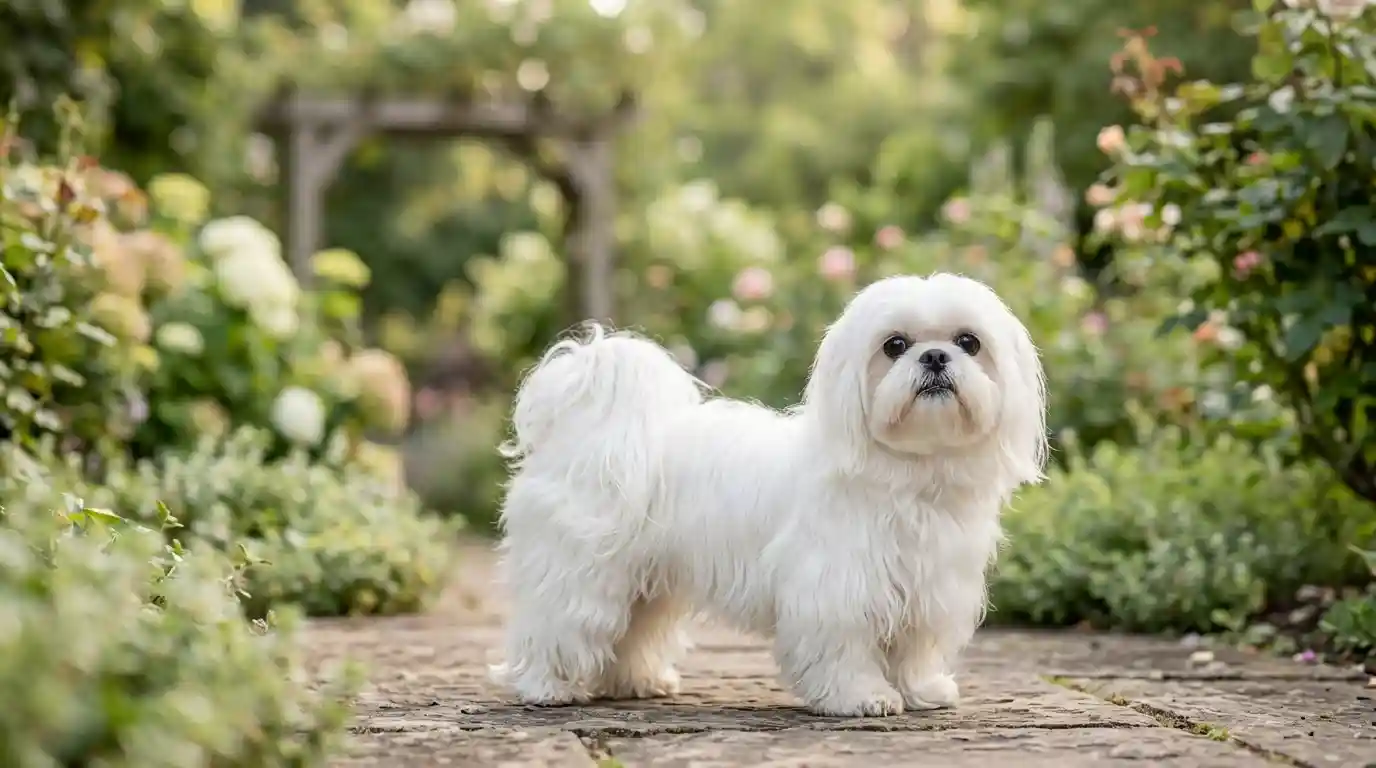
A white Shih Tzu may be completely white or simply have white as the dominant part of a multi-color coat. Some dogs appear snowy white from head to tail, while others have small patches of gold, brindle, black, liver, blue-gray, or another shade around the ears, face, or body. White should also be separated from pigmentation: an ordinarily pigmented white Shih Tzu typically has a black nose, dark eye rims, and dark eyes, while liver- or blue-pigmented dogs may have different pigment points even when much of the hair is white. A white coat is not the same thing as albinism, and “pure white” describes appearance rather than proving that a dog is purebred. White hair can also make tear staining, saliva discoloration, and everyday dirt more visible, so coat maintenance often feels more cosmetic even though the underlying grooming needs are the same as other Shih Tzu colors. This guide explains how to identify a white coat, understand markings and pigmentation, evaluate rarity and health claims, follow puppy color changes, and keep light hair clean without using harsh whitening methods.
Table of Contents
- What does “white Shih Tzu” mean?
- How to describe the coat and pigmentation accurately
- Are white Shih Tzus rare?
- Can a Shih Tzu puppy’s coat color change?
- Do white Shih Tzus have color-specific health risks?
- How to keep a white Shih Tzu’s coat clean
- White Shih Tzu FAQs
- Final thoughts
What Does “White Shih Tzu” Mean?
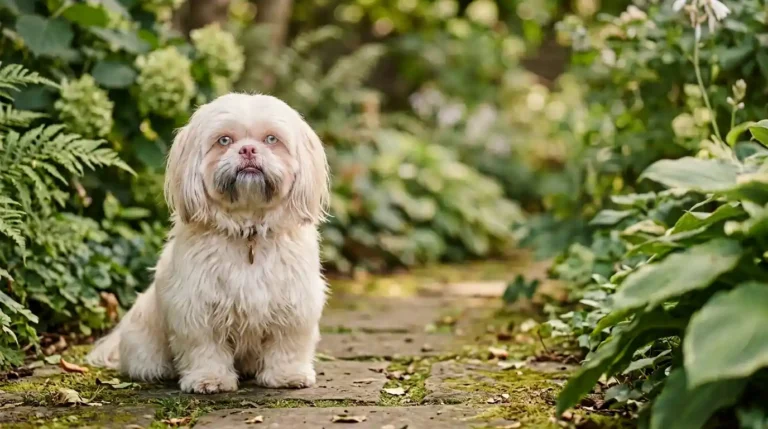
A white Shih Tzu is simply a Shih Tzu whose coat is completely or predominantly white.
The phrase may refer to:
- An all-white Shih Tzu
- A solid white Shih Tzu
- A mostly white Shih Tzu with tiny colored markings
- A white-based dog with larger colored patches
- A puppy that currently looks white but may develop more visible contrast as the coat matures
It does not describe a separate breed.
White is one appearance within the broader range of Shih Tzu colors.
Solid White Versus Mostly White With Markings
A solid white Shih Tzu appears white across nearly the entire visible coat.
Depending on the individual dog, you may see no obvious secondary color at all or only tiny areas of another color hidden around:
- Ear roots
- Tail
- Skin beneath the coat
- Facial hair
- Back
A mostly white dog, by comparison, may have visible colored sections.
Common examples include:
- White with gold ears
- White with black facial patches
- White with brindle areas
- White with silver patches
- White with red markings
- White with liver-pigmented colored areas
The amount of secondary color can range from a tiny spot to large patches covering much of the head or back.
Does “Pure White” Mean Purebred?
No.
The phrase pure white Shih Tzu normally means the coat looks completely white.
It does not prove ancestry.
A dog’s coat can look perfectly white whether the dog is:
- Purebred
- Mixed
- Registered
- Unregistered
If ancestry matters, use pedigree and parentage information rather than color.
Our purebred Shih Tzu guide explains that distinction in more detail.
White Is Not the Same as Albino
A white dog and an albino dog are not automatically the same thing.
A typical white Shih Tzu can still have normal dark pigmentation, including:
- Black nose
- Black lips
- Black eye rims
- Dark eyes
- Dark paw pads
True albinism involves a more fundamental reduction or absence of pigment production and may produce very pale or pinkish pigmentation and light-sensitive eyes.
If you are comparing these appearances, see our separate guide to the albino Shih Tzu.

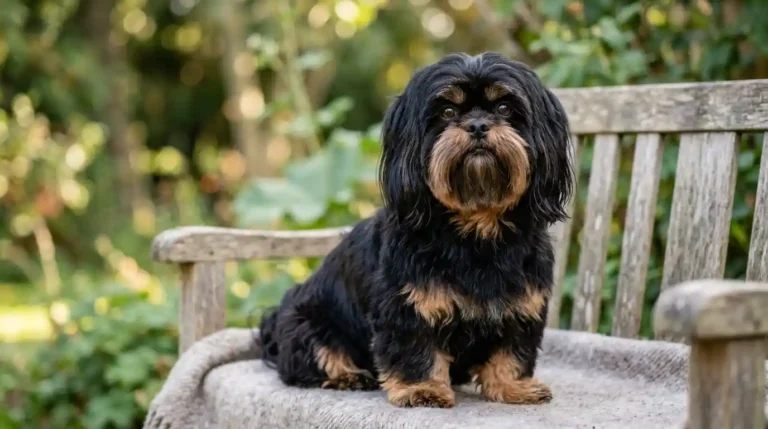
White Alongside Brindle, Liver, Blue, and Other Colors
White can appear alongside almost any of the breed’s other coat colors or patterns.
White and Black
A black and white Shih Tzu can have anything from a mostly black coat with white markings to a mostly white body with black patches.
The contrast is usually strong.
White and Gold
A gold and white Shih Tzu typically combines bright white areas with warm honey, yellow-gold, or golden markings.
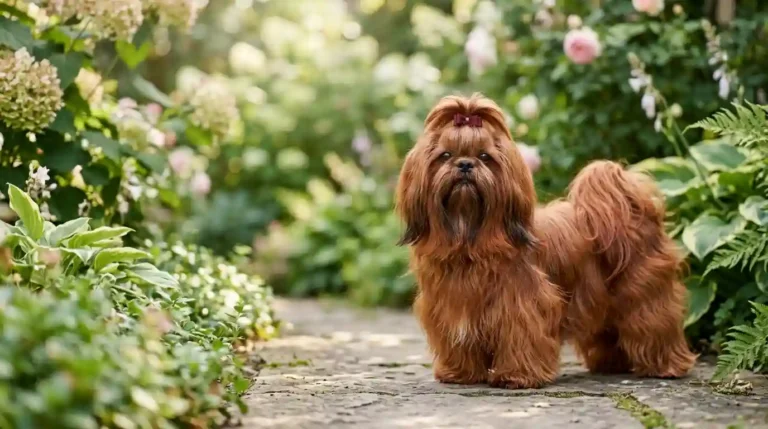
White and Red
A red and white Shih Tzu adds copper, auburn, orange-red, or reddish-gold areas.
White and Brindle
A brindle and white Shih Tzu has white areas alongside patterned colored hair containing darker and lighter streaks.
Brindle should not be mistaken for simple brown or tan patches.
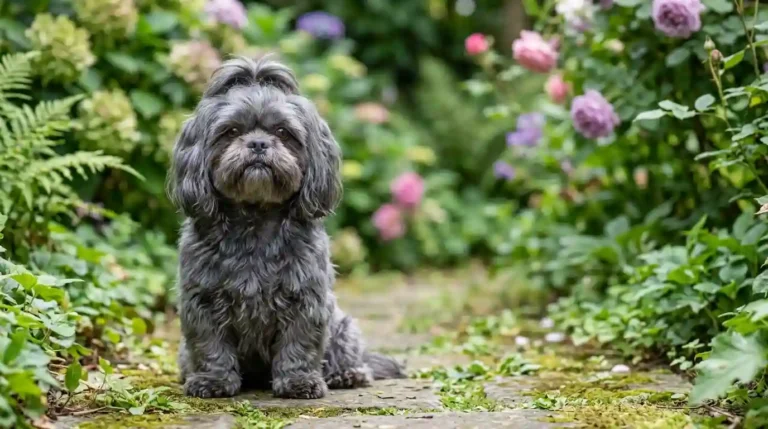
White and Silver
A silver and white Shih Tzu may look extremely pale because light silver can blend visually with white.
Natural daylight helps reveal the cool silver tone.
White and Blue
A blue and white Shih Tzu can look gray and white, but blue pigmentation involves more than coat shade.
Nose and eye-rim pigmentation help provide context.
White and Liver
A liver and white Shih Tzu combines white hair with liver pigmentation.
A dog may have extensive white coat while its nose, lips, and eye rims remain brown rather than black.
The skin pigmentation matters more than simply seeing brown hair.
What About Parti-Color?
A dog with large areas of white and distinct colored patches may be described as parti-color.
Parti is a pattern description rather than another breed type.
Piebald or random white spotting in dogs can produce variable amounts of white, and the borders may be irregular or asymmetrical.
That means two littermates can have very different-looking white patterns.
How to Describe the Coat and Pigmentation Accurately
When identifying a white Shih Tzu, separate three questions:
- What color is the hair?
- What additional colors or patterns are present?
- What color are the nose, lips, and eye rims?
This prevents common identification mistakes.
What the Shih Tzu Standard Says About Color
The Shih Tzu breed standard does not favor one coat color over another.
It states that all colors and markings are permissible and are considered equally.
The current American Kennel Club Shih Tzu breed page also lists White among Shih Tzu registration colors.
So an all-white or predominantly white coat is not inherently better, worse, more correct, or less correct than another permitted coat based on color alone.
A white dog still needs to meet the same general breed expectations concerning:
- Structure
- Movement
- Expression
- Temperament
- Coat
- Overall balance
Color does not determine quality by itself.
What Nose and Eye-Rim Color Can—and Cannot—Tell You
The standard expects:
Black nose, lips, and eye rims on ordinary colors
with exceptions for:
- Liver pigmentation on liver-pigmented dogs
- Blue pigmentation on blue-pigmented dogs
This makes pigment points useful.
White Coat + Black Nose
A white dog with:
- Black nose
- Black lips
- Black eye rims
- Dark eyes
has ordinary black-based skin pigmentation even though its visible hair is white.
This is very different from albinism.
White Coat + Liver Nose
If a white or mostly white Shih Tzu has:
- Brown/liver nose
- Brown eye rims
- Brown lip pigmentation
the dog may be liver-pigmented.
The white hair itself does not become “liver”; the skin pigment provides the important clue.
White Coat + Blue Nose
A slate-gray or blue-gray nose and matching eye-rim pigmentation may indicate blue pigmentation.
Again, hair color alone cannot prove that.
What About Paw Pads?
Paw-pad pigmentation can provide supporting context.
Ordinarily pigmented dogs often have dark pads, while liver- or blue-pigmented dogs may show different shades.
But paw pads should not be used alone to classify the entire coat.
Dark Eyes Matter Too
The Shih Tzu standard calls for very dark eyes, with lighter eyes permitted on liver- and blue-pigmented dogs.
A white coat does not normally mean the dog should have pale eyes.
This is another reason a white Shih Tzu with dark eyes and black pigment points should not be confused with an albino dog.

Are White Shih Tzus Rare? What the Evidence Can Support
You may see advertisements describing:
- Rare white Shih Tzu
- Rare pure white Shih Tzu
- Ultra-rare snow-white Shih Tzu
- Rare solid white puppy
These phrases should be treated cautiously.
There is no comprehensive worldwide census showing exactly what percentage of Shih Tzus are solid white.
Without a defined population and reliable numbers, it is difficult to say precisely how rare an all-white Shih Tzu is.
Solid White May Be Less Common Than White Markings
It is reasonable to distinguish:
white appearing somewhere in the coat
from:
a dog appearing entirely white
White markings are common across many Shih Tzu color combinations.
A fully white-looking dog may be encountered less often in some breeding populations because many Shih Tzus carry visible secondary colors.
But “less common” is not the same as proving a universal rarity ranking.
White Genetics Are More Complex Than One Gene
Another common claim is:
“Two recessive white genes create a pure white Shih Tzu.”
That explanation is too simple to apply universally.
White coat appearance in dogs can arise through different genetic mechanisms.
For example, MITF-associated piebald or white spotting can produce white areas of varying extent in many dog breeds.
Other dogs can look cream-to-white because red/yellow pigment is expressed at extremely low intensity.
Therefore, an all-white appearance should not automatically be assigned to one single “piebald gene” or one simple recessive mechanism without genetic evidence for that dog and breed population.
Does White Mean More Valuable?
No objective breed-quality rule makes a white Shih Tzu more valuable because of color alone.
Market prices can still differ according to:
- Demand
- Breeder
- Pedigree
- Location
- Health screening
- Veterinary care
- Marketing
A higher price for “rare pure white” is a seller’s pricing decision, not proof of better health or superior breed quality.
Can a Shih Tzu Puppy’s Coat Color Change?
Yes.
Shih Tzus are well known for visible coat changes as puppies mature.
A white puppy may remain predominantly white, but any secondary colored areas can change considerably.
For example:
- Gold markings may become pale cream.
- Red markings may soften toward gold.
- Black tipping may diminish.
- Brindle may become less obvious.
- Silver markings may become much lighter.
- Dark ears may fade enough to blend with white.
Can a Colored Puppy Become Nearly White?
Some puppies with very pale gold, cream, or silver areas can become so light that they appear nearly white as adults.
That does not mean every colored puppy will become white.
The degree of coat-color change varies widely.
Can a White Puppy Develop Dark Color Later?
A truly white patch generally does not suddenly develop heavy pigment simply because the puppy grows.
However, existing tiny colored areas can become more noticeable as coat length changes, and hair growth can alter the visual boundary between white and colored areas.
Photos can also hide small markings.
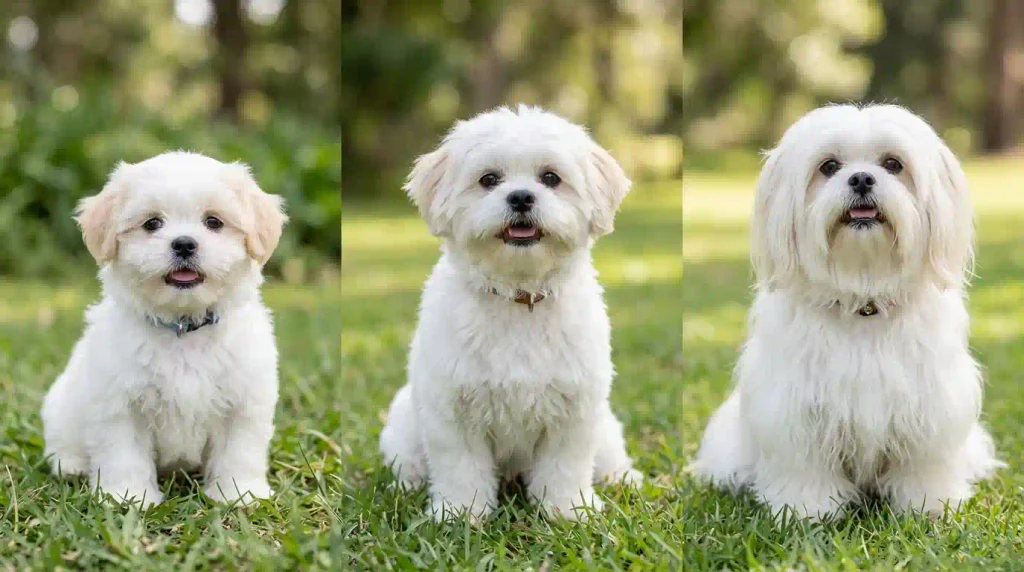
Puppy Coat Versus Adult Coat
Many Shih Tzus undergo a noticeable puppy-to-adult coat transition around the end of the first year.
Longer adult hair can change the visual proportions of markings.
A small colored ear patch may look different when the hair becomes long.
A white blaze may appear broader as facial hair develops.
This means an early puppy photograph should not be treated as a guaranteed picture of the final adult coat.
Do White Shih Tzus Have Color-Specific Health Risks?
A white coat by itself should not be treated as a diagnosis.
A white Shih Tzu can experience the same general health concerns seen elsewhere in the breed.
There is no good evidence that every white Shih Tzu is inherently unhealthy simply because of hair color.
The two areas that deserve more careful discussion are pigment-associated congenital deafness in dogs generally and the visibility of eye discharge on light hair.
What Is Known About Pigmentation and Hearing
Congenital deafness is associated with certain white-pigmentation patterns in some dog populations.
The biological explanation involves pigment-producing cells, or melanocytes, which also play a role in normal inner-ear development.
This association is particularly well documented in breeds with certain piebald, extreme-white, or merle patterns.
However, that does not mean:
white Shih Tzu = deaf dog
Nor does current evidence establish that a white Shih Tzu has a unique breed-specific deafness rate simply because it is white.
That distinction is important.
If you are concerned about hearing, the dog’s behavior alone may not detect deafness in one ear.
A BAER hearing test is the objective method commonly used to assess congenital hearing function.
Possible reasons to discuss testing with a veterinarian include:
- Puppy does not respond normally to sound
- Breeder reports hearing concerns
- Unusual startle responses
- Difficulty locating sound
- Concern about congenital deafness
Do not assume normal hearing or deafness from coat color alone.
White Is Not Albinism
True albinism can carry separate pigment-related concerns.
That should not be generalized to normally pigmented white Shih Tzus.
A white dog with a black nose, black eye rims, dark eyes, and normal skin pigmentation is demonstrating pigment even though its hair looks white.
When Tear Staining or Eye Discharge Needs Veterinary Attention
Tear staining is especially visible on a white Shih Tzu because reddish-brown discoloration contrasts strongly with pale hair.
The staining itself comes from pigments present in tears.
The important question is why so many tears are reaching the coat.
Possible contributors can include:
- Facial anatomy
- Hair rubbing near the eye
- Poor tear drainage
- Allergies
- Irritation
- Eyelid abnormalities
- Corneal injury
- Eye infection
- Other eye disease
Many cases of mild staining are mainly cosmetic.
But staining should not distract from signs of actual discomfort.
Contact a veterinarian if you notice:
- Squinting
- Persistent redness
- Yellow or green discharge
- Cloudy eye
- Swelling
- Strong odor
- Repeated pawing at the eye
- Sudden increase in tearing
- One eye behaving differently from the other
A Shih Tzu’s large, prominent eyes deserve careful attention regardless of coat color.

How to Keep a White Shih Tzu’s Coat Clean
White does not fundamentally change Shih Tzu grooming needs.
It simply makes dirt and discoloration easier to see.
The breed’s long double coat remains the main grooming consideration.
Brushing, Bathing, and Choosing a Haircut
A long-coated Shih Tzu needs frequent brushing to prevent matting.
When kept in a full coat, daily brushing is often appropriate.
Focus on:
- Behind ears
- Neck
- Armpits
- Chest
- Belly
- Inner legs
- Tail
- Areas beneath a collar or harness
Brush in sections so you reach the coat near the skin.
Running a comb through afterward can help locate hidden tangles.
Bathing a White Coat
Bathing frequency should reflect:
- Coat length
- Activity
- Skin condition
- Environment
- Grooming schedule
Use dog-formulated shampoo rather than human shampoo or household whitening products.
A conditioner or suitable leave-in spray can help reduce tangling in long hair.
For daily dirt between baths, dog-safe grooming wipes may be convenient for:
- Paws
- Beard
- Lower legs
Avoid wipes containing ingredients inappropriate for use close to the eyes.
Should You Use Whitening Shampoo?
Products marketed for white coats may improve brightness, but “whitening” should not mean bleaching.
Avoid:
- Household bleach
- Peroxide experiments
- Human hair bleach
- Harsh detergents
- Products that irritate the skin
The goal is a healthy white coat, not unnaturally bright hair at the expense of skin comfort.
Puppy Cut
A puppy cut keeps the body hair relatively short and is one of the most practical styles for companion Shih Tzus.
Benefits can include:
- Easier brushing
- Faster bathing
- Less debris caught in the coat
- Easier paw cleaning
A short coat still needs regular grooming.
Teddy Bear Cut
A teddy bear cut generally leaves the face rounded and fluffy while shortening the body coat.
Exact styling varies between groomers.
It can make a white Shih Tzu look particularly soft and rounded, but it remains a haircut—not a different coat type.
Lion Cut
A lion cut leaves selected areas longer and clips other sections shorter.
It is less representative of the breed’s natural show presentation and should be discussed with a professional groomer before choosing it.
Top Knot
If facial hair is kept long, a top knot helps hold hair away from the eyes.
Keep bands comfortable and avoid pulling the hair too tightly.
For basic breed characteristics beyond grooming, see our Shih Tzu facts and shih tzu Breed Information resources.
Cleaning the Face and Reducing Visible Stains
White facial hair benefits from gentle, regular cleaning.
A practical routine is:
- Check both eyes each day.
- Remove ordinary debris gently.
- Keep long facial hair away from the eyes.
- Keep the beard reasonably dry after drinking.
- Wash dirty facial hair during normal bathing.
- Monitor whether staining suddenly becomes worse.
Do not repeatedly scrub delicate skin under the eyes.
Aggressive cleaning can create irritation that makes the area look worse.
Should Facial Hair Be Trimmed?
Pet owners may choose to keep hair near the eyes shorter.
If trimming near the eyes, use extreme care or ask an experienced groomer.
Moving scissors near a dog’s eye creates unnecessary risk if the dog suddenly moves.
Food and Saliva Stains
White beard hair can also discolor from:
- Wet food
- Saliva
- Water
- Chewing
- Environmental dirt
Keeping the beard clean and drying it gently can improve appearance.
Again, persistent odor, skin irritation, or excessive licking deserves investigation rather than cosmetic cleaning alone.
Nail and Paw Care
White legs and paws show mud quickly, but nail and paw care should focus on health rather than appearance.
Check paws for:
- Mats between toes
- Dirt
- Small foreign objects
- Redness
- Cracked pads
- Overgrown nails
Trim nails regularly.
Long nails can alter how a dog stands and walks.
After muddy walks, rinse or wipe the paws and dry them well.
Do not assume paw licking is simply because white hair looks stained.
Persistent licking can indicate:
- Irritation
- Allergies
- Infection
- Pain
- Foreign material
A veterinarian can investigate if the behavior continues.
White Shih Tzu FAQs
What is a white Shih Tzu?
A white Shih Tzu is a Shih Tzu whose coat is completely or predominantly white.
Can Shih Tzus be solid white?
Yes, some Shih Tzus can appear solid or nearly completely white.
Is white an accepted Shih Tzu color?
Yes, white is permitted within the breed and all colors and markings are considered equally under the U.S. standard.
Is a full white Shih Tzu a separate variety?
No, white coat color does not create a separate Shih Tzu breed or variety.
Is a pure white Shih Tzu automatically purebred?
No; “pure white” describes coat appearance, not documented ancestry.
Are white Shih Tzus albino?
No. Most white Shih Tzus are normally pigmented dogs rather than albinos.
What color nose should a white Shih Tzu have?
An ordinarily pigmented white Shih Tzu generally has a black nose.
Can a white Shih Tzu have a liver nose?
A liver-pigmented Shih Tzu can have brown nose, lip, and eye-rim pigmentation even when much of its coat is white.
Can a white Shih Tzu have a blue nose?
Blue-pigmented dogs may have slate or blue-gray pigmentation, though coat appearance alone cannot confirm blue.
What color eyes should a white Shih Tzu have?
Ordinarily pigmented Shih Tzus should have very dark eyes; lighter eyes may occur with liver or blue pigmentation.
Can a white Shih Tzu have black markings?
Yes, white and black can occur together in many distributions.
Can a white Shih Tzu have brindle markings?
Yes, brindle may occur alongside white.
Can a white Shih Tzu have gold markings?
Yes, gold and white is a common recognizable combination.
Can a white Shih Tzu puppy change color?
Yes, secondary colored areas can become lighter or look different as the adult coat develops.
Can a colored Shih Tzu become nearly white?
Some pale gold, cream, silver, or other markings can lighten substantially, making an adult dog look much whiter.
Are white Shih Tzus rare?
There is no reliable global dataset establishing an exact frequency for solid white Shih Tzus.
Is a solid white Shih Tzu the rarest color?
There is insufficient population evidence to support a universal rarest-color ranking.
Are white Shih Tzus more expensive?
Some sellers charge more for certain appearances, but white color alone does not prove greater quality or value.
Are white Shih Tzus deaf?
No. White coat color alone does not mean a Shih Tzu is deaf.
Can white pigmentation be associated with deafness in dogs?
Yes, certain white-pigmentation patterns are associated with congenital deafness in some dog breeds, but that does not establish a white-Shih-Tzu-specific risk.
How can a dog’s hearing be tested?
BAER testing can objectively assess hearing function.
Why does my white Shih Tzu have brown tear stains?
Tear pigments become highly visible on white hair, and excessive tearing or reduced drainage can make staining more noticeable.
Are tear stains always an eye infection?
No. They can have several causes, so persistent or abnormal discharge should be evaluated properly.
How often should a white Shih Tzu be brushed?
A long coat generally needs very frequent brushing, often daily, to prevent matting.
Does white hair require special shampoo?
Not necessarily; use a gentle dog-appropriate shampoo and avoid harsh bleaching products.
Is a puppy cut good for a white Shih Tzu?
Yes, a puppy cut can make routine maintenance easier.
Does white coat color change shedding?
Color itself does not determine shedding characteristics.
Are white Shih Tzus hypoallergenic?
Color does not determine allergen production; see our guide to whether the Shih Tzu is hypoallergenic.
Does white coat color affect temperament?
There is no reliable evidence that white hair determines Shih Tzu personality.
Does white color change lifespan?
There is no established separate lifespan for white Shih Tzus based simply on coat color.
Final Thoughts
A white Shih Tzu may be completely white or predominantly white with small or large secondary-color markings. The key to accurate identification is to separate hair color from pigmentation: a normally pigmented white dog can have a black nose, dark eye rims, dark eyes, and dark paw pads, while liver or blue pigmentation follows different rules.
White is an accepted Shih Tzu color and does not create a separate breed, prove purebred status, or automatically imply albinism or deafness. It does make tear staining and everyday dirt easier to see, so gentle face cleaning, frequent brushing, appropriate bathing, and regular paw care are especially useful.
For additional comparisons, explore our complete Shih Tzu colors guide and Shih Tzu facts resource.