Tan Shih Tzu: Coat Color, Markings, and Care
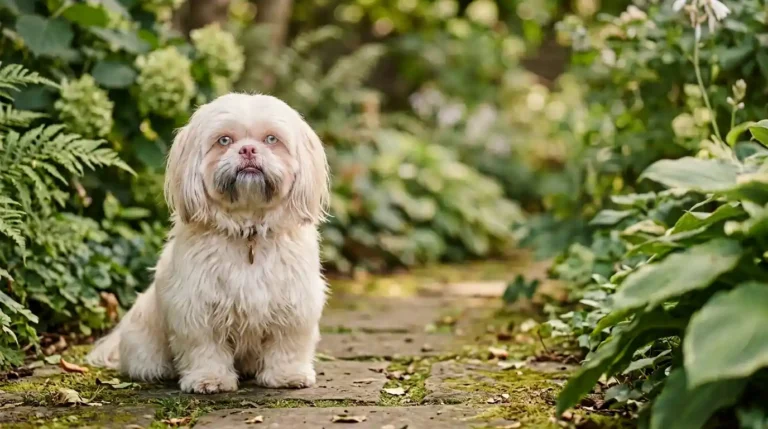
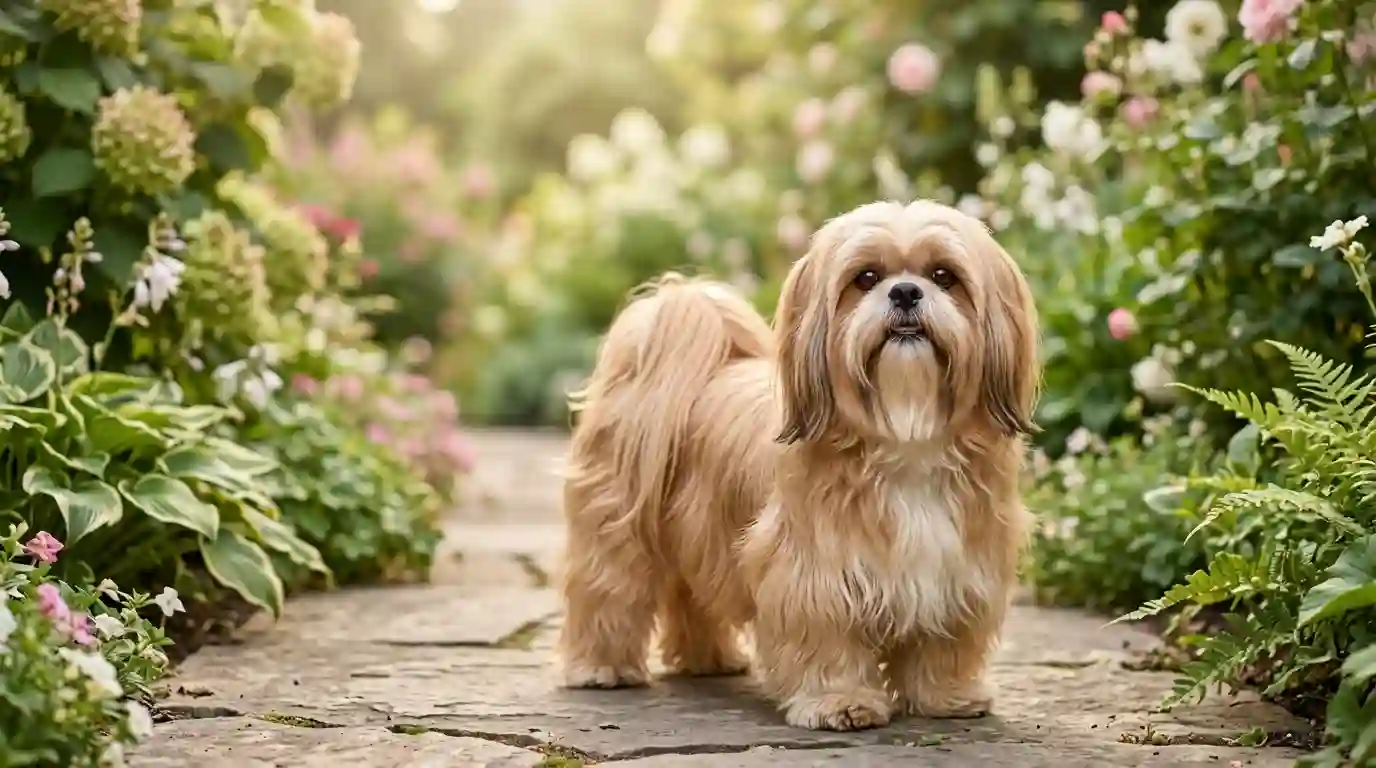
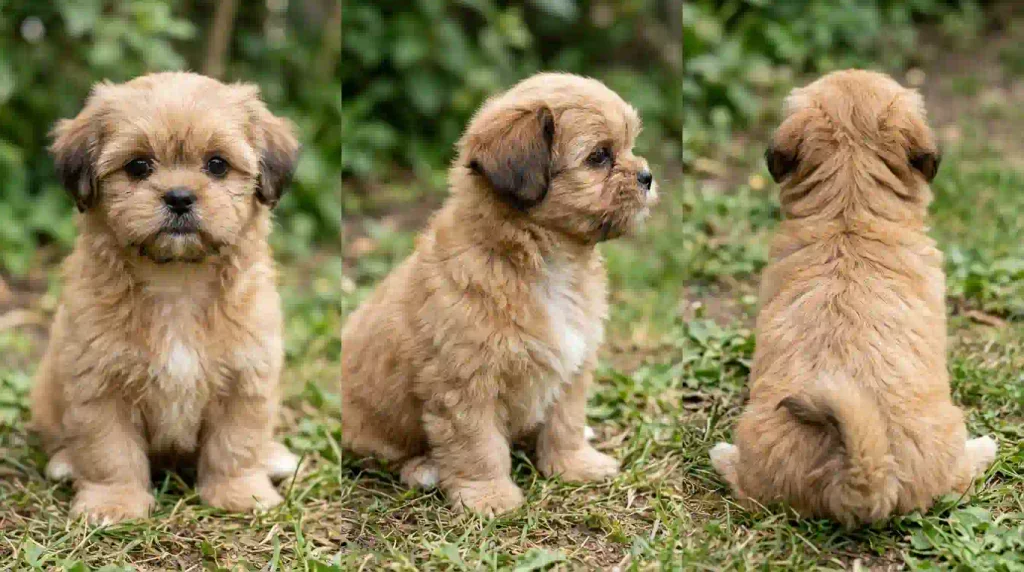
A tan Shih Tzu usually has a warm beige, sandy, caramel, biscuit, or light-brown-looking coat, but “tan” is often a visual description rather than a standalone AKC Shih Tzu color label. That distinction matters because tan can overlap with gold, cream, light brown, or faded red, especially in puppy photos. Some dogs are predominantly tan-looking, while others have only tan markings over black, white, gold, or another base coat. To describe the coat accurately, look at the overall shade, where the tan appears, whether white or black markings are present, and the dog’s nose, lips, and eye-rim pigmentation. Puppy coats can also change considerably as the adult coat grows, so an eight-week-old tan puppy may look lighter, more golden, or more cream-colored later. This guide explains what a tan coat looks like, how to separate tan from gold, red, and cream, how tan markings differ from a two-color coat, what changes may happen with age, and how to care for the Shih Tzu’s long double coat.
Table of Contents
- What does a tan Shih Tzu look like?
- Tan coat versus tan markings
- Can a tan Shih Tzu’s coat change as it matures?
- Grooming and caring for the coat
- What to confirm when identifying a puppy’s color
- Tan Shih Tzu FAQs
- Final thoughts
What Does a Tan Shih Tzu Look Like?
A tan Shih Tzu usually appears warmer than cream but lighter and softer than a deep brown or red Shih Tzu.
The tan coat may resemble:
- Sand
- Biscuit
- Beige
- Caramel
- Light brown
- Pale honey
- Wheat
- Golden tan
- Soft fawn-like beige
There is no single exact shade that every owner uses for the word “tan.”
One person may call a pale golden dog tan, while another describes the same dog as gold or cream.
This is why identifying the coat from one photograph can be difficult.
If you are comparing the full range of Shih Tzu colors, tan is best understood as an informal appearance term that sits close to several warm coat descriptions.
Common Tan Shades
A tan-looking Shih Tzu may fall anywhere between a very pale beige and a richer caramel color.
Light Tan
Light tan can look almost cream in bright daylight.
These dogs may have:
- Pale beige body
- Slightly darker ears
- Black nose
- Dark eye rims
- Creamy facial hair
A very pale tan dog may resemble a blonde Shih Tzu or a lightly colored gold dog.
Medium Tan
Medium tan is easier to distinguish because the warm brown-beige color is more obvious.
It may appear:
- Sandy
- Caramel
- Biscuit-colored
- Light golden brown
A golden brown Shih Tzu may visually overlap with this range.
Dark Tan
Dark tan approaches light brown, copper, or darker gold.
Depending on lighting, a dark tan puppy can sometimes be mistaken for:
- Brown
- Red
- Gold
- Sable
- Light brindle
This is one reason natural daylight is far more useful than warm indoor lighting.
Tan Versus Gold, Red, and Cream
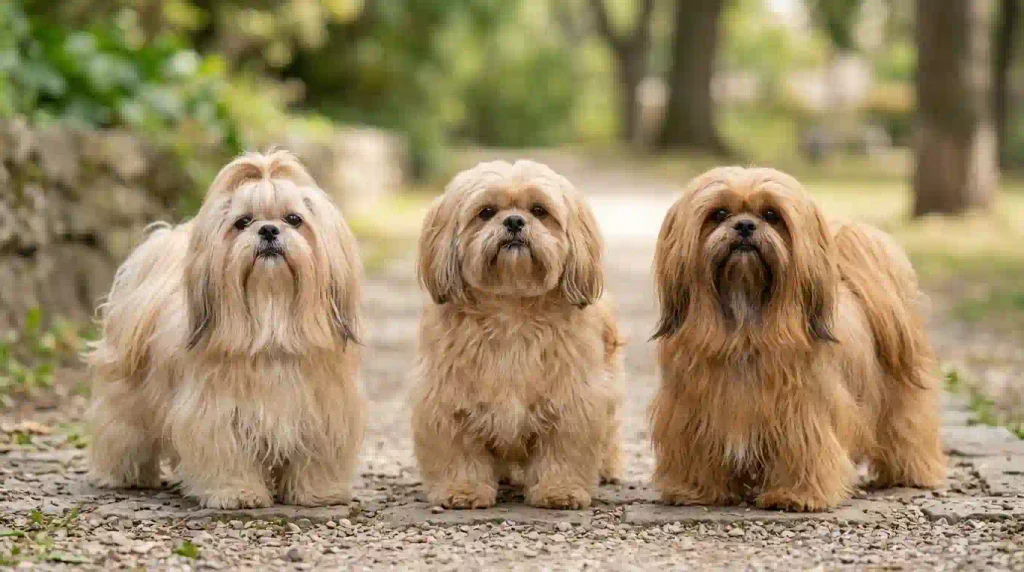
These warm colors overlap visually, but there are useful descriptive differences.
| Description | Typical Appearance |
| Tan | Beige, sandy, caramel, light brown |
| Gold | Honey, yellow-gold, richer golden tone |
| Red | Copper, orange-red, auburn |
| Cream | Very pale warm ivory or beige |
| Brown | Deeper chestnut or chocolate-looking shade |
Tan vs. Gold
Gold usually has a stronger yellow or honey tone than tan.
A dog described as gold may look:
- Honey-colored
- Golden yellow
- Warm amber
- Rich wheat-gold
Tan often looks slightly browner or more neutral.
However, a pale gold Shih Tzu can easily be called tan by an owner.
That is not necessarily wrong—it simply shows why casual visual descriptions and registration labels do not always match perfectly.
A gold and white Shih Tzu may therefore resemble what someone else calls tan and white.
Tan vs. Red
A red Shih Tzu usually has more intense warm pigment.
Look for:
- Copper
- Burnt orange
- Auburn
- Mahogany-red
- Rich reddish gold
Tan is generally softer and less saturated.
A red puppy may also lighten as it matures, which can make an adult red dog appear closer to gold or tan.
Tan vs. Cream
Cream is usually paler.
A cream-colored dog may appear:
- Ivory
- Pale beige
- Very light gold
- Warm off-white
A light tan dog should usually retain more visible beige or sandy pigment.
Tan vs. Brown
A brown Shih Tzu generally appears darker and richer than tan.
Brown may include:
- Chestnut
- Chocolate
- Medium brown
- Dark caramel
Do not assume a brown-looking or tan-looking coat automatically means liver pigmentation.
A true liver Shih Tzu is identified largely through brown-based pigmentation of the nose, lips, and eye rims.
Tan Coat Versus Tan Markings
A Shih Tzu can look tan in two very different ways.
A predominantly tan coat: Tan covers much of the body.
Tan markings: Tan appears only in selected areas over another base color.
That distinction is important because the current AKC Shih Tzu color list does not use Tan as a standalone registration color, but it does list Tan Markings.
So a seller saying “tan Shih Tzu” may be describing what the dog looks like rather than quoting its formal registration color.
How Markings and Two-Color Coats Differ
Suppose a dog is mostly black with small tan areas over the eyebrows, muzzle, chest, or legs.
That is different from a predominantly tan dog.
A black and tan Shih Tzu may have:
- Black body
- Tan eyebrows
- Tan muzzle
- Tan chest
- Tan legs
The tan is a marking rather than the dominant coat color.
Now consider a dog with a light tan back, tan ears, tan sides, and only small white areas on the chest.
That dog may reasonably be described visually as tan, even if its registration paperwork uses a different formal category.
Two-Color Tan and White Appearance
A tan and white Shih Tzu may have substantial amounts of both colors.
The white may appear on the:
- Face
- Muzzle
- Chest
- Neck
- Belly
- Legs
- Paws
- Tail tip
while the tan covers the:
- Ears
- Back
- Shoulders
- Sides
- Tail
If white covers most of the dog, owners may reverse the description and say “white and tan.”
The color order is usually descriptive rather than a strict genetic classification.
Parti-Color Appearance
When large white areas are combined with another color, owners sometimes use the term parti-color.
A parti-color coat may have:
- White blaze
- White collar
- White chest
- White body sections
- Large tan or gold patches
Parti-color describes distribution, not another Shih Tzu breed.
This is why coat descriptions should not be confused with different types of Shih Tzu.
Brindle Can Look Tan From a Distance
A brindle Shih Tzu may contain warm tan, gold, red, or brown-looking sections mixed with darker hairs.
From a distance, a lightly brindled dog can appear tan.
Look closely for:
- Dark streaks
- Dark tipping
- Intermixed dark hairs
- Repeating bands
A black brindle Shih Tzu can look much darker, while red brindle Shih Tzu coats may overlap more with warm tan and red shades.
When a Black Mask or White Markings Are Also Present
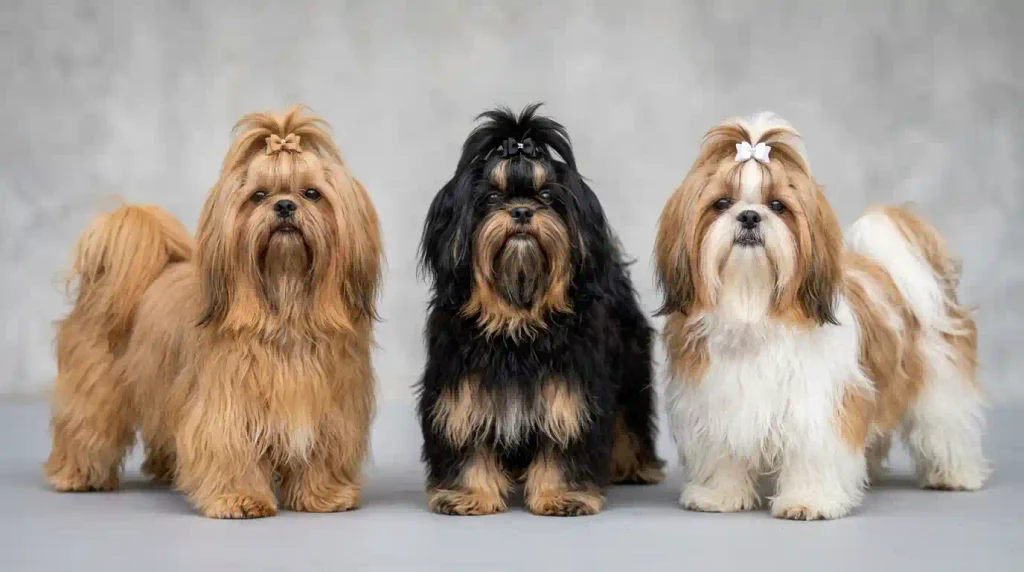
A tan-looking coat can also carry a darker face.
A black mask concentrates black hair around the muzzle and facial region.
This appearance is especially familiar in the black mask gold Shih Tzu.
On a lighter warm coat, a dark mask can make the entire dog look more strongly colored.
Do not assume the black mask changes the base tan or gold shade.
It is another visible trait layered over the coat.
White markings can work the same way.
Common examples include:
Blaze Marking
A white stripe running upward between the eyes.
Tuxedo-Style Marking
A darker or tan body with a white chest, feet, belly, or muzzle.
Saddle Pattern
A large colored region across the back surrounded by lighter or white areas.
These are appearance descriptions rather than separate breeds or official Shih Tzu types.
Check Nose and Eye-Rim Pigmentation
Pigment points can help you avoid confusing tan with liver or blue.
The Shih Tzu breed standard says nose, lips, and eye rims should be black on ordinary colors, with exceptions for liver- and blue-pigmented dogs.
So:
Tan-looking coat + black nose + black eye rims
is consistent with ordinary pigmentation.
But:
Tan-looking coat + brown nose + brown eye rims
suggests liver pigmentation.
A dog may still have a pale tan, gold, or cream-looking body while genetically expressing liver pigmentation.
Similarly:
Tan-gray coat + slate-blue nose
should make you examine whether blue pigmentation is involved.
The blue Shih Tzu guide explains this distinction further.
Paw-pad pigmentation can support the assessment, although the nose and eye rims are easier to evaluate.
Can a Tan Shih Tzu’s Coat Change as It Matures?
Yes.
A tan-looking Shih Tzu puppy may look noticeably different when its adult coat develops.
The American Shih Tzu Club notes that many Shih Tzus experience a significant puppy-to-adult coat transition around 10 to 12 months.
Changes owners may notice include:
- Dark tan becoming pale tan
- Golden-brown becoming gold
- Dark tipping becoming less visible
- Warm beige becoming creamier
- Tan markings becoming softer
- White areas appearing more prominent
Not every puppy changes dramatically.
Some remain close to their original shade.
Why the Puppy Coat Can Look Darker
Puppy hair is shorter.
Dark tips can therefore occupy a larger proportion of what you see.
As the adult coat grows longer, lighter portions of the hair shaft may become more noticeable.
This can create the impression that the entire dog has faded.
The dog’s genetics did not suddenly change—the visual balance of the coat changed.
White Markings May Look Larger
Long hair can also make white markings appear more extensive.
A narrow white blaze on a puppy may look broader when facial furnishings grow.
White chest hair can spread visually over a larger area.
White legs can appear to blend into lighter tan body hair.
Can Tan Become Gold?
Visually, yes.
A tan-looking puppy may develop an adult coat that people describe as gold.
Likewise, a gold puppy may lighten enough that someone later calls it tan or cream.
This does not necessarily mean the puppy’s original description was dishonest.
Warm shades overlap and can shift visibly with maturity.
Can Tan Become Red?
A puppy’s shade can change, but a pale tan puppy should not be promised to become deep red simply because the seller expects it.
If strong red coloring matters to you, compare the dog with clearly labeled examples and ask for natural-light photographs.
Can the Exact Adult Color Be Predicted?
Not reliably from one photo.
A breeder can make an informed estimate using:
- Parent colors
- Grandparents
- Previous litters
- Hair roots
- Current markings
- Experience with the bloodline
but none guarantees an exact adult shade.
Avoid claims such as:
- “Guaranteed dark tan forever”
- “Will definitely turn cream”
- “Will become caramel at one year”
- “This shade never fades”
A responsible description allows for uncertainty.

Grooming and Caring for the Coat
A tan Shih Tzu does not need special grooming because of its color.
The important factor is the Shih Tzu’s long, dense double coat.
The official breed standard describes the coat as luxurious, double-coated, dense, long, and flowing.
Brush Often Enough to Prevent Mats
Long-coated Shih Tzus need frequent brushing.
Depending on coat texture and length, that may mean daily grooming.
Problem areas often include:
- Behind the ears
- Neck
- Under the front legs
- Chest
- Belly
- Inner legs
- Tail
- Areas under collars and harnesses
Brush in layers rather than smoothing only the top.
A comb can then help confirm that you have reached through the coat.
Be Extra Careful During the Puppy Coat Change
The puppy-to-adult transition can create a period when hair tangles faster.
Loose puppy hair becomes trapped within developing adult hair.
Consistent brushing is especially important during this stage.
Bathing
Bathing frequency depends on:
- Lifestyle
- Coat length
- Skin condition
- Activity level
- Grooming routine
The American Shih Tzu Club notes that many companion dogs are bathed roughly every few weeks, but individual needs vary.
Use dog-formulated products and rinse thoroughly.
Do not bathe a heavily matted coat without addressing the mats first, because water can tighten tangles.
Does Tan Hair Need Color-Enhancing Shampoo?
No special color treatment is required.
A natural tan coat may become lighter as the dog matures.
That should not be viewed as a grooming failure.
Prioritize:
- Healthy skin
- Clean coat
- Gentle brushing
- Proper nutrition
- Veterinary care
- Comfortable grooming
over trying to force a particular shade.
White Markings Need Routine Cleaning
If your tan dog also has white areas, staining may be more visible around:
- Eyes
- Beard
- Mouth
- Chest
- Feet
Food, saliva, moisture, tears, and dirt can all affect light hair.
Persistent tearing, excessive licking, redness, odor, swelling, or skin irritation should not be treated only as a cosmetic coat issue.
Does Coat Color Affect Allergy Potential?
No.
Tan coloring does not make the dog more or less suitable for someone with allergies.
For that issue, see our guide to whether the Shih Tzu is hypoallergenic.
What to Confirm When Identifying a Puppy’s Color
If you are looking at a puppy advertised as a tan Shih Tzu, confirm the description rather than relying on one photograph.
1. Ask for Natural-Daylight Photos
Avoid making the decision from photographs taken:
- Under yellow indoor bulbs
- With flash
- In very strong sunlight
- With filters
- With heavy saturation
Neutral daylight provides a better view of warm shades.
2. Ask How the Color Is Recorded
Because Tan is not currently a standalone AKC Shih Tzu registration color, ask what appears on the paperwork.
The seller may be using tan as an everyday description while the registration uses Gold, Gold & White, or another applicable formal term.
The current AKC Shih Tzu page lists Tan Markings (012) among its markings and can be checked directly on the American Kennel Club Shih Tzu breed page.
3. Determine Whether Tan Is the Coat or a Marking
Ask whether tan covers most of the puppy or appears only:
- Above the eyes
- Around the muzzle
- On the chest
- On the legs
Tan points over a black coat are very different from a predominantly tan-looking dog.
4. Check the Nose, Lips, and Eye Rims
Black pigmentation suggests an ordinary black-pigmented warm coat.
Brown pigmentation suggests investigating liver.
Slate-blue pigmentation suggests investigating blue.
5. Look for Brindle or Dark Tipping
Ask for close-up photographs.
A coat that looks tan from far away may contain:
- Brindle
- Black tips
- Sable-like shading
- Dark facial patterning
6. Ask for Parent Photos
Compare parents as:
- Puppies
- Young adults
- Mature adults
This can show how dramatically the bloodline tends to lighten.
7. Ask About Previous Puppies
Adult photos from earlier litters can provide useful context.
They still cannot guarantee this puppy’s exact final shade.
8. Do Not Judge Quality by Color
A beautiful tan coat does not establish:
- Health
- Temperament
- Pedigree
- Breed quality
- Responsible breeding
If ancestry is important, evaluate documentation rather than assuming coat color proves a purebred Shih Tzu.
For general breed characteristics beyond coat color, use our Shih Tzu facts and shih tzu Breed Information guides.
Tan Shih Tzu FAQs
What is a tan Shih Tzu?
A tan Shih Tzu is usually a dog whose coat appears beige, sandy, caramel, biscuit, or light brown.
Is tan an official AKC Shih Tzu color?
Tan is not currently listed as a standalone AKC Shih Tzu registration color.
Does AKC recognize tan markings on Shih Tzus?
Yes. Tan Markings are currently listed as a Shih Tzu marking.
Can a tan Shih Tzu be registered as gold?
A visually tan-looking dog may have another formal registration label, so check the dog’s paperwork rather than assuming equivalence.
Is tan the same as gold?
No, although light gold and tan can overlap considerably in appearance.
Is tan the same as cream?
No; cream is generally paler, though very light tan and cream can be difficult to separate visually.
Is tan the same as red?
No. Red usually has stronger copper, orange-red, or auburn tones.
Is tan the same as brown?
Tan is generally lighter and softer than brown.
Can a tan Shih Tzu have white markings?
Yes; substantial white areas may create a tan-and-white appearance.
Can a tan Shih Tzu have a black mask?
Yes, dark facial hair can appear over a warm tan or gold-looking coat.
Can tan appear as markings on a black Shih Tzu?
Yes. Tan points may appear around the eyebrows, muzzle, chest, or legs on a black-based coat.
Can a tan Shih Tzu be brindle?
A tan-looking coat can contain darker brindle hairs, so inspect the pattern closely.
What color nose should a tan Shih Tzu have?
An ordinarily pigmented tan-looking Shih Tzu generally has a black nose.
What does a brown nose mean?
A brown nose together with brown lips and eye rims suggests liver pigmentation.
Can a tan Shih Tzu puppy change color?
Yes. The visible shade may become lighter or look more gold or cream as the adult coat develops.
When does the puppy coat change?
Many Shih Tzus undergo a noticeable puppy-to-adult coat transition around 10–12 months.
Will a dark tan puppy stay dark?
It may, but the exact adult shade cannot be guaranteed from puppy appearance alone.
Can a tan puppy become gold-looking?
Yes. Warm coat shades can become lighter and may be described differently in adulthood.
Does tan coat color affect temperament?
No reliable evidence shows that tan coloring determines personality.
Does tan coat color affect health?
Coat shade alone does not provide an overall health assessment.
Does a tan Shih Tzu need special grooming?
No. Grooming requirements come from coat length and texture rather than tan pigmentation.
Are tan Shih Tzus rare?
There is no reliable worldwide dataset establishing tan-looking Shih Tzus as a specific rarity category.
Are tan Shih Tzus more expensive?
Individual sellers may price colors differently, but tan appearance alone does not establish greater quality or value.
Is a tan Shih Tzu a separate type?
No. Tan is an appearance description, not a separate recognized Shih Tzu breed.
Final Thoughts
A tan Shih Tzu typically has a soft beige, sandy, caramel, or light-brown-looking coat, but tan is best understood as a visual description rather than a current standalone AKC Shih Tzu registration color. It can overlap with gold, cream, light brown, and faded red, while tan may also appear only as markings on another base color.
For accurate identification, compare the coat in natural light, check whether tan is dominant or limited to markings, examine the nose and eye-rim pigmentation, and allow for puppy-to-adult coat change.
Most importantly, do not let color overshadow health, temperament, pedigree, and responsible breeding. For side-by-side color comparisons, continue with our complete Shih Tzu colors and tan and white Shih Tzu guides.