
Teacup Shih Tzu: Size, Health, and What Buyers Should Know
A teacup Shih Tzu is not a separate Shih Tzu breed, official AKC size category, or recognized variety. The term is generally used by sellers for an unusually small Shih Tzu expected to mature below the breed standard’s ideal adult weight of 9–16 pounds. Similar marketing names include Imperial Shih Tzu, mini Shih Tzu, miniature Shih Tzu, micro teacup Shih Tzu, pocket Shih Tzu, and toy Shih Tzu—but the Shih Tzu is already a Toy Group breed. Some naturally small Shih Tzus can be healthy companions, so being under the ideal weight does not automatically mean a dog is ill. The concern arises when extreme smallness is deliberately prioritized over structure, health, and responsible breeding. Very small puppies may also require closer attention to feeding, injury prevention, temperature, dental development, and signs of low blood sugar. This guide explains what the teacup label actually means, how small these dogs are claimed to become, which health questions matter, how to evaluate a breeder, and how a marketed teacup compares with a standard-size Shih Tzu.
Table of Contents
- Is “teacup Shih Tzu” an official size or variety?
- How small are teacup Shih Tzus said to get?
- What health and safety issues should owners consider?
- What daily care does a very small Shih Tzu need?
- How to assess a breeder or adoption option
- Teacup versus standard-size Shih Tzu: a quick comparison
- Teacup Shih Tzu FAQs
- Final thoughts
Is “Teacup Shih Tzu” an Official Size or Variety?
No.
The teacup Shih Tzu is not an officially recognized Shih Tzu variety.
The same applies to:
- Imperial Shih Tzu
- Mini Shih Tzu
- Miniature Shih Tzu
- Micro Shih Tzu
- Pocket Shih Tzu
- Micro teacup Shih Tzu
- Toy Shih Tzu
- Shih Tzu Imperial mini
These are generally informal or marketing descriptions for dogs expected to mature unusually small.
The official breed remains simply the Shih Tzu.
This point is especially important because advertisements sometimes present an Imperial Shih Tzu dog or teacup Shih Tzu dog as though it were an ancient, separately recognized breed.
It is not.
For a broader explanation of informal labels such as American, European, Imperial, and mini, see our guide to the types of Shih Tzu.
How the Label Differs From the Breed Standard
The current Shih Tzu breed standard calls for an ideal mature weight of:
9 to 16 pounds
with a height generally around:
9 to 10½ inches, while 8–11 inches is permitted.
Just as importantly, the standard describes the breed as:
- Compact
- Solid
- Sturdy
- Substantial for its size
A Shih Tzu is supposed to feel surprisingly solid when picked up rather than extremely delicate.
The American Shih Tzu Club’s guidance on Imperial and teacup Shih Tzus specifically states that “Imperial” and “tiny teacup” are not separate recognized varieties.
That does not mean every Shih Tzu weighing less than nine pounds is automatically unhealthy.
Breed standards describe the ideal dog for the breed. Individual pets can naturally fall outside those ideal measurements.
The important distinction is between:
A naturally small individual
and:
A breeding program deliberately selecting for increasingly extreme smallness and selling that size as a premium feature.
What About “Imperial Shih Tzu”?
The term Imperial Shih Tzu is often used interchangeably with teacup.
Advertisements may claim that Imperial dogs represent an ancient royal line or the original palace-size dog from China.
Historical evidence does not establish a separate modern Imperial breed.
The Shih Tzu’s origin is connected with Tibetan ancestry and Chinese imperial-court breeding, but that history should not be used to turn “Imperial Shih Tzu” into a modern recognized size category.
A full-grown Imperial Shih Tzu sold today is still a Shih Tzu—or, depending on ancestry, potentially a mix—rather than a separate official breed.
What About Mini, Miniature, and Toy Shih Tzus?
The same principle applies.
A mini Shih Tzu, miniature Shih Tzu, or toy Shih Tzu is not a separate recognized Shih Tzu breed.
In fact, the Shih Tzu is already assigned to the AKC Toy Group.
Calling one “toy size” does not create another level beneath the normal breed.
The terms may tell you what the seller expects the dog to weigh, but they should not replace actual information about:
- Age
- Current weight
- Parent size
- Growth
- Health
- Pedigree
- Veterinary findings
Why Advertised Weight Claims Need Context
A seller might advertise:
- “Guaranteed 4-pound adult”
- “5-pound Imperial”
- “3-pound micro teacup”
- “Under 6 pounds full grown”
- “Tiny forever”
- “Pocket-size Shih Tzu”
These statements deserve careful examination.
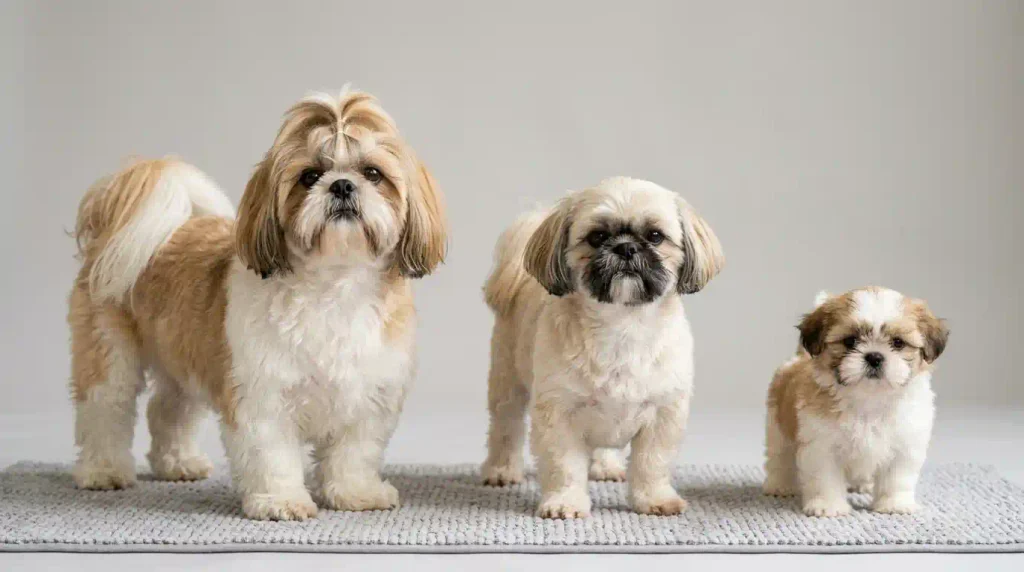
A puppy’s current weight is not the same thing as its adult weight.
A six-week-old puppy weighing a small amount is supposed to be small because it is still a baby.
What matters is whether its growth is appropriate for:
- Age
- Genetics
- Nutrition
- Overall health
Adult-weight predictions can be informed by family history and growth patterns, but they are still estimates.
A Runt Is Not Automatically a Teacup Breed
Another confusing term is runt of the litter.
The smallest puppy in a litter may simply be slightly smaller than its siblings.
That does not automatically mean:
- It will stay exceptionally small
- It is unhealthy
- It is a special Imperial line
- It is a different breed
Likewise, a puppy that is unusually tiny because of poor growth should not be marketed automatically as a premium “micro” dog without investigating why it is small.
Small size can have many explanations.
How Small Are Teacup Shih Tzus Said to Get?
There is no official teacup Shih Tzu weight cutoff.
That is one of the most important facts for buyers to understand.
Because “teacup” is not a standardized category, different sellers can use it for different adult weights.
One breeder might call a 7-pound dog teacup.
Another might reserve the term for dogs under 5 pounds.
Another may advertise puppies expected to mature at 3 or 4 pounds.
None of those numbers creates an official breed definition.
Adult Size Claims Versus a Puppy’s Current Size
When someone advertises a full-grown teacup Shih Tzu, ask for the dog’s actual measured adult weight.
When looking at a puppy, ask for:
- Date of birth
- Current age
- Current weight
- Weight history
- Mother’s adult weight
- Father’s adult weight
- Adult weights of grandparents where known
- Sizes of earlier puppies from the same parents
These details provide more useful context than the word “teacup.”
What Is an Imperial Shih Tzu Weight?
Again, there is no official separate Imperial Shih Tzu weight chart.
The recognized Shih Tzu standard gives the ideal mature range of 9–16 pounds.
A dog advertised as Imperial generally falls below that ideal—or is expected to.
How far below varies by seller.
This is why “Imperial Shih Tzu size” is not enough information by itself.
Can an Adult Shih Tzu Weigh Less Than Nine Pounds and Be Healthy?
Yes.
Some individual Shih Tzus naturally mature below the standard ideal without being diagnosed with a disease.
Breed standards are not veterinary diagnosis charts.
The fact that a dog weighs eight pounds rather than nine does not automatically create a medical problem.
Concern increases when a dog is:
- Extremely undersized
- Failing to grow normally
- Structurally fragile
- Repeatedly ill
- Produced by deliberate extreme downsizing
- Advertised at a premium with little health documentation
The individual dog should be assessed rather than making conclusions from a marketing term alone.
Mini Shih Tzu Full Grown Size
The same uncertainty applies to mini Shih Tzu full-grown size and miniature Shih Tzu full grown searches.
There is no official “mini” range.
If an adult dog’s size matters to you, look at real family measurements rather than a category invented by the seller.

What Health and Safety Issues Should Owners Consider?
A very small Shih Tzu is not guaranteed to develop health problems.
It is equally inaccurate, however, to assume that deliberately making an already small Toy breed dramatically smaller has no practical consequences.
Veterinary literature on teacup dogs discusses several concerns that owners and prospective buyers should understand.
Research is still developing on how much extreme size itself increases each risk versus how much risk comes from poor breeding practices, underlying genetics, or ordinary small-breed predispositions.
So these conditions should be treated as risks to investigate, not diagnoses attached automatically to every tiny dog.
Risks Associated With Very Small Size and Poor Breeding
Hypoglycemia
Hypoglycemia means abnormally low blood glucose.
Very small puppies can have limited energy reserves and may become vulnerable when they:
- Do not eat adequately
- Become ill
- Experience significant stress
- Are very active without sufficient nutrition
Possible warning signs can include:
- Unusual weakness
- Sleepiness or mental dullness
- Trembling
- Poor coordination
- Collapse
- Seizures
A puppy showing these signs needs prompt veterinary attention.
Do not rely on a generic internet feeding schedule to manage a puppy known to have low blood glucose.
A veterinarian should determine feeding frequency, diet, and emergency instructions based on the individual puppy.
Dental Crowding and Periodontal Disease
Shih Tzus are already small, short-muzzled dogs.
Making the skull and jaw even smaller does not necessarily make the teeth proportionally smaller.
Very small dogs may therefore experience problems such as:
- Dental crowding
- Retained puppy teeth
- Plaque accumulation
- Gingivitis
- Periodontal disease
Routine veterinary dental examinations and home dental care are important.
Do not wait until the dog develops severe bad breath, loose teeth, pain, or difficulty eating.
Patellar Luxation
Patellar luxation occurs when the kneecap moves out of its normal position.
It is seen in many small dogs, including Shih Tzus.
Possible signs include:
- Skipping while walking
- Briefly lifting a rear leg
- Intermittent lameness
- Reluctance to jump
- Pain in more severe cases
Not every small Shih Tzu will develop patellar luxation, but the condition is important enough that the American Shih Tzu Club includes patella evaluation in its CHIC recommendations.
Fragile Bones and Injury
Extremely tiny dogs have less body mass to absorb trauma.
An event that might cause only a minor injury in a larger dog could be more serious in a very small puppy.
Common household risks include:
- Jumping off beds
- Jumping from sofas
- Falling from someone’s arms
- Being stepped on
- Rough play with larger dogs
- Rough handling by children
This does not mean the dog should live without normal movement.
It means the household should be arranged intelligently around the dog’s size.
Liver Shunts
Portosystemic or liver shunts occur when blood bypasses normal processing through the liver.
Possible signs can include:
- Poor growth
- Neurologic episodes
- Vomiting
- Diarrhea
- Abnormal behavior
- Seizures in some dogs
The American Shih Tzu Club includes portosystemic shunt among known breed concerns for which no simple predictive genetic test is currently available.
A puppy that is unusually tiny because it is failing to grow normally should therefore be medically evaluated rather than automatically celebrated as “micro.”
Brachycephaly and Breathing
The Shih Tzu is a brachycephalic, or short-muzzled, breed.
Potential airway concerns exist regardless of whether the dog is standard-size or unusually small.
Watch for:
- Labored breathing
- Persistent noisy breathing
- Poor exercise tolerance
- Difficulty recovering after activity
- Heat intolerance
A tiny body does not eliminate the breed’s short-muzzle anatomy.
Do not assume snorting or severe breathing noise is harmless simply because “Shih Tzus do that.”
Eye Problems
Shih Tzus have large, relatively exposed eyes.
Potential concerns can include:
- Corneal injuries
- Dry-eye conditions
- Irritation
- Eyelid abnormalities
- Other eye disease
An owner may casually call discharge or irritation an “eye infection,” but red or painful eyes can have multiple causes.
Persistent:
- Redness
- Squinting
- Cloudiness
- Discharge
- Rubbing
- Swelling
should be evaluated by a veterinarian rather than diagnosed from appearance.
Intervertebral Disc Disease
Shih Tzus can experience spinal and intervertebral disc problems.
However, it would be misleading to claim that every teacup Shih Tzu specifically develops intervertebral disk disease because of small size.
Focus instead on sensible prevention:
- Maintain appropriate body condition
- Avoid repeated unsafe jumping from excessive heights
- Seek veterinary care for back pain, weakness, or abnormal movement
Temperature Regulation
Very small dogs have a higher surface-area-to-body-mass relationship than larger dogs and may lose heat quickly.
Cold weather can therefore require extra care.
At the same time, the Shih Tzu’s short muzzle makes heat management important too.
The goal is not simply “keep the dog warm.”
It is avoid temperature extremes.
Anesthesia and Medication Dosing
Veterinary procedures are routinely performed successfully on small dogs, but very small size can make some aspects more technically demanding.
Accurate weight measurement is particularly important for medication dosing.
Never divide medications intended for a larger dog based on guesswork.

Questions to Discuss With a Veterinarian
If you already own an unusually small Shih Tzu, useful veterinary questions include:
- Is my puppy growing appropriately for its age?
- Is its body condition healthy?
- Does it need a specific feeding schedule?
- What signs of hypoglycemia should I watch for?
- Are the baby teeth erupting and falling out normally?
- Are the kneecaps stable?
- Are there concerns about breathing?
- Are the eyes healthy?
- Does the puppy have an open fontanel?
- Are any blood tests or bile-acid testing indicated based on symptoms?
- What parasite-prevention products are appropriate for its exact weight?
- When is anesthesia safe if dental or surgical care becomes necessary?
These are much more useful than simply asking, “Is my teacup healthy?”
The veterinarian needs to evaluate the individual dog.
What Daily Care Does a Very Small Shih Tzu Need?
A very small Shih Tzu still needs the fundamentals required by every puppy:
- Complete nutrition
- Fresh water
- Veterinary care
- Vaccination according to veterinary guidance
- Socialization
- Positive reinforcement
- House training
- Grooming
- Exercise
- Sleep
- Safe human interaction
The difference is that mistakes involving feeding, falls, temperature, or medication may matter more quickly in a tiny puppy.
Feeding and Monitoring a Puppy
Very small puppies may need closer feeding supervision.
Do not assume that a generic “teacup feeding plan” is appropriate for every puppy.
A veterinarian should help determine:
- Appropriate food
- Daily amount
- Meal frequency
- Growth monitoring
- Whether special precautions are needed
Monitor whether the puppy:
- Eats reliably
- Gains weight appropriately
- Remains alert
- Has normal stool
- Drinks normally
- Shows consistent energy
A tiny puppy repeatedly refusing meals deserves attention.
Keep an Accurate Weight Record
A kitchen-style digital scale designed to measure small weights can be useful if your veterinarian recommends monitoring growth.
Record:
- Date
- Weight
- Appetite
- Any illness
- Medication
The trend matters more than obsessing over whether the puppy will remain “teacup.”
Healthy development should be the goal.
House Training
Very small dogs still need consistent house training.
Take the puppy to the toilet area:
- After waking
- After eating
- After play
- Before sleeping
- At appropriately frequent intervals
Use positive reinforcement.
Punishment does not increase bladder capacity or teach the puppy what you actually want.
Separation Anxiety and Independence
Shih Tzus were bred for companionship and can become highly people-oriented.
An extremely small puppy may receive almost constant handling because owners feel protective of it.
That can unintentionally prevent the dog from learning healthy independence.
Practice short, safe periods of:
- Resting alone
- Settling in a pen or crate when appropriate
- Playing independently
- Being away from constant physical contact
If significant separation anxiety develops, work with a veterinarian or qualified behavior professional rather than assuming it is simply a “teacup personality.”
Grooming, Handling, and Household Safety
Small size does not reduce the Shih Tzu’s coat-maintenance requirements.
A tiny dog can still develop severe mats.
Brushing
Long coats require frequent brushing, with particular attention to:
- Behind the ears
- Armpits
- Neck
- Chest
- Belly
- Inner legs
- Tail
A shorter puppy cut can make maintenance easier.
Nail Trimming
Tiny paws mean tiny nails, but they still need routine trimming.
Use appropriately sized tools and good lighting.
If you are uncomfortable trimming nails on a very small puppy, ask a groomer or veterinary professional.
Dental Care
Because dental crowding can be a concern, introduce tooth brushing early with dog-safe toothpaste.
Make dental checks part of regular veterinary care.
Safe Handling
Support the puppy’s:
- Chest
- Body
- Hindquarters
rather than lifting it carelessly by the front legs.
Teach children to sit down before holding a very small dog.
Furniture and Stairs
Consider:
- Ramps or pet steps where appropriate
- Blocking unsafe staircases
- Preventing high jumps
- Non-slip flooring
- Secure railings and balcony areas
A very small dog can disappear under furniture or move behind someone’s feet without being noticed.
Larger Dogs in the Home
Many large dogs can live peacefully with small dogs, but size differences create physical risk even during friendly play.
Supervise interactions.
A playful paw from a large dog can injure a tiny puppy without aggression being involved.
How to Assess a Breeder or Adoption Option
Buying a puppy based mainly on the phrase “teacup Shih Tzu for sale” is risky because the label tells you very little about the actual dog.
A better approach is to investigate the breeding program.
Records, Parent Dogs, and Health Screening
Ask to see:
- The mother
- Information about the father
- Adult weights of both parents
- Veterinary records
- Vaccination and deworming history
- Registration documents where applicable
- Pedigree information
- Health-screening results
- Contract terms
The American Shih Tzu Club’s current CHIC recommendations include:
- OFA/CAER eye certification
- OFA patella evaluation
with cardiac and hip evaluations listed as optional within the club’s CHIC protocol.
A CHIC number does not mean the dog is guaranteed disease-free; it means the recommended screenings were completed and made publicly available.
Ask About Previous Litters
Useful questions include:
- What did earlier puppies from these parents weigh as adults?
- Were any unusually small?
- Did any require treatment for low blood glucose?
- Were there liver-shunt concerns?
- Were retained baby teeth common?
- Were there patella problems?
- Have puppies required unusual medical intervention?
A responsible breeder should be willing to discuss problems as well as successes.
Ask Why the Puppy Is Small
This question can be revealing.
Possible answers might include:
“The parents are both on the smaller end of normal, and this puppy is the smallest in the litter.”
That provides context.
A weaker answer is:
“It carries the royal Imperial gene that guarantees a three-pound adult.”
There is no recognized “Imperial gene” establishing a separate Shih Tzu variety.
Warning Signs in Size and Price Claims
Be cautious when a seller focuses almost entirely on:
- Guaranteed tiny adult size
- “Micro” terminology
- “Rare Imperial blood”
- “Royal Chinese teacup line”
- Extreme price premiums
- Color plus size marketing
- No verifiable health tests
- No adult parent information
Examples might include:
- “Black teacup Shih Tzu”
- “Rare black Imperial Shih Tzu”
- “Teacup black Shih Tzu under 4 pounds”
- “Imperial Shih Tzu black and white”
- “Rare lavender micro mini Shih Tzu”
Color is separate from size.
A black Shih Tzu does not become a special breed because it is small, and the complete Shih Tzu colors range should not be used to create artificial teacup varieties.
What About Teacup Shih Tzu Price?
There is no official teacup Shih Tzu price or Imperial Shih Tzu cost.
Prices vary according to:
- Country
- Region
- Breeder
- Pedigree
- Veterinary care
- Health testing
- Demand
- Color
- Marketing
A higher price does not prove:
- Better health
- Rarer genetics
- A separate Imperial breed
- Guaranteed adult size
Pay for responsible breeding and appropriate care, not simply for the smallest number on a weight prediction.
Adoption Is Also an Option
Rescues sometimes receive small adult Shih Tzus.
An adult rescue has one major advantage if size matters to you:
Its adult size is already known.
A rescue organization may not know the dog’s complete pedigree, but it can often provide practical information about:
- Current weight
- Health
- Dental condition
- Temperament
- House training
- Grooming tolerance
- Compatibility with other pets
For most families, these facts matter far more than whether the dog can be called “Imperial.”

Teacup Versus Standard-Size Shih Tzu: A Quick Comparison
| Feature | “Teacup” or Imperial Label | Standard Shih Tzu |
| Official separate variety? | No | Shih Tzu is the recognized breed |
| Official weight definition | None | Ideal mature weight 9–16 lb |
| AKC-recognized “teacup” term | No | Registered simply as Shih Tzu |
| Adult size prediction | Varies by seller | Breed standard provides ideal range |
| Health automatically poor? | No, but extreme size and poor breeding warrant scrutiny | Health still depends on breeding and individual dog |
| Hypoglycemia concern | Can be important in very small puppies | Can occur, but extremely tiny puppies may require closer monitoring |
| Injury risk | Greater practical concern when extremely tiny | Still a small breed, but intended to be sturdy |
| Grooming | Same Shih Tzu coat needs | Same |
| Temperament | Not determined by small size label | Individual variation |
| Separate lifespan standard | No | AKC lists Shih Tzu life expectancy around 10–18 years |
| Higher price justified by label? | Not by the label itself | Price depends on many factors |
| Best evidence when buying | Parent size, health testing, vet records | Same |
The biggest difference is therefore not:
“teacup breed versus normal breed.”
It is:
an unusually small individual versus the size and substance described in the Shih Tzu standard.
For general breed characteristics, see our Shih Tzu facts and shih tzu Breed Information guides.
Teacup Shih Tzu FAQs
What is a teacup Shih Tzu?
It is an informal marketing term for an unusually small Shih Tzu, not a separate recognized breed.
Is a teacup Shih Tzu AKC recognized?
No; AKC recognizes the Shih Tzu, not a separate teacup variety.
What is an Imperial Shih Tzu?
Imperial Shih Tzu is another informal label commonly used for an undersized Shih Tzu.
Are Imperial and teacup Shih Tzus the same?
The terms are often used interchangeably in advertising, but neither is an official Shih Tzu variety.
What is a mini Shih Tzu?
“Mini” is an informal size label rather than an official breed category.
What is a miniature Shih Tzu?
It usually means a small Shih Tzu; there is no separately recognized miniature variety.
What is a micro teacup Shih Tzu?
“Micro teacup” is an even stronger marketing term for extreme smallness and has no official weight definition.
What is a pocket Shih Tzu?
Pocket Shih Tzu is another informal size term without an official breed-standard definition.
What is the standard Shih Tzu adult weight?
The U.S. breed standard gives an ideal mature weight of 9–16 pounds.
How big does a teacup Shih Tzu get?
There is no official teacup size range, so adult-size claims vary among sellers.
How much does a teacup Shih Tzu weigh?
There is no standardized teacup weight; ask for the actual dog’s age, weight, parent sizes, and growth history.
How big is a full-grown Imperial Shih Tzu?
There is no official Imperial size standard because Imperial is not a recognized variety.
Can a full-grown Shih Tzu weigh under nine pounds?
Yes, individual Shih Tzus can mature below the ideal range without automatically being unhealthy.
Is every tiny Shih Tzu unhealthy?
No; health must be evaluated individually, although extreme size and poor breeding practices deserve careful scrutiny.
Are teacup Shih Tzus prone to hypoglycemia?
Very small puppies can be vulnerable to low blood glucose, especially when they do not eat adequately or become ill.
What are common teacup Shih Tzu health concerns?
Issues worth discussing with a veterinarian include hypoglycemia, dental crowding, orthopedic problems, liver shunts, breathing concerns, eye problems, and injury risk.
Do teacup Shih Tzus have fragile bones?
Extremely tiny dogs can be more vulnerable to traumatic injury, so falls and rough handling deserve extra attention.
Do teacup Shih Tzus have dental problems?
Very small mouths can contribute to crowding and retained teeth, which may increase periodontal problems.
Can teacup Shih Tzus have patellar luxation?
Yes, patellar luxation occurs in small breeds including Shih Tzus, but it is not guaranteed in every tiny dog.
Do teacup Shih Tzus have liver shunts?
Liver shunts can occur in small dogs, but being marketed as teacup does not itself diagnose a liver shunt.
What is the teacup Shih Tzu lifespan?
There is no separate evidence-based lifespan standard for “teacup Shih Tzu” because it is not a recognized variety.
What is an Imperial Shih Tzu lifespan?
Imperial is not a distinct breed with its own established lifespan; longevity depends on the individual dog’s health and genetics.
Do mini Shih Tzus live as long as regular Shih Tzus?
There is no official mini population with a separate lifespan dataset, so individual health matters more than the marketing label.
Are teacup Shih Tzus harder to house-train?
Small bladder capacity can require frequent toilet opportunities, but consistency and positive reinforcement remain the key training principles.
Do teacup Shih Tzus need special food?
They need nutritionally appropriate food, but diet and feeding frequency should be individualized with veterinary guidance.
How often should a tiny Shih Tzu puppy eat?
Meal frequency depends on age, size, health, and risk of hypoglycemia, so follow the puppy’s veterinarian rather than a universal teacup schedule.
Do teacup Shih Tzus need less grooming?
No. Their coat can mat just like that of a standard-size Shih Tzu.
Is a puppy cut suitable for a small Shih Tzu?
Yes, a puppy cut can make coat maintenance easier regardless of body size.
Are black teacup Shih Tzus a different variety?
No; black describes coat color and teacup describes an informal size label.
Does color affect teacup health?
Color itself does not determine whether an unusually small Shih Tzu is healthy.
Are teacup Shih Tzus hypoallergenic?
Size does not change allergy potential; see our guide to whether the Shih Tzu is hypoallergenic.
How much does a teacup Shih Tzu cost?
Prices vary widely, and an unusually high price based solely on a teacup label does not prove quality or rarity.
How can I tell whether a teacup breeder is responsible?
Ask for parent sizes, health screening, veterinary records, pedigree information, previous-litter history, and an explanation of why the puppy is unusually small.
Is a tiny puppy automatically the runt of the litter?
No; “runt” and “teacup” are different informal descriptions and neither explains the puppy’s health without further information.
Is a teacup Shih Tzu purebred?
It can be, but the word teacup does not prove ancestry; documentation is more useful for determining whether a dog is a purebred Shih Tzu.
Final Thoughts
A teacup Shih Tzu is not a separate breed, official AKC variety, or standardized size. Teacup, Imperial, mini, miniature, pocket, and micro are labels generally used for Shih Tzus expected to mature smaller than the breed standard’s ideal 9–16-pound range.
Some naturally small dogs can be healthy, so size alone should never be treated as a diagnosis. The greater concern is deliberate extreme downsizing without enough attention to structure, health, and responsible breeding.
Before choosing a tiny puppy, verify its age, growth, parent sizes, veterinary history, and health screening rather than relying on a guaranteed weight or premium marketing name. For more context, compare the informal labels in our types of Shih Tzu guide and learn the breed’s normal characteristics through our Shih Tzu facts resource.