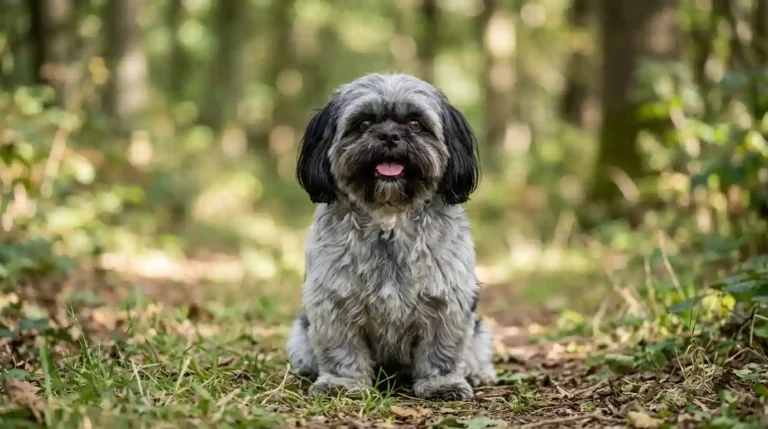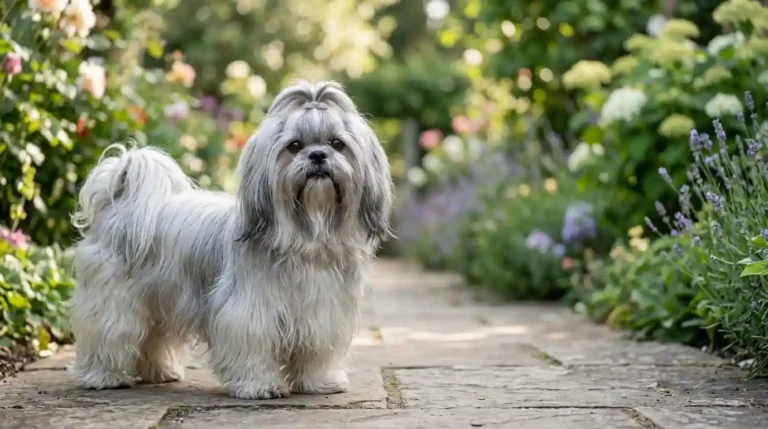
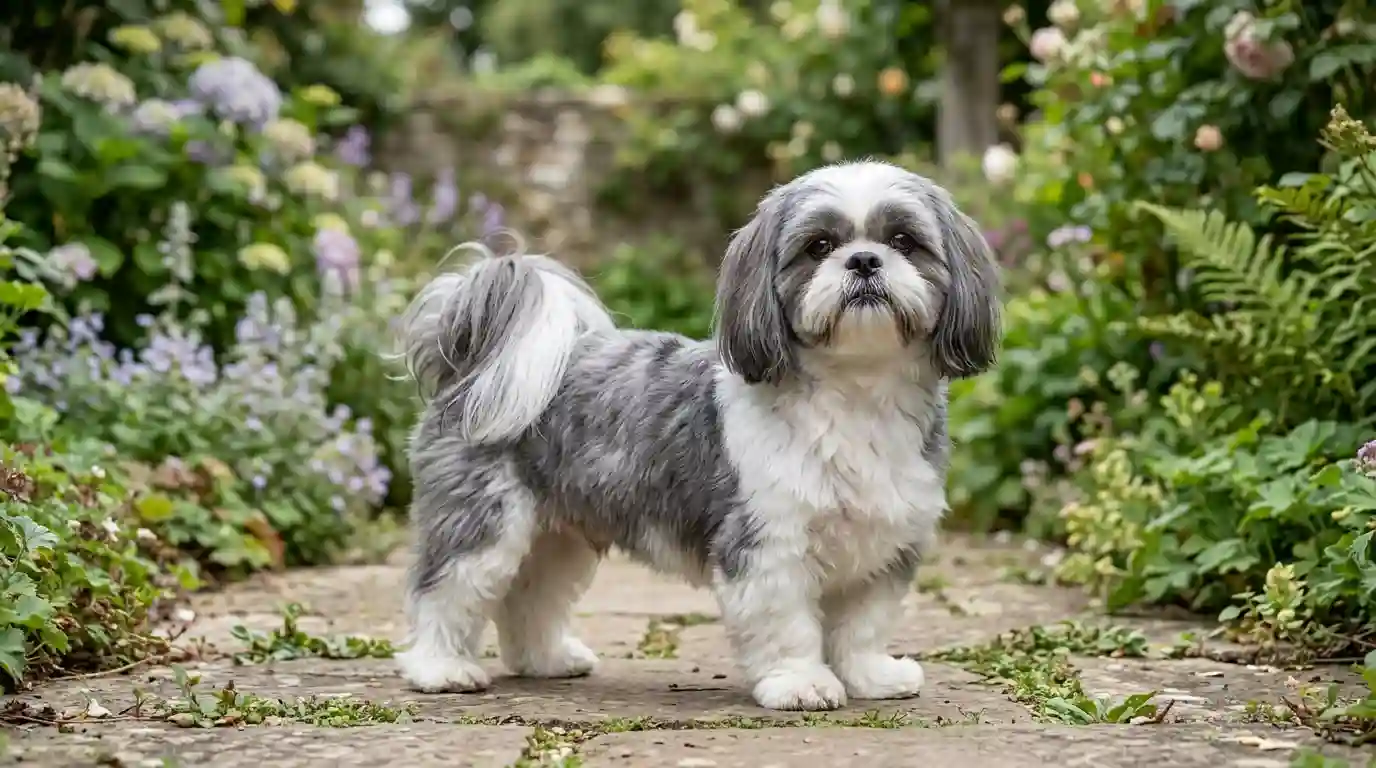
Grey and White Shih Tzu: Color, Markings, and Care
A grey and white Shih Tzu usually has cool gray, charcoal, silver-gray, or faded dark areas combined with clearly visible white markings, but identifying the coat is not always as simple as matching a puppy to a color chart. “Grey,” “gray,” “silver,” and “blue” are sometimes used loosely in everyday descriptions even though they do not always mean the same thing. A Shih Tzu can also change considerably between its puppy coat and adult coat, with dark hairs fading, patterns becoming less obvious, and previously black-looking areas developing a softer gray or silver appearance. The best way to describe a gray and white Shih Tzu is therefore to look at the coat pattern, white markings, nose pigmentation, lips, eye rims, age, and earlier photos together. This guide explains those differences, shows what can and cannot be determined from appearance, covers normal coat color change, and gives practical grooming advice for keeping a gray-and-white coat healthy without confusing cosmetic color changes with genuine skin or coat problems.
Table of Contents
- What does “grey and white” mean on a Shih Tzu?
- How can you identify a grey-and-white Shih Tzu?
- Can a grey-and-white Shih Tzu change color with age?
- Is grey and white an accepted Shih Tzu color combination?
- How do you care for a grey-and-white coat?
- Grey-and-white Shih Tzu quick answers
- Final Thoughts
What Does “Grey and White” Mean on a Shih Tzu?
The phrase grey and white Shih Tzu usually describes appearance rather than one narrowly defined genetic color.
The dog has visible gray-toned areas together with white hair. Those gray portions might range from dark charcoal to smoky gray, steel gray, or pale silver depending on the individual dog, age, lighting, and the way the coat has changed over time.
American readers will often see the spelling gray and white Shih Tzu, while “grey” is also commonly used online. Both spellings describe the same visible color concept.
The white portion can appear as small markings or cover a large percentage of the body. That means two dogs described as Shih Tzu grey and white may look dramatically different from each other.
One may be mostly gray with:
- A white chest
- White feet
- A facial blaze
- A white muzzle
- A white tail tip
Another may be mostly white with large gray patches across the head, ears, or back.
Before assigning a very specific label, it helps to understand the broader range of shih tzu colors because Shih Tzus can show substantial variation in shade and markings.
Grey, Silver, and Blue: How the Labels Differ
Grey, silver, and blue can look similar, but they should not automatically be treated as synonyms.
Grey describes what the coat looks like
“Grey” or “gray” is often a practical visual description.
A dog may appear gray because dark hairs have become lighter, because black and lighter hairs visually blend together, or because the adult coat has changed from the puppy’s original shade.
A grey shih tzu may therefore be described according to how its coat looks without that word alone proving a particular pigment genotype.
That distinction matters.
If a formerly dark puppy gradually becomes smoky gray, you should not automatically conclude that the dog has a genetic dilution simply because the adult hair looks lighter.
Silver often describes a lighter, reflective gray appearance
A silver coat tends to appear lighter or more reflective than ordinary dark gray.
Long Shih Tzu hair can make this especially noticeable because individual hairs catch light differently. A coat that appears charcoal indoors can look silvery outdoors.
Some dogs develop a distinctly pale silver appearance as they mature. If substantial white is also present, the resulting appearance may resemble a silver and white shih tzu.
Again, visual description is useful, but photographs alone cannot always establish why the hair became silver.
Blue relates more importantly to pigmentation
In dog-color terminology, “blue” often refers to diluted black pigmentation rather than a bright blue coat.
A blue shih tzu may have hair that appears gray, slate, charcoal-blue, or smoky rather than literally blue.
The more useful clue is pigmentation.
The official Shih Tzu standard specifies black pigmentation on the nose, lips, and eye rims for most colors, with blue pigmentation on blue-pigmented dogs and liver pigmentation on liver-pigmented dogs.
That means a gray-looking coat and a genetically blue-pigmented dog are not automatically the same thing.
The AKC glossary also notes that “blue” may be used for gray coloration in dog terminology but warns that color definitions vary by breed.
If a dog’s coat looks gray but its nose, lips, and eye rims remain clearly black, you should be cautious about calling the dog genetically blue solely from coat appearance.
Compare suspected blue-and-white coloring with the dedicated blue and white shih tzu guide.
Similarly, a blue gray shih tzu deserves separate consideration because everyday descriptions may blend two visual terms that do not necessarily describe identical biological traits.
A dilution gene can affect pigmentation, but a gray-looking adult coat by itself is not enough to prove that a particular dilution is present. Likewise, you cannot infer a particular recessive gene merely because a dog photographs as silver or gray.
Appearance provides clues. It does not replace pedigree information or appropriate genetic testing when genetic certainty matters.
How White Markings Shape the Coat Pattern
White can dramatically change how the gray portion of the dog is perceived.
A mostly gray Shih Tzu with a small white chest patch may look almost solid from a distance. A mostly white dog with gray ears and back patches can look completely different even though both may be described as white and grey Shih Tzu.
Common white markings include:
- White muzzle
- White forehead blaze
- White chest
- White neck
- White belly
- White legs
- White paws
- White tail tip
Some dogs have broad white areas separating the colored patches.
Owners and breeders may use terms such as parti-color for dogs with substantial white combined with another color. In casual usage, this helps describe the coat pattern, although the exact terminology used in listings and registrations may vary.
The colored portion can also form recognizable markings.
A gray patch may cover:
- Both ears
- One side of the face
- The eyes and ears
- Much of the back
- A saddle-like area across the body
The distribution of gray and white does not need to be symmetrical.
One dog might have a white face with gray ears, while another has one gray eye patch and one white side of the face.
This variation is part of what makes Shih Tzu gray and white coats visually distinctive.
Do not confuse gray patches with a merle pattern simply because there are several shades present. A merle shih tzu involves a different pattern concept, and irregular light-and-dark mottling should be evaluated separately.
Likewise, gray-looking stripes or intermixed dark hairs can sometimes resemble a faded brindle shih tzu. Brindle patterning may become harder to see when a long coat changes or lightens.
How Can You Identify a Grey-and-White Shih Tzu?
Start with what you can actually observe.
Instead of immediately deciding that a dog is gray, silver, or blue, describe the coat in layers:
- What does the hair look like?
- How much white is present?
- Where are the colored patches?
- What color is the nose?
- What color are the lips and eye rims?
- Is the dog a puppy or adult?
- Has the coat changed since earlier photographs?
This method is much more useful than relying on a single label from a breeder advertisement or social-media post.
Check the Coat Alongside Nose, Lips, and Eye Rims
A dog’s hair color and its pigment should be evaluated separately.
First look at the grey coat itself.
Is it:
- Dark charcoal?
- Medium gray?
- Pale silver?
- Mixed black and gray?
- Bluish-gray?
- Gray with obvious white areas?
Then examine the nose pigmentation, lips, and eye rims.
The current official AKC Shih Tzu breed standard says that nose, lip, and eye-rim pigmentation is black except on liver-pigmented dogs, where it is liver, and blue-pigmented dogs, where it is blue.
That distinction is extremely useful.
Black pigment with gray-looking hair
If the nose, lips, and eye rims remain clearly black while the coat looks gray or silver, the visible coat may be the result of fading or another coat-color expression rather than proof of blue pigmentation.
This is common enough that coat appearance should never be your only test.
A dog might have begun life looking similar to a black shih tzu before developing a lighter adult appearance.
If both black and gray areas remain visible, compare the coat with a black and grey shih tzu.
Blue pigmentation
Blue pigmentation generally appears slate-gray or diluted rather than deep black.
Look at the nose, lips, and eye rims together rather than judging the nose alone.
A suspected blue-and-white dog is better evaluated against examples of a blue and white shih tzu.
Liver pigment
Brown or liver pigmentation is different again.
A gray-looking photograph does not establish liver pigmentation. If the nose and eye rims appear brown, compare the dog with a liver shih tzu or liver and white shih tzu rather than relying on coat shade.
Paw pads as supporting clues
Paw pads may offer additional information about overall pigment, but they should not be used alone to classify a dog.
Pads can vary, become weathered, contain mixed pigment, or be partly hidden by hair.
Use them as supporting evidence—not the deciding factor.
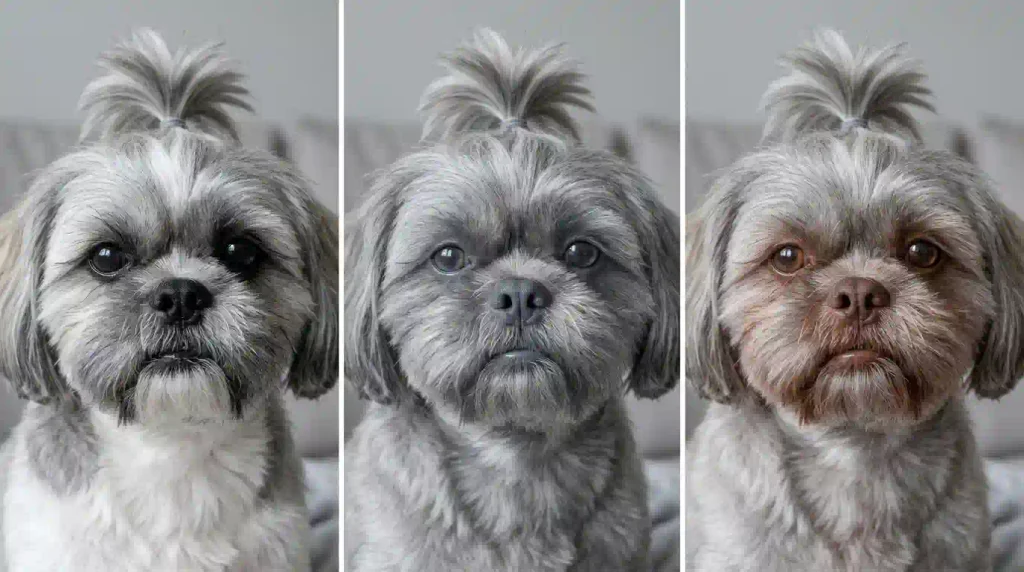
Why Coat Photos and Lighting Can Be Misleading
Digital photographs can dramatically change a gray coat.
Gray is especially vulnerable because it sits between black and white. Small changes in exposure, contrast, and white balance can move the appearance toward:
- Black
- Silver
- Blue-gray
- Brown-gray
- Almost white
Warm indoor bulbs can add yellow or brown tones.
Cool LEDs may make a neutral gray coat appear blue.
Direct sunlight may create silver highlights.
Shade can make the same dog appear darker.
Phone cameras also apply automatic image processing. Exposure correction and sharpening may exaggerate the difference between white and gray sections.
If you are evaluating a gray and white Shih Tzu puppy, ask for:
- Outdoor photographs in indirect daylight
- Front and side views
- Close-ups of the nose
- Close-ups around the eyes
- Photos taken at more than one age
- Video without a strong filter when possible
Do not judge pigmentation from one compressed social-media image.
White balance can especially mislead people who are trying to distinguish gray from the cooler tones associated with blue pigmentation.
The same problem occurs when comparing a gray-and-white dog with a silver shih tzu. The difference may look obvious in one photograph and disappear in another.
Similarly, pale gray areas can sometimes be confused with the coat of a white shih tzu when the image is overexposed.
The most reliable visual assessment occurs in neutral natural light while looking at the dog in person.
Can a Grey-and-White Shih Tzu Change Color With Age?
Yes.
Shih Tzus can show substantial coat color change between puppyhood and adulthood.
This is particularly important for gray, silver, black, gold, and brindle-looking puppies because coat fading can dramatically alter contrast.
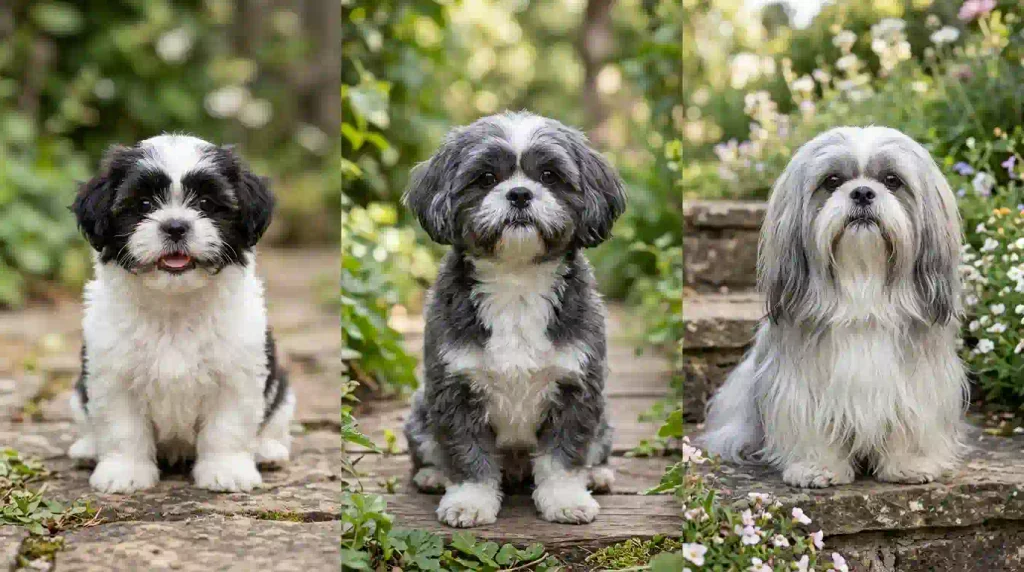
A puppy that appears mostly black and white may later look unmistakably gray and white.
Another puppy may already look gray at a young age and become progressively lighter.
Puppy-to-Adult Coat Changes
The puppy coat is not necessarily a preview of the exact adult shade.
As the adult coat develops, you may notice:
- Dark hair becoming lighter
- Black tips becoming less visible
- Charcoal areas becoming gray
- Gray areas becoming silver
- Greater contrast between white and colored areas
- Reduced contrast if colored sections fade significantly
- Changes around the face and ears
This gradual lightening is often referred to casually as coat fading or graying.
A black-looking puppy can become gray
This is one of the most important expectations for prospective owners.
A puppy can be born with very dark hair and later appear much lighter.
The underlying white markings may remain easy to recognize while the darker colored sections change from nearly black to charcoal or silver-gray.
That is why an early photograph should not be treated as a guaranteed adult color.
If the puppy begins with obvious black-and-white contrast, compare it with a black and white shih tzu but continue documenting its development.
Silvering can become more visible with coat length
Long adult hair reflects light differently from short puppy hair.
That can make a coat seem much more silver even when the change is partly due to hair structure, length, and lighting.
Owners sometimes assume that every silver-looking coat indicates a dilution gene.
That conclusion is too strong.
Visual silvering does not by itself demonstrate a specific genetic mechanism.
Graying is not the same as blue pigmentation
A dog becoming gray as it matures is not automatically becoming genetically blue.
Blue pigmentation concerns the dog’s pigment characteristics.
A coat can become gray-looking while the nose and eye rims remain black.
This distinction protects owners from mislabeling their dog based only on hair shade.
Pattern can become harder to see
A puppy with brindled or dark-tipped areas may appear more uniformly gray after those markings fade.
For example, a young black brindle shih tzu may have more obvious patterning when the coat is short.
As adult hair develops, the pattern can visually soften.
Similarly, a silver brindle shih tzu may look different depending on coat length and the amount of dark striping that remains visible.
What a Puppy’s Parents and Early Photos Can Tell You
Parents and family history can provide clues, but they cannot promise an exact adult shade.
If both parents became lighter as they matured, their puppies may also show significant color change. However, individual variation still matters.
Ask the breeder for:
- Photos of both parents as puppies
- Current adult photos of the parents
- Photos of previous related litters
- The puppy’s newborn photos
- Photos from four, eight, and twelve weeks when available
- Accurate descriptions of nose and facial pigmentation
These records can help you understand a trend.
They cannot guarantee that your puppy will finish at a specific shade of silver or gray.
This is especially important when sellers advertise puppies based on an exact expected adult appearance.
A responsible breeder should be comfortable saying:
“This puppy is dark gray and white now, but the colored areas may lighten considerably.”
That is more credible than promising that an eight-week-old puppy will stay precisely the same color.
If your main goal is learning about normal Shih Tzu development rather than color alone, explore the broader shih tzu Breed Information section and these shih tzu facts.
Is Grey and White an Accepted Shih Tzu Color Combination?
Shih Tzus can occur in many colors and patterns, and color diversity is normal within the breed.
The important question is not whether a visually gray-and-white dog “looks unusual,” but how the breed standard treats color.
What the Breed Standard Says About Coat Colors
The current American Kennel Club Shih Tzu breed standard states that all colors and markings are permissible and are to be considered equally.
That means coat color should not be treated as a measure of a Shih Tzu’s overall quality.
A gray-and-white appearance does not make a dog inherently better or worse than a:
- gold and white shih tzu
- brown and white shih tzu
- red and white shih tzu
- tan and white shih tzu
- Black-and-white dog
- Silver-and-white dog
Color is one characteristic among many.
It also does not establish whether the dog is a purebred shih tzu.
Purebred status depends on ancestry and pedigree rather than the visual shade of the coat.
Similarly, color labels should not be confused with separate breed varieties. Some online lists of types of shih tzu use informal terms based on appearance, size, or marketing rather than recognized separate breeds.
Why “Rare Color” Claims Deserve Caution
Terms such as “rare gray,” “rare silver,” or “rare blue-gray” can sound impressive in puppy advertisements.
Do not let the word rare replace more important questions.
The AKC has specifically noted in its educational material that all colors occur in the Shih Tzu and that no color should be treated as inherently rare in a way that determines breed quality.
A seller may still use “rare” informally to describe what they produce less often, but the term should not automatically justify:
- A large price premium
- Claims of superior health
- Claims of better temperament
- Claims of higher breed quality
- Guaranteed adult coloring
Ask for evidence behind any unusual claim.
If a breeder says the puppy is genetically blue, ask how that conclusion was reached.
Was it based on the nose, lips, and eye rims?
Was genetic testing performed?
Or is the breeder simply calling the puppy blue because the fur looks gray?
Those are very different levels of evidence.
Be equally cautious when unusual marketing combines color with terms such as “micro,” “imperial,” or teacup shih tzu.
Color should remain secondary to:
- Health
- Temperament
- Appropriate breeding practices
- Veterinary records
- Socialization
- Suitability for your household
How Do You Care for a Grey-and-White Coat?
A white and gray Shih Tzu does not need fundamentally different grooming simply because of its color.
The care requirements come primarily from the Shih Tzu coat itself.
When maintained long, the breed carries a dense, flowing double coat. Without consistent grooming, tangles can progress into uncomfortable coat matting.
Brushing, Bathing, and Preventing Mats
For a full or moderately long coat, regular grooming is essential.
Many long-coated Shih Tzus benefit from daily brushing, especially in high-friction areas.
Pay particular attention to:
- Behind the ears
- Around the neck
- Under the front legs
- Chest
- Belly
- Inner thighs
- Tail
- Areas beneath a harness
Brush through the entire coat
Surface brushing can make a Shih Tzu look neat while tangles remain close to the skin.
Work in sections and make sure the brush reaches through the coat gently without scraping the skin.
A metal comb can be used afterward to locate smaller knots.
If the comb repeatedly catches in one area, there may still be a tangle underneath.
Never aggressively pull through a tight mat.
Severe matting can cause discomfort and may require professional grooming.
Bathe according to the dog’s lifestyle
Bathing frequency varies.
A dog with a long show-style coat may need a different routine from a pet kept in a short trim.
Use a shampoo made for dogs rather than human shampoo, and rinse thoroughly.
Residue left in a dense coat can contribute to irritation.
The white portions of a Shih Tzu white and grey coat may show:
- Dirt
- Saliva staining
- Food stains
- Tear discoloration
- Mud around the feet
more obviously than the gray areas.
That does not mean the dog requires aggressive whitening treatments.
Gentle, regular cleaning is usually preferable to repeatedly applying harsh products solely to make the white hair brighter.
Dry the coat thoroughly
Moisture trapped in tangled hair can make grooming more difficult.
After bathing, dry the coat carefully and brush or comb according to the dog’s normal routine.
Consider a shorter pet trim
Owners who do not want the maintenance of a floor-length coat can choose a shorter trim.
A short pet coat still requires brushing and bathing, but it is generally easier to manage.
Color does not change this requirement.
A blonde shih tzu, dark dog, gray-and-white dog, or silver shih tzu all need grooming appropriate to coat length and texture.

When a Skin or Coat Change Needs Veterinary Attention
Normal fading happens gradually.
Health-related coat changes may look different.
Do not assume every change in color or texture is simply normal graying.
Watch for:
- Sudden hair loss
- Bald patches
- Persistent itching
- Red or inflamed skin
- Crusts
- Sores
- Unusual odor
- Excessive licking
- Greasy skin
- Sudden thinning
- Major texture changes
- Areas that appear painful
These signs deserve attention regardless of coat color.
A healthy puppy gradually changing from dark gray to silver is very different from an adult dog suddenly losing hair in patches.
Similarly, discoloration in white hair can sometimes come from surface staining rather than an actual change in pigment.
If the coat around the eyes, muzzle, or paws changes color, check whether moisture, saliva, dirt, or licking is involved before deciding that the dog’s genetic coat color has changed.
Persistent skin or coat abnormalities should be discussed with a veterinarian.
Coat color itself is not a diagnosis.
Grey-and-White Shih Tzu Quick Answers
Is Gray the Same as Silver or Blue?
No; gray describes appearance, silver usually describes a lighter gray effect, and blue should be assessed with pigmentation rather than gray hair alone.
Does Coat Color Determine Health or Temperament?
No; a grey-and-white coat by itself does not reliably predict a Shih Tzu’s health or temperament.
Is “grey” different from “gray” in a Shih Tzu?
No; they are simply different spellings of the same color word.
Can a black-and-white puppy turn grey and white?
Yes; dark puppy hair can lighten considerably as the adult coat develops.
Can a grey-and-white Shih Tzu become silver?
A gray coat can lighten and develop a more silver appearance as the dog matures.
Is every grey Shih Tzu genetically blue?
No; a gray-looking coat alone does not prove blue pigmentation or a specific dilution genotype.
How can I tell whether my gray Shih Tzu is blue?
Check the nose, lips, and eye rims and compare the pigmentation rather than relying only on coat color.
Can grey-and-white Shih Tzus have black noses?
Yes; a gray-looking coat can occur with normal black pigmentation.
Are grey-and-white Shih Tzus rare?
The visual combination should not automatically be treated as a rare or premium form of the breed.
Can a grey Shih Tzu have white markings?
Yes; white can appear on the face, chest, neck, paws, legs, belly, tail, or larger areas of the body.
Is a grey-and-white Shih Tzu a parti-color?
A dog with substantial white plus gray-colored areas may be described informally as parti-colored, depending on the pattern and terminology being used.
Is gray-and-white the same as silver-and-white?
Not necessarily; silver generally suggests a lighter or more reflective shade than ordinary gray, although everyday descriptions can overlap.
Is gray-and-white the same as blue-and-white?
No; a blue-and-white classification should not be made solely because the colored hair looks gray.
Does a gray-and-white Shih Tzu need special shampoo?
No; use a dog-appropriate shampoo based on the individual dog’s skin and coat needs rather than color alone.
How often should a grey-and-white Shih Tzu be brushed?
A long coat often benefits from daily brushing, while shorter pet trims may be easier to maintain.
Do white areas require extra care?
They may show dirt and staining more easily, but gentle routine cleaning is usually more appropriate than harsh whitening products.
Can a gray Shih Tzu be hypoallergenic?
Color does not determine allergen exposure; see the shih tzu hypoallergenic guide for a fuller explanation.
Does a grey-and-white coat prove a dog is purebred?
No; coat appearance cannot establish ancestry or pedigree.
Final Thoughts
A grey and white Shih Tzu can range from a dark charcoal-and-white puppy to a pale silver-and-white adult, and that variation is exactly why color should be identified carefully. Look at the visible coat, placement of white markings, age, previous photographs, and—most importantly when distinguishing gray from blue—the nose, lips, and eye-rim pigmentation.
Expect some puppies to change significantly as their adult coat develops, and avoid breeders who guarantee an exact mature shade from a young puppy photograph. Whether your dog ultimately looks gray, silver, black-gray, or nearly white, coat color matters far less than health, temperament, responsible breeding, and good daily care.
For side-by-side comparisons with neighboring shades, start with the complete shih tzu colors guide and then explore the individual color pages most similar to your dog’s appearance.