Lavender Shih Tzu: Color, Identification, and Care
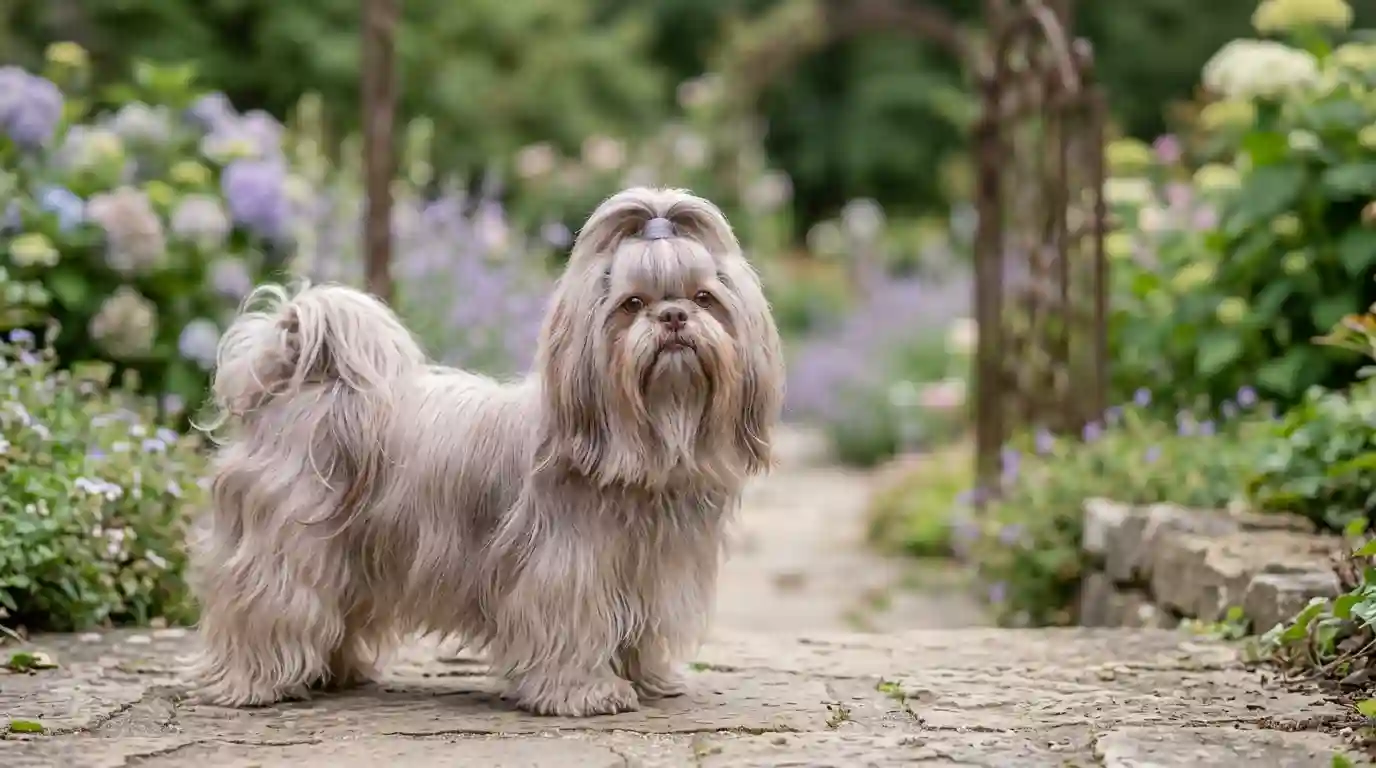
A lavender Shih Tzu usually describes a dog with a soft, diluted brown-gray, taupe, dusty lilac, or silvery beige appearance rather than a coat that is literally purple or lavender. The label is closely associated with terms such as lilac coat and Isabella coat, which are often used for pigmentation produced when brown or liver eumelanin is also affected by dilution. However, “lavender” is not a color you should diagnose from one puppy photo. Lighting, coat length, fading, and camera processing can all change how the hair looks, while the dog’s nose pigmentation, lips, eye rims, and paw pads provide additional clues about the underlying pigment. Genetics can help clarify the picture: variants involving the D locus and MLPH gene can dilute dark pigment, but a DNA result must be interpreted alongside other coat-color genes rather than being treated as a simple “lavender test.” This guide explains how to identify a lavender-looking Shih Tzu, distinguish it from liver and blue, understand the genetics, evaluate breeder claims, and care for the coat properly.
Table of Contents
- What does “lavender” mean in a Shih Tzu?
- How to identify a lavender-looking Shih Tzu
- What genetics may produce a lavender appearance?
- Can a lavender Shih Tzu’s color change with age?
- What do breed standards say about lavender?
- Does a lavender Shih Tzu need special care?
- What to ask before choosing a lavender puppy
- Lavender Shih Tzu quick answers
- Final Thoughts
What Does “Lavender” Mean in a Shih Tzu?
The word lavender can be misleading if you imagine an actual purple dog.
A lavender-looking Shih Tzu normally has a muted, diluted shade that may appear:
- Pale taupe
- Dusty brown-gray
- Silvery beige
- Mushroom-colored
- Grayish chocolate
- Soft pinkish-gray
- Cool light brown
Exactly how the coat appears depends on the dog’s underlying pigment, other coat-color genes, age, lighting, and coat length.
This is why “lavender” should initially be treated as a descriptive color label, not a guaranteed genetic diagnosis.
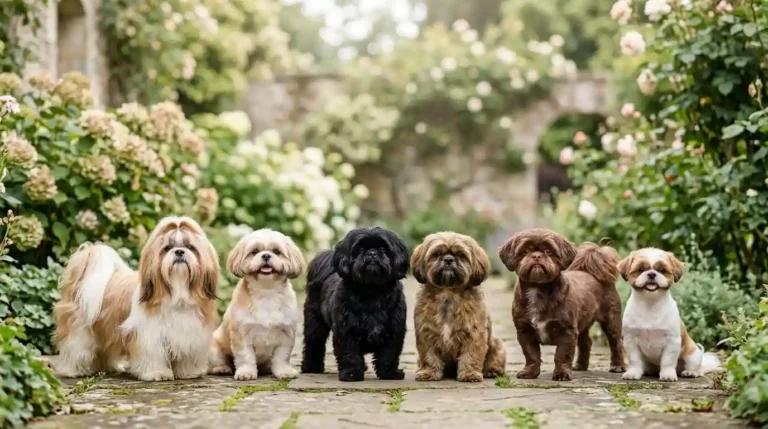
Owners comparing different shih tzu colors may notice that lavender sits visually between several familiar shades. It can look lighter and cooler than ordinary liver, warmer than many blue-gray coats, and more brown-based than a typical silver coat.
The difficulty is that two visually similar dogs may not have exactly the same coat-color genetics.
A breeder may call one puppy lavender, another lilac, and another Isabella even when the puppies look nearly identical. Another breeder may use those words differently.
For that reason, identification should begin with observable characteristics and then move toward genetic interpretation only when the available evidence supports it.
How Lavender Relates to Liver, Isabella, and Lilac
The clearest way to understand lavender is to start with liver pigmentation.
In dogs, black and brown belong to the eumelanin pigment system. Genetic changes at the brown locus can convert what would otherwise be black eumelanin into brown or liver eumelanin.
A liver shih tzu therefore should not be identified simply because the coat looks brown. One of the most useful clues is brown or liver pigmentation at the nose, lips, and eye rims.
Now add dilution.
The MLPH gene, commonly discussed through the D locus, influences how eumelanin pigment is distributed. When a dog inherits the appropriate dilute variants, black pigment can appear blue-gray, while brown pigment can become a much lighter, muted shade.
The UC Davis Veterinary Genetics Laboratory dog coat color guide describes dilution as changing black to blue and brown to lilac or Isabella.
That provides the basic genetic concept behind many uses of the term lavender Shih Tzu.
A simplified visual pathway looks like this:
Black pigment → dilution → blue-gray pigment
Brown/liver pigment → dilution → lilac/Isabella-type pigment
“Lavender” is commonly used around that second combination.
However, terminology is not standardized equally across every breed or breeder community. One person’s “lavender” may be another person’s “lilac,” “Isabella,” “dilute liver,” or simply “light liver.”
That is why you should focus on pigment first and marketing terminology second.
Is Lavender the Same as Lilac?
Often, the terms overlap.
A lilac Shih Tzu and lavender Shih Tzu may both be used to describe a dilute brown/liver appearance.
The distinction usually reflects breeder vocabulary more than a universally recognized difference between two completely separate colors.
If someone claims that “lilac” and “lavender” are genetically different categories, ask exactly which genes or test results they are using to make that distinction.
Without a defined genetic explanation, the difference may simply be descriptive.
Is Lavender the Same as Isabella?
“Isabella” is another term frequently used for diluted brown pigment in dogs.
In practice, lavender, lilac, and Isabella may overlap substantially.
An Isabella coat often looks pale beige-brown, taupe, silvery fawn, or muted chocolate-gray.
Again, do not assume every dog advertised as Isabella has undergone genetic testing. Breeders may use the term based entirely on appearance.
Is Lavender the Same as Liver?
Not exactly.
Liver refers to brown eumelanin pigmentation. Lavender or lilac is generally used when that brown pigment is also diluted to a paler, cooler-looking shade.
A regular liver chocolate shih tzu can therefore look considerably darker and richer than a lavender dog.
Think of liver as the underlying brown-pigment category and lavender as one possible diluted-looking expression associated with that pigment.

How to Identify a Lavender-Looking Shih Tzu
The most common mistake when identifying a lavender Shih Tzu is looking only at the body coat.
The hair matters, but it is only one piece of evidence.
A stronger identification combines:
Coat shade + nose pigmentation + lips + eye rims + paw pads + age + natural-light appearance + genetic evidence when available.
Start by observing the dog without assigning a label.
Does the coat look rich brown, pale brown, silver-brown, gray, blue-gray, beige, or taupe?
Then examine the pigment points.
Compare Coat Shade With Nose, Lips, Eye Rims, and Paw Pads
Pigment points are especially valuable when the hair itself is difficult to classify.
Nose Pigmentation
Look carefully at the nose in neutral natural daylight.
A standard black-pigmented dog will typically have a nose that appears strongly black.
A liver-pigmented dog generally has a brown nose.
A blue-pigmented dog may show slate-gray or diluted blue-gray pigment.
A lavender-looking dog associated with diluted brown pigment may have a lighter, muted brown, taupe, pinkish-brown, or gray-brown nose rather than deep black.
Do not use one photograph to make this judgment.
Indoor lighting can dramatically change the color of the nose.
Lip Pigmentation
The lips should be examined alongside the nose.
If the coat appears lavender but the lips are strongly black, that raises questions about whether the dog is truly showing a dilute brown-pigment combination or merely has a lavender-looking coat under certain lighting.
A consistent pigment pattern is more informative than one isolated body area.
Eye-Rim Pigmentation
Look at the skin immediately around the eyes.
The eye rims may provide a clearer view of pigment than long facial hair does.
A liver-pigmented dog tends toward brown pigment around the eyes, while a blue-pigmented dog can show a cooler diluted tone.
Lavender-looking dogs associated with diluted brown pigmentation may have a softer brown-gray or taupe appearance.
Again, this is a visual clue—not a DNA result.
Paw-Pad Pigmentation
The paw pads can provide supporting information.
Check whether they appear:
- Black
- Brown
- Slate-gray
- Muted brown-gray
- Pinkish in some areas
- Mixed in pigment
Paw pads should not be used as the single deciding feature because individual pads can vary and may contain mixed pigmentation.
They are most useful when they agree with the nose, lips, and eye rims.
A Practical Natural-Light Identification Check
If you are trying to identify your own dog or evaluating lavender Shih Tzu puppies, examine the dog outdoors in bright shade rather than direct midday sunlight.
Direct sunlight can wash the coat out.
Warm indoor lighting can push lavender toward chocolate or beige.
Cool artificial lighting can push it toward blue-gray.
Natural indirect daylight gives you a more neutral comparison.
Take photographs from:
- Front
- Left side
- Right side
- Back
- Close-up of the nose
- Close-up of the eyes
- Close-up of the paw pads
If possible, photograph a neutral white or gray object in the same image. It can help reveal whether the phone’s white balance has shifted the overall color.

Tell Lavender Apart From Liver and Blue
The easiest confusion occurs between lavender, liver, and blue because all three can appear muted.
Here is a practical comparison:
| Feature | Lavender/Lilac-Looking | Liver | Blue |
| Typical visual impression | Taupe, pale brown-gray, silvery beige | Brown, chocolate, reddish brown | Slate, steel gray, cool blue-gray |
| Underlying pigment concept | Diluted brown/liver | Brown/liver | Diluted black |
| Nose appearance | Often muted brown-gray or taupe | Brown/liver | Slate or blue-gray |
| Eye rims | Muted brown-gray | Brown/liver | Blue-gray/slate |
| Overall warmth | Usually between liver and blue | Warmer | Usually cooler |
| Photo confusion | Can look gray, beige, or liver | Can look red or chocolate | Can look gray or silver |
This table is useful for visual orientation, but it is not a substitute for genetic testing.
Lavender Versus Liver
A liver shih tzu typically shows stronger, richer brown pigmentation.
The nose may appear chocolate, reddish-brown, or medium brown rather than diluted taupe.
The body hair can be almost any shade because “liver” is fundamentally about eumelanin pigment rather than one fixed coat color.
A red liver shih tzu demonstrates this particularly well: warm reddish hair can occur alongside liver pigmentation.
Likewise, a liver and white shih tzu may have large white areas while retaining the same underlying liver pigment.
Lavender is generally used when that brown pigment appears additionally diluted.
Lavender Versus Blue
A blue shih tzu involves diluted black eumelanin rather than diluted brown eumelanin.
Visually, blue tends to lean toward:
- Slate
- Charcoal-gray
- Steel-gray
- Smoky blue-gray
Lavender tends to retain more brown, beige, taupe, or pinkish warmth.
The distinction can be extremely subtle in photographs.
A cool lavender dog photographed under blue light can look almost identical to a blue dog. A blue dog photographed under warm light may pick up enough brown to look lavender.
This is one reason your lavender blue shih tzu comparison research should consider pigment and genetic context rather than hair shade alone.
Lavender Versus Gray or Silver
A grey shih tzu can appear pale, smoky, or silver without having diluted brown pigmentation.
A silver shih tzu may also resemble lavender when warm lighting adds beige or brown tones.
Check the pigment points.
A silver-gray dog with a strongly black nose is very different genetically from a lavender-looking dog whose nose and eye rims show diluted brownish pigment.
Lavender Versus Albino or Very Pale Dogs
A pale coat does not mean albinism.
An albino shih tzu involves fundamentally different pigmentation issues.
A lavender dog still has pigment. The pigment is simply altered in color and intensity.
Do not use terms such as “albino lavender” casually unless there is appropriate evidence explaining what is actually meant.
What Genetics May Produce a Lavender Appearance?
Dog coat-color genetics can become complicated quickly, but the basic lavender concept can be explained without turning the article into a genetics textbook.
Two pigment systems matter broadly in dogs:
Eumelanin creates black-based pigment and its modified forms, including brown and diluted shades.
Phaeomelanin produces red, gold, cream, yellow, and related warm coat shades.
Lavender terminology mainly concerns changes to eumelanin.
From Black Pigment to Brown Pigment
The first important genetic step involves the brown locus.
Variants affecting TYRP1 can change eumelanin from black to brown.
That brown can appear in areas such as:
- Nose
- Lips
- Eye rims
- Coat hair
- Paw pads
This is the genetic basis behind liver or chocolate pigmentation.
A brown shih tzu may visually overlap with liver terminology, but remember that coat shade and pigment category should still be considered separately.
Dilution and the D Locus in Plain English
The second major concept is dilution.
The D locus is associated with the MLPH gene, short for melanophilin.
The melanophilin protein plays a role in the normal distribution of pigment within hair.
When certain recessive variants are inherited from both parents, the visible pigment can become diluted.
Instead of dense, strongly colored eumelanin, pigment granules are distributed differently, producing a paler appearance.
The simplified result is:
Black → blue
and
Brown → lilac/Isabella
This second pathway is the one most relevant to Shih Tzu lavender terminology.
Is the Dilute Gene Recessive?
Known MLPH dilution variants follow an autosomal recessive inheritance pattern.
In simple terms, a dog generally needs two relevant dilute copies—one inherited from each parent—to display the dilute phenotype associated with known variants.
A dog with only one dilute copy may be a carrier without appearing dilute.
Imagine a simplified mating where both parents each carry one dilute variant:
Parent 1: D/d
Parent 2: D/d
The theoretical distribution for each puppy would be:
- 25% D/D
- 50% D/d
- 25% d/d
This represents probability for each puppy, not a guarantee that exactly one quarter of every litter will be dilute.
A litter of four could contain no dilute puppies, one, several, or—in unusual outcomes—even all dilute puppies.
Genetic probability does not operate like a fixed litter quota.
More Than One Dilution Variant Exists
The older explanation of the D locus often described only:
D = non-dilute
d = dilute
Modern testing is more detailed.
Multiple variants in the MLPH gene have been identified, including variants often labeled d1, d2, and d3.
This matters because not every dilute phenotype across every breed is explained by one single mutation.
One known rare MLPH dilution variant has been detected in Shih Tzus, which demonstrates why breed-specific genetic evidence matters more than oversimplified color charts.
You do not need to memorize the variant names to evaluate a puppy.
The practical lesson is simply:
Dog color genetics is more complicated than “two lavender parents make lavender puppies.”
Where Does the Brown Gene Fit In?
Dilution by itself does not automatically create lavender.
If black eumelanin is diluted, the result is generally described as blue.
To reach the common lilac/Isabella/lavender concept, the dog also needs brown/liver eumelanin.
So a simplified conceptual model is:
Black eumelanin + no dilution → black pigment
Brown eumelanin + no dilution → liver/chocolate pigment
Black eumelanin + dilution → blue pigment
Brown eumelanin + dilution → lilac/Isabella/lavender-type pigment
Real coat appearance can still be modified by many other genes.
That is why a genetically similar pigment combination does not mean every lavender dog will have exactly the same body-coat shade.
One may appear beige.
Another may look taupe.
Another may look almost silver.
Another may appear distinctly lavender-gray.
What a DNA Test Can and Cannot Confirm
DNA testing can be valuable when used for the right question.
A laboratory may test relevant coat-color loci, including:
- Brown-related variants
- Dilution-related variants
- Other genes affecting coat pattern or pigment
If a dog has genetic results supporting both brown/liver eumelanin and known dilution variants, that provides much stronger evidence for a lilac/Isabella-type genetic interpretation than photographs alone.
But there is an important limitation:
There is not necessarily a universal test result that simply says “this dog is lavender.”
“Lavender” is a descriptive label.
A DNA report instead tells you which tested variants the dog carries.
You then interpret those results alongside the phenotype.
What a Dilution Test Can Tell You
A D-locus test can determine whether the dog carries specific known MLPH dilution variants included in that laboratory’s test.
Depending on the result, it may show that the dog:
- Has no tested dilution variants
- Carries one tested dilution variant
- Has two relevant dilution variants and is expected to express dilution
That is meaningful evidence.
What a Dilution Test Cannot Tell You
A dilution result alone cannot tell you the entire coat color.
A dog could genetically express dilution but still need other loci interpreted to understand why it looks the way it does.
Likewise, a negative result for known variants does not necessarily explain every possible dilution phenotype across every dog population because genetic knowledge continues to develop.
Testing technology also differs among laboratories.
When evaluating breeder DNA results, ask:
Which laboratory performed the test?
Which genes and variants were actually tested?
Can I see the original report?
Is the breeder interpreting the result accurately?
Do not accept a screenshot saying simply “lavender gene: positive” without understanding what test produced that conclusion.

Can a Lavender Shih Tzu’s Color Change With Age?
Yes.
A lavender Shih Tzu puppy may look noticeably different as an adult.
That does not necessarily mean its underlying genetic pigment category changed.
The visible hair can change while the genetic basis remains the same.
Shih Tzus are particularly challenging to predict from young puppy photos because the puppy coat and adult coat can differ substantially in:
- Shade
- Length
- Texture
- Contrast
- Dark tipping
- Marking visibility
A puppy that looks deep taupe at eight weeks might become pale silver-beige as an adult.
Another may retain stronger brown tones around the ears and face while the body lightens.
Why Puppy Coats May Look Darker
Young dogs often have shorter hair that makes concentrated pigment easier to see.
Some puppies also have dark-tipped hairs.
As the hair grows longer, the lighter portion of the shaft becomes more visually dominant.
The overall impression can therefore shift from:
Dark taupe → lavender-gray
or:
Chocolate-gray → pale Isabella
without the dog’s fundamental genetic pigmentation changing.
The Face May Change Differently From the Body
The ears, muzzle, and face can remain darker than the torso.
This can produce a puppy that initially appears almost solid lavender but develops more visible contrast later.
Alternatively, dark facial hair may fade and produce a more uniform adult appearance.
White Markings Can Become More Noticeable
A lavender puppy with white markings may develop stronger visual contrast as the colored areas fade.
This can make a two-color dog look quite different as an adult.
White can appear on the:
- Face
- Forehead
- Muzzle
- Chest
- Neck
- Feet
- Legs
- Tail
- Belly
Large white areas do not change the underlying lavender pigmentation in the colored regions.
What Parent Dogs Can Suggest
If you are considering lavender Shih Tzu puppies, ask for photographs of the parents at several ages.
Adult parent coats may indicate how color tends to develop in that family.
Photos of previous puppies from similar pairings can also provide context.
However, parents cannot guarantee the exact adult shade.
A breeder can reasonably say:
“This line often lightens substantially.”
They cannot reasonably promise:
“This puppy will remain exactly this shade of lavender.”
Genetics influences color, but individual expression and coat development still vary.
Why Edited Puppy Photos Are a Problem
Lavender is especially easy to exaggerate digitally.
Increasing saturation can create purple tones that are not present in real life.
Reducing warmth can make a beige coat look more lilac.
Increasing exposure can turn liver into pale Isabella.
Before choosing a puppy based on color, request unedited natural-light photos and video.
A dog should look consistently lavender-like under ordinary conditions, not only in one carefully edited portrait.

What Do Breed Standards Say About Lavender?
This section is important because breeder terminology and breed-standard terminology are not always the same thing.
The American Kennel Club Shih Tzu breed standard allows Shih Tzus in all colors and markings and considers colors equally.
However, lavender is not separately defined as a named color category in the breed standard itself.
This means two things can be true at the same time:
A Shih Tzu can have a coat that a breeder or owner reasonably describes as lavender.
And:
“Lavender” does not need to appear as a distinct breed-standard category for the dog to be a Shih Tzu.
Standard Wording Versus Breeder Labels
| Term | How it is commonly used |
| Lavender | Descriptive breeder/owner term for a pale dilute brown-gray appearance |
| Lilac | Often overlaps with diluted brown/liver terminology |
| Isabella | Another term often used for diluted brown pigment |
| Liver | Breed-relevant pigmentation category involving brown pigment |
| Blue | Breed-relevant pigmentation category involving diluted black pigment |
This distinction prevents a common mistake:
A breeder label does not automatically become an official breed-standard category simply because it sounds specific.
Similarly, unusual color terminology does not establish whether a dog is a purebred shih tzu.
Pedigree concerns ancestry.
Coat terminology concerns appearance and pigmentation.
Those are separate questions.
Does “Rare Lavender Shih Tzu” Mean Higher Quality?
No.
The phrase rare lavender Shih Tzu may be used in advertising, but rarity does not establish quality.
Even if a particular color combination is produced less frequently in a breeder’s program, that does not mean the puppy is:
- Healthier
- Better tempered
- More correct structurally
- Better bred
- More purebred
- More suitable for your household
Color should be one preference among many.
Health and temperament matter much more over the life of the dog.
Be especially cautious when several marketing labels are combined, such as:
“Ultra-rare lavender teacup.”
Terms related to a teacup shih tzu and unusual coat color can both be used to create an impression of exclusivity.
That does not substitute for health records, pedigree, responsible breeding practices, or realistic size and color expectations.
Does a Lavender Shih Tzu Need Special Care?
A lavender Shih Tzu does not automatically require a completely different grooming routine from other Shih Tzus.
The breed’s coat type—not the marketing name of the color—creates most of the grooming requirements.
Shih Tzus have a long double coat when allowed to grow naturally.
The outer coat grows long and flowing, while the undercoat contributes density.
Without consistent grooming, the coat can tangle and form uncomfortable mats.
Coat Care and Routine Grooming
A long lavender coat needs the same core maintenance as a black, gold, liver, gray, or other Shih Tzu coat.
Brush Consistently
Long coats generally require frequent brushing.
For dogs maintained in a full coat, daily brushing is often practical because it prevents small tangles from becoming tight mats.
Pay particular attention to:
- Behind the ears
- Neck
- Chest
- Under the front legs
- Inner legs
- Belly
- Tail
- Areas under a collar or harness
Brush through the full coat rather than only smoothing the surface.
A metal comb can help find knots that remain close to the skin.
Keep the Face Clean
Long facial hair collects:
- Food
- Water
- Saliva
- Eye-area moisture
Keep the muzzle and eye area clean and dry.
If the coat is worn long, a topknot can help keep hair away from the eyes.
Many pet owners instead choose a shorter facial trim.
Bathe as Needed
Use dog-appropriate shampoo and rinse thoroughly.
Bathing frequency depends on the dog’s:
- Coat length
- Lifestyle
- Skin condition
- Outdoor activity
- Grooming schedule
Do not choose harsh products merely because they promise to “enhance lavender.”
The goal should be healthy skin and manageable hair—not artificially altering the shade.
Consider a Puppy Trim
A shorter pet trim can dramatically reduce grooming time.
A lavender dog will still display its pigment and general color in a short coat, although clipping may change the visual intensity because different portions of the hair shaft are exposed.
This sometimes makes the coat appear temporarily darker after grooming.
Check the Skin During Grooming
Long hair can hide early skin problems.
While brushing, look for:
- Redness
- Scaling
- Hair thinning
- Bald patches
- Crusts
- Bumps
- Unusual odor
- Excessive oiliness
- Areas that cause discomfort
Routine grooming provides an excellent opportunity to notice changes early.

Health Claims to Treat Cautiously
Unusual coat colors often attract unusual health claims.
Some websites say dilute dogs are always unhealthy.
Others say lavender dogs are perfectly protected from every color-related concern.
Neither extreme is useful.
Lavender Color Alone Is Not a Diagnosis
A dog being described as lavender does not automatically mean it has a disease.
A coat label does not tell you:
- Whether the dog has allergies
- Whether it will develop skin disease
- Whether it has orthopedic problems
- Whether it has eye disease
- Whether it will have respiratory issues
- How long it will live
Health must be evaluated individually.
What About Color Dilution Alopecia?
Color dilution alopecia, or CDA, is a real inherited hair-follicle disorder associated with dilute pigmentation in some dogs.
Signs can include:
- Hair thinning
- Patchy hair loss
- Dry or scaly skin
- Secondary skin problems
However, it is incorrect to diagnose CDA simply because a Shih Tzu is lavender, lilac, Isabella, or blue.
Not every dilute dog develops the condition.
The frequency and expression also vary among breeds and individuals.
A healthy-looking lavender puppy should not automatically be labeled diseased.
At the same time, a breeder should not dismiss significant hair loss by saying:
“That’s normal because lavender coats are thin.”
Persistent hair thinning, broken hairs, scaling, recurrent skin infections, or bald areas deserve veterinary evaluation.
Do Not Confuse Normal Coat Fading With Hair Loss
Color change is not the same as coat loss.
If the dog progresses from dark taupe to pale lavender while maintaining a full, healthy coat, that is a color-development question.
If the dog develops visible skin through thinning hair, bald patches, inflammation, or scaling, that is a health question.
Treat them separately.
Does Color Determine Temperament?
No.
There is no useful basis for assuming that lavender Shih Tzus are automatically calmer, more affectionate, more intelligent, or more difficult than other Shih Tzus.
Temperament depends on factors including:
- Genetics beyond coat color
- Early development
- Socialization
- Training
- Environment
- Individual personality
Readers who want a broader understanding of normal breed behavior and characteristics should explore the shih tzu Breed Information section and these shih tzu facts.
What to Ask Before Choosing a Lavender Puppy
Color can understandably influence which puppy catches your attention.
A lavender coat is unusual-looking and can be very attractive.
But buying a puppy solely because the advertisement says “rare lilac lavender Shih Tzu” is risky.
Use the color claim as the beginning of your questions—not the end.
Ask What the Breeder Means by Lavender
Start with the simplest question:
“When you say lavender, what exactly do you mean?”
A knowledgeable breeder should be able to explain whether they are referring to:
- Visual coat color
- Diluted liver pigmentation
- DNA results
- Family-line terminology
- Registration terminology
If the only explanation is:
“It looks purple, so it’s lavender,”
you do not have much genetic evidence.
Ask About Nose and Eye-Rim Pigmentation
Ask the breeder to provide clear natural-light photos of:
- Nose
- Lips
- Eye rims
- Paw pads
- Full coat
A knowledgeable breeder should understand why those pigment points matter.
Ask Whether Genetic Testing Was Done
If the breeder makes a specific genetic claim, ask to see the actual DNA report.
Do not settle for:
“The parents were tested.”
Ask:
Which parent?
Which test?
Which laboratory?
Which genes?
What were the results?
If the puppy is claimed to be a genetically dilute liver/lilac dog, evidence related to both brown pigmentation and dilution is more informative than a generic health DNA panel.
Ask About the Parents
Ask for the sire and dam’s:
- Registered names
- Pedigree information
- Current photos
- Puppy photos
- Adult coat colors
- Available health records
If both parents changed dramatically in coat color as they matured, that information can help set realistic expectations for the puppy.
Ask About Health Screening
Color DNA tests and health tests are not the same thing.
A breeder who has tested a dog for D-locus dilution has not automatically completed every relevant health screening.
Ask what health evaluation has been performed on the breeding dogs.
Also ask about health problems known in previous generations.
Ask for Veterinary Records
The puppy should come with appropriate veterinary documentation for its age.
Records may include:
- Examination history
- Vaccination information
- Parasite-control history
- Microchip details
- Relevant health observations
Ask About Socialization
A beautiful coat does not compensate for poor puppy development.
Ask:
- Where the puppies are raised
- Whether they experience household sounds
- How often they are handled
- Whether they have begun grooming
- Whether they have interacted appropriately with people
- How the breeder evaluates temperament
Ask About the Contract
Read the breeder contract before paying a deposit.
Look for clear terms involving:
- Registration
- Health guarantees
- Return policy
- Breeding rights
- Buyer responsibilities
- Breeder responsibilities
A responsible breeder should be willing to discuss what happens if you can no longer keep the dog.
Be Cautious With Exact Adult-Color Guarantees
No breeder should need to guarantee that an eight-week-old puppy will remain exactly one particular shade.
A more credible statement is:
“This puppy currently appears lavender and has pigment/genetic results consistent with our interpretation, but the adult coat may become lighter.”
That acknowledges the difference between genetic pigmentation and visible adult coat shade.
Do Not Pay for a Name Alone
Terms such as:
- Rare lavender
- Ultra lilac
- Platinum lavender
- Exotic Isabella
- Imperial lavender
- Micro lavender
can make a puppy sound exclusive.
Ask what measurable characteristic each term actually describes.
If there is no clear explanation, you may simply be paying extra for marketing language.
A purebred shih tzu should be assessed through pedigree evidence, while responsible breeding should be evaluated through health, welfare, temperament, records, and breeder practices.
Color comes after those considerations.
Lavender Shih Tzu Quick Answers
What is a lavender Shih Tzu?
A lavender Shih Tzu is a descriptive term for a dog with a muted lilac, taupe, silvery-brown, or dilute liver-like appearance.
Is lavender an official Shih Tzu color?
Lavender is not separately named in the AKC breed-standard color wording, although the Shih Tzu standard permits all colors and markings.
Is lavender the same as lilac?
The terms commonly overlap and are often used for similar dilute brown/liver appearances.
Is lavender the same as Isabella?
They can overlap; Isabella is another term frequently used for diluted brown pigmentation.
Is lavender the same as liver?
No; liver refers to brown eumelanin, while lavender is generally used for a lighter, diluted expression associated with brown pigment.
Is lavender the same as blue?
No; blue generally involves diluted black pigment, while lavender/lilac terminology generally refers to diluted brown pigment.
What color is a lavender Shih Tzu’s nose?
It may appear muted brown, taupe, gray-brown, or another diluted brownish shade rather than deep black.
Can a lavender Shih Tzu have a black nose?
A strongly black nose would make a typical dilute-brown/lavender interpretation less straightforward and deserves closer evaluation.
Are lavender Shih Tzus actually purple?
No; lavender describes a muted taupe, brown-gray, lilac-gray, or silvery-beige appearance rather than literal purple hair.
Are lavender Shih Tzus rare?
They may be produced less often than common color combinations, but “rare” should not be treated as proof of quality or used without context.
Is a rare lavender Shih Tzu healthier than other colors?
No; an unusual color does not make a puppy inherently healthier.
Do lavender Shih Tzus have different personalities?
No reliable temperament difference can be predicted from lavender coat color alone.
Can lavender Shih Tzu puppies get lighter?
Yes; the adult coat can become substantially lighter than the puppy coat.
Can a lavender puppy turn silver?
A lavender-looking coat may lighten enough to appear very silver, though pigment points can still help distinguish its underlying color category.
What causes lavender coloring?
The common genetic explanation involves brown/liver eumelanin combined with genetic dilution affecting pigment intensity.
What is the D locus?
The D locus refers to genetic variation involving MLPH that can dilute eumelanin pigment.
What does the MLPH gene do?
MLPH is involved in pigment distribution, and certain variants can produce diluted coat and skin-point pigmentation.
Is dilution recessive?
Known MLPH dilution variants generally act recessively, meaning two relevant dilute copies are typically needed for the phenotype.
Can DNA prove a Shih Tzu is lavender?
DNA can identify relevant brown and dilution variants, but “lavender” remains a descriptive label interpreted from several genetic and visual factors.
Does a DNA dilution test prove the dog is purebred?
No; coat-color testing does not establish pedigree or breed purity.
Is lavender related to merle?
No; dilution and merle are different genetic concepts and should not be confused.
Can a lavender Shih Tzu be merle too?
Different genetic traits can potentially occur together, but a merle shih tzu involves a separate pattern mechanism from simple dilution.
Does a lavender Shih Tzu need different grooming?
No; routine grooming depends primarily on the Shih Tzu’s coat type and length rather than the lavender label.
How often should a long-coated lavender Shih Tzu be brushed?
A full-length Shih Tzu coat generally benefits from very frequent, often daily, brushing to prevent tangles and mats.
Can lavender Shih Tzus get color dilution alopecia?
Color dilution alopecia can occur in some dilute dogs, but a lavender color label alone does not diagnose or predict the condition in an individual Shih Tzu.
What should I do if my lavender Shih Tzu starts losing hair?
Persistent thinning, bald areas, scaling, itching, or skin inflammation should be evaluated by a veterinarian.
Is lavender the same as grey?
No; a gray-looking coat can have black pigmentation, while lavender generally implies a diluted brown/liver interpretation.
Is lavender the same as silver?
No; silver describes visible coat appearance and does not by itself establish diluted brown pigmentation.
Can white occur with lavender?
Yes; a lavender-pigmented Shih Tzu can also have white coat markings.
Can lighting make a liver Shih Tzu look lavender?
Yes; lighting, exposure, white balance, and photo editing can all shift brown toward lavender, gray, or beige.
Should I choose a puppy based on lavender color?
Color can be a preference, but health, temperament, responsible breeding, pedigree, and suitability for your household should carry more weight.
Final Thoughts
A lavender Shih Tzu is best understood as a descriptive color label, usually associated with a muted lilac, taupe, or Isabella-like appearance produced when brown/liver pigment is also diluted. The coat alone cannot prove that interpretation. Check the nose, lips, eye rims, paw pads, natural-light appearance, family history, and—when a breeder makes genetic claims—relevant DNA results.
Expect lavender Shih Tzu puppies to change somewhat as the adult coat develops, and be cautious of sellers who guarantee an exact mature shade or use “rare” as the main reason for a high price. Health, temperament, responsible breeding, and good grooming matter more than any exotic color name.
For broader comparisons before identifying your dog, explore the complete shih tzu colors guide.