Red Liver Shih Tzu: How to Identify the Color and What It Means
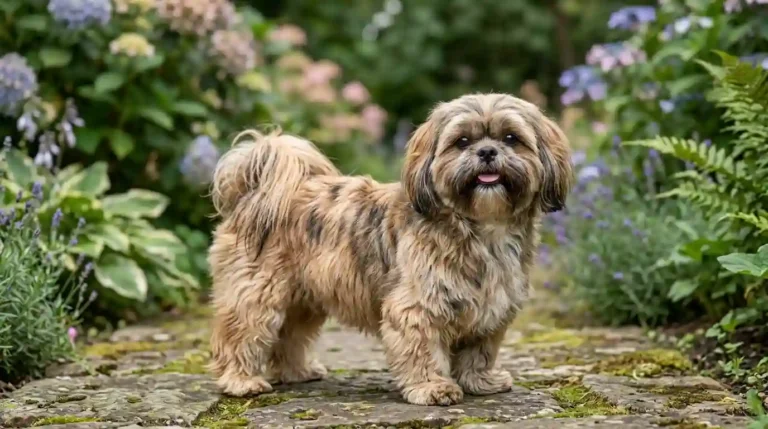
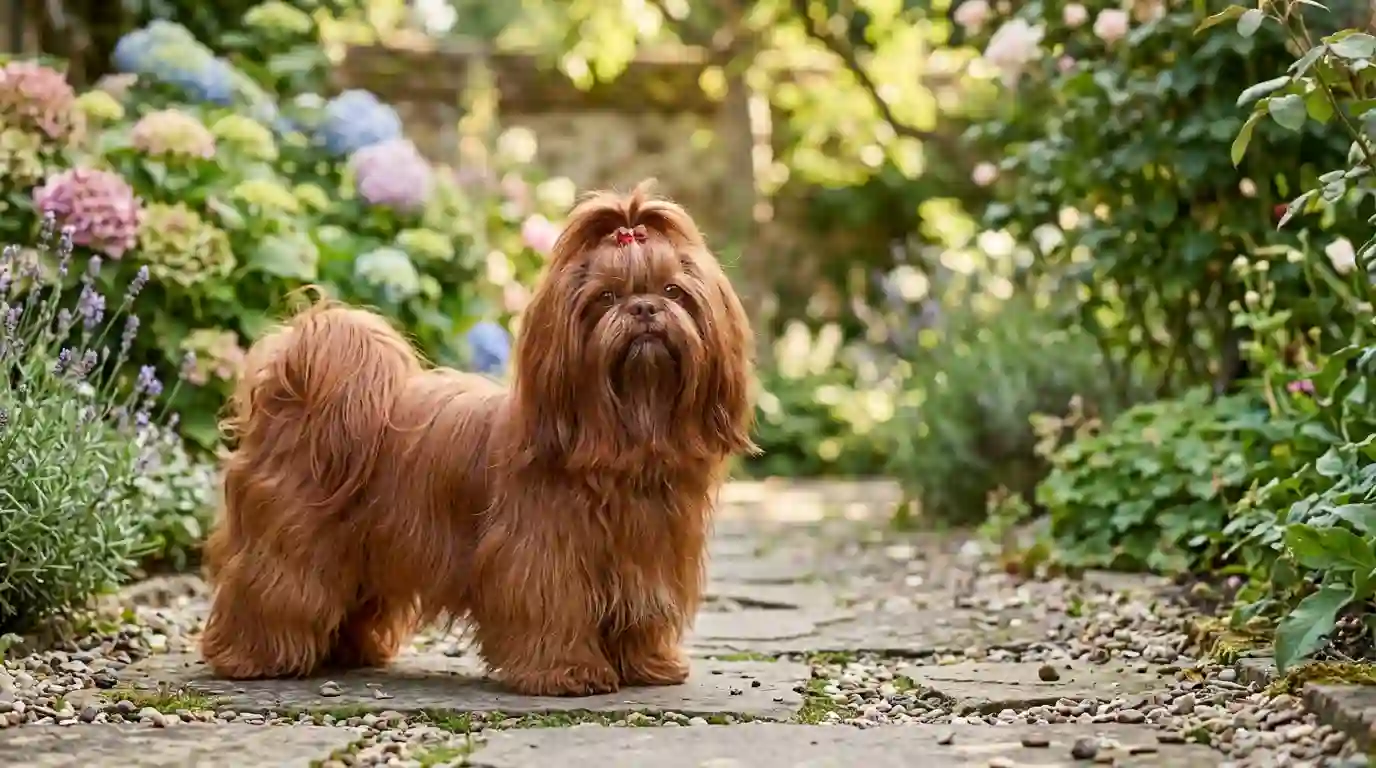
A red liver Shih Tzu is generally a Shih Tzu with a warm red, copper, auburn, or reddish-gold coat combined with liver pigmentation instead of black pigmentation on features such as the nose, lips, and eye rims. The phrase can be confusing because “red” and “liver” do not describe exactly the same thing: red usually refers to the visible coat shade, while liver describes brown-based eumelanin pigmentation.
That distinction is the easiest way to identify a liver red Shih Tzu correctly. Instead of judging the dog only by how reddish or brown its hair appears, look closely at the nose, lips, eye rims, and other pigmented areas in natural daylight. A reddish dog with a black nose is not the same color-pigment combination as a reddish dog with liver-colored points.
In this guide, you’ll learn what red liver Shih Tzu means, how to distinguish it from similar Shih Tzu colors, what genetics and breed standards actually say, how puppy color can change, and whether this coloring affects care, health, or value.
Table of Contents
- What does “red liver” mean in a Shih Tzu?
- How can you identify a red liver Shih Tzu?
- How does red liver compare with similar Shih Tzu colors?
- What do breed standards say about red and liver Shih Tzus?
- Can a red liver puppy’s color change as it matures?
- How should you care for a red liver Shih Tzu’s coat?
- Does red liver coloring tell you about a dog’s health or value?
- Red liver Shih Tzu identification checklist
- Frequently asked questions
- Final thoughts
What Does “Red Liver” Mean in a Shih Tzu?
The term red liver Shih Tzu combines two descriptions that are easy to mistake for a single standardized color name.
“Red” refers primarily to the dog’s visible coat appearance. Depending on the individual dog, this may range from warm golden-red to copper, mahogany, auburn, or deeper reddish tones.
“Liver,” by contrast, refers primarily to the dog’s brown-based pigment rather than simply describing brown-looking hair.
Understanding that difference makes many confusing Shih Tzu color labels easier to interpret.
If you are learning about coat varieties in general, start with our shih tzu Breed Information section and complete guide to Shih Tzu colors.
Red Describes the Coat; Liver Describes Pigmentation
Dogs produce different types of pigment in their hair and skin. Two important categories are eumelanin, responsible for black or brown-based pigment, and pheomelanin, associated with red and yellow shades.
In dogs with normal black eumelanin, features such as the nose, lips, and eye rims are generally dark or black.
With liver pigmentation, the eumelanin that would ordinarily appear black becomes brown. This is associated with variants at the B locus, involving the TYRP1 gene.
Importantly, the brown gene changes black eumelanin to brown but does not directly change red/yellow pheomelanin. This is why a dog can have a visibly red coat while simultaneously having brown or liver pigmentation.
A simple way to think about it is:
| Feature | “Red” | “Liver” |
| Mainly describes | Hair/coat shade | Eumelanin pigmentation |
| Common appearance | Red, copper, auburn, reddish-gold | Brown or liver pigment |
| Useful areas to inspect | Body coat, ears, tail | Nose, lips, eye rims |
| Opposite comparison | Gold, cream, other coat shades | Black pigment |
| Is it the same thing? | No | No |
This distinction is also useful when comparing a red Shih Tzu with a liver Shih Tzu.
Why a Red Coat Can Have Liver-Colored Features
A dog’s coat and visible skin points are influenced by interacting genes rather than a single “color gene.”
The brown or liver trait is commonly associated with recessive variants at the B locus. When brown is expressed, eumelanin that would otherwise appear black becomes brown.
A red-colored dog can therefore retain its reddish coat while displaying liver-colored pigmentation where dark pigment would otherwise be visible.
This is why the nose is such a useful clue.
A reddish Shih Tzu with a clearly black nose, black lips, and black eye rims is visually different from a reddish Shih Tzu whose nose, lips, and eye rims are brown or liver.
However, appearance should be interpreted carefully. Lighting, photographs, coat staining, age, and pigmentation intensity can all affect what you see.
How Can You Identify a Red Liver Shih Tzu?
Identification should begin with the dog’s pigmented points, not simply with the overall coat color.
Many Shih Tzus can look brown, gold, reddish, cream, or copper depending on lighting. A brown Shih Tzu, for example, may visually overlap with certain liver dogs even though “brown” is often being used casually to describe hair color.
Use several clues together.
Check the Nose, Lips, and Eye Rims in Natural Light
The most useful areas to examine are:
- Nose
- Lips
- Eye rims
- Other clearly pigmented skin
- Paw pads as an additional clue
Take the dog near a window or outdoors in indirect natural daylight. Avoid strongly colored indoor bulbs or filters.
For a liver-pigmented Shih Tzu, the nose should appear brown rather than true black. The lips and eye rims should also follow the liver pigmentation rather than appearing solid black.
The official American Kennel Club Shih Tzu standard specifically distinguishes pigmentation, stating that the nose, lips, and eye rims are black except in liver- and blue-pigmented dogs. You can review the official AKC Shih Tzu breed standard for the breed-standard wording.
The eyes may also appear lighter in liver-pigmented dogs, but eye color alone should not be used as your identification method.
Look at the Coat Separately From the Skin Points
Once you have examined pigmentation, assess the coat independently.
A red coat may appear:
- Rich copper
- Auburn
- Rust-red
- Reddish gold
- Deep warm red
- Light red or faded red
- Red with white markings
Do not classify liver pigmentation simply because the hair appears chocolate or brown.
Likewise, a red coat does not automatically mean liver pigmentation.
A red and white Shih Tzu can have clearly defined white markings while retaining red-colored areas. Its pigmentation still needs to be evaluated separately.
Similarly, a liver and white Shih Tzu describes another appearance in which white spotting can occur alongside liver-associated coloring or pigmentation.
Use Photos as Clues, Not Proof
Online listings can make color identification especially difficult.
A photograph can alter the appearance of pigmentation because of:
- Warm indoor lighting
- Camera white balance
- Filters
- Shadows
- Overexposure
- Reflections from surrounding colors
- Editing and saturation
- Wet or stained facial hair
A nearly black-looking liver nose can appear darker in a poorly exposed photograph, while a black nose may look brown under warm lighting.
If you are evaluating a puppy offered by a breeder, ask for clear photographs taken outdoors in indirect daylight, including a close-up of the nose, lips, and eyes.
For important breeding or genetic questions, DNA testing can provide information that photographs cannot.

How Does Red Liver Compare With Similar Shih Tzu Colors?
Shih Tzus have considerable variation in coat shades, markings, and pigmentation. This creates overlap between informal breeder descriptions and official color terminology.
Here is a practical comparison.
| Appearance | Coat | Nose/points | Key distinction |
| Red with black points | Red/copper | Black | Red coat without liver pigmentation |
| Red liver | Red/copper | Brown/liver | Red coat plus liver pigmentation |
| Liver and white | Liver-associated shades + white | Liver | Noticeable white pattern |
| Red and white | Red + white | May require separate pigment assessment | White markings are central |
| Brindle | Mixed striped/banded appearance | Variable | Pattern rather than simple red |
| Red with black mask | Red/gold coat | Dark facial mask | Black eumelanin visible in mask |
Red With Black Points Versus Red With Liver Points
This is probably the most important comparison.
A red Shih Tzu may have a beautiful red coat while retaining a black nose, black lips, and black eye rims.
A red liver Shih Tzu has the red coat but displays liver/brown pigmentation instead of normal black pigmentation.
In other words:
Red coat + black points ≠ red liver
Red coat + liver points = the appearance generally described as red liver
This is why judging the coat alone can cause misidentification.
Red Liver Versus Liver and White
A red liver dog can be predominantly reddish without large white patches.
A liver and white Shih Tzu has obvious white markings in addition to liver-associated pigmentation/coloring.
White spotting is a separate aspect of coat appearance. It does not turn liver pigmentation into a different pigment type.
The same principle applies to a brown and white Shih Tzu or gold and white Shih Tzu: descriptive coat labels should not automatically be treated as proof of a specific pigment genotype.
Red Liver Versus Brindle or a Black Mask
A brindle Shih Tzu has a patterned appearance produced by differently colored hairs or bands rather than simply having one uniform red shade.
A red brindle Shih Tzu can show warm red areas with darker patterned hairs, making some photographs appear much darker than a straightforward red coat.
Similarly, a dog with a dark facial mask may look heavily pigmented around the muzzle. A black mask gold Shih Tzu illustrates why facial hair color and underlying nose pigmentation should not be confused.
If there is genuinely black pigment in the nose, eye rims, or facial mask, that should be considered when assessing whether “liver” is an accurate description.
The same principle helps distinguish a red liver dog from combinations such as a black and brown Shih Tzu or brown black and white Shih Tzu.
What Do Breed Standards Say About Red and Liver Shih Tzus?
The breed-standard context is important because online sellers sometimes use informal color labels as if each were a separate official classification.
The American Kennel Club Shih Tzu standard permits all colors and markings and considers them equally. It also specifically addresses pigmentation: nose, lips, and eye rims are normally black, with liver pigmentation on liver-pigmented dogs and blue pigmentation on blue-pigmented dogs.
The AKC’s breed information also lists individual registration color options including Red, Liver, Red & White, and Liver & White.
However, “red liver” is not presented as its own separate AKC registration color name. It is more useful as a descriptive phrase explaining a red-looking coat combined with liver pigmentation.
That is an important distinction.
A breeder saying “red liver” may be describing the dog’s appearance rather than quoting an official registration category.
Owners comparing unusual colors such as blue Shih Tzu, lavender Shih Tzu, or liver chocolate Shih Tzu should make the same distinction between informal appearance labels, genetics, and registry terminology.
Color also does not determine whether a dog is a purebred Shih Tzu. Pedigree and parentage are separate questions.
Can a Red Liver Puppy’s Color Change as It Matures?
Yes. A Shih Tzu puppy’s coat can look noticeably different as it matures.
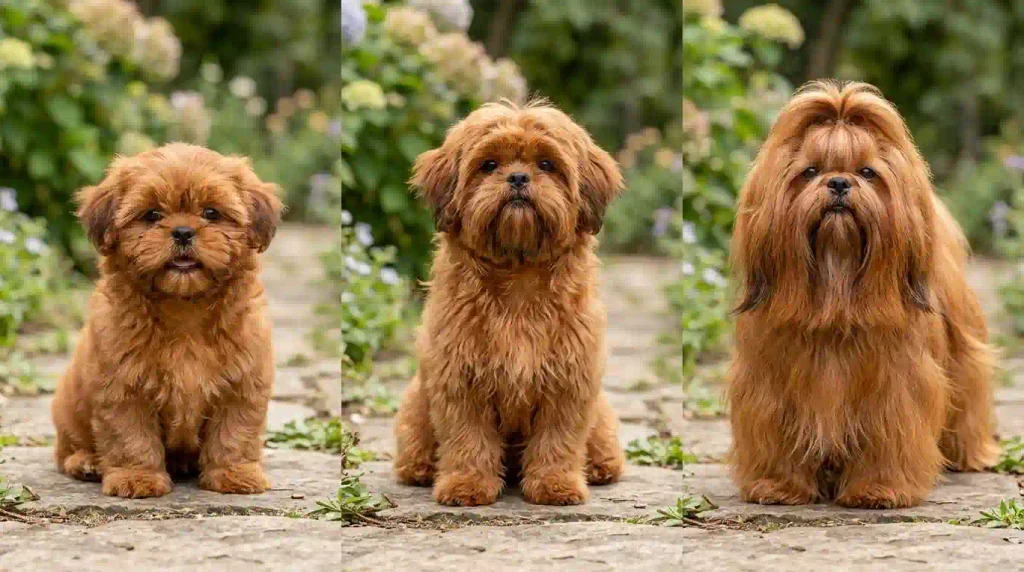
A puppy born with an intense red, copper, or dark warm coat may become lighter, softer, or more golden-looking over time. Other dogs retain stronger red coloration.
The final result varies between individuals.
That means a photograph taken at eight or twelve weeks should not be treated as a guarantee of the exact adult coat shade.
Several things may change the way the coat appears:
- Growth of the adult coat
- Different proportions of lighter and darker hairs
- Hair length
- Grooming
- Sun exposure
- Lighting
- Natural age-related coat changes
The underlying pigmentation of features such as the nose and eye rims should be considered separately from changes in hair shade.
For example, a puppy may become less intensely red while still retaining liver pigmentation.
This difference between coat shade and pigment points is crucial when following a red liver puppy into adulthood.
Owners interested in how color terminology fits into the breed more broadly may also find our types of Shih Tzu and Shih Tzu facts guides helpful.

How Should You Care for a Red Liver Shih Tzu’s Coat?
A red liver Shih Tzu does not require a special grooming routine simply because of its color.
The important consideration is the Shih Tzu coat itself.
Shih Tzus have a long, dense double coat when kept in full coat, and that hair can become tangled or matted if it is not maintained consistently.
Brush Regularly
For dogs in longer coat, brush and comb frequently enough to prevent knots from tightening into mats.
Pay particular attention to:
- Behind the ears
- Legs
- Armpits
- Chest
- Belly
- Tail
- Areas beneath collars or harnesses
Use a comb after brushing to check that you have reached through the coat rather than smoothing only the outer hair.
Keep the Face Clean
Food, saliva, tears, and moisture can discolor light facial hair.
This is especially noticeable on dogs with white markings, such as a red and white Shih Tzu or liver and white Shih Tzu.
Keep facial hair clean and dry, and gently remove debris around the eyes rather than allowing buildup.
Persistent eye irritation, unusual discharge, skin inflammation, or odor should be discussed with a veterinarian rather than treated as a cosmetic color problem.
Bathe According to the Dog’s Needs
Use a dog-appropriate shampoo and rinse thoroughly. Residual shampoo can irritate the skin.
Conditioning may make longer coats easier to detangle.
A pet kept in a shorter trim may require less daily coat management than a Shih Tzu maintained in a full show-style coat, but regular grooming remains important.
Do Not Try to “Enhance” the Red Color
A healthy coat should be your goal—not artificially making the coat appear darker or redder.
Nutrition, general health, proper grooming, and protection from excessive coat damage matter more than trying to maintain a particular shade.
Whether you have a red liver dog, black Shih Tzu, white Shih Tzu, silver Shih Tzu, or golden brown Shih Tzu, basic coat health should come before color intensity.
Does Red Liver Coloring Tell You About a Dog’s Health or Value?
Color alone is not enough to determine a dog’s overall health, quality, temperament, or financial value.
A red liver Shih Tzu should not automatically be considered healthier, less healthy, superior, or more valuable simply because of its pigmentation.
When choosing a puppy, look beyond color.
A responsible breeder should be willing to discuss:
- Parentage
- Health testing
- Veterinary history
- Temperament
- Puppy development
- Living conditions
- Registration documentation where applicable
- Health guarantees or contracts
- Questions about the parents
Be cautious when dramatic rarity claims are used mainly to justify an unusually high price.
Some color combinations may appear less frequently in a particular breeder’s dogs or local market, but frequency can vary by bloodline, breeding population, location, and terminology.
“Rare” therefore does not automatically mean healthier or better.
Color terminology can also be inconsistent. One breeder may describe a puppy as red liver while another may use liver red, chocolate red, reddish liver, or another marketing description.
Evaluate the dog, documentation, breeding practices, and health—not just the label.
Red Liver Shih Tzu Identification Checklist
If you are trying to decide whether a puppy or adult could reasonably be described as a red liver Shih Tzu, use this quick checklist:
- Look at the coat in daylight. Does it appear red, auburn, copper, or reddish-gold?
- Check the nose. Is it genuinely brown/liver rather than black?
- Inspect the lips. Do they match the liver pigmentation?
- Look at the eye rims. Are they brown-based rather than black?
- Check other pigmented areas. Paw pads can provide an additional clue.
- Separate white markings from pigment. White areas do not determine whether the dog is liver.
- Do not rely on eye color alone.
- Do not identify liver purely from brown-looking coat hair.
- Ask for natural-light photographs if evaluating a puppy remotely.
- Use genetic testing when genotype matters.
The most important rule is simple:
Judge the red coat and liver pigmentation separately, then describe how they occur together.

Frequently Asked Questions
Is red liver an official Shih Tzu color name?
No. “Red liver” is commonly used descriptively, while AKC registration listings include Red and Liver as separate color options.
Does a brown nose alone confirm a red liver Shih Tzu?
Not by itself; examine the coat, lips, eye rims, other pigmentation, and overall evidence together.
Are red liver Shih Tzus rare or more expensive?
Availability and prices vary by breeder and location, and the color label alone does not justify assuming a dog is exceptionally rare or worth a premium.
Is a red liver Shih Tzu the same as a red Shih Tzu?
Not necessarily. A red Shih Tzu can have black pigmentation, while “red liver” generally describes a red coat combined with liver-colored pigmentation.
Is a liver Shih Tzu always brown?
Not necessarily in the way people casually use the word brown; liver primarily refers to brown-based eumelanin pigmentation rather than requiring one specific visible coat shade.
Can a red liver Shih Tzu have white markings?
Yes. White markings can occur alongside red and liver-associated pigmentation.
Can a red liver puppy become lighter?
Yes. The visible coat shade may change as the puppy matures, so puppy color should not be treated as an exact prediction of adult shade.
Do red liver Shih Tzus need special grooming?
No. Their grooming needs are based on the Shih Tzu coat and hairstyle rather than the liver pigmentation itself.
Final Thoughts
A red liver Shih Tzu is best understood by separating two characteristics: the red coat and the liver pigmentation. The coat may range from copper and auburn to reddish gold, while liver pigmentation is most clearly evaluated through features such as the nose, lips, and eye rims.
Do not assume that every reddish-brown Shih Tzu is liver, and do not assume that every red dog has liver points. Natural-light examination—and genetic testing when genetics genuinely matter—provides much better information than breeder labels or edited photographs.
If you are comparing colors before choosing a puppy, explore our complete Shih Tzu colors guide as well as the dedicated red Shih Tzu and liver Shih Tzu guides. Understanding the difference between coat color, markings, and pigmentation makes identification much easier.