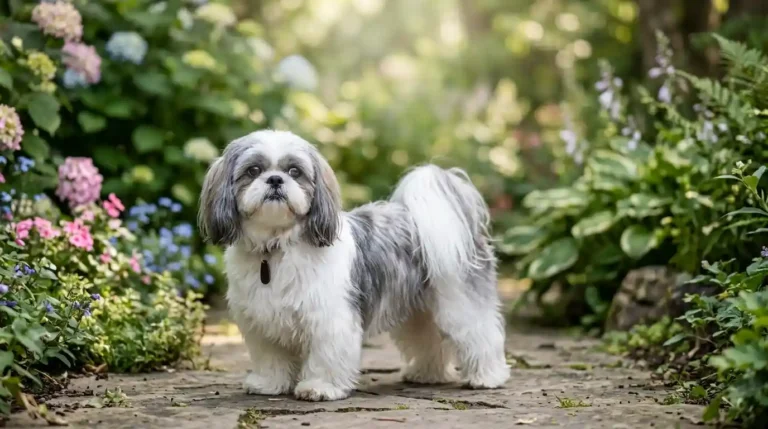
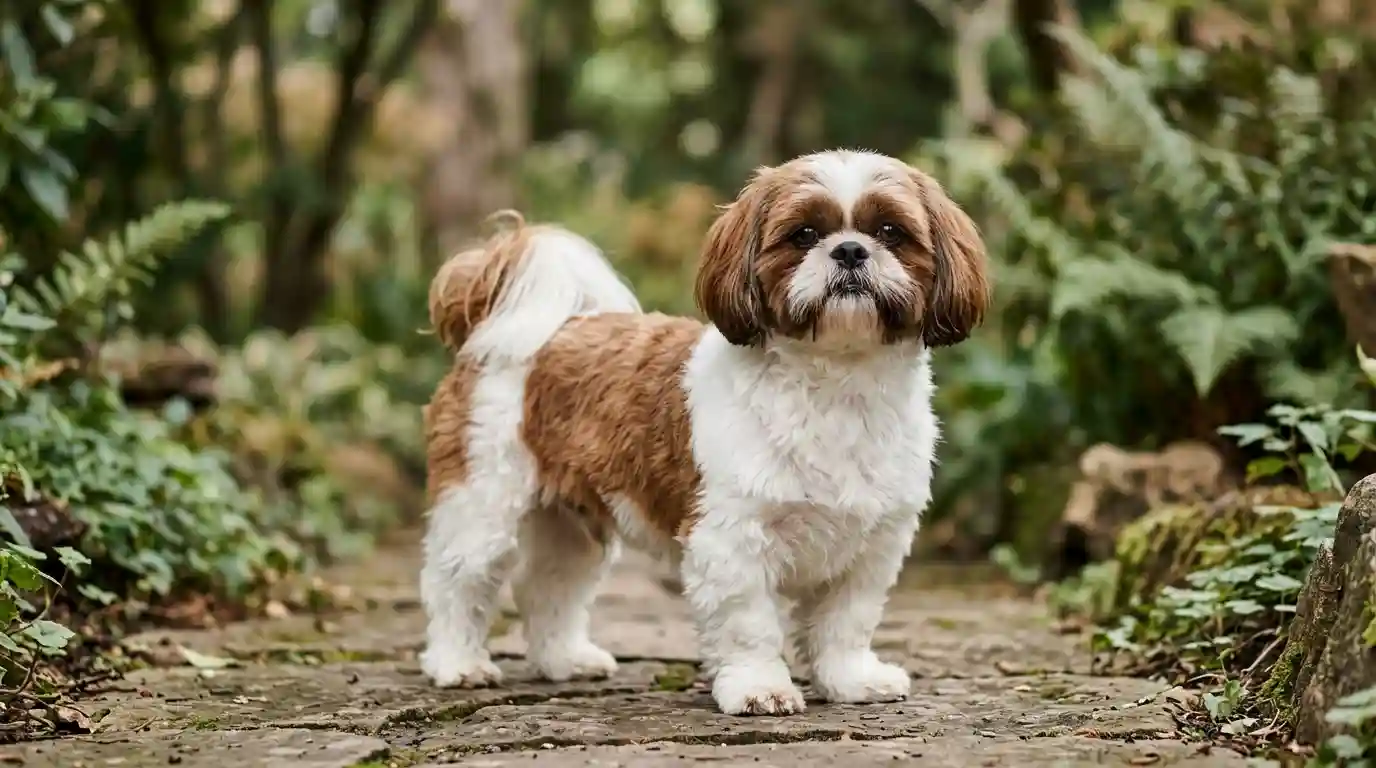
Brown and White Shih Tzu: Identify the Coat and Care for It
A brown and white Shih Tzu has brown-looking areas of hair alongside distinct white patches—but that description alone does not tell you whether the dog is liver and white. To make a more precise identification, inspect the nose, lips, and eye rims in natural light. Brown pigment at those points supports a liver description; genuinely black points suggest that the warm-colored hair may instead be gold, red, or another shade paired with white. Even a dark brown and white Shih Tzu puppy may look lighter after its adult coat grows or a haircut exposes different strands. If you are choosing a puppy, ask for current, unfiltered photographs and an explanation of any color label before assuming the adult dog will look exactly the same. Below, you will find a visual comparison, a sensible way to track coat changes, a short explanation of genetics, and a grooming routine for both the colored and white parts of the coat. The goal is to describe the dog you can see accurately—and make a good care decision regardless of its label.
Table of Contents
- What does “brown and white” describe?
- Is the dog liver and white or another similar combination?
- Will a brown-and-white puppy keep the same coat?
- What can genetics and registration establish?
- Is brown and white accepted or unusually rare?
- How should you groom the coat and monitor the skin?
- What should you check before choosing a puppy?
- Frequently asked questions
- Final thoughts
What does “brown and white” describe?
Brown-looking colored areas alongside distinct white patches
The phrase describes chocolate, tan, or caramel-looking patches contrasted with white fur. A dog may be mostly white with colored ears, mostly colored with a white chest, or somewhere between. A coat with substantial white is sometimes called parti-color.
“Warm brown ears and back, white face and legs” describes the coat more clearly than simply “brown.” A blaze between the eyes or white paws describes the placement of markings, not the pigment in the colored hair. Compare Shih Tzu colors and a brown Shih Tzu without prominent white areas.
Why the name alone does not establish liver pigmentation
Liver describes brown rather than black pigment at places such as the nose, lips, and eye rims. “Brown and white” can describe the appearance of the hair even when those facial points are black. That difference matters when an advertisement uses brown and white, chocolate and white, and liver and white as though they are interchangeable.
Two dogs may have cocoa-colored patches and white chests, yet one has black facial points and the other brown ones. The second has the points expected of a liver and white Shih Tzu. If you cannot see the points, describe the visible coat without claiming a genotype.
Is the dog liver and white or another similar combination?
Check the nose, lips, and eye rims in natural light
Check whether the nose, lips, and eye rims—skin points—look brown or black in natural light.
The official AKC Shih Tzu breed standard describes black nose, lips, and eye rims except for liver pigment on liver-pigmented dogs and blue pigment on blue-pigmented dogs. Paw pads can offer another clue, but a photograph of one pad or a dog’s eye color cannot establish its genotype. The standard notes that eyes may be lighter in liver-pigmented dogs; that observation is not a stand-alone test.
| Visible combination | What it suggests | What to check next |
| Brown-looking patches, white areas, brown nose and facial outlines | Consistent with liver pigmentation and white markings | Confirm the points in person or in clear daylight photographs |
| Brown-looking patches, white areas, black nose and facial outlines | Brown-looking hair with black pigment; the coat may be called gold, red, or another shade | Compare the colored hair and any dark tips or striping |
| Grayish colored areas and gray-blue facial points | Consider blue pigmentation alongside white | Avoid deciding from hair shade alone |
| Unclear or newly changing nose pigment | The color description is uncertain | Request better views; ask a veterinarian about a new physical change |

Compare liver and white with red, gold, and brindle alongside white
A black-nosed red and white Shih Tzu may look rusty brown indoors. A gold and white Shih Tzu may look caramel; a golden brown Shih Tzu can look darker in photographs. Check facial pigment before using liver.
A brindle and white Shih Tzu has darker streaks within the colored areas plus separate white patches. Ask for a body close-up if the streaks are unclear.
Separate a black mask and dark hair tips from the base color
A black mask is dark facial hair; dark hair tips can make gold or reddish hair seem brown. Neither proves brown nose pigment. A “brown and white” label may also overlook a third visible hair color.
Check the hair near its roots and view several areas. Brown-looking hair with black points does not prove liver; brown points do not require dark chocolate hair.
Will a brown-and-white puppy keep the same coat?
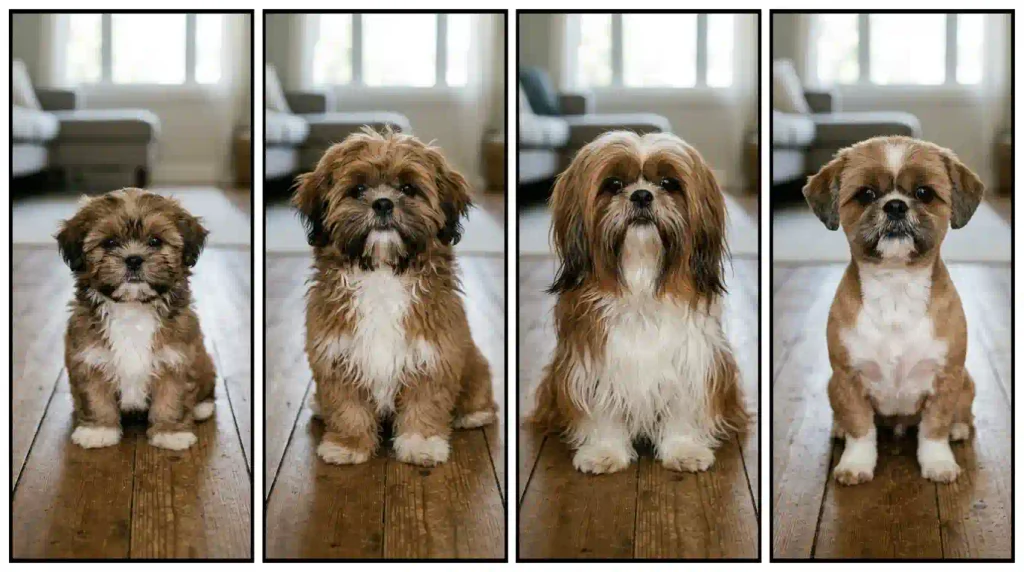
How growing hair and haircuts change the appearance
A puppy’s brown patches may lighten or blend differently as adult hair grows. A short trim can remove dark tips and expose a paler shade; white areas may then seem more prominent. Puppy pictures cannot promise an exact adult shade.
Some dogs keep strong contrast; others develop softer tan or gold-colored areas. A haircut changes what hair you see, not the dog’s inherited pigment. Treat promises of a permanently dark chocolate coat cautiously.
Take comparable photographs as the puppy matures
Photograph the side, face, and same colored patch in open shade. Record the date, age, and haircut; repeat after grooming and as the coat grows. This controls for lighting and hair length.
For a puppy, request current and earlier photos plus recent parent pictures, if available. Parent coats offer context, not a guarantee. Compare pigment separately with our liver chocolate Shih Tzu guide.
What can genetics and registration establish?
Brown pigment and white markings are different traits
The B locus affects whether black eumelanin appears brown in hair and skin. Two relevant recessive brown alleles are generally needed to show brown pigment; a one-copy carrier can retain black points. Red and yellow hair follow other pigment pathways, so a brown-nosed dog can have gold-looking hair. UC Davis Veterinary Genetics Laboratory documents these distinctions.
White markings are separate. A brown nose and white patches together are informative, but their boundaries do not identify every gene involved.
Read DNA results and color labels within their limits
A genetic test reports the variants a laboratory examines. Check the dog’s identity and test scope. The result cannot promise an exact adult shade, certify health, or establish every aspect of white spotting. A registration color is likewise a description, not a physical examination.
“Brown and white coat with brown nose, lips, and eye rims” is clearer than an unsupported claim of a rare genotype.
Is brown and white accepted or unusually rare?
What the breed standard says and how to assess rarity claims
The AKC Shih Tzu standard permits all colors and markings and considers them equally. It also describes liver pigmentation. A brown-and-white appearance is not disqualifying simply because of its colors.
An advertiser might call a dark brown and white Shih Tzu “rare,” but one litter does not establish population-wide frequency. Ask whether the claim describes a shade, registration wording, or DNA result. Prioritize the puppy’s condition, parent records, and fit for your home.
How should you groom the coat and monitor the skin?
Brush through the double coat and care for white areas
Brown and white Shih Tzus have the breed’s dense double coat. Brush in small sections and follow with a comb down to the skin so you can find hidden tangles in the undercoat. Check behind the ears, beneath the collar, under the front legs, and around the legs. A brush passing easily over the surface does not prove the hair beneath is free of matting. Long coats generally need daily attention.
Bathe with dog-appropriate shampoo, rinse well, and dry thoroughly. Clean dirty white areas gently. A shorter pet trim simplifies care but does not remove the need to brush; ask a groomer for a manageable length.
Distinguish ordinary color change from a concern for a veterinarian
Gradual changes in hair shade are different from hair loss, persistent itching, redness, sores, or a newly changing area of skin or nose pigment. Ask a veterinarian to assess those signs rather than attributing them to the brown-and-white coat. Coat color alone is not a diagnosis and does not imply that a dog has a liver-related illness.
Part thick hair to inspect the skin, and use dated photos to explain new concerns at an appointment.

What should you check before choosing a puppy?
Request current photos and clarify the advertised color
Ask for a current front view, side view, and close-up of the nose, lips, and eye rims, all taken in ordinary daylight. Then ask the breeder what “brown and white” means in the listing. Are they describing the hair you can see, claiming liver pigmentation, quoting a registration label, or referring to a test result? Those are different statements.
For a “chocolate and white” listing, request an unfiltered live view and photos across dates; do not assume an eight-week-old shade will remain fixed.
Review health records and plan for ongoing grooming
Request the puppy’s veterinary records and the parents’ identifiable health screening results. A color test is not a health certificate. Observe the puppy’s comfort and budget for grooming.
Buyer checklist: Clear daylight photographs; an explanation of the color label; identified parent and puppy records; actual health results where offered; realistic adult-color expectations; and a grooming plan. General Shih Tzu facts can help you prepare, but the individual dog and its records should drive your decision.
Frequently asked questions
Is every brown and white Shih Tzu liver?
No; brown-looking hair can occur with black facial pigment.
What makes a Shih Tzu liver and white?
Brown nose, lips, and eye rims alongside white coat markings support that description.
Can a mostly white Shih Tzu have brown spots?
Yes; the amount and placement of colored patches can vary.
Will brown and white puppies keep the same shade?
Not necessarily; growing hair and trims can change how the colored areas look.
Does white fur require a different shampoo?
Use products suited to the dog’s skin and coat, and clean dirty white areas gently.
Does brown and white affect temperament?
A coat description alone does not predict an individual dog’s temperament.
Final thoughts
A brown and white Shih Tzu is easy to describe visually: warm-colored hair appears alongside distinct white patches. For a more specific liver and white identification, look at the nose, lips, and eye rims in natural light before relying on a photograph or seller’s label. Keep dated photos as your puppy grows, because hair length and trimming can change the coat’s apparent shade. Whatever its markings, plan to comb through the double coat, keep white areas clean, and have new skin or hair-loss concerns assessed by a veterinarian. If you are choosing a puppy, request clear current pictures and identifiable health records. Use the comparison checklist to ask precise questions, then choose the dog whose needs fit your home rather than buying a promised color.