Blue Shih Tzu: How to Identify the Color, Genetics, and Care
Summary. A blue Shih Tzu is identified primarily by blue-gray pigmentation, especially on the nose, lips, and eye rims—not by a bright-blue coat. Its hair might look charcoal, steel gray, pale gray, or surprisingly close to black. A gray-looking dog with a truly black nose is not automatically blue, and blue eyes do not prove blue pigmentation. The most useful first step is to examine several pigment points together in natural daylight, then describe the coat and markings separately. This guide shows how to distinguish blue from silver, black, liver, and lavender; what the dilution genes and a DNA report can actually tell you; and why a puppy’s adult hair may look different. It also addresses rarity claims, possible coat and skin concerns, everyday grooming, and questions to ask before choosing a puppy. By the end, you should be able to describe what you see accurately, recognize what still needs confirmation, and place the dog’s health and suitability above any fashionable color label.
Table of contents
- What makes a Shih Tzu “blue”?
- How can you identify a blue Shih Tzu?
- What causes blue pigmentation?
- Do blue Shih Tzu puppies change color?
- Is a blue Shih Tzu rare or officially accepted?
- Does blue pigmentation affect health or temperament?
- How should you groom a blue Shih Tzu?
- What should you ask before choosing a blue puppy?
- FAQs
- Final thoughts
What makes a Shih Tzu “blue”?
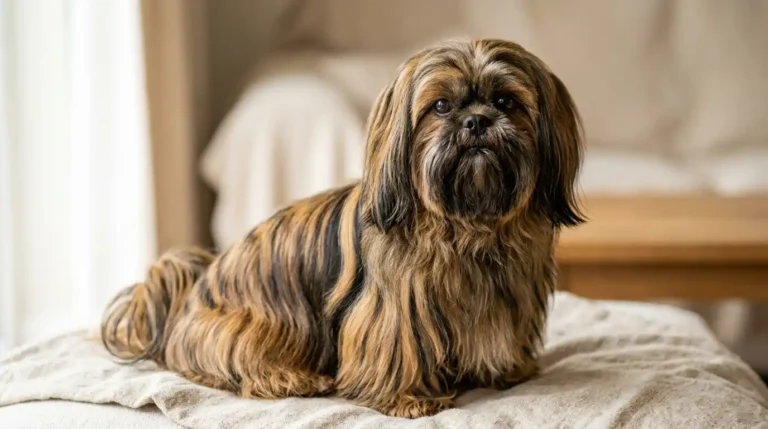
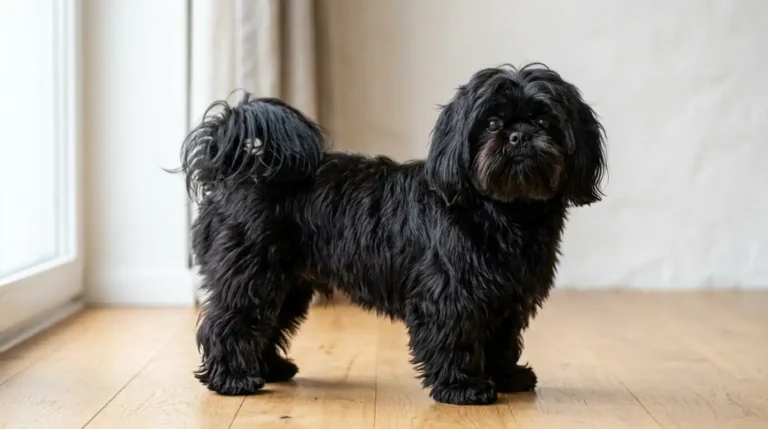
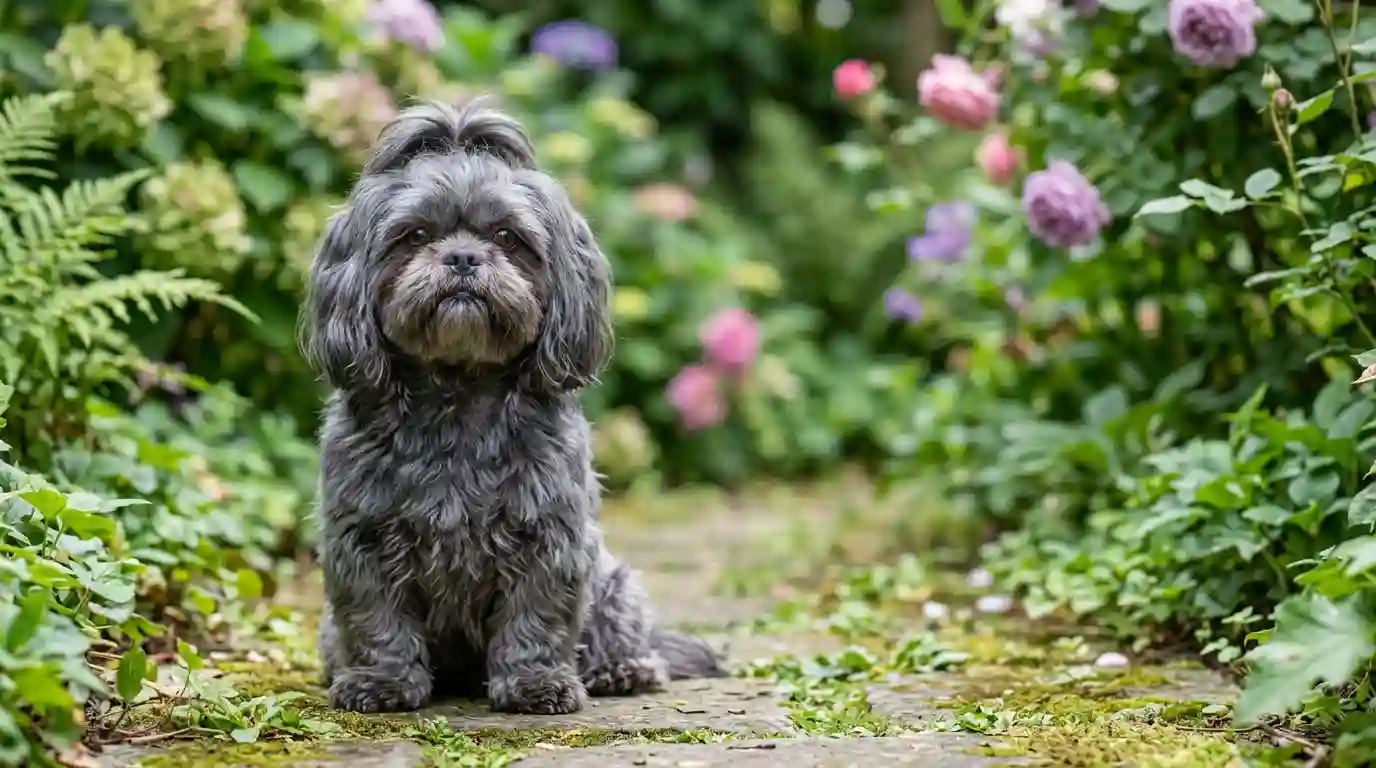
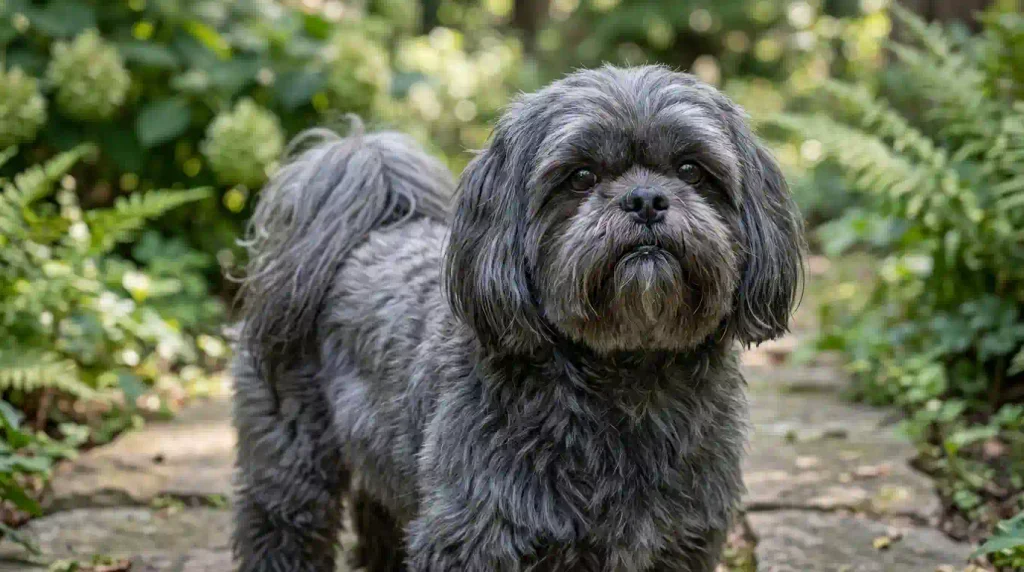
In dog-color language, blue usually describes a diluted form of black pigment that looks blue gray rather than a vivid blue. A blue Shih Tzu typically shows that pigment on the nose leather, lips, and eye rims. The hair may also have a gray or charcoal cast, but a particular shade of hair is not enough to identify the dog. That distinction resolves much of the confusion around the phrase shih tzu blue: people often mean the visible coat, while a precise pigment description starts at the face.
The official Shih Tzu breed standard from the American Kennel Club specifies black pigment on the nose, lips, and eye rims for most colors, with liver pigment on liver-pigmented dogs and blue pigment on blue-pigmented dogs. It also permits all colors and markings. This is the single external link in this article and the reference point for the breed-standard statements below. For the wider range of patterns, see shih tzu colors.
Blue pigment versus blue-looking hair
Picture two Shih Tzus with similar steel-gray hair. One has jet-black nose leather and black eye rims. The other has nose leather, lip edges, and eye rims that appear consistently slate gray in daylight. The second dog gives stronger visible evidence of blue pigmentation; the first may simply have gray or silver-looking hair over black pigment. A photo of their backs alone would hide the most useful distinction.
The color may be subtle. A blue nose is often described as gunmetal, blue gray, or charcoal rather than an obvious blue. The lips and eye rims should be considered alongside it. Wet noses, shadow, warm indoor light, camera processing, and surface staining can all change how a single point looks. The correct approach is to compare several features under ordinary light and say when the result remains uncertain.
Do not use true blue as a promise that the coat must be uniformly blue. In a careful description, a blue-pigmented dog can have lighter hair, dark hair, and white markings. “True blue blue Shih Tzu” is sometimes used in listings for emphasis, but the extra words do not create a separate breed or verify a test result. A blue gray shih tzu guide can help explain the visible shade; this article focuses on how to assess the underlying blue-pigment claim.
Why a blue dog can have several coat colors
Blue pigmentation and coat pattern answer different questions. Pigment tells you about the dark color at points such as the nose; pattern tells you where different hairs appear. A blue-pigmented dog may have a largely dark coat, pale areas, brindling, tan points, or conspicuous white patches. A solid blue Shih Tzu is usually a description of a relatively uniform-looking coat, not a rule that every blue-pigmented dog must be solid.
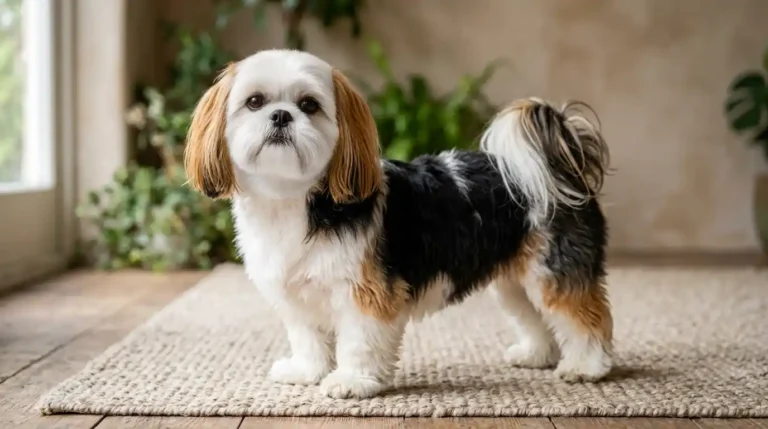
A blue and white shih tzu has white areas as well as blue pigmentation. A blue brindle shih tzu may show darker and lighter striping in colored hair. Tan points can create what a breeder calls a blue Dobie Shih Tzu, referring to the placement of tan on the face and legs rather than a new breed. Describe the visible parts separately: “blue-gray points, white chest, dark brindle patches” is clearer than stacking fashionable labels together.
The shape of the markings can matter to an owner even though it does not establish a genotype. A white blaze can split a dark face, a collar can frame the neck, and pale feet can make a dark dog look lighter from the front. A puppy cut can change the apparent balance by shortening one part of the coat more than another. When identifying color, first record the skin points, then the hair shades and marking locations.
How can you identify a blue Shih Tzu?
Identification works best as a short sequence rather than a glance at one picture. View the face in daylight. Check the nose, both eye rims, and lip edges. Describe the coat separately, including white, brindle, or tan markings. Finally, compare any breeder paperwork or DNA result with the dog it is supposed to describe. This sequence can support a sensible conclusion while leaving room for uncertainty where lighting or genetics makes a firm label premature.
Examine the nose, lips, and eye rims in natural light
Choose bright open shade. Direct sun can blow out a pale nose in a photo, while a yellow room lamp can make a blue-gray nose look brown. Let the dog settle comfortably; there is no reason to pry at the mouth or restrain it for a color photograph. Look first at the nose leather, then the exposed edge of the lips and the skin encircling the eyes. Do these areas share a cool, diluted blue-gray cast, or are they consistently black or brown?
A blue nose Shih Tzu has more than an attractive gray hairstyle: corresponding diluted pigment at the face supports the blue description. A black nose generally points away from blue pigmentation even if the coat is silver. Brown or liver-colored points suggest a different pigment category. Compare both sides of the face; shadows and fur can conceal the lip or eye-rim edge. If the nose is partly pink or recently changing, a photograph is an especially poor basis for a confident genetic label.
Paw pads may add supporting information, but outdoor wear, uneven pigmentation, and camera exposure make them difficult to assess alone. The breed standard specifically names the nose, lips, and eye rims in its pigment rule. Treat pads as another observation, not as a shortcut that overrides the facial points. If the dog has a very long facial coat, gently move the hair aside so you can see the actual eye rim rather than a dark ring of hair.
Save an unfiltered face photograph and a full-body photograph taken on the same day. Note the dog’s age, lighting, and coat length. This small record is useful when a puppy grows or when a seller’s edited images give conflicting impressions. It also helps you explain your question clearly to a breeder or veterinarian without relying on “it looked bluer last month.”
Compare blue, black, silver, liver, and lavender
Similar-looking coats can sit over different pigment. Use the table as a practical comparison, not a visual DNA test.
| Description | What the hair may look like | More informative pigment clue | What the label alone cannot prove |
| Blue Shih Tzu | Slate, charcoal, steel gray, or very dark | Blue-gray nose, lips, and eye rims | Exact genotype, adult shade, or health status |
| Black Shih Tzu | Black or nearly black; may later show lighter hairs | Black nose, lips, and eye rims | That every hair will remain black |
| Silver Shih Tzu | Pale to darker silvery hair | Often black points when the dog is not blue pigmented | That gray hair equals blue pigment |
| Liver Shih Tzu | Brown, cream, or another warm-looking shade | Brown or liver-colored points | That a brown-looking coat alone is genetically liver |
| Lavender Shih Tzu | Pale gray-brown or lilac description | Requires careful interpretation of brown and dilute pigment | That a marketing term is a complete laboratory result |
For a dark comparison, see black shih tzu. A black and grey shih tzu may have visible gray hairs without blue points. Likewise, a grey shih tzu or silver shih tzu label can describe the hair people see. Inspect the pigment before treating those everyday coat words as a synonym for blue.
On the brown side, liver shih tzu and liver chocolate shih tzu guides explain why brown pigment differs from black pigment dilution. The lavender shih tzu and lavender blue shih tzu terms can be ambiguous in advertisements, so ask what the seller means and what testing, if any, supports the label. A warm photograph is not evidence of brown pigment, just as a cool photograph is not evidence of blue.
Pattern words should also remain distinct. A blue merle shih tzu describes mottling associated with a different pattern question; it is not a more intense version of solid blue. A merle shih tzu guide is the appropriate place to examine that claim. A brindle shih tzu has striping in pigmented hair, which can be easy to miss at a distance or under a long coat.

What eyes, paw pads, and photos can—and cannot—confirm
The AKC standard permits lighter eyes on blue-pigmented and liver-pigmented Shih Tzus. That does not mean every blue dog has blue eyes. Searches for blue eye Shih Tzu, blue eyed Shih Tzu, or Shih Tzu with blue eyes often mix up iris color with the blue pigment of the nose and eye rims. A dog may have a lighter iris for more than one reason; neither eye color nor a photo of the eyes alone establishes the dog’s coat-color genotype.
Similarly, a pale paw pad might support an observation but cannot settle an uncertain nose color. A photo can misrepresent every one of these clues. Phone cameras adjust white balance, portrait modes alter contrast, and online images are often brightened. Ask for an ordinary, recent daylight image that includes the face and body. If a listing uses only heavily filtered photographs, request new images before making a color-based decision.
Do not conflate a blue-gray nose with albinism. An albino shih tzu is a separate pigmentation topic, and an unusually pale photo cannot establish it. Also avoid diagnosing an eye problem from an unusual eye color alone. If an eye has new cloudiness, redness, discharge, or apparent discomfort, that calls for veterinary examination irrespective of whether the dog is described as blue.
What causes blue pigmentation?
Blue reflects a change in how dark pigment is expressed. In simplified terms, eumelanin is the pigment responsible for black or brown areas. Certain inherited variants at the D locus, involving the MLPH gene, dilute black pigment to a blue-gray appearance. Other genetic factors influence which areas contain dark pigment, whether that pigment is black or brown before dilution, and where white or patterned hair appears. That is why one genetic shorthand cannot describe an entire Shih Tzu coat.
Dilution of black pigment and recessive inheritance
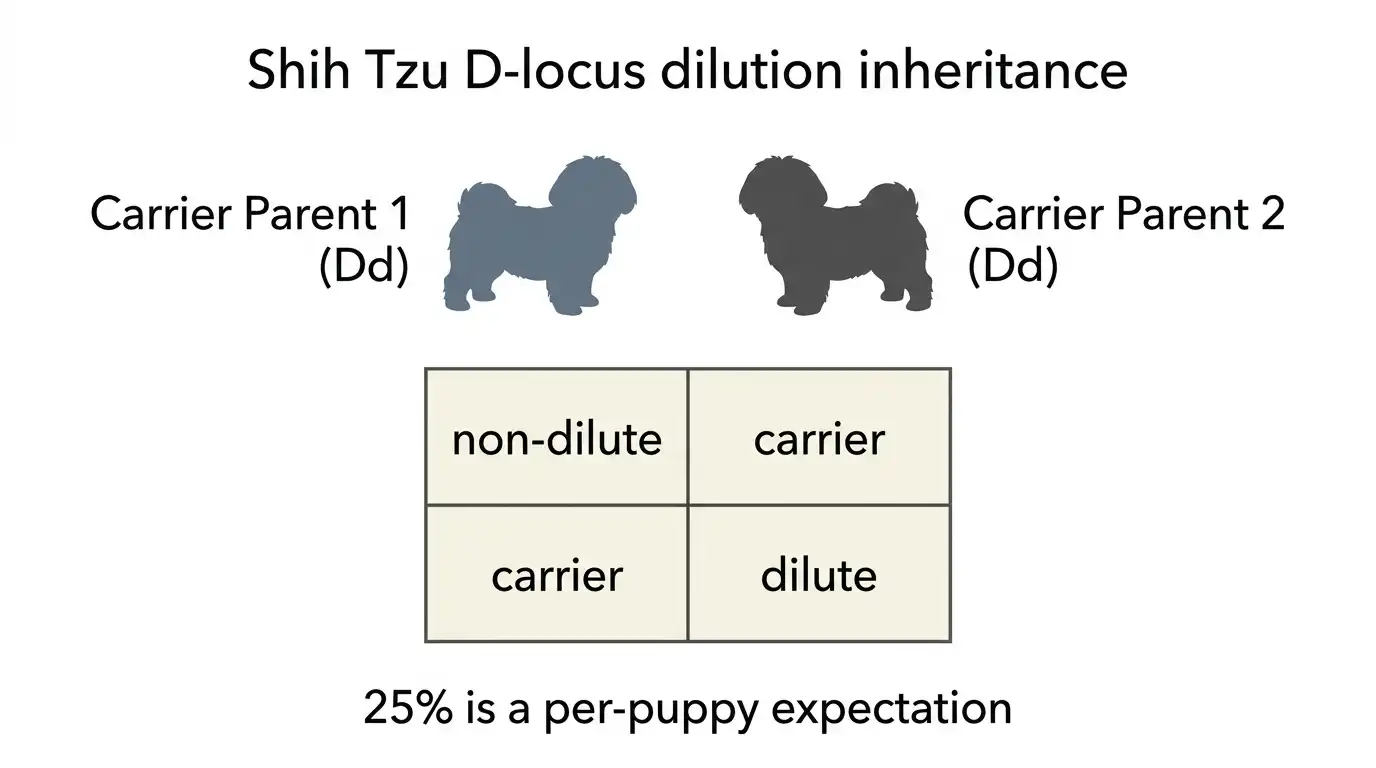
For the known MLPH dilution variants commonly discussed in dogs, visible dilution is autosomal recessive. A dog generally needs an appropriate dilute variant from each parent to express that form of dilution. A dog with only one tested copy is generally a carrier without showing that dilute phenotype. Genetic reports may use D for a non-dilute version and forms of d for tested dilute variants. The letters are shorthand for the test’s findings, not a name for every shade visible on the dog.
Two carrier parents are expected to produce, on average, 25% dilute offspring for the relevant inherited variant combination. That is a probability for each puppy, not a guarantee that exactly one in four puppies in a particular litter will be blue. It also does not guarantee the puppy’s white markings, hair length, or final shade. Some online explanations mistakenly say two carriers have a 50% chance of a blue puppy; that confuses a parent’s chance of passing a variant with the puppy’s chance of receiving the needed combination from both parents.
The B locus is a separate part of the pigment picture, concerning black versus brown pigment. If brown pigment is also diluted, breeders may use terms such as lilac, isabella, or lavender. Those labels vary in use and need a clear explanation rather than an assumption based on a photograph. The normal way to describe a dog for a general reader is to separate what is observed—“cool gray nose and pale brown hair”—from what a laboratory has tested.
Color patterns introduce still more variation. White spotting can interrupt pigmented hair without changing the color of the nose. Tan points may be visible above the eyes and on the legs. A blue Dobie Shih Tzu is a descriptive combination of blue pigmentation and a particular tan-point arrangement, not a formally distinct Shih Tzu breed. Compare the arrangement with black and tan shih tzu if the point pattern, rather than the blue pigment, is what you are trying to identify.
What a D-locus DNA report can tell you
A reputable laboratory can test for specified, known dilution variants. The report should identify the dog, name the test or panel, and state the genotype rather than merely presenting a breeder’s summary. A result consistent with dilution can strengthen a color explanation when the coat is hard to judge. It can also help responsible breeders understand a carrier’s potential to pass a variant to offspring.
Read the test’s scope before treating the answer as complete. A D-locus report does not map every white patch or brindle stripe, predict the exact adult hair shade, diagnose color dilution alopecia, or prove the dog is a purebred shih tzu. Different panels cover different variants. When a result and visible appearance seem to disagree, ask the laboratory, a veterinarian, or a qualified genetics professional to interpret the full report and its limitations.
The dog’s identifying details matter. A cropped image of a “blue” result without a microchip number, registered name, or other clear link to the puppy does not establish that the report belongs to the dog being offered. Nor should a seller substitute color testing for relevant health information about the individual puppy and its parents. Ask which question the test was intended to answer, and keep the answer in that scope.
Do blue Shih Tzu puppies change color?
Yes, their hair can change in appearance as they grow, and a haircut can make an immediate visual difference. That does not mean every blue-pigmented puppy loses its diluted pigment or that an owner can predict the exact mature shade from a birth photograph. Separate stable genetic information from the changing look of a growing coat. A sensible color record includes both the puppy’s visible hair and the facial pigment rather than treating them as interchangeable.
Hair changes as the puppy coat matures
A blue Shih Tzu puppy may have a dark charcoal coat, a lighter blue-gray coat, white areas, or another pattern. As the puppy coat gives way to mature hair, light and dark strands can become more or less conspicuous. Some hairs may have differently colored tips and roots. A puppy that seemed uniformly dark can appear more silver or gray later, while a mix of long hair can make separate colors blend from a distance.
There is no reliable promise that every rare blue Shih Tzu puppy stays the same shade or follows a fixed changeover date. Genes and individual coat development differ. Keep photographs at a few stages rather than trying to infer the entire adult coat from one picture. Take them in similar daylight and record the dog’s age. If the pattern includes white, note where the main white patches lie; those landmarks help when the surrounding pigmented hair becomes lighter.
Owners sometimes say a blue puppy “turned gray.” That statement may simply describe the visible shade of its adult hair. The dog can still be blue pigmented at the nose, lips, and eye rims. Conversely, a black-pigmented puppy can develop gray-looking hair without becoming a blue-pigmented dog. The distinction is why a puppy photograph should be paired with a current face photograph when a seller advertises a particular color.
How grooming and lighting alter appearance
Trimming removes hair tips and exposes shorter layers. If the tips are darker than the roots, a fresh puppy cut may suddenly make a patch look pale. A long coat blends darker tips, lighter undercoat, and adjacent white hairs into a softer overall shade. Neither change by itself proves that a gene has switched on or off. Grooming can also reveal a faint brindle pattern that was hidden in long hair.
Lighting makes comparison harder. A gray-blue patch can look almost black in deep shade, brownish under warm bulbs, and pale in an overexposed photo. Artificial filters can intensify the effect. Photograph the dog in open shade with no filter, include a clear view of the nose, and repeat with roughly the same coat length when comparing changes over time.
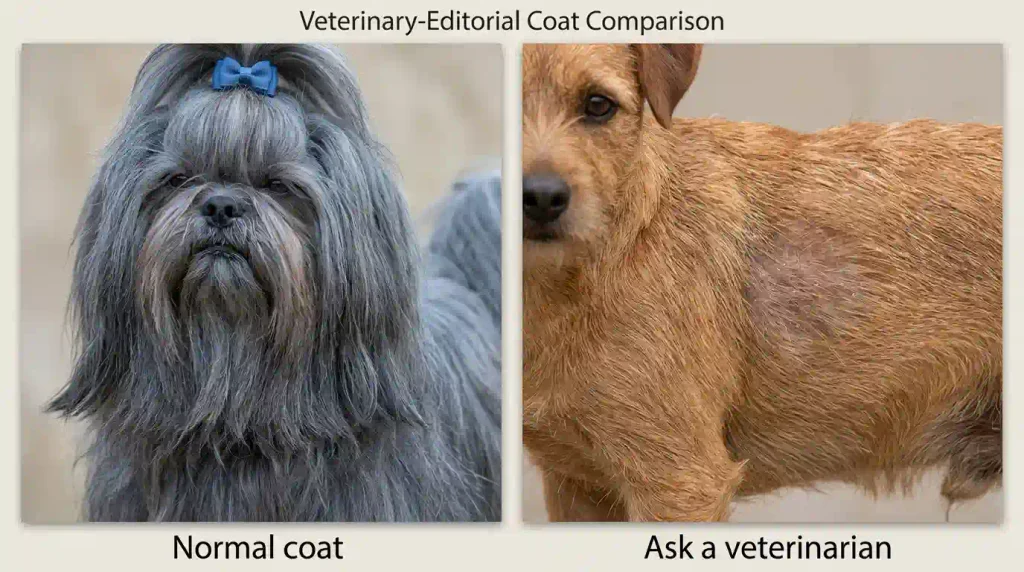
Distinguish a color change from a coat-condition change. A different shade after clipping may be ordinary; new bare patches, broken hair, scaling, persistent itch, or red skin deserve attention. If you have concerns, make a record of when the change began and what products or grooming methods were recently used. That history is more useful to a veterinarian than a vague claim that the dog “stopped being blue.”
Is a blue Shih Tzu rare or officially accepted?
The breed standard accepts all Shih Tzu colors and markings, including blue pigmentation. “Accepted” answers a standards question. “Rare” is a frequency claim, and a seller needs evidence before claiming an exact rate or using rarity as proof of value. Blue pigmentation is sometimes described as less commonly seen, but an exact US prevalence cannot be calculated from a few breeder galleries or search results.
The breed standard versus a seller’s “rare” label
A registration color is the description entered on the dog’s paperwork. It is useful for records but is not a laboratory genotype, medical clearance, or guarantee that the adult hair will match a puppy photograph. Ask how the seller arrived at “blue”: facial pigment, a test result, registry entry, or merely gray-looking hair. A clear explanation is more valuable than a decorative certificate with an unsupported “exclusive” label.
The same caution applies to claims about a “rare blue Shih Tzu puppy,” a solid blue Shih Tzu, or a special blue-eyed type. Scarcity does not prove health or quality. Nor does an unusual shade establish a different breed. The Shih Tzu remains the same companion breed; the shih tzu Breed Information and shih tzu facts pages are better starting points for deciding whether its size, temperament, grooming, and care suit your household.
If a breeder bundles a blue-color surcharge with a size promise such as teacup shih tzu, evaluate the claims separately. A blue nose does not predict adult weight. Breed history and shih tzu origin are interesting context, but romantic stories about palace dogs do not verify the puppy in front of you. The term types of shih tzu can likewise reflect informal descriptions rather than officially separate blue varieties.
Ask for clear records, meet the puppy if feasible, and consider what you would think of the dog if its adult coat turned out lighter or darker than advertised. If you would still welcome it and the health information checks out, color becomes a preference rather than the basis for the entire decision.
Does blue pigmentation affect health or temperament?
Blue coloring does not by itself determine whether a Shih Tzu is affectionate, bold, quiet, or easy to train. Behavior develops from multiple influences, including the individual dog, early experience, socialization, and daily care. Nor does a color word diagnose an illness. The medically relevant question is narrower: what coat problems have been described in some dilute-colored dogs, and what changes should an owner take seriously?
What is established about color dilution alopecia
Color dilution alopecia is a recognized hair and skin disorder in some dogs with dilute coats. Affected dogs may show hair thinning or loss, broken hair, flakes, and sometimes itching or secondary skin trouble. This condition has been described in several breeds, but the available veterinary references do not provide a dependable rate specifically for blue Shih Tzus. It would be misleading to promise that all blue Shih Tzus are at risk, or to guarantee that no blue Shih Tzu could ever develop a dilute-associated coat problem.
Having an MLPH-related dilution result is not the same as receiving an alopecia diagnosis. The pigment test addresses tested coat-color variants; a veterinarian diagnoses skin disease based on the dog and appropriate examination. Some other skin conditions can look similar from a distance. If hair becomes sparse, resist the temptation to label the condition from a search result and treat it with an unproven color-specific shampoo.
The white areas of a blue and white shih tzu do not turn the dog into a separate medical category. Similarly, a light iris should not automatically be explained as a consequence of dilution. When a breeder claims that a particular shade guarantees good health, better temperament, or freedom from genetic disease, ask for individual evidence rather than a color-based assurance.
Which skin or coat changes warrant veterinary care
Arrange a veterinary assessment for persistent or spreading hair loss, flaky skin, redness, sores, crusts, unusual odor, repeated scratching, or pain during grooming. These signs can reflect many causes. Tell the veterinarian when you first noticed them, whether the dog was recently clipped, whether a new product was used, and whether only the dark-colored areas or also the white areas are affected.
If you are recording progression, take dated natural-light photographs without delaying care for a visibly uncomfortable dog. Do not pull out hairs or clip irritated skin simply to see the color underneath. A veterinarian may need to examine the skin, assess for infection or parasites, and decide whether additional investigation is worthwhile. Advice for one diagnosed disorder does not automatically apply to another.
Routine health should remain the priority when choosing a puppy as well. Observe breathing at rest and after gentle activity, comfort when moving, eye appearance, skin condition, and the puppy’s interaction with people. Ask about veterinary records and relevant parental screening. A well-documented puppy with a color you did not initially seek may be a better match than a poorly documented “rare blue” puppy.
How should you groom a blue Shih Tzu?
Care for the dog in front of you, not for a color label. A blue Shih Tzu has the breed’s dense double coat, with an outer coat and undercoat that can tangle. Dark or charcoal hair may conceal mats near the skin; white areas reveal dirt more quickly. Coat length, texture, activity, and the dog’s tolerance of handling determine the details of a routine. No special dye, bleaching treatment, or “blue enhancer” is needed to maintain inherited pigment.
Brushing the double coat and choosing a manageable trim
For a long coat, brush frequently and thoroughly, often daily. Work in small layers so you reach the undercoat rather than polishing only the top. Follow with a comb to check behind the ears, beneath the collar, around the armpits, behind the legs, and at the base of the tail. Be gentle around the face and eyes. Tight mats can pull painfully at the skin; ask a professional groomer or veterinarian for help rather than cutting close to the skin with scissors.
A shorter puppy cut can reduce the work of maintaining a floor-length coat, though a short-coated dog still needs brushing, bathing, and repeat trims. Ask your groomer for a schedule that suits the individual coat. Keep hair from rubbing the eyes or obstructing vision, clean the muzzle gently when soiled, and dry the coat adequately after bathing. Choose dog-safe products according to the dog’s skin and veterinary advice rather than a shampoo advertised to make a blue coat “bluer.”
The cut can also change the color you see. If darker tips are clipped away, the remaining coat may look paler. A short coat may expose a gray-blue undercoat that had been concealed by longer hair. Do not conclude that the dog has developed a disorder merely because a newly trimmed patch looks lighter. Check the skin beneath it: healthy intact hair and comfortable skin tell a different story from broken hair, scale, and irritation.
Quick coat-care routine
- Look at the eyes, muzzle, and visible skin briefly each day.
- Brush a long coat in sections and comb down to the undercoat.
- Check high-friction areas beneath collars, harnesses, and legs for mats.
- Arrange trims at an interval that keeps the dog comfortable and manageable.
- Record new hair loss or irritation and ask a veterinarian about persistent symptoms.
If a household member has dog allergies, color is not a useful predictor. The shih tzu hypoallergenic guide addresses that separate concern. Blue pigmentation does not eliminate the proteins that can trigger allergies, and a beautifully groomed dog can still need regular care.
What should you ask before choosing a blue puppy?
Buying or adopting a Shih Tzu is a long-term decision; color is one part of its description. Begin by deciding whether the breed’s coat maintenance and general needs suit your household. Then gather evidence about the particular puppy. An online listing with a dramatic photograph can raise useful questions, but it should not be treated as proof of genotype, adult appearance, health, or breeding quality.
Check photographs, test results, and health records
Request recent unfiltered photos or a live video in natural light showing the puppy’s face and whole body. Ask specifically to see the nose, eye rims, and lip edges. If possible, view the puppy after it has had time to move around normally rather than only when it is posed. Compare the seller’s color words with what the pictures show, and ask how old the puppy was when each image was taken.
If the seller cites a D-locus report, request the full result and a clear link between the report and this puppy. If the claim relies on parental results, ask what the parents’ genotypes actually show and what those results can predict for the litter. Parent photos are interesting, but hair shades in a picture do not replace their named reports. A color test should sit alongside, not in place of, veterinary records and pertinent health information.
Ask about the puppy’s health history, routine care, socialization, and the parents’ relevant screening. Observe whether the puppy appears comfortable at rest and during gentle play. Do not let a claim that blue dogs are “rare” discourage ordinary questions about records or conditions of care. If the seller cannot explain the color without changing between blue, silver, liver, and lavender, request a straightforward description of nose pigment and what any test assessed.
Several nearby color pages can help with a specific comparison: black and white shih tzu for dark coats with white patches, silver and white shih tzu for silvery hair with white, and liver and white shih tzu for brown-pigmented points. Use these links to clarify an observed trait, not as a checklist of labels to add to one advertisement.
A practical buyer checklist
- What exactly does “blue” describe here? Ask whether the seller means nose and eye-rim pigment, coat shade, registration color, a DNA result, or some combination.
- Can I see the face and body in neutral daylight? A filtered portrait or a picture of only the back hides key clues.
- How old is the puppy in each photo? Recent images are more useful than a single newborn picture.
- Is a complete genetic report available? Check the dog’s identifying details and which variants the lab tested.
- What veterinary and parental records can I review? Color documentation does not replace health documentation.
- How does the puppy move, breathe, and respond? Observe the individual animal, not just its advertisement.
- What grooming has the puppy experienced? Gentle handling and realistic care advice matter with a double coat.
- Would I still choose this dog if the adult hair shade changes? No seller can honestly guarantee every future color detail.
Keep your questions proportionate. A breeder may reasonably describe a puppy as blue based on clear pigment even without a separate color DNA test. The concern is an unsupported guarantee or a mismatch between the claim and the evidence. An honest seller can explain what is known, what is observed, and what remains uncertain.
Do not confuse coat color with ancestry or unusual size. The purebred shih tzu guide addresses pedigree questions; a blue nose is not ancestry proof. If you encounter a comparison with a prapso shih tzu, remember that a coat-length or appearance discussion is distinct from a blue-pigment claim. Choose the puppy and its care arrangement, not the most elaborate collection of labels.
FAQs about blue Shih Tzus
What is a blue Shih Tzu?
A Shih Tzu described as having diluted, blue-gray dark pigment, especially at the nose, lips, and eye rims.
Is a blue Shih Tzu’s fur actually blue?
Usually not bright blue; it may look charcoal, slate, steel gray, or nearly black.
Can a blue Shih Tzu have white markings? Yes; blue pigmentation and white coat markings can occur together.
Does a blue nose prove every color gene?
No; it is a useful visible clue, while a genetic report addresses only the variants it tests.
Can a black-nosed gray Shih Tzu be called blue?
Gray-looking hair alone does not establish blue pigmentation; check the nose, lips, and eye rims.
Are blue eyes required in a blue Shih Tzu?
No; lighter eyes may occur, but iris color is not a requirement or a stand-alone color test.
Is a blue-eyed Shih Tzu the same as a blue Shih Tzu?
No; “blue-eyed” describes the iris, while the coat-color term concerns pigmentation elsewhere.
Is blue merle the same as blue?
No; merle describes a separate mottled pattern and should not be inferred from blue-gray hair.
Will a blue puppy stay the same shade?
Not necessarily; hair can look different as the coat grows, matures, or is trimmed.
Are blue Shih Tzus accepted by the AKC?
Yes; the Shih Tzu standard permits all colors and markings and specifies blue points on blue-pigmented dogs.
Is blue necessarily rare?
It may be less often seen in some settings, but an exact US frequency needs reliable data rather than a seller’s claim.
Does a blue coat cause alopecia?
Blue color alone is not a diagnosis; seek veterinary care for persistent hair loss, flakes, or irritated skin.
Does a blue Shih Tzu need special shampoo?
No color-specific product is required; choose dog-safe grooming based on the individual coat and skin.
Can two carrier parents produce a blue puppy?
Yes; for a relevant tested recessive dilution variant, the expected chance per puppy is 25%.
Final thoughts
The clearest way to understand a blue Shih Tzu is to separate facial pigment from the changing look of the hair. Examine the nose, lips, and eye rims together in daylight, record coat shades and markings separately, and treat a DNA report as evidence about the variants it actually tests. A puppy’s coat may lighten or look different after grooming, while new hair loss or irritated skin calls for veterinary attention. The Shih Tzu’s grooming needs and suitability as a companion matter much more than whether a seller calls its shade rare. Save the buyer checklist before contacting a breeder, request clear photographs and records, and choose a healthy individual dog you can care for throughout its life. For a broader comparison, explore the site’s shih tzu colors guide.