Shih Tzu Hair Loss: Possible Causes and When to Seek Care
Is your Shih Tzu losing hair, developing bald patches, or shedding more than usual? While Shih Tzus are known for their beautiful, long, silky coats and relatively low shedding, excessive hair loss can signal an underlying health problem. Common causes include allergies, flea infestations, mange, bacterial or fungal infections, hormonal disorders, nutritional deficiencies, and grooming-related damage. Sometimes, the problem is simply hair breakage or a normal coat transition, but persistent thinning, itching, irritated skin, or sudden bald spots deserve closer attention.
Understanding the difference between normal shedding and medical hair loss, also called alopecia, is essential for protecting your dog’s skin and coat health. This guide explains why Shih Tzus lose hair, what different hair-loss patterns may indicate, how veterinarians diagnose the cause, and which treatments can help restore healthy coat growth.
You’ll also learn how to prevent grooming damage, recognize warning signs, care for thinning fur, and determine whether your Shih Tzu’s hair will grow back. If hair loss develops suddenly, spreads rapidly, or occurs with painful skin, sores, or other signs of illness, contact your veterinarian promptly.
Table of Contents
- Shih Tzu Hair Loss: Quick Overview
- Signs and Symptoms of Hair Loss in Shih Tzus
- Common Causes of Hair Loss in Shih Tzus
- Why Is My Shih Tzu Losing Hair During Brushing?
- Shih Tzu Hair Loss by Age and Coat Development
- How Veterinarians Diagnose Shih Tzu Hair Loss
- Shih Tzu Hair Loss Treatment Options
- Home Care and Natural Remedies for Shih Tzu Hair Loss
- Will My Shih Tzu’s Hair Grow Back?
- Preventing Hair Loss and Maintaining a Healthy Shih Tzu Coat
- Frequently Asked Questions About Shih Tzu Hair Loss
- Final Thoughts: Helping Your Shih Tzu Maintain a Healthy Coat
1. Shih Tzu Hair Loss: Quick Overview
Shih Tzus have a distinctive double coat consisting of a longer outer coat and a softer undercoat. Although they typically shed less noticeably than many short-haired breeds, their hair still follows a natural growth and replacement cycle.
Excessive hair loss becomes concerning when the coat develops thinning areas, visible bald patches, broken hair, or associated skin abnormalities.
1.1 What Is Alopecia in Shih Tzus?
Alopecia is the medical term for partial or complete hair loss in areas where hair normally grows.
In Shih Tzus, alopecia can be localized to a small patch or generalized across larger areas of the body.
Veterinarians distinguish between congenital alopecia, which develops because of abnormalities present from birth, and acquired alopecia, which develops later because of disease, inflammation, parasites, hormones, or other factors.
Alopecia is a clinical sign rather than a single disease.
1.2 Is It Normal for a Shih Tzu to Lose Hair?
Yes, some hair loss is normal.
Healthy Shih Tzus shed old or damaged hairs as new hair grows. Loose hair may remain trapped within the long coat until grooming removes it.
However, visible bald spots, rapidly thinning fur, skin inflammation, and hair falling out in large clumps are not typical shedding patterns.
These symptoms should be investigated.
1.3 Normal Shedding vs. Abnormal Hair Loss
The difference between normal shedding and alopecia is an important first step when evaluating coat changes.
| Feature | Normal Shedding | Abnormal Hair Loss |
| Hair loss pattern | Scattered loose hairs | Bald patches or widespread thinning |
| Skin appearance | Usually healthy | May be red, flaky, darkened, or inflamed |
| Coat density | Generally maintained | Noticeably reduced |
| Itching | Usually absent | May occur |
| Hair regrowth | Normal replacement | Depends on underlying disease |
| Veterinary care | Routine monitoring | Evaluation when persistent or progressive |
A dog may experience shedding and medical hair loss simultaneously.
1.4 Shih Tzu Shedding vs. Hair Breakage: How to Tell the Difference
Shedding involves hair naturally separating from the follicle during the hair-growth cycle.
Hair breakage occurs when the shaft snaps because of friction, tangles, dryness, or grooming damage.
Shed hairs are typically longer and may retain a small club-shaped root end. Broken hairs often appear shorter, uneven, or frayed.
A veterinarian can examine hair shafts under a microscope when the distinction is unclear.
1.5 How Much Hair Loss Is Normal for a Shih Tzu?
There is no universal daily hair-loss count for Shih Tzus.
The amount of loose hair varies with age, coat length, season, grooming frequency, and individual genetics.
A few hairs on a grooming brush are usually normal.
Large clumps, persistent coat thinning, or exposed skin suggest that the problem may extend beyond ordinary shedding.
1.6 Do Shih Tzus Have a Seasonal Shedding Cycle?
Shih Tzus may experience seasonal changes in shedding, but their long coat often makes loose hair less noticeable.
Environmental conditions, daylight exposure, and individual coat characteristics influence shedding.
Seasonal changes should not create extensive bald patches, inflamed skin, or persistent itching.
1.7 Are Shih Tzus Hypoallergenic?
Shih Tzus are commonly described as low-shedding or hypoallergenic dogs.
However, no dog breed is completely hypoallergenic.
All dogs produce allergens through skin flakes, saliva, and other biological materials.
1.7.1 Shih Tzu Shedding and Allergies in Humans
People with dog allergies may react to proteins carried in pet dander and saliva rather than hair itself.
Reduced shedding does not guarantee that a Shih Tzu will be suitable for every allergy-sensitive household.
Likewise, a Shih Tzu experiencing hair loss does not automatically produce more allergens.
2. Signs and Symptoms of Hair Loss in Shih Tzus
Hair-loss symptoms vary depending on the underlying cause.
Some conditions cause intense itching and inflamed skin, while others produce relatively smooth, non-itchy bald patches.
2.1 Thinning Hair and Reduced Coat Density
A thinning coat may become noticeable when the fur separates more easily or the skin becomes visible along the back, sides, or abdomen.
Gradual thinning can occur with hormonal disease, nutritional problems, or hair-cycle disorders.
Sudden changes deserve veterinary evaluation.
2.2 Bald Patches and Missing Fur
A bald Shih Tzu may develop one small hairless area or several patches across the body.
Possible explanations include ringworm, mites, bacterial infections, friction, or noninflammatory alopecia.
A circular bald patch does not automatically mean ringworm; examination and testing are necessary.
2.3 Hair Falling Out in Clumps
Hair falling out in large clumps may indicate excessive shedding, serious inflammation, infection, or hair-cycle disruption.
Long-haired dogs can also release substantial amounts of previously trapped loose hair during brushing.
The presence of bald areas or unhealthy skin helps distinguish concerning hair loss from accumulated shedding.
2.4 Itching, Scratching, and Excessive Licking
Persistent scratching, chewing, or licking can physically damage hair follicles and shafts.
Veterinarians call itching pruritus.
Common itchy skin conditions include fleas, mange, allergies, bacterial infections, and yeast overgrowth.
Repeated licking may also produce self-inflicted bald patches.
2.5 Shih Tzu Hair Loss With Itching vs. Without Itching
The presence or absence of itching provides an important diagnostic clue.
Hair loss accompanied by intense itching often suggests inflammatory skin disease, parasites, or allergies.
Relatively symmetrical, non-itchy thinning may suggest an endocrine disorder or abnormal hair cycle.
However, hormonal conditions can develop secondary infections that cause itching, so these patterns are not definitive.
2.6 Symmetrical Hair Loss vs. Patchy or Localized Baldness
Symmetrical hair loss affects similar areas on both sides of the body.
It can occur with hypothyroidism, Cushing’s disease, and certain noninflammatory alopecias.
Localized baldness may develop because of infection, parasites, friction, grooming trauma, or persistent licking.
The distribution helps veterinarians narrow possible causes.
2.7 Redness, Rashes, Hives, and Skin Irritation
Inflamed skin may develop red patches, raised bumps, hives, papules, or pustules.
These changes can occur with allergic dermatitis, infections, contact reactions, and parasites.
Severe irritation may encourage scratching and secondary hair loss.
2.8 Scabs, Skin Discoloration, and Other Associated Symptoms
Look for crusting, dandruff, greasy skin, unpleasant odors, sores, darkened skin, or thickened areas.
These findings may indicate chronic dermatitis, yeast overgrowth, bacterial pyoderma, or an underlying endocrine disorder.
Persistent lumps or ulcerated skin lesions should also be examined. Our guide to Shih Tzu Skin Cancer explains why suspicious skin growths need veterinary assessment.
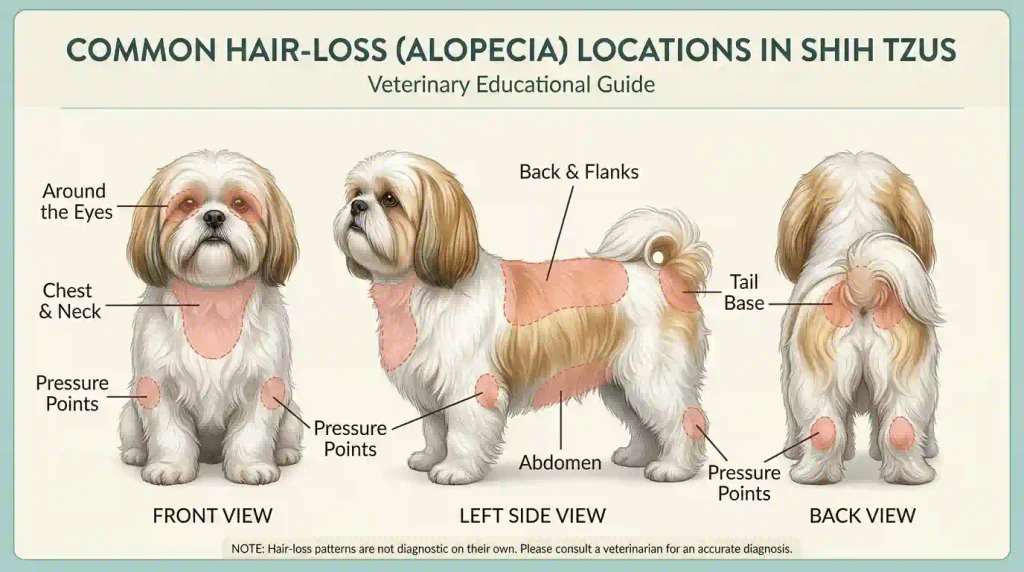
2.9 Shih Tzu Hair Loss by Body Location
The location of missing hair provides useful clues, although different diseases can affect the same area.
2.9.1 Hair Loss Around the Eyes and Eyelids
Hair loss around the face may result from mites, allergies, infections, or repeated rubbing.
Excessive moisture and irritation can also affect nearby facial hair.
If your dog has associated eye symptoms, our Shih Tzu Eye Discharge guide explains common causes of tearing and irritation.
Persistent squinting or unusual eye appearance should be evaluated separately; see Shih Tzu Eye problems for additional information.
2.9.2 Hair Loss on the Back and Flanks
If your Shih Tzu is losing hair on its back, possible causes include allergies, parasites, bacterial infection, seasonal flank alopecia, or hormonal disease.
Symmetrical flank hair loss without itching may suggest a hair-cycle or endocrine condition.
2.9.3 Hair Loss on the Tail
Tail hair loss may occur because of flea allergy dermatitis, repeated chewing, or endocrine disease.
Fleas commonly irritate the lower back and tail-base area.
Some dogs also lick or chew near their rear end because of Shih Tzu anal glands discomfort.
2.9.4 Hair Loss on the Stomach and Belly
The abdomen naturally has thinner hair than some other body areas.
New bald patches, redness, dark pigmentation, or pustules may indicate allergies, skin infections, or hormonal disorders.
2.9.5 Hair Loss Around the Chest and Neck
Collars, harnesses, grooming tools, and excessive scratching may contribute to localized breakage.
Check whether equipment rubs against the skin.
Hair loss accompanied by neck swelling or painful lesions needs veterinary attention.
2.9.6 Hair Loss on Pressure Points and Callused Skin
Repeated pressure against hard surfaces can cause thickened skin, calluses, and localized hair loss.
Elbows and other pressure points may be affected.
Provide supportive bedding and seek care if the area becomes cracked, painful, or infected.
3. Common Causes of Hair Loss in Shih Tzus
Determining why a Shih Tzu is losing hair requires considering parasites, infections, allergies, hormones, nutrition, and external damage.
Multiple conditions may occur together, making veterinary diagnosis important.
3.1 Fleas and Flea Allergy Dermatitis
Fleas can cause severe irritation, particularly in dogs allergic to proteins in flea saliva.
Flea allergy dermatitis frequently affects the lower back, tail base, and hindquarters.
Affected dogs may scratch, chew, and develop crusts or thinning fur.
Even a small number of flea bites can trigger substantial itching in sensitive dogs.
3.2 Mites and Mange
Mange develops when certain mites cause skin disease.
Demodectic mange involves Demodex mites, which normally inhabit canine hair follicles but may multiply excessively under some circumstances.
It can produce patchy alopecia, redness, scaling, and secondary infection.
Sarcoptic mange, caused by Sarcoptes mites, commonly produces intense itching and can spread between dogs.
Although shih tzu ear mites mainly affect the ears, mite-related irritation and scratching can sometimes damage surrounding facial hair.
3.3 Bacterial Skin Infections
Bacterial infections, including pyoderma, may cause pustules, crusting, redness, and patchy hair loss.
Staphylococcal bacteria are frequently involved in canine skin infections.
Bacterial disease often develops secondarily to allergies, parasites, or hormonal problems.
Treatment must address both the infection and any underlying cause.
3.4 Fungal Infections and Ringworm
Ringworm, or dermatophytosis, is a fungal infection affecting skin and hair.
It may produce circular bald patches, scaling, crusting, and broken hairs.
Some infected dogs have little or no itching.
Ringworm can spread between pets and people, so suspected cases require appropriate diagnosis and household precautions.
3.5 Yeast Infections (Malassezia Dermatitis)
Malassezia yeast normally lives on canine skin but can overgrow when the skin environment becomes abnormal.
Yeast dermatitis may cause greasy skin, a musty odor, redness, itching, and darkened or thickened skin.
Repeated scratching can lead to additional hair loss.
Yeast problems may also occur alongside ear infections, making information about shih tzu ear infection symptoms useful when the dog has both skin and ear irritation.
3.6 Allergies and Allergic Dermatitis
Allergic skin disease is a frequent cause of itching, scratching, licking, and secondary hair loss.
Explore our guide to shih tzu allergies for more information about triggers and veterinary management.
3.6.1 Environmental and Contact Allergies
Pollen, dust mites, molds, and environmental allergens may contribute to canine atopic dermatitis.
Contact irritation can also occur after exposure to certain detergents, shampoos, fabrics, or chemicals.
Symptoms may involve the paws, face, ears, abdomen, and other sensitive areas.
3.6.2 Food-Related Allergic Reactions
Food allergies can cause itching and recurring skin or ear inflammation.
Some affected dogs also develop gastrointestinal symptoms.
A veterinarian may recommend a controlled elimination diet or hydrolyzed-protein food trial to investigate food-related reactions.
Randomly changing foods repeatedly is less reliable than a properly conducted dietary trial.
3.7 Hormonal and Endocrine Disorders
Hormonal disorders can interfere with hair-follicle activity and normal coat replacement.
Hair loss from endocrine disease is often gradual and may affect both sides of the body.
3.7.1 Hypothyroidism
Hypothyroidism occurs when the thyroid gland produces insufficient thyroid hormone.
Affected dogs may develop a thinning coat, weight gain, lethargy, recurrent skin infections, or poor hair regrowth after clipping.
Diagnosis requires appropriate thyroid testing and clinical evaluation.
Treatment usually involves prescribed levothyroxine.
3.7.2 Cushing’s Disease (Hyperadrenocorticism)
Cushing’s disease involves excessive cortisol exposure.
Possible symptoms include symmetrical hair loss, thin skin, increased thirst, frequent urination, increased appetite, and a pot-bellied appearance.
For a detailed explanation, read our Shih Tzu Cushing’s Disease guide.
Treatment depends on the cause and may involve medication such as trilostane.
3.7.3 Hormonal Hair Loss vs. Allergy-Related Hair Loss
Hormonal hair loss often develops gradually without severe initial itching.
Allergy-related hair loss commonly involves scratching, chewing, redness, or inflamed skin.
However, secondary infections may complicate either condition.
Veterinarians consider additional symptoms, blood tests, and skin examinations before making a diagnosis.
3.8 Genetic and Noninflammatory Alopecia
Some dogs develop hair loss because of inherited follicle abnormalities or disruptions to normal hair cycling.
These conditions are not necessarily itchy or inflammatory.
3.8.1 Alopecia X
Alopecia X is a poorly understood hair-cycle disorder associated with noninflammatory coat loss.
It is more strongly associated with certain plush-coated breeds and should not be presumed to be a common Shih Tzu diagnosis.
Affected dogs may develop symmetrical hair loss and skin darkening while otherwise appearing healthy.
Other causes must be excluded before the diagnosis is considered.
3.8.2 Seasonal Flank Alopecia
Seasonal flank alopecia causes recurrent hair loss on one or both sides of the body.
The exposed skin may become darker.
Hair may regrow spontaneously, but recurrence is possible.
3.8.3 Congenital Alopecia and Pattern Baldness
Congenital alopecia occurs when normal hair follicles fail to develop or function properly.
Pattern baldness causes thinning in characteristic areas.
These conditions are different from ordinary shedding and may have a hereditary component.
3.9 Inflammatory and Autoimmune Skin Conditions
Immune-mediated disorders can damage skin tissue and interfere with healthy hair growth.
Examples include pemphigus and discoid lupus erythematosus.
Some rare inflammatory diseases can cause ulcers, scarring, and permanent hair loss.
3.9.1 Dermatomyositis
Dermatomyositis is an uncommon inherited inflammatory disorder involving skin and sometimes muscle.
It is primarily recognized in certain predisposed breeds rather than being a typical Shih Tzu problem.
Skin lesions may produce hair loss and scarring.
3.9.2 Acanthosis Nigricans and Skin Thickening
Acanthosis nigricans describes darkened, thickened skin.
In dogs, it may occur secondarily to chronic friction, allergies, infection, or endocrine abnormalities.
It is a skin-change pattern, not a specific diagnosis of hair loss.
3.10 Stress-Induced Licking and Over-Grooming
Stress, anxiety, discomfort, and boredom may contribute to excessive grooming behavior.
Repeated licking or chewing can break hairs and create localized bald patches.
However, skin disease and pain must be investigated before hair loss is attributed to behavior alone.
3.11 Hair Loss After Severe Illness, Surgery, or Medication
Physical stress from serious illness, fever, surgery, pregnancy, or lactation can sometimes disrupt the hair-growth cycle.
Temporary excessive shedding may develop weeks after the triggering event.
Certain medications and treatments, including chemotherapy, can also affect coat growth.
Veterinary evaluation helps distinguish these changes from infection or hormonal disease.
3.12 Nutritional Deficiencies and Poor Coat Health
Healthy hair growth requires adequate protein, energy, essential fatty acids, vitamins, and minerals.
Poor nutrition can contribute to dull, brittle, or thinning fur.
3.12.1 Vitamin and Mineral Deficiencies
Deficiencies involving protein, zinc, or other essential nutrients may impair skin and coat health.
However, supplementation is not automatically beneficial when a dog already eats a complete and balanced diet.
Excessive supplementation can create additional problems.
3.12.2 Poor Diet and Nutritional Imbalances
Unbalanced homemade diets or prolonged inadequate food intake can contribute to poor hair growth.
Dogs with chronic digestive disease may also experience nutritional problems.
Persistent Shih Tzu diarrhea deserves attention because ongoing gastrointestinal disease can affect overall health and nutrient absorption.
3.13 Friction, Grooming Damage, and Hair Shaft Breakage
Tight collars, harnesses, rough brushing, repeated rubbing, and tangled fur may break hair shafts or irritate follicles.
Long-coated Shih Tzus are particularly vulnerable to grooming-related breakage.
Mechanical hair loss may improve when the damaging activity stops, provided the follicles remain healthy.
4. Why Is My Shih Tzu Losing Hair During Brushing?
Brushing can reveal previously trapped loose hair, but excessive grooming force may also break healthy strands.
Understanding the difference helps prevent unnecessary coat damage.
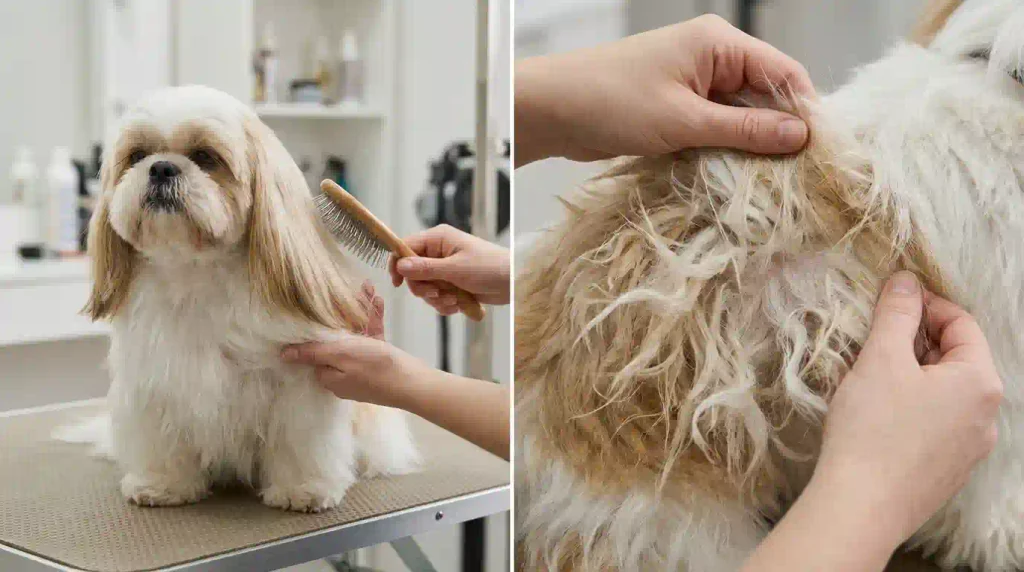
4.1 Shed Hair vs. Broken Hair
A naturally shed hair usually separates from its follicle after completing a growth cycle.
Broken hair has a damaged shaft and may appear uneven or shortened.
When the problem is unclear, a veterinarian can examine hair samples using a trichogram.
4.2 How Mats and Tangles Cause Hair Breakage
Matted fur creates tension close to the skin.
Attempting to pull through tight knots may break hairs, irritate follicles, or cause pain.
Severe matting may require careful professional clipping rather than aggressive brushing.
4.3 Grooming Practices That Can Damage the Coat
Common grooming mistakes include using inappropriate brushes, excessive bathing, harsh shampoo, and repeatedly brushing dry, tangled fur.
Overheating the coat with grooming equipment can also cause damage.
Gentle detangling and appropriate conditioning help protect long hair.
4.4 Can Tight Top Knots, Hair Ties, and Accessories Cause Hair Loss?
Yes, repeated tension from tight top knots, hair ties, clips, or decorative accessories may cause localized hair breakage and traction-related follicle damage.
Avoid pulling facial hair tightly backward.
Use loose, comfortable styles and reposition accessories regularly.
4.5 How to Reduce Hair Fall and Breakage During Brushing
Brush gently in manageable sections, starting near the ends of the hair.
Use a dog-safe detangling spray when appropriate and support the hair close to the skin to reduce pulling.
Choose grooming tools suitable for a Shih Tzu’s coat texture.
4.6 When Excessive Hair Loss During Grooming Is Abnormal
Seek veterinary advice if brushing repeatedly produces large clumps, exposes bald skin, causes discomfort, or reveals redness and crusting.
A grooming adjustment alone will not resolve mange, fungal infections, or endocrine alopecia.
5. Shih Tzu Hair Loss by Age and Coat Development
Age influences coat growth, shedding, and susceptibility to certain medical conditions.
5.1 Hair Loss in Shih Tzu Puppies
Puppies may experience coat changes as they mature, but significant baldness is not a normal part of development.
5.1.1 Normal Puppy Coat Changes vs. Medical Hair Loss
As Shih Tzu puppies develop adult coats, hair texture and density may change.
Normal coat transition should not cause widespread exposed skin or painful lesions.
5.1.2 Common Causes of Puppy Hair Loss
Possible causes include demodectic mange, ringworm, bacterial infections, parasites, and grooming irritation.
Young puppies may also have congenital coat abnormalities.
5.1.3 How Veterinarians Treat Hair Loss in Puppies
Treatment depends on age, weight, diagnosis, and medication safety.
Puppies with rapidly spreading lesions, lethargy, fever, or poor appetite need prompt veterinary care.
5.2 Hair Loss in Adult Shih Tzus
Adult Shih Tzus may develop alopecia because of allergies, infections, parasites, hormonal disorders, or grooming damage.
Changes associated with pregnancy and lactation can also influence hair cycling in breeding females.
For more information about reproduction, see How many puppies can a Shih Tzu have.
5.3 Why Is My Senior Shih Tzu Losing Hair?
Older Shih Tzus may develop thinner coats because of endocrine disorders, chronic illness, nutritional problems, or skin disease.
Hair loss is not automatically a normal consequence of aging.
Senior dogs experiencing weakness, appetite changes, or progressive decline require broader veterinary evaluation.
5.4 Does Hair Loss Increase as Shih Tzus Get Older?
Some older dogs experience changes in coat density or hair-growth speed.
However, severe baldness should not be dismissed as an inevitable aging change.
Veterinarians may investigate thyroid disorders, Cushing’s disease, skin infections, and other conditions.
5.5 At What Age Do Shih Tzus Stop Shedding or Changing Coats?
Shih Tzus do not completely stop shedding at a particular age.
The transition from puppy coat to adult coat commonly occurs during the first year and may continue into early adulthood.
Normal hair replacement continues throughout life.
5.6 Hair Loss and Shedding in Shih Tzu Mixed Breeds
Mixed-breed dogs may inherit different coat textures, densities, and shedding patterns.
A Shih Tzu mix may shed more visibly than a purebred Shih Tzu.
However, bald patches and inflamed skin still require medical assessment regardless of breed mixture.
6. How Veterinarians Diagnose Shih Tzu Hair Loss
Accurate diagnosis is essential because many causes of alopecia look similar.
The goal is to identify what is damaging the hair or preventing normal growth.
6.1 When Should You Worry About Shih Tzu Hair Loss?
Be concerned when your Shih Tzu develops rapidly enlarging bald patches, painful skin, bleeding, pus, severe itching, or widespread coat thinning.
Sudden hair loss accompanied by fever, weakness, poor appetite, or other systemic illness deserves prompt assessment.
6.2 When to Contact a Veterinarian
Arrange a veterinary appointment for persistent or progressive hair loss, even when the exposed skin appears normal.
Seek more urgent care if the skin is severely painful, swollen, infected, or ulcerated.
Hair loss alone is rarely an emergency, but accompanying illness can change the urgency.
6.3 Shih Tzu Hair Loss Pattern Chart: Possible Causes and When to See a Vet
| Hair Loss Pattern | Possible Causes | Recommended Action |
| Symmetrical thinning without itching | Endocrine disease, hair-cycle disorder | Schedule veterinary examination |
| Circular bald patches | Ringworm, mites, localized infection | Prompt assessment |
| Bald areas with intense itching | Fleas, allergies, mange, infection | Veterinary appointment |
| Greasy skin with odor and thinning | Yeast or bacterial dermatitis | Prompt evaluation |
| Hair loss near collar or top knot | Friction, traction, breakage | Adjust grooming and assess skin |
| Hair loss with weight gain and lethargy | Hypothyroidism or other illness | Veterinary examination and testing |
| Thin coat with increased thirst and appetite | Possible Cushing’s disease | Veterinary evaluation |
| Hair loss with sores or bleeding | Infection, trauma, inflammatory disease | Urgent assessment |
| Increased shedding after serious illness | Possible hair-cycle disruption | Veterinary advice if persistent |
This comparison provides clues, not a diagnosis.
6.4 Medical History and Physical Examination
Your veterinarian will ask when hair loss started, where it appeared, whether itching occurs, and which grooming or parasite-prevention products are used.
Changes in appetite, weight, thirst, activity, and medication history are also important.
Mention unrelated symptoms rather than assuming everything results from skin disease.
For example, persistent shih tzu coughing or shih-tzu breathing problems may require separate respiratory evaluation.
Similarly, if you’re wondering, “my shih tzu is constipated,” tell your veterinarian about that digestive concern as part of the overall medical history.
6.5 Identifying Hair Loss Patterns and Associated Skin Symptoms
The veterinarian examines the distribution of hair loss, skin color, inflammation, and remaining hair shafts.
They may look for fleas, mites, pustules, dandruff, scabs, or abnormal pigmentation.
A smooth, non-itchy patch suggests a different diagnostic approach from painful, infected skin.
6.6 Diagnostic Tests for Shih Tzu Alopecia
Testing is selected based on physical findings and suspected causes.
6.6.1 Skin Scrapings for Mites and Parasites
Skin scrapings collect material from the skin surface or follicles.
Microscopic examination can help identify mites such as Demodex.
A negative scraping does not exclude every parasitic disease.
6.6.2 Skin Cytology for Infections
Skin cytology examines cells and microorganisms collected with slides, swabs, or adhesive tape.
It helps identify bacterial and yeast overgrowth.
6.6.3 Trichogram and Hair Shaft Examination
A trichogram involves microscopic examination of hair samples.
It may reveal broken shafts, abnormal hair development, parasites, or evidence of fungal infection.
6.6.4 Fungal Testing and Bacterial Cultures
Fungal cultures or other laboratory tests may be used when ringworm is suspected.
Bacterial cultures can help guide treatment for deep, recurrent, or difficult infections.
6.6.5 Wood’s Lamp Examination
A Wood’s lamp emits ultraviolet light and may cause some ringworm-infected hairs to fluoresce.
Not all dermatophyte infections fluoresce, so a negative result does not rule out ringworm.
6.6.6 Blood Tests and Hormone Testing
Blood tests may help investigate hypothyroidism, Cushing’s disease, systemic illness, or nutritional abnormalities.
Endocrine testing should be interpreted alongside clinical symptoms.
6.6.7 Skin Biopsy for Complex Hair Loss Conditions
A skin biopsy may be recommended when simpler tests cannot establish a diagnosis.
It can help identify autoimmune disease, unusual inflammatory disorders, inherited follicular abnormalities, or certain skin cancers.
6.7 Identifying Underlying Diseases and Risk Factors
A thorough diagnosis considers previous health problems, medications, nutritional history, parasite exposure, and possible inherited disease.
The Merck Veterinary Manual’s guide to hair loss in dogs explains why the underlying cause must be identified before successful treatment can be expected.
7. Shih Tzu Hair Loss Treatment Options
Treatment should address the medical reason for hair loss rather than simply attempting to stimulate coat growth.
7.1 Treatment Based on the Underlying Cause
Parasite-related alopecia requires appropriate parasite treatment.
Bacterial and fungal infections need specific medications, while endocrine disorders may require long-term hormonal management.
Treating the wrong condition can delay improvement.
7.2 Managing Symptoms Before a Diagnosis
While testing is underway, veterinarians may recommend measures to control itching, protect damaged skin, and prevent self-trauma.
An Elizabethan collar or recovery collar may help prevent licking.
Avoid applying random medications that could interfere with diagnostic testing.
7.3 Treating Fleas, Mites, and Parasitic Infestations
Veterinarians select parasite treatments based on the species involved, your dog’s health, and product safety.
Consistent flea prevention is particularly important for dogs with flea allergy dermatitis.
Environmental cleaning and treatment of other household pets may also be necessary.
7.4 Treating Bacterial, Fungal, and Yeast Skin Infections
Bacterial pyoderma may require topical antiseptic treatment and, in selected cases, oral antibiotics.
Ringworm requires antifungal treatment and appropriate environmental precautions.
Yeast dermatitis commonly responds to veterinarian-directed antifungal therapy.
7.5 Managing Allergy-Related Hair Loss
Allergy management may include flea prevention, environmental changes, prescription anti-itch medication, allergen-specific immunotherapy, or a controlled dietary trial.
Treating secondary infections is often essential.
Some dogs require long-term management rather than a one-time cure.
7.6 Treating Hormonal and Endocrine Disorders
Hypothyroidism is commonly managed with prescribed thyroid hormone replacement.
Cushing’s disease may require medications such as trilostane and regular monitoring.
Coat regrowth may take considerably longer than improvement in other symptoms.
7.7 Oral Medications and Other Veterinary Treatments
Depending on diagnosis, a veterinarian may prescribe antiparasitic medication, antibiotics, antifungals, anti-itch medication, or endocrine treatment.
Not every dog needs oral medication.
The safest treatment depends on age, medical history, and laboratory findings.
7.8 Topical Treatments and Medicated Shampoos
Veterinary shampoos, mousses, wipes, and topical medications may help control bacterial or yeast overgrowth.
Some products also reduce scaling and irritation.
Use the recommended contact time and bathing schedule, since excessive washing can worsen dryness or irritation.
7.9 Nutritional Support and Dietary Treatment
A complete and balanced diet supports healthy skin and follicles.
Dogs with diagnosed nutrient deficiencies may benefit from targeted dietary correction.
Omega-3 fatty acids can support skin health in selected cases but should not be treated as a universal cure for alopecia.
7.10 Managing Alopecia X and Other Noninflammatory Hair Loss
Treatment of noninflammatory hair-cycle disorders varies according to diagnosis.
Some affected dogs regrow hair spontaneously, while others remain partially bald despite treatment.
Because Alopecia X is a diagnosis of exclusion, veterinary evaluation must rule out more common diseases first.
7.10.1 Can Melatonin Help Shih Tzu Hair Loss?
Melatonin has been used by veterinarians in selected cases of hair-cycle disorders, particularly certain forms of noninflammatory alopecia.
However, evidence is limited, responses vary, and it is not an established treatment for every Shih Tzu experiencing hair loss.
7.10.2 Risks of Using Melatonin Without Veterinary Guidance
Do not give human melatonin products without veterinary approval.
Some formulations contain xylitol or other ingredients that are dangerous to dogs.
Appropriate use also depends on the dog’s condition, other medications, and the formulation.
7.11 Protecting Damaged Skin During Treatment
Exposed skin may be more vulnerable to friction, sunlight, irritation, and infection.
Provide clean bedding, appropriate grooming, and protective measures recommended by your veterinarian.
Monitor new sores, swelling, discharge, or worsening discomfort.
8. Home Care and Natural Remedies for Shih Tzu Hair Loss
Home care can support skin comfort and coat recovery, but it cannot replace veterinary diagnosis.
8.1 Safe Home Care for a Shih Tzu With Thinning Hair
Keep the affected skin clean, dry, and protected from unnecessary friction.
Avoid scratching or picking at scabs.
Monitor whether the bald area expands or develops redness, odor, or irritation.
8.2 How to Groom a Shih Tzu Experiencing Hair Loss
Use gentle grooming tools and avoid pulling at damaged fur.
Work slowly around sensitive skin and do not force a brush through tight mats.
A professional groomer may help with difficult coat maintenance once a veterinarian has assessed active skin disease.
8.3 Choosing Gentle Shampoos and Skin-Care Products
Choose mild dog-specific grooming products unless your veterinarian recommends a medicated shampoo.
Avoid harsh fragrances, strong detergents, and human shampoos that may irritate canine skin.
Bathing frequency should reflect your dog’s coat condition and medical needs.
8.4 Can Coconut Oil Help Shih Tzu Hair Regrowth?
Coconut oil is sometimes promoted as a natural treatment for dry skin and coat problems.
However, there is insufficient reliable evidence that applying coconut oil stimulates hair regrowth or cures alopecia.
It may leave the coat greasy, irritate sensitive skin, or cause digestive upset if excessively ingested.
8.5 Natural Hair Loss Remedies: What Works and What Doesn’t?
Natural remedies cannot reliably eliminate mites, correct thyroid deficiency, or cure fungal infections.
Supportive measures such as balanced nutrition, gentle grooming, and stress reduction may improve general coat health.
Avoid applying essential oils, concentrated herbal preparations, or untested products to irritated skin.
8.6 Why Human Hair Growth Products Like Minoxidil Are Dangerous for Dogs
Minoxidil is toxic to pets and must never be used to stimulate a Shih Tzu’s hair growth.
Minoxidil-containing products can cause dangerous cardiovascular effects, including low blood pressure, abnormal heart rhythm, and serious complications.
Keep human hair-growth products away from pets, including residue on pillows, hands, and clothing.
If exposure is suspected, contact an emergency veterinarian or animal poison-control service immediately. Do not wait for symptoms.
8.7 How to Protect Your Household if Your Shih Tzu Has Ringworm
Ringworm can spread between animals and humans.
Follow veterinary treatment instructions, clean potentially contaminated bedding and grooming tools, and limit close contact when recommended.
Wash your hands after handling affected skin.
Household members who develop suspicious skin lesions should seek medical advice.
8.8 Foods That Support Healthy Skin and Coat Growth
Healthy coat development depends on sufficient dietary protein, essential fatty acids, vitamins, and minerals.
A complete and balanced commercial diet appropriate for your dog’s life stage is generally a sound starting point.
Veterinary nutrition advice may be needed for dogs with allergies, chronic disease, or special dietary requirements.
8.9 Foods and Dietary Practices to Avoid
Avoid unbalanced diets, excessive supplementation, and dietary changes made without a clear reason.
8.9.1 Can Human Food Cause Hair Loss in Shih Tzus?
Occasional suitable human foods do not automatically cause alopecia.
However, an unbalanced diet based heavily on table scraps may fail to meet nutritional requirements.
Certain human foods are also toxic to dogs.
8.9.2 Does Excess Salt Affect a Shih Tzu’s Skin and Coat?
Excessive salt intake is not a recognized common direct cause of canine alopecia.
However, high-salt foods can create other health risks and should not replace a balanced dog diet.
8.10 Preventing Further Irritation and Hair Breakage at Home
Use comfortable collars and harnesses, maintain loose grooming styles, and provide supportive bedding.
Keep hair free of severe mats without excessive brushing.
Prevent repeated licking when directed by a veterinarian.

9. Will My Shih Tzu’s Hair Grow Back?
Hair regrowth depends on whether the follicles remain healthy and whether the underlying disease is successfully managed.
9.1 Can Shih Tzu Hair Grow Back After Alopecia?
Yes, many Shih Tzus regrow hair after treatment for allergies, parasites, infections, and hormonal disorders.
However, recovery varies according to the cause, severity, and duration of the condition.
9.2 How Long Does It Take for Shih Tzu Hair to Regrow?
Early hair regrowth may become noticeable within several weeks after the cause is controlled.
More complete coat restoration can take several months, especially in long-coated breeds.
Some chronic conditions produce slower or incomplete recovery.
9.3 Will Hair Grow Back After a Haircut or Shaving?
Healthy Shih Tzu hair generally grows back after trimming or shaving.
However, coat appearance may remain uneven for a period, and dogs with underlying skin or endocrine disease may experience delayed regrowth.
Shaving does not improve medical alopecia.
9.4 Can Bald Spots Grow Hair Again Naturally?
Some temporary hair-loss conditions resolve after the triggering factor disappears.
Seasonal flank alopecia and certain hair-cycle disturbances may show spontaneous regrowth.
Bald spots caused by infection, parasites, or hormonal disease usually require appropriate diagnosis and treatment.
9.5 What Affects Hair Regrowth and Recovery?
Important factors include follicle health, the underlying disease, treatment response, nutrition, age, inflammation, and scar formation.
Coat length also influences how quickly recovery becomes visibly noticeable.
9.6 Why Some Shih Tzus Experience Permanent Hair Loss
Severe scarring or destruction of hair follicles can prevent normal regrowth.
Certain congenital disorders, autoimmune conditions, deep infections, and traumatic injuries may cause permanent alopecia.
Protecting skin early can reduce the risk of lasting damage.
9.7 What to Do if Your Shih Tzu’s Hair Does Not Grow Back
Schedule a veterinary follow-up if hair remains absent despite appropriate treatment.
Your veterinarian may reassess the diagnosis, repeat testing, investigate endocrine disorders, or recommend a dermatology referral.
Do not repeatedly change medications without guidance.
9.8 How to Support Healthy Hair Regrowth Safely
Follow the prescribed treatment plan, maintain adequate nutrition, and prevent additional skin trauma.
Use gentle grooming and monitor for recurrent infection.
Remember that some dogs may remain partially hairless even when their skin is comfortable and healthy.
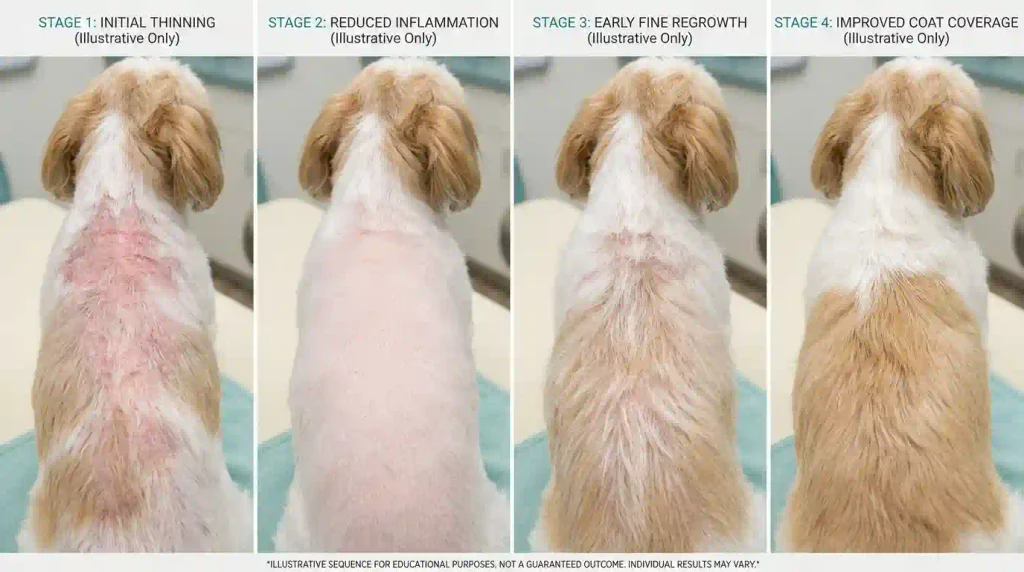
9.9 How to Track Hair Regrowth With Weekly Photos and Coat Measurements
Photograph the affected area once weekly using similar lighting, distance, and camera angles.
Record symptoms, treatment changes, and visible coat development.
| Week | Hair Coverage | Skin Appearance | Itching | Notes |
| Week 1 | Large thin patch | Mild redness | Moderate | Veterinary treatment started |
| Week 2 | Similar coverage | Less redness | Mild | Reduced scratching |
| Week 3 | Fine new hair visible | Skin improving | Minimal | Continue prescribed care |
| Week 4 | Slightly increased coverage | Healthy appearance | Minimal | Veterinary follow-up |
| Week 6 | Noticeable regrowth | Healthy appearance | None reported | Continued monitoring |
This is an illustrative tracker, not an expected treatment timeline.
Use photographs to support veterinary follow-up rather than to diagnose the condition independently.
10. Preventing Hair Loss and Maintaining a Healthy Shih Tzu Coat
Not every cause of alopecia can be prevented, but consistent coat care and veterinary monitoring can reduce avoidable problems.
10.1 Establishing a Consistent Grooming Routine
Brush regularly using appropriate grooming tools.
Prevent severe matting and avoid tight accessories that pull on the coat.
Clean grooming equipment and inspect the skin while brushing.
10.2 Preventing Fleas, Mites, and Skin Infections
Follow a veterinarian-recommended parasite-prevention program.
Check regularly for scratching, dandruff, redness, or skin lesions.
Early treatment helps reduce secondary infections and follicle damage.
10.3 Managing Allergies and Environmental Triggers
Identify possible allergens and follow a consistent management plan.
Avoid unnecessary exposure to irritating products.
Dogs with recurring itchy skin may benefit from long-term dermatological care.
10.4 Providing a Balanced Diet for Coat Health
Choose a nutritionally complete diet appropriate for your dog’s age and health.
Ask a veterinarian before adding supplements or changing to a homemade feeding plan.
Consistent nutritional support is important for normal hair cycling.
10.5 Reducing Stress and Excessive Licking
Maintain predictable routines, comfortable resting areas, appropriate exercise, and mental enrichment.
If compulsive licking continues, investigate medical causes of discomfort before assuming anxiety is responsible.
10.6 Regular Veterinary Skin and Coat Checkups
Routine veterinary examinations help identify developing skin problems and other health conditions.
Owners should mention unusual changes in coat density alongside appetite, thirst, weight, and activity changes.
For broader preventive guidance, explore our shih tzu health and wellness resources.
Hair loss alone does not mean a senior dog is approaching death. However, severe overall deterioration requires veterinary attention, as explained in our Shih Tzu Signs of Death guide.
10.7 Long-Term Management of Chronic Alopecia
Some conditions require lifelong medication or repeated skin examinations.
Others may leave permanent coat changes despite successful control of the underlying disease.
The priority is maintaining healthy skin, controlling discomfort, and preventing complications rather than achieving a perfectly full coat in every case.
11. Frequently Asked Questions About Shih Tzu Hair Loss
Why Is My Shih Tzu Losing Hair Suddenly?
Sudden hair loss may result from infection, parasites, excessive scratching, medication effects, or other medical conditions and should be evaluated by a veterinarian.
Is It Normal for a Shih Tzu to Have Bald Spots?
No, visible bald patches are not typical shedding and may indicate alopecia, infection, parasites, or grooming damage.
Why Is My Shih Tzu Losing Hair on Its Back?
Possible causes include flea allergy dermatitis, mites, bacterial infection, endocrine disease, or seasonal flank alopecia.
Can Allergies Make a Shih Tzu Lose Hair?
Yes, allergies can cause itching and excessive licking or scratching that damages hair and leads to bald patches.
Can a Shih Tzu Become Completely Hairless?
Severe or generalized alopecia can produce extensive hair loss, but Shih Tzus are not naturally a hairless breed.
Will My Shih Tzu’s Hair Grow Back?
Hair often regrows when the underlying cause is treated and the follicles remain healthy, although some conditions cause permanent loss.
Can Stress Cause Hair Loss in Shih Tzus?
Stress-related overgrooming may contribute to hair breakage and localized baldness, but medical causes should be ruled out first.
Is Coconut Oil Good for Shih Tzu Hair Loss?
Coconut oil has not been proven to cure alopecia or reliably stimulate hair growth in dogs.
Should I Shave a Shih Tzu That Is Losing Hair?
Shaving is not generally a treatment for alopecia and should be considered only when necessary for grooming or veterinary care.
Can Shih Tzu Hair Loss Be a Sign of a Serious Disease?
Yes, alopecia can sometimes accompany endocrine disorders, severe skin infections, autoimmune disease, or other systemic illnesses.
12. Final Thoughts: Helping Your Shih Tzu Maintain a Healthy Coat
If your Shih Tzu is losing hair, identifying the underlying cause is the most important step toward restoring a healthy coat. Although some shedding and hair breakage are normal, persistent bald patches, excessive itching, inflamed skin, and progressive thinning may indicate allergies, parasites, infections, hormonal disorders, or nutritional problems.
Many cases of Shih Tzu hair loss improve with appropriate veterinary treatment, consistent grooming, balanced nutrition, and ongoing skin care. However, some chronic or scarring conditions may prevent complete regrowth.
Check your dog’s coat regularly, document unusual changes, and avoid unproven home remedies or human hair-growth products.
If hair loss persists or worsens, schedule a veterinary skin examination. For more breed-specific guidance, visit our Shit Zhu resource hub, where you’ll find additional information about Shih Tzu health, grooming, and daily care.