
Shih Tzu Allergies: Causes, Symptoms, Treatment, and Relief
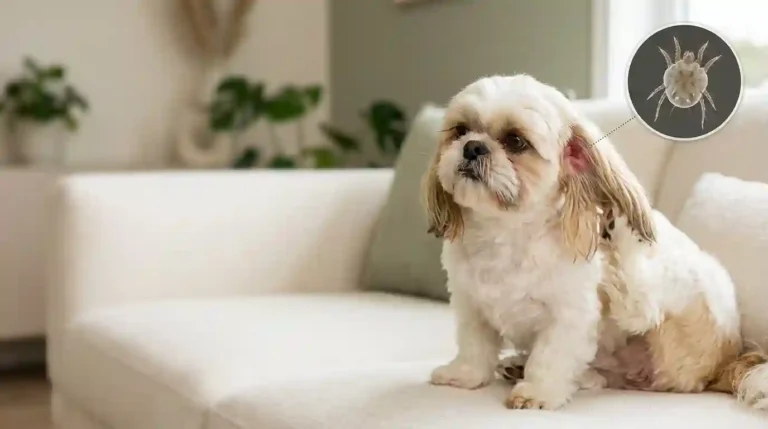
Shih Tzu allergies are a common concern for owners whose dogs experience persistent scratching, itchy paws, irritated skin, ear infections, or excessive licking. These uncomfortable symptoms may develop because of environmental allergens such as pollen and dust mites, certain food proteins, flea bites, or contact with irritating household products. However, not every itchy Shih Tzu has an allergy. Yeast infections, parasites, bacterial skin infections, and other health conditions can produce similar symptoms.
Understanding the underlying cause is essential for finding effective relief. Veterinary treatment may include prescription itch-control medications, medicated shampoos, flea prevention, carefully supervised elimination diets, or allergen-specific immunotherapy. Consistent grooming, gentle skin care, and identifying potential triggers can also help reduce recurring flare-ups.
If your Shih Tzu keeps scratching, licking its paws, or developing red skin despite regular bathing and flea prevention, the next step is a veterinary examination rather than experimenting with multiple home remedies. This guide explains the warning signs, common allergy triggers, diagnostic methods, treatment options, and practical strategies that can help your Shih Tzu feel more comfortable.
Important: Sudden facial swelling, difficulty breathing, collapse, or severe weakness may indicate a life-threatening allergic reaction. Seek emergency veterinary care immediately rather than attempting home treatment.
Table of Contents
- Understanding Shih Tzu Allergies
- Types of Shih Tzu Allergies and Common Causes
- Signs and Symptoms of Shih Tzu Allergies
- Shih Tzu Skin and Health Problems That Can Be Mistaken for Allergies
- How to Diagnose Allergies in Shih Tzus
- Shih Tzu Allergy Treatments and Relief Options
- Grooming and Skin Care for Shih Tzus With Allergies
- Diet, Nutrition, and Supplements for Shih Tzu Allergies
- Preventing Shih Tzu Allergy Flare-Ups and Managing Long-Term Care
- When to Seek Veterinary Help for Shih Tzu Allergies
- Frequently Asked Questions About Shih Tzu Allergies
- Final Thoughts
Understanding Shih Tzu Allergies
What Are Shih Tzu Allergies?
Shih Tzu allergies occur when a dog’s immune system reacts abnormally to substances that are ordinarily harmless. These substances, called allergens, may include pollen, dust mites, flea saliva, or particular food proteins.
The immune system’s response can trigger inflammation, itching, skin redness, and irritation. In dogs, allergic disease frequently affects the skin rather than producing the sneezing and runny nose commonly associated with allergies in humans.
Veterinarians use the term pruritus to describe itching. Persistent pruritus can interfere with sleep, cause repeated scratching, and eventually damage the skin.
Allergic skin disease may be temporary, seasonal, or chronic, depending on the underlying cause and the dog’s exposure to triggers.
Why Are Shih Tzus Prone to Allergies?
Shih Tzus are among the breeds in which canine atopic dermatitis, a chronic inflammatory skin condition, is recognized. However, not every Shih Tzu will develop allergies.
Genetic susceptibility, immune system activity, environmental exposure, and skin barrier health all contribute to individual risk.
Their long, dense coats and facial folds may also complicate skin care. Moisture and debris can accumulate close to the skin, particularly around the paws, ears, and facial creases.
These anatomical characteristics do not directly cause an immune-mediated allergy, but they may make secondary irritation and infection harder to recognize or manage.
Owners exploring broader shih tzu health and wellness concerns should understand that maintaining healthy skin is an important part of overall preventive care.
At What Age Do Shih Tzus Develop Allergies?
Environmental allergies often first become noticeable in young adult dogs, commonly between approximately six months and three years of age.
However, symptoms can appear earlier or later.
Food allergies may emerge at different life stages, including after a Shih Tzu has eaten the same diet for years. A sudden new allergy-like problem in an older dog should also prompt investigation for infections, parasites, and other illnesses.
Age provides a diagnostic clue, but it cannot confirm or exclude allergic disease.
Can Shih Tzu Allergies Get Worse With Age?
Yes, some Shih Tzus experience increasingly frequent or severe allergy flare-ups as they get older.
Repeated allergen exposure, chronic inflammation, and secondary infections may contribute to worsening symptoms. Over time, affected skin can become thicker, darker, and more susceptible to irritation.
Nevertheless, worsening itching should not automatically be attributed to aging. New health conditions, changes in the home environment, or reduced effectiveness of an existing treatment plan may be responsible.
Regular veterinary assessments help distinguish disease progression from treatable complications.
How the Immune System and Skin Barrier Contribute to Allergies
Canine atopic dermatitis involves a complex interaction between immune system abnormalities, skin barrier dysfunction, and environmental triggers.
Immune pathways involving T-helper 2 (Th2) responses, IgE antibodies, and inflammatory signaling molecules can contribute to allergic inflammation.
Meanwhile, the outermost skin layer, called the stratum corneum, normally helps retain moisture and block irritants. Changes in barrier proteins and lipids, including pathways involving filaggrin, may weaken this protection.
When the barrier is compromised, allergens and microorganisms can interact more easily with the skin.
Scratching causes additional damage, producing an itch-scratch cycle that can continue even when the initial trigger is no longer present.
How Coat Structure and Facial Folds Affect Skin Sensitivity
A Shih Tzu’s dense double coat can conceal redness, small bumps, dandruff, and early skin lesions.
Matted fur may trap moisture and increase friction, while facial folds create areas where tears, saliva, and debris accumulate.
These conditions can encourage secondary bacterial or yeast overgrowth, especially when inflammation is already present.
Regular coat inspections, careful drying, and facial fold hygiene help owners detect changes before minor irritation develops into a more serious problem.
Types of Shih Tzu Allergies and Common Causes
Understanding the different types of Shih Tzu allergies helps explain why symptoms may recur despite changes to food, shampoo, or grooming routines.
Environmental Allergies and Atopic Dermatitis
Environmental allergies are associated with substances encountered indoors or outdoors.
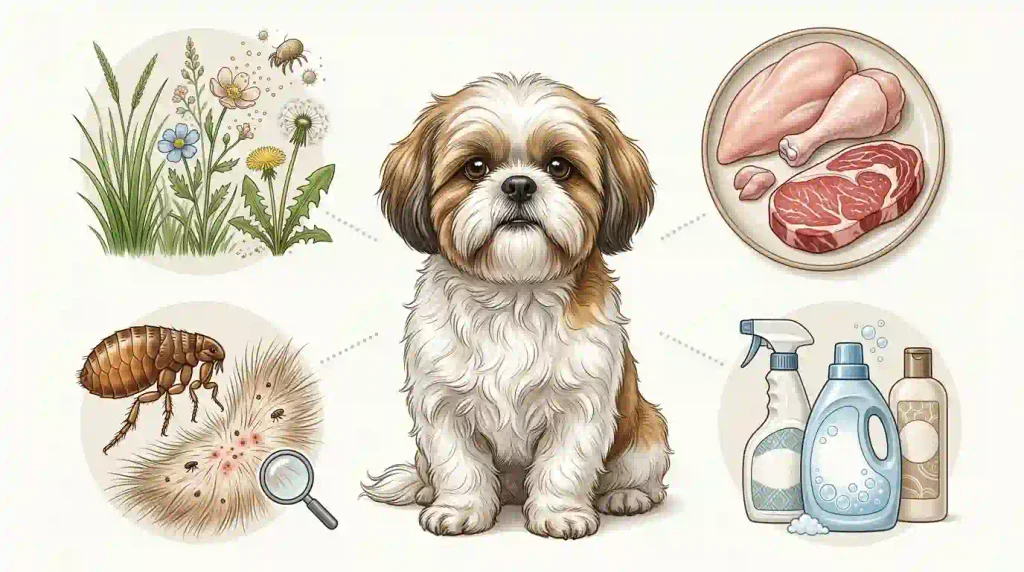
Common triggers include pollen, house dust mites, molds, and other airborne or environmental allergens.
In susceptible dogs, exposure may trigger canine atopic dermatitis, leading to itchy paws, inflamed ears, facial rubbing, and recurring skin irritation.
Environmental allergens can contact the skin directly. Therefore, a Shih Tzu may develop symptoms after walking through grass without showing obvious respiratory problems.
Atopic dermatitis is generally a long-term condition that requires ongoing management rather than a single curative treatment.
Seasonal vs. Year-Round Allergies: Pollen, Dust, Grass, and Mold
Seasonal allergies frequently coincide with increased pollen exposure.
Tree pollen may become troublesome during spring, while grasses, weeds, and ragweed can contribute to symptoms during warmer months and fall.
Year-round allergies may involve indoor allergens such as dust mites, household dust, or mold.
Humidity can also influence allergen levels and promote microbial overgrowth, potentially worsening existing skin problems.
A dog that scratches during the same months each year may have seasonal environmental allergies. In contrast, symptoms continuing throughout the year suggest a broader range of possibilities, including indoor allergens, food-related disease, or multiple triggers.
Food Allergies and Dietary Triggers
Food allergies involve an adverse immune response to a dietary ingredient, usually a protein.
Potential triggers include chicken, beef, dairy proteins, eggs, and other ingredients. However, the actual problem ingredient differs between individual dogs.
A Shih Tzu with a food allergy may develop persistent itching, ear inflammation, paw licking, or digestive problems such as vomiting and diarrhea.
Food allergy is less common than many owners assume, and skin symptoms alone cannot identify it.
Changing from one commercial dog food to another without a structured diagnostic plan may not reveal the responsible ingredient.
Flea Allergy Dermatitis
Flea allergy dermatitis is an allergic reaction to substances in flea saliva.
For a sensitized Shih Tzu, even limited flea exposure may trigger intense itching.
Commonly affected areas include the lower back, tail base, thighs, and abdomen.
A dog can develop flea allergy dermatitis even when an owner cannot find visible fleas. Fleas may be removed through grooming, and only occasional bites may be necessary to cause symptoms.
Consistent veterinary-recommended flea prevention is essential for susceptible dogs.
Contact Allergies and Skin Irritants
Contact dermatitis occurs when substances touching the skin cause irritation or, less commonly, an allergic immune response.
Possible sources include household cleaning products, laundry detergents, artificial fragrances, lawn chemicals, carpet treatments, and grooming products.
Some dogs may also react to materials used in bedding, collars, or bowls, although a reaction to a product does not always indicate a true allergy.
Affected skin is often concentrated around areas of direct exposure, such as the belly, paws, chin, or neck.
Removing a suspected irritant may help, but persistent symptoms require evaluation because infection and environmental allergies can look similar.
Can Shih Tzus Have Multiple Allergies at the Same Time?
Yes. A Shih Tzu may have environmental allergies alongside flea allergy dermatitis or an adverse food reaction.
Different triggers can contribute to the dog’s overall inflammatory burden.
For example, mild year-round itching may become substantially worse during grass pollen season or after a flea bite.
This explains why changing food alone does not always resolve scratching.
Veterinarians may need to address several contributing factors to achieve reliable symptom control.
Signs and Symptoms of Shih Tzu Allergies
Shih Tzu allergy symptoms vary depending on the underlying cause, severity of inflammation, and presence of secondary infections.
Some dogs display obvious red skin, while others show only repeated licking, chewing, or rubbing.
Excessive Scratching, Licking, and Chewing
Persistent scratching is one of the most recognizable signs of allergic skin disease.
An affected Shih Tzu may scratch its neck, rub its face against furniture, chew its feet, or repeatedly lick the same patches of skin.
Owners often ask, “Why is my Shih Tzu so itchy?” or “Why does my Shih Tzu scratch so much?”
Possible explanations include allergies, parasites, infection, or other skin disorders. The pattern and intensity of itching help guide the veterinary investigation.
Occasional scratching is normal. Repeated behavior that interrupts sleep, causes hair loss, or damages the skin is not.
Red, Inflamed, and Irritated Skin
Skin inflammation may produce redness, warmth, swelling, small bumps, or irritated patches.
These changes often develop in areas exposed to friction or moisture, including the armpits, groin, belly, and spaces between the toes.
Dogs with chronic inflammation may develop darker or thicker skin.
Redness alone cannot identify an allergen. Similar changes occur with bacterial infections, yeast overgrowth, and contact irritation.
Itchy Paws, Belly, Face, and Ears
The location of itching can provide valuable clues.
| Affected area | Common observations | Possible explanations |
| Paws | Licking, chewing, redness between toes | Atopy, contact irritation, yeast infection |
| Belly and armpits | Red patches, scratching, irritation | Environmental allergy, contact dermatitis |
| Face and muzzle | Rubbing, scratching, inflamed skin | Atopy, facial fold irritation |
| Ears | Head shaking, scratching, discharge | Allergic inflammation, ear infection, mites |
| Tail base | Chewing, hair loss, intense itching | Flea allergy dermatitis |
| Around the anus | Scooting, licking, irritation | Anal gland disease, parasites, allergy-associated irritation |
Itching near the rear end may be mistaken for a skin allergy. However, problems involving Shih Tzu anal glands can also cause scooting, licking, and discomfort.
These body-area patterns are helpful clues, not definitive diagnostic tests.
Hair Loss, Hot Spots, and Skin Lesions
Repeated scratching or chewing damages hair shafts and inflames the underlying skin.
This can result in thinning hair, bald patches, scabs, crusted wounds, and open sores.
Some dogs develop hot spots, also called acute moist dermatitis, which are rapidly developing areas of painful, inflamed skin.
Hot spots may appear wet, sticky, red, and surrounded by matted fur.
Because infected or severely inflamed lesions can worsen quickly, painful or expanding areas should be examined by a veterinarian.
Recurrent Ear Infections and Excessive Earwax
Allergic inflammation can affect the ear canals, increasing the likelihood of recurrent otitis externa.
Signs include head shaking, frequent ear scratching, unpleasant odor, redness, and excessive earwax.
Ear discharge may become brown, yellow, or unusually thick depending on the underlying problem.
A Shih Tzu scratching its ears all the time may have an ear infection rather than uncomplicated allergy-related itching.
Repeated ear infections can also indicate an underlying allergic disease that has not been adequately controlled.
Watery Eyes, Eye Irritation, and Tear Staining
Watery eyes, redness, and rubbing around the face sometimes accompany environmental allergies.
However, Shih Tzus have prominent eyes and facial anatomy that increase their susceptibility to unrelated eye conditions.
Tear staining may result from tears flowing over facial hair, chronic moisture, or drainage problems.
Eye redness, squinting, cloudiness, or obvious pain can indicate a corneal ulcer or another urgent problem.
Owners should never assume that Shih Tzu eye allergies are responsible for these symptoms without a veterinary eye examination.
Greasy Skin, Unpleasant Odors, and Yeast Overgrowth
Greasy skin, dandruff, and a musty odor can accompany secondary yeast overgrowth.
Malassezia yeast naturally exists on canine skin in limited quantities. Under favorable conditions, it may multiply and contribute to inflammation.
An affected dog may develop oily skin, brownish debris, scaling, or a noticeable odor.
Persistent smell after bathing is a reason to investigate for infection rather than increasing shampoo frequency indiscriminately.
Brown Staining Between the Toes
Repeated paw licking deposits saliva on the hair.
Porphyrin compounds in saliva can produce reddish-brown discoloration, which is particularly visible on light-colored Shih Tzus.
Brown paw staining may indicate chronic licking associated with itching, but it does not identify the cause.
Veterinary assessment is especially important when the surrounding skin appears swollen, painful, moist, or inflamed.
Facial Fold Irritation and Inflammation
Shih Tzus can develop facial fold dermatitis when moisture, friction, and debris accumulate in skin creases.
Affected folds may become red, tender, or unpleasant-smelling.
Inflammation around the eyes is sometimes described as periocular dermatitis, while irritation in nasal or lip folds can produce localized discomfort.
These problems may occur alongside allergies but can also develop independently.
Keeping facial folds clean and appropriately dry helps prevent moisture-related irritation.
Digestive Symptoms Associated With Food Allergies
Some dogs with adverse food reactions experience vomiting, loose stools, diarrhea, increased gas, or abdominal discomfort.
Food-related skin disease can occur with or without digestive symptoms.
Loss of appetite or persistent gastrointestinal problems should not automatically be attributed to a food allergy.
Intestinal parasites, dietary intolerance, infections, and other gastrointestinal illnesses may produce similar signs.

Shih Tzu Skin and Health Problems That Can Be Mistaken for Allergies
Not every itchy Shih Tzu has canine allergies. Several medical conditions can cause similar changes in the skin, ears, coat, or eyes.
Recognizing these possibilities helps prevent unnecessary dietary restrictions and inappropriate treatments.
Yeast Infections and Malassezia Dermatitis
Malassezia dermatitis develops when yeast overgrows on the skin.
Common signs include greasy skin, redness, itching, thickened skin, and a characteristic musty smell.
Warm, moist areas such as the paws, groin, ears, and skin folds are frequently affected.
Yeast infection may be secondary to allergic inflammation, but it can also complicate other skin conditions.
Veterinarians commonly confirm yeast overgrowth by examining skin samples under a microscope.
Bacterial Skin Infections
Bacterial pyoderma can cause pustules, red bumps, circular areas of scaling, crusts, hair loss, and irritation.
Repeated scratching compromises the skin barrier and creates opportunities for bacteria to multiply.
Some infections remain superficial, while others involve deeper skin structures.
Persistent or recurrent infections may require additional testing, especially when previous treatments have not worked.
Fungal vs. Bacterial Ear Infections
Dogs can develop ear infections involving yeast, bacteria, or both.
Yeast-associated infections may produce brown discharge and an unpleasant odor. Bacterial infections can cause similar symptoms, sometimes with more marked pain or purulent discharge.
Appearance alone cannot reliably distinguish them.
Ear cytology helps the veterinarian identify microorganisms and select an appropriate treatment.
Ringworm, a dermatophyte fungal infection affecting skin and hair rather than a typical yeast ear infection, can also mimic some allergic skin lesions and may spread to people.
Parasites and Other Causes of Itching
Fleas are only one potential parasitic cause of Shih Tzu scratching.
Sarcoptic mange mites can cause intense itching, while Demodex mites may contribute to hair loss and inflamed skin.
Ear mites, lice, and other external parasites are additional possibilities.
Some infestations are difficult to identify through a simple visual examination, making flea combing, skin scrapings, or other veterinary tests important.
Owners searching for explanations because “my Shih Tzu keeps scratching but has no fleas” should remember that an absence of visible fleas does not exclude flea allergy or other parasites.
Hormonal Conditions That Affect Skin and Coat Health
Hypothyroidism and hyperadrenocorticism can affect skin thickness, hair growth, infection susceptibility, and coat quality.
In particular, Shih Tzu Cushing’s Disease may contribute to thinning hair, fragile skin, recurrent infections, increased thirst, and abdominal enlargement.
Hormonal diseases do not usually produce intense primary itching on their own, but secondary infections may cause substantial discomfort.
Older dogs with new coat changes or recurring infections may need endocrine evaluation.
Persistent lumps, ulcerated growths, or unusual skin lesions also deserve investigation because conditions such as Shih Tzu Skin Cancer can occasionally be mistaken for ordinary irritation.
Eye Conditions and Tear Staining Unrelated to Allergies
Shih Tzus are predisposed to eye problems, including dry eye, corneal injuries, and certain other ocular disorders.
Dry eye can cause thick discharge, redness, and irritation, while corneal ulcers may produce squinting, excessive tearing, and pain.
Glaucoma can cause severe eye pain and vision loss, and cataracts may affect vision without being related to allergies.
Persistent tear staining alone does not establish an allergic diagnosis.
Sudden squinting, cloudiness, eye swelling, or severe redness warrants prompt veterinary attention.
Breathing Problems and Facial Anatomy Issues That Allergy Treatments Cannot Fix
Shih Tzus have brachycephalic anatomy, meaning their shortened skull and muzzle can contribute to narrowed airways.
Conditions associated with brachycephalic obstructive airway syndrome may cause noisy breathing, snorting, exercise intolerance, and overheating.
These problems are different from allergic skin disease and generally will not improve with allergy medications.
Sudden breathing difficulty, however, can also occur during a severe allergic reaction or other emergency.
Any significant respiratory distress requires immediate veterinary assessment.
How to Diagnose Allergies in Shih Tzus
Diagnosing Shih Tzu allergies requires more than identifying red skin or choosing a commercial allergy test.
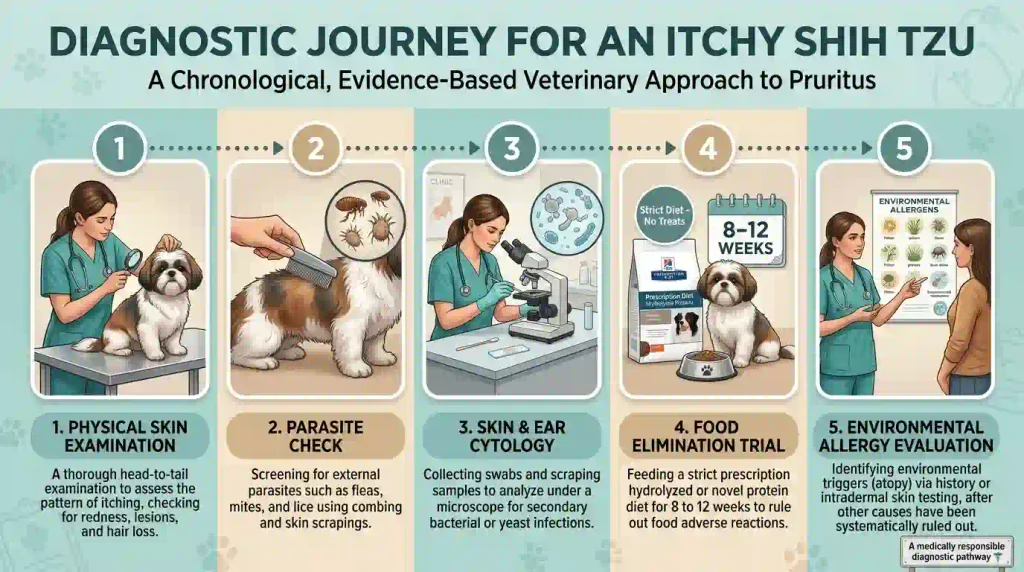
Veterinarians generally investigate parasites, infections, dietary reactions, and environmental allergies in a structured sequence.
This approach helps avoid treating the wrong condition and improves the likelihood of finding long-term relief.
Identifying Potential Allergy Triggers
Begin by observing when and where symptoms occur.
Important details include whether itching becomes worse after outdoor walks, bathing, exposure to cleaning products, or changes in food.
Consider whether symptoms appear during particular seasons or remain consistent throughout the year.
A recent move, new carpet, different laundry detergent, or introduction of another pet may provide useful context.
However, associations are not proof of causation. A dog may scratch after eating because of an existing skin problem rather than the meal itself.
The goal is to identify patterns worth investigating with your veterinarian.
Tracking Symptoms With a Two-Week Allergy Diary
A simple symptom diary can reveal recurring patterns that owners might otherwise overlook.
Record the intensity and location of itching, possible exposures, grooming activities, and any changes in skin appearance.
Use the following example to organize observations.
| Day | Itching score (0–10) | Symptoms and body areas | Possible exposure or change |
| 1 | 6 | Paw licking and ear scratching | Baseline symptoms |
| 3 | 7 | Red paws and facial rubbing | Outdoor walk through grass |
| 5 | 5 | Less frequent paw licking | Stayed mostly indoors |
| 8 | 6 | Ear scratching and head shaking | No obvious change |
| 11 | 4 | Mild paw licking | Veterinary treatment underway |
| 14 | 3 | Less scratching, improved sleep | Continued prescribed care |
These are illustrative observations, not evidence that grass caused the symptoms.
Photographs taken under consistent lighting can help document inflammation, hair loss, and treatment response.
A two-week diary provides useful initial information, but it cannot replace a longer food elimination trial or diagnose environmental allergies.
How to Measure Allergy Severity and Treatment Progress
Itching severity can be tracked using a simple numerical scale.
A practical owner-recorded scale ranges from 0 to 10:
- 0: No noticeable itching.
- 1–3: Occasional scratching or licking that rarely interrupts normal activities.
- 4–6: Frequent itching that may interrupt rest or daily routines.
- 7–8: Severe, repeated scratching, chewing, or licking with substantial discomfort.
- 9–10: Almost continuous itching, significant distress, or self-inflicted skin injury.
This is a simplified tracking system rather than a substitute for a validated veterinary pruritus scale.
Record the score at approximately the same time each day and note whether the dog sleeps comfortably.
A decreasing score may suggest improvement, but skin healing and secondary infections must also be assessed.
Veterinary Physical Examination and Medical History
A veterinarian begins by reviewing the dog’s medical history, diet, parasite prevention, previous treatments, and age when symptoms first appeared.
The examination typically includes checking the skin, coat, paws, ears, and other affected areas.
The veterinarian may look for fleas, infection, lesions, inflamed folds, or abnormalities that suggest other diseases.
Previous medication responses can also provide clues, although improvement with an itch-control drug does not prove that allergies are the underlying cause.
A complete history is particularly valuable when a Shih Tzu has experienced multiple recurring flare-ups.
Skin Cytology for Yeast and Bacterial Infections
Skin cytology is a commonly used diagnostic procedure for identifying microorganisms associated with skin inflammation.
The veterinarian may collect material through an adhesive tape impression, swab, or gentle contact with a microscope slide.
After staining the sample, microscopic examination can reveal yeast cells, bacteria, and inflammatory cells.
Cytology helps determine whether antimicrobial treatment is necessary.
It does not independently diagnose environmental or food allergies.
If skin infections recur despite appropriate care, additional diagnostic tests may be recommended.
Ear Examinations and Cytology
Dogs with itchy ears or recurrent ear discharge should have their ear canals examined.
An otoscopic examination can help identify inflammation, foreign material, abnormalities, and possible damage to the eardrum.
Ear cytology is used to evaluate yeast, bacterial organisms, and inflammatory cells.
These findings guide the selection of veterinary ear treatments.
Using random ear cleaners or medications before an examination can make an irritated ear worse, particularly if the eardrum is damaged.
How to Conduct a Strict Food Elimination Trial and Food Challenge
A properly conducted elimination diet trial is the reference standard for investigating suspected food allergies.
The veterinarian selects a suitable diet based on the dog’s previous dietary history. This is often a prescription hydrolyzed protein diet or a carefully chosen novel protein diet.
Step 1: Select an Appropriate Diagnostic Diet
Hydrolyzed diets contain proteins broken into smaller fragments to reduce the likelihood of triggering an immune response.
Novel protein diets use ingredients the dog has not previously consumed.
The choice depends on the Shih Tzu’s history, nutritional needs, and any other medical conditions.
Step 2: Feed the Diet Exclusively
The selected diet must be the only source of food during the trial unless the veterinarian specifically approves an alternative.
That means avoiding regular treats, table scraps, dental chews, flavored supplements, and other sources of unintended dietary proteins.
Even flavored medications and chewable parasite preventives may interfere with a strict trial. Ask your veterinarian about suitable alternatives rather than stopping necessary medications yourself.
Step 3: Continue for the Recommended Duration
Many dogs require approximately eight weeks of strict dietary restriction to assess skin-related improvement, although veterinarians may recommend a trial lasting four to twelve weeks depending on the circumstances.
Itching, lesions, and digestive symptoms should be monitored throughout the trial.
If the dog receives itch-control medication during the trial, the veterinarian must account for its effects when interpreting the results.
Step 4: Perform a Supervised Food Challenge
If symptoms improve substantially, the veterinarian may recommend reintroducing the previous diet to determine whether symptoms return.
This process is called a food challenge or dietary provocation.
Recurrence of symptoms after reintroduction, followed by improvement when the elimination diet is resumed, provides stronger evidence of a food allergy.
A food challenge should be planned with veterinary guidance, particularly if the dog has experienced a severe previous reaction.
Without this confirmation, improvement may be incorrectly attributed to food when seasonal changes or other treatments were responsible.
Intradermal and Blood Tests for Environmental Allergens
Intradermal skin testing involves introducing small quantities of environmental allergens into the skin and evaluating local reactions.
Blood-based allergy tests may measure allergen-specific IgE antibodies using laboratory methods such as ELISA.
These tests can identify environmental allergen sensitivities that may be useful when designing allergen-specific immunotherapy.
However, positive environmental allergy test results do not independently establish a diagnosis of canine atopic dermatitis.
Dogs may show sensitization without clinically important allergic disease, and relevant allergens may not always produce positive results.
Veterinarians diagnose atopic dermatitis primarily through medical history, characteristic symptoms, examination findings, and exclusion of other causes.
For a broader explanation of the diagnostic process, the American Animal Hospital Association’s allergic skin disease guidelines provide professional recommendations for evaluating allergic dogs.
Why Food Allergy Blood, Saliva, and Hair Tests Can Be Misleading
Commercial food sensitivity panels are often advertised as convenient alternatives to elimination diets.
These may use blood samples, saliva, or hair analysis to produce lists of supposedly problematic foods.
Unfortunately, such tests have not demonstrated sufficient reliability for diagnosing canine food allergies.
False-positive results may lead owners to eliminate nutritious foods unnecessarily, while false-negative results may create misplaced confidence.
A carefully planned elimination diet followed by an appropriate food challenge remains the preferred diagnostic approach.
Hormonal Screening for Older Shih Tzus
Older Shih Tzus with unusual hair loss, thinning skin, repeated infections, or other systemic symptoms may require hormonal testing.
A veterinarian might investigate hypothyroidism or Cushing’s disease if the history and examination suggest an endocrine disorder.
Possible tests include thyroid hormone assessment and specific screening procedures for hyperadrenocorticism.
These tests are not routinely needed for every itchy dog.
They are selected when additional findings, such as increased thirst, unexplained weight changes, lethargy, or characteristic coat abnormalities, justify further investigation.
How to Tell Food, Flea, and Environmental Allergies Apart
The following comparison highlights patterns that may guide the investigation.
| Feature | Food allergy | Flea allergy | Environmental allergy |
| Typical timing | Often year-round | Related to flea exposure | Seasonal or year-round |
| Commonly affected areas | Ears, paws, face, or body | Tail base, lower back, thighs | Paws, ears, face, belly |
| Digestive symptoms | Sometimes present | Uncommon | Usually absent |
| Visible fleas required? | No | No | No |
| Main diagnostic approach | Elimination diet and food challenge | Exposure history, parasite assessment, flea control | Clinical evaluation and exclusion of other causes |
| Long-term management | Avoid confirmed dietary allergens | Consistent flea prevention | Allergen management and individualized treatment |
No single body-area pattern or symptom reliably separates these conditions.
For example, itchy ears occur with both food-related and environmental allergic disease.
Accurate diagnosis requires considering the complete clinical picture rather than relying on one symptom.
Shih Tzu Allergy Treatments and Relief Options
Shih Tzu allergy treatment depends on the underlying cause, symptom severity, age, medical history, and presence of secondary infections.
Some dogs respond well to environmental control and targeted skin care. Others require prescription medications or long-term dermatology management.
The most effective plans often combine several approaches rather than relying on one product.
What to Do During a Sudden Allergy Flare-Up
If your Shih Tzu suddenly begins scratching or licking excessively, first assess the severity of the reaction.
Difficulty breathing, collapse, or significant facial swelling requires emergency care.
For non-emergency itching, contact your veterinarian for advice, especially if the dog has visible inflammation or a history of recurrent problems.
While arranging care, prevent further exposure to any clearly identified irritant and gently clean dirty paws with plain lukewarm water.
Avoid introducing several new shampoos, supplements, or medications simultaneously because doing so may worsen irritation and make treatment response difficult to interpret.
Reducing Exposure to Identified Allergens
Reducing allergen exposure may improve comfort when specific triggers have been identified.
Examples include washing bedding frequently, controlling indoor dust, avoiding recently treated lawns, and wiping pollen from paws after outdoor activities.
Dogs with confirmed contact reactions may benefit from switching to fragrance-free laundry products or removing the offending material.
Complete elimination of environmental allergens is rarely practical.
The goal is to decrease exposure where possible without severely restricting exercise or normal activities.
Treating Secondary Skin and Ear Infections
Secondary infections often make allergic itching substantially worse.
Veterinarians may prescribe topical antimicrobial treatments, medicated washes, antifungal medications, or antibiotics depending on the organism and infection severity.
Treatment should be selected based on examination findings and diagnostic testing.
Antibiotics are not needed for every itchy dog, and repeated use without confirming bacterial infection can contribute to antimicrobial resistance.
Likewise, yeast infections require appropriate antifungal care rather than antibacterial treatment alone.
Veterinary Antihistamines and Their Limitations
Antihistamines are sometimes used to help manage mild allergic symptoms.
Examples include diphenhydramine, commonly known as Benadryl, and hydroxyzine.
However, their effectiveness for established canine atopic dermatitis is inconsistent, and many dogs experience little meaningful relief.
They may also cause sedation, gastrointestinal upset, or other adverse effects.
Never give human antihistamines or combination cold-and-allergy products without veterinary approval. Some formulations contain additional ingredients that can be dangerous for dogs, and the appropriate medication depends on the individual animal.
Apoquel for Controlling Allergic Itching
Apoquel is the brand name for oclacitinib, a prescription medication used to control itching associated with allergic dermatitis and manage canine atopic dermatitis.
It works by affecting specific cellular signaling pathways involved in inflammation and itching, including those associated with cytokine activity.
Apoquel can provide relatively rapid relief in appropriately selected dogs, sometimes beginning within the first day.
However, it does not eliminate the underlying allergens or automatically resolve skin infections.
Apoquel is labeled for dogs at least 12 months old and is not intended for dogs with serious infections.
Because it affects immune signaling and carries important precautions involving infections and neoplastic conditions, veterinary assessment and monitoring are necessary, particularly for dogs requiring prolonged treatment.
Cytopoint Injections for Allergy Relief
Cytopoint is a veterinary injectable treatment containing lokivetmab, a monoclonal antibody that targets interleukin-31, an important signaling molecule associated with allergic itching.
By interfering with this itch pathway, Cytopoint can reduce scratching and help improve comfort.
Relief may begin relatively quickly, although individual responses vary.
The effect commonly lasts several weeks, and some dogs receive injections at intervals of approximately four to eight weeks based on veterinary assessment and product guidance.
Cytopoint does not cure atopic dermatitis or directly treat bacterial and fungal infections.
It may be considered when an injectable itch-control approach is preferable, but suitability should be determined by the treating veterinarian.
Corticosteroids and Cyclosporine for Allergic Skin Disease
Corticosteroids such as prednisone may reduce inflammation and itching during certain allergy flare-ups.
Although they can be effective, potential adverse effects include increased thirst, urination, appetite, and susceptibility to infections.
Long-term or repeated use requires careful risk assessment.
Cyclosporine is another prescription treatment used for canine atopic dermatitis. It modifies immune activity and may be beneficial when sustained inflammation control is required.
Unlike some faster-acting itch medications, cyclosporine may take several weeks to provide its full effect.
Treatment selection depends on the dog’s medical history and tolerance, and these medications should never be started, combined, adjusted, or stopped without veterinary instructions.
Medicated Shampoos and Topical Treatments
Topical therapy helps address skin surface problems, improve cleanliness, and support skin barrier function.
Veterinary medicated shampoos may contain ingredients such as chlorhexidine, miconazole, or other antimicrobial substances.
These are useful when specific bacterial or yeast problems have been identified.
For localized inflammation, veterinarians may recommend appropriate anti-inflammatory sprays, creams, or wipes.
Products containing corticosteroids, hydrocortisone, anesthetics such as lidocaine, or other active ingredients should be used only when suitable for the dog’s condition and the intended body area.
Avoid applying human skin medications near the eyes or to open lesions without veterinary direction.
Allergen-Specific Immunotherapy
Allergen-specific immunotherapy involves administering carefully selected environmental allergens in controlled amounts to modify the dog’s immune response over time.
Treatment may involve injections or, in some circumstances, formulations administered under the tongue.
The allergen mixture is usually selected using a combination of clinical history and environmental allergy testing.
Unlike medications primarily intended to suppress itching, immunotherapy aims to reduce sensitivity to relevant allergens.
However, improvement is gradual and may require several months. Some dogs need up to a year before the full benefit can be evaluated.
Not every dog responds, and other treatments may still be necessary.
Immunotherapy is generally best planned with a veterinarian experienced in managing canine allergic skin disease.
Managing Hot Spots and Inflamed Skin
Hot spots can develop rapidly when repeated licking or scratching damages the skin.
Veterinary treatment may involve careful clipping around the lesion, appropriate cleaning, pain management, and treatment of infection when present.
Owners should avoid cutting close to inflamed skin with scissors because Shih Tzus can move unexpectedly and skin injuries can occur.
A properly fitted protective collar may be useful to prevent further self-trauma while treatment takes effect.
Do not apply alcohol, hydrogen peroxide, strong antiseptics, or irritating essential oils to inflamed areas.
Safe At-Home Measures for Soothing Irritated Skin
Owners frequently search for Shih Tzu itching remedies when their dogs become uncomfortable.
For mild irritation, supportive measures may include using cool or lukewarm water to rinse the paws, maintaining a clean sleeping area, and preventing excessive scratching.
A veterinarian may suggest a gentle moisturizing shampoo, skin barrier product, or appropriately formulated oatmeal-based treatment.
However, not every natural ingredient is safe. Concentrated essential oils, harsh homemade rinses, and products designed for human skin may cause irritation or toxicity.
A home remedy for Shih Tzu itchy skin should never replace treatment for infection, parasites, or significant allergic inflammation.
Why Shih Tzu Allergy Treatments Sometimes Stop Working
A treatment that previously controlled itching may become less effective when new problems develop.
Possible explanations include increased seasonal allergen exposure, missed flea prevention, secondary infection, or progression of an underlying skin disorder.
Changes in medication administration or exposure to new dietary ingredients may also contribute.
A recurring flare-up does not necessarily mean the dog’s body has developed resistance to the prescribed treatment.
Rather than independently increasing medication amounts, arrange a follow-up examination so the veterinarian can reassess the skin and adjust the overall plan.
Choosing Allergy Treatments for Puppies and Senior Shih Tzus
Puppies and senior dogs require additional consideration when selecting allergy treatments.
Young puppies may have parasites, infections, or developing skin conditions that resemble allergies. Some prescription medications also have minimum age restrictions.
For example, Apoquel is not labeled for dogs younger than 12 months.
Senior Shih Tzus may have kidney, liver, hormonal, or other health problems that influence medication selection and monitoring.
Age alone does not determine the best treatment. The veterinarian must consider the dog’s complete health profile, diagnosis, and potential medication interactions.
Grooming and Skin Care for Shih Tzus With Allergies
Grooming plays an important supporting role in managing Shih Tzu skin allergies.
A consistent routine can help remove environmental debris, reduce coat matting, and identify inflammation before it becomes severe.
However, grooming cannot replace veterinary treatment when allergies cause significant itching or secondary infections.
Choosing Hypoallergenic Shampoos and Conditioners
Shih Tzus with sensitive skin generally benefit from gentle, fragrance-free shampoos formulated specifically for dogs.
Products described as hypoallergenic may contain fewer common irritants, but the label does not guarantee that every dog will tolerate them.
Choose products that support skin hydration and avoid unnecessary perfumes, dyes, and harsh cleansing agents.
Some moisturizing shampoos contain ceramides or other ingredients intended to help protect the skin barrier.
If your dog has recurring yeast or bacterial infections, a veterinarian may recommend a medicated product instead of an ordinary grooming shampoo.
Oatmeal and Aloe-Based Skin Care Products
Colloidal oatmeal is commonly included in soothing canine shampoos because of its moisturizing and skin-conditioning properties.
Some formulations may temporarily relieve mild dryness and irritation.
Aloe vera is another ingredient found in pet skin-care products, but concentration and formulation matter.
Do not allow your Shih Tzu to chew or consume aloe plant material, and avoid applying homemade preparations directly to irritated skin.
Neither oatmeal nor aloe can eliminate an underlying environmental or food allergy.
Products should be selected based on the dog’s individual skin condition and veterinary recommendations.
How Often Should You Bathe a Shih Tzu With Allergies?
Bathing frequency depends on the severity of skin disease, coat condition, environmental exposure, and shampoo formulation.
Some allergic Shih Tzus benefit from weekly bathing with a suitable product, while others require a different schedule.
When treating infection, veterinarians may temporarily recommend more frequent medicated baths.
Excessive washing with inappropriate shampoo can remove protective skin lipids and worsen dryness.
Conversely, insufficient bathing may allow environmental debris and allergens to accumulate in the coat.
Your veterinarian can recommend a schedule based on your dog’s skin condition and treatment response.
Proper Bathing, Rinsing, and Drying Techniques
Use comfortably lukewarm water and thoroughly wet the coat before applying shampoo.
Massage the product gently without aggressively scrubbing inflamed areas.
Follow the recommended contact time for medicated products, then rinse thoroughly to remove shampoo residue.
Pay particular attention to the armpits, groin, belly, and areas where shampoo can remain trapped.
After bathing, gently towel-dry the coat and use a low-heat dryer when appropriate.
Avoid leaving dense fur damp for prolonged periods, especially around skin folds and paws.
Does Trimming a Shih Tzu’s Coat Help With Allergies?
A shorter haircut can make skin inspection, bathing, and drying easier.
Many owners choose a manageable puppy cut for Shih Tzus with recurrent skin problems.
However, trimming the coat does not eliminate allergic sensitization or cure atopic dermatitis.
Avoid shaving extremely close to irritated skin unless it is necessary for veterinary treatment.
Routine brushing remains important regardless of coat length because mats can trap moisture and create friction.
Cleaning Facial Folds to Prevent Irritation
Facial folds should be inspected regularly for trapped moisture, debris, redness, and unpleasant odor.
Use a veterinarian-approved wipe or soft, slightly damp cloth to clean the folds gently.
Dry the area afterward to avoid prolonged moisture retention.
Avoid applying heavily fragranced products or harsh disinfectants around the nose and eyes.
If facial folds repeatedly become infected, swollen, or painful, veterinary assessment is necessary.
Ear Cleaning and Hygiene for Allergy-Prone Shih Tzus
Regular ear inspection can help owners identify excessive wax, redness, odor, or discharge.
Ear cleaning should follow veterinary instructions, especially when a Shih Tzu has a history of recurrent infections.
Use only appropriate canine ear-cleaning products and avoid inserting cotton swabs deep into the ear canal.
Overcleaning may irritate otherwise healthy ears.
If your Shih Tzu has painful or itchy ears, seek an examination before using home remedies or medicated cleaners.
Paw Cleaning and Care After Outdoor Activities
A Shih Tzu with environmental allergies may benefit from gentle paw cleaning after walks.
Removing grass particles, pollen, dirt, and lawn residues can reduce material remaining in contact with the skin.
Use plain water or veterinarian-approved grooming wipes, then dry carefully between the toes.
Check for redness, swelling, broken nails, foreign objects, and signs of infection.
Persistent paw chewing requires further investigation even when daily cleaning is performed.
Eye-Area Hygiene and Tear Stain Management
Gently clean the hair around the eyes using an appropriate soft cloth and veterinary-recommended method.
Keep facial hair trimmed or secured so it does not rub against the eyes.
Avoid getting shampoo, soap, fragrance, or other grooming chemicals near the eye surface.
Tear staining may improve with appropriate hygiene, but persistent excessive tearing can indicate problems unrelated to allergies.
Never use harsh bleaching agents, hydrogen peroxide, or unapproved tear-stain products near a Shih Tzu’s eyes.

Diet, Nutrition, and Supplements for Shih Tzu Allergies
Nutrition contributes to skin barrier maintenance, immune function, and overall health.
However, dietary changes should match the dog’s diagnosis rather than being based on assumptions about particular ingredients.
How Food Allergies Differ From Food Intolerances
Food allergies involve an immune-mediated reaction to dietary substances.
Food intolerance generally refers to an adverse response that does not involve the same immune mechanism.
Both conditions may cause digestive discomfort, and food allergies can also produce itching and inflammation.
For example, a dog may experience digestive upset after eating a fatty meal without having an allergy to the ingredients.
Because the symptoms overlap, owners should avoid labeling every reaction to food as an allergy.
Veterinary evaluation and carefully structured dietary trials provide a more reliable basis for treatment.
Which Foods Commonly Trigger Allergies in Shih Tzus?
Potential dietary allergens include animal proteins such as beef, chicken, dairy, and eggs.
Other ingredients, including wheat, soy, and certain alternative proteins, may cause reactions in individual dogs.
Pork, turkey, lamb, and other meats are not automatically safe simply because they are less commonly associated with reported food allergies.
Similarly, food additives, artificial colors, and preservatives are sometimes blamed for itching, but proteins are more frequently implicated in confirmed canine food allergy.
There is no evidence that every Shih Tzu should avoid chicken, grains, or dairy.
The appropriate diet depends on whether a specific ingredient has been demonstrated to cause a reaction.
Prescription Hydrolyzed Diets vs. Over-the-Counter Allergy Foods
Prescription hydrolyzed protein diets are formulated to reduce the likelihood of reactions to intact dietary proteins.
They may be especially useful during veterinary-supervised elimination trials.
Over-the-counter limited-ingredient diets can be useful for general feeding in some circumstances, but they are not always reliable for formal food allergy diagnosis.
Undeclared ingredients or manufacturing cross-contact may interfere with the interpretation of a dietary trial.
A diet advertised as hypoallergenic is not necessarily suitable for every allergic dog.
For diagnostic purposes, veterinarians typically prefer carefully selected prescription diets or appropriately formulated novel protein diets.
How Dietary Changes Support Allergy Management
A balanced diet supplies essential nutrients needed for normal skin renewal, coat growth, and immune function.
Dogs with confirmed food allergies may improve when the responsible ingredient is consistently avoided.
However, changing food does not directly treat pollen allergy, flea allergy dermatitis, or existing infections.
Frequent unnecessary diet changes may also produce digestive upset and complicate the identification of genuine triggers.
For a successful nutritional management plan, select a complete and balanced diet appropriate for the dog’s life stage and medical needs.
Omega-3 Fatty Acids for Skin and Coat Health
Omega-3 fatty acids may provide supportive benefits for some dogs with inflammatory skin disease.
Two important omega-3 fatty acids are eicosapentaenoic acid (EPA) and docosahexaenoic acid (DHA), commonly obtained from marine sources such as fish oil.
These nutrients participate in pathways involved in inflammation and may support skin and coat health.
Flaxseed contains alpha-linolenic acid (ALA), but dogs convert ALA into EPA and DHA inefficiently compared with obtaining these nutrients directly.
Omega-3 supplementation is not a substitute for allergy medication or infection treatment.
Appropriate amounts depend on the product, diet, health history, and body weight, so supplementation should be discussed with a veterinarian.
The Gut-Skin Connection and Probiotics
The gut microbiome contains microorganisms that interact with digestion and immune regulation.
Researchers continue to investigate possible connections between the intestinal microbiome and inflammatory skin diseases.
Probiotics, prebiotics, and synbiotics may influence microbial populations, but evidence supporting routine probiotic use as a treatment for canine atopic dermatitis remains limited.
Specific organisms, including strains of Lactobacillus rhamnosus, have attracted research interest, yet findings from one strain or species cannot automatically be applied to all commercial probiotic supplements.
Probiotics should therefore be considered potential supportive tools rather than established allergy cures.
What Allergy Supplements Can and Cannot Do
Skin and coat supplements may contain fatty acids, vitamins, minerals, or ingredients intended to support barrier function.
Some products may be useful when a dog has a specific nutritional need or when a veterinarian identifies an appropriate supportive role.
However, claims that supplements can permanently cure Shih Tzu allergies are not supported by strong clinical evidence.
Coconut oil, herbal products, chamomile preparations, and concentrated botanical extracts may also cause irritation or digestive problems in some dogs.
Adding multiple supplements to an already balanced diet can create unnecessary expense and potential nutritional imbalances.
During a strict elimination diet trial, even flavored supplements may interfere with diagnostic results.
Preventing Shih Tzu Allergy Flare-Ups and Managing Long-Term Care
Many common Shih Tzu allergies cannot be completely prevented.
However, consistent care can reduce exposure to known triggers, improve skin comfort, and help owners recognize problems earlier.
The most effective prevention strategies focus on regular monitoring and addressing the individual dog’s specific risk factors.
Maintaining a Clean, Low-Allergen Home Environment
A clean living environment may help reduce exposure to indoor allergens and irritants.
Wash pet bedding regularly, vacuum carpets and upholstered surfaces, and remove accumulated dust from areas where your Shih Tzu frequently rests.
A vacuum with appropriate filtration and a HEPA air purifier may help reduce certain airborne particles, although benefits for individual allergic dogs vary.
Avoid excessive use of scented sprays, strong air fresheners, and chemical cleaning products around sensitive pets.
Maintaining appropriate indoor humidity can also help discourage mold growth and excessive moisture accumulation.
Year-Round Flea Prevention
Consistent flea control is important for preventing flea allergy dermatitis.
Even indoor Shih Tzus may encounter fleas through other animals, visitors, or contaminated environments.
Use a veterinarian-recommended flea preventive appropriate for the dog’s age, size, and health status.
When flea infestation is identified, treating all relevant household animals and addressing the environment may be necessary.
Do not rely on essential oils or homemade flea repellents as substitutes for proven parasite prevention.
Establishing a Regular Grooming Routine
A predictable grooming routine makes it easier to detect changes in skin condition.
Brush the coat regularly, inspect high-risk areas, and maintain appropriate bathing intervals.
Examine paws, ears, facial folds, and the belly for redness or unusual odor.
For owners researching general breed care under the common misspelling Shit Zhu, the essential principle remains the same: a healthy coat requires consistent attention to the skin underneath.
Avoid introducing multiple grooming products at once, particularly when a dog has a history of contact sensitivity.
Protecting the Skin Barrier and Maintaining Coat Health
The skin barrier protects against moisture loss and the entry of microorganisms and irritating substances.
Gentle cleansing, adequate nutrition, and avoiding harsh chemicals support normal barrier function.
Veterinary moisturizing products containing appropriate lipids or ceramides may be recommended for some dogs with chronic inflammatory skin disease.
Maintaining a manageable coat length also helps owners identify inflammation and keep affected areas clean.
Damaged skin needs time to recover, even after the underlying itching is controlled.
Monitoring Skin Changes and Recognizing Early Warning Signs
Early signs of an allergy flare-up may include more frequent paw licking, increased ear scratching, facial rubbing, or restlessness.
Other warning signs include new redness, excessive earwax, unusual odor, and thinning hair.
Regular skin inspection allows owners to document these changes before significant self-trauma develops.
Photographs can be particularly useful when comparing symptoms between veterinary appointments.
Any new lump, persistent sore, or unexplained lesion should be evaluated rather than automatically attributed to allergies.
Supporting Skin Health With Balanced Nutrition
A nutritionally complete diet supports the normal maintenance and repair of skin and coat tissues.
Protein, essential fatty acids, vitamins, and minerals all contribute to healthy skin function.
Avoid unnecessarily restricting multiple food groups without a confirmed medical reason.
For dogs with diagnosed food allergies, maintaining the recommended diet consistently is more important than repeatedly searching for a supposedly universal allergy-free food.
Fresh water, suitable portions, and weight management are also important components of long-term health.
Exercise, Enrichment, and Stress Management
Regular activity and mental enrichment support a Shih Tzu’s overall quality of life.
Appropriate walks, interactive games, and predictable routines may help reduce boredom-related licking and restlessness.
However, stress reduction does not treat the underlying immune-mediated mechanisms of allergic dermatitis.
Choose exercise activities that match your dog’s age, mobility, and physical condition.
Dogs with orthopedic or spinal conditions, including IVDD in Shih Tzu dogs, may require activity modifications recommended by a veterinarian.
During high pollen periods, shorter walks followed by gentle paw cleaning may be more practical for environmentally sensitive dogs.
Common Mistakes to Avoid When Managing Shih Tzu Allergies
Several common mistakes can delay improvement or contribute to recurring skin problems.
- Assuming every itchy Shih Tzu has a food allergy: Environmental allergens, parasites, and infections may be more relevant.
- Changing dog food repeatedly: Unstructured changes make it difficult to identify genuine dietary reactions.
- Using human medications without veterinary approval: Some products contain ingredients or concentrations unsuitable for dogs.
- Ignoring ear infections: Recurrent ear disease often requires cytology and appropriate treatment.
- Overbathing with harsh shampoos: Excessive cleansing can worsen skin dryness and irritation.
- Stopping flea prevention: Flea allergy can occur even when fleas are not visible.
- Expecting immediate results from every treatment: Dietary trials and immunotherapy require longer assessment periods.
- Treating home remedies as cures: Supportive skin care cannot replace diagnosis and medically necessary treatment.
Avoiding these mistakes can make long-term management more consistent and effective.
Building a Long-Term Allergy Management Plan
A successful allergy management plan should reflect the Shih Tzu’s diagnosis, lifestyle, and treatment response.
Owners and veterinarians can work together to establish a practical routine covering parasite prevention, grooming, medication monitoring, nutrition, and follow-up appointments.
The plan should also explain what to do when symptoms begin returning.
For example, the veterinarian may recommend documenting new itching, checking for infection, reviewing flea control, or scheduling a reassessment.
Because environmental allergic disease is frequently chronic, the goal is usually sustained comfort and fewer flare-ups rather than permanently eliminating every allergic response.

When to Seek Veterinary Help for Shih Tzu Allergies
Veterinary care is necessary when itching becomes persistent, causes discomfort, or is accompanied by skin damage.
Some symptoms require immediate attention, while others justify a scheduled examination.
When Is a Shih Tzu Allergic Reaction an Emergency?
A severe allergic reaction can occasionally progress to anaphylaxis, a potentially life-threatening condition.
Emergency warning signs include sudden difficulty breathing, collapse, severe weakness, significant facial or muzzle swelling, pale gums, or rapidly progressing symptoms after a suspected exposure.
Severe vomiting or diarrhea combined with weakness or collapse can also indicate a serious systemic reaction.
Seek emergency veterinary care immediately if any of these symptoms occur.
Do not give oral medications or attempt home treatment while delaying emergency assessment.
Symptoms That Require a Veterinary Appointment
Schedule a veterinary examination if your Shih Tzu has persistent scratching, recurring paw chewing, inflamed ears, abnormal skin odor, hair loss, or recurring hot spots.
Painful lesions, discharge, swollen skin, and open wounds warrant prompt assessment.
Eye pain, squinting, cloudiness, or significant redness also require timely care because some eye conditions can threaten vision.
A dog that continues scratching despite appropriate flea prevention and gentle grooming needs an investigation into the underlying cause.
Why Early Diagnosis and Treatment Matter
Repeated itching can damage the skin barrier and create conditions that favor bacterial and yeast infections.
Early evaluation can identify treatable causes before inflammation becomes more extensive.
Appropriate care may also reduce unnecessary food restrictions, repeated medication trials, and ongoing discomfort.
For Shih Tzus with chronic disease, earlier development of a management plan can improve daily comfort and reduce the frequency of severe flare-ups.
When to Consult a Veterinary Dermatologist
A veterinary dermatologist specializes in diagnosing and managing disorders of the skin, ears, and related structures.
Referral may be helpful when a Shih Tzu has persistent itching despite treatment, recurrent infections, difficult dietary investigations, or complex allergy-management needs.
Dermatologists can perform advanced diagnostic evaluations and help develop individualized immunotherapy protocols when appropriate.
A referral may also be beneficial when several medical conditions appear to be contributing to the same symptoms.
How Breeders Can Help With Family Health History
Because genetic susceptibility contributes to canine atopic dermatitis, information about affected relatives may provide useful context.
Responsible breeders may be able to share whether a dog’s parents, siblings, or related dogs experienced recurrent skin disease, chronic ear infections, or diagnosed allergies.
Breeding records sometimes address questions such as How many puppies can a Shih Tzu have, but information about inherited health conditions is especially relevant when discussing allergy risk.
Family history cannot predict with certainty whether an individual puppy will develop allergic disease.
Nevertheless, transparent health records and responsible breeding practices support better-informed ownership decisions.
Frequently Asked Questions About Shih Tzu Allergies
Are Food Allergies Common in Shih Tzus?
Food allergies can occur in Shih Tzus, but environmental allergies, infections, and parasites should also be investigated before assuming food is responsible.
Can Shih Tzu Allergies Be Permanently Cured?
Chronic environmental allergies generally cannot be permanently cured, but appropriate treatment can often keep symptoms well controlled.
Are Shih Tzu Allergies Contagious?
Allergic disease itself is not contagious, although some infections or parasites that resemble allergies can spread between animals or to people.
Can a Shih Tzu Have Allergies Without a Visible Rash?
Yes, some Shih Tzus experience itching, paw licking, or ear discomfort before noticeable skin lesions appear.
Are Human Antihistamines Safe for Shih Tzus?
Some human antihistamines may be used under veterinary supervision, but certain formulations are unsafe and should never be given without professional advice.
Is Apoquel Safe for Long-Term Allergy Management?
Apoquel may be appropriate for long-term use in selected dogs at least 12 months old, provided a veterinarian evaluates potential risks and monitors treatment.
How Much Do Cytopoint Injections Cost?
Cytopoint prices vary by location, clinic, dog weight, and required treatment, so request an individualized estimate from your veterinarian.
How Long Does Shih Tzu Allergy Treatment Take to Work?
Some prescription itch treatments act within hours or days, while food trials may require eight to twelve weeks and immunotherapy can take several months.
Do Shih Tzus Need Lifelong Allergy Treatment?
Shih Tzus with chronic atopic dermatitis often need ongoing management, although medication requirements and symptom severity may change over time.
Final Thoughts: Helping Your Shih Tzu Find Lasting Allergy Relief
Shih Tzu allergies can cause persistent itching, paw licking, ear infections, skin redness, and recurring discomfort. Environmental allergens, food proteins, flea bites, and contact irritants are important possibilities, but infections and other medical conditions can produce remarkably similar symptoms.
Finding the underlying cause is the most important step toward effective relief. Veterinary examinations, appropriate diagnostic testing, consistent parasite prevention, and individualized treatments can help reduce flare-ups and protect your dog’s skin.
Gentle grooming, balanced nutrition, and careful symptom monitoring provide additional support, but they should complement rather than replace professional care.
If your Shih Tzu keeps scratching, start by recording the symptoms and arranging a veterinary examination. With the right diagnosis and a consistent management plan, many allergy-prone Shih Tzus can enjoy comfortable, active, and healthy lives.