IVDD in Shih Tzus: Signs, Stages, Treatment, Recovery, and Prevention
IVDD in Shih Tzu dogs is a potentially serious spinal condition that can cause neck or back pain, difficulty walking, weakness, and, in severe cases, paralysis. Known medically as intervertebral disc disease, IVDD develops when one or more spinal discs degenerate or herniate, potentially putting pressure on the spinal cord and affecting nerve function. Shih Tzus are among the breeds predisposed to certain forms of disc disease, which makes recognizing early warning signs especially important. Some dogs initially show subtle changes, such as trembling, reluctance to jump, a hunched back, or crying when picked up. Others develop sudden weakness or lose the ability to walk. A Shih Tzu with sudden weakness, paralysis, or difficulty urinating needs immediate emergency veterinary attention. Treatment depends on the location and severity of the spinal injury and may include strict activity restriction, veterinary-prescribed medication, surgery, and rehabilitation. This guide explains IVDD symptoms, neurological severity grades, diagnosis, treatment options, recovery expectations, home care, and practical steps that may help reduce avoidable spinal strain.
Table of Contents
- What Is Intervertebral Disc Disease (IVDD)?
- Why Shih Tzus Are at Risk for IVDD
- What to Do If You Suspect IVDD
- IVDD Symptoms in Shih Tzus
- IVDD Stages and Severity Grades
- How Veterinarians Diagnose IVDD
- How Veterinarians Choose a Treatment Plan
- IVDD Treatment Options for Shih Tzus
- Recovery and Day-to-Day Care
- Make Your Home Safer During IVDD Recovery
- Returning to Activity After IVDD
- Prognosis and Life Expectancy
- Long-Term Care After an IVDD Episode
- Preventing IVDD in Shih Tzus
- Frequently Asked Questions About IVDD in Shih Tzus
- Final Thoughts
What Is Intervertebral Disc Disease (IVDD)?
Intervertebral disc disease, commonly abbreviated IVDD, is a condition affecting the cushioning discs between the bones of a dog’s spine.
These discs normally help the spine move and absorb forces during walking, running, and everyday movement.
When a disc deteriorates, bulges, or ruptures, it can irritate or compress nearby nerves or the spinal cord. Depending on the location and severity of the injury, the dog may experience pain, reduced coordination, weakness, or paralysis.
Not every abnormal spinal disc produces symptoms. Problems arise when disc changes cause inflammation, pain, or neurological dysfunction.
Although IVDD can affect several dog breeds, Shih Tzus deserve particular attention because inherited characteristics can increase susceptibility to disc degeneration.
How spinal discs affect movement and nerve function
A dog’s spinal column consists of individual bones called vertebrae.
Between most adjacent vertebrae are intervertebral discs, which provide cushioning and help maintain flexibility.
Each disc has two main components:
- Annulus fibrosus: The tough outer ring that helps contain and support the disc.
- Nucleus pulposus: The softer inner material that helps distribute pressure.
The spinal cord travels through a protected canal within the vertebral column.
It carries signals between the brain and the body, including those involved in movement, sensation, and certain bladder functions.
When damaged disc material enters the spinal canal or a disc protrudes into it, the available space for the spinal cord may decrease.
This can interfere with normal nerve signaling.
A Shih Tzu with spinal cord compression may therefore show more than pain. Changes in walking, paw placement, balance, and bladder control can also develop.
Types of IVDD and how disc damage develops
Veterinarians commonly distinguish disc extrusion from disc protrusion.
Both can produce spinal pain or neurological dysfunction, but they develop differently.
Sudden disc rupture
An acute disc extrusion occurs when damaged disc material breaks through the outer disc structure and enters the surrounding spinal canal.
This is traditionally associated with Hansen type I disc disease.
Chondrodystrophic breeds, including Shih Tzus, are particularly associated with premature disc degeneration and this type of herniation.
Signs may develop suddenly.
A dog that appeared normal earlier may begin crying, walking unsteadily, or refusing to stand.
Severe extrusion can cause rapid neurological deterioration.
However, not every extrusion causes immediate paralysis. Some dogs initially show pain alone.
Gradual disc degeneration
Disc changes can also develop over a longer period.
A disc may progressively bulge or protrude, contributing to ongoing compression.
This is commonly associated with Hansen type II disc disease, although real clinical cases do not always fit neatly into one category.
Symptoms may appear gradually, including stiffness, reduced activity, or worsening coordination.
A sudden worsening can still occur in a dog with underlying chronic disc degeneration.
Owners cannot reliably identify the type of disc damage from symptoms alone. Veterinary examination and, when appropriate, advanced imaging are needed.

Why Shih Tzus Are at Risk for IVDD
Shih Tzus have several characteristics associated with increased susceptibility to certain spinal disc problems.
Their risk is influenced by inherited disc biology, individual anatomy, age, and other health factors.
However, being an at-risk breed does not mean every Shih Tzu will develop IVDD.
Breed anatomy and body shape
Shih Tzus are small companion dogs with relatively compact bodies and short limbs.
Their general structure differs from that of many larger, longer-legged breeds.
However, body shape alone does not explain IVDD.
The biological characteristics of the intervertebral discs are particularly important.
Some dogs have inherited forms of cartilage development that make their spinal discs more likely to degenerate prematurely.
When discs lose their normal structure, they may become more vulnerable to herniation.
Everyday activities such as jumping or running can place forces on the spine, but IVDD is not necessarily caused by one identifiable accident.
A disc may already be degenerating before any obvious symptoms develop.
Chondrodystrophy and the FGF4 retrogene
Chondrodystrophy is an inherited characteristic associated with shortened limbs and changes in cartilage development.
It is also associated with premature intervertebral disc degeneration.
Research has identified an insertion involving the FGF4 retrogene on canine chromosome 12, often called the CDDY-associated variant.
This variant is associated with increased susceptibility to certain forms of intervertebral disc disease.
Shih Tzus are among the breeds in which the variant has been identified.
However, genetic risk is more complicated than the presence or absence of one result.
A dog carrying the variant is not guaranteed to experience a symptomatic disc herniation.
Similarly, a negative result does not rule out every possible spinal condition or every cause of back pain.
Genetic testing is therefore a risk-assessment tool, not a diagnostic test for an active IVDD episode.
Age and other risk factors
IVDD can develop at different ages.
In predisposed breeds, clinical signs commonly appear during early or middle adulthood, although younger and older dogs can also be affected.
Traditional studies of chondrodystrophic breeds frequently describe clinical disease around three to seven years of age.
However, Shih Tzu IVDD is not limited to that age range.
Other factors that may influence spinal health include body weight, physical condition, previous disc episodes, inherited susceptibility, and the presence of degenerative changes.
Excess body weight can increase the demands placed on movement and may complicate recovery.
A previous IVDD episode may also indicate susceptibility to future disc problems at the same or another spinal level.
Owners should not assume that a senior Shih Tzu’s weakness is simply due to aging.
New neurological symptoms deserve veterinary evaluation at any age.
How common is IVDD in Shih Tzus?
Shih Tzus are a recognized breed at increased risk of intervertebral disc disease.
Historical veterinary research has identified them among breeds showing elevated rates compared with reference dog populations.
However, a single reliable lifetime prevalence percentage for all Shih Tzus is not well established.
Studies vary in their populations, definitions, methods, and whether they examine disc degeneration, diagnosed herniation, or symptomatic spinal disease.
A percentage from one veterinary hospital population should not automatically be applied to every pet Shih Tzu.
The practical message is that IVDD is a meaningful breed-related concern, but individual risk cannot be predicted from breed alone.
Knowing the warning signs and responding promptly is more useful than assuming a particular dog will or will not develop the condition.
What to Do If You Suspect IVDD
If your Shih Tzu suddenly develops neck pain, back pain, weakness, or abnormal walking, contact a veterinarian immediately.
Do not wait to see whether serious neurological symptoms improve overnight.
Until veterinary advice is available, restrict unnecessary movement.
Keep your dog away from stairs, furniture jumps, vigorous play, and rough handling.
If you must transport your dog, support the front and rear of the body together and avoid twisting the spine.
Do not massage, stretch, manipulate, or attempt to straighten the back or neck.
Do not give human pain medication or leftover veterinary prescriptions.
What changes to note before calling the veterinarian
Your observations can help the veterinary team understand how the problem developed.
Record when you first noticed symptoms and whether they appeared suddenly or gradually.
Important details include whether your Shih Tzu can walk, whether one or more legs seem weak, and whether the dog cries when moving.
Also note any changes in urination or bowel control.
If you can safely record a brief video of an abnormal movement that occurred naturally, it may help the veterinarian.
However, do not make your dog walk repeatedly, climb stairs, or perform movements just to obtain a video.
Avoid testing pain sensation at home by pinching the toes or paws.
Assessment of deep pain perception is a specialized veterinary neurological test.
When to seek urgent veterinary care
Painful movement and suspected back injury warrant prompt veterinary attention.
Certain symptoms require an emergency veterinary hospital without delay.
| Warning sign | Recommended response |
| New neck or back pain without obvious weakness | Contact a veterinarian promptly for examination |
| New paw dragging, knuckling, or unsteady gait | Urgent veterinary assessment |
| Weakness that is worsening | Emergency evaluation |
| Inability to stand or walk | Immediate emergency veterinary care |
| Sudden paralysis of one or more limbs | Immediate emergency veterinary care |
| Inability to urinate, suspected urinary retention, or sudden loss of bladder control with weakness | Immediate emergency veterinary care |
| Severe pain, repeated crying, or rapidly progressing symptoms | Immediate emergency veterinary care |
Sudden neurological deterioration may indicate significant spinal cord compression or another serious spinal disorder.
Early assessment gives the veterinary team the best opportunity to identify the problem and choose appropriate treatment.
Questions to ask about examination and referral
When speaking with your veterinarian, ask whether the symptoms suggest spinal cord involvement.
Find out whether the neurological examination shows signs of weakness, loss of coordination, or changes in pain perception.
Ask whether an emergency referral to a veterinary neurologist or surgeon is appropriate.
Other useful questions concern the need for MRI or CT imaging, whether hospitalization is recommended, and what movement restrictions are necessary while the diagnosis is being established.
If conservative treatment is recommended, ask which symptoms should prompt immediate re-evaluation.
A clear follow-up plan is especially important because a dog’s neurological condition can change after the first examination.
IVDD Symptoms in Shih Tzus
IVDD symptoms depend on where the affected disc is located and how severely the spinal cord or nearby nerves are affected.
Some Shih Tzus show obvious weakness or paralysis.
Others initially display subtle behavioral changes that owners may mistake for tiredness, aging, or minor discomfort.
Early signs owners may overlook
Early IVDD signs can include reluctance to jump onto furniture, hesitation before using stairs, or reduced interest in playing.
A normally active Shih Tzu may become unusually quiet.
Some dogs avoid being picked up or suddenly cry when their body position changes.
Others may stand with a stiff posture or refuse to lower their head toward a food bowl.
These signs are not specific to IVDD, but they may indicate pain.
If a Shih Tzu begins moving differently without an obvious explanation, a veterinary examination is appropriate.
Early identification matters because some spinal conditions can progress rapidly.
Cervical IVDD signs: neck pain and head movement
Cervical IVDD affects the neck region of the spine.
A Shih Tzu with cervical disc disease may hold the head unusually low or stiffly.
Turning the head from side to side can become uncomfortable.
Some dogs refuse to bend down to eat or drink.
Others cry when lifted or resist having a collar or harness handled.
Severe cervical spinal cord compression may affect coordination or strength in all four limbs.
Neck pain does not always mean IVDD.
Muscle injuries, joint disorders, inflammation, and other neurological conditions can cause similar symptoms.
A veterinarian must determine the actual cause.
Thoracolumbar IVDD signs: back pain and hind-limb changes
Thoracolumbar IVDD involves the spinal region extending through the lower chest and back.
This is a common location for clinically significant disc extrusion in dogs.
Affected Shih Tzus may develop a hunched back or tense abdominal posture.
They may refuse to jump, move stiffly, or cry when picked up.
As neurological involvement increases, the hind limbs may become weak or uncoordinated.
A dog may cross the back legs, stumble, or struggle to maintain balance.
Severe compression can lead to inability to walk or paralysis.
Sudden weakness in the hind limbs is an emergency, even if the dog does not appear to be in pain.
Changes in gait, paw placement, or limb movement
The spinal cord helps coordinate movement and awareness of limb position.
When spinal cord function is disturbed, a dog may place its paws incorrectly.
Signs can include dragging the toes, stumbling, crossing the hind legs, or walking with a swaying motion.
Some dogs begin wearing down the tops of their nails because they are scuffing the ground.
Others turn a paw under and fail to correct it normally.
This is sometimes described as knuckling.
An abnormal gait can develop before complete loss of walking ability.
Do not repeatedly test your dog’s gait at home if spinal disease is suspected.
Restrict movement and seek veterinary assessment.
Weakness, paralysis, or trouble standing
Weakness can range from a mild reduction in stability to complete inability to support body weight.
A Shih Tzu may struggle to stand after resting or suddenly fall when attempting to walk.
In severe cases, the hind limbs may stop moving voluntarily.
Depending on the location of spinal cord compression, other limbs may also be affected.
Paralysis is a medical emergency.
The absence of obvious crying does not mean the condition is less serious.
Dogs with severe neurological injury may show profound movement deficits without the same behavioral signs of pain seen in milder cases.
Trembling, sensitivity to touch, or a hunched posture
Trembling can be a sign of discomfort, fear, or another medical problem.
When associated with IVDD, it may occur alongside stiffness, reluctance to move, or a hunched back.
A dog may react defensively when someone reaches toward the neck or back.
Some Shih Tzus become reluctant to be groomed or held.
Others remain very still to avoid painful movement.
These behaviors are not specific to spinal disease.
For example, discomfort near the rear may have causes unrelated to the spine, including problems involving Shih Tzu anal glands.
However, anal gland discomfort does not adequately explain neurological findings such as paw knuckling or progressive hind-limb paralysis.
A veterinarian should evaluate the complete combination of symptoms.
Bladder or bowel control changes
Severe spinal cord disease can interfere with normal bladder and bowel function.
A Shih Tzu may become unable to urinate voluntarily or may leak urine because the bladder is not emptying normally.
This distinction is important.
Urine leakage does not necessarily mean the dog has normal bladder control.
A bladder that is retaining urine can become overfilled and leak.
Some dogs may also develop fecal incontinence.
Any sudden urination difficulty or loss of bladder control associated with weakness or suspected IVDD requires emergency veterinary care.
Do not attempt bladder expression unless a veterinarian has specifically examined your dog, determined that it is necessary, and taught you the correct technique.
IVDD Stages and Severity Grades
Veterinarians use neurological examinations to assess the severity of spinal cord dysfunction.
One commonly described five-grade system for thoracolumbar IVDD ranges from pain without neurological deficits to paralysis with loss of deep pain perception.
Different clinics and research studies may use slightly different grading terminology.
A severity grade is not something owners should assign by testing their dogs at home.
How severity is graded
| Grade | Typical clinical findings | General severity |
| Grade 1 | Spinal pain without detectable neurological deficits | Mildest neurological category |
| Grade 2 | Weakness or incoordination, but dog can still walk independently | Ambulatory neurological impairment |
| Grade 3 | Hind-limb weakness severe enough that the dog cannot walk independently | Non-ambulatory paresis |
| Grade 4 | Paralysis with deep pain perception still present | Severe spinal cord dysfunction |
| Grade 5 | Paralysis with deep pain perception absent | Most severe category |
This simplified table is most relevant to thoracolumbar spinal cord injury and should not be applied indiscriminately to cervical disease.
Deep pain perception is a conscious response assessed by a veterinarian using appropriate neurological techniques.
A withdrawal reflex alone does not prove that deep pain perception is present.
Owners should never attempt to determine the grade by pinching or otherwise hurting their dog’s paws.
What the grades can mean for mobility and treatment
Dogs in the mildest categories may remain able to walk despite significant pain.
Some can be treated with veterinary-directed conservative management, depending on the diagnosis and progression.
Dogs that can no longer walk have more significant neurological deficits.
For many dogs with severe spinal cord compression, surgery offers a greater chance of successful recovery than medical management alone.
Loss of deep pain perception is particularly concerning and affects prognosis.
However, treatment decisions are not based solely on the numerical grade.
The veterinarian must also consider imaging findings, duration of symptoms, progression, other illnesses, and the dog’s overall condition.
Improvement in one symptom does not guarantee that the spinal cord injury has fully resolved.
How Veterinarians Diagnose IVDD
An IVDD diagnosis requires more than recognizing symptoms at home.
Veterinarians use the history, physical examination, neurological findings, and imaging when appropriate to identify the likely cause and location of spinal disease.
Physical and neurological examination
The veterinarian begins by asking when the symptoms started and how they have changed.
A physical examination helps assess general health and identify other possible causes of discomfort.
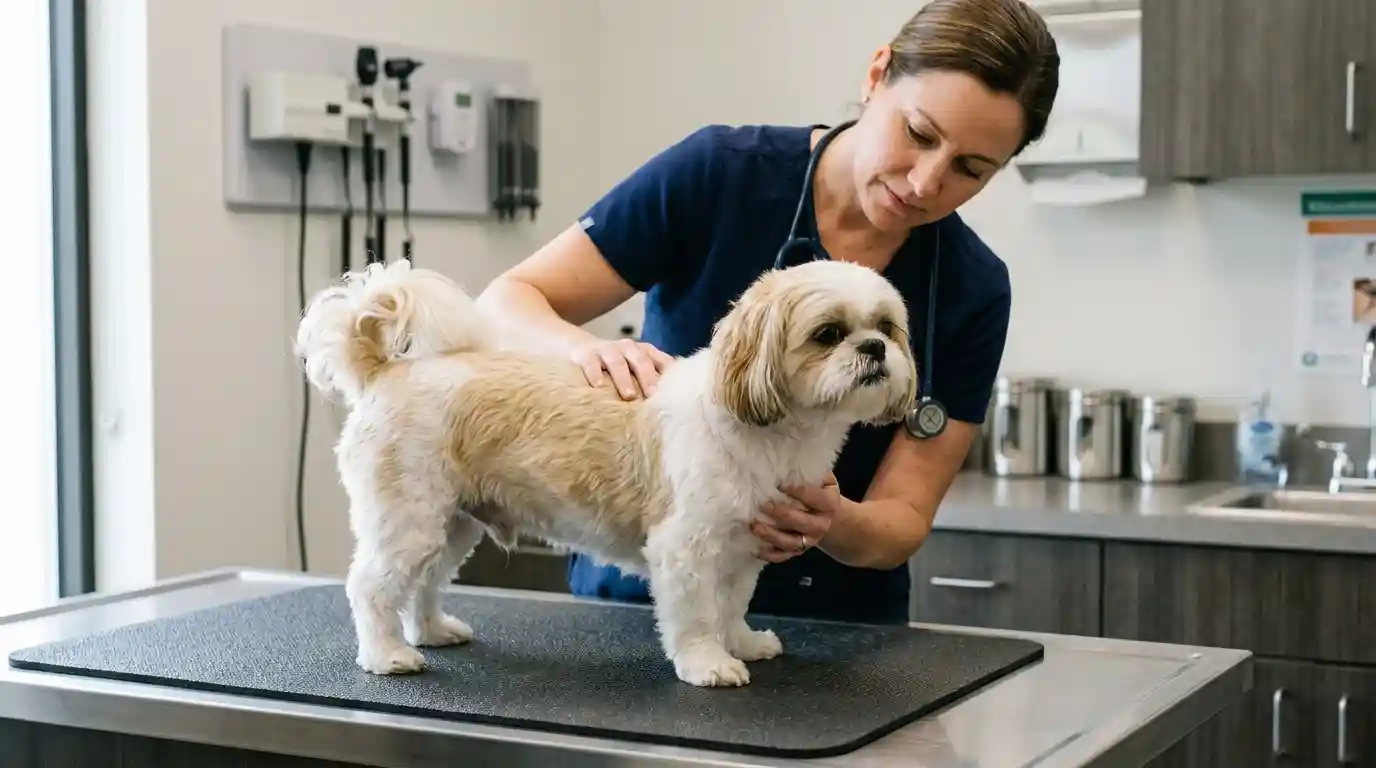
The neurological examination may assess walking ability, posture, limb strength, reflexes, paw-position awareness, and pain perception.
These findings help determine which region of the nervous system may be affected.
The veterinarian may also examine the bladder because spinal cord injury can interfere with normal urination.
Blood tests may be recommended to evaluate general health or prepare for anesthesia and other treatments.
The findings guide whether advanced imaging and specialist referral are necessary.
X-rays and advanced imaging
Spinal X-rays may reveal abnormalities such as disc mineralization or changes in the spacing between vertebrae.
However, ordinary X-rays do not reliably show the spinal cord or confirm every disc herniation.
An abnormal X-ray alone cannot establish the complete cause or severity of neurological dysfunction.
MRI is often preferred when detailed evaluation of the spinal cord and surrounding tissues is needed.
A CT scan can also be useful in selected circumstances.
The best imaging method depends on the suspected lesion, the dog’s condition, available equipment, and specialist recommendations.
Advanced imaging can help identify where the spinal cord is compressed and guide surgical planning.
The Cornell University College of Veterinary Medicine guide to diseased spinal discs provides additional veterinary information about diagnosis, imaging, and treatment.
Ruling out conditions with similar signs
Not every case of back pain or weakness is caused by IVDD.
Other possibilities include spinal trauma, inflammatory disease, infection, tumors, orthopedic injuries, and different neurological disorders.
Some illnesses cause generalized weakness rather than direct spinal cord compression.
For example, Shih Tzu Cushing’s Disease may contribute to muscle weakness over time, although it does not explain the typical sudden neurological pattern of acute disc extrusion.
The veterinarian may use blood tests, neurological findings, and imaging to distinguish these possibilities.
Avoid assuming that every episode of limping, trembling, or reduced activity is IVDD.
An accurate diagnosis is essential before selecting treatment.
How Veterinarians Choose a Treatment Plan
Treatment depends on how severely the spinal cord is affected and whether the condition is stable or progressing.
Some dogs can recover with non-surgical management.
Others need urgent surgical assessment.
How neurological signs and their progression affect the decision
A Shih Tzu with pain but normal walking ability may be considered for conservative treatment after veterinary assessment.
A dog with worsening weakness requires more urgent investigation.
The inability to walk indicates substantial neurological impairment.
Loss of deep pain perception increases the seriousness of the situation.
Veterinarians also consider how quickly the symptoms developed.
A dog that deteriorates from mild pain to paralysis over several hours may need a different response from one with stable, mild symptoms.
Repeated episodes or pain that remains uncontrolled despite appropriate treatment may also influence the recommendation.
What imaging can clarify
MRI or CT can help identify the location and extent of disc material affecting the spinal cord.
Imaging may reveal whether compression is severe, whether more than one disc is involved, or whether another condition is responsible.
These findings help determine whether surgery is likely to address the problem.
They may also provide information relevant to prognosis.
However, imaging results must be interpreted alongside the neurological examination.
A visible disc abnormality does not automatically mean that it is responsible for every symptom.
When a specialist consultation may help
A veterinary neurologist or surgeon may be especially helpful when neurological deficits are progressing, severe, or difficult to explain.
Referral may also be appropriate when the dog is not improving with conservative treatment or experiences recurrent episodes.
Specialists can discuss advanced imaging, surgical decompression, rehabilitation, and realistic recovery expectations.
Owners should ask about referral early if their Shih Tzu shows significant weakness or develops new problems with walking or bladder function.
IVDD Treatment Options for Shih Tzus
IVDD treatment generally falls into two broad approaches: conservative management and surgery.
Both may involve pain control, movement restriction, monitoring, and rehabilitation.
The correct choice depends on the individual dog’s condition.
Conservative treatment for mild cases
Conservative treatment is often considered for dogs with relatively mild, stable symptoms and no severe neurological deterioration.
It focuses on reducing activity, controlling pain, and allowing the affected area time to heal.
This does not mean simply leaving the dog to rest without veterinary supervision.
The veterinarian should establish the diagnosis, prescribe treatment, explain movement restrictions, and schedule reassessment.
Rest and activity restriction
Strict activity restriction is a central part of conservative IVDD treatment.
It usually involves confining the dog to an appropriately sized crate, pen, or other controlled recovery space.
Running, jumping, stairs, and active play are avoided.
Bathroom trips are short and carefully controlled according to veterinary instructions.
Veterinarians commonly prescribe several weeks of restricted activity, often around four to six weeks or longer depending on the case.
The exact duration must be individualized.
Do not discontinue restrictions just because the dog appears more comfortable after a few days.
Pain relief does not necessarily mean the disc injury has healed.
Veterinary-directed pain management
A veterinarian may prescribe medications to control pain and inflammation.
The specific combination depends on the dog’s condition and other health problems.
Some dogs also require treatment for muscle spasms or neuropathic pain.
Medication should never be selected or adjusted without veterinary direction.
Do not give ibuprofen, naproxen, acetaminophen, or other human pain medications unless a veterinarian specifically instructs you to do so.
Do not combine anti-inflammatory medications or add corticosteroids without veterinary approval.
Certain medication combinations can cause serious adverse effects.
If your Shih Tzu remains painful despite prescribed treatment, contact the veterinary team for reassessment rather than increasing the dose yourself.
When surgery may be considered
Surgery may be recommended when a disc herniation causes significant spinal cord compression, progressive neurological deficits, or severe symptoms that are unlikely to respond adequately to conservative treatment.
Dogs that cannot walk independently often require urgent specialist evaluation.
Surgery may also be considered for recurring episodes or persistent pain.
The recommendation depends on the dog’s neurological findings, imaging, overall health, and treatment goals.
What surgery aims to address
The main purpose of surgery is to relieve pressure on the spinal cord or affected nerves.
In thoracolumbar disc extrusion, a procedure such as a hemilaminectomy may be used to access and remove compressive disc material.
Other techniques may be appropriate for different spinal locations.
Surgery does not instantly repair injured spinal cord tissue.
Removing compression creates conditions that may support neurological recovery.
The extent and speed of that recovery depend on the severity of the original injury and several other factors.
Questions to discuss with the veterinary team
Before surgery, ask what the imaging shows and why the recommended procedure is appropriate.
Discuss the expected neurological outcome, possible complications, hospitalization, pain management, and follow-up care.
Ask whether your Shih Tzu will need assistance urinating or walking during recovery.
It is also important to understand the rehabilitation plan and the possibility of permanent deficits.
If surgery is recommended urgently, the veterinary team can explain why delaying treatment may affect the outcome.
Rehabilitation and mobility support
Rehabilitation may help selected dogs regain strength, coordination, and useful movement.
A veterinary rehabilitation professional can design exercises based on the dog’s neurological status and stage of healing.
Treatment may include controlled assisted movement, supported standing, balance exercises, or other supervised techniques.
Rehabilitation should begin only when the treating veterinarian considers it safe.
Forcing movement too early can interfere with recovery.
How a dog wheelchair may help
A dog wheelchair, sometimes called a mobility cart, may help dogs with persistent hind-limb weakness or paralysis participate in appropriately supervised activity.
It can support mobility and quality of life when independent walking remains limited.
However, a wheelchair is not a substitute for urgent diagnosis or treatment of acute spinal cord compression.
It should not be introduced simply because a newly affected dog cannot walk.
The veterinary team must first determine whether the spine is stable and whether mobility support is appropriate.
Correct fitting is essential to prevent rubbing, poor posture, or additional injury.
Recovery and Day-to-Day Care
Recovery varies considerably between dogs.
A Shih Tzu with pain alone may recover differently from one with severe paralysis.
The recovery plan should be based on the specific diagnosis, treatment, and neurological findings.
Typical recovery timeline
There is no single recovery timetable that applies to every dog with IVDD.
For mild cases managed conservatively, activity restriction commonly continues for several weeks.
Some dogs become more comfortable before the full restriction period ends.
Neurological recovery after significant spinal cord injury may take weeks to months.
Dogs recovering from surgery may initially remain hospitalized before continuing care at home.
A return to voluntary movement does not always mean strength, coordination, and bladder function have fully recovered.
Some dogs experience incomplete recovery or permanent deficits.
The veterinarian should provide milestones appropriate to the individual case.
Nursing care for a Shih Tzu recovering at home
Home nursing care can make a substantial difference in comfort and safety.
The recovery area should be quiet, stable, and easy to clean.
Food and water should be accessible without unnecessary stretching or twisting.
Bedding needs to support the body without creating excessive pressure.
Dogs with reduced mobility may need help changing position, staying clean, and using the bathroom.
The amount of assistance required depends on the neurological impairment.
Bathroom support and bladder-care instructions
Some recovering dogs can urinate normally while others have impaired bladder control.
If your Shih Tzu cannot empty the bladder voluntarily, the veterinarian must establish a bladder-management plan.
This may involve a technique taught directly by veterinary staff or another medical approach.
Do not attempt to express the bladder based only on online instructions.
Incorrect technique can leave urine behind or cause injury.
Urine leakage does not prove the bladder is empty.
Contact the veterinarian if the dog has difficulty urinating, develops unusual urine changes, or shows signs of discomfort.
Bedding, cleanliness, and skin checks
Dogs that cannot move easily are vulnerable to moisture irritation and pressure-related skin problems.
Use clean, supportive bedding and change soiled materials promptly.
Check areas that remain in contact with the bedding, including the hips, limbs, and underside.
Look for redness, swelling, wounds, or persistent dampness.
These changes should be reported to the veterinary team.
Not every skin lesion is related to pressure or urine exposure.
Unusual lumps, persistent wounds, or changing skin growths may require a separate examination, as discussed in our Shih Tzu Skin Cancer guide.
Safe transfers and handling
Always follow the veterinarian’s instructions for lifting and repositioning your recovering Shih Tzu.
In general, support the chest and rear body together to limit unnecessary twisting.
Avoid allowing the hindquarters to hang unsupported.
If the dog is painful or has had spinal surgery, ask veterinary staff to demonstrate safe transfers before going home.
Do not lift your dog by the front legs, collar, or abdomen alone.
For severely affected dogs, the veterinary team may recommend specific handling equipment or assisted-mobility techniques.
Caring for your Shih Tzu’s coat during restricted activity
Shih Tzus have long, continuously growing coats that require regular maintenance.
During IVDD recovery, normal grooming routines may need modification.
Avoid lengthy grooming sessions that require the dog to stand, turn, or change positions repeatedly.
Gentle brushing of accessible areas may be possible if the veterinarian approves.
Keep the coat around the rear clean, particularly if urinary or bowel problems are present.
A shorter practical trim may help some dogs remain comfortable during prolonged recovery.
However, do not schedule unnecessary grooming appointments while strict movement restriction is required.
Comfort and spinal safety take priority over coat appearance.
Follow-up care and rehabilitation
Veterinary follow-up helps determine whether the dog is improving as expected.
The veterinarian may reassess pain, walking ability, paw placement, strength, and bladder function.
The treatment plan can then be adjusted.
If rehabilitation is appropriate, exercises should be introduced gradually under professional guidance.
Do not begin strengthening activities simply because your Shih Tzu is eager to move.
New weakness, worsening pain, or changes in bladder control require immediate contact with the treating veterinarian.
Make Your Home Safer During IVDD Recovery
A controlled home environment can help prevent unnecessary movement during treatment and recovery.
Changes should be based on the veterinarian’s instructions and your Shih Tzu’s current mobility.
Preventing jumps from furniture and stairs
During active IVDD recovery, dogs should not jump onto or off furniture.
Stair access should also be restricted when the veterinary team recommends strict rest.
Use closed doors or pet barriers to prevent unsupervised movement.
Do not assume that a dog who suddenly feels better is ready to resume normal activity.
If your Shih Tzu needs to move between rooms, follow the recommended carrying or assisted-transfer method.
Ramps can be useful for some dogs after recovery, but they should not be introduced as a substitute for prescribed restriction.
Using a harness and limiting unnecessary movement
A well-fitting body harness may be preferable to pulling on a neck collar, particularly when cervical pain is involved.
However, a harness does not make active spinal disease safe for unrestricted walking.
Bathroom trips should follow the veterinarian’s specific instructions.
Some dogs may need additional support from a rehabilitation sling or other device.
Do not use improvised lifting methods that twist the spine or place uncontrolled pressure on the abdomen.
The goal is to reduce unnecessary movement while maintaining essential comfort and hygiene.
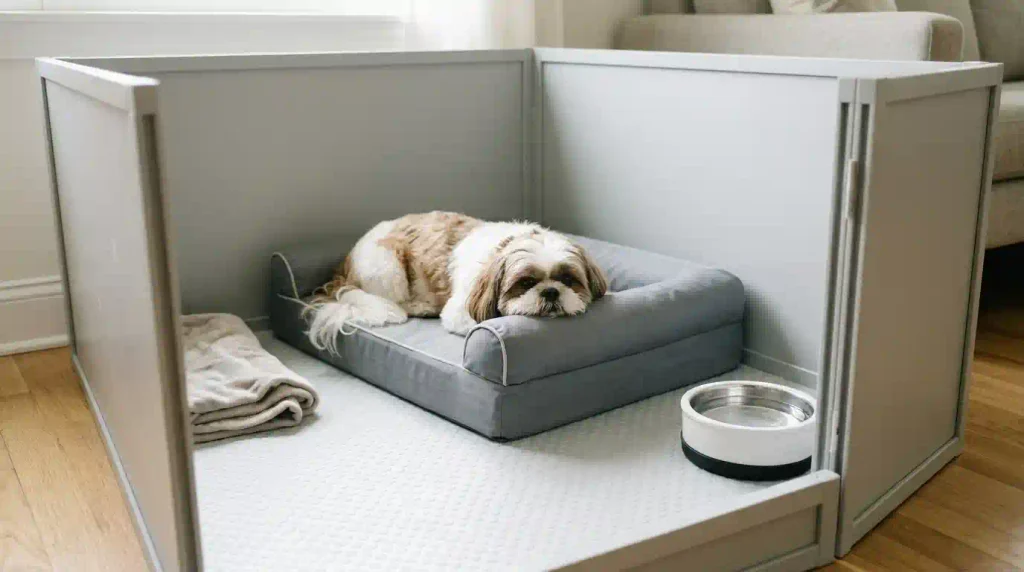
Setting up a quiet, easy-to-clean recovery area
Choose a space away from busy household traffic.
The area should be large enough for your Shih Tzu to rest comfortably and change position as permitted, but not large enough to encourage running or jumping.
Provide supportive bedding and easy access to water.
Use washable materials because accidents may occur.
Keep other pets and energetic children from disturbing the recovering dog.
The environment should have comfortable temperature and ventilation.
Regularly inspect the bedding for dampness or pressure points.
A predictable routine can help your Shih Tzu remain calm during restricted activity.
Returning to Activity After IVDD
Activity should return gradually and only with veterinary approval.
The fact that a Shih Tzu can stand or walk again does not necessarily mean normal spinal strength and coordination have returned.
Why activity should increase gradually
After weeks of restricted movement, muscles may be weaker and coordination may remain impaired.
Returning immediately to running, stairs, or jumping can place unnecessary demands on the recovering dog.
The veterinarian may recommend a staged progression.
This might begin with controlled supported movement and gradually advance to short, supervised walks.
The progression depends on neurological recovery and whether surgery was performed.
Avoid using excitement or willingness to play as the sole indicator of readiness.
Dogs may attempt activities that exceed their current physical ability.
How rehabilitation may support recovery
Professional rehabilitation may help improve muscle conditioning, controlled walking, balance, and functional mobility.
A rehabilitation veterinarian or appropriately trained therapist can adjust exercises to the dog’s abilities.
Some dogs may benefit from supported standing or carefully supervised walking activities.
Other techniques may be introduced when medically appropriate.
The goal is functional recovery without excessive stress.
Not every dog needs the same program.
Severe neurological deficits, persistent pain, or surgical restrictions may require a slower approach.
What to ask before restarting walks, stairs, or play
Before increasing activity, ask whether the spinal injury is sufficiently stable.
Find out how long walks should last and which surfaces are appropriate.
Ask whether stairs remain restricted and whether supervised use of ramps is suitable.
Discuss when jumping, running, rough play, or visits to a dog park might be considered.
Some dogs will need permanent modifications to their activities.
The veterinarian should explain which changes are temporary and which may be advisable long term.
Prognosis and Life Expectancy
A diagnosis of IVDD does not automatically mean that a Shih Tzu will have a shortened life or permanent paralysis.
Many dogs recover useful function.
However, outcomes vary substantially according to the severity and location of spinal injury.
Factors that can affect recovery
The most important factors often include neurological severity, whether deep pain perception is present, how quickly symptoms progress, and the underlying disc injury.
A dog with pain alone generally has a different prognosis from one with severe paralysis.
Dogs that lose deep pain perception have a more guarded prognosis.
Imaging findings and response to treatment also matter.
Some severe injuries can be associated with progressive myelomalacia, a devastating condition involving worsening spinal cord tissue damage.
This possibility requires urgent specialist attention when suspected.
No article can accurately predict an individual dog’s recovery based only on breed, age, or visible symptoms.
A veterinarian or neurologist can provide a more meaningful prognosis after examination and appropriate testing.
Mobility and quality of life after treatment
Some Shih Tzus regain normal walking ability after treatment.
Others recover with mild weakness or coordination changes.
Dogs with permanent neurological deficits may still enjoy a good quality of life when their pain, mobility, bladder care, hygiene, and daily needs are properly managed.
Supportive equipment may be appropriate for selected patients.
However, quality of life depends on more than walking.
Comfort, appetite, interaction, continence, and the ability to participate safely in everyday activities all matter.
If your dog has persistent deficits, discuss realistic long-term care requirements with the veterinary team.
Long-Term Care After an IVDD Episode
A Shih Tzu that has experienced IVDD may need ongoing adjustments even after returning to normal activity.
Future disc problems are possible, and some dogs experience recurring symptoms.
Long-term care focuses on monitoring, physical condition, and reducing unnecessary strain.
Changes to report at follow-up visits
Tell your veterinarian if you notice recurring neck or back pain.
New reluctance to jump, changes in walking, toe dragging, or unexplained weakness may be important.
Report any changes in urination or bowel control.
Also mention whether your dog has returned to normal play, eating, and resting habits.
Subtle changes may be easier to recognize when compared with your Shih Tzu’s usual behavior.
For owners managing multiple health concerns, the broader shih tzu health and wellness section provides additional information about breed-related care.
However, new neurological signs should be discussed directly with a veterinarian rather than monitored through home research alone.
Keeping a mobility and symptom log
A simple written record can help owners identify changes over time.
Track walking ability, comfort, appetite, medication administration, urination, and any unusual movements.
A sample log might look like this:
| Date | Walking and movement | Pain or behavior | Bathroom function | Notes |
| Day 1 | Walking slowly | Reluctant to move | Normal | Veterinary visit completed |
| Day 2 | Similar to previous day | More comfortable after prescribed care | Normal | Continued restriction |
| Day 3 | New toe dragging | Unusual posture | Changed | Contact veterinarian immediately |
This is an illustrative example, not a recovery timetable.
The purpose is to notice meaningful changes rather than assign medical grades at home.
Do not deliberately make the dog walk to complete the log.
If symptoms worsen, contact the veterinary team immediately.
Maintaining a healthy weight and limiting spinal strain
Healthy weight management supports general mobility and physical condition.
Excess body weight may make movement more demanding and complicate nursing care.
Ask your veterinarian to assess your Shih Tzu’s body condition and recommend an appropriate feeding plan.
During prolonged activity restriction, calorie needs may change.
Avoid reducing food drastically or starting a weight-loss plan without guidance.
Once recovery allows, appropriate low-impact activity can help maintain muscle condition.
Limiting unnecessary jumping and using safer handling practices may reduce avoidable spinal strain.
However, no home routine can guarantee that another disc episode will not occur.
Preventing IVDD in Shih Tzus
IVDD cannot always be prevented, especially when inherited disc degeneration is involved.
Owners can still take practical steps to support spinal health and reduce avoidable risks.
Prevention should be understood as risk management rather than a guarantee.
Safe activity and everyday movement
Maintaining a healthy weight is one of the most practical long-term goals.
Regular, appropriate physical activity helps support muscle condition and general mobility.
Avoid repeatedly encouraging high-impact jumping from elevated furniture.
Non-slip flooring may help dogs maintain traction, particularly on smooth indoor surfaces.
For dogs with a previous IVDD episode, discuss whether ramps, steps, or permanent activity restrictions are appropriate.
A body harness may help reduce neck pressure during controlled walks.
However, routine exercise restrictions should be individualized.
Healthy Shih Tzus still need suitable activity for physical and mental well-being.
The objective is not to eliminate normal movement, but to reduce unnecessary strain and respond promptly to signs of discomfort.
Breeder screening and responsible breeding
Breeding decisions can influence the future health of a breed.
Responsible breeders should consider hereditary risk, family history, physical health, and appropriate veterinary assessments.
A dog with a significant history of symptomatic spinal disease may warrant additional discussion before being considered for breeding.
Genetic tests and imaging can provide information, but neither offers a complete prediction of future IVDD.
If you’re researching Shih Tzu breeding, questions such as How many puppies can a Shih Tzu have are only one part of responsible planning.
The health of breeding dogs, inherited disease risks, and welfare of future puppies are equally important.
Genetic testing
Genetic testing can identify the FGF4 retrogene variant associated with chondrodystrophy and increased disc degeneration risk.
However, the results must be interpreted carefully.
A positive result does not mean that a particular dog will definitely develop clinical IVDD.
A negative result does not eliminate all spinal disease risk.
Variant frequencies also differ between breeds and populations.
Breeders should work with veterinary geneticists or knowledgeable veterinarians when interpreting results.
Decisions based on one genetic marker alone may have unintended effects on genetic diversity.
A responsible program considers multiple health factors rather than treating one DNA result as a complete measure of spinal health.
Spinal radiographic screening
Spinal radiographs can identify some mineralized intervertebral discs.
Disc calcification may be associated with degeneration.
In Dachshunds, radiographic screening for disc calcification has been studied and incorporated into some breeding programs.
However, evidence and screening recommendations from Dachshunds should not automatically be applied to Shih Tzus.
A universally validated Shih Tzu-specific spinal radiographic screening program is not established in the same way.
X-rays also cannot reliably predict whether or when an individual dog will experience a symptomatic herniation.
Breeders considering spinal imaging should discuss its usefulness and limitations with a veterinarian familiar with the breed.
Screening decisions should be part of a wider health and welfare strategy.
Frequently Asked Questions About IVDD in Shih Tzus
At what age can a Shih Tzu develop IVDD?
IVDD can occur at different ages, although clinical disc disease in predisposed breeds commonly develops during early to middle adulthood.
Can a Shih Tzu recover without surgery?
Yes, some dogs with mild, stable symptoms recover with veterinary-directed medication and strict activity restriction, but severe cases often need surgical assessment.
Does neck pain always mean IVDD?
No, neck pain has several possible causes, and a veterinarian must determine whether disc disease or another condition is responsible.
Can a Shih Tzu with IVDD walk again?
Yes, many dogs regain useful walking ability, but recovery depends on neurological severity, treatment, and individual response.
Is IVDD in Shih Tzus an emergency?
Suspected spinal pain needs prompt assessment, and sudden weakness, paralysis, or urinary problems require immediate emergency veterinary care.
Can IVDD happen suddenly?
Yes, acute disc extrusion can cause symptoms over minutes or hours, although some dogs develop more gradual changes.
Is IVDD painful for Shih Tzus?
It can be very painful, but severe neurological injury may also occur without obvious crying or other typical pain behaviors.
Can a Shih Tzu live a normal life after IVDD?
Some dogs return to normal activity, while others need long-term movement restrictions, rehabilitation, or mobility support.
How long does IVDD recovery take?
Mild cases may require several weeks of restricted activity, while neurological recovery after severe injury can take months or remain incomplete.
Does IVDD always cause paralysis?
No, some dogs experience neck or back pain alone, while others develop weakness or paralysis.
Can a Shih Tzu have IVDD more than once?
Yes, recurrence or a new disc herniation is possible, so owners should remain alert to future symptoms.
Can I massage my Shih Tzu’s back if IVDD is suspected?
No, avoid massage or spinal manipulation unless the treating veterinarian specifically approves it.
Can a dog with IVDD use stairs?
During active recovery, stairs are commonly restricted; later use should follow the veterinarian’s individualized recommendations.
Can IVDD affect a Shih Tzu’s bladder?
Yes, significant spinal cord dysfunction can interfere with voluntary urination or cause retention and leakage.
Is there a genetic test for IVDD in Shih Tzus?
Testing for the CDDY-associated FGF4 retrogene is available, but it assesses one inherited risk factor rather than diagnosing or fully predicting clinical IVDD.
Do ramps prevent IVDD?
Ramps may reduce some jumping demands when used appropriately, but they cannot guarantee prevention of inherited disc degeneration or herniation.
Final Thoughts
IVDD in Shih Tzu dogs can range from painful spinal discomfort to a serious neurological emergency involving weakness, paralysis, or impaired bladder function. Recognizing early changes in movement, posture, and behavior can help owners seek veterinary care before symptoms worsen. Mild, stable cases may respond to conservative treatment, while severe spinal cord compression often requires urgent specialist assessment and sometimes surgery. Recovery depends on neurological severity, appropriate treatment, careful nursing, and follow-up rehabilitation. Long-term weight management, sensible activity, and a safer home environment may help reduce avoidable strain, although they cannot eliminate inherited risk. If your Shih Tzu develops sudden walking difficulty or paralysis, seek emergency veterinary care immediately. For more everyday breed information, explore our Shit Zhu care resources alongside your veterinarian’s personalized advice.