
Shih Tzu Breathing Problems: Signs That Need Attention
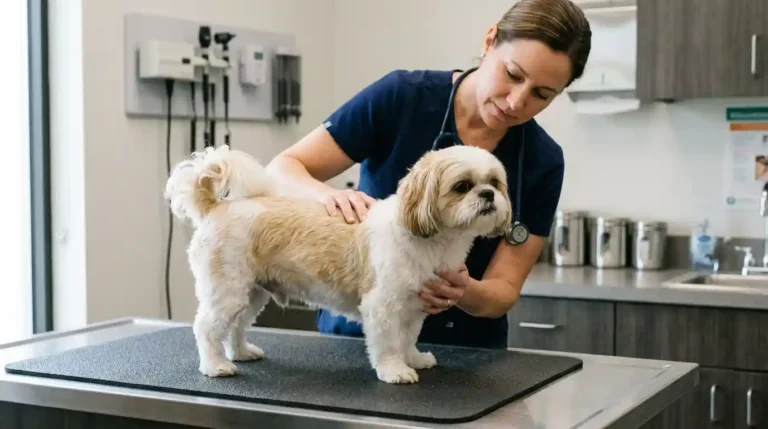
Shih Tzu breathing problems can range from occasional snoring and snorting to serious respiratory conditions that require immediate veterinary attention. Because Shih Tzus have short muzzles and compact facial structures, they are more susceptible to restricted airflow, especially when exercising, sleeping, or exposed to heat. One important cause is brachycephalic obstructive airway syndrome (BOAS), which can make breathing more difficult and may worsen over time. However, not every breathing change is caused by the breed’s flat face. A collapsed trachea, heart disease, respiratory infection, or nasal irritation can produce similar symptoms.
If your Shih Tzu is breathing heavily, making unusual honking noises, coughing frequently, or taking longer than normal to recover after activity, a veterinary examination is important. Understanding what normal breathing looks like, recognizing early warning signs, and knowing when symptoms become an emergency can help protect your dog’s health. This guide explains the causes, symptoms, diagnosis, treatment options, and practical ways to manage Shih Tzu breathing issues safely.
Emergency warning: If your Shih Tzu is struggling to breathe, has blue, gray, or very pale gums, collapses, or shows severe breathing effort while resting, seek emergency veterinary care immediately. Do not wait for the symptoms to disappear.
Table of Contents
- What Are Shih Tzu Breathing Problems?
- Why Shih Tzus Can Have Breathing Problems
- Signs and Symptoms to Watch For
- Causes of Breathing Changes Besides BOAS
- How Different Breathing Problems May Look Similar
- Factors That Can Make Breathing More Difficult
- How to Monitor Your Shih Tzu’s Breathing at Home
- When Breathing Problems Are an Emergency
- Preparing to Contact Your Veterinarian
- How Veterinarians Diagnose Breathing Problems
- Treatment and Long-Term Management
- Preventing Problems and Supporting Your Shih Tzu’s Health
- Frequently Asked Questions
- Final Thoughts
What Are Shih Tzu Breathing Problems?
Shih Tzu breathing problems refer to abnormalities that affect how comfortably and efficiently a dog moves air through its nose, throat, windpipe, and lungs.
These problems may cause noisy breathing, rapid breathing, coughing, wheezing, or increased effort during inhalation and exhalation.
Some respiratory difficulties are related to inherited facial anatomy, while others develop because of illness, inflammation, or aging.
Normal Breathing Sounds and Behaviors
A healthy Shih Tzu should generally breathe comfortably and quietly while resting in a cool environment.
Normal breathing involves gentle chest movement without excessive abdominal effort, gasping, or obvious distress.
A dog may temporarily breathe faster after exercise, during excitement, or while cooling itself through panting. Breathing should become more comfortable as the dog rests.
Occasional light snoring may occur during sleep, especially in short-muzzled breeds.
However, frequent loud snoring or persistent snorting should not automatically be considered healthy simply because the dog is a Shih Tzu.
Noisy Breathing vs. Labored Breathing
Noisy breathing and labored breathing are related but different.
Noisy breathing refers to abnormal sounds made as air passes through the respiratory passages. These may include snoring, snorting, whistling, rattling, or high-pitched sounds.
Labored breathing means the dog is working harder than normal to move air.
Signs of increased respiratory effort include pronounced chest movement, abdominal muscle involvement, extended neck posture, flared nostrils, and difficulty settling comfortably.
Some dogs experience noisy breathing without obvious respiratory distress, while others may have significant breathing difficulty with relatively little sound.
The amount of effort required to breathe is often more important than the loudness of the noise.
When a Breathing Change May Be a Warning Sign
A change becomes concerning when it is new, persistent, worsening, or associated with other symptoms.
For example, a Shih Tzu that previously enjoyed short walks but now stops frequently, pants excessively, or struggles to recover may have an underlying respiratory or cardiovascular problem.
Breathing changes during sleep, repeated coughing, unusual lethargy, or reduced appetite also deserve attention.
The presence of severe respiratory distress is an emergency regardless of whether the symptoms developed suddenly or gradually.
Why Shih Tzus Can Have Breathing Problems
One of the most important reasons Shih Tzus experience breathing difficulties is their brachycephalic anatomy.
Understanding how their facial structure affects airflow helps explain why seemingly ordinary activities can become challenging for some dogs.
Brachycephalic Anatomy and Restricted Airflow
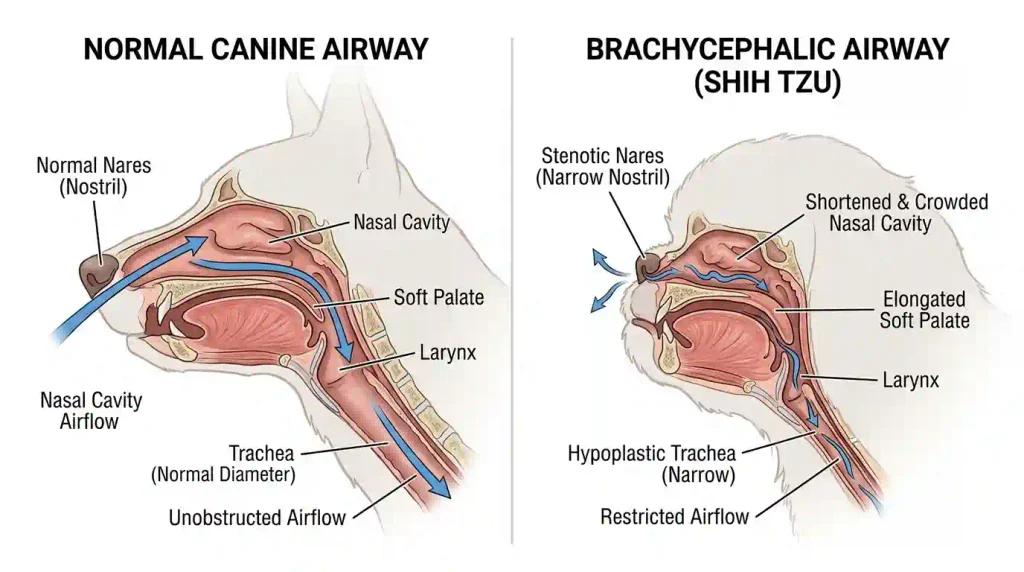
Are Shih Tzus brachycephalic? Yes. The term brachycephalic describes dogs with relatively shortened skulls and muzzles.
A flat-face Shih Tzu has shortened facial bones, but the soft tissues inside the nose and throat may not be proportionally reduced.
This can create a crowded upper airway.
Air must pass through the nostrils, nasal passages, throat, larynx, and trachea before reaching the lungs.
If any of these structures are unusually narrow or obstructed, the dog may need to exert additional effort to breathe.
Not every brachycephalic Shih Tzu develops clinically significant breathing problems, but the breed’s anatomy increases its susceptibility.
What Brachycephalic Obstructive Airway Syndrome (BOAS) Means
Brachycephalic obstructive airway syndrome, commonly abbreviated BOAS, is a condition in which anatomical abnormalities restrict airflow through a short-muzzled dog’s upper respiratory tract.
BOAS may involve narrow nostrils, excessive soft tissue in the throat, and changes affecting the larynx.
The resulting airway resistance can produce snoring, snorting, labored breathing, exercise intolerance, and heat sensitivity.
Severity varies considerably. Some Shih Tzus experience mild symptoms during activity, while others struggle to breathe comfortably even at rest.
BOAS is not simply a harmless characteristic of flat-faced dogs. Clinically significant airway obstruction can affect quality of life and requires veterinary evaluation.
Airway Abnormalities Linked to BOAS
Several structural abnormalities may contribute to BOAS. Affected dogs can have one or multiple problems simultaneously.
Stenotic Nares
Stenotic nares are abnormally narrow nostril openings.
When a Shih Tzu inhales, these narrow openings may further collapse inward, increasing resistance to airflow.
Dogs with stenotic nares may snort frequently, breathe noisily, or rely more heavily on mouth breathing during activity.
Severe narrowing can reduce the amount of air entering the nasal passages comfortably.
A veterinarian can often identify stenotic nares through a physical examination.
Elongated Soft Palate
The soft palate is the flexible tissue located toward the back of the roof of the mouth.
In some Shih Tzus, this tissue extends farther backward than normal and partially obstructs the airway near the larynx.
As air moves past the excessive tissue, it can produce noisy breathing, snoring, gagging, or retching.
An elongated soft palate may become particularly problematic during exercise or excitement because airflow demand increases.
Definitive assessment generally requires a carefully planned airway examination under anesthesia.
Everted Laryngeal Saccules and Laryngeal Collapse
Laryngeal saccules are small tissue structures near the vocal cords.
With chronic negative pressure from breathing against an obstructed airway, these tissues may be drawn into the airway opening.
This is called everted laryngeal saccules and can contribute to further obstruction.
Over time, additional changes to the laryngeal cartilage may develop, potentially leading to laryngeal collapse.
Advanced laryngeal collapse can cause severe breathing difficulties and may complicate treatment.
Early identification of significant airway obstruction can help reduce the risk of progressive secondary changes.
Hypoplastic Trachea
A hypoplastic trachea is an abnormally narrow windpipe that develops because of the dog’s anatomy.
This condition differs from a collapsing trachea, in which the tracheal structure loses support and narrows dynamically.
A hypoplastic trachea can further restrict airflow in dogs already affected by upper-airway obstruction.
Unlike stenotic nares or an elongated soft palate, a congenitally narrow trachea generally cannot be corrected through routine BOAS surgery.
Enlarged Tonsils, Tongue, or Nasal Turbinates
Some brachycephalic dogs have additional tissue crowding the upper respiratory tract.
An enlarged tongue, enlarged tonsils, or abnormal nasal turbinates can contribute to airflow resistance.
Nasal turbinates are structures inside the nose that help warm and filter inhaled air.
When unusually positioned or crowded, they may reduce the available space for airflow.
These abnormalities are not equally important in every Shih Tzu, but they can influence the overall severity of BOAS.
How Airway Obstruction Can Worsen Over Time
Repeated breathing against a narrowed airway can generate abnormal negative pressure in the throat.
Over time, this may contribute to swelling, tissue changes, and progressive weakening of structures around the larynx.
A Shih Tzu that initially experiences only mild snoring may later develop exercise intolerance, increased breathing effort, or more persistent airway noise.
Weight gain and reduced physical conditioning can further aggravate symptoms.
However, progression is not identical in every dog.
Early veterinary assessment may identify airway abnormalities that are suitable for corrective treatment before more serious secondary changes occur.
Why BOAS Signs Differ Between Shih Tzus
Two Shih Tzus with similar facial appearances may have very different breathing abilities.
This happens because external muzzle length does not reveal every abnormality inside the upper airway.
One dog may have relatively open nostrils and limited soft palate obstruction, while another has several overlapping anatomical problems.
Age, body condition, physical activity, inflammation, and underlying diseases also influence symptoms.
Therefore, the appearance of a Shih Tzu’s face alone cannot determine whether the dog has clinically significant BOAS.
Signs and Symptoms to Watch For
Shih Tzu breathing problems can produce a variety of symptoms, depending on which part of the respiratory system is affected.
Some symptoms appear gradually, while others develop suddenly.
Snoring, Snorting, Wheezing, and Noisy Breathing
Snoring is commonly associated with brachycephalic dogs because soft tissues in the upper airway may vibrate during breathing.
Snorting may occur when air moves through narrowed nasal passages.
Owners sometimes ask, “Why does my Shih Tzu snort like a pig?”
This description often refers to noisy upper-airway breathing or an episode of reverse sneezing.
Wheezing usually describes a whistling sound associated with narrowed airways, although owners may use the word to describe several different respiratory noises.
A veterinarian can help distinguish nasal stertor, high-pitched stridor, and true wheezing.
Repeated Shih Tzu wheezing attacks, persistent snorting, or increasingly loud breathing should be evaluated rather than dismissed as normal breed behavior.
Labored or Open-Mouth Breathing
Dogs may pant with their mouths open after physical activity or when they need to cool themselves.
However, open-mouth breathing while resting in a cool environment can indicate respiratory difficulty.
A Shih Tzu breathing fast and heavy may appear anxious, extend its neck, widen its stance, or use its abdominal muscles excessively.
These signs suggest that breathing requires greater effort than normal.
If a Shih Tzu is struggling to inhale or exhale, immediate veterinary attention is necessary.
Coughing, Gagging, or Retching
Repeated coughing can occur with several respiratory and heart conditions.
A dry honking cough may suggest tracheal collapse, while a persistent cough with other symptoms may indicate infection or heart disease.
Gagging and retching can accompany upper-airway obstruction, especially when excessive soft palate tissue interferes with swallowing or breathing.
Some BOAS-affected dogs also experience regurgitation or gastrointestinal problems.
A Shih Tzu making a honking noise does not automatically have a collapsed trachea, so veterinary assessment is necessary to determine the cause.
Reverse Sneezing, Sneezing, and Nasal Discharge
Reverse sneezing is a respiratory reflex involving rapid, repeated inhalations through the nose.
During an episode, a Shih Tzu may extend its neck, remain relatively still, and produce a loud snorting or honking sound.
Most uncomplicated episodes last seconds to a minute and resolve without treatment.
Unlike severe respiratory distress, the dog usually returns to normal breathing immediately afterward.
However, frequent episodes, persistent nasal discharge, nosebleeds, or difficulty breathing between episodes require examination.
Reverse sneezing may be associated with nasal irritation, inflammation, excitement, or certain anatomical conditions.
Exercise Intolerance and Slow Recovery
Exercise intolerance means a dog becomes tired or uncomfortable during activity that would ordinarily be manageable.
An affected Shih Tzu may stop walking, sit down frequently, pant excessively, or resist exercise.
Some dogs require an unusually long recovery period after short play sessions.
These symptoms can occur with BOAS, heart disease, lung disease, excess weight, or other medical conditions.
Exercise intolerance should not automatically be attributed to laziness or age.
Sleep Disruption and Changes in Resting Breathing
Breathing problems may become noticeable when a Shih Tzu sleeps.
Some dogs snore loudly, wake frequently, change sleeping positions repeatedly, or struggle to settle comfortably.
Others may appear to breathe unusually quickly while asleep.
An occasional increase in breathing during dreaming can occur, but persistent rapid breathing during quiet sleep deserves attention.
Difficulty resting comfortably, repeated waking accompanied by gasping, or increased breathing effort may indicate significant disease.
Heat Intolerance, Weakness, or Collapse
Dogs regulate body temperature largely through panting.
Because brachycephalic dogs have restricted upper-airway anatomy, they may struggle to cool themselves efficiently.
Heat and humidity can increase breathing demands and cause symptoms to worsen quickly.
Warning signs include excessive panting, drooling, weakness, stumbling, vomiting, confusion, and collapse.
Heatstroke is a medical emergency that can lead to organ damage.
A Shih Tzu that becomes weak or collapses during warm weather requires immediate veterinary care.
Blue, Gray, or Pale Gums
Healthy canine gums are generally pink, although natural pigmentation may make some areas harder to assess.
Blue or gray gums can indicate dangerously inadequate oxygenation, a condition known as cyanosis.
Very pale gums may indicate poor circulation, shock, anemia, or another serious problem.
Changes in gum color accompanied by breathing difficulty, weakness, or collapse require emergency attention.
Do not delay treatment while repeatedly checking gum color or trying to identify the underlying condition at home.
Causes of Breathing Changes Besides BOAS
Although BOAS is an important concern, Shih Tzu respiratory issues can develop for many other reasons.
Identifying the actual cause is necessary because different conditions require different treatments.
Collapsing Trachea
Tracheal collapse occurs when the cartilage rings supporting the windpipe become weakened or when the associated membrane contributes to narrowing of the airway.
The trachea may narrow during breathing, making airflow more difficult.
A characteristic symptom is a dry, harsh cough that owners often describe as goose-like honking.
Shih Tzu tracheal collapse may also cause exercise intolerance, coughing after excitement, or respiratory distress in more severe cases.
Small dog breeds are particularly associated with this condition, although coughing alone does not confirm it.
A collapsed trachea in a Shih Tzu is different from BOAS, even though both conditions can occur in the same dog.
Heart Disease
Heart disease can cause coughing, increased respiratory rate, reduced exercise tolerance, and breathing difficulty.
Some older small-breed dogs develop degenerative mitral valve disease, which may eventually lead to congestive heart failure.
When heart failure causes fluid to accumulate in the lungs, breathing may become faster or more difficult, especially during rest or sleep.
Not every dog with heart disease coughs, and not every coughing Shih Tzu has heart disease.
Veterinary examination, imaging, and sometimes cardiac ultrasound are needed to determine whether the heart is contributing to symptoms.
Respiratory Infections, Including Kennel Cough
Respiratory infections can affect the nose, throat, trachea, bronchi, and lungs.
Canine infectious respiratory disease complex, commonly called kennel cough, may cause a persistent hacking cough, gagging, sneezing, and nasal discharge.
Some dogs remain active despite coughing, while others become lethargic or develop fever and more serious illness.
Pneumonia can cause rapid breathing, reduced appetite, fever, and respiratory distress.
Dogs exposed to boarding facilities, grooming salons, dog parks, or other shared environments may encounter infectious respiratory pathogens.
A newly coughing dog should avoid close contact with other dogs until a veterinarian advises otherwise.
Allergies and Nasal Irritation
Environmental allergens, dust, smoke, fragrances, and other irritants may contribute to nasal inflammation or sneezing.
Some dogs experience nasal congestion or irritation after exposure to pollen, household cleaning products, or cigarette smoke.
However, severe breathing difficulty should never be assumed to result from a simple allergy.
The more typical signs of canine shih tzu allergies involve skin itching, paw licking, and ear inflammation rather than significant respiratory obstruction.
Allergies and BOAS may coexist, making diagnosis more complicated.
Chronic Rhinitis
Rhinitis refers to inflammation of the nasal passages.
Chronic rhinitis may produce frequent sneezing, persistent nasal discharge, congestion, or noisy nasal breathing.
Possible causes include inflammatory disease, infection, foreign material, or other nasal abnormalities.
Some dogs experience symptoms affecting both nostrils, while others have discharge mainly from one side.
Persistent or bloody nasal discharge requires veterinary investigation.
Treatment depends on identifying the underlying cause rather than simply suppressing sneezing.
Dental Disease and Nasal Problems
Dental disease can occasionally contribute to problems involving the nasal cavity.
Infection associated with an upper tooth root may affect nearby tissues, potentially creating communication between the mouth and nasal passage in severe cases.
Affected dogs may experience nasal discharge, sneezing, discomfort, or difficulty eating.
Foreign objects lodged in the nasal passages can produce similar symptoms.
A veterinarian may recommend an oral examination, dental imaging, or additional diagnostic procedures when these possibilities are suspected.
Nasal Tumors and Fungal Infections
Nasal tumors are less common than several other causes of breathing changes, but they remain important considerations, particularly in older dogs.
Possible symptoms include persistent nasal discharge, nosebleeds, sneezing, facial changes, and difficulty moving air through the nose.
Fungal infections affecting the nasal cavity can cause overlapping signs.
A diagnosis may require advanced imaging, rhinoscopy, tissue sampling, or other specialized tests.
Persistent one-sided nasal discharge or unexplained bleeding should not be ignored.
Pain, Stress, and Other Health Conditions
Not every episode of rapid breathing originates in the lungs or upper airway.
Pain, anxiety, stress, fever, and certain metabolic or hormonal disorders can cause increased respiratory rate or panting.
For example, Shih Tzu Cushing’s Disease may be associated with excessive panting, increased thirst, appetite changes, and other symptoms.
Pain from spinal conditions, including IVDD in Shih Tzu dogs, may also cause restlessness and panting.
Localized discomfort, including problems with Shih Tzu anal glands, can sometimes contribute to stress-related panting.
These conditions do not directly cause BOAS, but they illustrate why an accurate medical history matters.
How Different Breathing Problems May Look Similar
Several conditions can produce overlapping respiratory signs. The following comparison explains some useful differences.
| Condition | Common symptoms | Important clues |
| BOAS | Snoring, snorting, noisy inhalation, exercise intolerance | Often worsens with heat, excitement, or exertion |
| Tracheal collapse | Honking cough, gagging, occasional breathing difficulty | Cough may worsen with neck pressure or excitement |
| Heart disease | Rapid resting breathing, reduced stamina, sometimes coughing | May be associated with a heart murmur or fluid in the lungs |
| Respiratory infection | Coughing, sneezing, nasal discharge, sometimes fever | Recent exposure to other dogs may be relevant |
| Nasal disease | Sneezing, congestion, nasal discharge | Persistent or one-sided discharge may suggest a localized problem |
BOAS and Other Upper-Airway Problems
BOAS commonly produces noisy breathing associated with the upper airway, especially during inhalation.
However, laryngeal disease, nasal obstruction, and other throat abnormalities may produce similar sounds.
The exact character and timing of the noise can help a veterinarian determine which structures may be affected.
Tracheal Collapse
Tracheal collapse commonly produces a distinctive honking cough.
The cough may become worse during excitement, activity, or pressure on the neck.
However, tracheal collapse can coexist with other respiratory conditions, and the absence of a honking cough does not exclude it.
Heart Disease
Heart disease may initially present as reduced stamina or faster breathing during sleep.
When fluid accumulates in the lungs, respiratory effort may increase and the dog may struggle to rest comfortably.
Heart-related breathing problems can resemble respiratory disease, particularly in older small-breed dogs.
Respiratory Infection
Respiratory infections frequently cause coughing and may also produce sneezing, discharge, lethargy, or fever.
A recently developed cough after contact with unfamiliar dogs raises suspicion for infectious respiratory disease.
However, some infections produce few obvious symptoms other than coughing.
Why Symptoms Alone Cannot Confirm the Cause
A single symptom rarely identifies a specific respiratory condition.
For example, a Shih Tzu coughing and wheezing may have an airway disorder, infection, or heart-related illness.
Likewise, a Shih Tzu making a honking noise could be experiencing a tracheal cough or a different upper-airway event.
Veterinarians consider symptom patterns alongside physical findings and diagnostic results.
This distinction matters because treating the wrong condition can delay appropriate care.
Factors That Can Make Breathing More Difficult
Several everyday factors may increase breathing effort in a Shih Tzu with an already restricted airway.
Heat, Humidity, and Overheating
Warm temperatures and high humidity increase the need for cooling through panting.
For brachycephalic dogs, moving large amounts of air through a narrowed respiratory tract can be difficult.
During hot weather, even modest activity may trigger excessive panting or respiratory distress.
Keep your Shih Tzu in a cool, well-ventilated environment and avoid strenuous activity during the hottest parts of the day.
Never leave a dog unattended in a parked vehicle.
Exercise and Excitement
Exercise increases the body’s oxygen requirements.
A Shih Tzu with BOAS may become short of breath more quickly than a dog with an unrestricted airway.
Excitement can produce similar effects because the dog breathes faster and may pant excessively.
Choose short, controlled activities and provide frequent opportunities to rest.
If ordinary activity repeatedly produces abnormal breathing, a veterinary examination is necessary rather than simply restricting exercise indefinitely.
Excess Weight
Excess body weight increases the work required for breathing and may worsen existing airway obstruction.
Additional tissue around the neck and chest can also contribute to respiratory difficulty.
Maintaining a healthy body condition is particularly important for brachycephalic dogs.
A veterinarian can recommend an appropriate target weight and gradual weight-management plan.
Rapid dieting or excessive exercise is not advisable for a dog with significant breathing problems.
Pressure From a Neck Collar
A neck collar can place pressure around the trachea when a dog pulls against the leash.
This may worsen coughing or discomfort in dogs with tracheal disease or other respiratory problems.
A properly fitted body harness distributes leash pressure across the chest rather than concentrating it around the neck.
For many Shih Tzus with breathing concerns, a harness is a more comfortable choice for walks.
How to Monitor Your Shih Tzu’s Breathing at Home
Home monitoring can help identify subtle changes before they become severe.
It should complement veterinary care rather than replace diagnostic testing.
Observe Breathing When Your Dog Is Calm or Asleep
Choose a time when your Shih Tzu is sleeping quietly or resting comfortably without panting.
Watch the chest rise and fall.
One complete rise and fall counts as one breath.
Count the breaths for 30 seconds and multiply by two to calculate the respiratory rate per minute.
For many healthy resting or sleeping dogs, respiratory rates are commonly below approximately 30 breaths per minute, although individual variation occurs.
A persistently elevated sleeping rate, particularly above the dog’s usual baseline, should be discussed with a veterinarian.
Breathing effort matters more than any single numerical cutoff. A dog struggling to breathe requires emergency care even if the counted rate is not unusually high.
Notice Changes From Your Dog’s Usual Pattern
Every dog has an individual breathing pattern.
Observe whether your Shih Tzu normally sleeps quietly, makes mild snoring sounds, or occasionally pants after activity.
Concerning changes may include noticeably louder breathing, increased resting rate, more frequent coughing, new sleeping difficulties, or longer recovery periods.
Tracking changes over several days can help identify trends.
However, do not delay veterinary evaluation to collect more measurements when significant symptoms are present.
Track Symptoms, Triggers, and Recovery
A simple breathing diary can help you document symptoms accurately.
| Observation | What to record |
| Resting breathing | Breaths per minute while asleep |
| Breathing sounds | Snoring, snorting, wheezing, honking, or coughing |
| Activity | What the dog was doing before the episode |
| Environment | Temperature, humidity, or possible irritants |
| Duration | How long symptoms continued |
| Recovery | How quickly comfortable breathing returned |
| Other signs | Weakness, gagging, discharge, or appetite changes |
For example, a Shih Tzu that consistently breathes harder after brief walks in warm weather may need an assessment for BOAS or another underlying condition.
Use the diary to support veterinary discussions, not to determine a diagnosis independently.

When Breathing Problems Are an Emergency
Respiratory emergencies can progress quickly, particularly in brachycephalic dogs.
Recognizing serious warning signs and acting promptly can be lifesaving.
Emergency Warning Signs
Seek immediate veterinary care if your Shih Tzu develops any of the following:
- Severe or rapidly worsening difficulty breathing.
- Blue, gray, or unusually pale gums.
- Collapse, fainting, or inability to stand.
- Gasping, marked abdominal breathing, or obvious respiratory distress.
- Severe overheating with weakness, confusion, or collapse.
- Inability to settle comfortably because of breathing difficulty.
- Choking or suspected airway obstruction.
Do not assume a severe episode is ordinary reverse sneezing or a harmless Shih Tzu breathing attack.
A dog that appears to be fighting for air needs emergency evaluation.
What to Do if Your Shih Tzu Is Struggling to Breathe
If your Shih Tzu is experiencing significant respiratory distress, arrange immediate transportation to an emergency veterinary hospital.
Keep the dog as calm as possible and minimize handling, excitement, and physical exertion.
Use an air-conditioned vehicle when available.
If overheating is suspected, begin gentle cooling with cool water and airflow while traveling to emergency care. Avoid ice-cold immersion or prolonged delays.
Do not force food, water, oral medication, or home remedies into a dog struggling to breathe.
Do not place a muzzle on a dog in respiratory distress.
If possible, call the emergency hospital while someone else drives so the veterinary team can prepare.
At the hospital, stabilization may involve oxygen therapy, careful sedation, temperature management, and other emergency procedures depending on the cause.
Preparing to Contact Your Veterinarian
Clear information about your Shih Tzu’s symptoms can help the veterinary team determine how urgently an examination is needed.
What to Record Before Calling Your Veterinarian
When the dog is stable, note when symptoms began, how frequently they occur, and whether they are becoming worse.
Record any coughing, gagging, snorting, rapid breathing, or exercise intolerance.
Mention recent travel, grooming appointments, boarding, exposure to other dogs, possible allergens, and known medical conditions.
If you have measured sleeping respiratory rates, share those observations as well.
Also tell the veterinarian about any previous diagnosis of BOAS, heart disease, or tracheal collapse.
How a Video of an Episode May Help
A short video can provide valuable information when breathing episodes do not occur during a veterinary appointment.
Record the sound, breathing pattern, body posture, and visible chest movement when it is safe to do so.
A video may help distinguish reverse sneezing, coughing, and other respiratory noises.
However, never delay emergency transportation to record an episode.
A video supports clinical assessment but cannot replace an examination.
Questions to Ask Your Veterinarian
Useful questions include whether your Shih Tzu’s symptoms suggest BOAS, tracheal disease, heart disease, or another condition.
Ask whether further testing is necessary, what signs require emergency care, and whether activity restrictions are recommended.
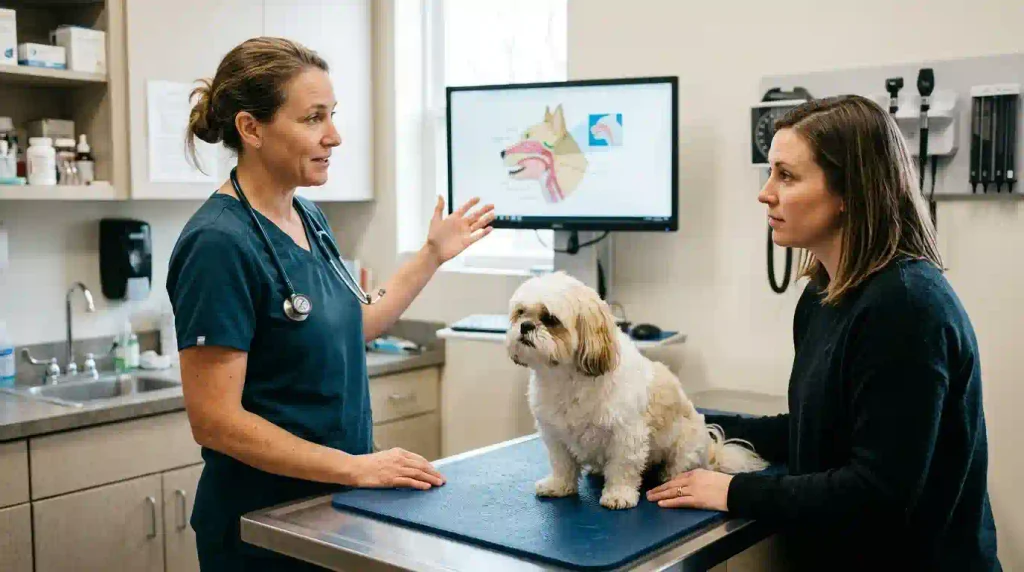
If BOAS is suspected, discuss whether referral to a veterinary surgeon would be appropriate.
Also ask how to monitor treatment response and when to arrange a follow-up visit.
How Veterinarians Diagnose Breathing Problems
The diagnostic approach depends on the dog’s symptoms, examination findings, age, medical history, and level of respiratory distress.
Severely affected dogs are stabilized before undergoing procedures that could increase stress.
Medical History and Physical Examination
The veterinarian begins by reviewing the dog’s symptoms, breathing history, activity tolerance, and previous medical problems.
The examination may include assessing respiratory effort, gum color, body temperature, heart rate, and overall condition.
The veterinarian also evaluates whether breathing noises appear to originate from the nose, throat, windpipe, or lungs.
In stable dogs, a functional assessment of breathing during controlled activity may sometimes provide additional information.
However, exercise testing is inappropriate for a dog already experiencing respiratory distress.
Checking Airflow, Heart, and Lungs
Veterinarians listen to the heart and lungs with a stethoscope and evaluate the character of respiratory sounds.
They may inspect the nostrils for narrowing and assess airflow through the upper respiratory tract.
A heart murmur, abnormal lung sound, or irregular breathing pattern may suggest an underlying condition beyond BOAS.
Pulse oximetry may help assess oxygen saturation, although results must be interpreted alongside the clinical examination.
Some anatomical abnormalities cannot be fully identified during an awake examination.
What Common Breathing Tests Help the Veterinarian Check
Diagnostic tests are selected according to the suspected disease.
Not every Shih Tzu with noisy breathing needs every available test.
X-Rays and Other Imaging
Chest X-rays can help evaluate the lungs, heart size, and portions of the respiratory tract.
They may reveal pneumonia, pulmonary fluid accumulation, certain structural abnormalities, or findings associated with cardiac disease.
Tracheal collapse may require additional imaging because the airway can change shape during different phases of breathing.
In some cases, fluoroscopy, which produces moving X-ray images, helps assess dynamic tracheal narrowing.
Blood Tests
Blood tests may identify anemia, inflammation, infection-related changes, or other health problems that contribute to abnormal breathing.
A complete blood count and serum chemistry panel can also help assess general health before anesthesia or surgery.
Blood gas testing may be used in selected cases to evaluate oxygenation, carbon dioxide levels, and acid-base balance.
These tests do not independently diagnose BOAS but may provide important information about respiratory function and overall health.
Airway Examination, Endoscopy, or CT Scan
A detailed upper-airway examination may be necessary to identify an elongated soft palate, everted laryngeal saccules, or other internal abnormalities.
Some examinations require sedation or general anesthesia, which carries additional risk in dogs with significant airway obstruction.
Endoscopy allows direct visualization of selected respiratory structures.
A CT scan can provide detailed images of the nasal passages and surrounding anatomy, particularly when nasal obstruction or other complex disease is suspected.
Bronchoscopy may be recommended when evaluating certain lower-airway conditions.
Veterinarians choose these procedures carefully based on expected benefits and safety considerations.
Treatment and Long-Term Management
Treatment for Shih Tzu breathing problems depends on the cause and severity.
Mild cases may be managed through monitoring and environmental changes, while significant anatomical obstruction may require surgery.
How Veterinarians Choose Between Monitoring, Medical Care, and Surgery
The first step is determining which condition is responsible for the symptoms.
Dogs with mild BOAS signs may benefit from weight management, controlled activity, and avoiding overheating.
However, these measures cannot remove anatomical obstructions.
Respiratory infections, heart disease, and tracheal collapse may require very different medical treatments.
Medication should be prescribed according to a veterinary diagnosis rather than selected solely because a Shih Tzu is breathing noisily.
For dogs with substantial BOAS-related obstruction, surgical consultation may be recommended.
Weight Management and Activity Adjustments
Maintaining a healthy body weight can reduce unnecessary stress on the respiratory system.
Overweight Shih Tzus may experience more severe exercise intolerance and heat sensitivity.
A veterinarian can help determine the dog’s ideal body condition and nutritional requirements.
Choose gentle, controlled exercise rather than intense running or prolonged activity during warm weather.
Short walks with adequate breaks are often preferable for dogs with reduced respiratory capacity.
If exercise produces significant breathing difficulty, stop the activity and seek veterinary advice.
Keeping Your Shih Tzu Cool and Reducing Stress
Environmental management is especially important for brachycephalic dogs.
Provide access to a cool indoor area, fresh water, and appropriate ventilation.
Avoid outdoor activity when temperatures or humidity levels are high.
During travel, maintain a comfortable vehicle temperature and avoid leaving the dog in enclosed, poorly ventilated spaces.
Excitement and anxiety can increase respiratory demand, so calm routines may help reduce symptoms in affected dogs.
A humidifier is not a treatment for airway obstruction; it may only be appropriate in selected situations involving dry-air irritation and should be maintained carefully to prevent microbial growth.
Using a Harness Instead of a Collar
A well-fitted harness can reduce pressure on the neck and trachea during walks.
This is particularly helpful for Shih Tzus with coughing, suspected tracheal collapse, or other respiratory concerns.
Choose a harness that allows comfortable shoulder movement and does not compress the throat.
Avoid unnecessary leash pulling or strenuous activity.
Although a harness may improve comfort, it cannot correct internal airway abnormalities.
BOAS Surgery and Other Treatment Options
Surgery may be recommended when anatomical abnormalities significantly restrict airflow.
The appropriate procedure depends on the structures involved.
Stenotic nares correction: A veterinary surgeon may widen the nostril openings to improve airflow through the nose.
Soft palate shortening: Excessive soft palate tissue may be surgically reduced to decrease obstruction near the larynx.
Laryngeal saccule treatment: In selected cases, protruding tissue may be removed or addressed as part of airway surgery.
Other procedures: Some dogs require additional treatment for enlarged tonsils or more complex upper-airway problems.
Severely affected dogs may occasionally require an emergency or temporary tracheostomy to maintain an open airway.
Surgery does not guarantee completely normal breathing, especially when advanced laryngeal changes or other respiratory conditions are present.
The American College of Veterinary Surgeons provides further veterinary information about brachycephalic syndrome, surgical correction, and expected outcomes.
Anesthesia and Surgical Risks
Brachycephalic dogs have increased anesthesia-related airway risks because their upper respiratory passages may already be restricted.
Induction, airway management, and recovery require careful planning.
Potential surgical complications include bleeding, swelling, inflammation, regurgitation, and respiratory obstruction after the procedure.
Postoperative swelling can be especially dangerous when the airway is already narrow.
For this reason, veterinary teams may recommend hospitalization and close monitoring after BOAS surgery.
A surgeon experienced in brachycephalic airway procedures can assess the individual dog’s risks and potential benefits.
Recovery and Outlook
Recovery depends on the type of treatment, severity of airway abnormalities, and presence of other health conditions.
After BOAS surgery, a Shih Tzu may need restricted activity, careful feeding, medication, and close observation during the initial recovery period.
Postoperative monitoring is particularly important because throat swelling can interfere with breathing.
Many appropriately selected dogs experience meaningful improvement in respiratory comfort after corrective surgery.
Earlier intervention may provide better outcomes before advanced secondary airway changes develop.
However, some dogs continue to require lifelong monitoring and environmental management.
Preventing Problems and Supporting Your Shih Tzu’s Health
Not every inherited airway abnormality can be prevented, but responsible care can help reduce avoidable respiratory stress and identify problems earlier.
Monitoring Changes in Your Dog’s Normal Breathing
Observe your Shih Tzu’s normal breathing patterns during sleep, activity, and rest.
Watch for changes in snoring, coughing, recovery time, and exercise tolerance.
Regular wellness examinations also provide opportunities to identify unrelated health problems before they become severe.
For example, suspicious skin growths may require investigation for conditions such as Shih Tzu Skin Cancer, even though skin cancer is not a typical cause of BOAS.
A complete health assessment helps distinguish respiratory disease from other conditions that affect a dog’s comfort and activity.
Breeding Considerations for Dogs With BOAS
Brachycephalic airway abnormalities have an important inherited component.
Breeding decisions should therefore prioritize healthy respiratory function rather than exaggerated facial characteristics.
Dogs with clinically significant BOAS should not be selected for breeding simply because their appearance matches a preferred flat-faced look.
A veterinary assessment of airway health, body condition, and relevant family history can help inform responsible breeding decisions.
Prospective breeders may also research reproductive topics such as How many puppies can a Shih Tzu have, but respiratory health and inherited disease risk deserve equal attention.
When to Schedule a Veterinary Checkup
Schedule a veterinary appointment whenever your Shih Tzu develops persistent snoring, unusual respiratory sounds, repeated coughing, or reduced exercise tolerance.
A routine examination is also valuable for dogs with mild symptoms that have been present for years.
Owners reviewing general shih tzu health and wellness information should recognize respiratory monitoring as part of preventive breed care.
Whether someone searches for the breed as Shih Tzu or the common misspelling Shit Zhu, the same principle applies: persistent breathing difficulty is not something to dismiss as a normal breed trait.
Earlier investigation can identify treatable problems and help prevent avoidable complications.
Frequently Asked Questions
Is Snoring Normal for a Shih Tzu?
Snoring is common in Shih Tzus, but frequent or loud snoring can indicate airway obstruction and deserves veterinary assessment.
Can Shih Tzu Puppies Have Breathing Problems?
Yes, puppies can have inherited airway abnormalities such as stenotic nares and elongated soft palates that cause breathing difficulty.
Can Breathing Problems Get Worse With Age?
Yes, chronic airway obstruction, progressive tissue changes, weight gain, and age-related diseases may worsen respiratory symptoms.
Why Is My Shih Tzu Breathing Fast While Sleeping?
Dreaming, heat, pain, respiratory disease, or heart problems may cause faster breathing; persistent rapid breathing during quiet sleep needs veterinary evaluation.
Can Allergies Cause Breathing Changes?
Yes, nasal irritation or inflammation may affect breathing sounds, but severe respiratory difficulty should not be assumed to be caused by allergies.
Can Heart Disease Cause Coughing or Breathing Difficulty?
Yes, heart disease may cause exercise intolerance, coughing, or rapid breathing, particularly when congestive heart failure develops.
Can Weight Gain Make Breathing Worse?
Yes, excess weight increases respiratory demands and can aggravate BOAS and other existing breathing conditions.
Final Thoughts: Protecting Your Shih Tzu’s Breathing and Comfort
Shih Tzu breathing problems can develop because of brachycephalic obstructive airway syndrome, tracheal collapse, heart disease, respiratory infections, and other underlying conditions. Although snoring and snorting are common in short-muzzled dogs, they should not automatically be considered harmless.
Pay attention to persistent coughing, unusual breathing sounds, exercise intolerance, rapid breathing during sleep, and difficulty recovering after activity. Severe respiratory distress, collapse, or blue gums require emergency veterinary care.
Maintaining a healthy weight, avoiding overheating, using a comfortable harness, and scheduling regular examinations can help support respiratory health.
If your Shih Tzu is breathing differently than usual, record the symptoms and arrange a veterinary assessment. Early identification of airway problems can improve comfort, guide treatment, and protect your dog’s long-term quality of life.