
Shih Tzu Eye Discharge and Watery Eyes: What to Watch For
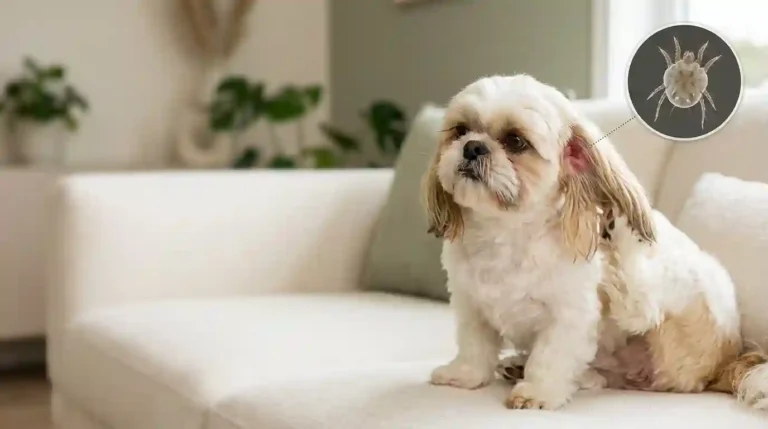
Shih Tzu eye discharge is a common concern for owners, especially when their dog’s beautiful, round eyes become watery, crusty, or surrounded by reddish-brown stains. A small amount of clear moisture or dried eye boogers can be normal, but thick yellow or green mucus, persistent tearing, redness, squinting, or swelling may indicate an underlying eye problem that needs veterinary attention. Because Shih Tzus have prominent eyes, short muzzles, and facial hair close to the cornea, they are particularly vulnerable to irritation, dry eye, blocked tear drainage, and corneal injuries.
If you’ve been wondering, “Why does my Shih Tzu have eye boogers?” or “Why does my Shih Tzu’s eyes water so much?” this guide will help you recognize different discharge types, understand their possible causes, and identify warning signs. You’ll also discover safe eye-cleaning methods, veterinary treatment options, and prevention tips to protect your Shih Tzu’s vision and comfort.
Important: If your Shih Tzu is squinting, keeping an eye closed, showing sudden cloudiness, or experiencing severe pain, seek veterinary care promptly rather than attempting home treatment.
Table of Contents
- Shih Tzu Eye Discharge: Quick Overview
- Types of Shih Tzu Eye Discharge by Color and Consistency
- Why Are Shih Tzus Prone to Eye Discharge?
- Common Causes of Eye Discharge in Shih Tzus
- Signs and Symptoms Accompanying Shih Tzu Eye Discharge
- When Is Shih Tzu Eye Discharge an Emergency?
- How Veterinarians Diagnose Shih Tzu Eye Discharge
- Shih Tzu Eye Discharge Treatment Options
- How to Clean Shih Tzu Eye Discharge Safely at Home
- How to Prevent Recurring Eye Discharge in Shih Tzus
- Frequently Asked Questions About Shih Tzu Eye Discharge
- Final Thoughts: Keeping Your Shih Tzu’s Eyes Healthy
1. Shih Tzu Eye Discharge: Quick Overview
1.1 What Is Eye Discharge in Shih Tzus?
Eye discharge, also called ocular discharge, refers to fluid, mucus, or crusty material that collects around a dog’s eyes. It develops from natural tear production, mucus, oils, environmental particles, or inflammation.
Healthy tears protect the cornea, remove debris, and maintain moisture across the eye surface. Small quantities of normal eye secretions may collect near the inner corners, particularly after sleeping.
Excessive discharge, however, can indicate changes in tear production, drainage problems, irritation, or eye disease.
1.2 Is Eye Discharge Normal in Shih Tzus?
Yes, a small amount of soft, pale, or lightly crusted eye discharge can be normal if your Shih Tzu’s eyes otherwise appear comfortable and healthy.
However, Shih Tzus are predisposed to several eye conditions because of their facial anatomy. Persistent watery eyes, thick mucus, or repeated crust formation should not automatically be considered normal for the breed.
A healthy Shih Tzu should generally have comfortable eyes without persistent squinting, significant redness, or visible pain.
1.3 Normal Eye Boogers vs. Abnormal Eye Discharge
Normal eye boogers, sometimes called rheum, usually appear as small amounts of dried material around the inner eye corners.
Abnormal discharge may be excessive, sticky, discolored, or associated with other symptoms.
| Normal Eye Discharge | Potentially Abnormal Eye Discharge |
| Small amount after sleeping | Continuous or increasing buildup |
| Clear or lightly colored | Yellow, green, bloody, or unusually thick |
| No obvious eye discomfort | Squinting, rubbing, or pain |
| Eyes remain clear | Red, swollen, or cloudy eyes |
| Easily removed with gentle wiping | Reappears rapidly or forms heavy crust |
Discharge color alone cannot diagnose the underlying condition.
1.4 When Should Shih Tzu Eye Discharge Be a Concern?
Be concerned when discharge develops suddenly, becomes persistent, affects your dog’s comfort, or accompanies unusual eye changes.
A veterinarian should evaluate new or worsening discharge, particularly when it is thick, colored, or associated with redness.
A painful or cloudy eye, sudden vision changes, marked swelling, or significant squinting requires urgent veterinary assessment because conditions such as corneal ulcers can worsen rapidly.
2. Types of Shih Tzu Eye Discharge by Color and Consistency
The color and texture of eye discharge can offer useful clues, but they cannot establish a diagnosis. Some conditions produce several discharge types, and different diseases may look similar.
2.1 Clear and Watery Eye Discharge
Clear discharge usually consists mainly of tears.
If you notice your Shih Tzu’s eyes watering excessively, possible explanations include environmental irritation, allergies, facial anatomy, poor tear drainage, or corneal discomfort.
A sudden increase in watering, especially in one eye, may indicate an injury or foreign object.
2.2 White or Gray Mucus Discharge
White or gray mucus may occur when the tear film does not adequately protect the eye surface.
One possible cause is dry eye, medically known as keratoconjunctivitis sicca (KCS).
Dogs with dry eye may also develop redness, inflammation, and sticky material around their eyelids.
2.3 Yellow or Green Eye Discharge
Yellow or green discharge can occur with bacterial infections, inflammation, dry eye, and other ocular conditions.
This type of discharge deserves veterinary evaluation, especially if it is new, worsening, or accompanied by discomfort.
A veterinarian must examine the eye before choosing treatment because antibiotics are not appropriate for every cause.
2.4 Thick, Sticky, or Pus-Like Eye Discharge
Thick discharge may stick to the eyelashes, mat surrounding fur, or make the eyelids difficult to open.
Possible causes include dry eye, conjunctivitis, secondary bacterial infection, or corneal disease.
Do not forcibly pull hardened material away from the eyelids.
2.5 Pink or Red Eye Discharge
Pink or blood-tinged discharge can indicate bleeding, injury, inflammation, or another serious eye problem.
It should not be confused with reddish-brown staining on the surrounding fur.
Fresh blood or pink discharge from the eye requires urgent veterinary attention.
2.6 Brown or Reddish-Brown Tear Stains
Brown tear stains are particularly noticeable on white and cream-colored Shih Tzus.
Tears contain pigments called porphyrins, which can contribute to reddish-brown discoloration of the facial fur when tearing repeatedly wets the area.
Tear staining itself is often cosmetic, but excessive moisture may irritate the skin and encourage secondary infection.
2.7 Crusty Eye Discharge and Dried Eye Boogers
Small amounts of dried discharge may accumulate overnight.
However, heavy crusting, sticky eyelids, or recurring deposits throughout the day can indicate an underlying problem.
Gentle cleaning may improve hygiene but does not treat infection, dry eye, or corneal disease.
2.8 Shih Tzu Eye Discharge in One Eye vs. Both Eyes
Unilateral eye discharge affects one eye, while bilateral discharge affects both.
One-sided tearing may be associated with a foreign body, corneal injury, tear-duct problem, or localized inflammation.
Discharge affecting both eyes can occur with allergies, dry eye, or environmental irritation.
These are patterns rather than firm diagnostic rules. Both unilateral and bilateral discharge can have serious causes.
2.9 Eye Discharge Color Chart: Possible Causes and Severity
| Discharge Type | Possible Causes | Suggested Urgency |
| Small amount of clear discharge | Normal tearing | Monitor if otherwise comfortable |
| Excessive watery discharge | Irritation, tear-drainage problems, corneal injury | Prompt veterinary assessment if persistent or sudden |
| White or gray mucus | Dry eye, inflammation | Veterinary appointment |
| Yellow or green mucus | Infection, dry eye, inflammation | Prompt veterinary assessment |
| Thick pus-like discharge | Significant inflammation or infection | Same-day veterinary advice |
| Pink or bloody discharge | Trauma, bleeding, serious eye disease | Urgent veterinary care |
| Reddish-brown fur stains | Chronic tearing, pigment deposits | Routine evaluation if persistent or worsening |
| Heavy crust with squinting | Painful eye disease, possible corneal damage | Urgent veterinary care |
An apparently mild discharge becomes more concerning if the dog squints, has a cloudy cornea, or seems painful.

3. Why Are Shih Tzus Prone to Eye Discharge?
Shih Tzus have distinctive facial features that make them more susceptible to eye irritation and certain ophthalmic disorders.
3.1 Shih Tzu Facial Anatomy and Eye Structure
Shih Tzus are brachycephalic dogs, meaning they have relatively short muzzles and compact skull shapes.
These features can affect eyelid positioning, eye exposure, and tear drainage.
Their facial structure is also associated with shih-tzu breathing problems, although airway and eye conditions require separate assessments.
3.2 Prominent Eyes and Increased Exposure to Irritants
Shih Tzus have relatively prominent eyes and shallow eye sockets, which can increase exposure of the corneal surface.
The cornea is the transparent front layer of the eye. When it is insufficiently protected, environmental particles, minor trauma, or inadequate lubrication may cause irritation.
Some Shih Tzus also have reduced corneal sensitivity, which may make certain injuries less obvious.
3.3 Facial Hair and Fur Irritation Around the Eyes
Long facial hair can touch the cornea or trap moisture and debris near the eyelids.
Repeated contact may stimulate excessive tearing or contribute to inflammation.
Keeping hair away from the eyes can help reduce irritation, but grooming must be performed carefully.
3.4 Tear Production and Tear Drainage Problems
Healthy tears form a protective tear film that lubricates and nourishes the eye surface.
Excess fluid normally drains through tiny openings called lacrimal puncta into the nasolacrimal duct.
If tear production increases or drainage becomes restricted, tears may overflow onto the facial fur.
3.5 Why Some Shih Tzus Cannot Close Their Eyes Completely (Lagophthalmos)
Lagophthalmos means incomplete eyelid closure.
Some Shih Tzus cannot fully cover their corneas when blinking or sleeping.
This can leave parts of the eye exposed, increasing tear evaporation and the risk of corneal irritation or ulceration.
3.6 How Inward-Rolling Eyelids and Abnormal Eyelashes Cause Irritation
Abnormal eyelid positioning or hair growth may cause repeated contact with the eye surface.
3.6.1 Entropion: When Eyelids Roll Inward
Entropion occurs when part of an eyelid rolls inward, allowing hair or eyelashes to rub against the cornea.
Symptoms may include watery eyes, redness, squinting, and persistent irritation.
3.6.2 Trichiasis: When Facial Hair Rubs Against the Eye
Trichiasis refers to normally located hairs that grow or lie in a direction that irritates the eye.
Hair near the inner eye corner, sometimes called caruncular trichiasis, can contribute to excessive tearing in brachycephalic dogs.
3.6.3 Abnormal Eyelashes and Distichiasis
Distichiasis involves additional eyelashes growing from abnormal positions along the eyelid margin.
Ectopic cilia are abnormal lashes that emerge through the inner eyelid surface and may be particularly painful.
Both can require specialist treatment when they damage the cornea.
3.7 Why Shih Tzus Develop Excessive Tearing and Tear Stains
When tears overflow instead of draining properly, the surrounding fur remains wet.
Repeated moisture exposure can produce reddish-brown staining and skin irritation.
Owners frequently ask, “Why do Shih Tzu eyes water?” The answer may involve normal anatomy, irritation, or an underlying disorder.
Persistent tearing should be assessed rather than treated as a purely cosmetic problem.

4. Common Causes of Eye Discharge in Shih Tzus
Understanding the underlying cause is essential because the correct Shih Tzu eye discharge treatment depends on whether the problem involves irritation, infection, inadequate tears, or structural abnormalities.
4.1 Normal Tear Production and Natural Eye Secretions
The eye naturally produces tears containing water, oils, and mucus.
These substances lubricate the cornea and help remove particles.
Small amounts of discharge may accumulate during sleep, but increasing mucus production can indicate changes in the eye’s protective tear film.
4.2 Eye Infections and Conjunctivitis
Conjunctivitis is inflammation of the conjunctiva, the thin membrane covering the inner eyelids and the visible white part of the eye.
It can develop from infections, allergies, irritation, or other eye diseases.
Common symptoms include redness, swelling, watering, and mucus discharge.
4.2.1 Bacterial Eye Infections
Bacterial infections may cause thick yellow or green discharge, inflamed eyelids, and discomfort.
Some develop secondarily when the eye surface is already damaged by dry eye or injury.
A veterinarian may recommend topical antibiotics after examining the eye.
4.2.2 Viral Eye Infections
Certain viral illnesses can cause conjunctivitis and watery or mucous discharge.
Dogs may also develop fever, respiratory symptoms, or other systemic signs, depending on the infection.
Treatment focuses on the specific disease and associated complications.
4.2.3 Fungal Eye Infections
Fungal eye infections are less common than many other causes of discharge.
They may involve the cornea or deeper eye structures and generally require specialized diagnosis and treatment.
4.3 Dry Eye (Keratoconjunctivitis Sicca)
Dry eye, or KCS, is an important condition in Shih Tzus.
It occurs when the eye lacks an adequate healthy tear film, often because of insufficient aqueous tear production.
Symptoms may include thick sticky mucus, redness, squinting, a dull-looking cornea, and chronic irritation.
Untreated dry eye can lead to corneal ulcers, pigmentation, scarring, and vision impairment.
4.3.1 Low Tear Production vs. Poor Tear Film Quality
Tear-film problems can involve insufficient tear volume or an unstable protective layer.
Low aqueous tear production is commonly evaluated with the Schirmer tear test.
Poor tear-film quality may involve abnormalities in the lipid or mucin components that help stabilize and spread tears.
Both can cause ocular discomfort, but diagnosis and treatment may differ.
4.4 Excessive Tearing (Epiphora)
Epiphora describes tears overflowing from the eyes.
It is a symptom rather than a disease.
It may occur because the eye produces too many tears in response to irritation or because normal tears cannot drain properly.
The veterinary article Eye Discharge (Epiphora) in Dogs by VCA Animal Hospitals explains how facial anatomy, eyelid abnormalities, and tear-drainage problems can contribute to excessive watering.
4.5 Blocked or Narrow Tear Ducts
The nasolacrimal ducts carry excess tears away from the eye.
If a duct becomes narrowed or blocked by inflammation, debris, or developmental abnormalities, tears may overflow onto the face.
A veterinarian can evaluate drainage and determine whether flushing or another procedure is necessary.
4.6 Environmental Allergies and Eye Irritation
Pollen, dust, airborne irritants, smoke, and certain grooming products can irritate sensitive eyes.
Dogs with allergies may also develop itchy skin, paw licking, or recurring ear problems.
Learn more about shih tzu allergies when eye symptoms occur alongside broader allergic reactions.
4.7 Foreign Objects, Dust, and Chemical Irritants
Grass seeds, loose hairs, dirt, and shampoo can enter or irritate the eye.
A foreign body may cause sudden watery discharge, intense blinking, or repeated pawing at one eye.
Chemical exposure can damage the cornea. Seek immediate veterinary guidance if a cleaning product or other chemical enters the eye, and begin gentle flushing with water or sterile saline while arranging help.
4.8 Corneal Ulcers and Eye Injuries
A corneal ulcer is an open defect in the transparent surface of the eye.
Shih Tzus are particularly vulnerable because their prominent eyes may be exposed to injury and incomplete blinking.
Signs include sudden squinting, excessive tearing, redness, light sensitivity, or cloudiness.
Corneal ulcers can progress rapidly and threaten vision. Suspected ulcers require urgent veterinary evaluation.
4.9 Pigmentary Keratitis: When Dark Pigmentation Develops on the Eye
Pigmentary keratitis occurs when dark pigment develops within the cornea, often in response to chronic irritation or inflammation.
It may gradually obstruct vision when pigmentation becomes extensive.
Underlying causes can include tear-film problems, eyelid abnormalities, and continuous hair contact.
4.9.1 Tear Stains vs. Pigmentary Keratitis
These conditions affect different locations.
| Tear Stains | Pigmentary Keratitis |
| Discoloration of facial fur | Pigmentation within the cornea |
| Usually reddish-brown | Typically dark brown or black |
| Often associated with tear overflow | Associated with chronic corneal irritation |
| Primarily cosmetic unless skin irritation develops | May interfere with vision |
| Managed through diagnosis and facial hygiene | Requires veterinary eye assessment |
Darkening that appears directly on the eyeball should never be treated as ordinary fur staining.
4.10 Glaucoma and Other Serious Eye Conditions
Glaucoma involves increased pressure within the eye and can cause significant pain and irreversible vision loss.
Symptoms may include redness, cloudiness, an enlarged-looking eye, or sudden visual impairment.
Other serious conditions include uveitis, corneal edema, and cherry eye, which is the prolapse of the third eyelid gland.
These disorders require veterinary diagnosis rather than cosmetic tear-stain treatment.
4.11 Related Skin and Dental Health Problems
Eye discharge sometimes occurs alongside unrelated skin, ear, or dental problems.
Chronically wet facial fur can cause dermatitis or secondary skin infection. Suspicious lumps around the eyelids should also be examined, rather than assuming they are part of ordinary tear staining. The separate guide to Shih Tzu Skin Cancer explains why persistent skin growths deserve veterinary assessment.
An owner may also notice head scratching associated with a shih tzu ear infection or shih tzu ear mites. These conditions can cause facial rubbing but do not independently explain eye discharge.
Systemic conditions such as Shih Tzu Cushing’s Disease may cause additional skin or coat changes that should be evaluated separately.
5. Signs and Symptoms Accompanying Shih Tzu Eye Discharge
Eye discharge is more concerning when it occurs alongside signs of inflammation, discomfort, or reduced vision.
5.1 Eye Redness and Inflammation
Redness may indicate conjunctivitis, irritation, dry eye, injury, or more serious disorders.
Persistent bloodshot eyes should not be dismissed simply because your dog is still playful.
5.2 Swollen or Irritated Eyelids
Swelling can develop from allergies, infections, trauma, or eyelid disorders.
Rapid swelling, particularly with pain or changes in eye appearance, deserves urgent attention.
5.3 Excessive Blinking and Squinting
Squinting is an important indicator of ocular discomfort.
A Shih Tzu repeatedly closing one eye may have a corneal ulcer, foreign body, or another painful condition.
Seek urgent veterinary evaluation rather than waiting for the discharge to clear.
5.4 Pawing, Rubbing, or Scratching the Eyes
Dogs may rub their faces against furniture or use their paws when their eyes feel irritated.
Unfortunately, repeated rubbing can worsen corneal damage.
A veterinarian may recommend a protective Elizabethan collar to prevent further injury.
5.5 Sticky Eyelids and Eye Crusting
Heavy mucus can dry around the eyelashes and make the eyelids difficult to separate.
Moistening the outer crust gently may improve comfort, but repeated buildup needs medical assessment.
5.6 Cloudy Eyes and Changes in Eye Appearance
Sudden cloudiness, bluish discoloration, a bulging eye, or changes in pupil appearance can indicate serious disease.
These symptoms require urgent veterinary evaluation even when discharge is minimal.
5.7 Eye Pain and Sensitivity to Light
A painful Shih Tzu may avoid bright light, keep an eye partly closed, or resist having its face touched.
These signs can accompany corneal ulcers, uveitis, or glaucoma.
5.8 Excessive Tearing and Wet Fur Around the Eyes
Continuous moisture can leave the muzzle damp, discolored, or irritated.
If watery eyes occur alongside other symptoms such as shih tzu coughing or Shih Tzu diarrhea, tell your veterinarian about the complete symptom pattern.
These additional symptoms may indicate separate conditions or a broader illness rather than a simple tear-drainage problem.
6. When Is Shih Tzu Eye Discharge an Emergency?
Some eye conditions can cause lasting damage within a short period. Recognizing emergency warning signs is more important than identifying discharge color alone.
6.1 Emergency Eye Warning Signs
Seek urgent or emergency veterinary attention if your Shih Tzu develops:
- Sudden severe squinting or inability to open an eye.
- Significant eye pain or repeated attempts to rub the eye.
- New cloudiness, major swelling, or a visibly bulging eye.
- Sudden blindness or dramatic changes in vision.
- Blood from the eye or suspected penetrating injury.
- An eyeball displaced from its normal position.
- Chemical exposure or severe eye trauma.
6.2 Symptoms That Require a Prompt Veterinary Visit
Arrange a prompt examination for persistent yellow or green discharge, recurrent heavy mucus, ongoing redness, or unusually excessive watering.
A same-day appointment may be appropriate when symptoms develop suddenly or the dog’s comfort is affected.
6.3 Mild Eye Discharge That May Be Monitored
A small amount of clear moisture or dried morning debris may be monitored if the eye remains comfortable, clear, and normally open.
If discharge becomes frequent, increases, or changes appearance, seek veterinary advice.
6.4 What to Do If Your Shih Tzu Has a Sudden Eye Injury
Prevent your dog from rubbing the injured eye and contact an emergency veterinary clinic.
Do not pull out embedded objects, press on the eyeball, or apply leftover eye medication.
For chemical exposures, gentle immediate flushing with clean water or sterile saline is generally appropriate while obtaining emergency veterinary instructions.
6.5 Eye Proptosis: What Happens When a Shih Tzu’s Eye Pops Out?
Proptosis occurs when the eyeball becomes displaced forward from the eye socket.
Brachycephalic breeds, including Shih Tzus, are more susceptible.
This is a true emergency. Do not attempt to push the eyeball back into place.
Protect the exposed eye from drying by gently keeping it moist with sterile saline or a saline-moistened clean dressing without applying pressure, and transport your dog immediately to an emergency veterinarian.
7. How Veterinarians Diagnose Shih Tzu Eye Discharge
An accurate ophthalmic diagnosis helps identify the underlying cause and prevent unnecessary or harmful treatment.
7.1 Physical Examination and Eye Health Assessment
A veterinarian begins by examining the eyes, eyelids, surrounding facial hair, and visible corneal surface.
They may also ask when symptoms started, whether one or both eyes are affected, and whether your dog has previously experienced similar problems.
7.2 Identifying the Type and Source of Discharge
The veterinarian assesses discharge consistency, eye redness, discomfort, and tear overflow.
A thick mucus discharge may suggest dry eye, but testing is necessary because several conditions can produce similar symptoms.
7.3 Common Veterinary Eye Tests and What They Detect
Several tests help distinguish tear-production disorders, corneal injuries, and abnormal eye pressure.
| Veterinary Test | Main Purpose |
| Schirmer tear test | Measures aqueous tear production |
| Fluorescein staining | Detects corneal epithelial defects or ulcers |
| Tonometry | Measures intraocular pressure |
| Tear-drainage assessment | Investigates nasolacrimal duct function |
| Slit-lamp examination | Examines detailed eye structures |
| Ophthalmoscopy | Helps assess structures inside the eye |
7.3.1 Schirmer Tear Test: Measuring Tear Production
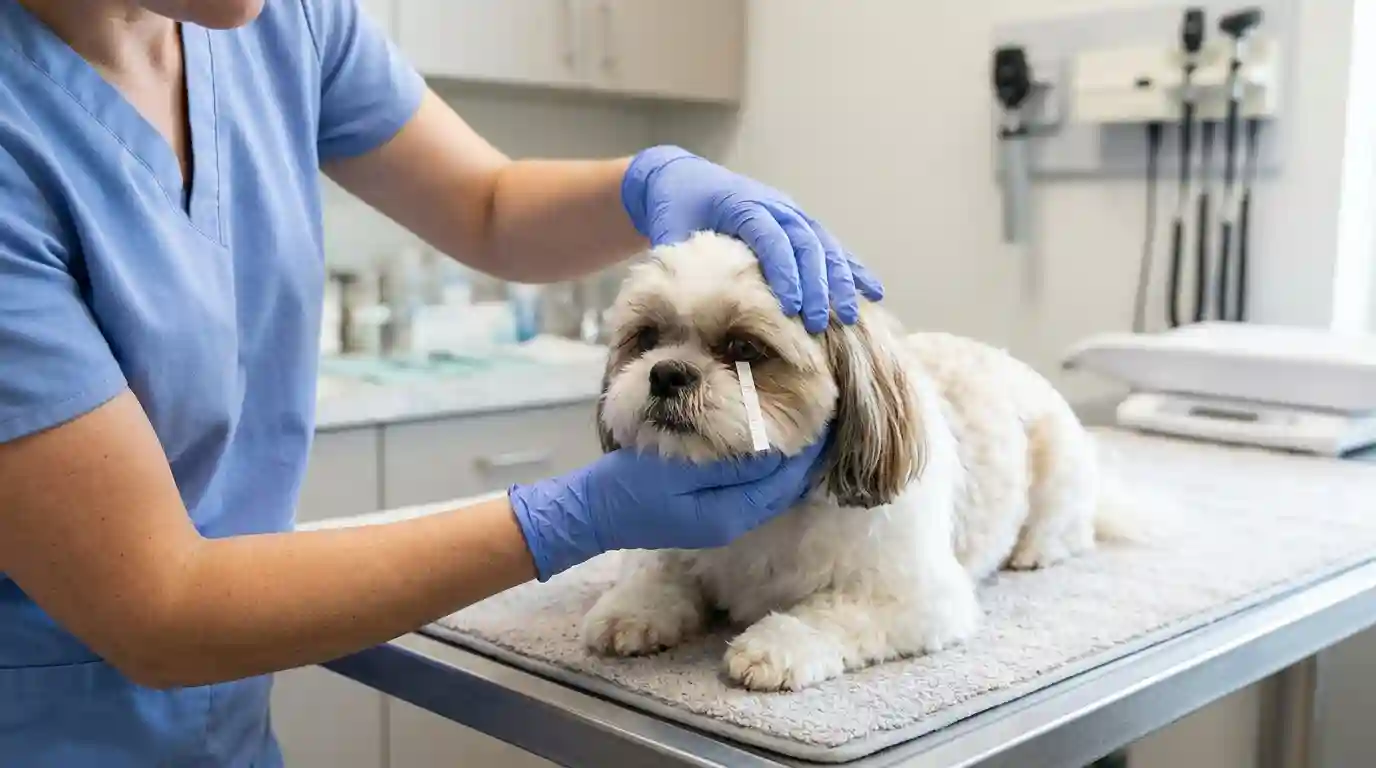
The Schirmer tear test uses a small paper strip to measure tear production over approximately one minute.
It is particularly useful when dry eye is suspected.
7.3.2 Fluorescein Staining: Detecting Corneal Ulcers
Fluorescein is a diagnostic dye that highlights damaged areas of the corneal surface.
It helps veterinarians identify ulcers that may otherwise be difficult to see.
7.3.3 Tonometry: Measuring Eye Pressure
Tonometry measures intraocular pressure.
It is important when glaucoma or certain inflammatory conditions are suspected.
7.3.4 Tear Duct Examination: Checking Drainage Problems
Veterinarians may assess whether tears can pass through the nasolacrimal drainage system.
Fluorescein drainage testing, careful examination, or flushing may be used depending on the situation.
7.4 Examining the Cornea, Eyelids, and Eye Surface
Detailed examination may identify entropion, abnormal eyelashes, lagophthalmos, corneal scarring, or pigmentary keratitis.
Some dogs require a specialist examination for complex abnormalities.
7.5 Identifying Infections and Underlying Eye Diseases
When infection is suspected, a veterinarian may recommend additional testing, including cytology or cultures in selected cases.
Testing helps distinguish primary infection from inflammation caused by dry eye, structural abnormalities, or injury.
8. Shih Tzu Eye Discharge Treatment Options
Treatment depends on the underlying diagnosis. Cleaning discharge may improve hygiene, but it does not necessarily resolve the cause.
8.1 Treatment Based on the Underlying Cause
For example, allergic irritation may require environmental management, while dry eye commonly requires ongoing prescription therapy.
Corneal ulcers and glaucoma demand different approaches and may need urgent treatment.
8.2 Veterinary Eye Drops and Ointments
Veterinarians may prescribe lubricating eye drops, antibiotic medications, tear-production stimulants, or other ophthalmic treatments.
Products must be selected according to the diagnosis.
Using the wrong eye drop can delay healing or make certain conditions worse.
8.3 Treating Bacterial and Other Eye Infections
Confirmed or strongly suspected bacterial infections may be treated with appropriate topical antibiotics.
Viral, fungal, and noninfectious inflammatory conditions require different management.
Do not use leftover antibiotics from a previous eye problem.
8.4 Managing Dry Eye and Excessive Tearing
Dry eye treatment may include artificial tears and veterinarian-prescribed medications such as cyclosporine or tacrolimus to stimulate tear production in appropriate cases.
Long-term treatment may be necessary.
Excessive tearing improves when its underlying trigger or drainage problem is addressed.
8.5 Treating Blocked Tear Ducts
Veterinarians may recommend tear-duct flushing or other corrective procedures when drainage obstruction is confirmed.
Some congenital abnormalities may require surgery.
Not every Shih Tzu with tear stains has a blocked duct, so examination is essential.
8.6 Treatment for Corneal Ulcers and Eye Injuries
Treatment may involve topical antimicrobial medication, pain management, corneal protection, and follow-up examinations.
An Elizabethan collar may help prevent rubbing.
Deep, infected, or rapidly worsening ulcers may require surgical intervention.
8.7 When Surgical Treatment May Be Necessary
Surgery may be considered for severe entropion, damaging eyelashes, persistent structural problems, advanced corneal disease, or selected cases of proptosis.
Cherry eye may require surgical replacement of the prolapsed third eyelid gland.
Severely damaged, irreversibly painful eyes sometimes require removal as a last-resort treatment.
8.8 What to Do When Eye Discharge Returns After Treatment
Recurring discharge may indicate incomplete resolution, continued facial hair irritation, chronic dry eye, or another underlying condition.
Schedule a recheck rather than repeatedly restarting old medications.
Take photographs documenting changes and note which treatment was previously prescribed.
8.9 When Your Shih Tzu Needs a Veterinary Ophthalmologist
A veterinary ophthalmologist specializes in diagnosing and treating eye diseases.
Referral may be appropriate for recurrent corneal ulcers, difficult-to-control dry eye, abnormal eyelashes, glaucoma, progressive pigmentation, or threatened vision.
8.10 Expected Recovery and Prognosis for Shih Tzu Eye Conditions
Recovery depends on the diagnosis and severity.
Mild irritation may improve rapidly once the cause is removed. Uncomplicated superficial corneal ulcers can sometimes heal within several days with appropriate treatment, while more serious ulcers may require much longer or surgical care.
Chronic dry eye and structural tearing problems may require lifelong management.
9. How to Clean Shih Tzu Eye Discharge Safely at Home
Regular eye-area cleaning can help keep your Shih Tzu comfortable and prevent moisture buildup in facial fur.
However, cleaning should be limited to routine hygiene when the eyes are otherwise comfortable. Painful, cloudy, swollen, or injured eyes need veterinary care first.
9.1 Step-by-Step Guide to Removing Eye Boogers
For mild, ordinary eye boogers, follow these steps:
- Wash your hands thoroughly before touching your dog’s face.
- Use a clean, soft cotton pad or lint-free cloth moistened with sterile saline.
- Gently wipe discharge from the fur around the inner eye corner without touching or pressing on the eyeball.
- Use a separate clean pad for the other eye to reduce cross-contamination.
- Carefully pat the surrounding fur dry.
- Reward your Shih Tzu for remaining calm during cleaning.
Never scrape the cornea or force open an uncomfortable eye.
9.2 How to Soften and Remove Dried Eye Crust
Dried eye crust may become attached to facial hair.
Hold a clean, slightly warm, damp cloth against the affected fur for a short period to soften the material.
Gently wipe away loosened debris without pulling the hair or rubbing the eye.
If crusting is extensive or the eyelids appear stuck together, seek veterinary advice.
9.3 How to Clean Tear Stains Around the Eyes
Tear stains are best managed by addressing excessive tearing and keeping the facial fur clean.
Gently clean the stained area with a veterinarian-approved product and dry it afterward.
Existing stained hair may remain discolored until it grows out or is carefully trimmed.
9.4 Safe Cleaning Materials and Eye-Care Products
For routine external cleaning, useful materials may include:
- Sterile saline intended for eye use.
- Soft, clean, lint-free cloths.
- Unscented, veterinarian-approved eye-area wipes.
- Clean cotton pads for the surrounding fur.
- A suitable fine-toothed grooming comb for facial hair away from the eye.
Use products only as directed and avoid contaminating medication droppers by touching them to the eye.
9.5 Eye Cleaning Products and Home Remedies to Avoid
Avoid hydrogen peroxide, alcohol, essential oils, harsh soaps, and scented cleaning products near your Shih Tzu’s eyes.
Do not use homemade herbal mixtures or contact lens disinfecting solutions as eye treatments.
Tear-stain remedies containing inappropriate antibiotics, including products involving tylosin without veterinary indication, also raise concerns about unnecessary antibiotic use and resistance.
9.5.1 Why Human Eye Drops and Steroid Drops Can Be Dangerous
Some human eye medications contain ingredients that are unsuitable for dogs or may conceal serious symptoms.
Steroid-containing eye drops are especially risky when a corneal ulcer is present because corticosteroids can delay healing and worsen complications.
Use ophthalmic medications only when prescribed or specifically approved by your veterinarian.
9.6 How Often Should You Clean Your Shih Tzu’s Eyes?
A gentle daily check is appropriate for many Shih Tzus.
Remove minor debris only when necessary rather than repeatedly wiping a clean eye.
Dogs with chronic tearing may need more frequent external fur cleaning based on veterinary advice.
9.7 When Home Cleaning Is Not Enough
Home cleaning is insufficient when your Shih Tzu has thick recurrent mucus, painful squinting, redness, cloudiness, or persistent excessive tearing.
Cleaning may temporarily improve appearance while leaving a corneal ulcer, infection, or dry eye untreated.

10. How to Prevent Recurring Eye Discharge in Shih Tzus
Although some anatomical causes cannot be completely prevented, regular grooming, eye examinations, and early treatment can reduce avoidable irritation and protect ocular health.
10.1 Establishing a Daily Eye-Care Routine
Check your Shih Tzu’s eyes each day for discharge, redness, swelling, or changes in appearance.
Observe both eyes under good lighting and compare them with your dog’s usual condition.
Daily monitoring is an important part of overall shih tzu health and wellness.
10.2 Keeping Facial Hair Clean and Properly Trimmed
Keep long facial hair away from the cornea using a suitable top knot or careful grooming.
Professional groomers familiar with Shih Tzus can help maintain a practical eye-area haircut.
Never use pointed scissors close to a moving dog’s eyes.
10.3 Reducing Exposure to Allergens and Irritants
Minimize exposure to smoke, strong fragrances, household sprays, and irritating grooming products.
After outdoor activities, inspect the facial fur for dust, grass seeds, or other debris.
10.4 Preventing Eye Infections and Injuries
Avoid rough play involving the face and be careful around branches, tall grass, and sharp objects.
Clean grooming equipment regularly and follow veterinary recommendations for existing eye disorders.
An Elizabethan collar may be necessary temporarily if your dog repeatedly rubs an irritated eye.
10.5 Managing Recurring Tear Stains
The most effective approach is to identify why tears continuously wet the fur.
If excessive tearing is related to anatomical features, some staining may persist despite good hygiene.
Keeping the fur clean and dry helps reduce secondary skin irritation.
10.6 Do Tear-Stain Removers and Supplements Work?
Commercial tear-stain wipes, powders, and supplements vary considerably in formulation and supporting evidence.
No product reliably eliminates staining from every underlying cause.
Avoid products claiming to cure eye disease or replace veterinary examination.
10.7 Eye-Care Differences Between Shih Tzu Puppies and Senior Dogs
Puppies may experience excessive tearing because of eyelid abnormalities, hair irritation, or developmental tear-drainage differences.
Very young puppies whose eyes have not opened normally require veterinary evaluation if swelling or discharge develops; never force their eyelids open.
Owners caring for breeding dogs or new litters may also be interested in How many puppies can a Shih Tzu have, alongside appropriate newborn health monitoring.
Senior Shih Tzus may develop chronic dry eye, corneal pigmentation, eyelid changes, or other age-associated disorders.
New symptoms in older dogs should not simply be attributed to aging.
10.8 How to Track Changes in Your Shih Tzu’s Eye Discharge
A simple symptom diary can help your veterinarian identify recurring patterns.
Track the affected eye, discharge color, consistency, amount, associated symptoms, and changes over time.
10.8.1 Daily Eye Discharge Symptom-Tracking Checklist
| Observation | What to Record |
| Affected eye | Left, right, or both |
| Discharge color | Clear, white, yellow, green, brown, or bloody |
| Consistency | Watery, sticky, thick, or crusty |
| Amount | Small, moderate, or excessive |
| Eye appearance | Clear, red, swollen, or cloudy |
| Discomfort | Squinting, pawing, or rubbing |
| Duration | When symptoms started and whether they are worsening |
| Treatment history | Prescribed products and observed response |
Photographs taken under similar lighting can also be helpful.
Document other health problems separately. For example, mobility changes related to IVDD in Shih Tzu dogs do not usually explain tear staining but remain important medical history.
Similarly, if you’re asking, “my shih tzu is constipated,” or dealing with Shih Tzu anal glands concerns, record these issues for your veterinarian rather than assuming all symptoms share one cause.
10.9 Regular Veterinary Eye Examinations
Routine veterinary examinations help identify dry eye, corneal problems, and eyelid abnormalities before they cause severe complications.
Dogs with previously diagnosed ophthalmic disease may need more frequent monitoring.
Eye discharge alone is not a reliable indicator of a dog’s overall prognosis. Owners worried about severe systemic deterioration can review Shih Tzu Signs of Death to understand why broader clinical assessment matters.
11. Frequently Asked Questions About Shih Tzu Eye Discharge
11.1 Can Shih Tzu Puppies Outgrow Tear Stains?
Some puppies develop less tear staining as their facial features mature, but persistent tearing may require veterinary assessment.
11.2 How Long Does It Take for Tear Stains to Fade?
Existing discoloration may take weeks to months to disappear as stained hair grows out, depending on grooming and the underlying cause.
11.3 Why Are My Shih Tzu’s Tear Stains Getting Worse?
Increasing staining may result from excessive tear production, drainage problems, irritation, or changes in facial hair and hygiene.
11.4 Do Black Shih Tzus Get Tear Stains?
Yes, dark-coated Shih Tzus can develop tear staining, although the discoloration is usually less visible.
11.5 Can Shih Tzu Eye Infections Clear Up Without Treatment?
Some mild irritation resolves, but suspected infections need veterinary evaluation because serious eye diseases can appear similar.
11.6 Are Daily Tear-Stain Wipes Safe for Shih Tzus?
Veterinarian-approved wipes may be suitable for external facial-fur cleaning when used as directed and kept away from the eyeball.
11.7 Can Shih Tzus Develop Permanent Vision Problems From Eye Discharge?
Eye discharge itself does not necessarily cause blindness, but untreated conditions such as corneal ulcers, glaucoma, and severe dry eye can damage vision.
12. Final Thoughts: Keeping Your Shih Tzu’s Eyes Healthy
Shih Tzu eye discharge can range from harmless morning eye boogers to symptoms of serious conditions such as dry eye, conjunctivitis, corneal ulcers, and blocked tear ducts. Understanding discharge colors, recognizing unusual symptoms, and maintaining gentle eye hygiene can help you protect your dog’s comfort and vision.
The most important step is knowing when routine cleaning is appropriate and when professional veterinary care is necessary. Persistent mucus, redness, squinting, cloudiness, or sudden excessive tearing should never be ignored.
Make daily eye checks part of your dog’s grooming routine, follow veterinarian-recommended treatments, and schedule regular wellness examinations.
For more breed-specific information, explore the Shit Zhu resource hub, using the correct breed name Shih Tzu when researching your companion’s health.