
Shih Tzu Ear Mites: Warning Signs, Treatment, and Routine Ear Care
Shih Tzu ear mites are tiny, contagious parasites that live primarily inside a dog’s ear canals and can cause intense itching, repeated head shaking, dark crumbly discharge, redness, and discomfort. The most common ear mite affecting dogs is Otodectes cynotis, which spreads mainly through close contact with infected animals, including dogs and cats. Although ear mites are a recognizable cause of ear irritation, not every Shih Tzu with itchy ears or coffee-ground-like debris has parasites. Yeast infections, bacterial infections, allergies, and excessive earwax can produce similar symptoms. If your Shih Tzu repeatedly scratches its ears, develops dark discharge, or seems uncomfortable when its ears are touched, arrange a veterinary examination rather than experimenting with home remedies. A veterinarian can check for mites using an otoscope or microscopic examination and recommend appropriate antiparasitic treatment. This guide explains what ear mites look like, how they spread, how to distinguish them from other ear problems, which treatments veterinarians use, and how to protect your Shih Tzu from recurring infestations.
Important: A Shih Tzu with severe ear pain, bleeding, sudden head tilting, loss of balance, difficulty walking, or unusual neurological symptoms needs urgent veterinary care. These signs may indicate a serious ear condition or another medical problem beyond a straightforward ear mite infestation.
Table of Contents
- What Are Ear Mites in Shih Tzus?
- How Shih Tzus Get Ear Mites
- What Do Ear Mites Look Like?
- Signs and Symptoms of Ear Mites
- Ear Mites vs. Ear Infections and Other Ear Problems
- Possible Complications
- What to Do Before the Veterinary Visit
- How Veterinarians Diagnose Ear Mites
- How Ear Mites Are Treated
- Recovery and Follow-Up
- How to Prevent Ear Mites and Reinfestation
- Can People Get Ear Mites from a Shih Tzu?
- Frequently Asked Questions
- Final Thoughts
What Are Ear Mites in Shih Tzus?
Ear mites are microscopic or barely visible external parasites that can infest the ears of dogs, cats, and certain other animals.
Unlike bacterial or yeast infections, ear mite infestation involves living parasites that feed and reproduce on the animal.
The infestation is called otodectic mange and can cause inflammation of the external ear canal, known as otitis externa.
Shih Tzus with ear mites may experience anything from mild irritation to intense itching and secondary infection.
Otodectes cynotis and Other Mites
Otodectes cynotis is the primary ear mite species responsible for typical ear mite infestations in dogs.
These mites belong to the class Arachnida, which also includes ticks and spiders.
They are not insects, and they should not be confused with fleas, lice, or intestinal parasites.
Adult Otodectes cynotis mites have eight legs and are extremely small, generally measuring less than half a millimeter.
They may appear as tiny pale or whitish moving specks when viewed under appropriate magnification.
Although other mites can affect canine skin, most commonly discussed Shih Tzu ear mite infestations involve Otodectes cynotis.
For example, Sarcoptes scabiei causes sarcoptic mange, which may produce intense itching and crusting around the ears but is a different parasitic disease.
Demodex mites can also affect canine skin and occasionally contribute to ear problems.
Identifying the responsible parasite matters because different mite infestations may require different diagnostic and treatment approaches.
Where Ear Mites Live and What They Feed On
Ear mites usually live on the surface of the skin lining the external ear canal.
The canine ear canal has vertical and horizontal sections that extend inward toward the eardrum.
The mites move along this surface and feed on skin debris and material associated with the ear canal, including secretions and tissue fluids.
They do not typically burrow deep into the skin like some other mite species.
Their presence irritates the delicate ear canal lining and can trigger an inflammatory response.
As inflammation develops, the ear may produce increased wax and other secretions.
This combination of mites, wax, skin debris, and inflammation can result in the characteristic dark material associated with ear mite infestations.
Although the ears are their usual habitat, mites may occasionally be found on the head, neck, tail, or other areas of the body.
These unusual locations can contribute to itching or skin lesions outside the ear canal.
The Ear Mite Life Cycle
Understanding the ear mite life cycle helps explain why treatment must follow veterinary instructions even when scratching improves quickly.
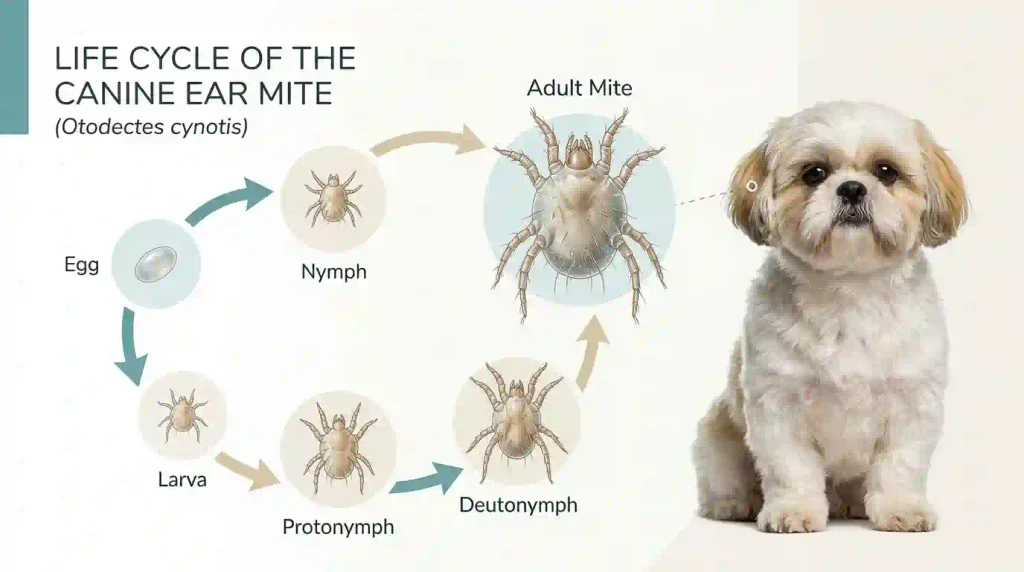
The life cycle of Otodectes cynotis includes several developmental stages.
These are:
- Egg
- Larva
- Protonymph
- Deutonymph
- Adult mite
Adult female mites lay eggs on the host, usually within the ear canal.
After hatching, the larvae develop through the nymph stages before becoming adults capable of reproducing.
The entire life cycle generally takes approximately 18–28 days, depending on conditions.
Most of this development occurs on the animal rather than in the surrounding environment.
Some treatments affect specific developmental stages more effectively than others.
Therefore, the medication selected and its duration must be appropriate for the parasite’s life cycle.
Certain veterinary products have sustained activity that helps control newly developing mites, while other treatment approaches may require repeated administration.
Stopping an incomplete treatment course can allow surviving mites to continue reproducing.
How Shih Tzus Get Ear Mites
Ear mites spread primarily through contact between animals.
A Shih Tzu does not need to have dirty ears or poor grooming habits to become infested.
Even a well-groomed dog can acquire mites after interacting with an infected pet.
Contact With Infected Dogs, Cats, and Other Animals
Direct contact is the most important route of ear mite transmission.
When a Shih Tzu plays, sleeps, or cuddles with an infected animal, mites may move from one host to another.
Cats are particularly important because Otodectes cynotis infestations are common in cats, especially young animals.
A household cat with ear mites may transmit the parasites to a Shih Tzu through close contact.
Infected dogs can also spread mites to other dogs.
Other susceptible animals may include ferrets and certain wild mammals.
Transmission does not require aggressive interaction.
Ordinary activities such as sleeping together, grooming each other, or resting in close physical contact may be sufficient.
An animal may also carry mites without displaying obvious symptoms.
Consequently, a Shih Tzu can become infested even when the source animal appears healthy.
Exposure Through Bedding, Toys, Grooming, or Shared Spaces
Ear mites spend most of their life cycle on an animal.
Although transmission through contaminated objects is possible, environmental exposure is considered much less important than direct animal contact.
Mites may occasionally transfer through recently shared bedding, grooming equipment, or items that have been in close contact with an infected pet.
However, ear mites generally do not establish large, persistent populations in carpets or household furniture in the way some other parasites can.
Owners should avoid assuming that ordinary household dust causes ear mite infestation.
It is also important to distinguish between exposure opportunities and confirmed transmission.
For example, visiting a grooming salon or boarding facility does not automatically mean a Shih Tzu acquired ear mites there.
If an infestation is diagnosed after contact with multiple animals, discuss possible exposure sources with your veterinarian.
In multi-pet homes, identifying and treating affected animals is usually more important than extensive chemical treatment of the environment.
How Age and Animal Contact Affect the Likelihood of Ear Mites
Ear mites can affect Shih Tzus of any age.
However, puppies and young animals may be more likely to encounter infestations through close contact with their mothers, littermates, or other infected pets.
Puppies raised in groups frequently share sleeping areas and have substantial physical contact.
These conditions can make transmission easier when one animal carries mites.
Owners researching breeding and puppy development, including How many puppies can a Shih Tzu have, should understand that parasite prevention and veterinary examinations are important components of responsible litter care.
Adult Shih Tzus can also become infested, particularly when living with infected cats or dogs.
However, ear mites are not the explanation for every itchy ear in an adult dog.
Allergies, yeast infections, and other causes of otitis externa must also be considered.
What Do Ear Mites Look Like?
Ear mites are extremely small, making them difficult to identify without magnification.
Owners may notice the changes caused by the parasites long before they see an actual mite.
Tiny Mites and Eggs
Adult ear mites are usually pale, whitish, or translucent.
Under magnification, their rounded bodies and legs become visible.
A veterinarian may occasionally observe moving mites deep in the ear canal with an otoscope.
However, many owners cannot see them with the naked eye.
Mite eggs are even more difficult to identify without microscopic examination.
They are deposited within the ear environment and develop through the parasite’s life cycle.
A tiny moving speck noticed near a dog’s ear is not enough to confirm the species.
Likewise, the inability to see mites does not rule out an infestation.
Microscopic identification is the preferred method of confirmation when suitable material is available.
Dark, Crumbly Discharge That Resembles Coffee Grounds
One of the classic signs associated with ear mites is dark, crumbly ear debris.
Owners often describe this material as resembling coffee grounds.
It may appear dark brown or nearly black and can accumulate around the ear opening or deeper inside the canal.
The debris consists of a mixture of wax, skin material, inflammatory secretions, and other substances.
Some dogs produce substantial amounts, while others have relatively little visible discharge.
Although coffee-ground-like material raises suspicion for ear mites, it is not specific to parasitic infestation.
Yeast-associated ear disease, bacterial inflammation, and excessive wax production can produce similar appearances.
Dark discharge should be considered a reason for veterinary examination, not proof that a Shih Tzu has ear mites.
How Ear Mites Differ From Normal Earwax
Healthy canine ears may naturally contain small amounts of wax.
Normal wax can vary in color from pale yellow to light or medium brown.
It should not generally be accompanied by severe itching, pain, swelling, or a strong unpleasant odor.
Ear mite infestation may produce increased debris along with frequent head shaking and scratching.
However, distinguishing ordinary wax from abnormal discharge based on color alone is unreliable.
| Ear finding | Normal earwax | Possible ear mite infestation |
| Color | Yellow to light or medium brown | Often dark brown or black |
| Texture | Soft or slightly waxy | May be thick, crumbly, or crusty |
| Amount | Usually limited | Sometimes excessive |
| Itching | Usually absent | Often present |
| Head shaking | Occasional | May be frequent |
| Odor | No strong unpleasant smell | May develop, especially with infection |
| Visible mites | Absent | Sometimes detected with magnification |
A Shih Tzu may have ear mites without producing textbook coffee-ground debris.
Conversely, a dog with very dark wax may have no mites at all.
Veterinary testing is necessary for a reliable diagnosis.

Signs and Symptoms of Ear Mites
Shih Tzu ear mites can cause several recognizable signs, although symptoms vary between dogs.
The intensity of irritation depends on the infestation, the dog’s inflammatory response, and whether secondary infections have developed.
Intense Itching, Scratching, and Pawing
Persistent ear itching is one of the most common signs of an ear mite infestation.
A Shih Tzu may repeatedly scratch the same ear with a hind paw or try to rub its ears against nearby objects.
Some dogs interrupt sleep or normal activities to scratch.
Others become restless, irritable, or reluctant to have their heads touched.
This itching develops because the mites irritate the ear canal lining and trigger inflammation.
The dog’s immune response to the parasites can increase discomfort even when the number of mites is relatively low.
However, severe ear itching is not unique to ear mites.
Allergic inflammation and secondary infections may cause similar behavior.
Head Shaking, Rubbing, and Head Tilt
A Shih Tzu with itchy ears may shake its head repeatedly.
Some dogs rub the affected side of their head against carpeting, furniture, or bedding.
Occasional head shaking after waking or bathing can be normal, but frequent shaking throughout the day is concerning.
Repeated shaking can also cause damage to the ear flap.
A persistent head tilt is a more serious sign and should not be dismissed as ordinary ear mite behavior.
Head tilting may indicate middle or inner ear disease, vestibular dysfunction, or another neurological problem.
If your Shih Tzu develops a sudden head tilt, loss of balance, or abnormal eye movements, seek urgent veterinary attention.
Redness, Inflammation, Odor, and Ear Sensitivity
Ear mites can cause inflammation of the external ear canal.
Affected ears may look red, swollen, unusually moist, or irritated.
The Shih Tzu may pull away or whine when the ear is handled.
A strong unpleasant odor can develop, particularly when bacterial or yeast infection is present.
However, odor alone cannot distinguish mites from other ear disorders.
Some ear mite infestations cause relatively mild inflammation, while others result in substantial discomfort.
A veterinary examination helps determine whether parasites, microorganisms, or another inflammatory condition is responsible.
Hair Loss, Scabs, or Crusted Skin Around the Ears
Repeated scratching can damage hair and skin around the ear flaps.
Owners may notice thinning hair, broken hair shafts, scabs, or crusted patches.
Occasionally, mites or associated irritation affect skin outside the ear canal.
Persistent scratching may create superficial wounds that become infected.
Crusting around the ears can also occur with other conditions, including skin mites, allergic dermatitis, and bacterial infections.
A painful, expanding, bleeding, or persistent lesion should be examined rather than automatically attributed to ear mites.
Ear Mites vs. Ear Infections and Other Ear Problems
Ear mite infestation is only one possible cause of Shih Tzu ear problems.
Yeast, bacteria, allergies, foreign objects, and wax accumulation can create similar symptoms.
The best treatment depends on identifying which problem is actually present.
Comparing Signs of Mites, Yeast, Bacterial Infections, and Wax Buildup
The following comparison highlights general patterns.
| Condition | Common symptoms | Typical findings | How it is evaluated |
| Ear mites | Intense itching, head shaking, ear rubbing | Dark crumbly debris, inflammation | Otoscopy and microscopic examination |
| Yeast overgrowth | Itching, redness, odor | Brownish wax, greasy debris, possible musty smell | Ear cytology |
| Bacterial infection | Pain, inflammation, scratching | Variable discharge, sometimes yellow or purulent | Ear cytology and sometimes culture |
| Excessive wax | Ear debris, occasional discomfort | Wax accumulation without necessarily having infection | Otoscopic examination |
| Allergic ear inflammation | Recurring itching, redness | Inflamed canal, sometimes increased wax | Clinical evaluation and investigation of underlying allergies |
| Foreign object | Sudden head shaking, often one-sided pain | Possible grass seed or other material | Otoscopic examination |
These findings overlap considerably.
For example, both mites and yeast can cause dark ear debris.
Bacteria and yeast may also be present together.
Owners researching a shih tzu ear infection should understand that parasitic infestation and microbial infection are different problems, even though they can occur simultaneously.
Why Symptoms and Discharge Alone Cannot Confirm Mites
An ear mite diagnosis should not be made solely because a Shih Tzu has black earwax or scratches frequently.
Several conditions affect the skin lining the ear canal.
Allergic otitis, for example, may create itching and inflammation before any significant bacterial or yeast infection develops.
Dogs with shih tzu allergies may experience repeated ear problems involving the same symptoms.
The ear may also contain dark wax because of an underlying skin disorder rather than parasites.
An otoscopic examination and microscopic evaluation help distinguish these possibilities.
Using an ear mite medication without confirming the cause can delay appropriate treatment for another condition.
Secondary Infections and Ear Canal Irritation
Ear mite infestation can alter the normal ear canal environment.
Inflammation may increase wax production and damage the skin barrier.
These changes can encourage excessive growth of organisms already present on the skin.
Common secondary problems include bacterial otitis and yeast-associated inflammation involving organisms such as Malassezia.
A Shih Tzu may therefore have both ear mites and an active ear infection.
Treating the mites alone may not completely resolve pain, odor, or discharge if a secondary infection remains.
Similarly, treating only the infection without eliminating the parasites may allow symptoms to continue.
Veterinarians commonly assess both parasitic and microbial contributors when examining an affected ear.
Possible Complications
Most ear mite infestations can be treated successfully when diagnosed early.
However, untreated or severe infestations may contribute to painful complications.
Scratching Injuries and Aural Hematoma
Repeated scratching and head shaking can injure the delicate tissues of the ear flap.
One possible complication is an aural hematoma.
This occurs when blood collects between layers of tissue within the pinna, producing a swollen, sometimes balloon-like appearance.
The ear flap may become warm, thickened, painful, or distorted.
A hematoma does not resolve simply because the original itch is treated.
Veterinary assessment is necessary to determine how the swelling should be managed.
Without appropriate care, some affected ears develop permanent thickening or changes in shape.
Preventing continued scratching while treating the underlying ear problem helps reduce further injury.
Secondary Bacterial or Yeast Infection
Inflamed ear canal skin is more vulnerable to secondary microbial problems.
Bacterial infections may cause additional redness, pain, and discharge.
Yeast overgrowth can contribute to itching, greasy debris, and odor.
In severe cases, the ear canal may become markedly swollen or ulcerated.
Long-lasting inflammation can eventually cause tissue thickening and narrowing.
Certain systemic conditions may also influence susceptibility to infection.
For example, Shih Tzu Cushing’s Disease can affect skin health and immune function, although it is not a typical direct cause of an ear mite infestation.
Veterinarians investigate underlying medical conditions when infections recur or behave unusually.
Hearing or Balance Problems in Severe Cases
Uncomplicated ear mite infestation usually affects the external ear canal.
However, severe inflammation, persistent infection, or damage to deeper structures can lead to more serious complications.
A Shih Tzu may experience reduced hearing when the ear canal becomes obstructed by debris or swelling.
Middle and inner ear involvement can affect balance.
Warning signs include head tilt, circling, stumbling, falling, or abnormal eye movements.
These signs require prompt veterinary investigation.
It is also important to consider other possible explanations for mobility changes.
For example, spinal disease such as IVDD in Shih Tzu dogs may cause weakness or difficulty walking, although its neurological pattern differs from typical vestibular disease.
Never assume that sudden balance problems are caused only by visible ear debris.
What to Do Before the Veterinary Visit
If you suspect your Shih Tzu has ear mites, arrange an appointment with your veterinarian.
The goal before the examination is to prevent additional irritation and collect useful information without interfering with diagnostic testing.
Note Symptoms and Recent Contact With Other Animals
Record when the ear problem began and whether one or both ears are affected.
Observe how frequently your Shih Tzu scratches, shakes its head, or rubs against furniture.
Make a note of visible discharge, odor, pain, and unusual behavior.
Recent animal contact is especially important.
Tell the veterinarian if your Shih Tzu has interacted with cats, puppies, unfamiliar dogs, or animals known to have ear problems.
If you have other pets at home, mention whether they are scratching their ears or shaking their heads.
Information about recent grooming, boarding, travel, and parasite prevention can also be helpful.
You should also report significant unrelated symptoms.
For example, digestive problems such as Shih Tzu diarrhea or concerns described as my shih tzu is constipated may be relevant to a broader medical history or medication review, even though they are not typical symptoms of ear mites.
Avoid Inserting Tools or Unapproved Products Into the Ear
Do not attempt deep ear cleaning before the veterinarian examines a painful or inflamed ear.
Avoid inserting cotton swabs, tweezers, or other objects into the ear canal.
These tools can push debris deeper or injure delicate tissue.
Do not use hydrogen peroxide, rubbing alcohol, vinegar, essential oils, or homemade mixtures.
Concentrated botanical products and human ear medications may cause irritation or toxicity.
Some ear preparations are also unsafe when the eardrum is damaged.
If the dog has severe discharge or pain, leave the deeper ear canal alone until the veterinary team provides instructions.
The veterinarian may prefer to collect an untreated sample of ear material for examination.
Prevent Further Scratching When Possible
Repeated scratching can cause wounds and increase inflammation.
Keep your Shih Tzu calm and avoid unnecessary handling of painful ears.
If the dog is injuring itself, ask the veterinarian whether a properly fitted protective collar is appropriate.
Do not tightly bandage the ears against the head.
Make sure the dog remains comfortable and can breathe normally.
This is especially important in a brachycephalic breed.
Owners dealing with separate shih-tzu breathing problems should tell the veterinary team before any sedation, anesthesia, or physical restraint is planned.
If your Shih Tzu becomes extremely distressed, develops significant swelling, or shows neurological symptoms, seek urgent care rather than waiting for a routine appointment.
How Veterinarians Diagnose Ear Mites
Veterinary diagnosis focuses on identifying the parasites and checking for other ear conditions that may explain the symptoms.
This usually involves an ear examination and microscopic testing.
Ear Examination With an Otoscope
An otoscope is a veterinary instrument that allows the ear canal to be examined using light and magnification.
The veterinarian gently looks inside the ear to assess inflammation, wax, discharge, foreign material, and other abnormalities.
In some cases, ear mites can be seen moving within the canal.
The veterinarian also evaluates the condition of the eardrum when it is visible.
An intact eardrum is important when choosing appropriate ear-cleaning solutions and medications.
If the canal is swollen or filled with debris, a complete examination may not be possible immediately.
The veterinary team may first address pain and inflammation or recommend a more controlled examination.
Microscopic Examination of Ear Debris
Microscopic examination is a common method for confirming ear mites.
A veterinarian collects a sample of ear debris with an appropriate swab or sampling instrument.
The material is placed on a microscope slide and examined for mites or eggs.
An ear mite may be identified by its characteristic body shape and legs.
The veterinarian may also perform ear cytology to look for yeast, bacteria, and inflammatory cells.
These findings help distinguish uncomplicated parasitic infestation from an infestation complicated by secondary infection.
Occasionally, mites are not found in the first sample even when clinical suspicion remains.
In such cases, the veterinarian may repeat the examination, evaluate other animals, or consider additional diagnostic steps.
Ruling Out Other Ear Conditions
An ear mite infestation can resemble several unrelated ear diseases.
Veterinarians may investigate yeast infection, bacterial otitis, foreign objects, allergic inflammation, or abnormal ear canal growths.
In older dogs, persistent one-sided ear symptoms may require investigation for polyps or tumors.
These conditions differ from more general skin growth concerns described in Shih Tzu Skin Cancer, but both illustrate why unexplained lumps or lesions should be evaluated rather than treated empirically.
When infection is persistent or severe, bacterial culture and susceptibility testing may be appropriate.
If the Shih Tzu has recurring problems involving both ears, allergy assessment may also be recommended.
Accurate diagnosis allows the veterinarian to select treatment for the actual cause instead of relying on the appearance of the discharge.

How Ear Mites Are Treated
Shih Tzu ear mite treatment aims to eliminate the parasites, reduce inflammation, treat secondary infections, and prevent reinfestation.
The appropriate medication depends on the dog’s age, weight, health, infestation severity, and other medications or preventives already being used.
Treatment should be prescribed or approved by a veterinarian.
Veterinary Ear Cleaning and Prescribed Medication
An effective treatment plan may include appropriate ear cleaning and antiparasitic medication.
Cleaning helps remove excessive wax, crusts, and inflammatory debris that can interfere with examination and treatment.
However, cleaning alone does not reliably eliminate ear mites.
Veterinarians may prescribe a topical medication applied to the skin, a formulation used in the ear, or another suitable antiparasitic treatment.
Examples of active ingredients used in veterinary parasite-control products include selamectin, moxidectin, and certain isoxazoline-class medications.
The exact product must be appropriate and approved or specifically prescribed for the individual animal and the intended use.
Not every flea, tick, or heartworm preventive treats ear mites.
Some products work against multiple external parasites, while others have a narrower spectrum of activity.
Medication labels, approved species, age restrictions, and potential interactions must be checked carefully.
Do not use a cat medication on a dog, or a dog medication on a cat, unless the veterinarian specifically confirms that the product and formulation are suitable.
Never estimate a dosage based on another pet’s prescription.
The Companion Animal Parasite Council’s guidance on Otodectic Mites explains the parasite’s life cycle, diagnosis, transmission, and veterinary treatment considerations.
Treating Secondary Infections and Inflammation
If a Shih Tzu has an ear mite infestation alongside bacterial or yeast infection, additional treatment may be necessary.
Ear cytology can help identify the organisms contributing to the problem.
A veterinarian may prescribe antifungal, antibacterial, or anti-inflammatory medication when appropriate.
These medicines address complications rather than serving as substitutes for antiparasitic treatment.
For example, an antibiotic ear drop may treat a bacterial infection but will not necessarily eliminate Otodectes cynotis.
Similarly, an ear mite medication may successfully kill parasites while an established yeast infection continues causing discomfort.
Treating every identified contributing problem improves the likelihood of complete recovery.
Pain control may also be required when inflammation is significant.
Why All Household Pets May Need Treatment
Ear mites spread readily through direct contact between susceptible animals.
If one Shih Tzu has a confirmed infestation, other dogs and cats in the household may also be exposed.
Some pets may carry mites without showing obvious itching or discharge.
Treating only the visibly affected dog may allow mites to move between animals again.
Veterinarians commonly recommend treating all in-contact dogs and cats with appropriate species-specific products.
The specific plan depends on the household, the animals involved, and their medical histories.
A medication suitable for an adult Shih Tzu may not be appropriate for a young kitten, pregnant animal, or pet with a particular health condition.
Do not automatically apply one pet’s medication to every animal.
For households with several pets, ask the veterinarian whether treatment should begin on the same day to reduce reinfestation risk.
When Sedation May Be Needed for Examination or Cleaning
Some Shih Tzus have extremely painful or inflamed ears.
Trying to force a deep ear examination or cleaning procedure on an awake, distressed dog can cause injury.
A veterinarian may recommend sedation or anesthesia when a complete examination is necessary and cannot be performed safely while the dog is awake.
This may be particularly useful when thick debris blocks the canal, a foreign object is suspected, or professional flushing is required.
The veterinarian assesses the dog’s overall health before selecting a sedation plan.
Because Shih Tzus are brachycephalic, airway anatomy and respiratory function deserve special consideration.
Owners should inform the veterinary team about snoring, previous anesthesia problems, exercise intolerance, or chronic coughing.
Information such as recurrent shih tzu coughing can be relevant to anesthetic assessment, even though coughing is not a typical symptom of ear mite infestation.
Sedation is not needed for most straightforward ear mite cases.
Its use depends on the animal’s comfort and the clinical procedures required.
Recovery and Follow-Up
Many Shih Tzus begin feeling more comfortable after appropriate treatment starts.
However, disappearance of visible symptoms does not always mean the entire infestation or associated inflammation has resolved.
How Long Treatment May Take
The length of treatment depends on the medication and severity of the infestation.
Some veterinary products are administered once and continue acting over time.
Other regimens require repeated applications according to a specific schedule.
Because the ear mite life cycle lasts roughly three to four weeks, the treatment plan must account for developing stages of the parasite.
Mild itching may begin improving within several days.
However, irritated ear canal skin may take longer to recover.
If secondary yeast or bacterial infection is present, additional treatment may continue after mite control has begun.
Dogs with extensive scratching injuries or chronic ear disease may require a longer recovery period.
Owners should follow their veterinarian’s timeline rather than expecting every Shih Tzu to recover at the same rate.
Completing the Full Treatment Plan
Complete all prescribed medication and scheduled follow-up care.
Do not stop treatment early merely because the dog is scratching less.
Likewise, avoid repeating a medication sooner than directed.
Applying too much antiparasitic medication or combining products unnecessarily can increase the risk of adverse reactions.
If you accidentally miss a scheduled application, contact the veterinary clinic for instructions.
If other pets require treatment, ensure their schedules are coordinated as recommended.
The goal is to eliminate mites across exposed animals, not merely to improve symptoms in the most visibly affected dog.
Rechecking the Ears to Confirm Mites Are Gone
A veterinarian may recommend a follow-up appointment to assess treatment response.
The examination may include another otoscopic inspection or microscopic evaluation of ear debris.
Follow-up becomes especially important when the original infestation was severe, secondary infection was present, or symptoms continue.
Successful treatment generally results in reduced scratching, less head shaking, improved ear appearance, and resolution of abnormal discharge.
However, a Shih Tzu may continue showing symptoms because of another condition even after the mites have been eliminated.
A repeat examination can identify whether inflammation, yeast, bacteria, or another underlying problem remains.
When to Contact the Vet if Symptoms Persist, Worsen, or Return
Contact your veterinarian if your Shih Tzu continues shaking its head, scratching intensely, or producing abnormal discharge after treatment.
Return sooner if the dog develops severe pain, swelling, bleeding, or new neurological symptoms.
Persistent itching may indicate incomplete mite elimination, reinfestation from another pet, or an unrelated ear disorder.
New discharge may suggest secondary infection.
The veterinarian may recommend repeat microscopy, cytology, or investigation for allergies.
Do not repeatedly apply leftover medication without a confirmed diagnosis.
An infection that looks similar to the original episode may require a completely different treatment.
How to Prevent Ear Mites and Reinfestation
Prevention focuses on identifying exposure risks, maintaining appropriate parasite control, and responding quickly when another pet develops symptoms.
Good ear hygiene supports ear health but cannot independently prevent every mite infestation.
Regular Ear Checks and Veterinarian-Approved Cleaning
Inspect your Shih Tzu’s ears regularly for dark debris, redness, swelling, odor, and signs of discomfort.
A weekly visual inspection is a practical habit for many owners.
Gently lift the ear flap and observe the visible surface without inserting objects into the canal.
Healthy ears usually need only limited cleaning.
Excessive cleaning can irritate normal skin and disrupt the ear environment.
If your veterinarian recommends an ear cleaner, follow the instructions regarding product type and frequency.
Avoid unnecessary home cleaning when the ear becomes painful or inflamed.
Maintaining a consistent grooming routine also helps identify changes early.
Owners researching broader shih tzu health and wellness can include weekly ear inspection alongside coat care, dental hygiene, nutrition, and routine veterinary checkups.
Year-Round Parasite Prevention
Appropriate parasite prevention helps protect dogs against several common external and internal parasites.
Some veterinary products provide activity against ear mites in addition to fleas or ticks.
However, product coverage varies.
Heartworm preventives, flea treatments, and tick-control medications do not all work against the same organisms.
Ask your veterinarian which products are appropriate for your Shih Tzu’s age, weight, lifestyle, and exposure risks.
A veterinarian may recommend a year-round prevention plan based on local parasite patterns and household circumstances.
Do not combine multiple parasite treatments without professional guidance.
Using more products does not necessarily provide better protection and may increase the risk of adverse effects.
Checking Other Pets and Following Household Treatment Instructions
In multi-pet households, observe all dogs and cats for ear scratching, head shaking, or abnormal discharge.
Remember that some infected animals may have mild or unnoticed symptoms.
If one pet is diagnosed with ear mites, contact your veterinarian about evaluation and treatment of exposed animals.
Use the correct products for each species.
A household with young kittens, puppies, senior pets, or animals with chronic disease may require different medication choices.
Follow the recommended treatment schedule for every exposed animal.
When introducing a new pet, a general veterinary examination and appropriate parasite assessment can help identify problems before close contact with resident animals.
Temporarily limiting close contact between an untreated infested pet and other animals may also be recommended.
Cleaning Bedding and Shared Items
Although direct animal contact is the major route of ear mite transmission, ordinary cleaning of shared pet items is sensible during treatment.
Wash bedding, blankets, and washable soft toys according to their care instructions.
Clean grooming brushes and equipment used between animals.
Vacuum frequently used resting areas as part of normal household hygiene.
There is generally no need to use aggressive household pesticides solely because ear mites have been diagnosed.
The parasites normally spend most of their life cycle on animals, so veterinary treatment of exposed pets is the central control measure.
Avoid spraying insecticides, essential oils, or strong disinfectants directly onto pet bedding unless the products are specifically appropriate for that use.
Keep pets away from recently cleaned surfaces until they are safe and dry.

Can People Get Ear Mites from a Shih Tzu?
Ear mites primarily infest animals, but people occasionally ask whether the parasites can spread from an infected Shih Tzu to human family members.
Human exposure is possible, although clinically significant infestation is uncommon.
Risk of Temporary Skin Irritation
Otodectes cynotis is adapted to animal hosts.
In rare cases, contact with an infested animal may cause temporary skin irritation or an itchy rash in a person.
However, the parasite does not commonly establish a persistent infestation in humans.
Most ear mite cases in dogs therefore do not lead to significant human health problems.
If a person develops an unexplained rash after close contact with an infected pet, a healthcare professional can assess the symptoms.
Do not apply veterinary antiparasitic medication to human skin.
Likewise, do not use human scabies treatments on your Shih Tzu without veterinary direction.
Different parasites and species require different medical approaches.
Hygiene While Caring for an Affected Pet
Basic hygiene is generally appropriate when handling a pet with ear mites.
Wash your hands after touching the dog’s ears, collecting debris, applying medication, or cleaning bedding.
Use disposable gloves when handling heavily contaminated ear material if desired.
Wash towels and pet bedding regularly.
Avoid sharing ear-cleaning tools between animals unless they have been properly cleaned.
If possible, limit close contact between an untreated infested pet and other animals until the veterinarian’s household treatment plan is underway.
There is usually no reason to panic or isolate an affected Shih Tzu from all human contact.
The priority is prompt veterinary treatment, management of exposed household pets, and routine hygiene.
Frequently Asked Questions
Can I Tell if My Shih Tzu Has Ear Mites by Looking at the Discharge?
No, dark coffee-ground-like discharge suggests possible ear mites, but yeast, bacteria, and other ear conditions can look similar; veterinary examination and microscopy are needed for confirmation.
Can Ear Mites Go Away Without Treatment?
Ear mites generally should not be expected to disappear without appropriate treatment, and untreated infestations can cause ongoing irritation, secondary infection, and transmission to other pets.
Should Every Pet in the Household Be Treated?
Veterinarians generally recommend appropriate treatment for all exposed dogs and cats when ear mites are confirmed, using products selected for each animal’s species, age, and health.
Final Thoughts: Protecting Your Shih Tzu From Ear Mites
Shih Tzu ear mites can cause intense itching, repeated head shaking, dark crumbly discharge, and uncomfortable inflammation. Although these parasites are contagious between animals, most infestations respond well to appropriate veterinary treatment.
The most important step is confirming the cause of the ear problem. Yeast infections, bacterial infections, allergies, and excess wax can produce similar symptoms, so home diagnosis based on discharge alone is unreliable.
Regular ear inspections, proper grooming, veterinarian-recommended parasite prevention, and coordinated treatment of exposed household pets can reduce the risk of recurring infestations.
If your Shih Tzu is scratching its ears, shaking its head, or developing abnormal discharge, schedule a veterinary examination. Early diagnosis and treatment can relieve discomfort, prevent complications, and help maintain healthy ears.
Whether you know the breed as Shih Tzu or encounter the common misspelling Shit Zhu, recognizing ear irritation early is an important part of responsible dog care.