
Shih Tzu Cushing’s Disease: Symptoms, Diagnosis, Treatment, and Care
Shih Tzu Cushing’s disease is a hormonal disorder that causes a dog’s body to experience excessive levels of cortisol, potentially leading to increased thirst, frequent urination, unusual hunger, hair loss, muscle weakness, and a pot-bellied appearance. Also called hyperadrenocorticism, this condition most often develops in middle-aged or senior dogs, and its symptoms can emerge so gradually that owners initially mistake them for normal aging. A Shih Tzu may begin drinking more water, asking to go outside at night, panting while resting, or developing thinning hair along the body. Although these changes can be concerning, Cushing’s disease is often manageable with appropriate veterinary treatment and ongoing monitoring. The challenge is that similar symptoms can also occur with diabetes, kidney disease, urinary tract infections, and certain medications, so accurate diagnosis is essential. In this guide, you’ll learn what causes Cushing’s disease in Shih Tzus, how to recognize the warning signs, which veterinary tests confirm the condition, available medications and surgical treatments, and how to support your dog’s comfort and quality of life at home.
Table of Contents
- What Is Cushing’s Disease in Shih Tzus?
- Causes and Types of Cushing’s Disease
- Signs and Symptoms of Cushing’s Disease in Shih Tzus
- How Veterinarians Diagnose Cushing’s Disease
- Treatment Options for Shih Tzu Cushing’s Disease
- Ongoing Treatment and Home Care
- Prognosis and Life Expectancy
- Preventing Medication-Induced Cushing’s Disease
- Frequently Asked Questions
- Final Thoughts
What Is Cushing’s Disease in Shih Tzus?
Cushing’s disease is an endocrine disorder in which a dog experiences prolonged exposure to excessive cortisol.
Cortisol is a hormone produced by the adrenal glands, which are located near the kidneys.
It helps regulate metabolism, blood sugar, inflammation, and the body’s response to stress.
Normal cortisol production is essential for health. However, excessive cortisol over an extended period can disrupt several body systems.
In Shih Tzus, the resulting changes may include increased drinking, urinary accidents, unusual hunger, weakened muscles, and skin or coat abnormalities.
Cushing’s disease is most commonly diagnosed in middle-aged and older dogs, although age alone cannot establish whether the condition is present.
Hyperadrenocorticism and Excess Cortisol
The medical term hyperadrenocorticism describes a condition involving excessive activity of the adrenal cortex, commonly resulting in excess cortisol production.
Naturally occurring canine Cushing’s disease develops when the body produces too much cortisol.
A related condition, called iatrogenic Cushing’s syndrome, develops when a dog receives excessive or prolonged exposure to corticosteroid medication.
Cortisol affects several important processes:
- Regulation of blood glucose.
- Protein and fat metabolism.
- Inflammatory responses.
- Immune system function.
- Muscle maintenance.
- Water balance and urine production.
- Adaptation to physical and emotional stress.
When cortisol remains excessively elevated, it can contribute to muscle breakdown, increased appetite, changes in body fat distribution, and reduced resistance to certain infections.
These effects help explain why Cushing’s disease produces symptoms in several parts of the body rather than one isolated organ.
How the Pituitary and Adrenal Glands Regulate Cortisol
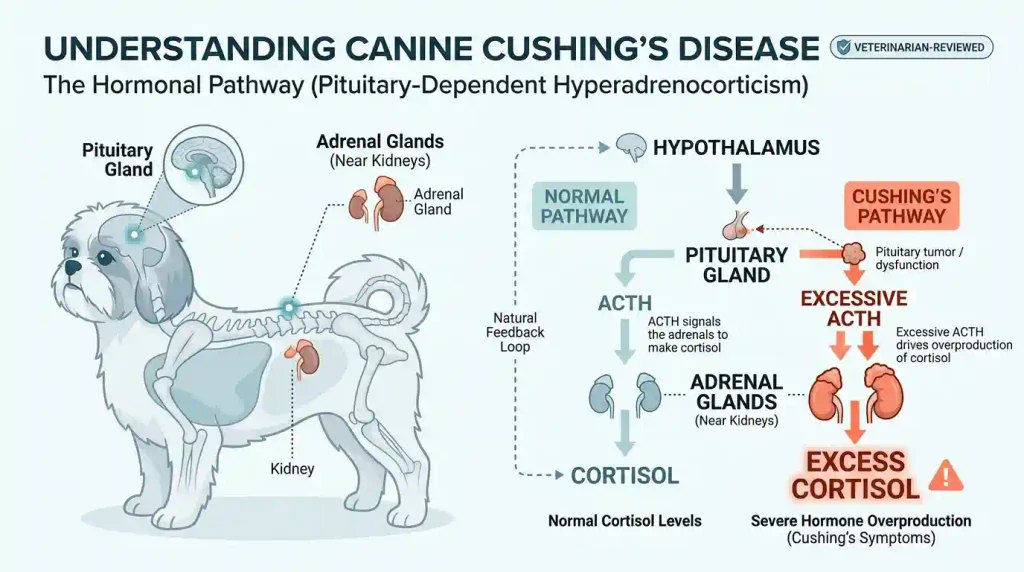
Cortisol production is controlled through a communication system known as the hypothalamic-pituitary-adrenal axis.
The hypothalamus, a region of the brain, releases signals that influence the pituitary gland.
The pituitary gland then releases adrenocorticotropic hormone, commonly called ACTH.
ACTH travels through the bloodstream and stimulates the adrenal glands to produce cortisol.
When enough cortisol is present, normal feedback mechanisms reduce further stimulation.
This helps maintain hormone balance.
In dogs with pituitary-dependent Cushing’s disease, a pituitary tumor may produce ACTH excessively, causing the adrenal glands to manufacture more cortisol than the body needs.
In adrenal-dependent disease, an adrenal tumor produces cortisol independently of normal regulatory signals.
Understanding this process is important because different causes may require different treatment approaches.
Does the Shih Tzu Breed Have a Higher Risk of Cushing’s Disease?
Cushing’s disease can affect Shih Tzus, but it is important not to overstate breed-specific risk.
Research has identified increased Cushing’s disease risk in several breeds, including Bichon Frises, Border Terriers, Miniature Schnauzers, Lhasa Apsos, and Yorkshire Terriers.
However, a large UK primary-care study published in 2022 did not identify Shih Tzus among the breeds with statistically demonstrated increased odds in its main findings.
That does not mean Shih Tzus are protected from the disease.
It means the available evidence does not justify claiming that every Shih Tzu has an unusually high inherited risk.
Small dogs are commonly represented among pituitary-dependent Cushing’s cases, and Shih Tzus may develop the condition as they age.
For owners, recognizing compatible symptoms and obtaining an accurate diagnosis matters more than assuming risk from breed alone.
Causes and Types of Cushing’s Disease
Cushing’s disease in dogs is generally divided into three major categories: pituitary-dependent, adrenal-dependent, and medication-induced.
Identifying the type is important because it helps guide treatment and prognosis.
Pituitary-Dependent Cushing’s Disease
Pituitary-dependent Cushing’s disease is the most common naturally occurring form.
It accounts for approximately 80–85% of naturally occurring cases in dogs.
This condition usually develops because of a tumor in the pituitary gland.
Many pituitary tumors responsible for Cushing’s disease are benign adenomas, but they can still cause significant hormonal problems.
The tumor produces excessive ACTH, which stimulates both adrenal glands to release too much cortisol.
Most affected dogs develop gradually progressing symptoms.
However, some dogs have larger pituitary tumors, sometimes called macroadenomas.
If a pituitary mass becomes large enough to affect surrounding brain structures, neurological symptoms may develop.
These can include behavioral changes, altered awareness, seizures, or difficulty walking.
Such signs require prompt veterinary assessment.
Most dogs with pituitary-dependent Cushing’s disease are managed medically, although specialist surgery or radiation may be appropriate in selected cases.
Adrenal-Dependent Cushing’s Disease
Adrenal-dependent Cushing’s disease accounts for approximately 15–20% of naturally occurring cases.
It results from a cortisol-producing tumor in one or occasionally both adrenal glands.
Adrenal tumors can be benign adenomas or malignant carcinomas.
Unlike pituitary-dependent disease, the tumor produces cortisol without requiring excessive stimulation from ACTH.
The resulting high cortisol concentration often suppresses the body’s normal ACTH production.
The opposite adrenal gland may become smaller because it receives less stimulation.
Abdominal ultrasound or other imaging can help identify an adrenal mass.
Surgery may provide a potentially curative option when the tumor can be removed completely and the dog is a suitable surgical candidate.
However, adrenal surgery is complex and requires careful assessment.
Iatrogenic Cushing’s Disease From Steroid Medication
Iatrogenic Cushing’s syndrome develops from exposure to corticosteroid medication rather than a naturally overactive adrenal gland.
Medications such as prednisone, prednisolone, and dexamethasone may produce Cushing-like symptoms when used at sufficient doses for prolonged periods.
Corticosteroids can be prescribed for allergies, immune-mediated diseases, inflammatory conditions, and other medical problems.
Depending on the medication, dose, and duration, oral, injectable, ear, eye, and topical steroid products may contribute to systemic exposure.
Possible signs include increased drinking, excessive appetite, panting, and muscle weakness.
Long-term steroid exposure can also suppress the body’s normal cortisol production.
Never stop a prescribed corticosteroid suddenly without veterinary instructions.
Abrupt withdrawal after prolonged treatment can cause dangerous cortisol deficiency.
Your veterinarian will determine whether a gradual dose reduction or alternative treatment is appropriate.
| Type | Main Cause | Typical Treatment Approach |
| Pituitary-dependent | Excess ACTH from a pituitary tumor | Usually medication; selected cases may receive specialist surgery or radiation |
| Adrenal-dependent | Cortisol-producing adrenal tumor | Surgery when appropriate, or medical management |
| Iatrogenic | Excess exposure to corticosteroid medication | Veterinary-guided medication adjustment or tapering |
Signs and Symptoms of Cushing’s Disease in Shih Tzus
The symptoms of Cushing’s disease can affect drinking habits, urination, appetite, skin, coat, muscles, and behavior.
Not every Shih Tzu develops every symptom.
Some dogs initially show only one or two changes.
Why Signs Can Develop Gradually and Resemble Aging
Cushing’s disease often develops slowly.
Owners may notice that their dog is sleeping more, walking less enthusiastically, or drinking slightly more water than before.
These changes may seem consistent with aging.
However, aging alone should not automatically explain persistent changes in thirst, urination, appetite, or body condition.
For example, a senior Shih Tzu that suddenly needs to urinate at night may have an endocrine disorder, urinary infection, kidney disease, or another medical problem.
The pattern and combination of symptoms help veterinarians decide whether Cushing’s testing is appropriate.
Increased Thirst, Urination, and Appetite
Three classic signs of Cushing’s disease are:
Polydipsia: Excessive thirst or increased water consumption.
Polyuria: Increased urine production.
Polyphagia: Excessive hunger or increased appetite.
An affected Shih Tzu may empty its water bowl more frequently than usual.
You may also notice larger urine volumes, increased bathroom trips, nighttime urination, or accidents indoors.
Some dogs beg for food constantly, search for scraps, or become unusually interested in meals.
These signs are important, but they are not specific to Cushing’s disease.
Diabetes mellitus, kidney disease, and certain medications can produce similar changes.
Do not restrict your dog’s drinking water while investigating excessive thirst.
Providing constant access to fresh water is essential unless a veterinarian gives a specific, medically supervised instruction.
Excessive Panting, Low Energy, and Muscle Loss
Excessive panting is another common feature of canine Cushing’s disease.
An affected dog may pant while resting or in a cool room.
However, panting can also occur because of pain, overheating, heart disease, respiratory problems, and other conditions.
Shih Tzus are brachycephalic dogs, meaning they have relatively short muzzles.
This makes it particularly important not to assume that increased panting is caused by Cushing’s disease without evaluating possible breathing problems.
Muscle weakness and muscle loss can also occur.
A Shih Tzu may become reluctant to climb stairs, jump onto furniture, or walk its usual distance.
The legs may appear thinner as muscle mass decreases.
These changes may develop gradually and become more noticeable over time.
If your dog experiences severe breathing difficulty, collapse, or marked weakness, seek urgent veterinary care.
Pot-Bellied Appearance and Changes in Body Shape
A pot-bellied appearance is a recognizable physical change associated with Cushing’s disease.
The abdomen may become rounder or more prominent.
This can result from several factors, including weakened abdominal muscles, redistribution of body fat, and enlargement of the liver.
Meanwhile, the limbs and other muscles may become thinner.
This combination can make the abdomen appear disproportionately large.
A pot belly does not automatically mean a dog is overweight.
However, abdominal enlargement can also occur with other conditions, including fluid accumulation, organ enlargement, pregnancy, and gastrointestinal disease.
A veterinarian should assess new or progressive abdominal changes.
Hair Loss, Thin Skin, and Recurring Skin Infections
Cushing’s disease can significantly affect the skin and coat.
Possible changes include:
- Hair thinning or symmetrical hair loss.
- Slower coat regrowth after clipping.
- Thin or fragile skin.
- Recurrent bacterial skin infections.
- Increased skin pigmentation.
- Poor wound healing.
- Blackheads or other follicular changes.
- Occasionally, mineral deposits in the skin called calcinosis cutis.
Hair loss may be particularly noticeable along the trunk, flanks, or abdomen.
The head and lower legs may retain more hair than the body.
Shih Tzus have long, dense coats, so early thinning can be difficult to recognize.
Owners may first notice reduced coat volume during brushing or grooming.
Cushing’s-associated skin changes can resemble other problems.
For example, a dog with excessive licking around the rear end may have Shih Tzu anal glands problems rather than an endocrine-related skin condition.
Similarly, an unusual skin growth should not automatically be attributed to Cushing’s disease. Persistent lumps or changing lesions may require a separate evaluation for conditions discussed in our Shih Tzu Skin Cancer guide.
Secondary Conditions and Complications
Prolonged excessive cortisol can increase the risk of additional medical problems.
Potential complications include:
- Urinary tract infections.
- High blood pressure.
- Protein loss through the kidneys.
- Diabetes mellitus.
- Certain gallbladder disorders.
- Increased susceptibility to some infections.
- Blood clot formation, including potentially serious thromboembolism.
- Muscle weakness and reduced mobility.
Pancreatitis and other illnesses may also occur in dogs with Cushing’s disease, although one condition should not automatically be assumed to cause the other.
The veterinarian may recommend blood pressure measurement, urine culture, or additional testing when appropriate.
Some urinary tract infections produce few obvious symptoms in dogs with Cushing’s disease.
This makes urinalysis and follow-up monitoring particularly useful.
How Cushing’s Symptoms Can Overlap With Kidney Disease, Diabetes, and Medication Effects
The symptoms of Cushing’s disease overlap with several other medical conditions.
| Symptom | Cushing’s Disease | Other Possible Causes |
| Increased thirst | Common | Diabetes, kidney disease, medications |
| Frequent urination | Common | Urinary infection, diabetes, kidney disease |
| Increased appetite | Common | Steroid medication, other metabolic or behavioral causes |
| Panting | Common | Heat, pain, respiratory disease, heart disease |
| Hair loss | Possible | Allergies, hypothyroidism, skin infections |
| Pot-bellied appearance | Possible | Obesity, organ enlargement, abdominal fluid |
| Weakness | Possible | Arthritis, neurological or metabolic disease |
| Urinary accidents | Possible | Urinary infection, incontinence, increased urine production |
Because these signs are not unique to Cushing’s disease, veterinary testing is essential.
A single elevated liver enzyme or a change in drinking habits cannot confirm the diagnosis.

How Veterinarians Diagnose Cushing’s Disease
Diagnosing Cushing’s disease requires more than one symptom or a single routine blood test.
Veterinarians consider the dog’s history, physical examination, laboratory findings, and results from specialized hormone tests.
Testing is most useful when several findings suggest the condition.
Medical History, Physical Examination, and Routine Lab Work
Your veterinarian will ask about changes in drinking, urination, appetite, activity, panting, and skin condition.
They may also ask whether your Shih Tzu has received corticosteroid medication.
This includes oral medication, injections, and certain eye, ear, or skin preparations.
During the physical examination, the veterinarian may assess:
- Body weight and muscle condition.
- Abdominal shape.
- Skin thickness and coat changes.
- Heart and respiratory function.
- Blood pressure.
- Evidence of other diseases.
Because stress and unrelated illnesses can affect cortisol testing, the veterinarian will usually consider other possible causes before ordering specialized endocrine tests.
Blood Tests and Urinalysis
Initial testing commonly includes a complete blood count, blood chemistry panel, and urinalysis.
A chemistry panel may reveal increased alkaline phosphatase, commonly called ALP.
Alanine aminotransferase, or ALT, may also be elevated.
Some dogs have increased cholesterol or mild blood glucose abnormalities.
Urinalysis may show dilute urine, protein loss, or signs of infection.
However, these findings are not specific to Cushing’s disease.
Elevated ALP can occur for several reasons, including medication effects and liver disorders.
Similarly, dilute urine can occur with kidney disease and other conditions.
Routine tests help establish whether specialized cortisol testing is appropriate.
Low-Dose Dexamethasone Suppression Test
The low-dose dexamethasone suppression test, abbreviated LDDST, is commonly recommended as a first-line diagnostic test for naturally occurring canine Cushing’s disease.
The veterinarian collects an initial blood sample to measure cortisol.
A small dose of dexamethasone is then administered.
Additional blood samples are typically collected approximately four and eight hours later.
In a healthy dog, dexamethasone normally suppresses cortisol production through the body’s feedback system.
Dogs with Cushing’s disease may not suppress cortisol normally.
The resulting pattern can support the diagnosis and sometimes provide information about whether the disease is pituitary-dependent.
However, stress and other illnesses can produce misleading results.
The veterinarian must interpret the test alongside symptoms and other findings.
ACTH Stimulation Test
The ACTH stimulation test evaluates how the adrenal glands respond to a synthetic ACTH hormone.
The veterinarian measures baseline cortisol, administers synthetic ACTH, and collects another blood sample afterward.
An excessive cortisol response may support a diagnosis of naturally occurring Cushing’s disease.
However, the test is less sensitive than the LDDST in some circumstances, especially for adrenal-dependent disease.
A normal ACTH stimulation result does not rule out every case of naturally occurring Cushing’s disease.
The test is particularly useful in evaluating suspected medication-induced disease and is also used in selected treatment-monitoring protocols.
It helps identify inadequate cortisol production when over-suppression from treatment is suspected.
Urine Cortisol-to-Creatinine Ratio
The urine cortisol-to-creatinine ratio, often abbreviated UCCR, compares urinary cortisol with creatinine.
This test can be useful when a veterinarian wants to help rule out Cushing’s disease.
A low or normal result makes the condition less likely.
However, an elevated result does not confirm Cushing’s disease.
Stress, other illnesses, and several nonadrenal conditions can increase the ratio.
Veterinarians may recommend collecting a free-catch urine sample at home to reduce stress-related effects.
If the result is elevated, additional testing is usually necessary.
High-Dose Dexamethasone Suppression Test
The high-dose dexamethasone suppression test, or HDDST, may be used in selected cases after Cushing’s disease has been diagnosed.
Its main purpose is to help distinguish pituitary-dependent disease from adrenal-dependent disease.
The test uses a higher dexamethasone dose than the low-dose test.
Some pituitary-dependent cases demonstrate cortisol suppression, while adrenal-dependent tumors generally do not respond in the same way.
However, not all pituitary-dependent cases suppress cortisol even at the higher dose.
Therefore, lack of suppression does not prove that the disease comes from an adrenal tumor.
Other tests, including endogenous ACTH measurement and abdominal imaging, may be more useful depending on the case.
Ultrasound and Other Imaging
Abdominal ultrasound can help assess the adrenal glands.
For pituitary-dependent Cushing’s disease, both adrenal glands may be enlarged because they are repeatedly stimulated by ACTH.
With an adrenal tumor, one gland may contain a mass while the other becomes smaller.
Ultrasound can also provide information about other abdominal organs.
X-rays may be used to investigate additional concerns or assess the dog’s general condition.
CT scans can provide more detailed anatomical information, particularly before adrenal surgery.
MRI or CT imaging of the brain may be recommended when a pituitary tumor is suspected to be large or neurological signs develop.
Not every Shih Tzu with Cushing’s disease needs every imaging procedure.
Identifying the Underlying Type of Cushing’s Disease
After confirming naturally occurring Cushing’s disease, the veterinarian may recommend tests to identify whether the condition is pituitary-dependent or adrenal-dependent.
Possible methods include:
- Reviewing LDDST patterns.
- Abdominal ultrasound.
- Measuring endogenous ACTH.
- Selected additional hormone tests.
- CT or MRI when appropriate.
Identifying the underlying cause can help determine whether surgery is a realistic treatment option.
However, some dogs are treated medically without every possible differentiating test, particularly when surgery is not being considered.
For more detailed veterinary recommendations, the American Animal Hospital Association’s 2023 Selected Endocrinopathies Guidelines explain diagnostic testing and medical management of canine Cushing’s syndrome.
Diagnostic Testing Costs and Considerations
The cost of diagnosing Cushing’s disease varies with the clinic, region, test availability, and complexity of the case.
In the United States, a comprehensive initial workup involving routine blood tests, urinalysis, endocrine testing, and sometimes imaging may cost several hundred dollars to more than $1,000.
Published consumer estimates commonly place more extensive diagnostic workups around 500–1,500, but these figures are only broad planning estimates and are not guaranteed local prices.
A veterinarian may recommend testing in stages rather than ordering every procedure immediately.
| Diagnostic Service | Why It May Be Needed |
| Physical examination | Assess symptoms and medical history |
| Complete blood count | Evaluate blood cells and general health |
| Blood chemistry panel | Check liver enzymes, glucose, and other markers |
| Urinalysis | Assess urine concentration and infection concerns |
| LDDST | Investigate naturally occurring Cushing’s disease |
| ACTH stimulation test | Evaluate selected suspected cases or treatment safety |
| Abdominal ultrasound | Assess adrenal glands and other organs |
| CT or MRI | Investigate tumors or plan specialized treatment |
Ask your veterinarian for an itemized estimate.
Also discuss future costs because many dogs require ongoing medication and repeated monitoring after diagnosis.
Treatment Options for Shih Tzu Cushing’s Disease
Treatment depends on whether the condition originates from the pituitary gland, an adrenal tumor, or medication exposure.
The goal is to reduce harmful cortisol effects while maintaining enough normal hormone activity for the body to function.
Treatment Goals and Choosing an Approach
Treatment is intended to improve symptoms, reduce complications, and support quality of life.
A successful treatment plan may help normalize excessive drinking, improve appetite regulation, reduce panting, and gradually restore energy.
Some physical changes, including coat regrowth and muscle recovery, take longer.
The veterinarian considers the dog’s age, overall health, tumor type, potential complications, and owner preferences.
Not every dog requires the same treatment.
Some dogs may be managed with medication, while selected adrenal tumors may be treated surgically.
Medication With Trilostane or Mitotane
Trilostane is a commonly used medication for treating naturally occurring canine Cushing’s disease.
It works by inhibiting enzymes involved in cortisol synthesis.
Trilostane is available under the veterinary brand name Vetoryl and other formulations, depending on the market.
It is used for both pituitary-dependent and adrenal-dependent hyperadrenocorticism.
Treatment requires regular veterinary monitoring because excessive cortisol suppression can be dangerous.
Mitotane is another medication used in selected cases.
It acts on the adrenal cortex and reduces cortisol production through a different mechanism.
Mitotane requires careful dosing and monitoring because excessive adrenal suppression can cause serious complications.
Older medications such as selegiline and ketoconazole have been used in specific circumstances, but they are not the preferred routine treatments for most dogs with naturally occurring Cushing’s disease.
Neither trilostane nor mitotane should be started, stopped, or adjusted without veterinary guidance.
Surgery for Adrenal Tumors
Surgical removal of an affected adrenal gland is called an adrenalectomy.
It may provide a potentially curative treatment for certain adrenal-dependent cases.
However, adrenal surgery is technically demanding.
Tumors may be located close to major blood vessels and other important structures.
The veterinarian must also assess whether the tumor has invaded nearby tissues or spread.
CT imaging and specialist surgical evaluation may be recommended.
Surgery is not suitable for every dog.
Older age alone does not automatically rule out surgery, but overall health and anesthetic risk are important considerations.
When surgery is not appropriate, medical treatment may be used to manage cortisol production.
Pituitary Surgery and Radiation Therapy
In selected cases of pituitary-dependent Cushing’s disease, specialist treatment may target the pituitary tumor itself.
Pituitary surgery, called hypophysectomy, is performed in specialized veterinary centers.
It is not widely available and requires extensive expertise and postoperative hormone management.
Radiation therapy may be considered for certain pituitary tumors, particularly when a large mass is causing neurological problems.
These options are generally evaluated by veterinary specialists.
Most dogs with pituitary-dependent disease are treated medically.
Managing Iatrogenic Cushing’s With Veterinary Guidance
Medication-induced Cushing’s syndrome is managed differently from naturally occurring disease.
The underlying problem is excessive corticosteroid exposure.
The veterinarian may reduce the steroid dose gradually or recommend an alternative treatment for the original condition.
A slow taper may be necessary because prolonged corticosteroid use can suppress normal adrenal hormone production.
Stopping treatment abruptly can result in dangerous cortisol deficiency.
Tell your veterinarian about every corticosteroid product your Shih Tzu receives, including eye drops, ear treatments, skin medications, injections, and oral tablets.
Ongoing Treatment and Home Care
Successful long-term management depends on cooperation between the veterinarian and owner.
Medication alone is not enough.
Observing changes in symptoms, attending recheck appointments, and recognizing possible side effects are essential.
What to Expect After Treatment Begins
Some symptoms improve earlier than others.
Excessive drinking, increased urination, and unusual appetite may begin improving during the first weeks of effective treatment.
Panting and general activity may also improve as cortisol becomes better controlled.
However, muscle recovery and coat regrowth can take several months.
Not every dog responds at the same rate.
Some require medication adjustments after follow-up testing.
The goal is gradual, safe improvement rather than eliminating cortisol completely.
Follow-Up Appointments and Medication Monitoring
Dogs receiving trilostane require regular veterinary reassessment.
Common monitoring plans include an early recheck around 10–14 days after starting medication or adjusting the dose.
Another assessment is often performed around one month.
Once the dog is stable, monitoring may continue approximately every three to six months, depending on the veterinary protocol and clinical circumstances.
The veterinarian may use:
- Owner reports of symptoms.
- Physical examinations.
- Blood chemistry and electrolyte testing.
- Pre-medication cortisol measurement.
- ACTH stimulation testing when appropriate.
The exact monitoring approach varies between clinics and individual cases.
Cortisol results are interpreted together with how the dog is actually feeling.
A dog that appears unwell needs assessment even if a previous laboratory test was satisfactory.
Medication Side Effects That Need Prompt Veterinary Attention
Trilostane and mitotane can suppress cortisol too much.
This can result in hypoadrenocorticism, sometimes called Addison’s disease, or an Addisonian-type crisis.
Possible warning signs include:
- Vomiting.
- Diarrhea.
- Reduced appetite.
- Marked lethargy.
- Weakness.
- Shaking or unusual instability.
- Collapse.
Electrolyte imbalances may develop in severe cases.
If your Shih Tzu develops vomiting, diarrhea, poor appetite, marked lethargy, or weakness while taking trilostane, withhold the medication and contact your veterinarian immediately for instructions.
Collapse or severe weakness requires emergency veterinary care.
The medication may need to be paused, and urgent blood tests may be necessary.
Do not attempt to correct a suspected cortisol problem by changing the dose yourself.
A Home Symptom and Water-Intake Log for Vet Visits
A simple daily log can help your veterinarian evaluate treatment response.
Record water intake, urination habits, appetite, energy, and medication-related concerns.
Try to keep measurements consistent.
If multiple pets share a water bowl, mention that measurements may be unreliable.
| Date | Water Intake | Urination | Appetite | Energy and Panting | Other Notes |
| Day 1 | Measured daily total | Frequent trips | Increased hunger | Panting at rest | Before treatment |
| Day 7 | Measured daily total | Slightly fewer trips | Still hungry | More active | Report at recheck |
| Day 14 | Measured daily total | Closer to usual | Improving | Less panting | Veterinary follow-up |
For water intake, use a measuring container to track how much fresh water you provide and how much remains over 24 hours.
Account for spills, added water, and water consumed outside the bowl.
You may also record water consumption in milliliters per kilogram of body weight if your veterinarian recommends it.
Do not limit your dog’s water intake to make the numbers appear normal.
The log is intended to reveal natural changes, not change your dog’s drinking behavior.
Monitoring Thirst, Urination, Appetite, Energy, Panting, Skin, and Coat
Owners play a particularly important role in monitoring Cushing’s disease.
Useful observations include whether your Shih Tzu:
- Drinks more or less than usual.
- Needs more bathroom breaks.
- Has urinary accidents.
- Begs for food excessively.
- Pants while resting.
- Walks and plays comfortably.
- Develops new areas of hair thinning.
- Experiences recurrent skin infections.
- Shows improved muscle strength.
Take photographs of the coat or abdominal shape periodically if your veterinarian finds them useful.
Persistent skin infections, changes in weight, or unexpected symptoms should be reported.
For broader preventive care, the shih tzu health and wellness section provides information about other common breed-care concerns.
Diet and Supplements: What They Can and Cannot Do for Cushing’s Disease
There is no proven diet or supplement that cures naturally occurring canine Cushing’s disease.
Nutritional management should support the dog’s overall health and any accompanying medical conditions.
A veterinarian may recommend dietary adjustments if the dog is overweight, has diabetes, develops pancreatitis, or has another condition requiring specific nutrition.
A balanced diet with appropriate calories and adequate protein may help support muscle maintenance.
However, changes should be individualized.
Avoid giving herbal cortisol-lowering products or supplements marketed as natural Cushing’s cures without veterinary approval.
Such products may lack reliable evidence and could interfere with treatment.
Fresh water should remain available.
Gentle exercise, consistent feeding routines, and regular grooming can support comfort and wellbeing.
For readers seeking additional Shit Zhu care resources, the correct breed name is Shih Tzu, and ongoing health decisions should be guided by your veterinarian.

Prognosis and Life Expectancy
Cushing’s disease often requires long-term management, but many dogs maintain a good quality of life with appropriate treatment.
The outlook depends on the cause, severity, concurrent illnesses, and response to therapy.
How the Cause and Severity Affect Prognosis
Dogs with pituitary-dependent Cushing’s disease can often be managed medically for extended periods.
Some studies report median survival times of approximately two to three years after diagnosis or treatment, although results vary widely between populations.
A median is a statistical midpoint, not a prediction of how long an individual dog will live.
Some dogs live considerably longer, especially when the disease is well controlled and serious complications are absent.
Adrenal-dependent disease has a different prognosis.
A localized adrenal tumor that can be removed successfully may have a favorable outcome.
However, malignant tumors, surgical complications, or metastasis can worsen the outlook.
Large pituitary tumors causing neurological problems may also require specialized treatment.
For an individual Shih Tzu, the veterinarian is best positioned to discuss life expectancy after reviewing diagnostic results and overall health.
Quality of Life With Ongoing Treatment and Monitoring
Quality of life is an important treatment goal.
A dog whose excessive thirst, urination, hunger, and panting become better controlled may enjoy improved comfort and daily activity.
Some dogs regain muscle strength and experience gradual coat regrowth.
Continue monitoring for recurring symptoms and medication side effects.
Regular follow-up appointments help identify when treatment adjustments may be needed.
For older Shih Tzus, the veterinary team may also assess dental disease, arthritis, respiratory concerns, and other conditions that affect general wellbeing.
The presence of Cushing’s disease does not automatically mean your dog cannot enjoy a comfortable life.
Appropriate treatment and realistic monitoring can make a meaningful difference.
Preventing Medication-Induced Cushing’s Disease
Naturally occurring Cushing’s disease usually cannot be prevented through ordinary home care.
However, careful corticosteroid use can reduce the risk of medication-induced Cushing’s syndrome.
Using Steroid Medications Only as Prescribed
Corticosteroid medications are valuable treatments for many canine conditions.
However, prolonged or excessive exposure can produce adverse effects.
Use prednisone, prednisolone, dexamethasone, and other corticosteroids only according to veterinary instructions.
Follow the prescribed dose and schedule.
Avoid giving leftover steroid medication from previous illnesses.
Tell your veterinarian about all steroid-containing products your Shih Tzu receives, including skin creams and ear or eye medications.
Regular follow-up is especially important when long-term corticosteroid treatment is necessary.
Why Steroid Doses Should Not Be Changed or Stopped Without Veterinary Guidance
Long-term corticosteroid use can suppress the body’s normal production of cortisol.
If the medication is stopped suddenly, the adrenal glands may not immediately produce enough hormone to meet the body’s needs.
This can cause serious illness.
The veterinarian may recommend gradual steroid tapering to allow normal hormone function to recover.
The schedule depends on the medication, dose, duration of use, and the disease being treated.
Never alter a steroid dose independently.
If your Shih Tzu develops excessive thirst, increased appetite, panting, or other suspected steroid side effects, contact the prescribing veterinarian for advice.
Frequently Asked Questions
Is Cushing’s Disease Common in Shih Tzus?
Shih Tzus can develop Cushing’s disease, particularly as they age, but strong evidence of a uniquely elevated breed-specific risk is limited.
What Are the First Signs of Cushing’s Disease in a Shih Tzu?
Early signs often include increased thirst, frequent urination, unusual hunger, excessive panting, and gradual changes in energy or coat condition.
Can Cushing’s Disease in Shih Tzus Be Cured?
Some adrenal-dependent cases may be cured through successful tumor removal, while most pituitary-dependent cases require long-term management.
How Long Can a Shih Tzu Live With Cushing’s Disease?
Survival varies widely, but many dogs live for years with appropriate treatment, monitoring, and management of other health problems.
Is Trilostane Safe for Shih Tzus?
Trilostane is an established veterinary treatment, but it requires careful dosing and monitoring because excessive cortisol suppression can cause serious side effects.
Can Diet Alone Treat Cushing’s Disease?
No, diet can support general health and concurrent conditions, but it does not replace veterinary treatment for naturally occurring Cushing’s disease.
Final Thoughts
Shih Tzu Cushing’s disease is a complex hormonal condition, but recognizing the early signs and obtaining an accurate diagnosis can make a meaningful difference to your dog’s health. Increased drinking, frequent urination, unusual hunger, excessive panting, hair loss, and a pot-bellied appearance should never be dismissed as normal aging without veterinary evaluation.
Although the condition often requires lifelong medication and monitoring, many affected dogs can maintain a comfortable quality of life with appropriate care. Treatment depends on whether the disease originates in the pituitary gland, adrenal glands, or corticosteroid exposure.
If your Shih Tzu is showing several of these symptoms, schedule a veterinary appointment and bring a record of changes in drinking, appetite, urination, and energy.
Early assessment, consistent treatment, and regular follow-up are the best ways to support your Shih Tzu’s long-term wellbeing.