
Shih Tzu Eye Problems: Warning Signs and Veterinary Care
Shih Tzu eye problems are among the most important health concerns for this affectionate, flat-faced breed. Their large, expressive eyes may be beautiful, but their prominent position, shallow eye sockets, and unique facial anatomy make them vulnerable to irritation, injuries, infections, and vision-threatening diseases. Common conditions include corneal ulcers, dry eye, cherry eye, cataracts, glaucoma, and eyelid abnormalities. Some cause mild discomfort, while others can lead to permanent blindness without timely veterinary treatment.
If your Shih Tzu has red or bloodshot eyes, excessive tearing, unusual discharge, cloudiness, frequent blinking, or difficulty seeing, understanding these warning signs can help you respond appropriately. This guide explains the most common Shih Tzu eye diseases, what they look like, how veterinarians diagnose them, and which treatments may protect your dog’s vision.
You’ll also learn about breed-specific eye risks, safe home-care routines, surgical options, prevention strategies, and ways to support a visually impaired Shih Tzu. Sudden squinting, severe eye pain, a cloudy cornea, or an eyeball displaced from its socket requires urgent veterinary attention.
Table of Contents
- Shih Tzu Eye Problems: Overview
- Signs and Symptoms of Shih Tzu Eye Problems
- Common Shih Tzu Eye Problems and Diseases
- When Are Shih Tzu Eye Problems an Emergency?
- How Veterinarians Diagnose Shih Tzu Eye Problems
- Shih Tzu Eye Problems Treatment Options
- How to Care for Your Shih Tzu’s Eyes at Home
- Living With a Shih Tzu That Has Eye Problems
- Frequently Asked Questions About Shih Tzu Eye Problems
- Final Thoughts: Protecting Your Shih Tzu’s Eye Health
1. Shih Tzu Eye Problems: Overview
Shih Tzus have distinctive facial characteristics that influence their eye health. Unlike breeds with deeper-set eyes, Shih Tzus have relatively shallow eye sockets and prominent eyeballs, which can expose their corneas to irritation and injury.
Understanding these anatomical differences helps explain why some eye conditions occur more frequently in this breed.
1.1 How Common Are Eye Problems in Shih Tzus?
Eye problems are particularly important in Shih Tzus because of their brachycephalic facial structure.
Veterinary studies have identified high frequencies of ocular abnormalities in examined groups of Shih Tzus, including eyelid defects, abnormal tear-film function, and corneal disease.
However, not every Shih Tzu develops a serious eye condition. Individual risk depends on inherited anatomy, environmental exposure, underlying medical conditions, and preventive care.
Owners should pay attention to persistent tearing, redness, visible eye changes, and unusual behavior rather than assuming these signs are normal characteristics of the breed.
1.2 What Veterinary Research Reveals About Shih Tzu Eye Health
A 2024 study published in Veterinary Ophthalmology, titled The Shih Tzu Eye: Ophthalmic Findings of 1000 Eyes, examined the medical records of 500 Shih Tzus.
Researchers identified at least one ophthalmic abnormality in 964 of the 1,000 examined eyes.
Frequently identified problems included:
- Caruncular trichiasis, involving hair near the inner eye corner.
- Medial canthal entropion, in which part of the eyelid turns inward.
- Reduced tear-film breakup time, indicating poor tear-film stability.
- Keratoconjunctivitis sicca, commonly known as dry eye.
- Pigmentary keratitis and incomplete eyelid closure.
Important: The study examined a veterinary clinical population. Its results should not be interpreted to mean that 96.4% of all Shih Tzus have eye disease.
Nevertheless, the findings highlight the importance of breed-specific ophthalmic care.
1.3 Why Are Shih Tzus Prone to Eye Problems?
The Shih Tzu’s distinctive appearance contributes to several ocular health risks.
1.3.1 Brachycephalic Facial Structure and Shallow Eye Sockets
Shih Tzus belong to the brachycephalic group of dogs, characterized by shortened muzzles and relatively compact skulls.
Their eye sockets may provide less protection for the eyeballs, while facial skin folds and nearby hairs can contact the ocular surface.
Brachycephalic anatomy is also associated with shih-tzu breathing problems, although airway disorders and eye conditions require separate veterinary assessments.
1.3.2 Prominent Eyes and Increased Risk of Injury
A Shih Tzu’s exposed cornea may be more vulnerable to scratches from grass, branches, rough play, and household objects.
Their eyes may also be more susceptible to injury when the face experiences blunt trauma.
Because dogs sometimes hide discomfort, an injury may not be obvious until squinting, tearing, or redness develops.
1.4 Understanding Brachycephalic Ocular Syndrome (BOS)
Brachycephalic ocular syndrome describes a collection of eye problems associated with short-faced dog breeds.
It may involve:
- Prominent eyeballs and increased corneal exposure.
- Incomplete blinking.
- Eyelid abnormalities.
- Facial hair rubbing against the eye.
- Reduced corneal sensitivity.
- Tear-film instability.
- Chronic corneal irritation and pigmentation.
These abnormalities may develop together and increase the likelihood of recurrent corneal injury.
1.4.1 Incomplete Blinking and Exposed Cornea (Lagophthalmos)
Lagophthalmos occurs when the eyelids cannot fully cover the eyeball during blinking or resting.
Incomplete closure may leave part of the cornea exposed, increasing tear evaporation and reducing natural protection.
Over time, persistent exposure may contribute to inflammation, corneal scarring, pigmentation, or ulceration.
Veterinarians may recommend lubricating medication or corrective surgery in selected cases.
1.5 At What Age Do Shih Tzus Develop Eye Problems?
Shih Tzu eye problems can appear at almost any age.
Puppies and young dogs may develop congenital eyelid abnormalities or cherry eye, while adults can experience dry eye, corneal injuries, and eyelash disorders.
Older Shih Tzus may develop cataracts, age-related lens changes, and chronic ocular disease.
Age alone cannot identify the underlying problem, and sudden changes should never be dismissed as normal aging.
2. Signs and Symptoms of Shih Tzu Eye Problems
Eye diseases can produce overlapping symptoms, making it difficult to identify the exact condition without veterinary examination.
Recognizing early warning signs can help protect your Shih Tzu’s comfort and eyesight.
2.1 Red or Bloodshot Eyes
Redness may develop when the conjunctiva or other eye tissues become inflamed.
Possible causes include irritation, allergies, conjunctivitis, dry eye, corneal injury, or glaucoma.
A red eye that is painful, cloudy, or suddenly worsening requires urgent evaluation.
2.1.1 Eye Redness Caused by Allergies
Environmental allergens such as pollen, dust, and household irritants may contribute to eye redness and watering.
Dogs experiencing allergic reactions may also scratch their skin, lick their paws, or develop recurring ear discomfort.
Learn more about shih tzu allergies when ocular symptoms accompany broader allergic problems.
2.1.2 Eye Inflammation and Irritation
Eye inflammation may produce redness, swelling, watery discharge, and increased blinking.
Inflammation can involve the conjunctiva, cornea, or internal structures such as the uvea.
Because some inflammatory disorders threaten vision, persistent redness should be investigated rather than treated with random eye drops.
2.2 Excessive Tearing and Eye Discharge
Watery eyes, thick mucus, and crusty discharge can indicate abnormal tear production, poor tear drainage, infection, or irritation.
Discharge may appear clear, white, yellow, or green depending on the condition.
For a detailed explanation of discharge types and cleaning methods, see our Shih Tzu Eye Discharge guide.
2.3 Squinting, Blinking, and Eye Rubbing
Frequent squinting, excessive blinking, or keeping an eye partially closed often indicates pain.
A dog may also paw at its face or rub against furniture.
Sometimes owners mistake ear discomfort for eye irritation. Conditions such as a shih tzu ear infection or shih tzu ear mites can also cause head scratching and facial rubbing.
If the eye itself appears painful or abnormal, arrange urgent veterinary assessment.
2.4 Cloudy or Discolored Eyes
Cloudy eyes may result from cataracts, nuclear sclerosis, corneal edema, inflammation, or glaucoma.
The location of the cloudiness matters. Lens changes occur behind the pupil, whereas corneal disease affects the transparent front surface.
Sudden cloudiness, especially with redness or pain, requires urgent examination.
2.5 Swollen Eyelids and Changes in Eye Appearance
Swelling, an unusual lump, or a red mass near the inner eye corner may indicate inflammation, cherry eye, injury, or an eyelid growth.
Persistent or enlarging skin masses should be examined. Our article on Shih Tzu Skin Cancer explains broader warning signs associated with suspicious skin growths.
A visibly protruding or displaced eyeball is an emergency.
2.6 Signs Your Shih Tzu Is Losing Vision or Going Blind
A visually impaired Shih Tzu may:
- Bump into furniture or doorframes.
- Hesitate near stairs.
- Struggle to locate toys or treats.
- Become less confident in unfamiliar environments.
- Appear startled when approached unexpectedly.
- Have difficulty navigating in dim lighting.
Sudden vision loss requires emergency veterinary attention, while gradual deterioration still deserves prompt assessment.
3. Common Shih Tzu Eye Problems and Diseases
Several eye diseases affect Shih Tzus, ranging from manageable chronic conditions to emergencies requiring immediate intervention.
The following sections explain their symptoms, risks, and typical veterinary treatments.
3.1 Proptosis: When a Shih Tzu’s Eye Pops Out
Proptosis occurs when the eyeball becomes displaced forward from its normal position inside the eye socket.
Because Shih Tzus have shallow eye sockets and prominent eyeballs, they are more susceptible to this injury than many longer-muzzled breeds.
Owners sometimes search for “Shih Tzu eyes popping out” or “Shih Tzu eye popped out” when describing this frightening condition.
Common causes: Blunt trauma, vehicle accidents, falls, animal attacks, or significant pressure to the head.
Warning signs: A protruding eyeball, stretched eyelids, swelling, bleeding, and obvious distress.
Treatment: Emergency veterinary care is necessary. Depending on the damage, surgery may reposition and protect the eye, or removal may be necessary when the injury is irreparable.
Proptosis can permanently damage the optic nerve and threaten vision even with prompt treatment.
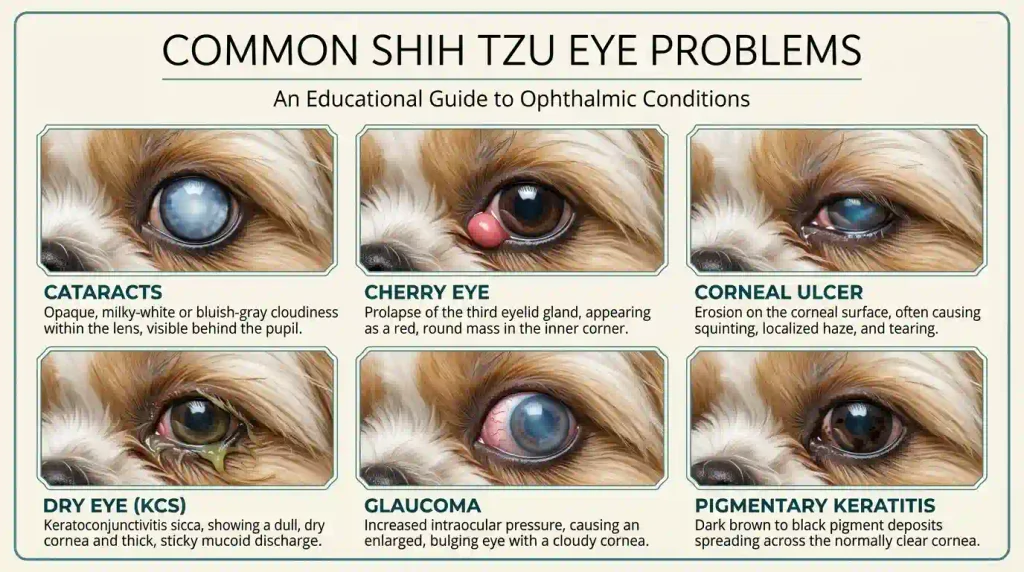
3.2 Cataracts in Shih Tzus
Cataracts develop when the normally transparent lens becomes opaque.
They interfere with light reaching the retina and may cause progressively blurred vision or blindness.
Shih Tzu cataracts may develop because of inherited factors, aging, diabetes mellitus, inflammation, or injury.
Symptoms can include cloudy pupils, poor navigation, difficulty seeing in dim light, and reduced confidence.
An ophthalmic examination is needed to determine whether surgery is appropriate.
3.2.1 Cataracts vs. Nuclear Sclerosis: Understanding Cloudy Eyes
Owners often mistake nuclear sclerosis for cataracts because both can create a cloudy appearance.
| Feature | Cataracts | Nuclear Sclerosis |
| Affected structure | Lens | Lens |
| Typical appearance | White or gray opacity | Bluish-gray haze |
| Vision changes | Can cause significant impairment | Usually little significant vision loss |
| Common association | Age, diabetes, genetics, inflammation | Age-related lens changes |
| Treatment | Monitoring or cataract surgery | Usually no treatment required |
If you’re wondering, “Why is my Shih Tzu’s eye cloudy?” do not assume it is simply an aging change. Only examination can reliably distinguish these conditions.
3.3 Cherry Eye (Prolapsed Third Eyelid Gland)
Cherry eye occurs when the gland of the third eyelid protrudes from its normal position.
The affected tissue often appears as a pink or red, rounded swelling near the inner corner of the eye.
Although cherry eye can occur in several breeds, Shih Tzus are among the breeds that may develop it.
Common symptoms: A visible red lump, tearing, irritation, swelling, or discharge.
Treatment: Surgery to reposition and preserve the gland is commonly recommended.
Removing the gland is generally avoided because it contributes to tear production, and removal can increase the risk of dry eye.
3.4 Corneal Abrasions and Ulcers
A corneal abrasion is a superficial injury to the cornea, while a corneal ulcer involves loss of corneal surface tissue.
Shih Tzus are especially vulnerable because of prominent eyes, incomplete blinking, and facial hair irritation.
Signs of a Shih Tzu corneal ulcer may include severe squinting, excessive tearing, redness, and a cloudy or bluish cornea.
Some ulcers become infected or progressively deeper.
A deep ulcer may develop a descemetocele, where only a very thin inner layer remains intact.
Corneal perforation or rupture is an emergency. It can threaten the entire eye and cause permanent vision loss.
Veterinary treatment depends on ulcer depth, infection, and progression.
3.5 Dry Eye (Keratoconjunctivitis Sicca)
Dry eye, medically called keratoconjunctivitis sicca (KCS), occurs when the eye lacks sufficient healthy tears to maintain a protected ocular surface.
One common cause is immune-mediated inflammation affecting the tear-producing glands.
Typical symptoms include thick mucus discharge, redness, irritation, dull-looking eyes, and repeated corneal problems.
Chronic dry eye can cause corneal scarring, pigmentation, ulceration, and reduced vision.
Treatment often involves prescribed tear stimulants and lubricating medications.
3.5.1 Poor Tear Film Quality vs. Insufficient Tear Production
A healthy tear film includes components that help lubricate the surface, reduce evaporation, and protect the cornea.
Two important problems are:
Quantitative tear deficiency: The eyes produce too little aqueous tear fluid.
Qualitative tear deficiency: Tear-film stability or composition is abnormal, causing the protective layer to break up too quickly.
Shih Tzus can experience tear-film instability even when tear production measurements appear adequate.
The distinction influences diagnosis and treatment.
3.6 Eye Infections and Conjunctivitis (Pink Eye)
Conjunctivitis is inflammation of the conjunctiva, the thin membrane covering the inner eyelids and parts of the eyeball.
Possible causes include bacterial infection, viral illness, allergies, irritation, and underlying dry eye.
Symptoms include red eyes, swelling, watery or thick discharge, and discomfort.
Not every case of conjunctivitis is caused by bacteria. Antibiotics are appropriate only when indicated by veterinary evaluation.
3.7 Eyelash and Eyelid Disorders
Abnormal eyelids and misdirected hairs can continuously irritate the ocular surface.
Over time, persistent friction may contribute to corneal ulcers and scarring.
3.7.1 Entropion: Inward-Rolling Eyelids
Entropion occurs when an eyelid turns inward, allowing the eyelid skin or surrounding hair to rub against the cornea.
Affected dogs may develop tearing, squinting, redness, and recurrent ulcers.
Corrective eyelid surgery may be necessary.
3.7.2 Trichiasis: Hair Rubbing Against the Eye
Trichiasis describes normally located hairs that contact the eye in an irritating direction.
Long facial hair and hairs near the inner eye corner can contribute to this problem in Shih Tzus.
Treatment depends on whether the hair is causing irritation, corneal damage, or persistent discomfort.
3.7.3 Distichiasis: Abnormally Positioned Eyelashes
Distichiasis involves extra eyelashes emerging from abnormal locations along the eyelid margin.
Some cause no symptoms, while others rub against the cornea and produce tearing or pain.
Problematic lashes may be treated with specialized procedures such as cryotherapy or electrolysis.
3.7.4 Ectopic Cilia: Eyelashes Growing Through the Inner Eyelid
Ectopic cilia grow through the inner surface of the eyelid and can directly contact the cornea.
They may cause intense pain and persistent corneal ulcers.
Removal generally requires a veterinary ophthalmic procedure.
3.7.5 Medial Canthal Entropion and Caruncular Trichiasis
Medial canthal entropion affects the eyelid near the inner corner of the eye.
Caruncular trichiasis involves hairs arising from tissue near that corner and contacting the ocular surface.
Both are especially relevant to brachycephalic ocular syndrome.
Surgical techniques such as medial canthoplasty may improve eyelid positioning, reduce exposure, and decrease ongoing corneal irritation.
3.8 Glaucoma and Increased Eye Pressure
Glaucoma involves damage associated with impaired aqueous humor drainage and elevated intraocular pressure.
It can cause severe pain and rapid, permanent vision loss.
Warning signs include eye redness, corneal cloudiness, an enlarged-looking eye, dilated pupils, and sudden visual impairment.
Shih Tzu glaucoma requires urgent treatment to reduce pressure and protect remaining vision.
Veterinarians may use pressure-lowering medications or recommend surgery.
3.9 Progressive Retinal Atrophy (PRA)
Progressive retinal atrophy refers to inherited retinal disorders that cause gradual degeneration of light-sensitive cells.
Some affected dogs initially struggle to see in darkness.
Over time, vision may progressively deteriorate.
There is currently no established treatment that reliably reverses retinal degeneration from PRA.
Genetic screening may be relevant for certain inherited forms, while environmental adjustments help affected dogs remain comfortable.
3.10 Retinal Detachment
Retinal detachment occurs when the retina separates from its supporting tissues.
Possible causes include inflammation, high blood pressure, trauma, or underlying eye disease.
Affected dogs may experience sudden vision loss, abnormal pupil responses, or disorientation.
Retinal detachment requires urgent veterinary ophthalmic evaluation.
3.11 Pigmentary Keratitis
Pigmentary keratitis develops when dark pigment accumulates within the cornea, commonly after chronic irritation or inflammation.
The affected eye may appear to have brown or black discoloration across part of its surface.
Predisposing factors include dry eye, incomplete blinking, abnormal eyelids, and facial hair contact.
Treatment focuses on addressing the underlying irritation and preserving remaining vision.
4. When Are Shih Tzu Eye Problems an Emergency?
Eye injuries and certain diseases can progress rapidly. Knowing when to seek emergency veterinary care is essential for protecting your dog’s vision.
4.1 Emergency Eye Warning Signs
Seek emergency veterinary assistance when your Shih Tzu experiences:
- Sudden blindness or major vision changes.
- Severe squinting or inability to open an eye.
- A displaced or protruding eyeball.
- Sudden corneal cloudiness with pain.
- Significant eye trauma or bleeding.
- A deep or visibly damaged corneal surface.
- Severe swelling with obvious discomfort.
- Suspected chemical injury.
Do not wait for symptoms to resolve when an eye appears seriously injured.
4.2 Shih Tzu Eye Problems Comparison Chart: Symptoms, Severity, and Urgency
| Eye Condition | Common Warning Signs | Vision Risk | Veterinary Urgency |
| Cherry eye | Pink or red lump near inner corner | Usually manageable; can contribute to tear-film problems | Prompt appointment |
| Dry eye | Thick mucus, redness, irritation | Can cause ulcers and scarring | Prompt appointment |
| Cataracts | Cloudy lens, declining vision | Potentially significant | Veterinary evaluation |
| Corneal ulcer | Squinting, tearing, cloudy or painful cornea | Can progress to blindness | Urgent, usually same day |
| Glaucoma | Pain, redness, cloudy or enlarged eye | High risk of irreversible blindness | Emergency |
| Proptosis | Eyeball displaced from socket | High risk of permanent damage | Immediate emergency |
| PRA | Gradual night blindness and visual decline | Progressive vision loss | Veterinary ophthalmic assessment |
| Retinal detachment | Sudden visual impairment | High | Emergency |
| Pigmentary keratitis | Dark pigment on cornea | Depends on extent and progression | Prompt evaluation |
| Conjunctivitis | Redness, tearing, discharge | Depends on underlying cause | Prompt assessment |
These are general guidelines. Severe pain, sudden deterioration, or acute vision loss increases urgency regardless of the suspected diagnosis.
4.3 When to Contact a Veterinarian
Contact your veterinarian whenever symptoms persist, recur, or affect your Shih Tzu’s comfort.
A new red eye or increased discharge should generally be assessed promptly, especially when squinting or cloudiness is present.
Early evaluation may prevent a manageable problem from developing into a serious complication.
4.4 What to Do If Your Shih Tzu Has an Eye Injury
Keep your dog calm and prevent rubbing or scratching.
Avoid pressing on the affected eye or applying unprescribed medication.
If a chemical enters the eye, promptly begin gentle flushing with clean water or sterile saline while contacting emergency veterinary services.
If an object is embedded, do not attempt to remove it.
4.5 Immediate Care for a Displaced or Injured Eyeball
If your Shih Tzu’s eye has popped out, never attempt to push it back into the socket.
Keep the exposed eyeball gently moist with sterile saline or a clean saline-moistened dressing without applying pressure.
Prevent further trauma and travel immediately to an emergency animal hospital.
The sooner treatment begins, the better the chance of preserving the eye, although visual recovery cannot be guaranteed.
5. How Veterinarians Diagnose Shih Tzu Eye Problems
Accurate diagnosis determines whether a Shih Tzu needs medication, surgical intervention, long-term management, or emergency treatment.
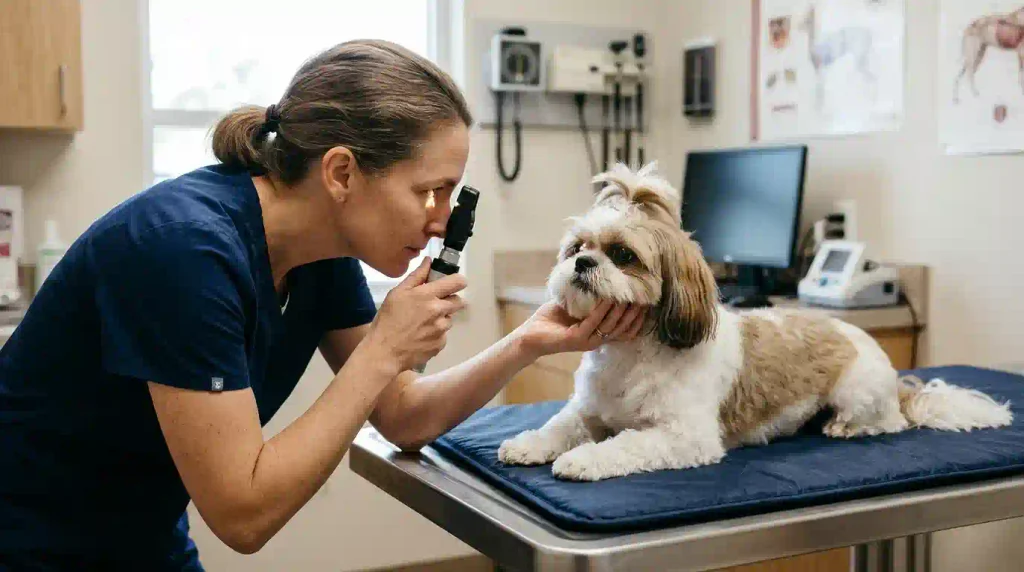
5.1 Veterinary Eye Examination
A veterinary ocular examination may include checking the eyelids, cornea, conjunctiva, pupils, lens, and visible internal eye structures.
The veterinarian also evaluates discomfort, vision responses, and tear production.
Additional testing depends on the suspected disease.
5.2 Identifying the Underlying Eye Condition
Similar symptoms can occur with different disorders.
For example, redness may result from allergies, conjunctivitis, corneal ulcers, or glaucoma.
Veterinarians combine examination findings, symptom history, and diagnostic testing to identify the cause.
They may also investigate systemic conditions such as diabetes or Shih Tzu Cushing’s Disease when broader signs suggest an endocrine disorder.
5.3 Common Diagnostic Tests for Shih Tzu Eye Diseases
5.3.1 Schirmer Tear Test: Measuring Tear Production
The Schirmer tear test uses a small paper strip placed near the lower eyelid to measure tear production.
It is particularly useful when dry eye is suspected.
5.3.2 Fluorescein Staining: Detecting Corneal Ulcers
Fluorescein dye highlights damaged areas of the corneal surface.
This test helps identify abrasions, ulcers, and certain structural defects.
A veterinarian may use specialized illumination to examine the stained cornea.
5.3.3 Tonometry: Measuring Intraocular Pressure
Tonometry measures pressure inside the eyeball.
It helps diagnose glaucoma and may assist in evaluating certain inflammatory eye conditions.
5.3.4 Tear Film Breakup Time: Evaluating Tear Stability
Tear-film breakup time measures how quickly the protective tear film becomes unstable after blinking.
A reduced result can suggest poor tear-film quality.
This is particularly relevant in Shih Tzus because ocular-surface research has identified tear-film instability as an important breed-related issue.
5.4 When to Consult a Veterinary Ophthalmologist
A veterinary ophthalmologist has advanced training in eye diseases and ophthalmic surgery.
Referral may be recommended for:
- Recurrent corneal ulcers.
- Persistent or complicated dry eye.
- Cataract surgery evaluation.
- Glaucoma or retinal disease.
- Eyelid abnormalities requiring surgery.
- Progressive corneal pigmentation.
- Unexplained vision loss.
5.5 Can Online Veterinary Consultations Help With Eye Problems?
Veterinary telehealth may help owners describe symptoms, discuss previously diagnosed conditions, and decide how urgently an examination is needed.
However, photographs and video consultations cannot reliably diagnose many eye diseases.
Conditions requiring fluorescein staining, tonometry, or detailed corneal examination need in-person care.
Online advice should never delay emergency treatment.
6. Shih Tzu Eye Problems Treatment Options
Shih Tzu eye problems treatment varies according to the affected structure, disease severity, and risk of permanent vision loss.
No single medication treats every type of eye disease.
6.1 Treatment Based on the Specific Eye Condition
Treatment generally aims to relieve pain, protect the cornea, control inflammation, address the underlying disease, and preserve vision.
Some problems respond to medication, while structural abnormalities may require surgery.
Follow-up examinations help confirm healing and identify complications.
6.2 Veterinary Eye Drops, Ointments, and Medications
Veterinarians may prescribe:
- Artificial tears and lubricating eye drops.
- Antibiotic eye drops or ointments.
- Tear-production stimulants.
- Medication to reduce intraocular pressure.
- Appropriate pain relief.
- Disease-specific anti-inflammatory treatment.
Medication choice depends on examination findings.
Avoid using leftover prescriptions or human eye medications without veterinary approval.
6.3 Dry Eye Treatment and Long-Term Management
Dogs with dry eye may require daily lubrication and prescribed medications such as cyclosporine or tacrolimus.
These drugs can help improve tear production in suitable patients.
Many cases require long-term or lifelong treatment because stopping medication may allow symptoms to return.
6.4 Treatment for Eye Infections and Conjunctivitis
Bacterial infections may require appropriate antimicrobial eye medication.
However, conjunctivitis can also occur because of allergies, dry eye, or mechanical irritation.
Treatment should target the underlying cause instead of automatically using antibiotics.
6.5 Cherry Eye Treatment and Surgery
Cherry eye treatment commonly involves surgical repositioning of the prolapsed third eyelid gland.
The goal is to preserve the gland’s normal tear-producing function.
A successful procedure often improves the appearance of the eye and reduces ongoing irritation, although recurrence is possible.
6.5.1 How Much Does Cherry Eye Surgery Cost?
In the United States, cherry eye surgery may cost several hundred dollars or more, with some procedures exceeding $1,000 depending on the clinic and complexity.
Costs vary according to geographic location, anesthesia, whether one or both eyes require surgery, specialist involvement, and follow-up care.
Ask the veterinary clinic for a written estimate covering examination, surgery, medications, and postoperative visits.
6.6 Corneal Ulcer Treatment and Healing
A superficial Shih Tzu eye ulcer may be treated with prescribed topical medication, pain management, and protection from self-trauma.
An Elizabethan collar may prevent the dog from rubbing the affected eye.
Deep or rapidly progressive ulcers may need more intensive treatment, including surgical grafting.
Veterinary ophthalmologists may use specialized corneal procedures when medically appropriate.
Never use steroid eye drops on a suspected corneal ulcer unless a veterinarian has specifically evaluated and directed treatment.
6.7 Treatment Options for Cloudy Eyes and Cataracts
Treatment depends on whether cloudiness originates in the cornea or lens.
Nuclear sclerosis usually does not require surgery.
Vision-impairing cataracts may be treated with phacoemulsification, a procedure that removes the opaque lens material.
A veterinary ophthalmologist evaluates the retina and other eye structures before recommending surgery.
Cataract surgery can cost several thousand dollars in the United States, with the final expense depending on the hospital, diagnostic testing, and postoperative care.
6.8 Managing Glaucoma and Other Vision-Threatening Conditions
Glaucoma treatment may include medications to reduce intraocular pressure or surgical procedures.
Prompt pressure reduction is important because optic nerve and retinal damage may become irreversible.
When vision cannot be preserved and the eye remains severely painful, eye removal, called enucleation, may be considered to relieve suffering.
6.9 When Eye Surgery Is Necessary
Ophthalmic surgery may be recommended when medication cannot adequately correct the underlying problem.
Examples include:
- Third eyelid gland replacement for cherry eye.
- Entropion correction.
- Removal of problematic ectopic eyelashes.
- Medial canthoplasty for selected brachycephalic eye disorders.
- Corneal grafting for severe ulcers.
- Cataract removal.
- Procedures for glaucoma.
- Enucleation when an eye is irreversibly damaged and painful.
The veterinarian should explain expected benefits, complications, and long-term care requirements before surgery.
6.10 Home Remedies for Shih Tzu Eye Problems
Home care can support hygiene and comfort, but it cannot reliably diagnose or cure serious eye disease.
6.10.1 Herbal Remedies and Dietary Changes: Evidence and Safety
Some owners consider herbal preparations, omega-3 fatty acids, or dietary antioxidants for eye health.
Although nutrition supports general health, there is insufficient evidence that these approaches cure cataracts, glaucoma, corneal ulcers, or inherited retinal disease.
Avoid applying herbal mixtures or homemade solutions directly to the eye.
6.10.2 Why Home Remedies Cannot Replace Veterinary Treatment
Warm compresses or gentle external cleaning may remove ordinary debris, but they do not treat corneal perforation, high eye pressure, or retinal disease.
Delaying veterinary care can increase the risk of permanent vision loss.
6.10.3 Why Steroid Eye Drops and Unprescribed Medications Can Be Dangerous
Steroid-containing eye drops may worsen corneal ulcers and interfere with healing.
Some unprescribed medications can also conceal symptoms without treating the underlying problem.
Never administer human eye drops, antibiotic ointments, or anti-inflammatory eye medication unless approved by your veterinarian.
7. How to Care for Your Shih Tzu’s Eyes at Home
Good preventive eye care includes regular observation, gentle hygiene, careful grooming, and appropriate veterinary monitoring.
7.1 Basic Shih Tzu Eye-Care Routine
Examine your Shih Tzu’s eyes daily in good lighting.
Look for redness, changes in pupil appearance, excessive watering, unusual discharge, or cloudiness.
Pay attention to behavior, especially squinting, facial rubbing, and hesitation when moving.
Preventive monitoring should be part of your dog’s overall shih tzu health and wellness routine.
7.2 How to Clean Your Shih Tzu’s Eyes Safely
For small amounts of ordinary external eye debris:
- Wash your hands.
- Moisten a clean, soft cotton pad with sterile saline intended for eye use.
- Gently wipe the surrounding fur without touching the corneal surface.
- Use a separate pad for each eye.
- Carefully dry the facial fur afterward.
Do not forcibly remove hardened crusts, touch the eyeball with sharp grooming tools, or attempt cleaning when the eye appears severely painful.
7.3 Keeping Facial Hair and Eyelashes Away From the Eyes
Long facial hair should be kept clean and away from the cornea.
Some owners use a loose top knot to prevent hair from falling into the eyes.
Professional grooming may be safer than trimming near the eye with household scissors.
7.4 Protecting Your Shih Tzu’s Eyes From Injury
Avoid allowing your Shih Tzu to push its face into thorny bushes, tall grass, or sharp vegetation.
Discourage rough play that creates a risk of facial trauma.
Keep the home environment free of hazards near your dog’s normal walking routes.
Veterinary-approved protective eyewear may be appropriate for certain activities or individual medical needs.
7.5 Preventing Eye Infections and Irritation
Keep bedding, grooming equipment, and the facial area clean.
Avoid spraying perfume, strong household cleaners, or shampoo near the eyes.
If your dog has chronic dry eye or another diagnosed disorder, follow the prescribed treatment schedule.
7.6 Regular Veterinary Eye Checkups
Routine veterinary examinations can identify developing eye problems before they become severe.
Senior dogs and those with chronic ophthalmic conditions may need more frequent assessments.
During appointments, mention changes elsewhere in your dog’s health, including persistent shih tzu coughing, digestive problems such as Shih Tzu diarrhea, or concerns expressed as “my shih tzu is constipated.”
These symptoms do not necessarily cause eye disease, but a complete medical history helps veterinarians understand your dog’s overall condition.
Similarly, Shih Tzu anal glands problems usually involve discomfort around the rear end rather than the eyes and should be evaluated as a separate health concern.
7.7 Genetic Eye Screening and OFA/ACVO Eye Certification for Breeding Dogs
Responsible breeding programs can help reduce the risk of passing on certain inherited eye diseases.
In the United States, the Orthopedic Foundation for Animals (OFA) maintains the Companion Animal Eye Registry, which uses examinations performed by veterinary ophthalmologists certified through the American College of Veterinary Ophthalmologists (ACVO).
These screening examinations help identify inherited or potentially hereditary eye abnormalities.
Eye certification does not guarantee that a dog will never develop eye disease. It also does not replace a complete diagnostic examination when symptoms appear.
Owners considering breeding should discuss screening results, inherited disease risks, and reproductive health with a veterinarian.
For related breeding information, see How many puppies can a Shih Tzu have.

8. Living With a Shih Tzu That Has Eye Problems
Many Shih Tzus continue to enjoy comfortable, fulfilling lives despite chronic eye disease or reduced vision.
Consistent treatment and a predictable home environment can make a significant difference.
8.1 Managing Chronic Eye Conditions
Some conditions, including dry eye and progressive corneal pigmentation, require ongoing monitoring.
Owners may need to administer eye medication daily, attend follow-up examinations, and watch for new symptoms.
Treatment consistency is especially important when medication controls a chronic condition rather than permanently curing it.
8.2 Why Shih Tzu Eye Problems Keep Coming Back After Treatment
Recurring symptoms may indicate an unresolved underlying problem.
For example, treating a corneal ulcer may allow the surface to heal temporarily, but the ulcer can return if abnormal eyelashes continue rubbing against the cornea.
Persistent tear-film instability or incomplete blinking can produce similar recurring problems.
Veterinary reassessment is necessary when eye disease repeatedly returns.
8.3 Recovery and Prognosis for Common Eye Diseases
Recovery depends on disease severity and how quickly appropriate treatment begins.
Mild conjunctivitis and superficial ulcers often have favorable outcomes when managed correctly.
More serious conditions, including advanced glaucoma, retinal degeneration, and severe corneal injury, may permanently impair vision.
Early diagnosis generally offers the best opportunity to preserve ocular comfort and function.
8.4 Can Shih Tzu Dry Eye Be Cured?
Many cases of immune-mediated dry eye cannot be permanently cured.
However, prescribed tear-stimulating and lubricating medications can often control symptoms and improve comfort.
Lifelong management may be required.
8.5 At What Age Do Shih Tzus Commonly Go Blind?
There is no specific age at which Shih Tzus naturally become blind.
Vision loss depends on the underlying condition.
Some dogs experience early inherited retinal disease, while others develop cataracts or chronic eye disorders later in life.
A blind Shih Tzu can still enjoy a good quality of life with appropriate care.
Vision loss alone does not mean that a dog is approaching death. Our separate guide on Shih Tzu Signs of Death explains broader end-of-life health changes.
8.6 Helping a Shih Tzu With Vision Loss
Dogs rely heavily on smell, hearing, memory, and familiar routines.
To help a blind Shih Tzu:
- Keep furniture and important household objects in consistent positions.
- Avoid leaving obstacles in walking areas.
- Use rugs and textured surfaces as navigation landmarks.
- Block access to stairs and other hazards.
- Speak before touching your dog.
- Maintain regular feeding and walking routines.
- Use verbal cues and scent-based enrichment.
If your Shih Tzu is also struggling to walk, remember that conditions such as IVDD in Shih Tzu dogs can affect mobility independently of vision.
A veterinarian can help distinguish visual impairment from pain or neurological disease.
8.7 Pet Insurance for Shih Tzu Eye Conditions
Pet insurance may help cover unexpected veterinary expenses associated with eye injuries, specialist consultations, medication, or surgery.
However, policies vary in coverage limits, waiting periods, deductibles, and exclusions for pre-existing conditions.
Some plans also treat hereditary or breed-related disorders differently.
Review the policy carefully before purchasing coverage, especially if your Shih Tzu has already received an eye-related diagnosis.
9. Frequently Asked Questions About Shih Tzu Eye Problems
Do Shih Tzus Have Eye Problems More Often Than Other Dogs?
Shih Tzus are predisposed to several eye conditions because of their prominent eyes, short muzzles, and eyelid anatomy.
Can Shih Tzu Eyes Pop Out Naturally?
Proptosis generally occurs after trauma or significant pressure; it is not a normal or harmless event and requires emergency treatment.
What Does Cherry Eye Look Like in a Shih Tzu?
Cherry eye usually appears as a pink or red rounded swelling near the inner corner of the eye.
Can a Shih Tzu Eye Ulcer Rupture?
Yes, severe corneal ulcers can perforate or rupture, creating an emergency that may threaten the eye and vision.
Why Does My Shih Tzu Have Cloudy Eyes?
Cloudiness may result from cataracts, nuclear sclerosis, corneal disease, or glaucoma and requires veterinary examination.
Can Shih Tzu Cataracts Be Treated Without Surgery?
Medication may manage related complications, but cataract surgery is the established method for removing a vision-impairing cataract.
Are Shih Tzu Eyes Not Straight a Medical Problem?
Apparent misalignment may reflect facial anatomy, but new or obvious eye deviation requires veterinary evaluation.
Can Glaucoma Cause Blindness in Shih Tzus?
Yes, glaucoma can rapidly damage the optic nerve and retina, causing permanent blindness without timely treatment.
Can a Blind Shih Tzu Live a Happy Life?
Yes, many blind Shih Tzus adapt well when their environment remains safe, predictable, and supportive.
Are Pictures Enough to Identify Shih Tzu Eye Problems?
No, photographs may show visible abnormalities, but many conditions require diagnostic tests and direct veterinary examination.
10. Final Thoughts: Protecting Your Shih Tzu’s Eye Health
Shih Tzu eye problems deserve careful attention because this breed’s prominent eyes, facial anatomy, and tear-film characteristics increase vulnerability to several ocular diseases. Conditions such as dry eye, cherry eye, corneal ulcers, cataracts, glaucoma, and eyelid abnormalities can affect comfort and vision, but many can be treated or managed successfully when identified early.
Regular eye examinations, gentle cleaning, careful grooming, and prompt response to warning signs are essential for protecting your companion’s eye health.
If your Shih Tzu develops redness, cloudiness, squinting, abnormal discharge, or changes in vision, contact your veterinarian rather than relying on home remedies.
For more breed-specific care and wellness information, explore our Shit Zhu resource hub, which covers the correctly named Shih Tzu breed and its health needs.