

Shih Tzu Signs of Death: End-of-Life Changes, Comfort, and Veterinary Support
Watching your beloved Shih Tzu grow older or struggle with declining health can be heartbreaking, especially when you notice changes in appetite, breathing, energy, or behavior. Understanding the Shih Tzu signs of death can help you recognize serious health problems, provide appropriate comfort, and know when veterinary attention is necessary.
Common end-of-life changes may include extreme weakness, refusal to eat, reduced water intake, unusual breathing patterns, confusion, loss of mobility, and withdrawal from family members. However, these symptoms do not automatically mean your Shih Tzu is dying. Many also occur with treatable conditions, including infections, heart disease, kidney problems, and respiratory disorders.
This guide explains the physical and behavioral signs of a declining Shih Tzu, possible stages of dying, and ways to evaluate your dog’s quality of life. You’ll also learn how veterinary hospice care works, when euthanasia may be considered, and how to keep your companion comfortable.
If your Shih Tzu collapses, struggles to breathe, has blue gums, or experiences prolonged seizures, seek emergency veterinary care immediately. Do not assume these symptoms are simply part of dying.
Table of Contents
- Shih Tzu Signs of Death: Quick Overview
- Shih Tzu Lifespan, Aging, and Common Causes of Death
- Physical Signs Your Shih Tzu May Be Dying
- Behavioral and Mental Signs of a Dying Shih Tzu
- Stages of a Shih Tzu Dying: What to Expect
- How to Know Whether Your Shih Tzu Is Dying or Seriously Ill
- How to Assess Your Shih Tzu’s Quality of Life
- How to Comfort and Care for a Dying Shih Tzu
- Natural Death vs. Euthanasia: Making the Right Decision
- What to Do After Your Shih Tzu Passes Away
- How to Support a Shih Tzu’s Health and Longevity
- Frequently Asked Questions About Shih Tzu Death
- Veterinary Sources and Medical References
1. Shih Tzu Signs of Death: Quick Overview
1.1 How to Tell If Your Shih Tzu May Be Dying
A dying Shih Tzu may experience a combination of physical weakness, behavioral changes, and declining organ function. These changes can develop gradually with a terminal illness or appear suddenly during a medical emergency.
The most concerning signs include persistent pain, inability to stand, difficulty breathing, reduced responsiveness, and loss of interest in previously enjoyable activities.
No single symptom can confirm imminent death. A veterinary examination is necessary to distinguish terminal deterioration from potentially reversible illness.
1.2 Early Warning Signs vs. Signs of Imminent Death
Early warning signs may include decreased appetite, unexplained weight loss, excessive sleeping, reduced activity, and changes in social behavior.
More severe deterioration may involve inability to swallow, extreme weakness, irregular breathing, profound unresponsiveness, and circulatory failure.
However, even severe symptoms can sometimes have treatable causes. Do not use a list of end-of-life signs to delay emergency treatment.
1.3 Quick Reference Table: Symptoms, Possible Causes, and Urgency
| Symptoms | Possible Explanations | Recommended Action |
| Loss of appetite | Dental pain, nausea, kidney disease, terminal illness | Contact a veterinarian promptly |
| Progressive weight loss | Chronic disease, cancer, poor nutrition | Schedule veterinary assessment |
| Excessive sleeping | Aging, pain, anemia, illness | Arrange an examination if new or worsening |
| Difficulty walking | Arthritis, spinal injury, neurological disease | Prompt assessment; emergency if sudden or severe |
| Labored breathing | Airway obstruction, heart disease, respiratory distress | Emergency veterinarian |
| Blue or gray gums | Severe oxygenation or circulation problem | Immediate emergency care |
| Confusion or withdrawal | Pain, cognitive dysfunction, systemic illness | Veterinary evaluation |
| Collapse or unconsciousness | Cardiac, neurological, metabolic, or respiratory emergency | Immediate emergency care |
| Persistent vomiting | Gastrointestinal or systemic disease | Urgent veterinary assessment |
| Uncontrolled seizures | Neurological or metabolic illness | Emergency care for prolonged, repeated, or first-time seizures |
These recommendations are general triage guidance. A veterinarian may recommend greater urgency depending on your dog’s history and accompanying symptoms.
2. Shih Tzu Lifespan, Aging, and Common Causes of Death
2.1 What Is the Average Lifespan of a Shih Tzu?
The American Kennel Club lists a Shih Tzu lifespan of approximately 10–18 years, although individual dogs vary considerably.
A large UK veterinary-record study reported a median age at death of approximately 12.7 years.
Genetics, body condition, inherited disease, nutrition, preventive healthcare, and early treatment of illness can all influence longevity.
A senior Shih Tzu becoming slower does not necessarily indicate that death is approaching.
2.2 Normal Aging vs. End-of-Life Decline
Normal aging commonly involves reduced stamina, longer sleeping periods, and gradual changes in vision, hearing, and mobility.
End-of-life decline is more concerning when several essential functions deteriorate together, particularly breathing, eating, walking, and interacting.
For additional preventive guidance, explore our shih tzu health and wellness resources.
2.3 What Do Shih Tzus Usually Die From?
Shih Tzus can die from many different diseases and injuries. The following are important potential causes, not a ranked list of the breed’s leading causes of death.
2.3.1 Cancer
Cancer may affect the skin, lymphatic system, brain, bones, or internal organs. Symptoms depend on the affected tissues and may include unexplained lumps, weight loss, bleeding, pain, or behavioral changes.
Mast cell tumors, lymphoma, and soft tissue sarcomas are examples of cancers that can affect dogs.
Our guide to Shih Tzu Skin Cancer explains concerning skin changes and veterinary evaluation.
2.3.2 Kidney and Urogenital Diseases
Chronic kidney disease can cause excessive thirst, increased urination, nausea, poor appetite, weight loss, and eventually severe illness.
Urinary tract infections and some other urogenital disorders can produce overlapping symptoms but may be treatable.
2.3.3 Liver Diseases
Liver disease may involve vomiting, lethargy, appetite changes, jaundice, abdominal swelling, or neurological symptoms.
Possible conditions include chronic hepatitis, liver failure, and congenital portosystemic shunts. Veterinary testing determines the cause and treatment options.
2.3.4 Heart and Respiratory Conditions
Heart failure, respiratory infections, and upper-airway disorders can interfere with oxygen delivery.
Signs may include coughing, breathing difficulty, exercise intolerance, weakness, or collapse.
2.3.5 Infections
Serious bacterial and viral infections can cause rapid deterioration, particularly in vulnerable dogs.
Canine parvovirus, distemper, and leptospirosis are examples of potentially life-threatening infections, although they are not exclusively senior-dog conditions.
2.3.6 Trauma and Injuries
Falls, vehicle accidents, severe spinal injuries, and other trauma may be life-threatening.
Conditions such as IVDD in Shih Tzu dogs can cause sudden pain, weakness, or paralysis and require prompt assessment.
2.4 Other Common Health Problems in Senior Shih Tzus
2.4.1 Eye Problems
Cataracts, dry eye, corneal ulcers, and eye injuries can reduce vision or cause significant discomfort.
Sudden squinting, eye cloudiness with pain, or a visibly injured eye requires urgent assessment.
2.4.2 Ear Problems
A shih tzu ear infection can cause head shaking, scratching, discharge, or unpleasant odor.
Similarly, shih tzu ear mites may cause irritation, although mites are not the only explanation for ear discomfort.
These symptoms should not automatically be interpreted as end-of-life changes.
2.4.3 Skin Conditions
Skin allergies, infections, tumors, and poor coat maintenance can create discomfort.
Understanding shih tzu allergies can help distinguish recurring irritation from other medical problems.
3. Physical Signs Your Shih Tzu May Be Dying
Physical changes are often the first symptoms an owner notices. Their significance depends on severity, duration, underlying disease, and whether multiple symptoms occur together.
3.1 Loss of Appetite and Refusal to Eat
A Shih Tzu approaching the end of life may lose interest in regular meals, favorite treats, or even hand-feeding.
However, dental pain, nausea, infections, and medication side effects can produce the same response.
A dog refusing food should receive veterinary advice rather than being assumed to be dying.
3.2 Decreased Thirst and Dehydration
Some severely ill dogs drink less because of weakness, nausea, or difficulty swallowing.
Dehydration may cause dry gums, weakness, or reduced urination.
Other diseases cause excessive thirst instead, so water intake alone cannot establish prognosis.
3.3 Rapid or Progressive Weight Loss
Unexplained weight loss can indicate chronic illness, poor nutrient absorption, cancer, or muscle wasting.
Advanced disease sometimes produces muscle atrophy even when a dog still eats.
Sudden or continuing weight loss deserves medical investigation.
3.4 Extreme Weakness and Loss of Mobility
A declining Shih Tzu may struggle to stand, climb steps, reposition, or walk to its resting area.
Arthritis, neurological disease, pain, and muscle weakness may contribute.
Sudden paralysis or inability to stand is an emergency, not a normal aging change.
3.5 Lethargy, Fatigue, and Excessive Sleeping
A seriously ill dog may spend more time sleeping and show little enthusiasm for play or walks.
Yet excessive sleeping can also result from pain, anemia, endocrine disease, or medication effects.
Look for changes compared with your dog’s usual behavior.
3.6 Changes in Breathing Patterns
Breathing abnormalities are among the most important symptoms to evaluate.
3.6.1 Labored or Difficult Breathing
Warning signs include marked abdominal effort, extended neck posture, open-mouth breathing at rest, and inability to settle comfortably.
Any significant breathing difficulty requires immediate veterinary care.
3.6.2 Slow, Shallow, or Irregular Breathing
Dogs with severe terminal illness may develop altered breathing rhythms.
However, shallow or irregular breathing can also signal respiratory failure, poisoning, trauma, or another emergency.
Never assume a breathing change is harmless because your dog is elderly.
3.7 Shih Tzu Breathing Problems vs. End-of-Life Breathing Changes
Because Shih Tzus have shortened muzzles, distinguishing chronic airway symptoms from a respiratory crisis is especially important.
Learn about shih-tzu breathing problems to understand breed-related respiratory risks.
3.7.1 How Brachycephalic Airway Syndrome Affects Shih Tzus
Brachycephalic obstructive airway syndrome (BOAS) can involve narrowed nostrils, an elongated soft palate, and other structural abnormalities.
These restrictions can worsen with heat, excitement, obesity, or age.
Treatment options depend on severity and may include lifestyle changes or surgery.
3.7.2 Normal Snoring vs. Dangerous Breathing Distress
A familiar, stable snoring pattern differs from a dog suddenly struggling to inhale.
Distress may include blue gums, collapse, rapidly increasing breathing effort, or loud breathing while awake.
Persistent shih tzu coughing also deserves assessment because respiratory and cardiac conditions can overlap.
3.8 Pain, Discomfort, and Restlessness
Persistent pain may cause pacing, panting, difficulty resting, trembling, or reluctance to move.
Uncontrolled pain substantially reduces quality of life, even when appetite remains normal.
3.8.1 Subtle Signs Your Shih Tzu Is in Pain Without Crying
Dogs do not always whine or yelp when suffering.
A painful Shih Tzu may become unusually quiet, tense its body, avoid being touched, change posture, or show irritability and pain-related aggression.
3.9 Vomiting and Digestive Problems
Repeated vomiting, nausea, abdominal swelling, constipation, and diarrhea can accompany serious systemic disease.
If you’re thinking, “my shih tzu is constipated,” remember that constipation alone is not evidence of impending death.
Likewise, Shih Tzu diarrhea can result from numerous treatable gastrointestinal problems.
3.10 Loss of Bladder and Bowel Control
Advanced weakness, neurological disease, and cognitive impairment may interfere with normal toileting.
Urinary or fecal incontinence should prompt assessment, particularly when accompanied by pain or reduced mobility.
Discomfort around the rear end may also involve Shih Tzu anal glands rather than terminal disease.
3.11 Pale Gums, Cold Paws, and Poor Circulation
Pale, white, blue, or gray gums can indicate serious circulatory or oxygenation problems.
Cold extremities may occur with poor circulation, but room temperature and other factors also influence paw temperature.
Abnormal gum color with weakness or breathing difficulty is an emergency.
3.12 Changes in Body Temperature
Dogs experiencing severe disease may develop fever or abnormally low body temperature.
Temperature changes cannot reliably predict when death will occur.
An unusually cold, weak, or unresponsive dog needs urgent attention.
3.13 Dull Eyes and Reduced Responsiveness
A critically ill Shih Tzu may show diminished interest in its surroundings or respond less to familiar voices.
Cloudy eyes alone are not a reliable sign of dying and may reflect age-related eye disease.
3.14 Muscle Twitching, Tremors, and Seizures
Muscle tremors and seizures can occur with neurological disorders, toxins, low blood sugar, or metabolic disease.
A first seizure warrants urgent veterinary assessment. Prolonged or repeated seizures require emergency care.
3.15 Poor Grooming and Unusual Body Odor
Severely ill dogs may develop matted coats, urine-soiled fur, irritated skin, or unpleasant odors because they cannot groom or reposition normally.
Dental disease, skin infections, and other treatable conditions can also cause unusual odors.

4. Behavioral and Mental Signs of a Dying Shih Tzu
Behavioral changes can reflect discomfort, fear, declining cognition, or systemic illness. They are meaningful when compared with your dog’s usual personality.
4.1 Sudden Personality and Behavioral Changes
An affectionate Shih Tzu may become irritable, quiet, unusually needy, or resistant to handling.
Sudden personality changes warrant veterinary evaluation.
4.2 Confusion, Disorientation, and Reduced Awareness
Older dogs may develop canine cognitive dysfunction, which can cause wandering, disorientation, and altered sleep patterns.
Confusion may also result from pain, medication effects, or acute illness.
4.3 Anxiety, Depression, and Emotional Distress
A declining dog may become unsettled, anxious, or less enthusiastic about familiar routines.
Persistent emotional distress can substantially affect comfort and should be discussed with a veterinarian.
4.4 Social Withdrawal, Isolation, and Detachment
Some sick dogs prefer secluded spaces or avoid interaction.
This behavior can reflect weakness, pain, anxiety, or overstimulation rather than an instinctive knowledge of death.
4.5 Increased Clinginess and Seeking Comfort
Other Shih Tzus seek constant attention, follow family members, or resist being left alone.
Gentle companionship and predictable routines may provide reassurance.
4.6 Loss of Interest in Family, Toys, and Daily Activities
Reduced enjoyment of favorite activities is an important quality-of-life indicator.
An occasional quiet day is different from persistent loss of interest combined with other signs of illness.
4.7 Sleeplessness and Changes in Sleep Patterns
Pain, cognitive dysfunction, anxiety, and medical conditions may disrupt sleep.
Nighttime pacing or repeated waking deserves assessment, especially if accompanied by panting or distress.
5. Stages of a Shih Tzu Dying: What to Expect
There is no dependable month-by-month or day-by-day timeline for dying. The following stages describe changes that may occur with progressive terminal illness, not a predictable sequence every Shih Tzu follows.
5.1 Early Decline: Possible Changes Months Before Death
Some dogs with chronic or terminal disease experience gradual weight loss, reduced stamina, repeated medical problems, or increasing dependence on caregivers.
These changes may continue for months or improve with treatment.
5.2 Progressive Decline: Changes in the Final Weeks
A terminally ill Shih Tzu may develop worsening weakness, appetite changes, reduced mobility, and difficulty maintaining normal routines.
Veterinary reassessment can help determine whether medications, hydration support, or other interventions remain beneficial.
5.3 Advanced Decline: Signs in the Final Days
Severe illness may bring prolonged resting, inability to walk independently, reduced eating and drinking, and greater need for assistance.
These findings cannot independently establish how many days remain.
5.4 Active Dying: Signs in the Final Hours
During active dying, profound unresponsiveness, altered breathing, and severe circulatory changes may occur.
Some dogs exhibit occasional reflex movements or irregular breaths.
If these signs appear unexpectedly, seek emergency help. If your dog is already receiving veterinary hospice care, follow the established crisis plan and contact the hospice team.
5.5 What Happens When a Shih Tzu’s Body Begins Shutting Down?
With irreversible organ failure, the heart, lungs, kidneys, or other systems may progressively lose their ability to maintain essential functions.
Reduced circulation and oxygen delivery can contribute to weakness and altered consciousness.
There is no universal order in which organs shut down.
5.6 How Long Does the Natural Dying Process Take?
Natural dying may unfold over hours or longer, depending on the underlying disease and complications.
No behavioral checklist can reliably predict the exact time of death.
5.7 Normal End-of-Life Changes vs. Signs of Suffering
Profound weakness may accompany terminal deterioration, but persistent distress should not be accepted as inevitable.
Repeated gasping, uncontrolled pain, panic, seizures, or inability to breathe comfortably requires veterinary intervention.

6. How to Know Whether Your Shih Tzu Is Dying or Seriously Ill
6.1 Symptoms That Can Indicate Treatable Illnesses
Many symptoms associated with dying have alternative explanations.
For example, an older Shih Tzu with excessive thirst, frequent urination, hair loss, and weakness might have Shih Tzu Cushing’s Disease, an endocrine disorder that can often be medically managed.
Anemia, diabetes, dental infections, arthritis, and urinary infections may also create worrying changes.
6.2 Shih Tzu Symptoms Comparison: Emergency, Urgent, or Monitor
6.2.1 Emergency Warning Signs That Need Immediate Veterinary Attention
Seek emergency care for significant respiratory distress, blue gums, sudden collapse, unconsciousness, severe trauma, or prolonged or repeated seizures.
Do not delay while attempting home remedies.
6.2.2 Symptoms That Require a Prompt Veterinary Appointment
Persistent appetite loss, new weight loss, vomiting, diarrhea, unexplained pain, and worsening mobility should be assessed promptly.
Your veterinarian can advise whether same-day care is appropriate.
6.2.3 Changes to Monitor With Veterinary Guidance
Mild, gradual activity changes in a dog otherwise eating, drinking, and breathing comfortably may be monitored under veterinary advice.
Record whether symptoms improve, persist, or worsen.
6.3 What to Do If Your Shih Tzu Suddenly Collapses
Call an emergency veterinary hospital immediately.
Check whether your dog is responsive and breathing, avoid unnecessary handling, and follow the emergency team’s instructions.
If your dog is not breathing normally, ask for immediate guidance about canine CPR while arranging emergency transport.
6.3.1 How to Transport a Shih Tzu Safely During a Breathing Emergency
Keep your dog calm and the vehicle cool.
Avoid pressure on the neck, tight collars, unnecessary restraint, and overheating.
Allow a position that makes breathing easier. Do not force an alert dog onto its side or into an uncomfortable posture.
6.4 How Veterinarians Evaluate a Declining Shih Tzu
Veterinarians consider medical history, physical examination findings, hydration, pain, breathing, neurological function, and overall quality of life.
They may also evaluate current medications and changes in daily activities.
6.4.1 How Veterinary Tests Help Identify Treatable Conditions
Blood tests, urinalysis, imaging, oxygen assessment, and other diagnostics can reveal kidney disease, infection, anemia, heart problems, or endocrine disorders.
Testing should be selected according to your dog’s condition, prognosis, and comfort.
6.5 Treatment Options for Serious Illness and End-of-Life Symptoms
Treatment may include pain medication, anti-nausea drugs, appetite support, oxygen therapy, antibiotics when indicated, and carefully managed fluid therapy.
Some Shih Tzus benefit from disease-directed treatment; others benefit most from symptom relief and hospice care.
7. How to Assess Your Shih Tzu’s Quality of Life
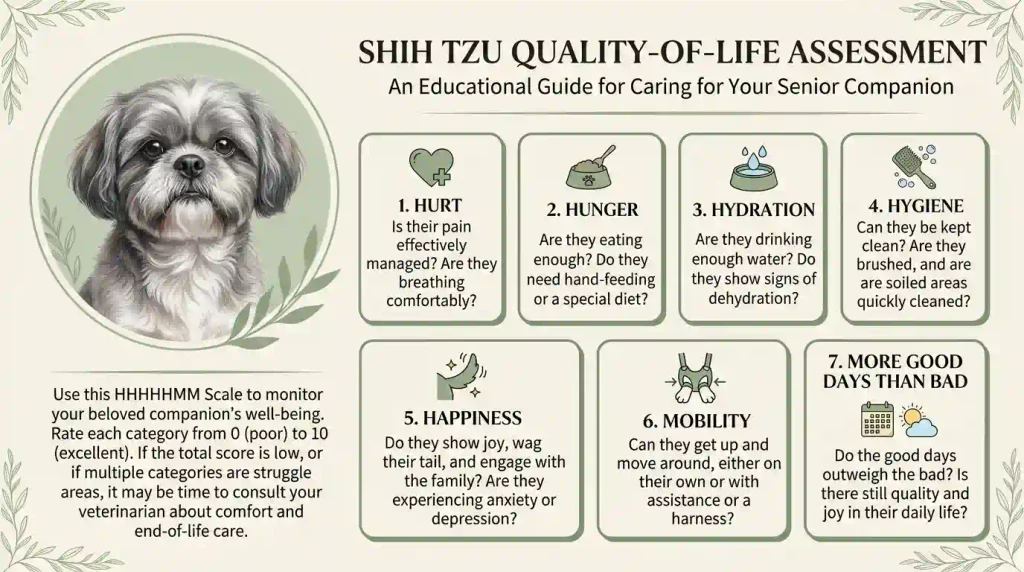
7.1 Understanding the HHHHHMM Quality of Life Scale
The HHHHHMM scale, associated with veterinarian Dr. Alice Villalobos, evaluates seven areas of well-being.
It is a practical conversation tool, not a diagnostic test or automatic euthanasia decision.
7.2 Evaluating Pain, Hunger, Hydration, Hygiene, and Happiness
The first five areas consider whether your Shih Tzu is comfortable, receives adequate nutrition and hydration, stays reasonably clean, and still experiences enjoyable interactions.
A veterinarian should interpret these factors alongside the underlying disease.
7.3 Assessing Mobility and Daily Comfort
Mobility considers whether your dog can move, reposition, and reach essential resources without unacceptable discomfort.
Assistive devices can improve mobility in some cases.
7.4 Tracking Good Days vs. Bad Days
The final component asks whether good days still outweigh bad days.
Evaluate enjoyment, sleep, distress, breathing, appetite, and the need for emergency interventions rather than relying on mood alone.
7.5 Sample 7-Day Shih Tzu End-of-Life Symptom Tracking Chart
Record observations using simple descriptions such as good, reduced, or poor.
| Day | Eating | Drinking | Mobility | Comfort | Overall Day |
| Monday | Good | Good | Reduced | Comfortable | Good |
| Tuesday | Reduced | Good | Reduced | Mild discomfort | Mixed |
| Wednesday | Reduced | Reduced | Poor | Restless | Bad |
| Thursday | Good | Good | Reduced | Comfortable | Good |
| Friday | Reduced | Reduced | Poor | Uncomfortable | Bad |
| Saturday | Reduced | Good | Poor | Restless | Bad |
| Sunday | Poor | Reduced | Poor | Uncomfortable | Bad |
This is an illustrative record, not a real patient’s medical history or a validated scoring system.
Bring your completed chart to veterinary appointments.
7.6 When Declining Quality of Life Signals a Need for End-of-Life Decisions
Repeated medical crises, persistent suffering despite treatment, inability to breathe comfortably, and the loss of most enjoyable activities may indicate a need to reconsider care goals.
Decisions should be individualized with veterinary guidance.
8. How to Comfort and Care for a Dying Shih Tzu
8.1 Creating a Quiet, Comfortable Resting Environment
Provide clean, soft bedding in a peaceful room with comfortable temperature and limited noise.
Non-slip flooring, supportive pillows, and easy access to essential resources can reduce unnecessary effort.
8.2 Managing Pain and Physical Discomfort
Veterinarians may prescribe analgesics and other medications to relieve suffering.
Never give human painkillers or change prescribed doses without veterinary approval.
8.3 Providing Food, Water, and Nutritional Support
Offer suitable food in small, manageable portions if your dog can swallow safely.
Your veterinarian may recommend dietary modifications, anti-nausea treatment, or hydration support.
8.3.1 What Not to Do When Your Shih Tzu Refuses Food or Water
Do not force-feed, syringe water into the mouth of a weak dog, or administer unprescribed fluids.
These actions can cause distress or aspiration into the lungs.
Seek veterinary guidance to determine the safest approach.
8.4 Helping With Movement, Toileting, and Hygiene
Assist your dog gently when standing or changing position.
Use washable bedding, disposable potty pads, or appropriately fitted dog diapers when necessary.
Regular skin cleaning and repositioning can help prevent irritation and pressure sores.
8.5 Offering Emotional Comfort and Companionship
Sit nearby, speak softly, and offer gentle contact if your Shih Tzu welcomes it.
Some dogs prefer close companionship, while others rest more comfortably with minimal handling.
8.6 Understanding Palliative and Hospice Care
Palliative care focuses on relieving symptoms and improving comfort, sometimes alongside disease-directed treatment.
Veterinary hospice emphasizes individualized care for animals approaching the end of life, including symptom management, caregiver support, and planning for deterioration.
8.7 Providing In-Home End-of-Life Care
In-home care may involve scheduled medications, symptom tracking, safe feeding assistance, comfortable bedding, and regular communication with the veterinary team.
The goal is to preserve dignity and minimize avoidable suffering.
8.8 Creating an After-Hours Emergency Veterinary Care Plan
Ask your veterinarian for an emergency hospital contact, medication instructions, warning signs requiring immediate intervention, and guidance for transportation.
Discuss what to do if symptoms become uncontrollable outside regular office hours.
8.9 Practical Comfort-Care Checklist for the Final Hours
Provide clean, comfortable bedding
Keep the environment calm and appropriately cool
Follow prescribed medication instructions
Watch for pain, panic, and breathing distress
Offer gentle companionship without forcing interaction
Keep emergency veterinary contact information available
Follow the veterinarian’s hospice or crisis plan

9. Natural Death vs. Euthanasia: Making the Right Decision
9.1 What Happens When a Shih Tzu Dies Naturally?
Natural death occurs when essential body functions cease because of illness or physiological deterioration.
The experience varies significantly between animals, and natural death is not always painless or peaceful.
9.2 Can a Shih Tzu Pass Away Peacefully at Home?
Some dogs can die peacefully at home with appropriate veterinary hospice support.
However, effective symptom management, a crisis plan, and access to urgent veterinary assistance are essential.
9.3 When Natural Dying May Cause Pain or Distress
Uncontrolled breathlessness, severe pain, persistent agitation, or repeated medical emergencies can make natural dying distressing.
These symptoms require veterinary attention rather than passive observation.
9.4 When Should You Consider Euthanasia?
Humane euthanasia may be considered when suffering cannot be adequately controlled and meaningful quality of life can no longer be maintained.
A veterinarian can help evaluate treatment options, prognosis, and comfort.
9.5 What Happens During Veterinary Euthanasia?
Veterinary euthanasia typically involves medication that produces unconsciousness followed by medication that stops vital functions.
Sedation may be given beforehand to reduce anxiety and discomfort.
A veterinarian can explain the procedure, including possible reflex movements after death.
9.6 How to Discuss End-of-Life Decisions With Your Veterinarian
Ask whether your Shih Tzu is suffering, which symptoms can still be relieved, and what realistic outcomes treatment may offer.
Also discuss in-home euthanasia, hospice-supported natural death, and emergency arrangements.
There is no need to make these decisions without professional support.
10. What to Do After Your Shih Tzu Passes Away
10.1 Immediate Steps After Your Shih Tzu’s Death
Contact your veterinarian or hospice provider for guidance.
If death is uncertain, especially after an unexpected collapse, seek immediate veterinary assistance rather than assuming your dog has passed away.
10.2 Burial, Cremation, and Final Arrangements
Common options include private cremation, communal cremation, and burial where local regulations permit.
Your veterinary practice can explain available services and arrangements.
10.3 Memorials, Paw Prints, and Keepsakes
Paw print impressions, photographs, a favorite collar, or a personalized memorial can preserve meaningful memories.
Some families create a small remembrance space at home.
10.4 Coping With Grief After Losing Your Shih Tzu
Grief after losing a companion animal can involve sadness, guilt, loneliness, or anticipatory grief before the loss occurs.
There is no required timetable for bereavement.
10.5 Taking Care of Yourself During Pet Loss
Speak with supportive family members, friends, or a pet-loss counselor.
Pet loss support groups may also help you process difficult emotions and remember your companion.
11. How to Support a Shih Tzu’s Health and Longevity
11.1 Providing a Balanced, Age-Appropriate Diet
Feed a complete and balanced diet appropriate for your dog’s age, medical conditions, and energy requirements.
Dogs with chronic disease may require veterinarian-prescribed nutritional changes.
11.2 Choosing Appropriate Feeding Portions and Schedules
Measure meals according to body condition and veterinary guidance.
Avoid both overfeeding and unnecessarily restrictive diets, especially in older dogs experiencing muscle loss.
11.3 Maintaining Hydration and Gentle Daily Exercise
Provide fresh water and encourage appropriate physical activity.
Short, comfortable walks may support mobility, but exercise should be adapted for pain, heat sensitivity, and respiratory limitations.
11.4 Scheduling Regular Veterinary Checkups
Senior dogs may benefit from examinations approximately every six months, depending on individual risk.
Regular monitoring can identify dental disease, arthritis, organ disorders, and other problems before they become severe.
11.5 Preventive Healthcare and Spay/Neuter Considerations
Vaccinations, parasite prevention, dental care, and individualized reproductive decisions are important throughout life.
For readers researching breeding rather than senior care, our guide to How many puppies can a Shih Tzu have explains reproductive considerations.
11.6 Providing Daily Attention and a Safe Home Environment
Maintain consistent routines, appropriate grooming, safe indoor temperatures, and regular interaction.
For general breed information, readers who encounter the alternative search spelling Shit Zhu can find resources under the correct breed name, Shih Tzu.
12. Frequently Asked Questions About Shih Tzu Death
12.1 Do Shih Tzus Know When They Are Dying?
There is no reliable scientific evidence that Shih Tzus understand their approaching death in the way humans do.
12.2 Do Dogs Say Goodbye Before They Die?
Some dogs become more affectionate or withdrawn, but these behaviors do not prove they are intentionally saying goodbye.
12.3 Why Do Some Dogs Hide or Run Away Before Death?
Hiding may reflect pain, fear, confusion, illness, or a desire for quiet rather than awareness of death.
12.4 Can Dogs Sense When Another Dog Is Dying?
Dogs may detect changes in another dog’s behavior, scent, or health, but their understanding of death remains uncertain.
12.5 Can a Shih Tzu Die From Sadness or Grief?
Stress and grief may affect behavior and appetite, but a decline in health should never be attributed to sadness without veterinary evaluation.
12.6 Is Sleeping With Eyes Open a Sign That a Shih Tzu Is Dying?
No. Sleeping with partially open eyes can occur for several reasons and does not independently indicate impending death.
13. Veterinary Sources and Medical References
For medically responsible Shih Tzu end-of-life guidance, veterinarians may draw on established resources such as:
- American Animal Hospital Association (AAHA) guidelines on senior care, palliative care, hospice, and euthanasia.
- American Veterinary Medical Association (AVMA) recommendations on humane euthanasia.
- Cornell University College of Veterinary Medicine information about canine respiratory distress and brachycephalic airway disease.
- Royal Veterinary College VetCompass research on Shih Tzu lifespan and health conditions.
- Dr. Alice Villalobos’ HHHHHMM quality-of-life assessment framework.
For pet owners, the American Animal Hospital Association’s end-of-life care guidance provides practical information about hospice care, quality-of-life evaluation, caregiver support, and humane euthanasia.
These resources support informed conversations but cannot replace an examination by a licensed veterinarian.
Final Thoughts: Helping Your Shih Tzu Through End-of-Life Changes
Recognizing the Shih Tzu signs of death can help you respond compassionately when your companion experiences serious physical or behavioral changes. Loss of appetite, weakness, altered breathing, confusion, and reduced mobility may occur during terminal decline, but they can also indicate illnesses that deserve treatment.
The most important priorities are identifying emergencies, managing discomfort, and preserving your dog’s quality of life. Veterinary examinations, symptom tracking, appropriate medications, and supportive home care can make a meaningful difference.
If your Shih Tzu’s health is deteriorating, schedule a veterinary quality-of-life consultation to discuss treatment, palliative care, hospice support, and available end-of-life options. A thoughtful care plan can help you make decisions centered on your companion’s comfort and well-being.