Blue and White Shih Tzu: Identify and Care
Summary. A blue and white Shih Tzu has white areas in its coat and blue, or diluted black, pigment. The word blue does not promise bright blue fur: the colored areas may look charcoal, slate, steel gray, or almost black. To assess the label, look at the nose, lips, and eye rims together in natural light. Blue-gray pigment at these points is more informative than a photograph of the hair alone. A black nose suggests a different color description, even if the coat looks gray; brown or liver-colored points suggest liver pigmentation. Puppies may also look different after their adult coat grows in or their hair is clipped. This guide walks through those comparisons, the genetics behind dilution, what ordinary coat changes look like, and the grooming and health signs worth watching. If you are choosing a puppy, it also shows which questions to ask before accepting a breeder’s color description or paying a premium for it. Your goal is an accurate description and a healthy companion, not a perfectly predicted adult shade.
Table of contents
- What is a blue and white Shih Tzu?
- How can you tell blue and white from similar colors?
- Why does this color occur?
- Will a blue and white puppy look the same as an adult?
- Does blue and white affect health or temperament?
- How do you care for a blue and white Shih Tzu’s coat?
- What should you check before choosing a puppy?
- FAQs
- Final thoughts
What is a blue and white Shih Tzu?
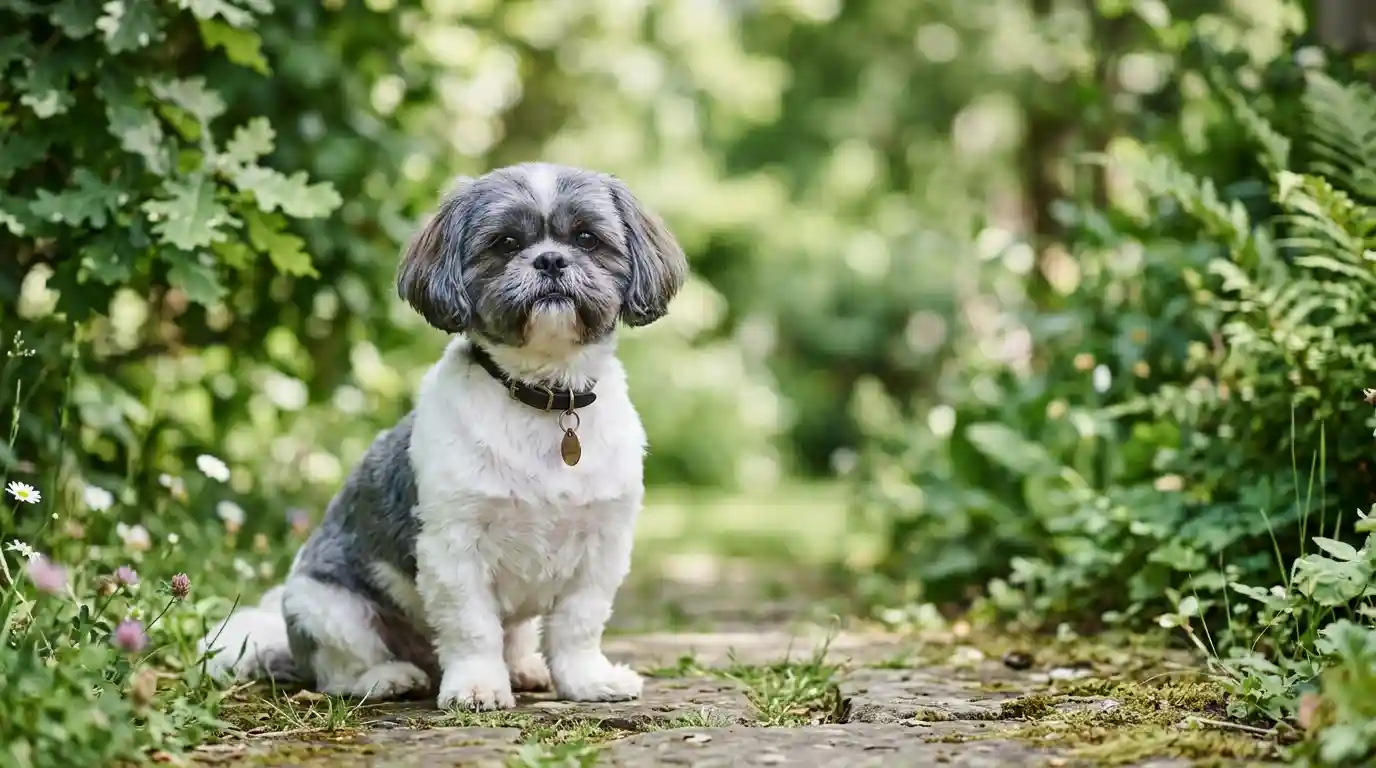
A blue and white Shih Tzu is a Shih Tzu described as having blue pigmentation alongside white coat areas. In dog-color language, blue commonly means that black pigment has been diluted to a gray-blue shade. White describes the areas where the coat lacks the same visible colored hair. The combination can produce a dog with dark patches over a white body, a mostly dark dog with a white chest and feet, or another distribution altogether.
This is a color description, not a separate breed, size, or personality type. For an overview of the wider palette, see shih tzu colors. The dog has the same basic care needs as other Shih Tzus. A useful distinction is between the color of the hair and the color of the pigment at the nose, lips, and eye rims. Two dogs may have similar gray-looking hair but different pigment at those points, leading to different descriptions.
The official American Kennel Club Shih Tzu standard says all coat colors and markings are permissible and specifies blue pigmentation at the nose, lips, and eye rims for blue-pigmented dogs. The standard also says those points are black on other colors, apart from liver-pigmented dogs, whose points are liver colored. This gives a sounder starting point than judging the coat from one photo. If you are still learning the breed’s general appearance, the shih tzu Breed Information section can provide wider context.
What “blue” means for pigment—and what “white” describes
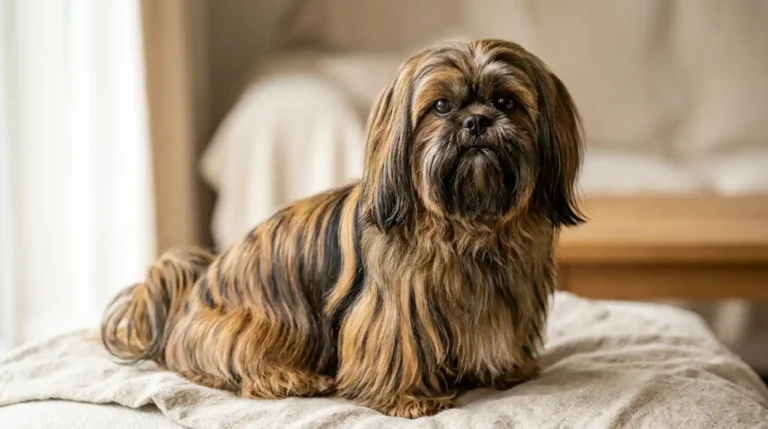
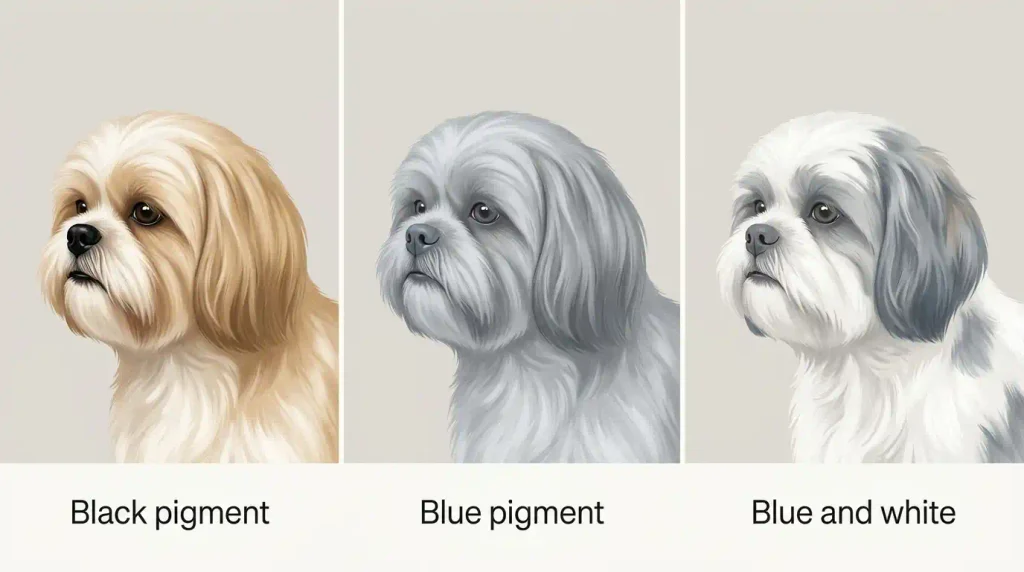
Imagine comparing two dark-and-white puppies side by side. One has a nose and eye rims that look distinctly black. The other has a nose and eye rims that look slate or blue gray in neutral daylight. Their hair may look nearly identical in a photo, but their pigment gives different clues. A blue-pigmented dog need not have a uniformly blue-looking coat: hair in its colored patches can range from noticeably gray to so dark that it appears black at first glance.
The white part is a marking or pattern in the coat. It might form a broad white base with darker patches, a white chest and legs, or a blaze on the face. Breeders and registries may describe a conspicuous two-color combination as blue and white, while a tiny white area may be recorded differently. There is no reliable at-home percentage rule that turns a small marking into a two-color coat. Record what you actually see rather than trying to calculate a formal category from a photograph.
The placement of white can change the dog’s overall impression. A white collar framing the neck makes the colored body appear darker; a white blaze down the forehead emphasizes the face; and a saddle-shaped colored area across the back can make a mostly white dog look predominantly blue from above. These are descriptions of where the hair colors appear, not evidence that the dog has a different temperament or needs a special diet.
Why the coat may look charcoal, gray, or nearly black
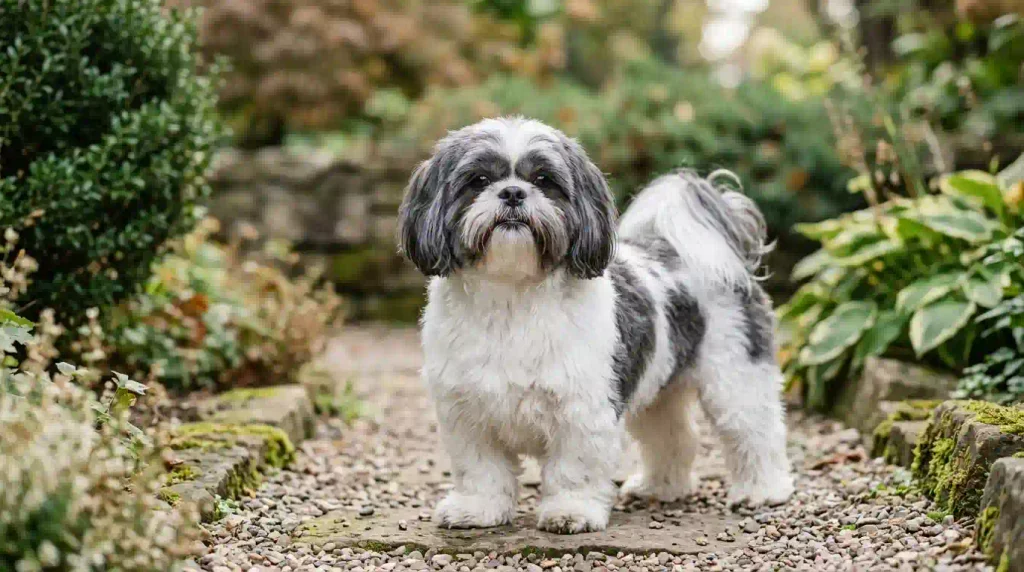
“Blue” is a conventional dog-color term, not a literal description of sky-blue hair. Depending on how much dark pigment the hairs carry, the dog’s colored areas may look blue gray, steel gray, charcoal, or nearly black. Hair length matters too. A long coat mixes tips, undercoat, and neighboring white hair in the viewer’s line of sight; a close trim exposes different parts of each hair and can change the overall impression.
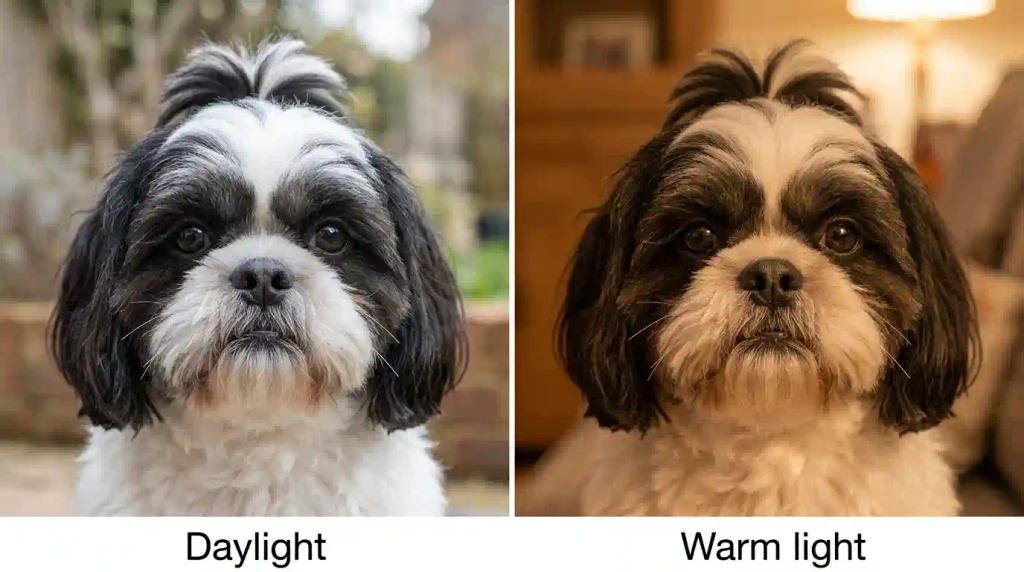
Lighting can exaggerate those differences. Warm indoor bulbs may make gray hair look brown. Bright sun can wash out a pale area, while deep shade makes a dark blue patch look black. Phone cameras add another variable by adjusting white balance and contrast. If a breeder sends only heavily edited portraits, request a short unfiltered video and still photographs in ordinary daylight. A blue shih tzu guide may help explain the pigment without the added distraction of white patches; the blue gray shih tzu guide explores descriptive differences in gray-looking coats.
How can you tell blue and white from similar colors?
Begin with the features that are least affected by a haircut: the nose leather, lip edges, and eye rims. Look at several points, because a shadow, wet nose, pale photograph, or temporary surface staining can fool you. Then describe the coat separately: where are the white areas, what color do the remaining hairs look in daylight, and are there stripes or additional tan patches? This method produces a more useful description than deciding that any gray-and-white dog must be blue and white.
Check the nose, lips, and eye rims in natural light
Choose bright open shade rather than direct midday sun or a yellow indoor lamp. Stand where you can see the dog comfortably, without pulling at its face. Observe the nose first, then the edges of the lips and the skin around both eyes. Do the points look consistently blue gray, consistently black, or distinctly brown? A blue-gray nose with similarly diluted lip and eye-rim pigment supports a blue-pigmented description. A black nose and black eye rims point away from it; brown points raise the possibility of liver pigment.
Paw pads can add a clue, but they are harder to interpret. Pads may show wear, staining, or variation, and the AKC standard’s explicit pigment distinction concerns the nose, lips, and eye rims. Avoid claiming that one paw-pad photograph proves a genetic result. The point of this check is to form a careful working description, not to diagnose a dog from a single feature.
Take one face photo and one full-body photo on the same day. Include the nose and both eyes without a filter, and note whether the coat is long or newly clipped. If a puppy’s appearance changes later, repeat the photos under similar conditions. These simple records are often more useful than trying to remember whether a patch was “really blue” several months earlier.
Compare blue and white, silver and white, black and white, and liver and white
These labels overlap visually more than a color chart suggests. Use the following table as a set of clues, not a substitute for examining the dog or its records.
| Description | Coat may appear | Most useful pigment clue | Common source of confusion |
| Blue and white | Gray-blue, charcoal, or dark colored areas with white | Blue-gray nose, lips, and eye rims | Dark blue hair can look black; lighting can make gray look warmer |
| Silver and white | Light to deeper silver-gray hair with white | Often black points when the dog is not blue pigmented | Gray-looking hair alone does not establish blue pigment |
| Black and white | Black patches and white areas | Black nose, lips, and eye rims | A dark blue coat may photograph as black |
| Liver and white | Brown-toned or sometimes deceptively pale areas with white | Brown or liver-colored nose, lips, and eye rims | Warm lighting can give gray hair a brown cast |
Compare the pigment before relying on shade names. A black and white shih tzu can have the same broad patch arrangement as a blue and white dog; the nose and eye rims help explain the different labels. A silver and white shih tzu can look especially similar in a clipped coat, while a grey and white shih tzu description may simply reflect the visible hair rather than a tested dilution genotype. A liver and white shih tzu brings brown pigment into the comparison.
Several other patterns can be mistaken for a two-color coat at a glance. Brindle and white shih tzu dogs have striping within some colored areas; a blue brindle shih tzu may need closer inspection to see it. A blue merle shih tzu describes a different mottled pattern: a pale-and-dark patchwork within pigmented hair is not the same thing as plain white spotting beside a solid-looking gray patch. Do not label a dog merle simply because it is blue and white.
What photos and eye color cannot confirm
Some blue-pigmented Shih Tzus have lighter eyes. The breed standard allows lighter eyes in blue-pigmented and liver-pigmented dogs, but eye color by itself cannot identify the pigment or establish parentage. A photograph may hide a dark nose in shadow, shift a slate nose toward brown, or make a brown nose look gray. Color descriptions offered for very young puppies are also less certain than a clear view of an older dog.
Do not use the word albino as a synonym for a pale, white, blue-eyed, or light-nosed Shih Tzu. Albinism is a separate pigmentation question; the albino shih tzu guide addresses it directly. Likewise, lavender is a breeder color term with its own genetic and descriptive ambiguities. If a seller switches between “blue,” “lavender,” and “liver” without explaining the pigment and any test result, ask what each term means in that particular listing. The lavender blue shih tzu and liver chocolate shih tzu guides offer useful comparisons.
Why does this color occur?
Two visible ideas come together: dilution affects black pigment, and white spotting affects where colored hair appears. Genes interact, so a tidy picture of one “blue gene” and one “white gene” cannot predict every shade and patch from a photo. A basic explanation, however, helps owners ask better questions and spot exaggerated promises.
Black pigment dilution and white spotting
Dogs make different pigments in their hair and skin. Eumelanin is the dark pigment that can appear black or, when diluted, blue gray. Variants associated with the canine D locus, including variants in MLPH, can dilute black pigment. The commonly tested form behaves recessively: a dog with a tested dilution variant from each parent can show dilution, while a dog with only one tested copy generally does not show that form of dilute color. A dilute dog can still have patches of white hair because white spotting is a separate aspect of coat pattern.
This also explains why a gray-looking coat is not conclusive. Another dog may have black pigment at its nose yet show lighter hair through age-related coat change, a mixture of light and dark hairs, or the way its coat was trimmed. Conversely, a blue-pigmented dog can carry patches that look exceptionally dark. The color of the nose and other skin points helps connect the visible coat to the pigment description, while a laboratory result can provide more specific information about tested variants.
Patterns add another layer of description. A white blaze, collar, chest, feet, or tail tip says where white hair is visible. A black mask describes dark coloring concentrated on the face. Brindle describes striping within pigmented hair. Those details should not be flattened into a long string of color words merely to sound precise. If a dog has obvious stripes, compare it with the brindle shih tzu guide; if the forehead is marked, note the blaze in plain language.
The AKC breed standard recognizes all Shih Tzu colors and markings as permissible. That statement concerns the breed standard; it does not independently verify that a particular seller’s puppy is purebred, carries a specific allele, or will retain its puppy coat shade.
When a DNA test helps—and its limits
A reputable laboratory’s dilution test can clarify whether a dog carries the known variants assessed by that test. This can be valuable when the coat and pigment are difficult to interpret or when a breeder is making a precise inherited-color claim. Read the report itself: look for the dog’s identifying details, the laboratory, the tested locus or variants, and the actual result. A screenshot cropped to show only a colored label is less useful than the complete report.
A D-locus result is not a complete color certificate. It does not, by itself, tell you exactly where white patches will fall, predict the adult hair shade in a growing puppy, diagnose a skin disorder, or establish that the dog is a purebred shih tzu. Laboratories test specified variants, and a result needs to be interpreted alongside appearance and family information. If the result conflicts with what you see, ask the laboratory or a veterinary genetics professional about the scope of its test rather than forcing the dog into a label.
Ask a breeder why testing was done and what decision it informs. For an ordinary pet owner who simply wants to describe their dog, careful photos and the pigment check may be enough. Testing becomes more useful when a particular inherited-color claim matters, especially in a breeding decision. It should complement health and pedigree documentation, not replace them.
Will a blue and white puppy look the same as an adult?
You can recognize the dog’s markings in puppy photos, but you cannot guarantee every adult hair shade from them. Shih Tzu coats change as puppies mature, and grooming changes which hairs are visible. Some patches lighten, some look darker when the undercoat is exposed, and contrast with adjacent white hair can make a modest change look dramatic. Keep dated photos if knowing what changed matters to you.
Normal coat and grooming-related changes
A puppy’s coat and its mature double coat do not always present color in the same way. Longer hair blends nearby colors, while a short puppy cut can reveal pale roots or a differently colored undercoat. Trimming dark tips may make a patch appear lighter even though the dog’s inherited pigment has not changed. Seasonal sunlight and staining can also alter how clean or warm a patch looks in a photo. None of these observations alone proves a new genetic color.
Compare like with like: the same dog, similar daylight, similar coat length, and similar camera settings. Focus on stable features such as the location of major white patches and the color of the nose, lips, and eye rims. Record the date, age, and whether the hair was recently clipped. This makes it easier to describe a gradual puppy coat change without relying on a seller’s promise that a puppy will stay an exact shade of steel gray.
If a color label matters for registration, ask how the breeder recorded it and whether corrections are possible under the relevant registry’s procedures. A registration color describes a dog on a form; it is not a medical assessment or an adult-color guarantee. If a listing calls a dog “rare blue and white” solely because its black-and-white puppy coat has turned gray, that distinction deserves a closer look at the pigment.
The same caution applies to comparisons with a black and grey shih tzu or silver shih tzu. A visible mixture of black and gray hairs is a description of appearance. It does not necessarily mean the dog’s nose carries blue pigment. Use descriptive language when certainty is limited: “gray and white coat with black nose” is more informative than a confident but unsupported genetic label.
Changes that warrant a veterinary check
A gradual difference in hair shade is one thing; new hair loss, persistent flaking, redness, crusting, repeated scratching, sores, or a bad smell is another. These changes can have many causes, including skin infection, irritation, parasites, allergies, and inherited coat disorders. A veterinarian can examine the skin and decide whether testing or treatment is needed. Do not assume that every patch of thinning fur on a blue dog is color dilution alopecia.
Notice where the change occurs and whether the dog seems uncomfortable. Photograph the area in the same light every few days if it is safe to wait for an appointment, and note any new shampoo, grooming product, medication, or clipping. Tell the veterinarian whether only the colored areas are affected or whether white areas are involved too. This history helps a professional assess the problem; it cannot replace an examination.
If a puppy has always had a pale patch, compare it with earlier photographs before calling it a new symptom. If the skin underneath has become inflamed or the hair is breaking off, seek advice even if the surface color seems unchanged. Healthy-looking hair and a comfortable dog matter more than preserving a particular shade for pictures.
Does blue and white affect health or temperament?
The color label does not tell you whether a dog will be calm, playful, trainable, or affectionate. Temperament develops through many influences, including inherited traits, early experience, handling, and the individual dog’s environment. Coat color also cannot stand in for a health examination. The useful health question is narrower: can dilution be associated with certain coat problems, and what should an owner actually watch for?
What is known about dilution-associated coat problems
Color dilution alopecia is a recognized hair and skin disorder in some dilute-colored dogs. Affected dogs may develop thinning hair, breakage, scaling, or secondary skin issues, often in the dilute-colored areas. The condition has been documented across several breeds, but that does not establish how common it is in blue and white Shih Tzus. A blue-pigmented Shih Tzu should not be treated as ill merely because of its color.
There is an important distinction between having a dilution variant and having a diagnosed disorder. A color DNA test addresses tested pigment variants; it is not a diagnosis of alopecia. Likewise, the absence of hair loss in a puppy cannot guarantee that it will never develop a skin problem. If the coat becomes sparse, scaly, itchy, or painful, ask your veterinarian to evaluate the dog instead of applying an online remedy or blaming every symptom on the blue color.
Do not assume the white areas confer a special illness either. White spotting and blue pigment describe different visible features. Claims that every blue and white puppy is deaf, blind, fragile, or “healthier because it is rare” need evidence about the individual dog and the particular inherited trait involved. The color words in an advertisement do not provide that evidence.
Prioritize the individual dog’s health over its color
When meeting a puppy, look beyond the patch arrangement. Does it move comfortably? Are the eyes clear, the skin reasonably healthy, and the coat free of extensive matting? Is breathing comfortable during quiet activity? Does the breeder discuss routine veterinary care and provide records that correspond to the puppy? These are practical observations, although only a veterinarian can perform a clinical assessment.
Ask about both parents’ health and the relevant screening documentation, and give yourself time to review what is actually provided. An attractive coat should not distract from exaggerated features, obvious discomfort, or a seller who refuses reasonable questions. The Shih Tzu is a companion dog first; reading general shih tzu facts can help set realistic expectations for living with one. The shih tzu origin and types of shih tzu pages give broader context, but no historical or marketing “type” changes the need to evaluate an individual dog.
Beware of size claims bundled with color claims. A label such as teacup shih tzu is a marketing description, not proof of a separate officially recognized color or breed. An unusually small puppy, an unusual pigment, and a high price are three separate questions. Ask for evidence relevant to each instead of treating them as a package deal.
How do you care for a blue and white Shih Tzu’s coat?
The blue and white pattern does not require a special color-specific shampoo or a different basic grooming schedule. The important feature for daily care is the Shih Tzu’s long double coat, which can tangle and mat. White hair makes dirt and staining more visible; dark hair may hide tangles close to the skin. A routine that reaches both the outer coat and undercoat protects comfort as well as appearance.
Brushing, bathing, trimming, and keeping white areas clean
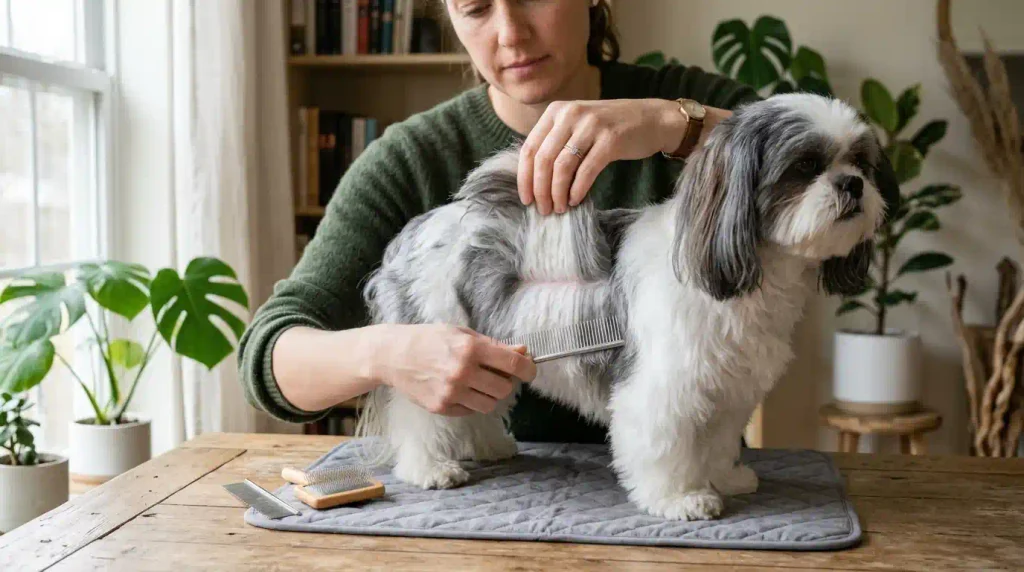
For a long coat, brush regularly and thoroughly, often daily, working in sections rather than smoothing only the surface. Part the hair gently, brush a small layer, and follow with a comb to find hidden tangles around the ears, under the collar, behind the legs, and near the chest. Be especially gentle near the armpits and groin. If a mat is tight against the skin, ask a groomer or veterinarian for help; pulling or cutting blindly can hurt the dog.
A shorter puppy cut can make maintenance easier, but it does not make grooming unnecessary. Ask a groomer how often your dog’s particular coat should be brushed between appointments and when its trim is due. Hair around the eyes needs attention so it does not obstruct vision or rub on the face. Clean the muzzle and other soiled areas gently, keep the feet comfortable, and dry the coat properly after bathing. Use products appropriate for dogs; harsh stain removers and human bleaching products are poor substitutes for cleaning and checking the underlying cause of discoloration.
White hair on the beard, chest, or feet can develop yellowish or reddish staining from moisture, saliva, outdoor dirt, or other causes. Cleaning may improve the look, but repeated wetness, odor, skin irritation, or discharge deserves veterinary advice. A persistent stain is not proof that the dog’s inherited white coat has “changed color.” The same distinction applies to a white shih tzu and to other light-patterned dogs.
After bathing, check for tangles again as the coat dries; water can tighten a pre-existing mat. Inspect the skin while parting the hair, particularly within darker patches where mild redness can be harder to see. If you notice new flakes or bald spots, document them instead of attempting to color-correct or conceal them for photographs. Good coat care keeps the dog comfortable and also makes its natural color easier to describe.
Practical grooming checklist
- Check around the eyes and muzzle daily; clean gently when needed.
- Brush and comb a long coat in layers, including areas hidden by a collar or harness.
- Inspect white areas for dirt and dampness and dark areas for concealed tangles.
- Schedule trimming or professional grooming to suit the dog’s coat length.
- Look at the skin beneath the hair, and call a veterinarian about persistent irritation or hair loss.
Do not confuse lower visible shedding with freedom from allergens. If someone in the household is sensitive to dogs, the shih tzu hypoallergenic guide addresses that separate question; blue and white coloring does not make an individual dog allergy free.
What should you check before choosing a puppy?
A photograph can start the conversation; it should not finish it. A responsible decision involves meeting the dog or receiving clear, recent, unfiltered evidence; checking documentation; and considering whether you can meet the breed’s grooming and general care needs. You do not have to become a genetics specialist to ask sensible questions.
Color descriptions, records, and breeder claims
Ask the seller what they mean by blue and white. Are they describing visible steel-gray patches, the nose and eye-rim pigment, a laboratory result, the registration color, or a combination? Request natural-light views of the face and full body. If they cite DNA testing, ask for the complete named result and the tested dog’s identification. If they cite registration, remember that a registration color is a recorded description, not proof of a future adult shade or an independent health certificate.
Words such as rare, exclusive, platinum, and designer blue are not a substitute for evidence. A high price cannot establish the genotype, pedigree, or health of a puppy. Compare the dog’s features with the seller’s explanation, ask how the puppy has been raised, and review veterinary and parent documentation. Be wary if the explanation changes each time you ask whether the nose is black, brown, or blue gray.
A seller may use several everyday labels for the same dog. For example, they may call visible patches “gray,” a pigment “blue,” and the coat “blue and white.” Ask for the meaning of each term before treating that variation as deception. The concern is an unsubstantiated guarantee: “This puppy will stay exactly this shade,” “every blue dog has special eyes,” or “this color guarantees a better temperament.” No color label can support those promises.
The white-marking pattern is another place to be precise. A broad white chest, facial blaze, or small patch on a paw should be described as it appears. If another color is present, note that too. A puppy with tan points, for example, needs a more specific description than simply blue and white. Related examples include black and tan shih tzu and brown black and white shih tzu. Keep the description accurate instead of trying to fit every marking into a prestigious-sounding label.
A short puppy evaluation checklist
Use these questions during a visit or a live video conversation. If a breeder cannot answer immediately, a considered follow-up is more useful than a rushed claim.
- Can I see the puppy in unfiltered daylight? Request a clear face view and views of both sides of the body, including the white patches.
- What color are the nose, lips, and eye rims? Ask the seller to explain how those features support the color label.
- How old is the puppy, and when were the photographs taken? Recent photos matter because coats change during growth.
- Is there a test report behind the genetic claim? Ask which variants were tested and whose sample was submitted.
- What health and veterinary records are available? Review the individual puppy’s records and relevant documentation for the parents.
- Can I observe the puppy moving and breathing comfortably? A photo of its color cannot answer this.
- What grooming has the puppy experienced? Gentle early handling can help make later coat care easier.
- What happens if the adult coat looks different? Do not buy on the promise of an exact future shade.
Take notes rather than relying on memory. You may decide you love the puppy regardless of whether the best eventual description is blue and white, silver and white, or something else. That is a sound outcome when the puppy suits your home, the records are clear, and you understand the work involved in caring for its coat.
It also helps to decide in advance which questions could change your decision. If a report cannot be matched to the puppy, ask for clarification before treating it as evidence. If you cannot view the puppy moving or see recent, ordinary-light photographs, wait until that information is available. If the adult color is crucial to your plans, recognize that no careful seller can promise an exact shade after coat changes. Put the observable dog and the documents ahead of a label. A clear answer may confirm the seller’s description; an honest explanation of uncertainty can be reassuring too. What matters is that you know which statements are observations, which are test results, and which remain predictions.
FAQs about blue and white Shih Tzus
Is a blue and white Shih Tzu actually blue? “Blue” usually means diluted black pigment that looks gray blue, not bright blue fur.
Can a blue and white Shih Tzu have almost black patches? Yes; very dark dilute hair can look nearly black, especially in shade or photographs.
What is the easiest first check? Compare the nose, lips, and eye rims in natural light; look for consistently blue-gray rather than black or brown pigment.
Are blue and white and gray and white the same? They can look similar, but “gray” describes visible hair while “blue” refers to a pigment description that needs further assessment.
Does a light eye prove a puppy is blue? No; eye color alone cannot establish a blue pigment or a particular genotype.
Are blue and white Shih Tzus recognized? The AKC Shih Tzu standard permits all colors and markings; a listing still needs accurate description and documentation.
Will the white patches disappear as the dog grows? Major white markings may remain recognizable, while coat growth, clipping, and changes in colored hair can alter their appearance.
Does a color DNA test prove a dog is purebred? No; a dilution test reports on the variants it assays, not breed ancestry or every health trait.
Is blue and white the same as blue merle? No; merle describes a different mottled pattern, while blue and white can describe diluted pigment with white spotting.
Does this color need special grooming? It needs regular Shih Tzu double-coat care; clean visible dirt on white hair and watch for mats throughout the coat.
Does blue coloring guarantee skin trouble? No; monitor the individual dog and consult a veterinarian for new hair loss, scaling, or irritation.
Should I pay more for a “rare blue” puppy? Judge the seller’s evidence, the dog’s health, and the suitability of the puppy before considering any color-based price claim.
Final thoughts
A blue and white Shih Tzu is best understood by separating pigment from hair color and white markings. Check the nose, lips, and eye rims in natural light, describe the coat you see, and allow for change as a puppy grows or its hair is trimmed. Use a DNA report to clarify a specific tested claim, not to predict every adult patch or substitute for veterinary care. Regular brushing, thoughtful grooming, and attention to new skin symptoms matter far more to the dog than a fashionable color name. If you are considering a puppy, save the checklist above, request clear photographs and records, and choose the individual companion whose health and care needs you can support. For adjacent patterns and descriptions, browse the site’s shih tzu colors guide.