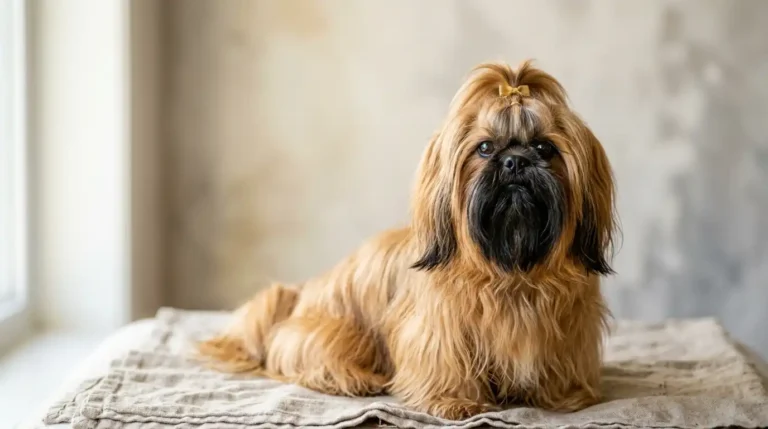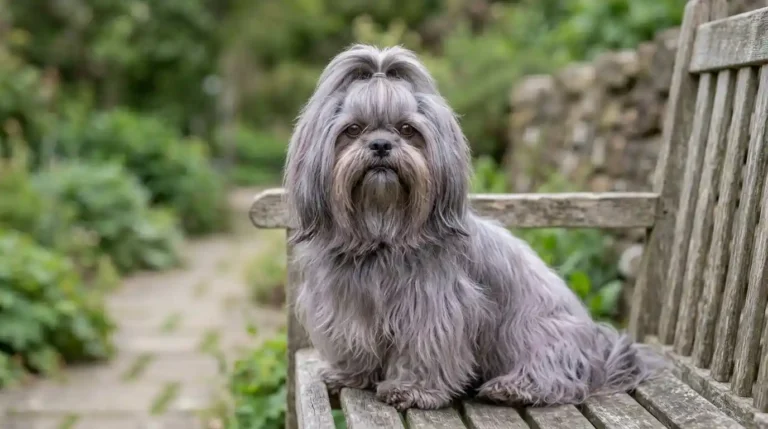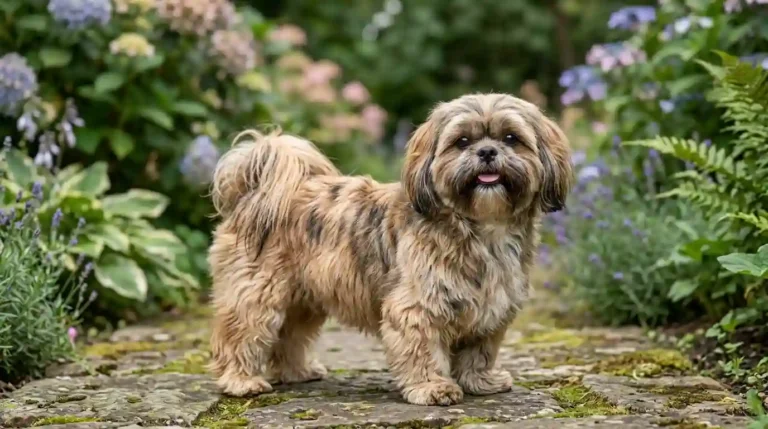
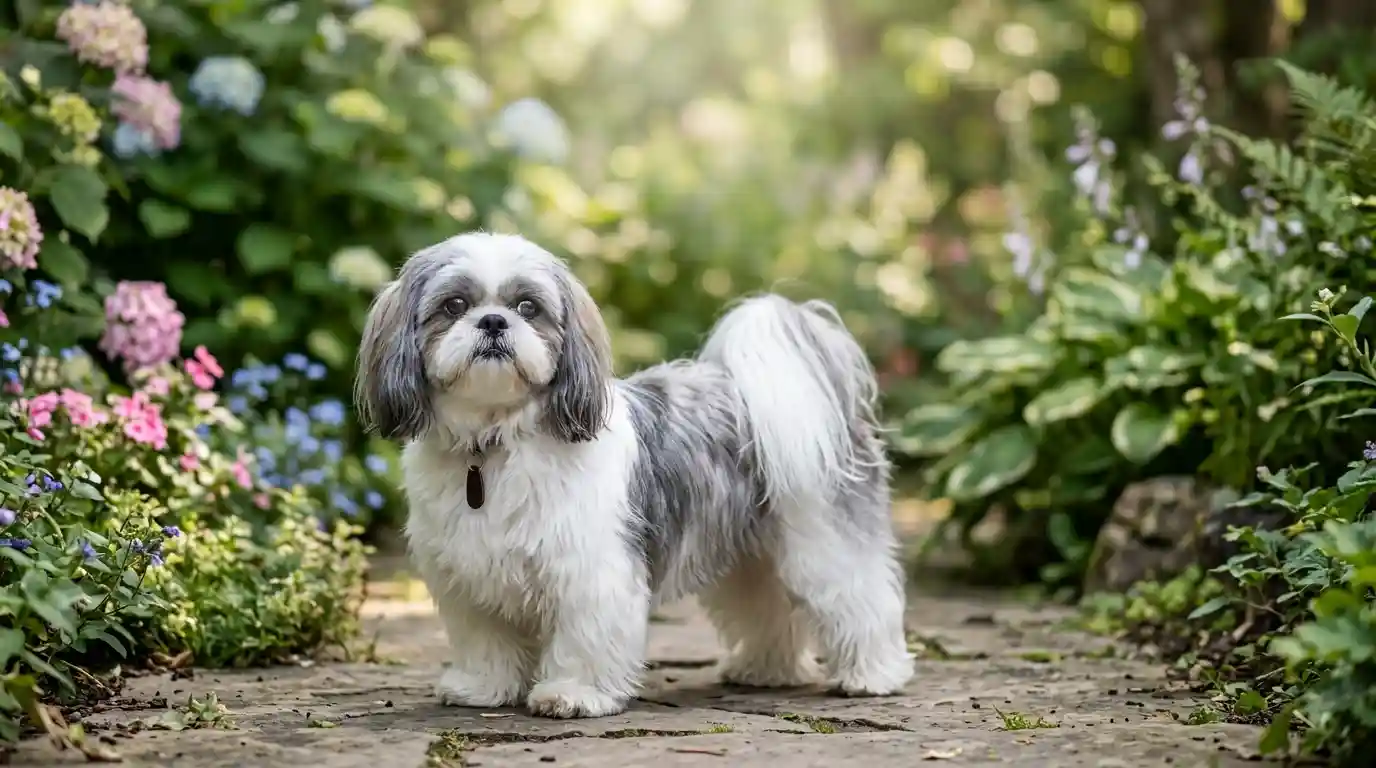
Silver and White Shih Tzu: How to Identify This Coat
A silver and white Shih Tzu combines cool silver or pale gray-looking coat areas with clearly white markings, but identifying the combination is not always as easy as it sounds. Silver can range from a darker smoky shade to a light metallic gray that blends visually with white, especially in a long adult coat. Puppies may also look darker than they do later, which is why a single puppy photo cannot guarantee the exact adult shade. When comparing a silver-and-white dog with a white-and-silver, gray-and-white, blue-and-white, or brindle dog, look at the overall distribution of color, the contrast between silver and true white hair, and the dog’s nose and eye-rim pigmentation. The American Kennel Club currently lists Silver & White as a Shih Tzu registration color, while the breed standard permits all colors and markings. This guide explains how to identify the coat, what may change with age, how to evaluate breeder photos, and how to care for the long double coat without relying on unsupported rarity or genetics claims.
Table of Contents
- What does a silver-and-white Shih Tzu look like?
- Silver-and-white or white-and-silver: which color is the base?
- Can the coat look different as a Shih Tzu matures?
- What does the breed standard say about the color?
- How should you care for a silver-and-white coat?
- Photo and breeder checklist for confirming the coat description
- Quick answers about silver-and-white Shih Tzus
- Final thoughts
What Does a Silver-and-White Shih Tzu Look Like?
A silver and white Shih Tzu generally has sections of cool gray or silver-looking hair combined with areas that appear clearly white.
The silver can vary substantially.
One dog may have medium silver across the ears, back, and tail while the chest, legs, muzzle, and forehead are white. Another may be predominantly white with only pale silver patches around the ears and saddle area.
A third may have enough darker tipping that the silver areas look smoky, charcoal, or almost black in certain lighting.
This variety is important because “silver” is not one exact photographic shade.
When owners compare Shih Tzu colors, silver can overlap visually with:
- Gray
- Pale black
- Blue-gray
- Light brindle
- White with dark tipping
- Faded puppy black
- Silver brindle
A typical silver-and-white dog may show white on the:
- Muzzle
- Forehead
- Chest
- Neck
- Belly
- Legs
- Paws
- Tail tip
while the silver areas may cover the:
- Ears
- Sides of the face
- Back
- Shoulders
- Saddle area
- Tail
There is no required symmetrical pattern.
One side of the dog’s face can have more silver than the other, and body patches can be irregular.
That is normal for a multi-color coat.
Silver Is Not Simply “Dirty White”
True white hair lacks the visible gray cast found in silver areas.
Under neutral natural light, white sections tend to look brighter and cleaner, while silver hair retains a cool gray or metallic tone.
This contrast can be easy to see on a moderately dark silver dog.
It becomes much harder when the silver is extremely pale.
Long Shih Tzu hair also catches light differently depending on angle, so an area can look almost white from one direction and distinctly silver from another.
For this reason, color should be evaluated under consistent daylight rather than warm indoor bulbs or heavily edited photographs.
How Silver Differs From Black
A young dog that later looks silver may initially have much darker hair.
This is one reason owners sometimes confuse a developing silver dog with a black Shih Tzu puppy.
A mature black coat remains much more deeply pigmented overall, while a silver coat has a lighter gray or metallic appearance.
A black and white Shih Tzu generally has stronger contrast between deep black and white than an adult silver-and-white dog.
How Silver Differs From Brindle
Brindle is a pattern rather than a uniform silver shade.
A silver brindle Shih Tzu can contain lighter silver-toned areas mixed with darker patterned hairs.
Likewise, a brindle and white Shih Tzu combines white spotting with visible brindle patterning.
Look closely at the colored areas.
If they contain repeated darker streaks, bands, or intermingled patterned hairs rather than a relatively even silver appearance, brindle may be the better description.

Silver-and-White or White-and-Silver: Which Color Is the Base?
Owners often ask whether their dog is silver and white or white and silver.
In ordinary descriptive language, people often put the visually dominant color first.
So:
Silver and white may suggest that silver covers more of the coat and white appears as markings.
White and silver may suggest that white covers more of the dog and silver appears in smaller patches.
That can be a practical way to describe appearance.
However, it is important to separate casual description from formal registration terminology.
The current AKC Shih Tzu color list uses Silver & White as the registration label.
It does not separately list “White & Silver” as another color category.
So a predominantly white Shih Tzu with silver markings may still fall under the same Silver & White registration terminology rather than becoming a separate officially named color.
Compare the Base Coat and the White or Silver Markings
When identifying the dog’s appearance, start by looking at the body as a whole.
Ask:
Which color occupies the largest continuous areas?
Then look at where the second color appears.
A silver-dominant dog might have:
- Silver back
- Silver ears
- Silver tail
- White blaze
- White chest
- White feet
A white-dominant dog might have:
- White body
- White legs
- White chest
- Silver ears
- Silver facial patches
- Small silver saddle
Both can reasonably be described as silver and white.
The exact percentage of each color is less important than accurately describing what is actually visible.
Parti Pattern and White Distribution
When a dog has clearly separated colored and white sections, owners may use the term parti-color.
Parti does not create another Shih Tzu breed or type.
It simply helps describe how color and white are distributed across the coat.
A silver-and-white dog can therefore have a parti-style appearance just as a red and white Shih Tzu, gold and white Shih Tzu, or liver and white Shih Tzu can.
For broader context, the types of Shih Tzu guide explains why coat color and pattern should not be confused with separate breed varieties.
Distinguish a Silver Sheen From White and Gray
Silver can be difficult to describe because it overlaps visually with the everyday word “gray.”
In ordinary conversation, someone might look at a silver Shih Tzu and simply say the dog is gray.
But registration terminology and visual descriptions do not always use the same vocabulary.
AKC currently lists:
- Silver
- Silver & White
among the Shih Tzu registration colors.
“Gray” is not separately listed in that same current color menu.
That does not mean a grey Shih Tzu description is meaningless. It means “gray” may function as a visual label, while “silver” is the formal registration wording used by AKC.
The same applies to a grey and white Shih Tzu: the everyday visual description and formal color terminology do not always match perfectly.
Silver Versus Blue
Silver should also not automatically be confused with blue.
A blue Shih Tzu is identified partly through diluted pigmentation rather than simply having gray-looking hair.
A blue and white Shih Tzu can therefore appear visually gray and white, yet the pigmentation of the nose, lips, and eye rims provides additional information.
The Shih Tzu standard specifies black nose, lips, and eye rims on ordinary colors, with liver pigmentation on liver-pigmented dogs and blue pigmentation on blue-pigmented dogs.
So a silver-and-white Shih Tzu would typically be expected to have black nose and eye-rim pigmentation unless another recognized pigmentation type applies.
Paw pads may also look dark, but paw-pad color alone should not be used as the deciding factor.

Can the Coat Look Different as a Shih Tzu Matures?
Yes.
A Shih Tzu puppy’s coat can look noticeably different once the adult coat develops.
This does not mean every silver-and-white puppy will undergo a dramatic transformation, but owners should expect some uncertainty when judging the final shade from an early photograph.
Canine coat pigmentation involves multiple genetic interactions, and visible appearance can also change as coat length, texture, tipping, and hair distribution develop.
That is why simple rules such as “this dark puppy will definitely become platinum silver” should be treated cautiously.
What Owners May See Between Puppyhood and Adulthood
A silver-and-white puppy may initially look:
- Dark gray and white
- Blackish and white
- Charcoal and white
- Brindle-gray and white
- Smoky silver and white
As the adult coat develops, some dogs may become:
- Pale silver and white
- Medium silver and white
- Soft gray-silver and white
- Platinum-looking silver and white
The biggest visible difference can occur when dark puppy tipping becomes less prominent.
Long adult hair can also make colors look softer because more of the lighter part of each hair shaft is visible.
The American Shih Tzu Club notes that many Shih Tzus undergo a noticeable puppy-to-adult coat change around 10 to 12 months of age.
That stage is often discussed primarily because grooming becomes more difficult temporarily, but it also changes how the coat looks.
Why Silver Can Appear Lighter With Age
There is no single universally established “silver Shih Tzu gene” that allows someone to predict every dog’s final shade from a puppy photo.
Dog coat pigmentation is genetically complex.
Several genes can interact to affect:
- Pigment production
- Pigment distribution
- Hair pattern
- Intensity
- White spotting
This is why it is safer to describe what is visible than to invent a simple genetic explanation for every silver coat.
A puppy may have dark tips over lighter hairs.
As the coat grows, those tips may become a smaller part of the visible coat.
The result can look like dramatic fading even though the underlying genetics have not suddenly changed.
Brindle Can Complicate the Picture
A dark brindle puppy may also lighten enough that the pattern becomes difficult to recognize later.
This is particularly relevant when comparing silver with a black brindle Shih Tzu or silver brindle puppy.
Dark striping that is obvious at eight or twelve weeks may become softer once long adult hair develops.
For that reason, a puppy described as silver-and-white from a single photo may deserve a closer look if dark patterned hairs are present.
White Markings Can Look Larger
The white itself may also appear more prominent as the dog grows.
For example, a small white chest on a puppy can look dramatically larger once long chest hair develops.
A facial blaze can appear broader because of longer hair.
White legs can visually blend into the body’s light silver hair.
The actual boundary may not have changed greatly, but coat length changes what your eye perceives.

Why a Precise Adult Color Can’t Be Promised From a Puppy Photo
Photographs are useful but limited.
A puppy can look different depending on:
- Camera white balance
- Exposure
- Flash
- Indoor bulbs
- Direct sun
- Shade
- Phone processing
- Filters
- Grooming
- Whether the coat is wet or dry
A dark photograph may make silver look black.
An overexposed image may make pale silver look white.
Warm indoor lighting can give a cool silver coat an unwanted brown or cream cast.
If color matters to you, ask for several unedited photographs taken in neutral daylight.
Better still, look at the puppy in person.
Parent photographs can provide context, especially if the breeder has photos of each parent as both puppy and adult, but they still cannot guarantee the exact adult appearance of an individual puppy.
Genetic inheritance is not simply an average of the parents’ visible colors.
What Does the Breed Standard Say About the Color?
The answer is straightforward:
Silver and white is an accepted Shih Tzu color combination.
The current AKC color list includes Silver & White with registration code 182.
It also lists Silver as a separate registration color.
More importantly, the official Shih Tzu breed standard says:
All colors and markings are permissible and are to be considered equally.
You can review the current information on the American Kennel Club Shih Tzu breed page.
That means silver and white is not inherently better or worse than:
- Black and white
- Gold and white
- Red and white
- Brindle and white
- Liver and white
- Blue and white
- Solid silver
- Other permitted colors
A dog’s color should also not be confused with its breed identity.
A silver-and-white puppy is not automatically a purebred Shih Tzu simply because its color appears in AKC terminology.
Pedigree and parentage are separate questions.
Likewise, being silver and white does not make the dog a special breed “type.”
The current standard recognizes one Shih Tzu breed rather than separate varieties based on coat color.
How Should You Care for a Silver-and-White Shih Tzu’s Coat?
Silver-and-white coloring does not require a special grooming routine.
The main grooming requirement comes from the Shih Tzu’s long, dense double coat.
Brush Before Mats Form
Long coats should be brushed often enough that tangles never develop into large mats.
Common problem areas include:
- Behind the ears
- Under the front legs
- Chest
- Neck
- Belly
- Inner legs
- Tail area
- Areas beneath collars or harnesses
Brush in sections and work toward the skin rather than only smoothing the outer surface.
A comb can help identify small tangles that remain after brushing.
During the puppy-to-adult coat transition, tangles may form faster than usual.
Keep the White Areas Clean
White sections make discoloration more obvious.
Common areas where staining can appear include:
- Under the eyes
- Around the mouth
- Beard
- Chest
- Feet
- Lower legs
Food, moisture, saliva, tears, and ordinary dirt can affect the appearance of white hair.
Do not assume every stain has one specific cause.
Persistent tearing, frequent licking, redness, odor, swelling, or discomfort should be evaluated appropriately rather than treated only as a cosmetic problem.
Do Not Try to Artificially “Silver” the Coat
The goal should be a healthy coat, not forcing a particular shade.
A silver puppy may naturally become lighter.
There is no need to use harsh whitening or color-changing products simply to make the silver contrast stronger.
Use dog-appropriate grooming products and prioritize skin and coat health.
The same basic care principles apply whether your dog is a silver Shih Tzu, silver-and-white, tan and white Shih Tzu, or another color.
Photo and Breeder Checklist for Confirming the Coat Description
If you are evaluating a puppy advertised as silver and white, use this checklist before relying on the seller’s label.
- Ask for natural-light photos. Avoid relying only on warm indoor lighting or professionally edited images.
- Request several angles. Look at the face, ears, back, chest, legs, and tail.
- Identify true white areas. Compare them directly with the silver patches.
- Look for a silver or cool gray cast. Silver should remain visibly different from the true white hair.
- Check for brindle. Dark striping or intermixed hairs may indicate a brindle pattern.
- Check the nose and eye rims. Ordinary silver-and-white dogs generally have black pigment points; slate-blue pigmentation suggests a different pigmentation category.
- Ask how the color is recorded. Seller terminology and registration terminology are not always identical.
- Ask for puppy and adult photos of the parents. These may show whether strong coat lightening occurs in the family.
- Ask whether previous puppies changed shade. Prior litters may provide useful context, though they cannot guarantee the outcome.
- Do not accept an exact adult-color guarantee. A responsible description should acknowledge that the coat can look different as the dog matures.
- Separate color from quality. A silver-and-white puppy should still be evaluated for health, temperament, structure, socialization, and breeding practices.
- Be cautious with rarity claims. “Rare platinum silver” or similar marketing language does not establish quality or justify assumptions about the dog’s health or value.
For prospective owners, the broader Shih Tzu facts and shih tzu Breed Information guides can help you evaluate the dog beyond coat color.

Quick Answers About Silver-and-White Shih Tzus
Is silver and white an official Shih Tzu color?
Yes. Silver & White is currently listed as an AKC Shih Tzu registration color.
What is the AKC code for Silver & White?
The current registration code is 182.
Is silver and white different from white and silver?
Visually, people may reverse the words depending on which color dominates, but AKC uses Silver & White as the registration label.
What does a silver and white Shih Tzu look like?
It typically has cool silver or gray-silver coat areas combined with distinctly white markings.
Can a silver and white Shih Tzu be mostly white?
Yes. The amount and distribution of white can vary significantly.
Can a silver and white Shih Tzu be mostly silver?
Yes. Some dogs have a predominantly silver coat with smaller white areas on the face, chest, legs, or tail.
Is a silver Shih Tzu the same as a gray Shih Tzu?
The descriptions can overlap visually, but Silver is a current AKC registration term while gray is often used informally.
Is silver the same as blue?
No. Blue refers to diluted pigmentation, while a silver-looking coat can occur with ordinary black pigment points.
What color nose should a silver and white Shih Tzu have?
Ordinarily the nose is black unless the dog belongs to another recognized pigmentation category such as blue or liver.
Should the eye rims be black?
In an ordinarily pigmented silver-and-white Shih Tzu, the eye rims should be black.
Can a silver and white Shih Tzu have black paw pads?
Dark or black paw-pad pigmentation can occur, but paw pads alone should not be used to determine coat color.
Can a silver-and-white puppy look black when young?
Some dark puppies can become noticeably lighter, so a young dog’s eventual silver appearance may not yet be obvious.
Do silver-and-white Shih Tzus change color?
Their visible coat shade can change as the puppy coat develops into the adult coat.
When does the Shih Tzu puppy coat change?
Many Shih Tzus experience a noticeable puppy-to-adult coat transition around 10–12 months.
Can a breeder guarantee that a puppy will become silver?
A precise adult shade cannot be guaranteed from puppy appearance alone.
Can silver-and-white be brindle?
Brindle patterning can coexist with white areas, but that may be better described as brindle-and-white or silver brindle depending on the visible pattern.
Is silver and white a parti-color?
It can have a parti-style appearance when clearly defined silver areas occur alongside white spotting.
Is silver and white rare?
Frequency varies among bloodlines and breeding populations, so broad universal rarity claims should be treated cautiously.
Are silver-and-white Shih Tzus more expensive?
Individual sellers may price colors differently, but coat color alone does not establish greater quality or value.
Does silver-and-white coloring affect temperament?
No reliable evidence supports assigning a different temperament simply because a Shih Tzu is silver and white.
Does this color require special grooming?
No. Grooming requirements come from the Shih Tzu coat itself rather than the silver-and-white color.
Are silver-and-white Shih Tzus hypoallergenic?
Color does not determine allergy potential; see our guide to whether the Shih Tzu is hypoallergenic for more detail.
Final Thoughts
A silver and white Shih Tzu is best identified by comparing the cool silver portions of the coat with clearly white markings under neutral natural light. Some dogs are silver-dominant, while others are mostly white with silver patches, and the contrast can become much softer as the adult coat develops.
Do not rely on a single puppy photo, a seller’s “platinum” label, or the assumption that every gray-looking dog is automatically silver or blue. Compare coat distribution, look at nose and eye-rim pigmentation, check for brindle patterning, and allow for normal coat change with age.
Silver & White is an accepted AKC registration color, but color itself does not determine health, temperament, pedigree, or quality. For more comparisons, explore our complete Shih Tzu colors guide and dedicated silver Shih Tzu article.