

Are Shih Tzus Hypoallergenic? What Allergy Sufferers Should Know
Summary
If you searched shih tzu hypoallergenic, you probably want a practical answer before bringing one home. Shih Tzus shed relatively little, but they are not allergy-free. Like every dog, they produce proteins that can trigger reactions in sensitive people. Those allergens are found in dander, saliva, and urine; a low-shedding coat does not make them disappear. Some people with dog allergies live comfortably with a particular Shih Tzu, while others react even after careful grooming and cleaning. The safest decision depends on your allergy history, how you respond to the individual dog, and whether your household can maintain a realistic exposure plan. This guide explains what the research actually shows, how the breed’s coat affects shedding, what symptoms to watch for, and how to test your expectations before adoption. It also covers practical steps for reducing allergens at home, the limits of bathing and air purifiers, and when an allergist’s advice matters more than a breed label.
Table of Contents
- Are Shih Tzus Hypoallergenic?
- What Causes Dog Allergies?
- Do Shih Tzus Shed and Produce Dander?
- What Does Research Say About Hypoallergenic Dogs?
- What Are the Symptoms of a Dog Allergy?
- How to Check Your Reaction Before Getting a Shih Tzu
- Do Age, Sex, or Breed Mix Affect Allergy Risk?
- How to Reduce Shih Tzu Allergens at Home
- Shih Tzu vs Other Low-Shedding Breeds
- Is a Shih Tzu Right for Your Household Beyond Allergies?
- Common Mistakes When Choosing a Shih Tzu for Allergies
- Frequently Asked Questions
- Final Verdict
1. Are Shih Tzus Hypoallergenic?
What “hypoallergenic” means
In everyday language, people use hypoallergenic dog to describe a breed they expect to trigger fewer symptoms. There is no universally reliable breed label that guarantees this outcome. All dogs produce allergenic proteins, and people can react to those proteins even when the dog leaves very little visible hair behind. The American Academy of Allergy, Asthma & Immunology’s pet-allergy guidance explains that there are no truly hypoallergenic dog breeds and describes testing and exposure-management options.
The distinction is particularly useful for the Shih Tzu. Calling the breed “low shedding” describes one feature of its coat. Calling an individual dog “safe for allergies” predicts a person’s medical response—something a coat type or breed name cannot establish. For a broader introduction to the breed, see shih tzu Breed Information.
The short answer for allergy sufferers
Are Shih Tzu dogs hypoallergenic? No dog, including a Shih Tzu, is guaranteed not to trigger allergies. Shih Tzus generally shed less visible hair than many breeds, which some households find easier to manage. Yet a person who reacts to dog dander or saliva can still develop symptoms around one.
If you have mild symptoms and are considering a dog, investigate your triggers and spend time with the particular animal before committing. If exposure has caused wheezing, chest tightness, or a serious asthma episode, seek individualized advice from an allergist first. A breeder’s assurance, a low-shedding score, or a friend who tolerates their own Shih Tzu cannot predict your response.
2. What Causes Dog Allergies?
Allergens in dander, saliva, and urine
Dander refers to tiny flakes shed from the skin. Dog allergens can also occur in saliva and urine. When a dog licks its coat, saliva dries on the hair; when it moves, scratches, or is brushed, allergen-bearing material can move into household dust and onto nearby surfaces. A person may react after touching the dog, handling a blanket, or spending time in a room where the dog regularly rests.
Scientists have identified several dog allergen components. Can f 1 is a commonly studied component measured in dog coats and homes. Can f 2 is another dog allergen, while Can f 5 is associated with male dogs. These technical names help explain why two people may respond differently to the same dog; they do not provide a simple numerical “allergy rating” for a Shih Tzu.
The difference between dog hair and dog allergens
Hair is often a carrier of allergens, not the substance the immune system primarily recognizes. A loose hair may carry dander or dried saliva. A dog that sheds little can still deposit allergens when someone pets its face, brushes its coat, washes bedding, or cleans the floor. Airborne allergens can also persist without obvious hair floating around the room.
The popular “hair instead of fur” explanation oversimplifies the issue. Hair and fur are both forms of canine hair; differences in coat growth and shedding affect grooming, but they do not switch allergen production off. If you’re comparing appearance, shih tzu colors describes coat variation. A white shih tzu, a black shih tzu, and a multicolored Shih Tzu can all produce dog allergens: coat color is not a reliable allergy test.
Why reactions vary between people and dogs
One person may be sensitive mainly to a particular dog protein; another may respond to several. Individual dogs also differ, and the environment influences exposure. Time spent indoors, close facial contact, bedroom access, carpets, and cleaning routines can change how much allergen a person encounters. Pollen or household dust may add to symptoms and make it difficult to identify the true trigger by observation alone.
3. Do Shih Tzus Shed and Produce Dander?
How the Shih Tzu’s coat sheds
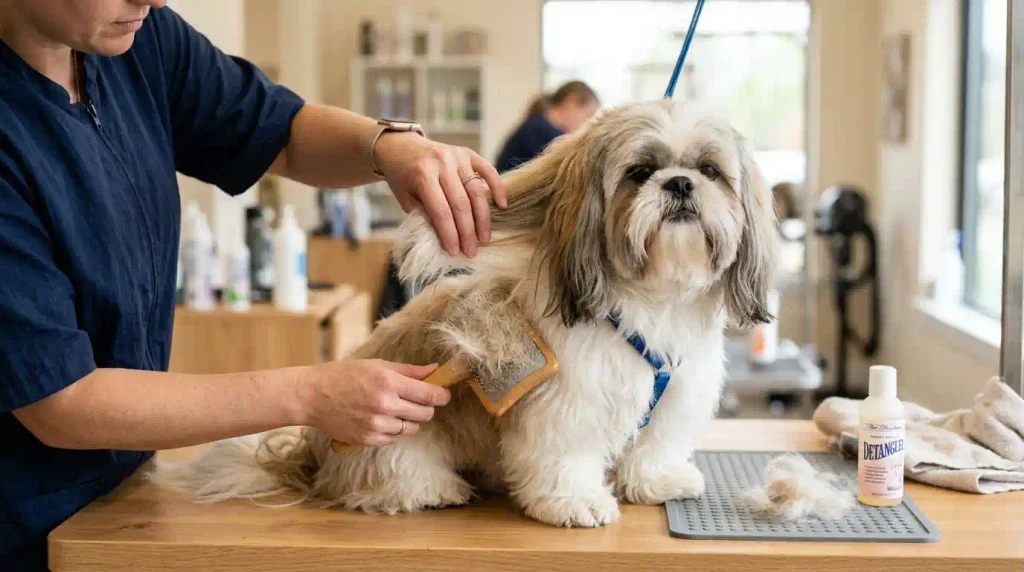
The Shih Tzu has a long double coat with an undercoat and an outer layer. Owners who keep the coat long usually need frequent brushing to prevent tangles. Loose hair can become caught in the surrounding coat instead of landing immediately on the furniture. Brushing then removes that retained hair, which explains why an owner may notice more loose strands during grooming than during ordinary play.
Coat length varies with the chosen trim. A full coat requires more maintenance; a short puppy cut is often easier to wash and comb. Neither style makes the dog stop producing allergenic proteins. Information about types of shih tzu can help you sort out appearance terms, but no coat style or color variety is a medically certified allergy-free type.
Why low shedding does not mean allergy-free
Less hair around the house may simplify cleaning, but dander and saliva can still settle on bedding, upholstery, toys, and clothing. The Shih Tzu’s facial hair can come into contact with saliva during normal licking and eating. If a person is particularly sensitive, cuddling the dog close to the face may matter more than finding a few hairs on the floor.
Puppy shedding versus adult shedding
Shih Tzu puppies develop a more mature coat as they grow. The amount of loose hair you notice can change during that transition, and grooming needs usually change too. There is no reliable rule that every puppy will shed heavily at an exact month or that adult shedding will stop entirely. If a puppy develops sudden hair loss, bald patches, or persistent itching, ask a veterinarian to check for a skin problem rather than assuming a normal coat change.
Skin health and dander
All dogs shed skin cells; dry or irritated skin may make flaking more noticeable. Itching, redness, greasy patches, or heavy dandruff can point to a health issue requiring veterinary attention. Do not assume a special food or supplement will cure a person’s dog allergy by changing the dog’s coat.
4. What Does Research Say About Hypoallergenic Dogs?
Findings from dog-allergen studies
In one 2012 study, researchers compared Can f 1 levels in hair and home samples from several breeds marketed as hypoallergenic and comparison dogs. The findings did not support describing a breed as consistently hypoallergenic on the basis of those measurements. Another study comparing dust in homes with “hypoallergenic” and other dogs found no reliable reduction in the measured dog allergen simply because a household chose a breed with that label.
What the evidence means for Shih Tzus
The studies above compared selected breeds and households; they were not a controlled trial demonstrating that Shih Tzus themselves produce a specific amount of allergen. It would be misleading to invent a Shih Tzu “allergen score” from them. The responsible takeaway is that low shedding is not enough evidence to promise low exposure or safety to an allergic person.
Common myths about hair, fur, and shedding
Three myths recur in puppy listings. First, “hair rather than fur” does not mean the dog lacks allergenic proteins. Second, barely shedding does not mean the dog produces no dander. Third, an apparently clean dog is not necessarily an allergy-safe dog; proteins can be present without visible dirt or loose hair.
5. What Are the Symptoms of a Dog Allergy?
Nose, eye, and skin symptoms
Common complaints include sneezing, a runny or blocked nose, itchy or watery eyes, coughing, and itchy skin. Some people develop hives or a rash after a dog licks them or rubs against their skin. Symptoms may start quickly or become noticeable after longer exposure. Washing hands after contact can remove material from the skin and reduce accidental transfer to the eyes.
Asthma symptoms
Wheezing, chest tightness, breathing difficulty, or worsening asthma require particular care. Someone with a history of serious reactions should discuss dog exposure with a clinician before arranging prolonged visits with a potential pet. A low-shedding coat is not a substitute for an asthma plan or prescribed treatment.
If breathing becomes difficult, stop the exposure and seek appropriate urgent medical care. For less severe but recurring symptoms, arrange an appointment rather than repeatedly increasing contact to see whether you “get used to” the dog. A clinician can assess the cause and discuss treatment options in the context of your medical history.
Pollen and dust carried in a dog’s coat
A long coat can pick up pollen, dust, or outdoor debris on walks. These are separate environmental triggers from the dog’s own proteins. If someone reacts more after outdoor play than after quiet indoor contact, that pattern is worth mentioning during an allergy consultation. It does not automatically prove the dog itself is harmless.
6. How to Check Your Reaction Before Getting a Shih Tzu
Allergy testing and advice from an allergist
An allergist can review your history and decide whether a skin prick test, an allergen-specific blood test, or another assessment is appropriate. Results must be interpreted alongside actual symptoms; a test cannot certify a specific dog as safe. In selected situations, an allergist may discuss testing for individual allergen components, such as Can f 5, if the result would change a practical decision.
Ask which symptoms require immediate attention and whether existing asthma changes the advice. Discuss medications or immunotherapy only with a qualified clinician. An over-the-counter antihistamine, eye drops, or nasal spray may be part of a treatment plan for some people, but choosing or stopping treatment should not be dictated by a puppy seller.
Spending time with the individual dog
Arrange more than one calm visit with the Shih Tzu you might adopt, if possible. Meet in an indoor environment resembling ordinary life and observe whether symptoms occur during and after contact. You may also learn how much grooming the dog needs, whether it licks frequently, and how your family members respond to being near it.
Do not deliberately provoke a severe reaction. If you have had asthma attacks or significant breathing symptoms around dogs, speak with an allergist before planning exposure. A “trial cuddle” is not a controlled medical challenge and should never override clinical guidance.
Testing your reaction in realistic settings
An outdoor encounter may involve less concentrated indoor allergen than daily life with a dog in the home. Where feasible and medically appropriate, repeat visits in a living space, and consider ordinary activities such as sitting nearby, handling the leash, and spending time after the dog has settled. Notice delayed symptoms as well as immediate ones.
Questions to ask before adoption
Ask how the dog is groomed, whether it has persistent skin problems, and whether a later visit is possible. Ask your household who will handle brushing, baths, laundry, and cleaning if the allergic person finds those tasks difficult. Agree on bedroom rules before the dog arrives and consider what you would do if symptoms remain unsafe despite reasonable measures.
If choosing a puppy, ask for honest health and pedigree information rather than accepting “100% hypoallergenic” as a selling point. A purebred shih tzu can still trigger allergies. Registry papers describe ancestry; they do not test human tolerance.

7. Do Age, Sex, or Breed Mix Affect Allergy Risk?
Puppies versus adult Shih Tzus
The puppy coat changes with maturity, and grooming routines change along with it. Young dogs also have different habits and environments from adults. A person who feels fine after meeting one puppy may still react after months of daily indoor exposure. If available, meeting adult Shih Tzus provides useful context for both coat care and household contact.
There is no medical basis for assuming shih tzu puppies are hypoallergenic simply because they are small or look less hairy. The same caution applies to unusually small dogs sold as teacup shih tzu: size marketing does not establish allergen safety.
Male versus female Shih Tzus
Can f 5 is a dog allergen associated with the prostate and male dogs. Research suggests that some people sensitized specifically to this component may respond differently to male and female dog allergens. This is a specialized finding, not evidence that every female Shih Tzu is safe or that neutering a male guarantees tolerance. Many people react to other components as well.
If the question is relevant to your history, ask an allergist whether component testing would help. Avoid choosing the sex of a puppy solely on internet advice about Can f 5. Your symptoms, test interpretation, and the individual dog’s suitability still matter.
Shih-Poos and other Shih Tzu mixes
A Shih-Poo combines Shih Tzu and Poodle ancestry; a Mal-Shi combines Shih Tzu and Maltese ancestry. Their coats can vary, even among littermates. A curlier or lower-shedding coat does not reliably prove reduced allergen production, so neither mix deserves a blanket “hypoallergenic” guarantee.
8. How to Reduce Shih Tzu Allergens at Home
Brushing and grooming
Brush often enough to prevent tangles and remove retained loose hair. The exact schedule depends on coat length and the individual dog. A shorter trim may make brushing easier, while a full coat generally takes more work. Professional grooming is useful if your household cannot maintain the coat comfortably.
Brushing can briefly stir up dander and dried saliva, especially around a matted coat. If the allergic person reacts during grooming, another household member or a professional groomer could handle the task. Choose a suitable location and clean tools afterward. A puppy cut helps maintenance; it does not create an allergy-free dog.
Bathing: benefits and limitations
Bathing can temporarily reduce allergens recovered from a dog’s coat, but the effect does not last indefinitely. A study of dog washing found that measured Can f 1 returned toward baseline over days, underscoring why an occasional bath cannot guarantee symptom control. More frequent bathing is not automatically better for an individual Shih Tzu: products and schedules must also protect its skin and coat.
Ask your veterinarian or groomer what bathing frequency and dog-safe shampoo suit your dog, especially if its skin becomes flaky, itchy, or red. Rinse and dry thoroughly. A human “hypoallergenic” product label is not a substitute for a canine-appropriate formulation or veterinary advice about a skin condition.
Keeping the bedroom dog-free
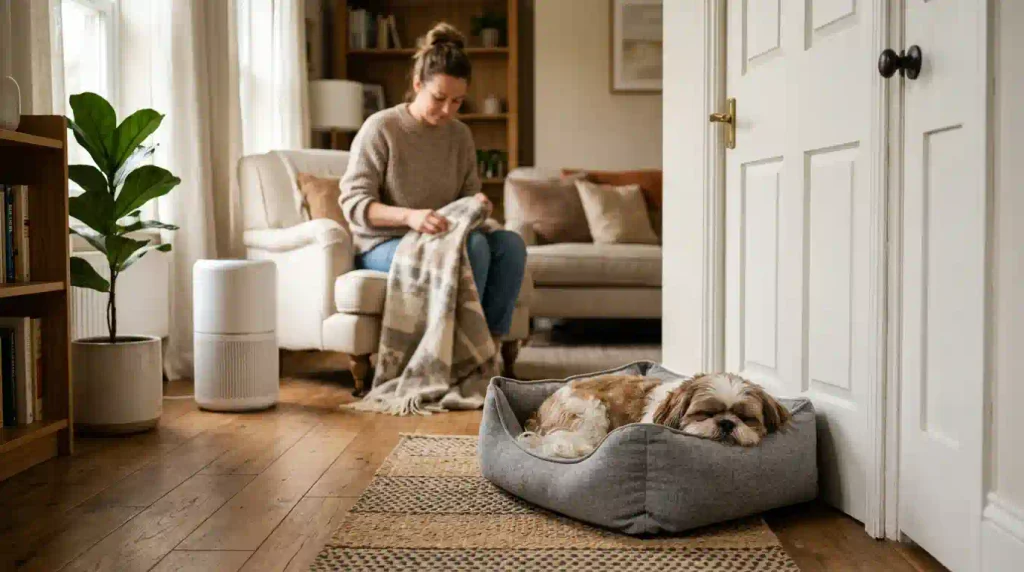
A pet-free bedroom is a practical way to reduce prolonged close contact. Keep the door closed consistently rather than letting the dog sleep on the bed some nights and expecting the space to remain low exposure. Wash bedding and consider where clothes that contacted the dog are stored before bedtime.
This boundary should be part of a humane routine. Give the Shih Tzu a comfortable bed and companionship elsewhere in the home; do not isolate a social dog for most of the day. If a household cannot keep reasonable boundaries without compromising either the person’s health or the dog’s welfare, reconsider the adoption plan.
Vacuuming and cleaning soft surfaces
Use a well-maintained vacuum, ideally with effective filtration, on floors and upholstered areas where the dog spends time. Wash dog bedding, washable throws, and other frequently contacted fabrics. Carpeting and upholstery can hold material longer than hard, wipeable surfaces, so match cleaning effort to your home’s layout.
HEPA air filtration
A properly sized HEPA air purifier can help capture particles suspended in indoor air. Place it where exposure matters, follow the manufacturer’s filter schedule, and treat it as a supplement to surface cleaning and bedroom rules. It cannot remove allergens still on a dog, a sofa, or a person’s hands.
Managing close contact
If saliva triggers symptoms, discourage face licking and wash hands after petting or play. Wipe the dog’s facial hair gently when it becomes messy, using a dog-safe approach. Keep frequently handled toys and soft items clean. You can still enjoy companionship without holding the dog close to your face for extended periods.
When to seek medical advice
Consult an allergist if symptoms continue despite sensible changes, if medication use is increasing, or if you are unsure whether the dog is the actual trigger. Ask about appropriate testing and options such as antihistamines, nasal treatment, eye drops, or immunotherapy when clinically relevant. Do not start or stop prescribed asthma treatment because an online breed article says Shih Tzus are low shedding.
Breathing difficulty, wheezing, or chest tightness deserves prompt attention according to your medical plan. If safe coexistence proves impossible, work with family members, the breeder, or a rescue on a responsible plan for the dog rather than delaying until the situation becomes a crisis.
9. Shih Tzu vs Other Low-Shedding Breeds
Coat care and shedding comparison
| Breed | General coat-care consideration | Allergy decision |
| Shih Tzu | Long double coat; frequent brushing or a maintained short trim | Low visible shedding does not prevent reactions |
| Poodle | Curly coat; regular professional trimming | Curl is not proof of low allergen production |
| Maltese | Long, silky coat; regular brushing and grooming | Individual tolerance must be assessed |
| Bichon Frise | Curly coat that requires regular maintenance | Low shedding does not mean allergy-free |
| Yorkshire Terrier | Fine, long coat with grooming needs | A small dog can still trigger symptoms |
| Schnauzer | Distinct coat that needs routine grooming | Breed reputation cannot predict one person’s response |
| Portuguese Water Dog | Larger, active dog with substantial coat-care needs | Household fit includes exercise as well as allergies |
| Lhasa Apso | Long coat requiring upkeep | Similar-looking coats do not imply identical individual reactions |
Why no breed guarantees an allergy-free home
Coat color does not solve the problem either. A brown shih tzu, gold and white shih tzu, or albino shih tzu has separate appearance or pigment characteristics; none of those descriptions establishes that a dog is safe for a person with allergies.
10. Is a Shih Tzu Right for Your Household Beyond Allergies?
Temperament and training
Shih Tzus are generally bred as affectionate companion dogs. Many enjoy being close to people and participating in household routines. That can be a benefit for someone seeking a companion, but it also means close contact is likely unless everyone agrees on sensible boundaries. Build habits that allow affection without requiring the dog to sleep in an allergic person’s bed.
Use short, reward-based training sessions for cues such as “off,” “settle,” and “leave it.” Teach the dog where to rest and give it rewarding alternatives to face licking. Explore shih tzu facts for more breed background; train the individual in front of you rather than assuming all Shih Tzus behave identically.
Exercise and daily routine
Plan regular walks and indoor play suited to the dog’s age and breathing comfort. A Shih Tzu does not need extreme endurance exercise, but it still benefits from movement, exploration, and interaction. After walks in a high-pollen season, gently clean dirty paws and keep outdoor debris off frequently used bedding.
Shih Tzus have short muzzles, so heat and strenuous exertion deserve care. Schedule outdoor activity for comfortable conditions and ask a veterinarian if the dog struggles to breathe. The history of the breed as a companion, outlined in shih tzu origin, does not remove its need for daily activity and attentive care.
Grooming time and costs
Budget time for brushing and money for professional trims if you cannot do all maintenance at home. A short coat still needs routine attention around the face, ears, paws, and nails. If the allergic household member should avoid brushing, decide who will take responsibility before adoption, not after the first mat appears.
Other health considerations
Ask a veterinarian about breathing, eyes, dental care, weight, and any persistent skin irritation. An uncomfortable dog may scratch or shed more loose material, but treating its medical condition is important regardless of its effect on a human’s allergies. Persistent eye discharge or breathing difficulty is not an ordinary feature to ignore.
11. Common Mistakes When Choosing a Shih Tzu for Allergies
Trusting the “hypoallergenic” label
A label on a breed list or puppy listing cannot diagnose your immune response. Ask the seller what they mean by “hypoallergenic.” If the answer is simply “the dog has hair, not fur,” you still need to consider dander, saliva, and urine. Request health information for the dog, but recognize that canine health records do not establish human allergy tolerance.
Assuming a puppy cut removes allergens
A puppy cut reduces the length of the coat and can make washing and brushing simpler. It does not prevent skin cells from shedding or the dog from producing saliva. If a close trim irritates the dog’s skin, it might also make grooming less comfortable. Keep the coat at a length your household can maintain well rather than treating a haircut as a cure.
Confusing a dog’s food allergies with human dog allergies
A Shih Tzu can have its own skin or food problems. A veterinary diet may be appropriate for that dog under professional guidance, but “hypoallergenic dog food” addresses a different question from whether a person is allergic to a dog. Buying a particular food will not remove Can f proteins from the animal or guarantee relief for a human family member.
Testing your reaction too briefly
A few minutes outdoors, a single puppy cuddle, or a visit while taking medication may not represent daily life. Repeat contact when safe, consider indoor exposure, and pay attention to later symptoms. An allergist’s interpretation is especially valuable if symptoms have been serious or your reaction seems inconsistent.
Adopting without an allergy-management plan
Decide who will groom the dog, which rooms will remain pet-free, how bedding will be washed, and what happens if symptoms worsen. Discuss the plan before an emotionally difficult decision arises. A dog should not face repeated upheaval because a household relied on an unsupported guarantee.
12. Frequently Asked Questions
Are Shih Tzus 100% hypoallergenic?
No; every Shih Tzu produces potential allergens despite usually shedding relatively little.
Can someone with dog allergies live with a Shih Tzu?
Some can, but tolerance varies; consult an allergist and assess the individual dog before committing.
Do Shih Tzus produce dander?
Yes; their skin sheds cells even when their coat leaves little visible hair around the home.
Does a puppy cut reduce allergies?
It can make grooming easier, but it does not stop the dog from producing allergens.
Are Shih Tzu mixes hypoallergenic?
No mix, including a Shih-Poo or Mal-Shi, is guaranteed to be allergy-free.
Is a male or female Shih Tzu better for allergies?
Sex may matter for someone specifically sensitive to Can f 5, but an allergist should interpret that possibility.
Should I get allergy testing before adopting?
If dog allergies are suspected—especially with asthma or significant symptoms—ask an allergist which assessment is appropriate.
Can a Shih Tzu trigger asthma?
Yes; dog allergens can worsen asthma in a sensitive person, regardless of the breed’s shedding level.
Can a Shih Tzu have allergies itself?
Yes; a dog’s own skin or food allergies are separate from a person’s allergy to dog proteins.
13. Final Verdict: Should You Get a Shih Tzu If You Have Allergies?
A Shih Tzu may be a manageable companion for some allergy sufferers, but low shedding is not a promise of low symptoms. Dog allergens still occur in dander, saliva, and urine, and responses vary between people and individual dogs. Begin with an honest review of your symptoms; speak with an allergist if reactions are significant, particularly if asthma is involved. Then, when medically appropriate, spend repeated time with the dog you are considering and plan for grooming, cleaning, and a pet-free bedroom. Choose the dog only if those routines protect your household while allowing the animal a comfortable, social life. If you are deciding now, write down your allergy history and arrange the relevant medical and dog visits before making a commitment.