
Black Mask Gold Shih Tzu: Appearance, Genetics and Care
Summary: A black mask gold Shih Tzu has a warm gold coat and visibly dark hair concentrated around the muzzle, sometimes extending toward the eyes or forehead. The contrast can be striking, but identifying it correctly takes more than spotting a black nose: most non-liver Shih Tzus have black nose and eye-rim pigment, even when their facial hair is gold. Dark ear tips, sable hairs, brindle streaks, and tan-point markings can also make a puppy look masked in photographs. This guide shows you exactly where to look, how to compare those patterns, and what genetics can and cannot tell you about a particular dog. It also covers the question many puppy buyers have: will the gold lighten, and will the dark face remain visible after the first haircut? Finally, you will find practical grooming advice and a grounded way to assess claims about rarity, price, and pedigree. Use the photo checklist before choosing a label—or choosing a puppy.
Table of Contents
- What Is a Black Mask Gold Shih Tzu?
- How Can You Recognize the Black Mask?
- Black Mask or a Different Dark Marking?
- What Genetics Produce a Gold Coat With a Black Mask?
- Will a Black Mask Gold Puppy Keep Its Colors?
- Is Black Mask Gold Recognized, Rare, or More Expensive?
- How Do You Care for This Shih Tzu’s Coat?
- Frequently Asked Questions
- Final Takeaway
What Is a Black Mask Gold Shih Tzu?
The quick answer and defining appearance
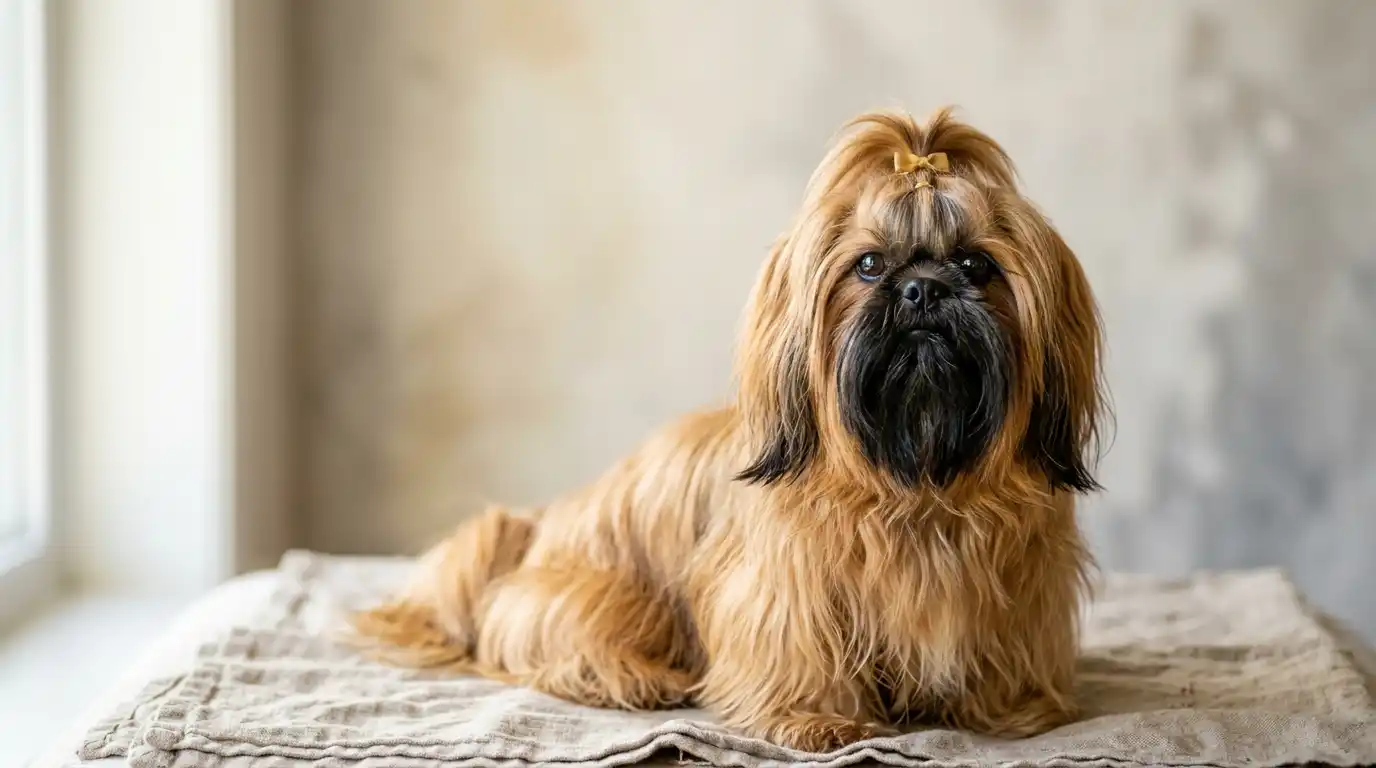
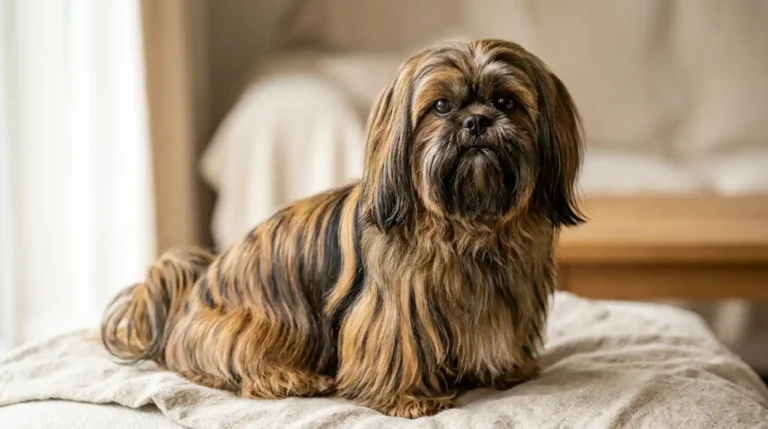
A black mask gold Shih Tzu is a gold-coated dog whose facial hair has a distinct dark area, particularly around the muzzle. The gold may cover most of the body, while the black creates contrast on the face. Owners also describe the look as a gold Shih Tzu with a black mask or, less precisely, a black and golden Shih Tzu. These are descriptions of appearance, not separate breeds.
The quickest check is to compare hair with hair: is the muzzle fur visibly darker than the gold fur on the cheeks or body? If only the nose and thin eye rims are black, the dog does not necessarily have a black coat mask. Black skin pigment is usual in Shih Tzus that are neither liver- nor blue-pigmented. You can explore other combinations in the shih tzu colors guide, but look at the face before assigning this particular label.
The American Shih Tzu Club includes “Black Mask Gold” in its color examples. Its breed standard allows all colors and markings, so the description fits within the breed’s accepted range. Coat color by itself, however, cannot prove ancestry or predict the adult dog’s exact appearance.
How gold shades and mask size vary
Gold covers a range of warm-looking coats, from pale honey or cream-gold to deeper yellow-orange. A dog with a very rich coat may be casually called red or golden brown. Lighting makes a difference: warm indoor bulbs can turn cream-looking fur orange in photographs, while bright sun can wash out gold.
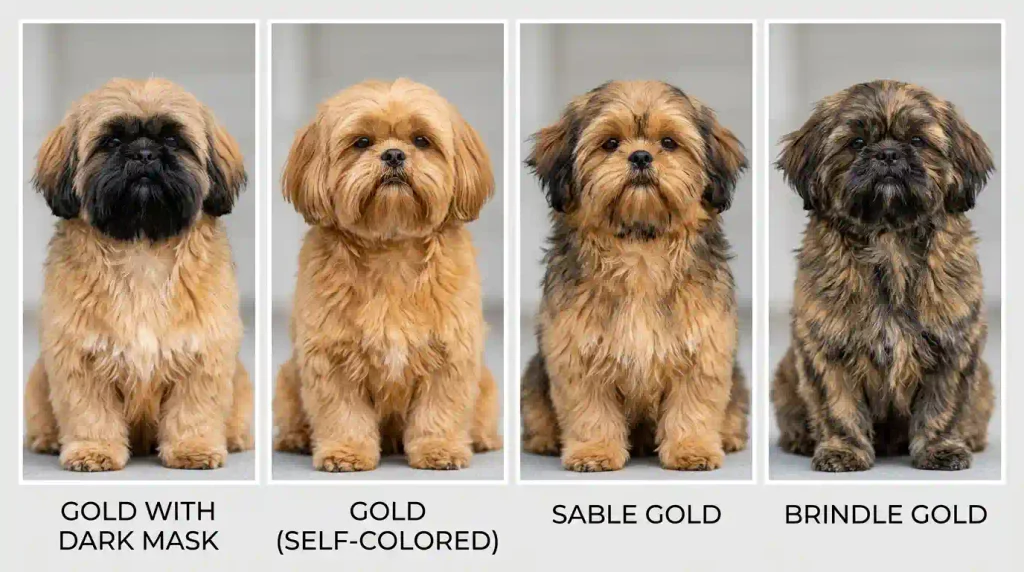
The mask can appear like a narrow dark muzzle, a broader patch reaching up toward the eyes, or a face with dark hair mixed into the forehead. Dark ears may accompany it, but ears alone do not establish a mask. A dog may also have white paws or chest fur; white marks describe an additional part of the coat, rather than cancelling the dark face.
“Solid gold” sometimes means the body is gold despite a black mask. Strictly describing all visible hair, however, a masked face is not gold from head to toe. Compare a golden brown shih tzu or red shih tzu to judge the body shade separately.
How Can You Recognize the Black Mask?
Muzzle, eyes, forehead, and ears: what to inspect
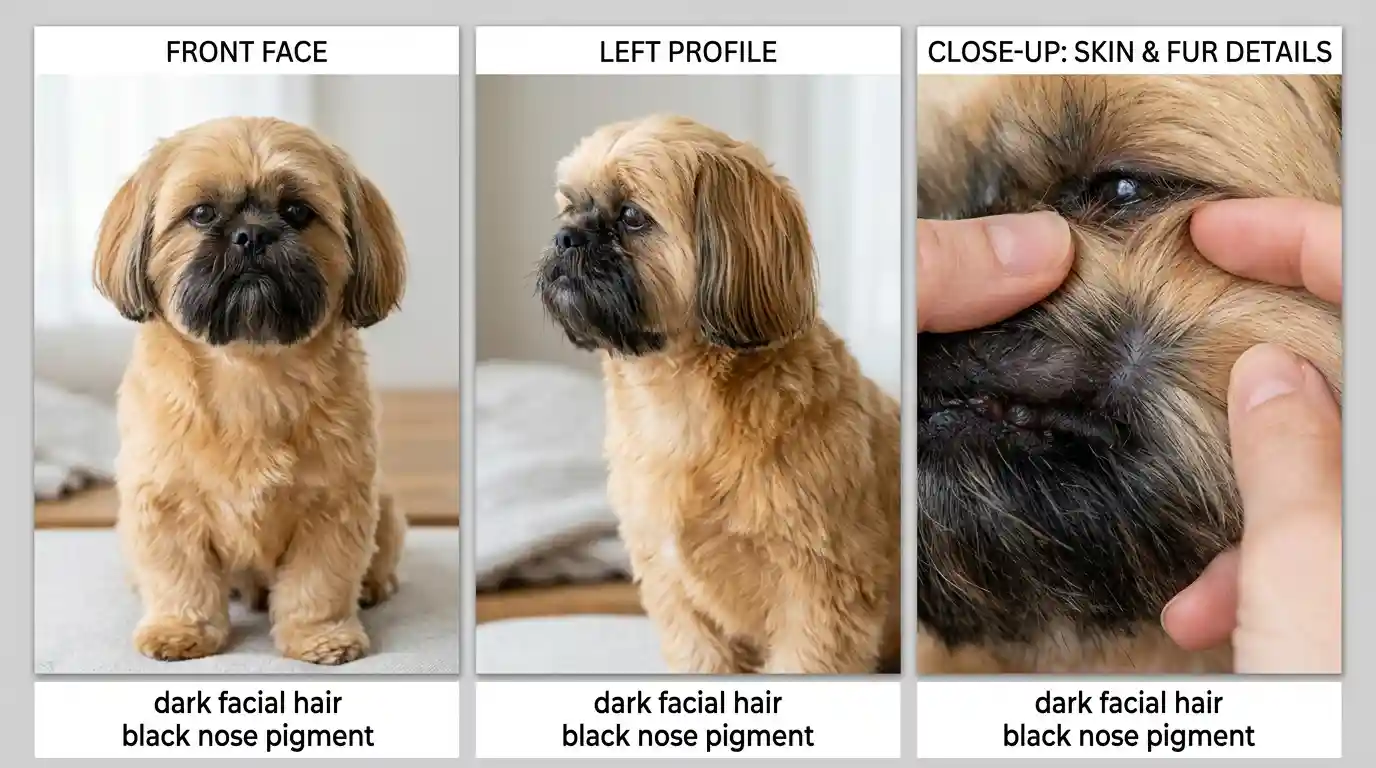
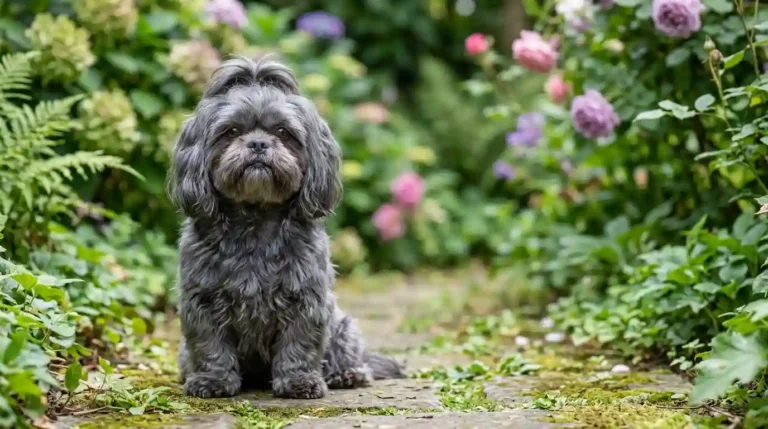
Start at the muzzle. Part any long facial hair gently and look for black or very dark strands above and around the nose. Then examine the hair beside the mouth and under the eyes. On some dogs the dark area rises toward the forehead; on others it stays close to the muzzle. Neither the exact outline nor the width must match a perfect circle.
Next, compare the cheeks, ears, and neck with the body. If the whole face is dark but the trunk is warm gold, the mask is relatively easy to spot. If only the ears are dark, describe dark ears rather than claiming a facial mask. If the dog is black almost everywhere, a genetically present mask might blend into the coat and be impossible to distinguish by sight.
Look separately at the nose, lips, and eye rims. These are areas of skin pigmentation, not evidence that black hair forms a mask. The Shih Tzu breed standard specifies black pigmentation there for most coat colors, with liver or blue pigmentation for dogs of those pigment types. A liver chocolate shih tzu raises a different pigment question; warm fur alone cannot settle it.
A daylight photo checklist for puppies and adults
For a puppy listing, ask for unfiltered photographs taken in natural, indirect light. One front-facing beauty shot is useful but insufficient. Request the following views:
- Front of the face: Can you see dark muzzle hair beyond the nose and lips?
- Both side profiles: Does the dark hair wrap around the face, or is one ear creating the impression of a mask?
- Eyes and forehead: Does dark facial fur reach those areas? Are the eye rims being mistaken for it?
- Body and back: Is the coat predominantly gold, or do dark streaks cover much of it?
- Chest, paws, and tail: Record any white patches and dark tips before choosing an exact color description.
- Coat at the roots: If longer hair has dark ends, check the newer growth near the skin.
Keep lighting similar in repeat photos; a short outdoor video can show the pattern from several angles.
Black Mask or a Different Dark Marking?
Mask versus black nose and eye rims
This is the most important comparison. The black nose is a pigmented surface; a black mask is dark hair growing around the face. A gold Shih Tzu can have a black nose, lips, and eye rims yet have no visibly dark muzzle fur. The same distinction applies to paw pads: their color helps describe pigmentation, but does not draw the boundaries of a facial coat pattern.
Mask versus sable tips, brindle, and black-and-tan points
| Feature | Where the dark color appears | Helpful visual clue |
| Black mask | Concentrated facial hair, especially at the muzzle | Face remains darker than nearby gold hair |
| Sable or black tipping | Dark ends on individual lighter hairs, sometimes across the body | Part the hair or compare before and after a trim |
| Brindle | Dark streaks through lighter coat areas | Streaks extend beyond the face |
| Black-and-tan points | Mostly dark body with lighter marks above the eyes and on legs | Base coat and color placement differ from a gold body with a dark muzzle |
| Dark ears | Primarily on the ears | Muzzle hair may remain gold |
A brindle shih tzu may have gold hair crossed by darker streaks. A black brindle shih tzu can look dark from a distance while showing warm streaks up close. Black tips on otherwise gold hairs can create broad shading that is mistaken for a larger mask, especially on a puppy with a long coat.
A black and tan shih tzu generally starts with a much darker body and has lighter points in fairly predictable positions. Calling its tan eyebrow spots a facial black mask reverses what the pattern shows. If the dog looks black and warm brown over much of its body, use the black and brown shih tzu comparison instead of forcing a gold-mask label.
What white patches add to the coat description
A gold dog can have both a dark facial mask and white on its chest, feet, or body. In plain language, you can say gold and white with a black mask. If three colors of hair are clearly visible, “tricolor” is also a useful broad description; it does not identify all the underlying genetics.
White may interrupt or cover part of the face. A white muzzle can make an inherited dark-mask variant difficult to see. For owners comparing large white areas, the gold and white shih tzu page is a natural next step. A white forehead stripe, often called a blaze, is another placement description rather than evidence of a separate breed.
What Genetics Produce a Gold Coat With a Black Mask?
Facial-mask pigmentation in plain English
Dog hair colors draw on two major pigment types: eumelanin, responsible for dark pigment that can appear black, and pheomelanin, which produces red-to-yellow shades such as gold and cream. A visible mask places darker pigment in facial hairs against a lighter coat. This explains the contrast without assuming every dark-haired face has identical genetics.
One well-established facial-mask variant is associated with MC1R, also called the E locus. The masked version is commonly written Eᵐ. UC Davis Veterinary Genetics Laboratory explains that dogs with this variant can produce a melanistic facial mask, but whether it is visible depends on other aspects of the coat, including white spotting and how dark the rest of the dog is. Its dog facial-mask genetics explanation is the authoritative external reference for this section.
The E-locus variant should not be described as simply a “recessive black mask gene.” Nor does every gold-looking coat necessarily carry the same E-locus combination. An entirely red/yellow coat produced by certain recessive E-locus combinations lacks black hair in its coat, while a gold-looking dog with genuinely black facial hair needs an explanation that permits that dark hair. Exact identification calls for appropriate testing, especially if the coat contains several overlapping patterns.
Why other inherited traits affect what you can see
The E locus is only part of coat genetics. Other loci affect pigment color, patterned placement, and white spotting. At the B locus, variants can turn otherwise black eumelanin brown in liver-pigmented dogs; this does not turn red-yellow pheomelanin into brown. The K locus can affect which coat patterns show, while white spotting associated with the S locus may obscure hair that would otherwise reveal a mask.
Dark ears, black tips, or a white blaze can accompany a mask. Describe them separately. These are coat variations within the breed, as the types of shih tzu discussion helps clarify.
What a coat-color DNA test can clarify
If the specific genetic cause matters, ask a canine genetics laboratory which MC1R mask variants its test covers. A coat-color panel may also assess other pigmentation and pattern variants. Read the actual genotype report with the laboratory’s explanation rather than interpreting a screenshot labeled merely “gold” or “black mask.”
A DNA result can help explain why a mask is possible or why black pigment is absent from a coat. It cannot promise the precise outline of dark fur in an adult Shih Tzu, account for every photographic illusion, or replace pedigree and health records. Color testing is optional for an owner who only wants to name a visible pattern; it becomes more useful when a breeder is evaluating specific inherited variants.
A reported mask variant and a white muzzle need to be interpreted together; a dark face alone cannot reveal how many copies of a variant the puppy inherited.
Will a Black Mask Gold Puppy Keep Its Colors?
Gold-coat changes as the puppy matures
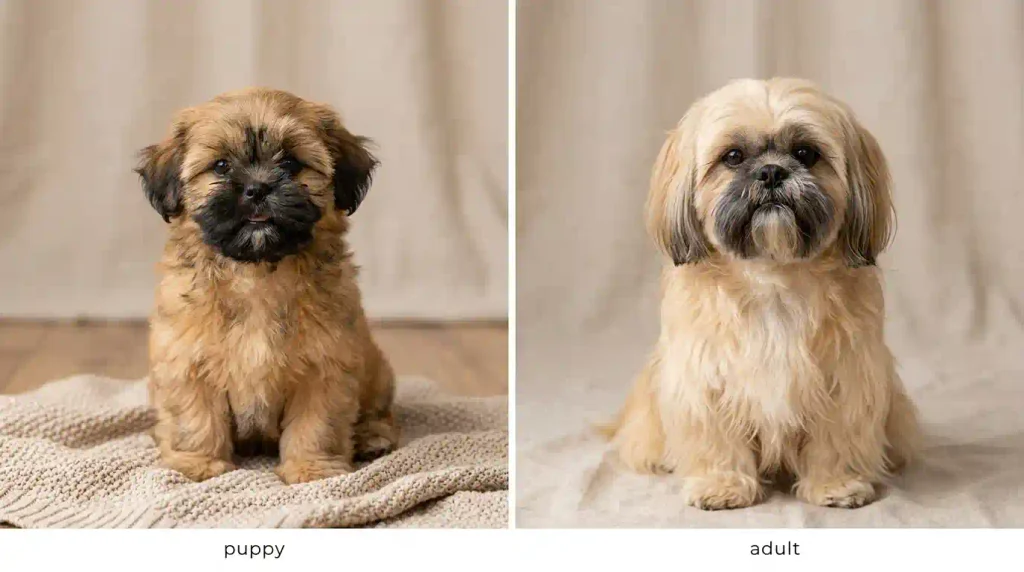
A Shih Tzu’s puppy coat can look different as the adult coat grows in. Deep gold may soften toward pale gold or cream; shaded hairs may look lighter once long puppy tips are trimmed. Some dogs keep stronger contrast, while others change enough to surprise their owners. No puppy photograph can guarantee an exact adult shade.
Photograph the puppy in indirect daylight from the same angle over time. Compare new growth with longer hair; family photos show possibilities, not guarantees.
Color labels on early registration paperwork may continue to reflect the puppy’s original appearance. The dog itself may look lighter in adulthood without that change indicating an illness. If the change comes with sudden hair loss, itching, sores, or irritated skin, a veterinarian should assess the skin rather than treating the issue as ordinary fading.
Why black tips and haircuts change the apparent pattern
Many puppies have dark-tipped hairs beyond the face. When a groomer clips those ends, the remaining coat can appear much more golden. That change is especially dramatic on the back, ears, and tail. It does not prove that black pigment disappeared from every hair or that the dog’s DNA changed.
Compare the trimmed muzzle with the body after a haircut. Very short facial hair can make the mask look smaller simply because less dark hair is visible. As the coat grows, the dark area may become easier to recognize again. If the face itself develops lighter new hair over time, the contrast may change more persistently.
Indoor bulbs and filters alter the apparent gold and black. Compare daylight photos before concluding that a coat faded.
Can the mask become less noticeable?
Yes. Its appearance can soften as surrounding gold fur lightens, facial hairs grow differently, or grooming changes the amount of dark hair you can see. White markings may also interrupt an expected dark area. Whether a particular puppy will keep a sharply defined mask is difficult to promise.
“Keep its mask” can mean retaining a genetic variant or retaining a clearly visible dark patch. Testing may address the first; observation over time answers the second.
Is Black Mask Gold Recognized, Rare, or More Expensive?
Breed-standard acceptance versus color labels
The American Shih Tzu Club’s examples include Black Mask Gold, and the US breed standard allows all colors and markings. That addresses whether this appearance can belong to a purebred dog. It does not mean a particular registration form must offer that exact everyday phrase as a single coat-color choice.
Registration terms, breed-standard permission, and visual descriptions answer different questions. A breeder may describe a puppy as gold with a black mask, while a form records a base color and a marking separately. If the wording matters to you, ask to see the actual paperwork and which organization issued it. A gold mask does not, by itself, certify a purebred shih tzu; pedigree records provide the relevant evidence.
Color does not establish size labels such as teacup shih tzu. See shih tzu Breed Information for broader context.
How to evaluate rarity and puppy-price claims
An eye-catching mask can be scarce in one breeder’s recent litters without being quantifiably rare across all US Shih Tzus. The pages reviewed for this topic do not supply a representative national frequency for the exact black-mask-gold combination. Treat phrases such as “one of a kind” or “guaranteed rare” as sales claims until the seller explains what they mean.
Price may reflect a breeder’s expenses, pedigree, location, demand, and sales strategy. A premium based solely on a predicted adult facial pattern deserves scrutiny because the appearance can change. Ask for current unfiltered photos, information about the parents, health documentation, and the breeder’s contract and return policy. You can also consider rescue dogs; an adult’s coat and behavior are easier to assess directly.
Prioritize health and socialization even if you love the mask; its adult contrast is not guaranteed.
How Do You Care for This Shih Tzu’s Coat?
Brushing, bathing, and preventing mats
The gold body and black face do not require a special color-specific grooming product. A Shih Tzu’s long double coat needs regular brushing and combing to prevent mats, particularly behind the ears, beneath a harness, in the armpits, and around the collar. Work in small sections and check that your comb reaches near the skin instead of gliding over the outer layer.
The right routine depends on hair length. A full coat demands more frequent attention than a comfortable shorter trim, but short coats still need skin and tangle checks. A professional groomer can recommend a schedule based on your dog’s coat texture and the style you can maintain. Bathe with a suitable dog shampoo when needed, rinse thoroughly, and dry the coat carefully enough to find tangles before they tighten.
Avoid harsh products marketed to deepen the mask. A gold and white shih tzu needs the same comfortable grooming despite different markings.
Keeping facial hair clean and comfortable
Facial hair around the eyes and mouth can collect food and moisture. Gently clean visible debris with an appropriate damp cloth or veterinary-recommended grooming product, and keep hair positioned or trimmed so it does not rub the eyes. Check the skin beneath the dark muzzle hair rather than assuming it is clean because stains are less visible.
If you notice persistent eye discharge, redness, squinting, or irritated skin, contact a veterinarian. Trimming should never require pressing sharp scissors against a moving dog’s eyes. A groomer can show you how to maintain a clean face while preserving the look you like.
Coat color does not determine human allergy risk; see shih tzu hypoallergenic for that separate question.
Choosing a puppy for health and temperament
Meet the individual puppy or adult dog whenever possible. Observe how it responds to gentle handling, how it moves and breathes at rest, and whether its eyes and skin look comfortable. Ask about socialization, veterinary visits, the parents’ relevant health evaluations, and what support is available after adoption.
An affectionate temperament is central to the breed’s companion role, but individual dogs vary. A color cannot establish whether a particular puppy will suit your household. If you are choosing between two similar gold puppies, prioritize their health history, behavior, and your ability to meet their grooming needs over the sharpness of their facial masks.
Keep documents and accept that the adult coat may differ. Review shih tzu facts for everyday breed needs.
Frequently Asked Questions
Is a black mask gold Shih Tzu purebred?
It can be; the color is compatible with the breed standard, but pedigree records—not appearance alone—establish purebred status.
Is a black mask the same as a black nose?
No; a mask is dark facial hair, while a black nose is skin pigmentation and can occur without a coat mask.
Can a gold Shih Tzu have white markings and a black mask?
Yes; describe the visible coat as gold and white with a black mask when all three areas of hair are present.
Will the black mask disappear after grooming?
A short trim can make it less visible, but grooming alone cannot change the dog’s inherited coat-color variants.
Final Takeaway
A black mask gold Shih Tzu is best identified by dark facial hair set against a predominantly gold coat. Check the muzzle in natural light, then separate the mask from a black nose, dark ear tips, sable shading, brindle streaks, and white markings. Genetics can help explain a facial mask, but a photograph cannot reveal a complete genotype or guarantee the exact adult pattern. Gold fur and the apparent mask can change as a puppy grows and is groomed. If you are considering a puppy, request clear photographs, read the health and pedigree information, and meet the dog where possible. Use the photo checklist above to name the coat accurately, then choose the companion whose care needs and temperament fit your home.
One Comment