
Black and Brown Shih Tzu: Identify the Coat and Care for It
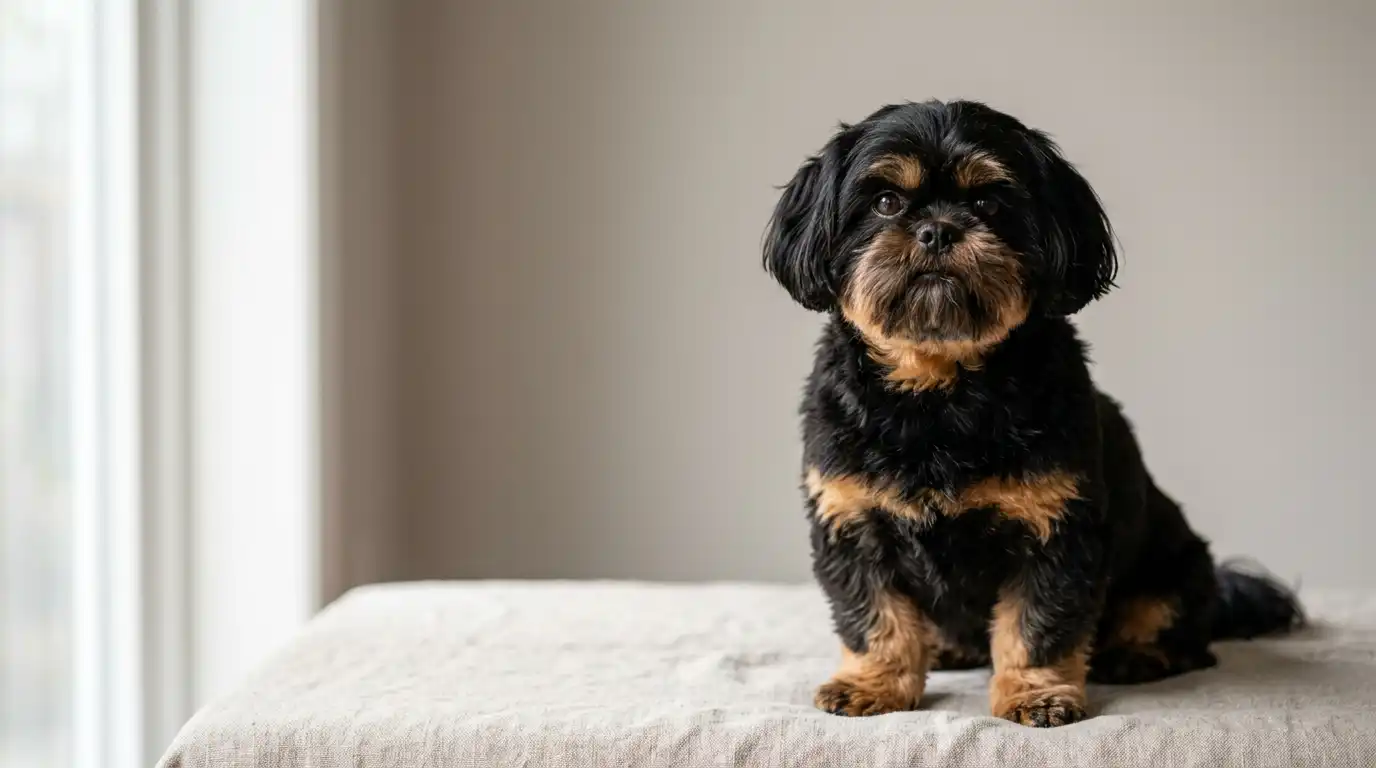
Summary: A black and brown Shih Tzu may have a dark coat with neat tan patches above the eyes and on the legs, or a less orderly mix of dark and warm-colored hair. The description tells you what a dog looks like, but it does not identify one single genetic pattern. A dog advertised as black and brown might be black and tan, brindle, sable, or even a gold dog with a black mask. The biggest source of confusion is the word brown: tan or gold fur can occur on a dog with a black nose, whereas liver describes a change in dark pigment that usually shows at the nose, lips, and eye rims. In this guide, you will learn where to inspect a puppy’s markings, how to compare similar coats, what a DNA test can clarify, and why an adult coat may look different from puppy photos. You will also find practical grooming and puppy-selection advice so you can appreciate the color without letting it overshadow health and temperament.
Table of Contents
- What Does “Black and Brown Shih Tzu” Mean?
- How Can You Identify a Black-and-Brown Coat?
- Black and Tan, Brindle, Sable, or a Black Mask?
- Is the Brown Color Actually Liver?
- What Genetics Produce Black and Brown Appearance?
- Will a Black-and-Brown Puppy Change Color?
- Is This Color Recognized, Rare, or More Expensive?
- Does the Color Affect Health, Personality, or Care?
- Frequently Asked Questions
- Final Takeaway
What Does “Black and Brown Shih Tzu” Mean?
The quick answer: two visible colors, several possible patterns
“Black and brown” is an everyday description of a Shih Tzu with dark and warm-colored areas in its coat. It is useful for telling someone which puppy you mean, but it is not a complete coat-pattern diagnosis. One dog may be mostly black with small, predictable tan markings. Another may have alternating dark and gold hairs across its body. A third may simply have a dark face against a reddish coat.
For identification, ask where the colors occur, whether the dark areas are patches or individual hairs, and what color the nose appears to be. Good daylight photographs of the front, both sides, and the dog with its hair parted can answer more than a single edited sales image. The broader guide to shih tzu colors is useful when you need to compare more combinations.
The breed itself has a long, flowing double coat, so its hair length can conceal boundaries between markings. A short trim may expose an unexpected tan patch or make dark tips seem to disappear. Coat appearance is only one part of identifying a dog; color alone cannot establish whether it is a purebred shih tzu.
Why brown fur may be called tan, gold, red, or chocolate
Owners often use brown for anything from pale tan to deep reddish gold. A breeder might describe those same hairs as gold, red, or tan depending on their shade and placement. In contrast, chocolate or liver can refer to the pigmentation of normally black areas, including the nose. These descriptions can overlap in casual speech while pointing to different traits in genetics.
Compare a golden area with the dog’s nose before deciding what the name implies. A warm brown-looking coat with a black nose could involve tan or gold hair rather than liver pigment. A brown shih tzu page can help you compare appearances, but the observable shade alone cannot provide a genetic answer.
That distinction matters when searching for a puppy. The phrase “shih tzu puppy black and brown” may bring up tan-point dogs, dark brindles, and mixed-color puppies. Request clear, recent photographs and describe the markings you actually want instead of relying entirely on the seller’s label.
How Can You Identify a Black-and-Brown Coat?
Where to look for tan points or “Dobie” markings
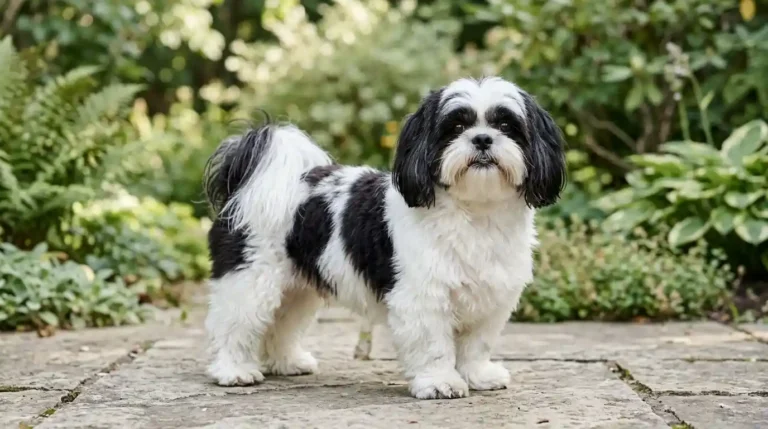
The clearest black-and-brown arrangement has a mostly black background with tan or gold points in fairly consistent places. Some Shih Tzu enthusiasts call these “Dobie” markings because the layout recalls a Doberman Pinscher’s black-and-tan coat. The nickname refers to the markings, not to a cross with a Doberman.
Look for lighter spots above the eyes, lighter cheeks or sides of the muzzle, tan on the lower legs or feet, and sometimes lighter hair on the chest or beneath the tail. The amount and depth of color vary. A face covered by long hair may require a gentle parting of the coat before you can see both eyebrow spots.
The useful clue is placement. A dog with tan points has a recurring arrangement; a dog with irregular dark streaks running through a lighter base may be brindle. A dog whose muzzle alone is dark may have a black mask. For a closer comparison of the distinctive point pattern, see black and tan shih tzu.
A photo checklist for the face, legs, chest, and tail
Use this checklist when evaluating a puppy listing or documenting your own dog:
- Face: Are there matching tan spots above the eyes? Are the cheeks light, or is the muzzle simply covered by a black mask?
- Front legs: Do lighter areas sit in similar positions on both legs, or are the colors mixed through the hair?
- Chest and underside: Is there a tan patch, a white patch, or both? White changes how you would describe the combination.
- Hind legs and tail: Check the lower legs and the area below the tail for additional points.
- Hair shafts: Part the coat. Are separate hairs striped or tipped black, or are there distinct areas of black and tan hair?
- Nose and eye rims: Note their color separately from the fur. Photograph them without filters in indirect daylight.
Save pictures from several ages if you have them. A photograph of a freshly clipped puppy and one taken weeks later may seem to show different colors because the visible parts of the hairs differ.
Black and Tan, Brindle, Sable, or a Black Mask?
How each pattern places dark and lighter hair
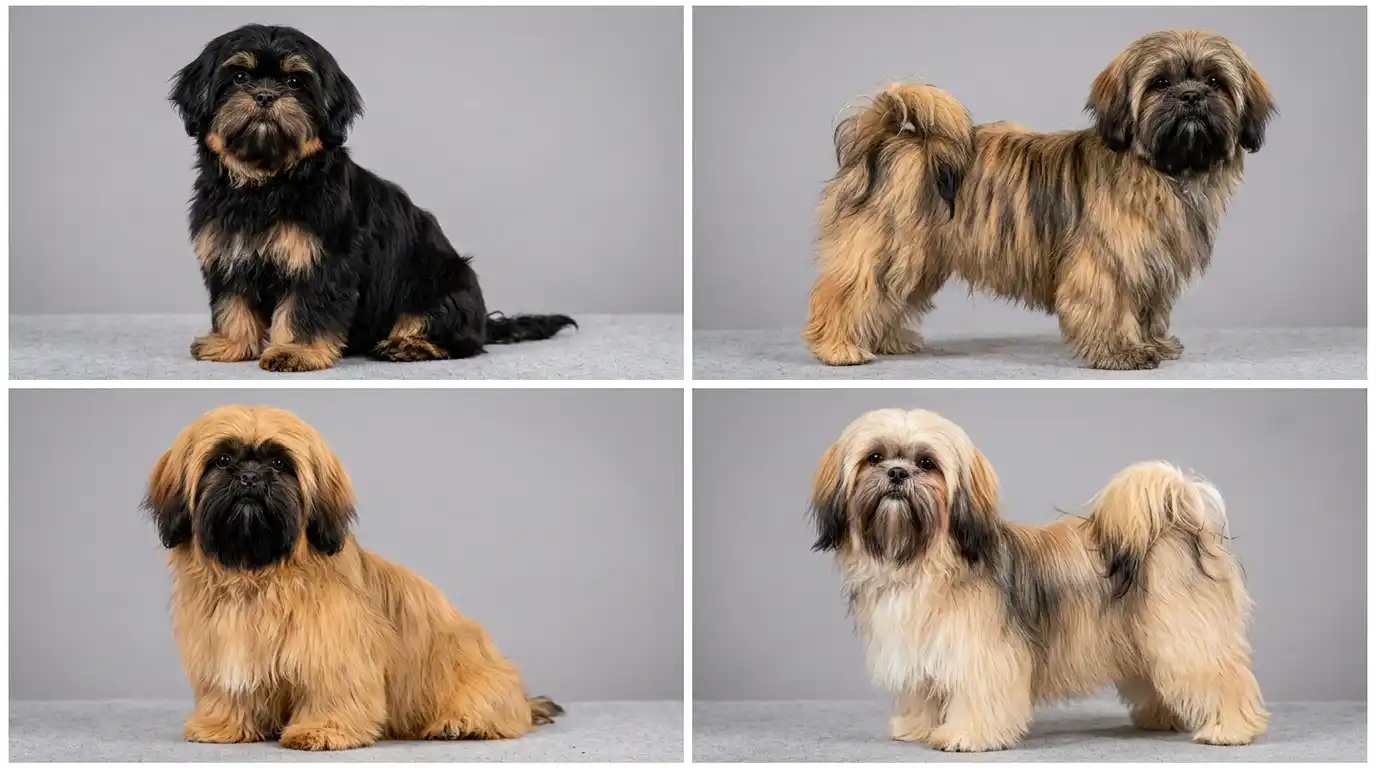
Several coats can look like a black brown Shih Tzu in a small picture. The table focuses on what you can actually inspect; none of its visual clues substitutes for a coat-color test when the genetics matter.
| Appearance | What to look for | Common source of confusion |
| Black and tan points | Black background with lighter marks in predictable places, often above the eyes and on the legs | Long facial hair hides the points |
| Brindle | Dark streaks interspersed with lighter hair, often across more of the body | A heavily brindled coat looks nearly black in dim light |
| Sable or black tipping | Dark ends on lighter individual hairs | Clipping removes the visible dark tips |
| Black mask | Concentrated dark hair on the muzzle or face | A dark face is mistaken for an all-over black-and-tan pattern |
| Solid black with small pale areas | Predominantly dark coat with limited contrasting marks | A tiny patch is called a fully patterned coat |
A black brindle shih tzu may appear black and brown until you inspect the streaks closely. A brindle shih tzu often has dark bands woven through gold, red, or other lighter hair, rather than tidy tan points. With sable, the contrast may come from the tips of individual hairs; trimming those ends can make the dog appear much lighter without changing its underlying genes.
A black mask gold shih tzu reverses the emphasis: the body may be predominantly warm gold while the muzzle is dark. If the whole dog looks almost solid black, compare it with a black shih tzu in well-lit photographs. Pattern terms describe the arrangement of color, not a separate Shih Tzu breed or type.
When white markings make the coat tricolor
If you can see black, tan or gold, and white fur, “tricolor” is a useful everyday description. White might form a chest bib, facial blaze, paws, or larger body patches. A white chest does not erase the tan points; it adds another visible color to describe.
Be precise about what you see. A brown black and white shih tzu may have three distinct color areas, while a black and white shih tzu with sunlit or dark-tipped hair can look temporarily brown in a photograph. Parti-color generally signals prominent white areas in a multicolored coat; it does not specify which nonwhite colors are present.
You may also see names such as blaze for a white facial stripe, saddle for a broad back marking, or tuxedo for a dark body with white on the chest. These describe placement. They should not be treated as proof of ancestry or used to invent a genetically distinct “type.”
Is the Brown Color Actually Liver?
Check the nose, lips, and eye rims
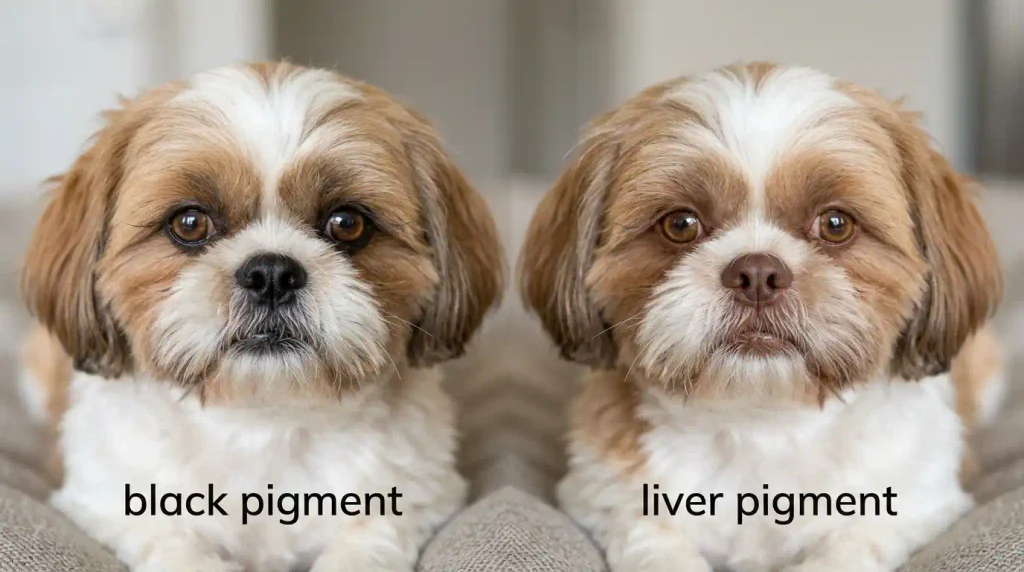
The word liver has a more specific meaning than the everyday word brown. In canine coat genetics, the B locus influences whether normally black eumelanin appears black or brown. A dog with the relevant recessive brown combination has brown rather than black eumelanin, including in the nose and other pigmented areas. Red or yellow hair comes from a different pigment and can look brownish even when the dog’s nose is black.
In a well-lit photograph, check the nose first, then the lips and eye rims. A clearly black nose alongside golden-brown coat patches points away from liver pigmentation. A distinctly brown nose with matching facial pigmentation raises the possibility of liver. Paw pads can add context, though mixed pink and dark pad areas make them less decisive in isolation.
The American Shih Tzu Club breed standard describes black nose, lips, and eye rims for the usual colors, with liver pigmentation for liver-pigmented dogs and blue pigmentation for blue-pigmented dogs.
Why coat shade alone cannot confirm liver pigmentation
Chocolate-colored hair, gold hair in shadow, and dark red hair can resemble one another on a phone screen. Filters, indoor lighting, and exposure settings change what you see. Conversely, a liver-pigmented dog does not need an evenly chocolate coat: pigment and coat pattern are related but distinct questions.
If the nose is brown, do not assume every light patch is genetically “brown hair.” The brown variant affects black pigment; it does not turn red-yellow pigment brown. This is why a gold or red dog can have a brown nose. If a breeder needs certainty about the B locus, ask what laboratory test was performed and what its result actually reports. Browse liver chocolate shih tzu and liver shih tzu for related appearances, keeping the nose-and-coat distinction in mind.
What Genetics Produce Black and Brown Appearance?
Black pigment, red-yellow pigment, and tan markings
Dog coats involve two major pigments: eumelanin, which can appear black or be modified toward brown, and pheomelanin, which produces red-to-yellow shades. Genes influence which pigment can appear, where it appears, and whether white spotting leaves areas without coat pigment. A single photo therefore cannot reveal every inherited allele.
The B locus is central to black versus liver pigmentation. Other gene regions, including the E, K, and A loci, influence how dark and red-yellow colors appear across the coat. The S locus is relevant when white spotting is involved. These systems interact: a dog may inherit a variant yet show little or none of its expected pattern because another inherited trait masks it. This is why a simple claim that one “black-and-brown gene” explains every black-and-brown Shih Tzu is inadequate.
“Dobie” is a visual nickname for tan points. It should not be interpreted as evidence that the puppy has Doberman ancestry. Similarly, black and gold areas cannot tell you by themselves whether a dog is a carrier of a recessive brown allele. Carriers may have black pigment and pass a variant to offspring without showing liver pigmentation themselves.
This topic fits into broader shih tzu Breed Information, but a useful owner-facing explanation only needs to connect the visible pattern to the limits of observation. For example, black nose plus tan eyebrows is an observation; the exact set of inherited variants is a laboratory question.
What a coat-color DNA test can clarify
A reputable canine genetics laboratory can test specific variants such as those associated with brown pigment. Depending on the panel, it may also examine variants linked to other coat colors and patterns. Ask for the actual result and the variants tested, rather than accepting “DNA verified” as a complete answer. Different panels cover different traits, and results must be interpreted alongside the dog’s visible coat and family history.
Color testing cannot establish every visual nuance or promise precisely how a puppy will look after grooming and maturation. Nor does a coat-color result, by itself, certify a pedigree or replace health screening. If you are simply curious about your companion dog’s coat, a clear set of photographs may be all you need. Testing makes more sense when a specific pigment or breeding question needs an answer.
Will a Black-and-Brown Puppy Change Color?
Puppy coat versus adult coat
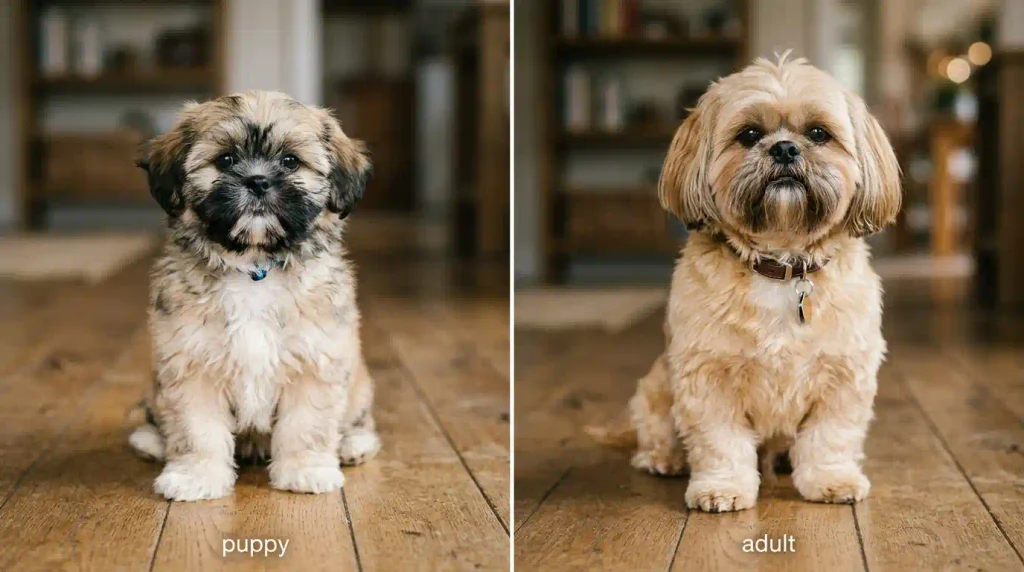
Yes, a Shih Tzu puppy’s appearance can change as its coat grows and is replaced. Black regions may remain dark or appear lighter; tan or gold areas may become paler or less contrasted. Exactly what happens varies by dog. Avoid any seller who promises a precise adult shade based only on an eight-week-old photograph.
Take pictures in similar daylight every few months and compare the same body regions. Look at the roots as well as the longer hair. A coat may contain newly grown lighter hairs while older, darker ends remain visible. Your dog can therefore seem to change sharply after a haircut even when the change developed gradually.
Ask to see current photographs of the puppy’s parents and, if available, adult dogs from earlier litters. They can show what is possible in that family, but they cannot guarantee an individual puppy’s final color. The shih tzu facts page offers broader breed context if this is your first Shih Tzu.
Fading, black tips, grooming, and photographs
Black-tipped puppy hairs deserve special attention. When those ends are clipped, lighter hair underneath becomes more visible. An owner may say a black-and-brown puppy “turned gold,” when part of the apparent shift came from removing dark tips. The effect differs from an orderly black-and-tan pattern, in which tan markings occupy particular places.
Sunlight and camera exposure can also make a dark coat look warmer or faded. Compare pictures taken indoors and outdoors without relying on one photograph to diagnose a genetic change. If a dog’s coat changes suddenly together with hair loss, itching, sores, or other symptoms, consult a veterinarian instead of assuming normal color maturation.
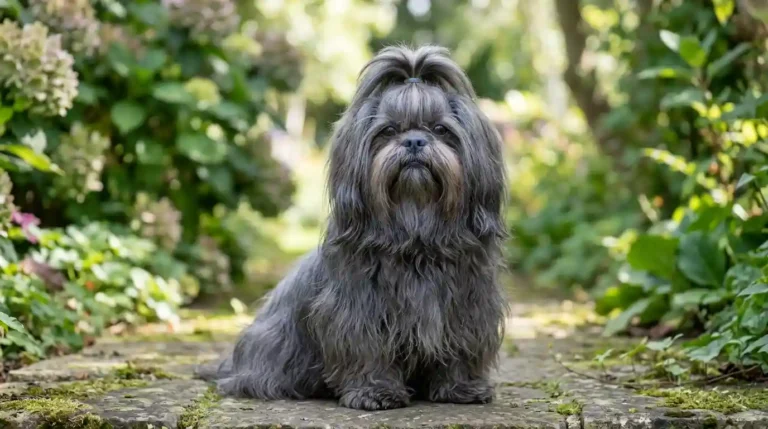
For visual comparisons, a black and grey shih tzu can show how different a lighter dark coat looks from black-and-tan points. Treat any predicted color as an informed possibility, not a purchase guarantee.
Is This Color Recognized, Rare, or More Expensive?
Breed-standard acceptance and color descriptions
The American Shih Tzu Club standard states that all colors and markings are permissible and considered equally. A black-and-tan appearance therefore does not, on its own, rule out a purebred Shih Tzu. Breed-standard permission and the particular wording on a registration form are different matters; everyday phrases such as “black and brown” may not match the available registration labels exactly.
Likewise, a striking coat does not prove purity. If pedigree matters to you, inspect the breeder’s records and registration information. If you are adopting, describe the visible markings honestly even if the dog’s ancestry is unknown. The page about types of shih tzu may help clarify why color descriptions and breed labels should be treated separately.
How to assess rarity and price claims
There is no reliable national frequency in these inspected sources for the exact category “black and brown Shih Tzu.” How often a color appears in a particular breeder’s litters does not establish how rare it is across the breed. A higher asking price is also not proof that a puppy is genetically unusual.
Ask what the seller means by “rare”: tan points, deep coat color, a particular pedigree, or simply current availability? Compare health records, parent information, living conditions, and support after purchase before paying a color premium. A breeder should be willing to discuss the uncertainty of adult coat color and to show you the puppy in consistent lighting. At a rescue, the same photo checklist helps you find the appearance you like without depending on a sales term.
If you are comparing a black-and-tan puppy with a golden brown shih tzu, focus on the dog’s fit with your household and its care needs as well as the shade.
Does the Color Affect Health, Personality, or Care?
Grooming the Shih Tzu’s long coat
A black-and-brown Shih Tzu needs the same attentive coat care as other Shih Tzus. The breed’s dense, long double coat can tangle where friction occurs: behind the ears, under a harness, beneath the legs, and around the chest. Work through the hair in small sections with a suitable brush and comb, reaching the undercoat rather than smoothing only the surface.
Keep facial hair out of the eyes and clean away visible debris gently. Check the skin as you groom, especially under mats. Ask a professional groomer to demonstrate a practical brushing routine for your dog’s chosen coat length, and arrange trims often enough to keep the coat comfortable and manageable. A shorter cut can reduce grooming time, but it does not change the dog’s genetic color.
Dark fur can make debris harder to see; light tan patches may show staining more readily. Neither calls for a special “color-enhancing” shampoo. Choose products suitable for the dog’s skin, rinse thoroughly, and speak with a veterinarian if you notice persistent itching or irritation. For households concerned about allergens, the discussion of shih tzu hypoallergenic explains why coat color does not answer that separate question.
Choosing a puppy for health and temperament
The breed standard describes the Shih Tzu as an affectionate companion. A puppy’s individual behavior and early experiences matter far more to your day-to-day life than the arrangement of its dark and tan patches. Meet the puppy, observe how it responds to gentle handling, and ask how it has been socialized.
Before committing, ask for veterinary records, the parents’ relevant health information, and a clear explanation of the breeder’s return or support policy. Notice whether the puppy breathes comfortably at rest, moves normally, and has clean eyes and skin. These observations do not replace a veterinary examination, but they give you better questions than “Will the coat stay this exact shade?”
If adopting an adult dog, you can see the current coat and get a clearer picture of temperament. If choosing a puppy, leave room for its appearance to mature. The right match is a dog you can care for regardless of whether its tan patches lighten over time.
Frequently Asked Questions
What is a black-and-brown Shih Tzu called?
It may be called black and tan when it has distinct tan points; other black-and-brown-looking coats can be brindle, sable, or masked gold.
Can a purebred Shih Tzu be black and tan?
Yes; the breed standard permits all colors and markings, although coat appearance alone cannot verify pedigree.
Can a black-and-brown puppy turn gray or cream?
Its coat can lighten or change contrast as it matures, but photographs alone cannot predict the exact adult shade.
Does a brown patch mean the dog is liver?
No; tan, gold, or red hair can look brown, while liver pigmentation is better assessed at the nose, lips, and eye rims.
Final Takeaway
A black and brown Shih Tzu is best identified by the placement of its colors. Look for symmetrical tan points if you suspect a black-and-tan pattern; inspect individual hairs for brindle streaks or black tips; and check the muzzle for a black mask. A brown-looking coat patch does not automatically mean liver pigmentation, so examine the nose, lips, and eye rims before using that label. Expect a puppy’s appearance to evolve, and evaluate claims of rarity or guaranteed adult color with care. Most of all, choose a dog whose health, temperament, and grooming needs fit your home. Save a few clear daylight photos, use the comparison checklist above, and ask the breeder or rescue to describe the markings you can actually see.
2 Comments