

Shih Tzu Coughing: What to Observe and When to Call a Vet
Shih Tzu coughing can sound like a dry hacking noise, a goose-like honk, a wet cough, or repeated gagging that makes owners wonder whether something is stuck in their dog’s throat. While an occasional cough may result from temporary irritation, persistent or recurring coughing can indicate an underlying health problem. Common causes include kennel cough, collapsing trachea, respiratory infections, chronic bronchitis, and heart disease. Shih Tzus also have short, flat faces that can contribute to noisy breathing and upper-airway difficulties. The sound of a cough, when it occurs, and whether other symptoms are present can provide useful clues, but these observations cannot confirm a diagnosis. If your Shih Tzu keeps coughing, record the episodes and contact your veterinarian, particularly if the cough is worsening or affecting normal activity. Difficulty breathing, collapse, or blue or unusually pale gums require emergency veterinary attention. This guide explains the different coughing sounds, possible causes, warning signs, diagnostic tests, treatment options, and practical steps to help keep your Shih Tzu comfortable.
Emergency warning: If your Shih Tzu is gasping, struggling to breathe, collapsing, or developing blue, gray, or very pale gums, seek emergency veterinary care immediately. Do not attempt cough remedies or wait for the episode to resolve.
Table of Contents
- What Does a Shih Tzu’s Cough Sound Like?
- How Shih Tzu Airway Anatomy Can Contribute to Coughing
- What Can Cause a Shih Tzu to Cough?
- Cough Pattern Guide: What to Note About Timing and Triggers
- Why a Shih Tzu Might Cough While Eating or Drinking
- Coughing in Senior Shih Tzus: Considering Heart and Airway Causes
- Is It a Cough or Reverse Sneezing?
- When Should You Call a Veterinarian?
- How Veterinarians Diagnose a Shih Tzu’s Cough
- How Coughing Is Treated
- Helping Prevent Coughing and Reduce Triggers
- Frequently Asked Questions
- Final Thoughts
What Does a Shih Tzu’s Cough Sound Like?
A Shih Tzu cough may sound different depending on which part of the respiratory system is irritated or affected.
Some coughing episodes are dry and repetitive, while others sound wet, harsh, or accompanied by gagging.
Recognizing the type of sound and the circumstances surrounding it can help owners provide useful information during a veterinary appointment.
Dry, Hacking, or Honking Cough
A dry cough produces a sharp, repetitive hacking sound without obvious mucus.
Some Shih Tzus develop a honking cough that resembles the sound of a goose.
This distinctive noise is often associated with tracheal collapse, a condition involving weakening and narrowing of the windpipe.
However, canine infectious respiratory disease, commonly known as kennel cough, can also cause a dry, honking cough.
A Shih Tzu may experience coughing spasms during excitement, when pulling on a leash, or after physical activity.
Because these symptoms overlap, the sound alone cannot establish whether the problem involves infection, the trachea, or another condition.
Wet or Phlegmy Cough
A wet cough sounds moist, rattling, or congested.
This can occur when mucus, inflammatory material, or fluid affects the respiratory passages.
Pneumonia and other lower respiratory diseases may produce a wet-sounding cough.
Unlike humans, dogs usually swallow mucus rather than coughing it out visibly.
Therefore, the absence of expectorated phlegm does not mean the lungs are clear.
A Shih Tzu with a wet cough, rapid breathing, reduced appetite, or lethargy should receive prompt veterinary attention.
Gagging, Retching, or Throat-Clearing Sounds
Some coughing episodes end with gagging or retching.
Owners may describe the sound as an attempt to clear something from the throat.
A dog with kennel cough may produce several harsh coughs followed by a gagging movement.
Upper-airway irritation, an elongated soft palate, tracheal disease, or gastrointestinal problems can also cause similar behavior.
If your Shih Tzu keeps coughing and gagging, observe whether the episode involves an actual cough, an attempt to vomit, or difficulty swallowing.
Frequent retching without producing vomit, especially with abdominal swelling or distress, also requires urgent assessment.
Coughing During Sleep, Rest, Exercise, or Excitement
The timing of coughing is often as important as its sound.
Coughing during exercise or excitement may occur with tracheal collapse, chronic airway irritation, or certain cardiovascular problems.
Coughing after sleep or during rest may suggest chronic respiratory disease, but it does not specifically identify heart disease.
A dog that coughs primarily after boarding or spending time around other dogs may have an infectious respiratory condition.
Record when the cough occurs and whether it resolves quickly or continues for several minutes.
These observations help veterinarians identify which diagnostic tests may be most useful.

How Shih Tzu Airway Anatomy Can Contribute to Coughing
Shih Tzus belong to a group of short-muzzled dogs known as brachycephalic breeds.
Their facial structure can influence airflow and contribute to breathing noises that owners sometimes mistake for coughing.
Brachycephalic Anatomy and Restricted Airflow
A Shih Tzu has a shortened muzzle, compact skull, and relatively crowded upper respiratory passages.
Although the facial bones are shortened, the surrounding soft tissues may occupy more space than the airway can comfortably accommodate.
This can produce airflow resistance, snoring, snorting, and increased breathing effort.
The same anatomy may make respiratory infections or other airway problems more difficult to tolerate.
However, a flat face does not mean that persistent coughing is normal.
Brachycephalic Obstructive Airway Syndrome (BOAS)
Brachycephalic obstructive airway syndrome, or BOAS, describes a combination of anatomical abnormalities that restrict upper-airway airflow.
These may include stenotic nares, an elongated soft palate, and secondary changes affecting the larynx.
Affected Shih Tzus may experience noisy inhalation, exercise intolerance, gagging, regurgitation, and breathing difficulty.
BOAS is primarily an airway obstruction disorder rather than a classic cause of repeated coughing.
Owners concerned about snorting, labored breathing, and abnormal respiratory sounds can explore the related guide to shih-tzu breathing problems for a broader explanation.
How Airway Structure May Relate to Coughing, Gagging, or Noisy Breathing
A crowded upper airway can produce sounds that resemble coughing even when the dog is actually snorting or struggling to inhale.
An elongated soft palate may contribute to gagging and retching, particularly after eating, drinking, or excitement.
Some Shih Tzus also experience regurgitation or swallowing-related difficulties.
These problems can increase the risk of material entering the airway under certain circumstances.
Persistent coughing in a brachycephalic dog should therefore be investigated rather than automatically attributed to breed anatomy.
What Can Cause a Shih Tzu to Cough?
There are several possible causes of Shih Tzu coughing, ranging from relatively mild irritation to serious respiratory or cardiovascular disease.
Understanding these possibilities helps owners recognize why veterinary evaluation is important.
Kennel Cough and Other Respiratory Infections
Kennel cough is a common name for canine infectious respiratory disease complex, often abbreviated CIRDC.
It involves infectious agents that affect the respiratory tract and can spread between dogs.
One important bacterial organism is Bordetella bronchiseptica, although viruses and other microorganisms can also contribute.
Common symptoms include a dry hacking cough, gagging, sneezing, and sometimes nasal discharge.
A Shih Tzu may develop symptoms after visiting a boarding kennel, daycare facility, dog park, grooming salon, or other environment where dogs gather.
Mild cases may improve with supportive care, but puppies, seniors, and dogs with underlying medical conditions can develop more serious illness.
Canine Influenza
Canine influenza is a contagious viral respiratory infection.
Affected dogs may develop coughing, sneezing, nasal discharge, fever, and reduced energy.
Some dogs experience mild symptoms, while others develop pneumonia.
Vaccination may be recommended for dogs with particular exposure risks, depending on veterinary guidance and local circumstances.
Other Viral and Bacterial Infections
Other pathogens associated with canine respiratory disease include canine parainfluenza virus, canine adenovirus, respiratory coronavirus, and certain bacterial organisms.
These infections can produce similar coughing symptoms.
Some dogs are infected with more than one respiratory pathogen.
Because the underlying organisms vary, antibiotics are not automatically appropriate for every case of kennel cough.
Pneumonia, Including Aspiration Pneumonia
Pneumonia involves inflammation and infection or injury affecting lung tissue.
Symptoms may include coughing, rapid breathing, fever, lethargy, reduced appetite, and difficulty breathing.
Aspiration pneumonia occurs when food, liquid, vomit, or other material enters the lower respiratory tract.
Shih Tzus with swallowing disorders, regurgitation, or certain upper-airway problems may face an increased aspiration risk.
A dog that suddenly develops coughing and breathing changes after vomiting or choking should be examined promptly.
Severe pneumonia may require hospitalization, oxygen therapy, fluids, and other veterinary treatments.
Collapsing Trachea
Tracheal collapse is an important cause of chronic coughing in small dogs.
The trachea, or windpipe, is normally supported by cartilage rings that help maintain an open airway.
When these structures weaken, the trachea may flatten and narrow during breathing.
A characteristic symptom is a harsh, dry, goose-like honking cough.
Coughing may worsen during excitement, exercise, heat exposure, or pressure from a neck collar.
Some affected dogs also experience wheezing, exercise intolerance, or respiratory distress.
Tracheal collapse can occur alongside other airway disorders, making diagnosis more complicated.
Heart Disease and Congestive Heart Failure
Heart disease is another important consideration, especially in older Shih Tzus.
Small dogs can develop degenerative mitral valve disease, which may gradually affect normal heart function.
When heart disease progresses to congestive heart failure, fluid may accumulate in the lungs and cause rapid or difficult breathing.
Coughing can occur with cardiac disease, although coughing alone is not a reliable indicator of heart failure.
Some dogs with enlarged hearts also have concurrent airway disease, which complicates interpretation.
A Shih Tzu with coughing, reduced exercise tolerance, increased sleeping respiratory rate, or fainting episodes needs veterinary assessment.
Heartworm Disease and Other Respiratory Parasites
Heartworm disease is caused by the parasite Dirofilaria immitis, which is transmitted through infected mosquitoes.
Adult heartworms live in the pulmonary arteries and can damage the heart and lungs.
Affected dogs may develop coughing, reduced stamina, weight loss, or breathing difficulties.
Other respiratory parasites, including certain lungworms, can also contribute to coughing.
Risk varies by geographic region, travel history, and preventive care.
Veterinarians may recommend routine heartworm testing and appropriate prevention based on the dog’s circumstances.
Chronic Bronchitis
Chronic bronchitis is a long-term inflammatory disease affecting the bronchi.
It typically involves persistent coughing over an extended period, often after other causes have been excluded.
The cough may occur during excitement, exercise, or rest.
Some affected dogs also develop wheezing or reduced exercise tolerance.
Small and older dogs can be affected, although the condition requires veterinary investigation rather than diagnosis based on age alone.
Management may involve environmental changes and prescription medications to control airway inflammation.
Allergies and Throat Irritation
Pollen, dust, smoke, artificial fragrances, and household cleaning chemicals can irritate the respiratory passages.
Some Shih Tzus may sneeze, snort, or cough after exposure to airborne irritants.
However, canine allergies more commonly produce skin-related symptoms such as itching, paw licking, and ear inflammation.
The guide to shih tzu allergies explains how allergic disease may affect different parts of the body.
Persistent coughing should not be attributed to allergies without considering infectious, structural, and cardiovascular causes.
Foreign Objects or Choking
Grass seeds, small pieces of toys, food particles, or other foreign objects may irritate or obstruct the respiratory tract.
A Shih Tzu may suddenly begin coughing, gagging, pawing at its mouth, or showing signs of distress.
Partial obstruction can cause repeated coughing while some airflow remains possible.
Complete airway obstruction can become life-threatening within minutes.
If your dog cannot breathe normally, collapses, or appears to be choking, seek emergency veterinary care immediately.
Do not blindly sweep fingers into the mouth, as this may push an object deeper or cause injury.
Esophagitis and Reflux
Esophagitis is inflammation of the esophagus, the tube connecting the mouth to the stomach.
Gastroesophageal reflux may irritate the esophagus and contribute to swallowing discomfort or regurgitation.
Although reflux does not directly explain every cough, material reaching the airway can trigger coughing and increase aspiration risk.
Affected dogs may lick their lips, swallow repeatedly, gag after meals, or regurgitate food.
Veterinary assessment is necessary to distinguish gastrointestinal symptoms from respiratory disease.
Pulmonary Hypertension
Pulmonary hypertension occurs when blood pressure within the pulmonary circulation becomes abnormally elevated.
It may develop secondary to heart disease, lung disease, heartworm infection, or other conditions.
Possible symptoms include exercise intolerance, rapid breathing, weakness, fainting, and occasionally coughing.
Diagnosis often involves an echocardiogram and evaluation for underlying disease.
Because pulmonary hypertension can be serious, suspected cases require veterinary management.
Cancer or Tumors Affecting the Airway
Tumors involving the lungs, trachea, or surrounding structures may cause persistent coughing.
Additional signs can include weight loss, breathing difficulties, reduced energy, and occasionally coughing up blood.
Lung tumors are not the same as external skin growths discussed in Shih Tzu Skin Cancer, although both require appropriate diagnosis.
Imaging and sometimes tissue sampling are needed to identify suspected respiratory tumors.
Cancer is not the most common cause of coughing, but it becomes an important consideration when symptoms persist or unusual findings appear.
Lung Lobe Torsion
Lung lobe torsion is an uncommon but potentially serious condition in which part of the lung twists around its supporting structures.
This can interfere with blood circulation and normal lung function.
Affected dogs may develop rapid breathing, coughing, chest discomfort, or sudden respiratory distress.
The condition can occur in different breeds and may occasionally be associated with other chest abnormalities.
Diagnosis usually requires imaging, and surgery is frequently necessary.
Sudden severe respiratory symptoms should always be treated as an emergency.
Dental Problems and Environmental Irritants
Severe dental disease can affect a dog’s overall health and may contribute to inflammation or infection in nearby tissues.
However, ordinary dental disease is not a common direct cause of persistent coughing.
Environmental irritants are a more straightforward trigger for airway inflammation.
Cigarette smoke, vaping aerosols, dust, strong perfumes, and cleaning sprays can aggravate an already sensitive respiratory system.
Reducing exposure may help, but persistent coughing still warrants evaluation for underlying disease.

Cough Pattern Guide: What to Note About Timing and Triggers
The way a Shih Tzu coughs may provide clues about the underlying problem.
However, different conditions often produce similar sounds, and no cough pattern can confirm a diagnosis on its own.
| Cough pattern | Possible causes | What owners should notice |
| Dry, honking cough | Tracheal collapse, kennel cough | Leash pressure, excitement, recent dog exposure |
| Wet or rattling cough | Pneumonia, lower-airway disease | Fever, rapid breathing, low energy |
| Coughing during exercise | Airway disease, heart disease | Reduced stamina, slow recovery |
| Coughing at night or rest | Heart or respiratory disease | Sleeping respiratory rate, breathing effort |
| Coughing after meals | Swallowing disorder, aspiration, airway irritation | Gagging, regurgitation, drinking difficulty |
| Coughing with nasal discharge | Infectious respiratory disease, nasal inflammation | Sneezing, fever, exposure history |
Coughing After Leash Pressure, Excitement, or Activity
Coughing triggered by pressure on the neck may raise concern for tracheal irritation or collapse.
Excitement and exercise can also increase breathing demands and provoke coughing in dogs with existing respiratory disease.
A properly fitted harness may help reduce neck pressure.
However, repeated coughing with ordinary activity should not be considered normal.
Coughing After Contact With Other Dogs
If your Shih Tzu begins coughing after boarding, daycare, grooming, or a dog park visit, an infectious respiratory condition becomes an important possibility.
Kennel cough symptoms may begin several days after exposure.
Keep the dog away from other dogs and contact your veterinarian for advice.
Even vaccinated dogs can develop infectious respiratory disease, although appropriate vaccination may reduce the risk or severity of certain infections.
Coughing During Sleep or at Rest
A Shih Tzu coughing at night may have chronic airway disease, tracheal collapse, heart disease, or another respiratory problem.
Pay attention to whether the dog also breathes rapidly while asleep.
For many healthy sleeping dogs, the respiratory rate is typically below approximately 30 breaths per minute.
Repeated increases above the dog’s normal baseline, especially alongside coughing or increased effort, should be discussed with a veterinarian.
Coughing With Nasal Discharge, Fever, or Low Energy
Coughing accompanied by sneezing, nasal discharge, fever, reduced appetite, or lethargy may indicate an infectious respiratory disease.
Yellow or green discharge can occur with inflammation and infection, but color alone does not identify a specific pathogen.
A dog that seems generally unwell should receive prompt veterinary evaluation.
Difficulty breathing or marked weakness requires emergency care.
Why a Shih Tzu Might Cough While Eating or Drinking
Coughing associated with meals deserves special attention because swallowing and airway protection must work together.
Coughing or Gagging Around Meals
Some Shih Tzus cough immediately after drinking water or eating food.
Possible explanations include throat irritation, tracheal sensitivity, swallowing difficulty, or problems affecting the upper airway.
Dogs that eat rapidly may experience temporary coughing or gagging.
However, recurring episodes are not necessarily harmless and should be discussed with a veterinarian.
Swallowing Problems and Aspiration Risk
Normal swallowing involves coordinated movement that helps prevent food and liquid from entering the airway.
When this process is disrupted, material may accidentally enter the respiratory tract.
This is called aspiration.
Aspiration can irritate the lungs and, in some circumstances, lead to aspiration pneumonia.
Warning signs include coughing during meals, repeated regurgitation, rapid breathing, or the development of respiratory symptoms after vomiting.
What Details to Share With Your Veterinarian
Tell your veterinarian whether the coughing occurs with dry food, wet food, water, or all forms of eating and drinking.
Note whether food comes back up without obvious abdominal effort, which may suggest regurgitation rather than vomiting.
If your Shih Tzu also has bowel changes, such as the concern described in my shih tzu is constipated, share that information rather than assuming all symptoms have the same cause.
A complete gastrointestinal and respiratory history may help identify overlapping problems.
Coughing in Senior Shih Tzus: Considering Heart and Airway Causes
Older Shih Tzus may develop chronic coughing because of age-associated changes affecting the respiratory or cardiovascular system.
However, age alone cannot determine the cause.
Coughing Associated With Heart Disease
Degenerative heart valve disease becomes more common as small dogs age.
Some dogs develop heart enlargement, murmurs, or congestive heart failure.
Changes in resting breathing, exercise tolerance, and energy levels can provide important clues.
Coughing may occur, but a dog with heart disease can also cough because of unrelated airway problems.
An echocardiogram and chest imaging may help distinguish these possibilities.
Coughing Associated With Tracheal or Other Airway Problems
Tracheal collapse and chronic bronchitis are important considerations in older small dogs.
Affected Shih Tzus may develop frequent coughing episodes, particularly during excitement or activity.
Excess weight, chronic inflammation, and exposure to airborne irritants may make symptoms more noticeable.
Older dogs can also develop other conditions that cause panting or altered breathing without directly causing cough.
For example, Shih Tzu Cushing’s Disease may cause excessive panting, while pain from IVDD in Shih Tzu dogs can affect activity and breathing behavior.
These conditions illustrate why veterinarians consider the dog’s overall health rather than examining the cough in isolation.
Why Overlapping Causes Need Veterinary Evaluation
A senior Shih Tzu may have more than one medical problem simultaneously.
For instance, a dog with heart valve disease may also have tracheal collapse or chronic bronchitis.
Treating only one condition may not eliminate the coughing.
Veterinary evaluation helps determine which diseases are contributing to symptoms and which treatments are appropriate.
Is It a Cough or Reverse Sneezing?
Reverse sneezing can sound alarming, particularly in small and brachycephalic dogs.
It is important to distinguish this reflex from ordinary coughing and serious respiratory distress.
How Reverse Sneezing Sounds and Looks
During reverse sneezing, a dog rapidly pulls air inward through the nose.
The episode often produces repeated snorting, honking, or gasping-like sounds.
A Shih Tzu may extend its neck, stand still, and keep its mouth mostly closed.
The episode commonly lasts a few seconds, although some continue longer.
Most dogs return to normal breathing afterward.
In contrast, a typical cough involves a forceful expulsion of air from the respiratory tract.
Common Reverse-Sneezing Triggers
Reverse sneezing may occur after exposure to dust, pollen, fragrances, excitement, or sudden changes in the environment.
Leash pressure and eating or drinking quickly can also trigger episodes in some dogs.
The reflex may involve temporary irritation of the nasopharynx.
Many episodes do not have an identifiable cause.
When Reverse-Sneezing Episodes Need Veterinary Attention
Occasional, brief reverse sneezing without other symptoms may not require treatment.
However, frequent episodes, persistent nasal discharge, bleeding, ongoing coughing, or changes in breathing justify veterinary assessment.
A veterinarian may investigate nasal inflammation, infection, foreign material, or anatomical abnormalities.
If the dog has difficulty breathing normally between episodes, seek urgent care rather than assuming reverse sneezing is responsible.
When Should You Call a Veterinarian?
A new or persistent cough should not be ignored, particularly in a small breed with potential airway vulnerabilities.
The urgency depends on how severe the cough is and whether other symptoms are present.
Persistent, Worsening, or Recurring Cough
Contact your veterinarian when coughing continues, becomes more frequent, or repeatedly returns.
A single brief cough after an obvious irritant may not indicate serious illness.
However, recurring hacking, honking, or gagging episodes should be evaluated.
If your Shih Tzu is coughing several times a day or the episodes interfere with sleep or activity, arrange veterinary advice promptly.
Coughing With Fever, Nasal Discharge, Poor Appetite, or Lethargy
Coughing accompanied by general illness may indicate infection or another significant medical condition.
Symptoms such as fever, decreased appetite, nasal discharge, or unusual tiredness warrant a prompt veterinary appointment.
Puppies, senior dogs, and pets with chronic illnesses may need earlier assessment.
Coughing With Difficulty Breathing, Weakness, or Blue or Pale Gums
Breathing difficulty is more concerning than coughing alone.
Signs include pronounced abdominal effort, gasping, extended neck posture, inability to rest comfortably, or rapid breathing that does not settle.
Blue or gray gums can indicate inadequate oxygenation.
Very pale gums may reflect poor circulation or another serious problem.
These symptoms require emergency veterinary care.
Suspected Choking or Something Stuck in the Throat
A Shih Tzu that suddenly begins coughing violently, gagging, or pawing at its mouth may have inhaled or swallowed foreign material.
If breathing remains comfortable, contact a veterinarian promptly for evaluation.
If the dog cannot move air normally, is collapsing, or shows marked distress, seek immediate emergency assistance.
Avoid offering food or water to push a suspected object down.
Signs That Require Emergency Veterinary Care
Seek emergency veterinary treatment if your Shih Tzu experiences severe respiratory distress, collapse, blue or gray gums, pronounced weakness, or a suspected complete airway obstruction.
Coughing up significant amounts of blood, rapidly worsening breathing, or severe distress after choking are also emergencies.
Keep the dog calm, minimize unnecessary movement, and travel to an emergency hospital.
Do not delay care while attempting home treatments or recording a video.
How Veterinarians Diagnose a Shih Tzu’s Cough
Diagnosing the cause of coughing generally involves a combination of medical history, physical examination, and appropriate diagnostic tests.
A veterinarian selects tests based on the dog’s symptoms and suspected condition.
Medical History and Physical Examination
The veterinarian may ask when the cough began, how it sounds, and whether it occurs during activity, sleep, or meals.
Recent contact with other dogs, vaccination history, travel, medications, and previous respiratory problems are also relevant.
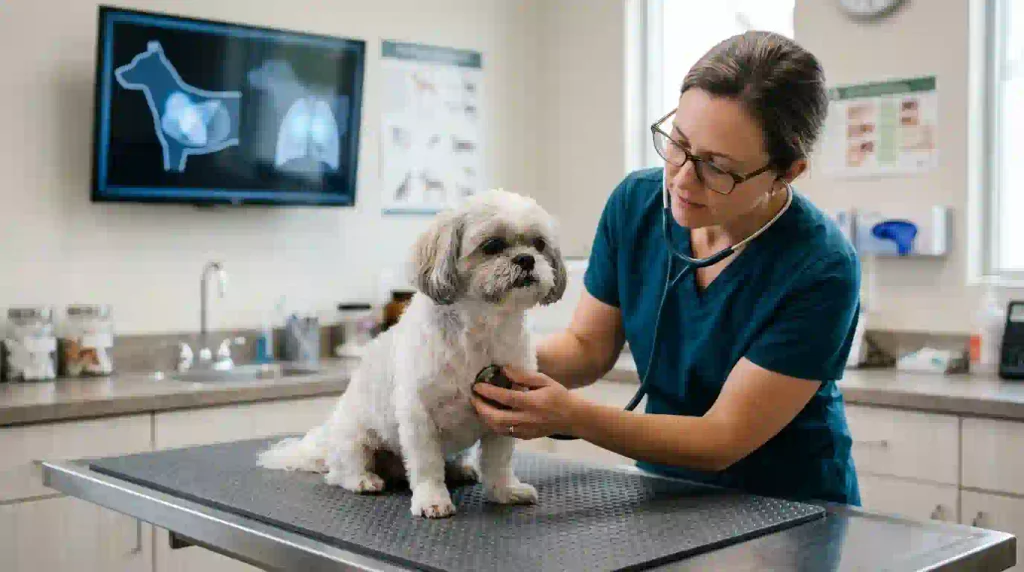
The examination includes listening to the heart and lungs, evaluating respiratory effort, and checking for fever or other abnormalities.
A heart murmur, unusual lung sounds, or obvious airway noise may guide further testing.
Chest X-Rays and Bloodwork
Chest radiographs can help evaluate the lungs, heart size, and portions of the airway.
They may reveal pneumonia, fluid accumulation, lung masses, or findings that suggest certain cardiovascular conditions.
Bloodwork can help assess infection-related changes, anemia, inflammation, and overall health.
However, a normal X-ray does not exclude every airway disorder, particularly conditions involving dynamic tracheal collapse.
Fluoroscopy and Airway Examination
Fluoroscopy produces moving X-ray images and may help identify changes in the trachea during breathing.
This is particularly useful when dynamic airway collapse is suspected.
Some dogs require bronchoscopy or other airway examinations to investigate inflammation, structural abnormalities, or unusual respiratory findings.
Because Shih Tzus can have brachycephalic airway restrictions, sedation and anesthesia require careful planning.
Tests for Infection and Other Underlying Conditions
Veterinarians may recommend respiratory PCR testing, heartworm testing, echocardiography, or additional imaging based on clinical findings.
Testing for infectious respiratory pathogens may be particularly useful during outbreaks or severe illness.
When chronic bronchitis or lower-airway disease is suspected, specialized sampling may sometimes be recommended.
No single test is appropriate for every coughing dog.
How Coughing Is Treated
Treatment depends on the underlying cause of the cough.
A medication that helps one dog may be ineffective or inappropriate for another.
Treatment for Kennel Cough and Other Infections
Many uncomplicated cases of kennel cough improve with supportive care.
Because viruses contribute to numerous cases, antibiotics are not automatically necessary.
Veterinarians may prescribe antibiotics when bacterial infection is suspected or when other clinical findings justify treatment.
Dogs with pneumonia may require more intensive therapy, including antimicrobial medication when indicated, oxygen support, and hospitalization.
A veterinarian may prescribe an appropriate cough suppressant for selected dogs with a troublesome, nonproductive cough.
However, suppressing a cough can be inappropriate when mucus or infected material needs to be cleared from the respiratory tract.
Supportive Care and Rest
A Shih Tzu recovering from a mild respiratory infection may benefit from a quiet, comfortable environment and reduced strenuous activity.
Provide fresh water, appropriate food, and a well-ventilated resting area.
Keep the dog away from smoke, dust, and strong fragrances.
If an infectious disease is suspected, avoid contact with other dogs until the veterinarian advises that it is safe.
Do not give over-the-counter human cough medicine, decongestants, or pain relievers without veterinary approval.
Some human formulations contain ingredients that can be toxic to dogs.
Medical Management for Tracheal Collapse
Tracheal collapse is generally a chronic condition requiring individualized management.
Veterinary treatment may include weight management, environmental modifications, and prescription medications.
Depending on the case, veterinarians may prescribe cough suppressants, anti-inflammatory medications, or other therapies to reduce coughing and airway irritation.
A harness is generally preferable to a collar that places pressure on the neck.
Avoiding overheating and excitement-related respiratory stress may also help.
For more detailed specialist information, the American College of Veterinary Surgeons’ guide to tracheal collapse explains diagnostic approaches and treatment options.
When Tracheal Stents or Surgery May Be Considered
Some dogs with severe tracheal collapse do not respond adequately to medical treatment.
In selected cases, veterinary specialists may recommend placement of external tracheal support rings or an internal airway stent.
An airway stent is a device designed to help maintain an open passage for airflow.
These procedures require careful evaluation because complications can include inflammation, continued coughing, stent migration, fracture, or other airway problems.
Not every dog is an appropriate candidate.
Even after intervention, ongoing medical management and monitoring may be necessary.
Managing Heart Disease and Other Underlying Causes
When coughing is associated with congestive heart failure, treatment may involve medications to manage fluid accumulation and support cardiac function.
The exact medications depend on the dog’s diagnosis and disease severity.
Chronic bronchitis, respiratory parasites, aspiration pneumonia, and other conditions require different treatment approaches.
Surgery or specialist care may be necessary for certain tumors, foreign objects, or severe structural abnormalities.
Owners should avoid starting medications based solely on the sound of the cough.
Helping Prevent Coughing and Reduce Triggers
Not every cause of coughing is preventable, but routine care can reduce exposure to certain respiratory risks.
Vaccination and Reducing Exposure to Infected Dogs
Keep your Shih Tzu current on vaccinations recommended by your veterinarian.
Vaccines targeting important respiratory pathogens may reduce the likelihood or severity of certain infections.
Avoid close contact with dogs showing persistent coughing, sneezing, or other signs of respiratory illness.
If your own dog develops a suspected contagious cough, postpone grooming appointments, daycare, boarding, and dog park visits until veterinary guidance indicates it is safe.
Breeders who research reproductive topics such as How many puppies can a Shih Tzu have should also consider infectious disease prevention for nursing mothers and young puppies.
Using a Harness and Avoiding Pressure on the Neck
A properly fitted harness can help reduce direct pressure on the trachea.
This is particularly useful for dogs that cough after pulling against a collar.
Choose a comfortable harness that allows normal shoulder movement and does not press against the throat.
A harness does not treat an underlying respiratory condition, but it can eliminate an avoidable source of irritation.
Limiting Exposure to Smoke, Dust, and Other Irritants
Keep your Shih Tzu’s environment free from cigarette smoke, vaping aerosols, excessive dust, and strong chemical fragrances.
Wash bedding regularly and maintain adequate household ventilation.
Avoid spraying perfumes, air fresheners, or harsh cleaning products near your dog.
Regular wellness examinations also help identify unrelated conditions that may affect comfort and behavior.
For example, discomfort involving Shih Tzu anal glands can cause restlessness and unusual body movements, even though anal gland disease is not a typical cause of coughing.
Recording Cough Episodes and Noting Possible Triggers
A simple cough diary can help your veterinarian recognize patterns.
Record the time, duration, sound, and possible trigger of each episode.
If safe, capture a short video showing the dog’s head, chest movement, and coughing behavior.
A useful record may include whether the dog was sleeping, eating, exercising, or interacting with another animal.
Also note appetite, energy, breathing rate, and any nasal discharge.
Maintaining these records alongside routine shih tzu health and wellness monitoring can support more informed veterinary discussions.

Frequently Asked Questions
Why Does My Shih Tzu Cough Like a Goose?
A goose-like honking cough may occur with tracheal collapse or kennel cough, and veterinary examination is needed to distinguish the cause.
Can a Shih Tzu Cough After Drinking Water or Pulling on a Leash?
Yes, coughing may occur with throat irritation, tracheal sensitivity, swallowing problems, or pressure on the neck.
Can Kennel Cough Cause Pneumonia?
Yes, some dogs develop pneumonia after infectious respiratory disease, particularly puppies, seniors, or dogs with other health problems.
Can Heart Disease Cause Coughing at Night?
Yes, heart disease may contribute to nighttime coughing, but respiratory disease is another common explanation and diagnosis requires veterinary evaluation.
Should I Give My Shih Tzu Human Cough Medicine?
No, never give human cough medicine without veterinary approval because some ingredients are dangerous for dogs or inappropriate for the underlying condition.
Final Thoughts: Understanding and Managing Shih Tzu Coughing
Shih Tzu coughing can develop because of respiratory infections, collapsing trachea, heart disease, airway irritation, and other medical conditions. Although an occasional cough may be harmless, frequent hacking, goose-like honking, wet coughing, or repeated gagging should not be dismissed as normal behavior.
Pay attention to when the cough occurs, what it sounds like, and whether your dog shows signs of illness or breathing difficulty. Keeping a short symptom diary and recording episodes can help your veterinarian identify possible causes.
Preventive care, appropriate vaccination, a comfortable harness, and a clean environment may reduce certain triggers.
If your Shih Tzu keeps coughing, arrange a veterinary assessment rather than experimenting with home remedies. Early diagnosis and appropriate treatment can improve comfort and help prevent avoidable complications.
Owners researching the breed under the common misspelling Shit Zhu should remember that recognizing respiratory warning signs is an important part of responsible Shih Tzu care.