My Shih Tzu Is Constipated: Signs and Next Steps
If you’re worried because my Shih Tzu is constipated, the first step is to check whether your dog is having difficulty passing stool, producing unusually hard or dry poop, or repeatedly squatting without a successful bowel movement. Constipation in Shih Tzus can develop because of dehydration, dietary changes, insufficient activity, swallowed hair, or painful conditions affecting the back or anal area. Their long coats can also trap feces around the anus, making a grooming problem look like constipation. Mild cases sometimes improve with appropriate hydration and veterinary-recommended dietary adjustments, but persistent straining may indicate fecal impaction, intestinal obstruction, or another medical problem. If your Shih Tzu is vomiting, has a swollen or painful abdomen, seems extremely weak, or cannot urinate, seek urgent veterinary attention. Avoid giving human laxatives, enemas, or unapproved home remedies. This guide explains how to recognize constipation, distinguish it from other problems, understand possible causes, and take safe next steps to help your Shih Tzu return to comfortable, regular bowel movements.
Table of Contents
- Is My Shih Tzu Constipated?
- What Causes Constipation in Shih Tzus?
- Matted Stool or True Constipation? Understanding Pseudocoprostasis
- Constipation Concerns in Shih Tzu Puppies and Senior Dogs
- What to Do First if Your Shih Tzu Is Constipated
- Is Your Shih Tzu Straining to Poop or Urinate?
- When Constipation Needs Urgent Veterinary Care
- Shih Tzu Constipation Symptom and Stool Log
- How Veterinarians Diagnose Constipation
- How Constipation Is Treated
- Recovery and Preventing Constipation
- Other Bowel and Anal Gland Concerns
- Frequently Asked Questions
- Final Thoughts
Is My Shih Tzu Constipated?
Constipation is a digestive problem in which stool becomes difficult or infrequent to pass. A constipated Shih Tzu may repeatedly attempt to defecate, produce small hard stools, or appear uncomfortable during bathroom breaks.
However, straining does not always mean constipation. Urinary problems, diarrhea-related inflammation, anal gland disease, and other conditions can cause similar behavior.
What Constipation Means in Dogs
Constipation occurs when feces remain in the colon longer than normal or become difficult to eliminate.
The colon absorbs water from stool. When feces remain there for an extended period, additional water may be absorbed, leaving the material harder and drier.
This can make bowel movements painful and increase the likelihood of further stool retention.
Veterinarians may use the term dyschezia for difficult or painful defecation.
Severe constipation that becomes difficult or impossible to relieve is called obstipation. Chronic stool retention can sometimes contribute to an enlarged, poorly functioning colon, known as megacolon.
How Often Shih Tzus Usually Poop
Many healthy adult Shih Tzus have one to three bowel movements daily, although individual patterns vary.
Frequency depends on diet, feeding schedule, age, activity, and digestive health.
Puppies often defecate more frequently because they eat smaller meals throughout the day and have developing digestive systems.
Senior dogs may have less predictable routines because of reduced mobility, medications, or underlying health conditions.
A change from your dog’s normal pattern is often more meaningful than a particular number of daily bowel movements.
If your Shih Tzu has not pooped for approximately 24 hours and this is unusual, contact your veterinarian for guidance, especially if there is straining. Do not wait if other concerning symptoms appear.
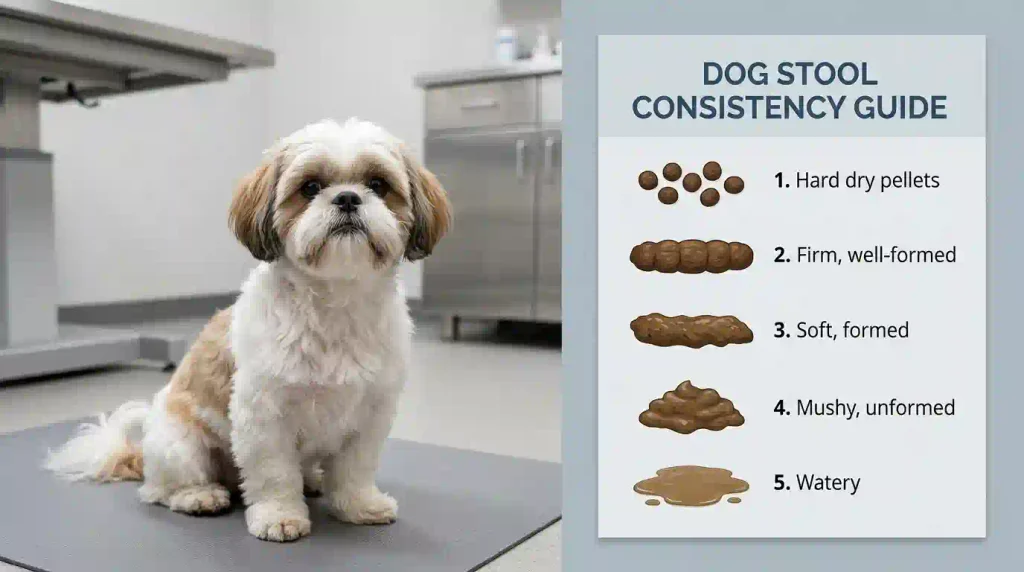
What Healthy Shih Tzu Stool Looks Like
Healthy dog stool is generally brown, formed, and moist enough to pass without difficulty.
It should maintain its shape when collected but not feel excessively hard or crumbly.
A stool consistency chart can help owners monitor digestive health.
| Stool appearance | What it may indicate |
| Hard, dry pellets | Possible constipation or dehydration |
| Firm, formed stool | Generally desirable consistency |
| Soft but formed stool | May be normal depending on diet |
| Mushy, poorly formed stool | Possible digestive upset |
| Watery stool | Diarrhea or, sometimes, liquid passing around impacted feces |
| Black, tarry stool | Possible digested blood requiring urgent assessment |
Stool appearance provides useful information but cannot independently diagnose constipation or its cause.
Signs of Constipation
Shih Tzu constipation symptoms can range from mild difficulty passing stool to significant pain and illness.
Straining or Squatting Without Passing Stool
A constipated Shih Tzu may repeatedly squat, circle, or attempt to poop without producing anything.
Some dogs pass only small quantities despite repeated attempts.
Persistent straining should be assessed promptly because urinary obstruction or intestinal disease can look similar.
Hard, Dry, or Pebble-Like Stool
Small, hard, dry pieces of feces are common signs of constipation.
Stool may appear unusually compact, difficult to pass, or separated into small pellets.
This can occur when feces remain in the colon and lose excessive moisture.
Pain, Crying, or a Hunched Posture
Painful defecation may cause a Shih Tzu to whimper, tense its body, or adopt an unusual posture.
Some dogs avoid squatting because movement or pressure causes discomfort.
Pain may come from constipation itself or from another condition affecting the back, pelvis, or anal area.
Small Amounts of Watery Stool, Mucus, or Blood
Some constipated dogs pass small amounts of watery material around retained feces.
This can be mistaken for ordinary diarrhea.
Excessive straining may also irritate the rectum and produce mucus or traces of fresh blood.
However, blood, persistent watery stool, or significant discomfort requires veterinary assessment rather than assuming constipation is the explanation.
Changes in Appetite, Energy, or Comfort
A constipated Shih Tzu may become restless, eat less, or seem uncomfortable.
More serious cases can involve vomiting, lethargy, abdominal pain, and reduced interest in normal activities.
These symptoms may indicate severe constipation or another gastrointestinal problem that requires prompt treatment.
What Causes Constipation in Shih Tzus?
Constipation in Shih Tzu dogs can have several contributing causes. Some are related to hydration and daily routines, while others involve pain, disease, or physical obstruction.
Not Drinking Enough Water or Eating Too Little Fiber
Dehydration is an important contributor to hard, dry stool.
When a dog does not consume enough water, its body may absorb more moisture from intestinal contents.
Insufficient dietary fiber can also contribute to constipation in some dogs, although not every constipated dog needs additional fiber.
Certain medical conditions require a different fiber approach, so dietary changes should match the underlying diagnosis.
Diet Changes, Bones, Hair, or Swallowed Objects
Sudden changes in dog food can temporarily affect stool consistency and bowel habits.
Eating bones, excessive plant material, hair, or other poorly digestible objects may cause fecal accumulation or obstruction.
Shih Tzus that chew toys or swallow pieces of household items can also develop gastrointestinal blockages.
If a foreign object may have been swallowed, seek veterinary guidance promptly rather than attempting to force a bowel movement.
Low Activity and Lack of Exercise
Regular physical activity supports normal digestive movement.
Dogs that spend long periods resting may have less frequent bowel movements.
A lack of exercise can contribute to stool retention, particularly when combined with poor hydration.
Gentle daily walks and predictable bathroom opportunities may help healthy dogs maintain regular bowel routines.
Matted Hair Around the Anus
Shih Tzus have long coats that require regular grooming.
Hair around the anus can become tangled with feces, especially after loose stools.
If the matting becomes severe, it can physically obstruct the anal opening and prevent normal defecation.
This condition is called pseudocoprostasis and requires attention because it can cause pain, irritation, and secondary infection.
Anal Gland Problems
Dogs have anal sacs located near the anus that normally release small amounts of scent material.
When these sacs become impacted, inflamed, or infected, defecation may become uncomfortable.
Some Shih Tzus respond by avoiding bowel movements or repeatedly straining.
Owners may also notice scooting, licking around the rear, or an unpleasant odor.
Anal gland disease can resemble constipation even when stool consistency is normal.
Joint, Back, or Pelvic Pain
Arthritis, spinal disorders, and pelvic injuries can make squatting painful.
A Shih Tzu may avoid defecating because it cannot comfortably assume the necessary posture.
For example, IVDD in Shih Tzu dogs can cause spinal pain, movement difficulties, and neurological abnormalities that may interfere with normal bathroom behavior.
Sudden hind-leg weakness, inability to walk, or loss of bladder and bowel control requires urgent veterinary assessment.
Medications and Anesthesia
Certain medications can slow intestinal movement or contribute to constipation.
Examples include some opioid pain medications, antihistamines, and other prescription drugs.
After surgery, reduced activity, changes in food intake, dehydration, and medication effects may temporarily alter bowel habits.
Shih Tzus recovering from anesthesia may require additional monitoring, particularly if they also have shih-tzu breathing problems that influence anesthetic planning and recovery.
Never discontinue prescribed medication without consulting the veterinarian.
Intestinal Blockage, Tumors, or Other Underlying Conditions
An intestinal obstruction can prevent normal movement of digestive contents.
Foreign objects, severe fecal impaction, intestinal narrowing, or masses may contribute to this problem.
Tumors affecting the colon, rectum, or surrounding tissues can also interfere with defecation.
These conditions differ from skin growths such as those discussed in Shih Tzu Skin Cancer, although any unusual lump near the anus should be examined.
An obstruction may cause vomiting, abdominal pain, loss of appetite, and repeated unsuccessful attempts to pass stool.
Neurological, Hormonal, or Colon Disorders
Normal bowel movements depend on coordinated activity between the colon, nerves, and pelvic muscles.
Neurological disorders can interfere with these processes.
Hypothyroidism, certain metabolic abnormalities, and diseases affecting the colon may also contribute to constipation.
Intact male dogs can experience difficulty defecating because of prostate enlargement or other prostate conditions.
Some endocrine disorders, including Shih Tzu Cushing’s Disease, can produce broader health changes that warrant investigation, although Cushing’s disease is not a typical direct cause of constipation.
Stress, Anxiety, and Changes in Routine
Travel, unfamiliar environments, boarding, and household changes can disrupt normal bathroom routines.
Some dogs avoid defecating when they feel anxious or lack access to a comfortable elimination area.
Repeatedly withholding stool may contribute to constipation.
A predictable feeding, exercise, and bathroom schedule can help dogs that are sensitive to routine changes.
Matted Stool or True Constipation? Understanding Pseudocoprostasis
Pseudocoprostasis is particularly relevant to long-haired breeds such as Shih Tzus.
It occurs when feces become trapped in the hair around the anus, creating a physical barrier to normal defecation.
How Feces Can Become Trapped in the Coat Around the Anus
Soft stool may stick to the hair beneath the tail.
As the material dries, it can form hard mats that pull on the surrounding skin and partially or completely cover the anal opening.
The dog may repeatedly squat or strain because stool cannot pass freely.
If left untreated, severe matting can cause inflammation, skin damage, and considerable discomfort.
Signs That May Help Distinguish Coat Matting From Constipation
With pseudocoprostasis, owners may notice obvious clumps of dried feces attached to the hair around the rear.
There may be an unpleasant smell, frequent licking, or visible discomfort when the tail is lifted.
With true constipation, the anal opening may appear unobstructed, but stool is difficult to pass because of a problem within the digestive tract or surrounding structures.
Both conditions can occur simultaneously.
A visual inspection may identify matting, but it cannot rule out deeper constipation or intestinal obstruction.
When Grooming or Veterinary Care Is Needed
Small amounts of loose surface debris may be cleaned gently with warm water if the dog is comfortable.
However, tightly matted feces, painful skin, or an obstructed anal opening should be addressed by a veterinarian or an appropriately trained groomer, depending on severity.
Avoid pulling hardened material away or using scissors near the skin.
If the dog is straining, painful, swollen, or unable to pass stool, seek veterinary care rather than arranging routine grooming alone.

Constipation Concerns in Shih Tzu Puppies and Senior Dogs
A dog’s age influences normal bowel patterns, medical risks, and appropriate constipation treatment.
Puppies and seniors may require earlier veterinary assessment than healthy adult dogs.
How Bowel Habits Can Differ by Age
Shih Tzu puppies usually defecate more frequently because they eat multiple meals and have developing digestive systems.
Their small size also makes dehydration and digestive illness potentially more serious.
Older Shih Tzus may experience constipation because of reduced activity, arthritis, medications, or age-related disease.
Breeders researching topics such as How many puppies can a Shih Tzu have should also understand the importance of monitoring each puppy’s feeding, urination, and bowel movements during early development.
Very young puppies may need specialized assistance with elimination, depending on their developmental stage.
Why a Change From Your Dog’s Usual Routine Matters
A sudden decrease in bowel movements can be more significant than an individual dog’s normal frequency.
For example, a Shih Tzu that normally defecates twice daily but suddenly stops may require attention even if another healthy dog routinely goes once a day.
Changes in appetite, water consumption, mobility, and energy should be recorded alongside stool frequency.
When to Contact a Veterinarian
Contact a veterinarian promptly if a puppy or senior dog develops persistent straining or an unexplained change in bowel movements.
Very young puppies, frail seniors, and dogs with chronic medical conditions should not be managed through prolonged observation without veterinary advice.
Vomiting, weakness, abdominal swelling, or inability to urinate requires urgent attention at any age.
What to Do First if Your Shih Tzu Is Constipated
Owners frequently ask, “My Shih Tzu is constipated, what can I do?”
The safest approach is to evaluate the symptoms, identify possible emergencies, and seek veterinary guidance before attempting treatment.
Note the Last Bowel Movement and Current Symptoms
Determine when your Shih Tzu last passed a normal stool.
Observe whether the dog is repeatedly squatting, producing hard pellets, or passing small amounts of mucus.
Also check for vomiting, abdominal discomfort, weakness, reduced appetite, or unusual behavior.
This information helps determine whether the situation requires urgent examination.
Check Whether Your Dog Can Urinate Normally
A dog struggling to urinate may appear to be constipated.
Observe whether your Shih Tzu is producing a normal urine stream.
Repeated attempts to urinate with little or no urine can indicate a urinary obstruction.
Inability to urinate is an emergency and requires immediate veterinary care.
Do not assume that repeated squatting means the problem involves stool.
Encourage Water and Follow Your Veterinarian’s Advice
For a comfortable, alert Shih Tzu without emergency signs, ensure fresh water is readily available.
You may also ask your veterinarian whether adding moisture to meals or using an appropriate canned dog food is suitable.
Some dogs may find water more appealing when offered in several clean bowls.
Do not force water into the mouth, especially if the dog is vomiting, distressed, or unable to swallow normally.
Hydration supports digestive health, but water alone cannot resolve every cause of constipation.
Ask Your Vet Before Trying Fiber, Pumpkin, or Other Remedies
Plain canned pumpkin without added sugar, spices, or pie filling is sometimes used as a dietary fiber source.
Veterinarians may also recommend psyllium or other fiber products in selected cases.
However, extra fiber can be inappropriate when a dog is dehydrated, has an obstruction, or suffers from certain colon disorders.
There is no universal Shih Tzu constipation home remedy suitable for every situation.
Ask your veterinarian whether additional dietary fiber is appropriate before introducing pumpkin, supplements, oils, or other products.
Avoid Human Laxatives, Mineral Oil, and Enemas Unless a Vet Directs You
Do not give human laxatives, suppositories, enemas, or mineral oil without veterinary instructions.
Some human enema preparations, particularly sodium phosphate products, can cause life-threatening electrolyte disturbances in dogs.
Orally administered mineral oil also carries a risk of aspiration into the lungs.
Attempting to treat a blockage with laxatives can worsen the situation or delay necessary treatment.
A veterinarian should determine whether stool softening, fluid therapy, or another intervention is appropriate.
Is Your Shih Tzu Straining to Poop or Urinate?
Straining to defecate and difficulty urinating can look remarkably similar.
Understanding the difference is important because urinary obstruction may become life-threatening quickly.
Signs of Straining to Defecate
A dog attempting to defecate may lift its tail, squat in a typical bowel movement position, and repeatedly push without producing stool.
Small hard pellets, mucus, or discomfort around the anus may also be present.
However, posture alone cannot reliably distinguish constipation from urinary problems.
Signs of Difficulty Urinating
A Shih Tzu with urinary difficulty may repeatedly squat or lift a leg while producing only drops of urine.
Other signs include licking around the genital area, crying, restlessness, blood in urine, or repeated unsuccessful trips outside.
Some dogs appear uncomfortable or develop a firm, painful abdomen.
Why Inability to Urinate Needs Urgent Veterinary Attention
Urinary obstruction prevents normal urine elimination.
The resulting pressure and metabolic disturbances can rapidly cause severe illness.
A dog producing no urine despite repeated attempts requires immediate emergency veterinary assessment.
Do not wait until the next morning or attempt constipation treatments when urinary obstruction is possible.
When Constipation Needs Urgent Veterinary Care
Mild changes in stool frequency are not always emergencies, but certain symptoms indicate that a Shih Tzu needs prompt medical attention.
Straining Without Producing Stool or Showing Significant Pain
Repeated unsuccessful attempts to defecate may indicate severe constipation, fecal impaction, obstruction, or another medical condition.
If your Shih Tzu cries, appears distressed, or strains repeatedly without producing stool, seek prompt veterinary care.
Vomiting, Loss of Appetite, or Marked Lethargy
Constipation accompanied by vomiting, refusal to eat, or pronounced weakness is more concerning than an isolated missed bowel movement.
These signs may occur with intestinal obstruction or other serious gastrointestinal disease.
A same-day veterinary assessment is appropriate, with emergency care for severe or worsening symptoms.
A Swollen or Painful Abdomen
A distended, tense, or painful abdomen may indicate significant stool accumulation, obstruction, or another abdominal emergency.
Avoid pressing or massaging the abdomen in an attempt to move stool.
Seek urgent veterinary care, particularly when swelling is accompanied by vomiting or repeated straining.
Blood or Very Dark Stool
Small amounts of bright red blood may occur with irritation from straining, but bleeding should still be assessed.
Large amounts of blood, repeated bloody stools, or black, tarry feces are particularly concerning.
Black stool may indicate digested blood from bleeding higher in the gastrointestinal tract.
Difficulty Urinating or Inability to Pass Urine
Repeated attempts to urinate with no urine output require emergency veterinary care.
Urinary obstruction is not something to monitor at home.
Constipation That Persists or Keeps Returning
If a Shih Tzu has not passed stool for approximately 24 hours and this is unusual, contacting a veterinarian is sensible.
Dogs that go 48 hours without a bowel movement need veterinary assessment, even if they otherwise appear relatively comfortable.
Repeated constipation episodes may indicate medication effects, painful defecation, dietary problems, or underlying disease.
Do not wait for a time threshold if your dog is painful, vomiting, repeatedly straining, or showing other warning signs.
Shih Tzu Constipation Symptom and Stool Log
A simple symptom log can help identify patterns and provide useful information during a veterinary appointment.
Record Bowel Movements and Stool Appearance
Record the date and time of each bowel movement, approximate amount of stool, and its consistency.
Note whether stool is formed, dry, pellet-like, unusually soft, or accompanied by mucus or blood.
Photographs may help document changes when taken discreetly.
Track Straining, Appetite, Water Intake, and Activity
Record unsuccessful bathroom attempts and any visible discomfort.
Also note appetite, drinking behavior, energy level, and changes in physical activity.
Note Diet Changes, Medications, Grooming, and Possible Swallowed Objects
Recent diet changes, medications, anesthesia, and grooming problems can provide important clues.
Document any suspected swallowing of bones, toys, hair, or other foreign materials.
Share the Log With Your Veterinarian
Use the following example to organize observations.
| Day | Bowel movement | Stool appearance | Other observations |
| Day 1 | One | Firm, normal | Eating and drinking normally |
| Day 2 | One small amount | Hard pellets | Mild straining |
| Day 3 | No normal stool | None observed | Repeated attempts; contact veterinarian promptly |
| Day 4 | Record only if vet advises monitoring | Note any changes | Follow veterinary treatment instructions |
This is an example of documentation, not a recommendation to wait several days before seeking care.
A stool diary becomes especially useful when constipation repeatedly returns or when the veterinarian is monitoring response to treatment.
How Veterinarians Diagnose Constipation
Veterinary diagnosis focuses on confirming stool retention and identifying why normal defecation has become difficult.
The examination may be straightforward in mild cases, while recurring or severe constipation requires more extensive investigation.
Medical History and Review of Diet, Water, Activity, and Medications
The veterinarian will ask about the last normal bowel movement, stool consistency, appetite, water intake, and physical activity.
Recent dietary changes, possible foreign-object ingestion, medications, and previous constipation episodes are also important.
A history of painful movement or difficulty urinating may suggest another cause.
Physical Examination and Abdominal Palpation
A veterinarian may gently feel the abdomen to assess whether the colon contains firm, retained feces.
The examination also checks for abdominal pain, dehydration, swelling, and other abnormalities.
A physical examination can suggest constipation, but additional tests may be necessary to identify an obstruction or underlying disease.
Rectal Examination and Anal Gland Assessment
A rectal examination may help identify retained stool, rectal narrowing, abnormalities near the anus, or a mass.
The veterinarian may also assess the anal sacs for impaction, inflammation, or infection.
This is important because anal gland discomfort can make defecation painful even when constipation is not the main problem.
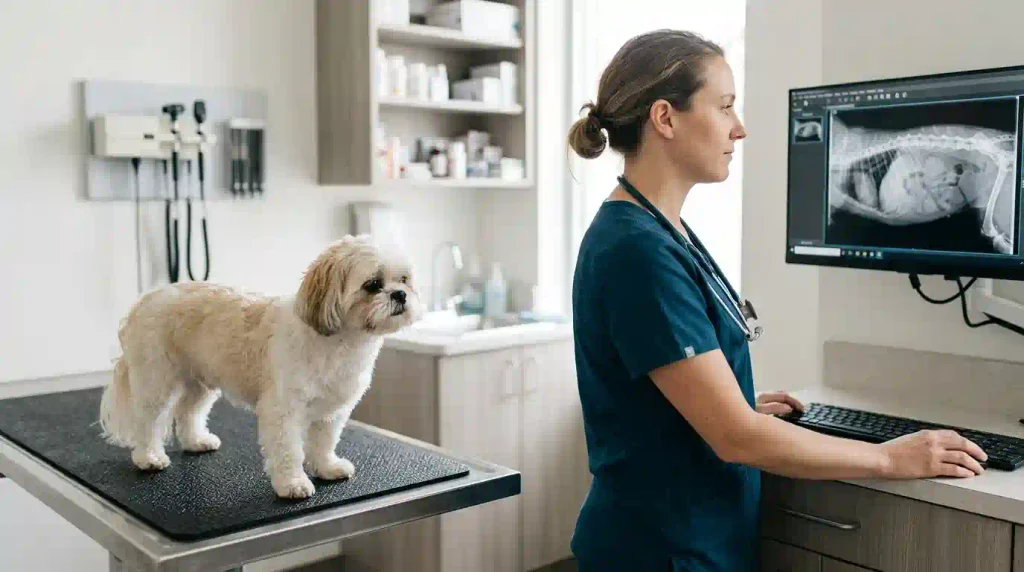
X-Rays and Other Imaging
Abdominal radiographs can show significant stool accumulation and help assess the size and condition of the colon.
They may also identify certain foreign objects, pelvic abnormalities, or other causes of obstruction.
Ultrasound or additional imaging may be recommended if the initial examination raises concerns about an underlying gastrointestinal problem.
In selected cases, more specialized procedures such as colonoscopy may be appropriate.
Blood, Urine, and Fecal Tests
Blood tests can help identify dehydration, electrolyte disturbances, and possible systemic illnesses.
Urinalysis may be useful when urinary disease is suspected.
Fecal testing, including flotation procedures, may be considered when parasites or other digestive disorders are possible.
These tests are chosen according to the dog’s symptoms rather than performed automatically for every case.
Checking for Orthopedic, Neurological, or Other Underlying Problems
Dogs with spinal pain, arthritis, pelvic injuries, or neurological abnormalities may avoid or struggle with normal defecation.
An orthopedic or neurological examination can help determine whether reduced mobility or nerve dysfunction is contributing to stool retention.
Additional screening may be recommended when hormonal, colon, or prostate disease is suspected.
How Constipation Is Treated
Treatment depends on whether the Shih Tzu has mild constipation, significant fecal impaction, an obstruction, or another underlying condition.
For additional veterinary information, the Merck Veterinary Manual’s guide to digestive disorders in dogs explains constipation and other intestinal conditions.
Increasing Fluids and Adjusting Diet
Dehydrated dogs may require additional fluids to restore normal hydration.
Mild cases may respond to veterinarian-recommended changes in water intake or dietary moisture.
Some dogs benefit from canned food or a therapeutic diet, depending on their nutritional requirements.
Others may need a different balance of dietary fiber.
Fiber, Pumpkin, or Supplements When Recommended
Veterinarians may recommend specific amounts of dietary fiber for selected dogs.
Options can include appropriate high-fiber diets, plain pumpkin, psyllium, or other veterinary-approved products.
However, adding fiber is not suitable for every dog.
Fiber may worsen problems when stool movement is restricted or adequate hydration is lacking.
Probiotics may sometimes be used as supportive digestive care, but they are not proven substitutes for treating an obstruction or fecal impaction.
Prescription Medications and Stool Softeners
Some constipated dogs require prescription medications to soften stool or improve bowel movement.
Veterinarians may use medications such as lactulose or other appropriate laxatives based on the dog’s condition.
A prokinetic medication such as cisapride may be considered in selected chronic cases, but mechanical obstruction must first be excluded.
Medication choice and dosage require veterinary guidance.
Veterinary Enemas and Manual Stool Removal
Dogs with significant fecal impaction may require professional assistance to remove retained stool.
Veterinary treatment can include fluid therapy, carefully selected enemas, or manual removal of hardened fecal material.
Sedation or anesthesia may be necessary for painful or severe cases.
These procedures should not be attempted at home because improper techniques or products can cause serious injury or toxicity.
Treatment for an Obstruction or Underlying Condition
If constipation results from a foreign object, intestinal narrowing, pelvic abnormality, or another illness, the underlying problem must be addressed.
Treatment may involve medication, specialist assessment, endoscopic intervention, or surgery.
Anal gland disease, parasites, and painful orthopedic conditions may also require specific care.
Simply softening stool will not resolve every cause of difficult defecation.
When Surgery May Be Needed
Surgery is uncommon for ordinary constipation but may be necessary when a serious obstruction or structural abnormality is present.
Dogs with severe, treatment-resistant megacolon may occasionally require removal of part of the colon, called a partial colectomy.
The decision depends on the diagnosis, overall health, and response to other treatments.
A veterinary surgeon can explain the potential benefits, complications, and recovery expectations.
Recovery and Preventing Constipation
Many Shih Tzus recover well once the underlying cause of constipation has been identified and treated.
Long-term prevention focuses on hydration, nutrition, comfortable movement, grooming, and regular bowel monitoring.
What to Expect After Treatment
Recovery depends on the severity and cause of constipation.
Some dogs resume comfortable bowel movements relatively quickly after appropriate treatment.
Others may need several days of dietary management, medication, and monitoring.
Dogs with recurring constipation or significant colon dysfunction may require ongoing veterinary care.
Contact your veterinarian if straining returns, stool remains absent, or new symptoms develop.
Keeping Water Available and Feeding an Appropriate Diet
Provide clean, fresh water throughout the day.
Feed a nutritionally complete diet suitable for your Shih Tzu’s age and health needs.
Avoid sudden diet changes and limit access to bones or objects that could be swallowed.
If your veterinarian recommends a therapeutic diet, follow the instructions consistently.
Regular Exercise and Bathroom Routines
Gentle daily activity supports normal digestive function.
Establish predictable bathroom opportunities, particularly after meals and periods of rest.
Older dogs or those with mobility problems may benefit from shorter, more frequent outings.
Avoid forcing exercise when the dog appears painful or unwell.
Grooming the Hair Around the Rear
Regular brushing and appropriate sanitary trimming can help prevent feces from becoming trapped in the coat.
Check the area beneath the tail after episodes of soft stool or diarrhea.
Severe matting should be handled by a veterinarian or qualified groomer.
Routine grooming is especially important for Shih Tzus with long coats.
Monitoring Stool and Bowel Habits
Become familiar with your dog’s normal bowel frequency, stool appearance, and bathroom behavior.
Watch for repeated straining, hard pellets, abnormal discharge, or discomfort.
A brief log can help identify early changes before constipation becomes severe.
Managing Recurring Constipation and Megacolon
Repeated constipation requires investigation because chronic stool retention may affect normal colon function.
Megacolon occurs when the colon becomes enlarged and loses some of its ability to move feces effectively.
Management may involve an individualized diet, appropriate medications, hydration support, and regular follow-up examinations.
Severe cases may require referral to a veterinary specialist.
Other Bowel and Anal Gland Concerns
Some conditions resembling constipation actually involve diarrhea, anal discomfort, or other digestive problems.
Understanding the differences can help owners recognize when additional veterinary investigation is needed.
Constipation, Diarrhea, and Bowel Obstruction: How Signs Can Differ
Constipation often causes difficult passage of hard or dry stool.
Diarrhea generally involves frequent passage of loose or watery feces, sometimes accompanied by urgency and straining.
An intestinal obstruction may cause vomiting, abdominal pain, reduced appetite, and little or no stool passage.
However, these symptoms overlap, and liquid stool can sometimes pass around retained feces.
Owners should never assume that watery discharge excludes constipation.
Anal Gland Symptoms and Veterinary Care
Anal gland problems may cause scooting, licking beneath the tail, a strong odor, or painful defecation.
Small breeds, including Shih Tzus, can develop anal sac impaction or inflammation.
For a more detailed explanation, the guide to Shih Tzu anal glands covers symptoms and veterinary management.
Persistent swelling, pain, bleeding, or discharge near the anus requires veterinary attention.
Why a Shih Tzu Might Eat Poop
Eating feces is called coprophagia.
Some dogs develop this behavior through curiosity, learned habits, environmental factors, or other influences.
It is not a reliable sign of constipation.
If the behavior begins suddenly or accompanies digestive symptoms, discuss it with your veterinarian.
Skin irritation related to shih tzu allergies can also cause licking near the rear, so owners should distinguish general skin discomfort from feces-eating behavior or difficulty defecating.
Good hygiene, prompt stool removal, and appropriate behavioral management may help reduce coprophagia.
Frequently Asked Questions
How Long Can a Shih Tzu Go Without Pooping?
Contact your veterinarian if your Shih Tzu has not pooped for 24 hours and this is unusual; 48 hours without stool requires assessment, or sooner if symptoms appear.
Can Constipation Resolve on Its Own?
Mild constipation may improve, but repeated straining, pain, vomiting, or persistent lack of stool requires veterinary evaluation.
Can I Give My Shih Tzu Pumpkin or a Human Laxative?
Ask your veterinarian before using pumpkin or fiber, and never give human laxatives or enemas without veterinary instructions.
Can Matted Hair Around the Anus Make It Hard to Poop?
Yes, severe fecal matting can obstruct the anal opening, causing pseudocoprostasis and painful or difficult defecation.
Can Constipation Be a Sign of a Blockage or Another Illness?
Yes, constipation can result from intestinal obstruction, severe fecal impaction, pain, neurological disorders, or other underlying medical conditions.
Final Thoughts: Helping Your Shih Tzu Poop Comfortably Again
If your Shih Tzu is constipated, start by checking the last bowel movement, stool appearance, appetite, hydration, and signs of discomfort. Mild changes in bowel habits may have simple explanations, but persistent straining, hard stool, or repeated unsuccessful attempts to defecate should never be ignored.
Remember that matted hair, anal gland disease, urinary obstruction, and intestinal problems can resemble constipation. Avoid unapproved laxatives and home remedies, especially when the underlying cause is uncertain.
Regular grooming, appropriate nutrition, access to fresh water, gentle exercise, and veterinary checkups can help support healthy bowel habits.
If your Shih Tzu is struggling to poop, contact your veterinarian and describe the symptoms clearly. Prompt diagnosis can prevent complications and help your dog return to comfortable, regular bowel movements.
Whether you are caring for a Shih Tzu or researching the breed under the common misspelling Shit Zhu, understanding digestive warning signs is an important part of responsible pet ownership.