

Brown, Black and White Shih Tzu: Identifying the Tricolor Coat
Summary: A brown black and white Shih Tzu is often described as a tricolor Shih Tzu: a dog with three visibly different coat shades. But the label can be confusing. The areas you call brown may be gold or tan, a dark muzzle may be a black mask rather than a third body color, and a few black-tipped hairs do not always make an otherwise gold-and-white dog tricolor. The nose, lips, and eye rims also matter if someone describes the dog as liver, which is a type of brown pigmentation rather than simply brown-looking fur. This guide shows you where to look, how to compare similar markings, and why a puppy’s colors may look different as its adult coat grows. You will also find a photo checklist, a plain-English explanation of coat genetics, and practical questions to ask before buying or adopting. The goal is to describe the individual dog accurately while putting health, temperament, and ongoing care ahead of a fashionable color name.
Table of Contents
- What Is a Brown, Black and White Shih Tzu?
- How Do You Identify the Three Colors?
- Tricolor or a Different Shih Tzu Pattern?
- Is the Brown Fur Gold, Tan or Liver?
- Why Does This Coat Combination Occur?
- Will a Tricolor Puppy Keep the Same Colors?
- Is This Color Recognized, Rare or More Expensive?
- Does Coat Color Affect Care, Health or Temperament?
- Frequently Asked Questions
- Final Takeaway
What Is a Brown, Black and White Shih Tzu?
A brown black and white Shih Tzu has fur that appears to contain three distinct colors: a brown-looking shade, black, and white. In everyday speech, tricolor is a useful description. For a Shih Tzu, the warm shade may be called gold or tan instead of brown, depending on its appearance and the terminology used for registration. The visible combination is more important to an owner than forcing a single label onto every variation.
Tricolor is a description of the coat, not a separate breed. A purebred shih tzu can have three visible colors. Shih Tzus also come in solids, two-color combinations, and other patterns; compare the wider range of shih tzu colors if you are identifying a puppy from photographs.
The quick answer: three visible colors
Look for recognizable areas of black, warm brown or gold, and white. For example, a dog might have black across the back, tan on the cheeks and legs, and white on the chest and forehead. Another might be mostly white with black ears and gold patches. The placement and proportions are individual. You do not need one color to cover a fixed percentage of the body to describe what you see as tricolor.
Color names vary. For a “black white and brown shih tzu,” note whether each shade forms a patch, hair tip, or facial marking.
Why “brown” may be called gold or tan
Many Shih Tzus have warm fur that looks brown in a dim photo. In daylight, that area may be yellow-gold, reddish gold, or tan. A gold and white shih tzu can look like a brown-and-white dog to someone using everyday color names; a tan and white shih tzu may be described similarly.
Liver refers to brown pigment where a dog would otherwise have black pigment. Gold or tan fur beside a black nose does not establish a liver coat.
How Do You Identify the Three Colors?
Start with a full-body view in open shade, then examine the face and hair roots. Flash and indoor lighting distort shades; clipping can remove dark hair tips.
Common locations for white, dark and tan areas
White may form a chest patch, forehead blaze, collar, paws, or larger sections. Black can appear on the ears, back, tail, or face. Tan or gold may show around the eyes, cheeks, ears, legs, or body. These are examples, not required placements.
A white blaze runs on the head between the eyes; a broader flare expands that area. A dark saddle covers part of the back, and a white chest on a darker dog may be informally called a tuxedo marking. Those terms describe placement, while tricolor describes how many visible shades the coat has. An apparent eyebrow or eye stripe may likewise be a marking rather than proof of a third color across the body.
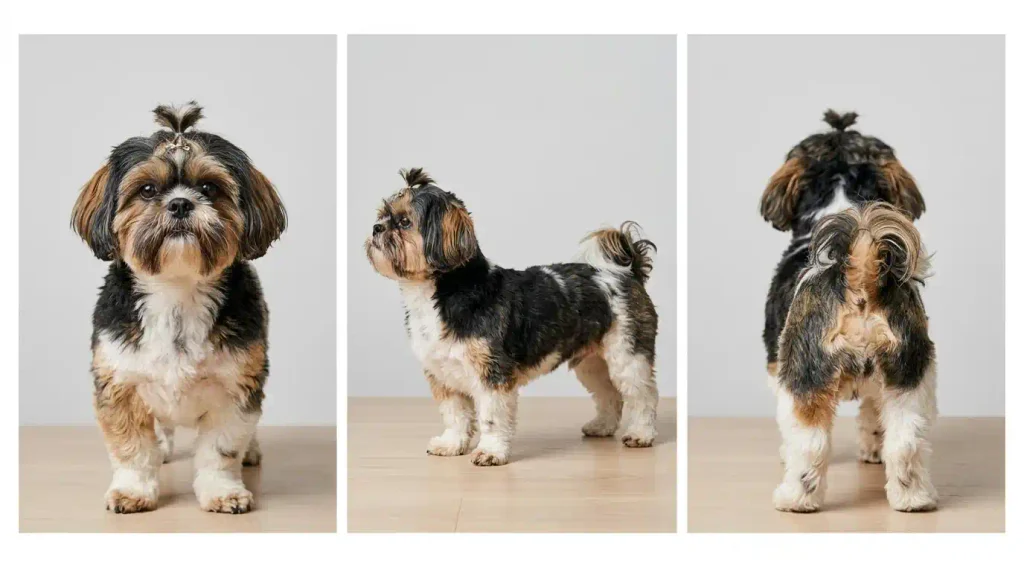
A photo checklist for owners and puppy buyers
- Front: Is the face dark because of a black mask, black ears, or separate black patches? Where is the white blaze?
- Both sides: Are the brown-looking and black areas separate patches, or are the hairs mostly shaded at their tips?
- Back and tail: Does a dark saddle create the impression of a third color that is barely visible elsewhere?
- Close-up: What color are the hairs at their roots? Can you see an actual warm patch beside black and white?
- Pigment: Are the nose, lips, and eye rims black or brown? Record this separately from the coat description.
- Age and lighting: How old was the dog in each photograph, and were the images taken in comparable natural light?
Ask for current unfiltered photos from several angles, then repeat them every few months to track changes.
Tricolor or a Different Shih Tzu Pattern?
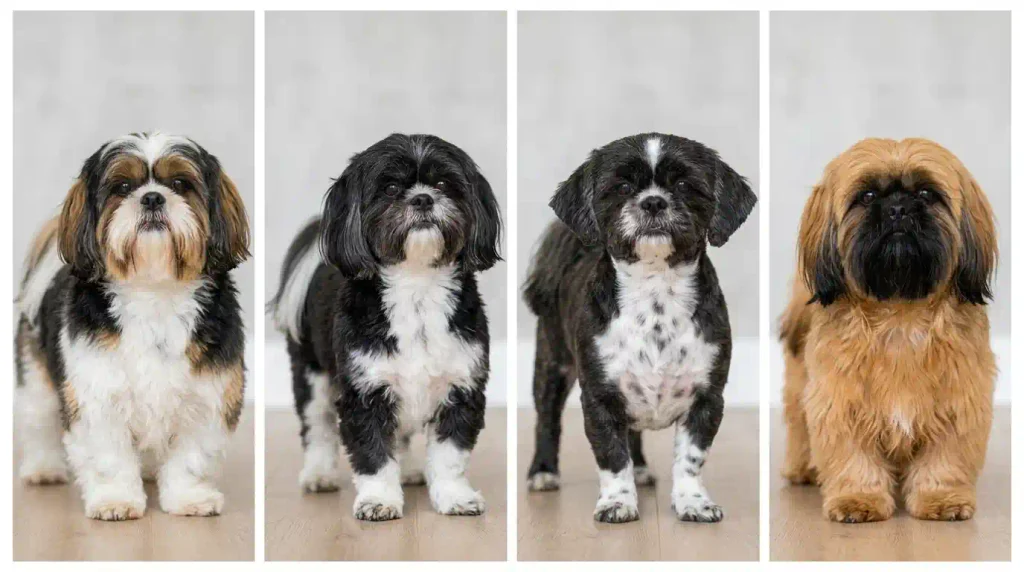
Several coats look tricolor from afar. Identify three visible areas of fur and ask what creates each shade. White spotting can coexist with brindle or a facial mask.
| Appearance | What distinguishes it from a clear black, gold and white coat |
| Black and white | Two clear colors; a warm reflection or stain does not establish a third patch. |
| Gold and white with black tipping | Individual gold hairs have dark ends; the dog may look darker before a trim. |
| Brindle and white | Dark streaks run through lighter pigmented areas, beside separate white areas. |
| Gold coat with black mask and white | Black is concentrated on the face; describe the mask separately if helpful. |
| Liver and white | Brown pigment replaces black pigment; nose and other points help distinguish it. |
Tricolor versus black and white with black tipping
A black and white shih tzu has distinct black and white areas. Some dogs also have warm-looking hair at the edges of a patch or a small tan area that becomes clearer with age. In that case, photograph it closely before settling on a two-color or three-color description.
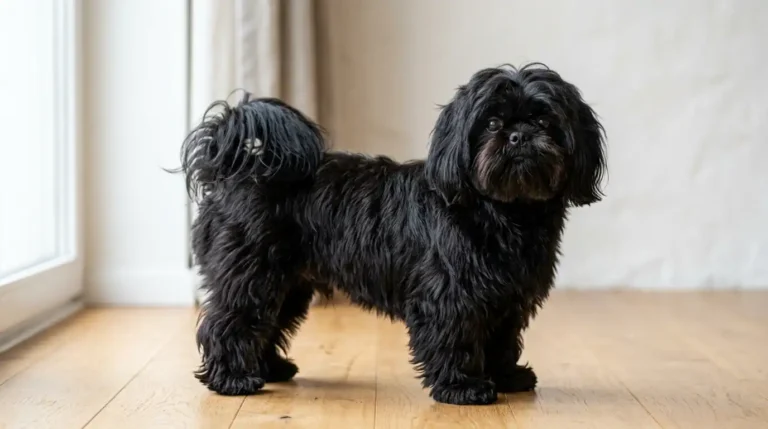
Black tipping is different: a lighter hair can have a dark end, creating an overall shaded appearance. After a haircut, those tips may disappear from view. On a black shih tzu, a brownish shine caused by lighting also does not automatically indicate a separate brown patch. Look for the same color difference from several angles under consistent daylight.
Tricolor versus brindle, sable and a black mask
A black brindle shih tzu has darker streaks against lighter pigmented hair; white spotting can add a third visible shade. Sable often describes lighter hairs with darker tips, while a black mask concentrates dark fur around the muzzle. These appearances may overlap visually without being identical.
For instance, a black mask gold shih tzu with a white chest can look black, gold, and white from the front. A black and tan shih tzu with white spotting may also look tricolor. Describe the actual distribution rather than assuming one photo establishes the underlying genetics.
Parti-color describes white placement, not an exact set of colors
“Parti-color” generally describes a coat with substantial white alongside colored sections. It does not specify whether those sections are black, gold, brindle, or another shade. A dog can therefore be both parti-colored and visibly tricolor. The terms answer different questions: Where is white? and Which colors can you see?
Compare a brown and white shih tzu with a black and brown shih tzu. Both descriptions identify visible color combinations; adding a separate white section changes the everyday description, but it does not reveal every gene the dog carries.
Is the Brown Fur Gold, Tan or Liver?
This is the most important naming distinction. Brown-looking hair is an observation; liver pigmentation is a specific pigment change. Dogs can make dark black/brown pigment and lighter red/yellow pigment. The brown-related B-locus variants change dark pigment from black to brown; they do not change the lighter red/yellow pigment in the same way. A dog with tan or gold fur can therefore retain black pigment on its nose.
Check the nose, lips and eye rims
The American Shih Tzu Club breed standard calls for black noses, lips, and eye rims on most colors, with exceptions for liver- and blue-pigmented dogs. A brown nose and corresponding brown points support describing a dog as liver-pigmented; a black nose and eye rims beside gold or tan fur suggest that the warm fur alone should not be called liver. Check in daylight, and ask a veterinarian if pigmentation appears abnormal or has recently changed.
If someone advertises a “liver, black and white” dog, request clear photographs of both coat and nose. The phrase may mix a technical pigment label with an informal description of dark fur. Genuine brown/liver pigment changes the dark pigment rather than leaving true black pigment in those areas. A liver chocolate shih tzu or liver and white shih tzu deserves its own careful description.
Why coat shade alone cannot establish pigmentation
Photos compress subtle differences. A dark liver patch may look nearly black on a screen, while a red-gold patch can look chocolate brown in shadow. Sunlight, camera processing, and coat length add more uncertainty. The nose, lips, and eye rims offer a useful visual clue; a suitable DNA test can clarify specific variants when the result matters. Neither a color name nor an image is a substitute for identifying the individual dog.
Do not confuse normal coat variation with albinism or assume that a light patch signals a health problem. A white shih tzu and an albino shih tzu are not interchangeable labels. Here, the priority is identifying the three visible shades and documenting pigment accurately.
Why Does This Coat Combination Occur?
Coat appearance results from inherited variants acting together, not from one universal “tricolor gene.” One set of influences affects whether hair makes dark or lighter pigment and where each appears. Other influences alter dark pigment or introduce white spotting. The eventual coat also changes in appearance as hair grows and is groomed.
Pigment and white spotting in plain English
Think of three separate questions. Which pigments can this dog make? Where do the darker and lighter pigments appear? Where does white interrupt the colored coat? The B locus helps determine whether dark pigment looks black or liver-brown. Other loci, including A, K, and E, influence patterns of dark and lighter pigment, while variants affecting white spotting influence white areas. These processes interact, so a three-color photograph is not a complete genetic report.
This also explains why a gold patch and a liver-brown patch can look alike in a photo but have different pigment explanations. A shaded coat, brindle streaks, or a black mask may add still more complexity. Use genetic terminology to clarify an uncertain description, not to promise a precise adult pattern based on a single puppy portrait.
What parents and a color DNA test can tell you
Photos of the parents as puppies and adults can show which changes occurred in that family. They cannot reveal every carried allele or guarantee an identical outcome for a puppy. A laboratory test reports the variants included in that particular test. Ask which loci it covers, whether its interpretation accounts for interacting traits, and whether additional variations could affect the result.
A coat-color panel addresses pigmentation. It does not replace parentage records, breed registration, veterinary checks, or observation of temperament. If you are purchasing a dog because of its appearance, ask the breeder to distinguish clearly between an observed coat color, a test result, and a prediction.
Will a Tricolor Puppy Keep the Same Colors?
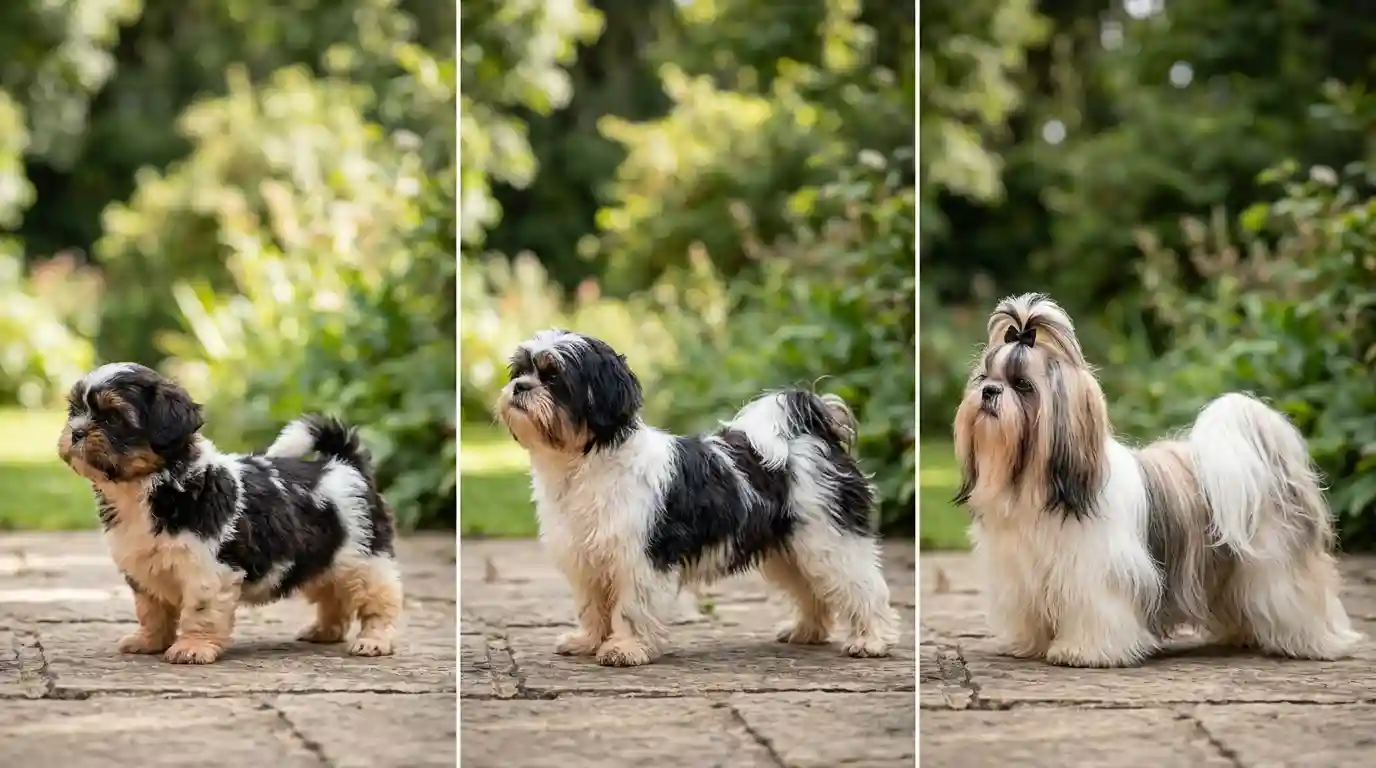
Not necessarily. The white areas, dark patches, and warm fur you see now may appear different when longer adult hair grows. Gold or tan areas can become lighter; dark tipping may be less noticeable after trimming; and the contrast between colors may change. Some dogs remain clearly tricolor, while others look different enough that an early label no longer describes them well.
Puppy-to-adult fading and changing contrast
Document the same dog at several ages. Compare the face, ears, sides, and tail in open shade, keeping the camera angle and coat length in mind. Notice whether the warm areas are becoming creamier, whether dark hair remains in distinct patches, and whether white is simply more visible as surrounding hair grows.
Avoid promises such as “the brown will definitely stay dark” or “all black patches will fade.” Parental photographs are useful context, not a guarantee. If an exact adult appearance is essential, consider meeting an adult dog whose present coat can be inspected directly.
How grooming and photographs affect appearance
A trim can remove old dark hair tips and reveal lighter growth below. A long coat can cover small colored patches that were easy to see on a short-haired puppy. Wet hair appears darker; camera filters and warm lighting can change the apparent shade. Record whether photographs were taken before or after grooming before concluding that the underlying coat pattern has changed.
Sudden hair loss, irritated skin, or an unusual new patch accompanied by discomfort needs veterinary attention. That is a different question from a healthy coat gradually changing in color or length as a puppy matures.
Is This Color Recognized, Rare or More Expensive?
The American Shih Tzu Club standard permits all colors and markings equally. A black, gold or tan, and white coat is therefore not disallowed simply because it has three visible colors. The precise words on a registration form are a separate administrative matter from whether a dog’s appearance meets the standard’s color provision.
Breed-standard permission versus registration terminology
An owner may say “brown, black and white,” while registration paperwork may use a standardized combination such as black, gold and white when that best fits the dog’s appearance. Do not assume that every shade commonly called brown corresponds to a registration option named brown. When completing paperwork, use the current registry’s instructions and ask the breeder about a label that does not seem to match the puppy.
Registration does not prove a shade is genetically unique. Nor does a tricolor coat verify a purebred shih tzu; request parentage documents.
Evaluating rarity and price claims
“Rare tricolor” is a marketing claim unless the seller can explain the population and records behind it. The breed permits an exceptionally broad range of colors. A puppy’s price also reflects factors beyond appearance, including local availability, the seller’s practices, veterinary work, and the dog’s age. There is no single reliable national price for a “brown black and white Shih Tzu.”
Ask what you receive for the quoted price: written health information, documented parentage, a clear contract, and ongoing support. Compare those concrete details instead of paying a premium solely for a color adjective. A strong photograph should not distract from a missing medical history or unanswered questions about how the puppy was raised.
Does Coat Color Affect Care, Health or Temperament?
Three visible colors do not create a separate grooming schedule or personality type. The Shih Tzu breed standard describes a dense, long double coat and an affectionate companion temperament; it does not assign a different temperament to black, gold, or white markings. Evaluate the individual dog’s behavior and needs.
Grooming a long, multicolored coat
Brush and comb in small sections so you reach beneath the surface, especially behind the ears, under the legs, around the collar, and near the tail. A dark patch can hide dirt; a white patch may make a stain more obvious. Neither changes the need to prevent matting and inspect the skin. Keep the face clean and arrange grooming often enough to maintain a comfortable coat length.
Bathe with a suitable dog shampoo when needed, rinse thoroughly, and dry the coat carefully. Avoid assuming that white fur needs harsh whitening products or that darker patches can safely go without inspection. If you are considering a shorter pet trim, ask a groomer what brushing you will still need between appointments.
What to assess before choosing a puppy
Meet the dog where possible, watch how it responds to ordinary handling, and request its available veterinary records. Ask about the parents, any health screening, socialization, and the written return policy. Notice the puppy’s breathing, movement, eyes, skin, and willingness to interact; ask your veterinarian to assess any concern. These checks are more useful than trying to infer health from a coat shade.
For everyday ownership questions, see shih tzu Breed Information and shih tzu facts. Choose the companion whose care needs and temperament fit your household, whatever mix of colors appears in the puppy photograph.
Frequently Asked Questions
What is a brown, black and white Shih Tzu called?
Usually a tricolor Shih Tzu; the brown-looking shade may be described as gold or tan.
Can a purebred Shih Tzu have all three colors?
Yes; the breed standard permits all colors and markings, although coat color alone cannot prove pedigree.
Can the brown areas turn lighter?
Yes; warm-colored areas may appear lighter as the adult coat develops, but the result varies by dog.
Does a brown patch mean the dog is liver?
No; check nose and other pigmentation because gold or tan fur can look brown without liver pigment.
Final Takeaway
A brown black and white Shih Tzu is best described first by the three colors you can actually see. If the warm shade looks gold or tan, say so; if someone calls the dog liver, check the nose, lips, and eye rims rather than judging a coat patch alone. Compare separate color patches with black tipping, brindle, sable, and a black mask, especially when looking at puppy photographs. Take dated pictures in similar daylight because adult coat growth and grooming can change how the colors appear. The breed standard permits the combination, while price and rarity claims need evidence of their own. If you are selecting a puppy or rescue dog, use the photo checklist, request health and parentage information, and choose the individual companion you can care for comfortably over the long term.
2 Comments