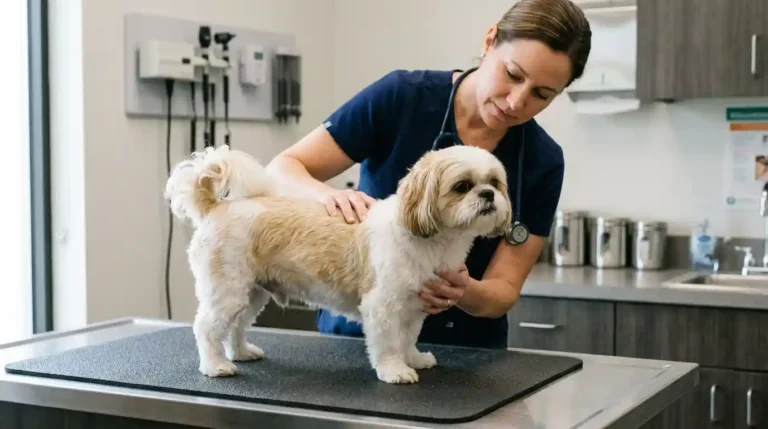

How Many Puppies Can a Shih Tzu Have? Litter Size, Pregnancy, and Delivery Guide
How many puppies can a Shih Tzu have? Most Shih Tzus give birth to approximately 3–5 puppies per litter, although smaller and larger litters are possible. Published research involving 95 Shih Tzu litters found an average of 4.2 puppies, with recorded litters ranging from just one puppy to nine. The actual number depends on several factors, including the mother’s age, physical condition, genetics, reproductive health, and breeding circumstances. First-time mothers may have smaller litters, but this is not a reliable rule, and every pregnancy is different. Because Shih Tzus are small, brachycephalic dogs, pregnancy and delivery also require careful veterinary planning, particularly when puppies are large relative to the mother’s birth canal or labor does not progress normally. Whether you’re researching Shih Tzu litter size, preparing for your dog’s first pregnancy, or wondering when an X-ray can confirm the number of puppies, this guide explains typical litter sizes, pregnancy duration, veterinary testing, responsible breeding, labor warning signs, C-section considerations, and essential care for the mother and newborn puppies.
Table of Contents
- Typical Shih Tzu Litter Size
- What Affects How Many Puppies a Shih Tzu Can Have?
- What to Discuss With a Veterinarian Before Breeding
- Shih Tzu Pregnancy: Duration, Signs, and Litter Counts
- Responsible Breeding and Litter Frequency
- Preparing for a Shih Tzu’s Labor and Delivery
- Caring for the Mother and Newborn Puppies
- Frequently Asked Questions About Shih Tzu Litters
- Final Thoughts
Typical Shih Tzu Litter Size
Shih Tzus are small companion dogs, so their litters are generally smaller than those of large and giant breeds.
However, litter size varies considerably between individual mothers.
A Shih Tzu may deliver only one or two puppies, while another may give birth to six or more.
Published breed-specific research offers a more reliable starting point than isolated reports about unusually large litters.
How Many Puppies Shih Tzus Usually Have
A Shih Tzu commonly has approximately 3–5 puppies in a litter, with around four puppies being a useful planning estimate.
A 2011 study published in the journal Theriogenology examined 10,810 litters from 224 purebred dog breeds registered with the Norwegian Kennel Club.
The Shih Tzu portion included 95 litters and reported an average of 4.2 puppies per litter.
A separate study of selected small dog breeds published in 2015 reported an average of approximately 4.57 puppies across 78 Shih Tzu litters.
These figures suggest that a typical Shih Tzu litter contains roughly four to five puppies, although individual pregnancies can produce substantially different numbers.
For owners asking, “How many puppies does a Shih Tzu usually have?” the practical answer is:
Expect around 3–5 puppies, but only veterinary pregnancy assessment can help estimate how many your individual Shih Tzu is carrying.
It is important to distinguish an average from a guaranteed litter size.
A mother carrying two puppies may be completely normal, while a litter of six puppies is not automatically abnormal.
The number alone does not determine whether the pregnancy is healthy.
Typical Litter Size Range and Rare Larger Litters
Shih Tzu litter size can vary from a singleton pregnancy to an unusually large litter.
In the Norwegian Kennel Club dataset, observed Shih Tzu litters ranged from 1 to 9 puppies.
The Polish study reported litters reaching eight puppies.
These research findings demonstrate that larger Shih Tzu litters are possible.
However, the largest recorded litter in a particular study is not necessarily the biological maximum for the breed.
| Number of Puppies | General Interpretation |
| 1 puppy | Possible singleton pregnancy |
| 2 puppies | Smaller litter |
| 3 puppies | Commonly encountered litter size |
| 4 puppies | Close to published breed averages |
| 5 puppies | Commonly encountered litter size |
| 6 puppies | Larger than the approximate breed average |
| 7–8 puppies | Relatively large Shih Tzu litter |
| 9 puppies | Unusual but documented in published data |
| 10 or more puppies | Exceptionally unusual; reliable breed-specific documentation should be verified |
A larger litter does not necessarily mean a healthier pregnancy.
More puppies can increase the nutritional and physical demands on the mother.
Large litters can also contribute to uterine overdistension, while very small litters may create different delivery concerns, including fetal oversize relative to the birth canal.
Both very small and unusually large litters deserve careful veterinary delivery planning.
Why Published Litter-Size Estimates Differ
You may encounter websites claiming that Shih Tzus usually have three puppies, four puppies, or as many as six puppies.
These estimates can differ for several reasons.
First, some figures come from breeder experience rather than systematic research.
Second, individual studies may examine different countries, breeding populations, and time periods.
Third, small studies can be strongly influenced by a few unusually large or small litters.
The method used to calculate litter size also matters.
Some studies count all puppies born, including stillborn puppies, while other sources discuss only live-born puppies.
These are not necessarily identical measurements.
For example, the Norwegian study reported a Shih Tzu average of 4.2 puppies, while the smaller Polish study reported approximately 4.57.
Both results support an approximate expectation of four to five puppies.
Neither study can predict the exact litter size of an individual dog.
Readers may occasionally encounter the breed name misspelled as Shit Zhu, but the correct name is Shih Tzu, and litter-size estimates should refer to the same recognized breed rather than unrelated mixes.
How Many Puppies a Shih Tzu May Have in Her First Litter
One common question is: How many puppies can a Shih Tzu have the first time?
A first-time Shih Tzu mother may have a relatively small litter, sometimes only one to three puppies.
However, first litters are not guaranteed to be smaller.
A first-time mother can also carry four, five, or more puppies.
In reproductive research, the number of previous litters a female dog has delivered is called parity.
Although breeder observations sometimes associate first pregnancies with smaller litters, the large Norwegian study did not find parity to be a significant independent predictor of litter size after accounting for other factors.
Therefore, it would be inaccurate to promise that a first-time Shih Tzu will have only two or three puppies.
| First Pregnancy Question | Practical Answer |
| Are first litters always smaller? | No |
| Can a first-time Shih Tzu have one puppy? | Yes |
| Can her first litter contain five puppies? | Yes |
| Does the first pregnancy guarantee easy delivery? | No |
| Can ultrasound give an exact count? | Not reliably |
| What is the best late-pregnancy counting method? | Veterinary radiography |
First-time mothers may also be less familiar with the sensations and behaviors associated with labor.
This makes preparation and veterinary guidance particularly valuable.
How Shih Tzu Litter Sizes Compare With Other Breeds
Breed size is one of the strongest general predictors of canine litter size.
Larger dogs tend to produce larger litters on average, although individual variation is substantial.
The Norwegian study provides useful comparisons because several breeds were examined within the same dataset.
| Dog Breed | Reported Average Puppies per Litter |
| Pomeranian | 2.4 |
| Chihuahua | 3.2 |
| Yorkshire Terrier | 3.5 |
| Cavalier King Charles Spaniel | 4.1 |
| Shih Tzu | 4.2 |
| Pug | 4.2 |
| Labrador Retriever | 6.9 |
| Golden Retriever | 7.5 |
These are averages from one historical research population, not guaranteed outcomes or current breed-wide limits.
The comparison shows why Shih Tzus generally have fewer puppies than large retrievers but can have larger litters than some other toy breeds.
The mother’s individual health and reproductive circumstances remain important.

What Affects How Many Puppies a Shih Tzu Can Have?
Several biological and reproductive factors influence litter size.
No single factor determines how many puppies a Shih Tzu will carry.
The mother’s age, reproductive health, genetics, breeding circumstances, and body condition all contribute to the overall picture.
The Mother’s Age and Breeding History
Age can influence reproductive performance.
Very young dogs may not be physically mature enough for safe breeding, even after their first heat cycle.
As females become older, reproductive efficiency may decline, and pregnancy-related complications may become more likely.
The relationship between age and litter size is not identical across breeds or individual dogs.
Previous pregnancy history may also help the veterinarian understand potential risks.
For example, a female that previously experienced difficult labor, stillbirth, uterine inertia, or an emergency C-section needs careful reassessment before another pregnancy is considered.
A first-time mother has no previous delivery record to help predict her response to labor.
A dog with several previous litters may have useful historical information, but that does not guarantee a complication-free delivery.
The Mother’s Size, Health, and Nutrition
A female Shih Tzu’s body size and physical condition can influence reproductive safety.
A very small or underweight mother may face different challenges from a healthy, normally proportioned adult.
Obesity can also increase pregnancy and anesthetic risks.
The veterinarian should assess body condition rather than relying on weight alone.
Good nutrition supports maternal health and fetal development.
However, overfeeding does not increase litter size.
Excess calorie intake may contribute to obesity, which can complicate pregnancy and delivery.
During pregnancy, nutritional needs change as fetal growth accelerates.
A veterinarian may recommend a complete, balanced diet appropriate for reproduction, growth, or gestation and lactation.
Owners should avoid unprescribed calcium supplementation during pregnancy because it can interfere with normal calcium regulation and contribute to postpartum problems.
The goal is supporting a healthy pregnancy—not trying to force a larger litter.
Genetics and the Sire’s Age
Genetics influence many aspects of reproduction, including fertility and reproductive anatomy.
The health of both parents matters.
The male dog, called the sire, contributes sperm quality and genetic characteristics to the puppies.
Age, reproductive health, and fertility problems may affect sperm quality.
However, an older sire does not automatically produce smaller litters.
The impact depends on individual reproductive function.
Breeders should consider inherited health conditions in both parents.
A responsible breeding program should aim to produce healthy puppies rather than prioritize unusually high puppy numbers.
Choosing a sire based solely on the expectation of a larger litter is not a sound breeding strategy.
Natural Mating and Artificial Insemination
Both natural mating and artificial insemination can result in pregnancy.
Natural mating allows sperm to enter the reproductive tract through ordinary mating.
Artificial insemination involves placing collected semen into the female reproductive tract using veterinary reproductive techniques.
Artificial insemination may use fresh, chilled, or frozen semen.
Litter size may be influenced by semen quality, timing relative to ovulation, insemination method, and reproductive health.
The Norwegian study identified an association between mating method and litter size.
However, this does not mean artificial insemination always produces fewer puppies.
The results depend on multiple factors and the breeding population studied.
Breeding timing is particularly important.
Veterinarians may use progesterone testing to help identify the optimal reproductive window.
Owners should not attempt artificial insemination without appropriate veterinary expertise.
What to Discuss With a Veterinarian Before Breeding
Shih Tzu breeding should begin with a veterinary health assessment—not simply waiting for a heat cycle.
Because pregnancy and delivery can place significant demands on a small dog, a prebreeding consultation is particularly important.
The Mother’s Health, Age, and Previous Delivery History
Before breeding, discuss whether the female Shih Tzu is physically mature, healthy, and an appropriate candidate for pregnancy.
The veterinarian may review:
- Age and reproductive history.
- Previous pregnancies and deliveries.
- Body condition and weight.
- Heart and respiratory health.
- Current medications.
- Vaccination and parasite prevention status.
- Orthopedic and eye health.
- Previous surgical procedures.
- Any history of reproductive infection.
- General physical fitness.
Existing health conditions may increase pregnancy or delivery risks.
For example, serious respiratory compromise, uncontrolled endocrine disease, or other systemic illnesses require careful consideration.
Conditions such as those discussed in our Shih Tzu Cushing’s Disease guide should be reviewed before breeding decisions, particularly when the dog is receiving ongoing medication.
A dog with an unresolved mass or concerning skin condition should also be assessed before pregnancy; our Shih Tzu Skin Cancer article explains why suspicious growths require veterinary evaluation.
Not every diagnosis automatically makes breeding impossible, but maternal welfare must come first.
Breed-Specific Health Guidance and Screening
Shih Tzus have certain anatomical and inherited health considerations.
Their short facial structure can contribute to brachycephalic airway problems.
Some individuals may experience noisy breathing, exercise intolerance, overheating, or breathing difficulty.
These concerns can become particularly important during pregnancy, labor, anesthesia, and recovery.
The veterinarian should assess airway function before breeding.
Shih Tzus may also develop eye abnormalities, patellar luxation, and other orthopedic problems.
The American Shih Tzu Club’s Canine Health Information Center recommendations include eye certification and patellar evaluation, with additional cardiac and hip testing available as optional assessments under its published protocol.
Breeding candidates should be assessed according to current veterinary and breed-club health guidance.
Routine health screening is about reducing avoidable inherited disease and protecting the mother.
It does not guarantee the number of puppies in a litter.
Delivery Risks and Whether a C-Section May Be Needed
A Shih Tzu may deliver puppies vaginally, but some pregnancies require a cesarean section.
A C-section is a surgical procedure used to remove puppies through the mother’s abdomen and uterus.
Possible reasons include:
- Puppies too large for the birth canal.
- Abnormal fetal positioning.
- A narrow or obstructed pelvic canal.
- Uterine inertia, where effective contractions are absent or insufficient.
- Signs of fetal distress.
- Failure of labor to progress.
- Serious maternal illness.
- A previous delivery history that suggests increased risk.
A singleton pregnancy may require special planning because an individual puppy can become relatively large.
Larger litters can also create difficulties if the uterus becomes overstretched or the mother becomes exhausted.
Shih Tzus are brachycephalic, so anesthesia and respiratory management also require careful attention.
However, not every Shih Tzu needs a C-section.
Whether surgery is recommended should depend on the mother’s condition, reproductive history, fetal assessment, and veterinary judgment.
If an elective C-section is being considered, its timing must be established using reliable pregnancy dating and fetal assessment—not a guessed date based only on mating.
Shih Tzu Pregnancy: Duration, Signs, and Litter Counts
Once pregnancy is suspected, veterinary monitoring can help assess maternal health, confirm fetal development, and plan for delivery.
How Long a Shih Tzu Is Pregnant
The typical canine gestation period is approximately 63 days from ovulation.
However, the interval between mating and birth can vary because mating does not always occur on the day of ovulation or fertilization.
Dogs may also mate more than once during the fertile period.
For this reason, a breeding date alone may not provide an exact due date.
Veterinarians can use ovulation timing, progesterone records, ultrasound measurements, and other information to estimate when delivery is expected.
A simplified pregnancy timeline looks like this:
| Pregnancy Period | Typical Development or Care |
| Weeks 1–2 | Fertilization and early embryonic development |
| Weeks 3–4 | Pregnancy may become detectable with ultrasound |
| Weeks 5–6 | Fetal development continues and abdominal changes may become noticeable |
| Week 7 | Fetal skeletons become visible on appropriate radiographs |
| Weeks 8–9 | Late-pregnancy monitoring and delivery preparation |
| Around day 63 from ovulation | Typical expected delivery timing |
The timeline is approximate.
A pregnancy that appears prolonged, or one associated with maternal illness or fetal concerns, requires veterinary evaluation.
Signs That a Shih Tzu May Be Pregnant
Pregnancy signs often develop gradually.
Possible changes include:
- Enlarged or more noticeable nipples.
- Changes in appetite.
- Mild weight gain.
- Abdominal enlargement.
- Increased rest or reduced activity.
- Mammary gland development.
- Nesting behavior near delivery.
Some pregnant dogs develop temporary appetite changes during early gestation.
Others show very few visible signs until later.
These symptoms cannot confirm pregnancy.
False pregnancy, also called pseudopregnancy, can cause similar changes after a heat cycle.
A Shih Tzu experiencing false pregnancy may show nesting behavior, mammary enlargement, or changes in behavior despite not carrying puppies.
Veterinary testing is necessary to establish pregnancy reliably.
How a Veterinarian Confirms Pregnancy
A veterinarian may use ultrasound, pregnancy-related hormone testing, carefully timed abdominal palpation, or radiography.
The recommended method depends on the stage of pregnancy.
Ultrasound is particularly useful for confirming early pregnancy.
Blood testing for the hormone relaxin may also help confirm pregnancy after implantation, although testing too early can produce a false-negative result.
Abdominal palpation requires experience and is useful only during certain stages.
Owners should not press firmly on the abdomen to try to feel puppies.
An incorrect technique could cause discomfort or injury.
How Ultrasound Checks Pregnancy and Fetal Viability
Ultrasound uses sound waves to produce images of structures inside the abdomen.
Veterinarians can often identify developing embryos around three to four weeks into pregnancy, depending on the timing and equipment.
Ultrasound can help assess fetal heartbeats and viability.
It is especially useful when there are concerns about pregnancy progression or possible fetal distress.
However, ultrasound is not always reliable for counting every puppy.
Puppies may overlap, move, or occupy positions that make it difficult to identify each fetus separately.
A scan that appears to show four puppies does not guarantee that only four are present.
For an accurate late-pregnancy litter count, radiography is generally more useful.
When an X-Ray Can Help Count Puppies
An abdominal X-ray, also called a radiograph, can help veterinarians count puppies once their skeletons have mineralized enough to be visible.
Fetal skeletons generally become visible during the latter portion of pregnancy.
For counting, veterinarians often prefer radiographs late in gestation, commonly around day 55 or afterward, when skeletal detail is clearer.
The veterinarian may count fetal skulls and spinal columns to estimate the number of puppies.
Radiography is generally more accurate for litter counting than ultrasound.
However, overlapping fetuses and image limitations can occasionally make the count uncertain.
An X-ray does not replace ultrasound when the primary concern is fetal heart rate or viability.
The veterinarian will decide which examination is appropriate.
Why a Prenatal Puppy Count Helps With Delivery Planning
Knowing the expected number of puppies can make delivery monitoring much safer.
Suppose a Shih Tzu is expected to deliver five puppies.
If she delivers four and then stops, the veterinarian can use the prenatal count and current signs to determine whether another puppy may remain.
Without an estimated litter count, it may be more difficult to recognize incomplete delivery.
A prenatal count also helps owners prepare supplies, monitoring records, and an emergency plan.
However, do not rely exclusively on the number written in an earlier report.
If the mother shows signs of distress, seek veterinary care regardless of whether the expected number of puppies has already arrived.

Responsible Breeding and Litter Frequency
Knowing how many puppies a Shih Tzu can produce is only one part of responsible breeding.
The mother’s long-term wellbeing, reproductive maturity, and ability to recover between pregnancies are equally important.
When a Shih Tzu Is Old Enough to Breed
Female Shih Tzus can experience their first heat cycle before reaching full physical maturity.
However, the ability to become pregnant does not mean that breeding is appropriate.
Breeding during the first heat is generally discouraged.
A responsible breeding decision should wait until the dog is fully mature and has completed appropriate health assessments.
For many small dogs, this means considering breeding only after approximately 18–24 months of age, depending on individual maturity and veterinary advice.
This is a general planning range rather than a universal medical rule.
The veterinarian should assess physical development, reproductive health, body condition, and any existing problems.
A young female that has not fully matured may face additional risks during pregnancy and delivery.
How Often a Shih Tzu Should Have a Litter
There is no single scientifically established breeding interval that is safe for every Shih Tzu.
Some breeding organizations have specific rules about minimum intervals between litters.
Veterinary recommendations also depend on the mother’s health and previous reproductive experience.
Repeated pregnancies can place substantial physical demands on a small dog.
The mother needs time to recover body condition, replenish nutritional reserves, and return to good health.
A Shih Tzu that experienced difficult labor, surgery, significant weight loss, infection, or nursing complications may need an extended recovery period or may not be an appropriate candidate for another pregnancy.
Owners should not assume that breeding during every heat cycle is safe.
Discuss the timing of any future litter with a veterinarian experienced in canine reproduction.
How Many Litters a Shih Tzu Can Have in Her Lifetime
A female Shih Tzu may remain capable of pregnancy across multiple reproductive years.
However, reproductive ability should not be confused with safe breeding capacity.
There is no universal lifetime litter number that guarantees safety.
You may encounter advice suggesting two, three, or four lifetime litters, but these figures are not reliable medical limits for every individual dog.
Kennel clubs and breeding registries may establish their own maximums or age restrictions.
The appropriate decision depends on:
- The mother’s age.
- Her overall health.
- Previous pregnancy outcomes.
- Recovery after nursing.
- History of difficult labor.
- Whether previous C-sections were required.
- Her body condition and quality of life.
- Current breeding regulations and welfare standards.
Some Shih Tzus should not be bred at all.
Others may be medically suitable for a limited number of carefully planned litters.
After a complicated pregnancy or delivery, retirement from breeding may be the safest choice.
The mother’s welfare should always take priority over achieving a particular number of litters.
Preparing for a Shih Tzu’s Labor and Delivery
Labor is the stage of pregnancy that requires the greatest immediate preparation.
Even when prenatal examinations appear reassuring, unexpected complications can occur.
Small breeds, including Shih Tzus, deserve careful monitoring because maternal-fetal size differences and other delivery problems may arise.
Setting Up a Safe, Comfortable Whelping Area
A whelping area is a designated space where the mother can give birth and care for her puppies.
Prepare the space before the expected delivery date.
It should be quiet, clean, comfortably warm, and protected from unnecessary disturbances.
A suitable whelping box should be large enough for the mother to lie on her side and nurse comfortably.
It should also help prevent puppies from wandering into unsafe areas.
Consider preparing:
- A sturdy, easy-to-clean whelping box.
- Clean, absorbent bedding.
- Fresh towels.
- A digital thermometer.
- A digital kitchen scale for newborn weights.
- Puppy identification and monitoring records.
- A safe, controlled heating arrangement if recommended.
- The veterinarian’s contact number.
- The nearest emergency veterinary hospital’s details.
- Transport arrangements in case urgent care is needed.
Some whelping boxes include protective rails designed to reduce the risk of puppies becoming trapped against the walls.
Avoid loose threads, tangled bedding, or materials that could obstruct newborn breathing.
Heating equipment should never create a situation where puppies cannot move away from excessive warmth.
The mother must also have a comfortable cooler area because overheating can be dangerous, particularly for brachycephalic dogs.
Signs That Labor Is Approaching
As delivery approaches, a Shih Tzu may show changes in behavior and physical condition.
Possible signs include:
- Restlessness.
- Nesting or digging at bedding.
- Panting.
- Seeking privacy.
- Following the owner more closely.
- Temporary appetite reduction.
- Trembling.
- Increased attention to the genital area.
- Mammary development.
Some dogs experience a decrease in body temperature before labor.
However, temperature changes are not completely reliable for predicting the exact delivery time.
A dog may also show nesting behavior during false pregnancy or because of discomfort.
If the expected due date is approaching, maintain contact with your veterinarian.
Do not rely on one sign to decide that delivery is definitely about to begin.
The Stages of Labor and Expected Time Between Puppies
Canine labor is generally divided into three stages.
Stage 1: Cervical preparation and early labor
During this stage, the cervix begins to dilate and uterine contractions occur, although visible abdominal pushing may not yet be obvious.
The mother may pant, pace, nest, tremble, or refuse food.
This stage often lasts several hours and may continue longer in some dogs.
Stage 2: Delivery of puppies
During the second stage, stronger uterine and abdominal contractions help deliver the puppies.
Visible pushing typically occurs.
Many puppies are delivered approximately 30–60 minutes apart, but the interval can vary.
A prolonged gap may be abnormal, particularly if the mother is straining or the veterinarian expects additional puppies.
Stage 3: Delivery of placentas
The placenta is the temporary organ connecting each developing puppy to the mother’s uterus.
A placenta is associated with each puppy.
Placental delivery may occur shortly after a puppy is born or between deliveries.
Stages 2 and 3 often alternate until all puppies have arrived.
The exact sequence can vary.
Never assume prolonged labor is safe simply because some dogs normally rest between puppies.
The mother’s condition and expected number of remaining puppies must be considered.
How to Tell Whether All the Puppies Have Been Delivered
Determining whether labor has finished can be difficult without a prenatal puppy count.
The mother may become calmer, stop actively pushing, and focus on nursing and grooming her puppies.
However, these behaviors do not guarantee that delivery is complete.
A dog may rest between puppies even when another fetus remains.
A late-pregnancy X-ray helps establish how many puppies are expected.
Keep a delivery log recording:
| Puppy | Birth Time | Initial Observation | Nursing Started? | Placenta Observed? |
| Puppy 1 | Record time | Breathing and movement | Yes/No | Yes/No/Uncertain |
| Puppy 2 | Record time | Breathing and movement | Yes/No | Yes/No/Uncertain |
| Puppy 3 | Record time | Breathing and movement | Yes/No | Yes/No/Uncertain |
| Puppy 4 | Record time | Breathing and movement | Yes/No | Yes/No/Uncertain |
| Puppy 5 | Record time | Breathing and movement | Yes/No | Yes/No/Uncertain |
If the veterinarian’s expected count differs from the number delivered, contact the clinic for guidance.
A follow-up examination or imaging may be needed.
Placental counts can also be difficult because the mother may consume placentas.
Do not rely on the number of visible placentas alone to determine whether delivery is complete.
Warning Signs of Prolonged or Difficult Labor
Difficult labor is called dystocia.
It can result from inadequate uterine contractions, an obstruction, an unusually large puppy, abnormal fetal positioning, or maternal illness.
Important warning signs include:
- Strong contractions without a puppy being delivered.
- Prolonged weak contractions without progress.
- A puppy visibly stuck in the birth canal.
- Excessive bleeding.
- Abnormal discharge before the first puppy.
- Severe pain or exhaustion.
- Collapse or marked weakness.
- A prolonged gap when puppies remain.
- Signs that the mother is seriously unwell.
A Shih Tzu may require emergency treatment or a C-section if vaginal delivery cannot proceed safely.
For detailed clinical warning signs, see the Cornell University College of Veterinary Medicine’s guide to dystocia in dogs.
When a Pause Between Puppies May Need Urgent Attention
Not every pause means something is wrong.
However, long intervals can signal a problem, particularly when additional puppies are expected.
Contact an emergency veterinarian immediately if your Shih Tzu has strong, active contractions for approximately 20–30 minutes without delivering a puppy.
If weak contractions continue for one to two hours without progress, urgent veterinary guidance is needed.
A gap of approximately two hours between puppies also warrants contacting the veterinarian when another puppy may remain.
Do not wait longer simply because the mother appears calm.
The veterinarian may recommend examination or imaging to determine whether labor is progressing normally.
A long pause can occur with uterine inertia, fetal malposition, or other complications.
These problems cannot be reliably distinguished at home.
Avoid giving oxytocin, calcium, or other medications without veterinary direction.
Such medications can be dangerous when an obstruction is present.
Discharge or Changes in the Mother That Warrant a Veterinary Call
Vaginal discharge may occur around labor and delivery.
Some clear or lightly blood-tinged discharge can occur during normal reproductive processes.
However, unusual discharge can indicate complications.
Urgently contact a veterinarian if you notice dark green discharge before the first puppy is delivered, especially when delivery does not follow promptly.
Green discharge may indicate placental separation and possible fetal distress.
Heavy bleeding, foul-smelling discharge, fever, severe pain, or marked weakness also requires urgent assessment.
After delivery, a certain amount of postpartum discharge can be normal.
However, discharge that becomes foul-smelling, excessively bloody, or is accompanied by fever, weakness, poor appetite, or illness requires veterinary examination.
Owners should not attempt to diagnose discharge color or cause from photographs alone.
Making an Emergency Delivery Plan With Your Veterinarian
An emergency plan is one of the most important preparations for a pregnant Shih Tzu.
Before the due date, discuss:
- The expected number of puppies.
- The estimated delivery window.
- Whether vaginal delivery appears reasonable.
- Individual risk factors for difficult labor.
- Emergency warning signs.
- When to contact the clinic.
- Availability of emergency C-section surgery.
- Safe transport arrangements.
- Expected emergency costs.
- Whether specialist referral is advisable.
Make sure you know which hospital is open overnight and on weekends.
Confirm that the facility can provide emergency obstetric surgery and newborn support if needed.
Do not wait until active labor becomes complicated to begin searching for emergency veterinary care.

Caring for the Mother and Newborn Puppies
Once the puppies are born, the focus shifts to nursing, warmth, hygiene, and maternal recovery.
Newborn puppies are particularly vulnerable because they cannot regulate their body temperature effectively and depend heavily on their mother.
Veterinary follow-up remains important even when delivery appears uncomplicated.
Checking That Each Puppy Is Nursing and Gaining Weight
Newborn puppies should begin nursing as soon as they are stable and able to feed.
The first milk, called colostrum, contains important maternal antibodies.
Receiving adequate colostrum early in life helps protect newborn puppies while their own immune systems are immature.
Watch for puppies that cannot latch, are repeatedly pushed away, appear unusually weak, or cry continuously.
Weigh each puppy at birth and record its weight.
Use a suitable digital scale and weigh puppies consistently, preferably at the same time each day.
Healthy puppies generally gain weight steadily.
Veterinary neonatal-care references commonly describe weight gains of approximately 5–10% of body weight per day, although rates vary among individuals.
A puppy that loses weight, fails to gain adequately, or becomes weak requires prompt veterinary attention.
Do not assume that the smallest puppy will catch up without additional help.
For large litters, the mother may require closer monitoring to ensure every puppy receives sufficient milk.
If supplemental feeding becomes necessary, use a veterinarian-approved canine milk replacer and obtain instructions on the correct feeding method.
Never force-feed a weak, chilled, or unresponsive puppy.
Keeping Newborn Puppies Warm and Clean
Newborn puppies have limited ability to maintain their own body temperature.
They depend on maternal warmth and an appropriately controlled environment.
During the earliest days, a suitably warm nesting area is important.
However, excessive heat can be dangerous.
Veterinary guidance often recommends environmental temperatures around 85–90°F (29–32°C) in the warmest puppy area during the first several days, with gradual reductions as the puppies develop.
The exact arrangement depends on the mother’s comfort, the litter size, and the heating system.
Do not heat the entire whelping box uniformly if it prevents the mother or puppies from escaping excessive warmth.
Heating pads and lamps require careful supervision and appropriate safety measures.
Never place newborn puppies directly against an unprotected heating pad.
Keep bedding dry and clean.
Replace soiled materials promptly without disrupting the mother unnecessarily.
Handling Newborn Puppies Safely
Handle newborn Shih Tzu puppies gently and only as necessary during the earliest days.
Wash your hands before handling them.
Support the entire body rather than lifting a puppy by the legs, head, or tail.
Keep handling brief and avoid allowing the puppy to become chilled.
Young children and unfamiliar visitors should not handle newborn puppies without appropriate supervision.
Excessive disturbance can stress the mother.
Observe whether she is nursing, grooming, and responding appropriately to her puppies.
If a puppy becomes cold, weak, or unresponsive, contact a veterinarian promptly for emergency guidance.
Do not attempt to feed a chilled puppy before appropriate warming and assessment.
Postpartum Care and Veterinary Checkups
After delivery, the mother needs adequate nutrition, hydration, rest, and monitoring.
Nursing substantially increases her energy and fluid requirements.
Your veterinarian may recommend a complete, balanced food appropriate for lactation.
Provide fresh water at all times.
Watch for signs of postpartum complications, including:
- Fever.
- Refusal to eat.
- Marked lethargy.
- Foul-smelling vaginal discharge.
- Persistent heavy bleeding.
- Painful or swollen mammary glands.
- Failure to produce adequate milk.
- Tremors, muscle stiffness, or seizures.
- Neglect of the puppies.
Tremors, stiffness, agitation, or seizures in a nursing small-breed dog can indicate eclampsia, a dangerous disorder involving low blood calcium.
This requires emergency veterinary care.
Painful, swollen mammary glands may indicate mastitis.
The mother should also be assessed if she develops urinary problems, persistent rear-end discomfort, or unusual scooting. Our guide to Shih Tzu anal glands explains another possible cause of discomfort around the rear, although postpartum symptoms should always be evaluated in the context of recent delivery.
Arrange a postpartum veterinary examination according to your veterinarian’s instructions.
The puppies should also receive appropriate newborn assessments and a preventive-care schedule.
For additional advice on routine care beyond pregnancy, explore our shih tzu health and wellness resources.

Frequently Asked Questions About Shih Tzu Litters
Can a Shih Tzu Have 10 or 11 Puppies?
A litter of 10 or 11 would be exceptionally unusual; published Shih Tzu datasets reviewed here recorded up to nine, so claims of larger litters need reliable verification.
Can an Older Shih Tzu Still Have Puppies?
Yes, an unspayed older Shih Tzu may still become pregnant, but age-related fertility and delivery risks make veterinary assessment essential before considering breeding.
How Many Puppies Does a Shih Tzu Usually Have?
A Shih Tzu usually has around three to five puppies, with published breed-specific studies reporting averages near four to five.
Can a Shih Tzu Have Only One Puppy?
Yes, a Shih Tzu can have a singleton pregnancy, which may require closer delivery planning because the puppy can be relatively large.
How Many Puppies Can a Shih Tzu Have the First Time?
A first-time Shih Tzu may have one or several puppies, and her first litter cannot be accurately predicted from breeding history alone.
How Long Is a Shih Tzu Pregnant?
A Shih Tzu is typically pregnant for about 63 days from ovulation, although the time calculated from mating can vary.
When Can You Tell How Many Puppies a Shih Tzu Is Carrying?
A veterinarian can usually estimate the litter most accurately with a late-pregnancy X-ray, commonly around day 55 or afterward.
Do Shih Tzus Always Need a C-Section?
No, some Shih Tzus deliver naturally, but a C-section may be necessary if labor is obstructed, the puppies are too large, or the mother or puppies show distress.
How Many Litters Can a Shih Tzu Have?
There is no universal medically safe lifetime number; breeding frequency should depend on age, health, previous deliveries, recovery, and veterinary advice.
Can a Shih Tzu Have Puppies Every Heat Cycle?
A female may be biologically capable of pregnancy at successive heat cycles, but breeding that frequently should never be assumed safe without individualized veterinary assessment.
Final Thoughts
How many puppies can a Shih Tzu have? Most Shih Tzus have approximately three to five puppies per litter, with published studies reporting averages of around four to five. Smaller litters are possible, while unusually large litters can contain eight or nine puppies. However, no average can predict the exact number carried by an individual dog.
A healthy pregnancy involves much more than puppy count. The mother’s age, breathing health, body condition, reproductive history, and delivery risks all deserve veterinary attention.
Ultrasound can help confirm pregnancy and assess fetal viability, while a late-pregnancy X-ray can help establish the expected litter count.
Our strongest recommendation is to arrange veterinary pregnancy monitoring and an emergency delivery plan well before labor begins. Careful preparation, responsible breeding decisions, and attentive newborn care give both the Shih Tzu mother and her puppies the best opportunity for a healthy outcome.