
Blue Brindle Shih Tzu: How to Identify the Pattern
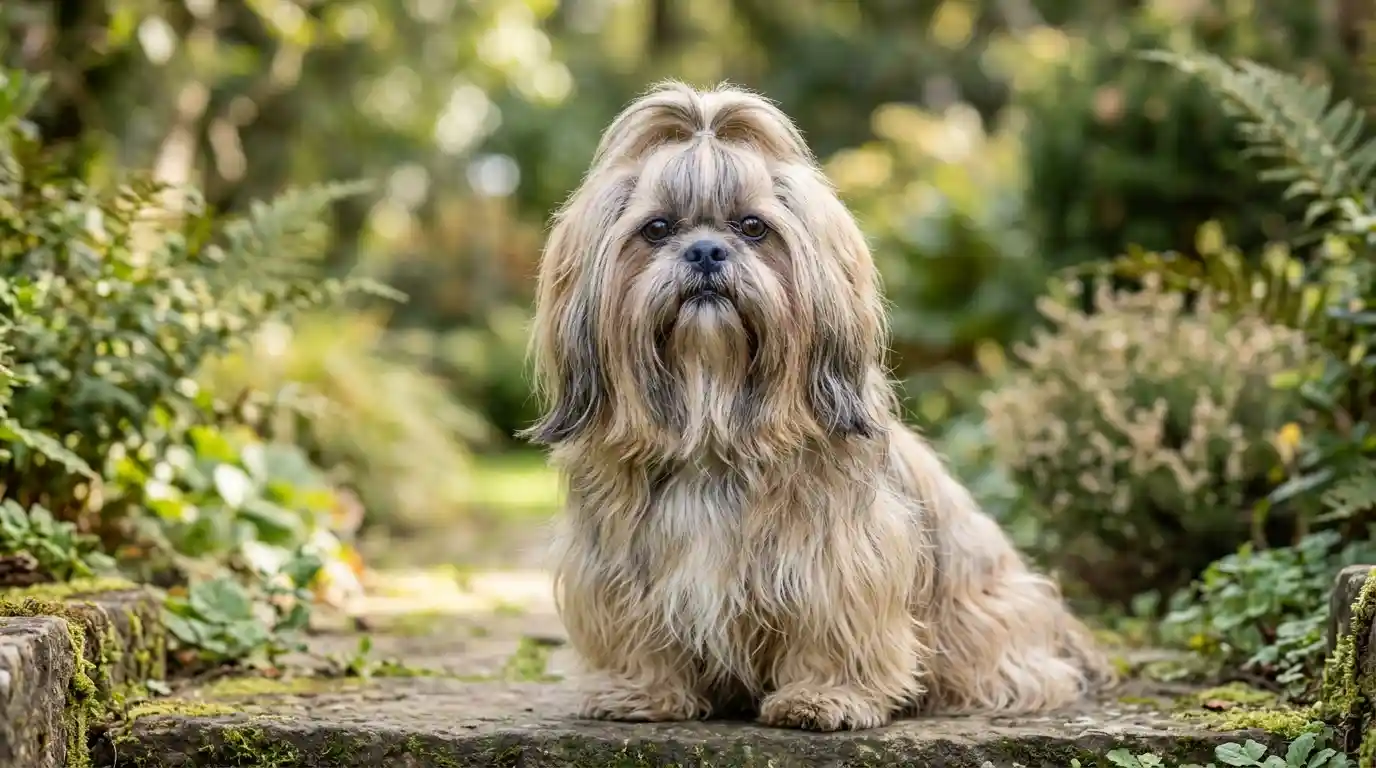
A blue brindle Shih Tzu has two coat traits that are easy to confuse: brindle describes streaks of dark pigment through lighter hair, while blue describes black pigment diluted to a slate or gray-blue shade. On a dog with both traits, the dark streaks may look smoky rather than jet black. The coat can include gold, tan, or cream areas, and some dogs also have white markings. A gray-looking photo alone cannot establish blue dilution, though: lighting, faded hair, and black-tipped strands can create a similar effect. To assess a puppy, look closely at the streaks in its hair, then check the nose, lips, and eye rims in natural daylight. Those clues can help you describe what you see, but a coat-color test and the breeder’s records answer different questions. This guide explains the visual checks, how the genes can interact, why a puppy’s pattern may change, and what matters most when choosing and caring for your dog.
Table of Contents
- What Is a Blue Brindle Shih Tzu?
- How Can You Identify One in Person or Photos?
- Blue Brindle or a Similar-Looking Coat?
- What Genetics Can Produce Blue Brindle?
- Will a Blue Brindle Puppy Keep Its Markings?
- Is Blue Brindle Recognized or Rare?
- Does This Coat Require Different Care?
- Choosing a Blue Brindle Puppy or Adult
- Frequently Asked Questions
- Final Takeaway
What Is a Blue Brindle Shih Tzu?
The quick answer: a brindle pattern with blue-diluted dark pigment
Brindle is a pattern; blue is a pigment description. Brindle creates irregular darker streaks across areas of lighter hair. When black pigment is genetically diluted, the dark parts can look gray-blue or charcoal instead. That combination is what people generally mean by “blue brindle.” It describes appearance and inherited pigmentation within the Shih Tzu breed, not a separate breed or a guaranteed adult shade.
The streaks can be subtle or thick enough to make a coat look mostly dark. Part long hair to see repeating streaks. Our guide to the brindle shih tzu covers the pattern more generally.
What “blue” can describe in a Shih Tzu
In dog-coat terminology, blue usually means a gray-blue version of black pigment, not bright blue hair. The American Shih Tzu Club’s breed standard explicitly allows blue pigmentation of the nose, lips, and eye rims on blue-pigmented dogs. A black nose with gray-looking hair therefore deserves a closer look before anyone labels the dog genetically blue. Compare the coat and points with a blue shih tzu, especially in daylight.
These clues do not replace a DNA result. A seller might use “blue” simply to describe gray-looking hair; ask which meaning they intend.
How Can You Identify One in Person or Photos?
Look for streaks in the colored hair
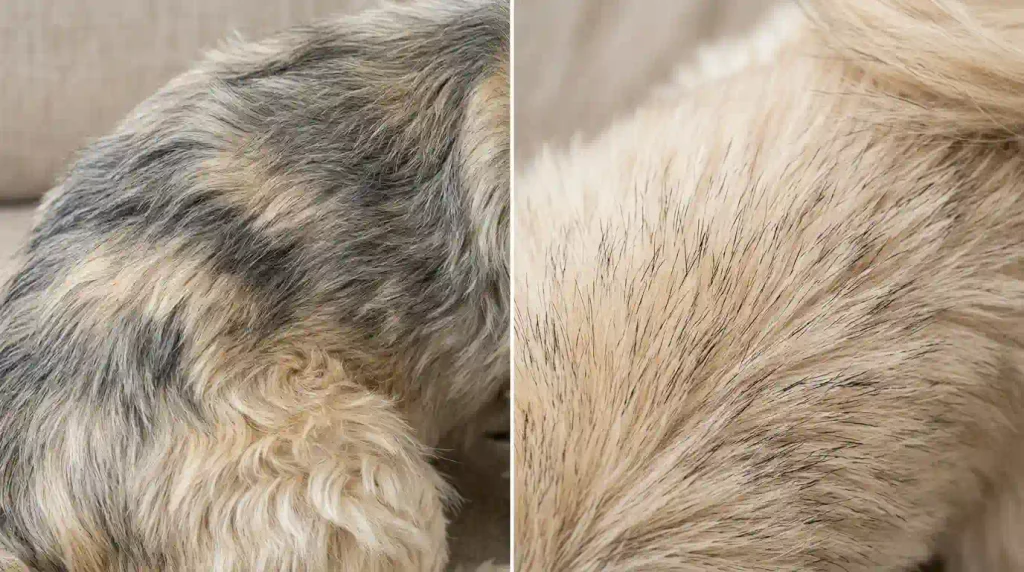
Begin with the shoulders, sides, ears, and legs where the coat has visible color. Gently separate a small section of hair and look for darker, uneven streaks recurring through a lighter background. Brindle may be obvious in a short puppy coat and difficult to see once long hair mixes the shades. Photograph the same area both with the hair lying naturally and with it parted.
Dark tips on otherwise lighter hairs can create a similar impression. A pattern across multiple areas is a better clue than one charcoal patch, although it still cannot establish genotype.
Check the nose, lips, and eye rims in daylight
Look at the exposed nose leather and the edges of the eyes and lips outdoors in open shade. Blue-pigmented points can appear slate gray rather than deep black. View several angles: a nose photographed under warm indoor light may look brown, while reflected sky can make black pigment look blue. Avoid deciding from one edited breeder photo.
Paw pads can be harder to interpret. Also distinguish brown liver pigmentation from blue: a liver shih tzu can have brown points regardless of its hair shade.
An identification checklist and its limits
| What to check | What you are looking for | What it cannot prove |
| Colored hair | Repeated darker streaks across lighter areas | The exact brindle genotype |
| Nose, lips, eye rims | Consistent slate-gray pigmentation | Every relevant dilution variant |
| Older, dated photos | Whether the pattern or shade changed | The puppy’s final adult color |
| Parent information | Background on the coat and lineage | A guaranteed coat outcome |
Ask for unfiltered outdoor photos and a video showing the face and coat from several angles. Record what is visible first.
Blue Brindle or a Similar-Looking Coat?
Blue brindle versus ordinary black brindle
Both coats may show the same kind of streaking. In a typical black brindle shih tzu, dark pigment appears black rather than slate gray. In a blue-diluted dog, its dark pigment can look softened or smoky. The nose and eye rims may offer a useful second clue, but an ambiguous photo is not enough to settle the question.
“Blue brindle” does not mean bright blue stripes. Hair length and lighting can make a patterned coat look uniform from a distance.
Blue brindle versus solid blue, sable, and black-tipped hair
A solid-looking blue coat may have little or no visible striping. Sable and black tipping can instead make individual lighter hairs look dark at their ends. Trimmed hair can lose those tips, changing the apparent pattern without changing the dog’s genetic makeup. A black and grey shih tzu is a visual description that also does not, by itself, establish blue dilution or brindle.
If patches look marbled rather than streaked, check multiple coat areas before accepting a brindle label.
How white markings change the description
White on the chest, feet, face, or body can occur alongside colored hair that displays brindle. In that case, “blue brindle and white” can be a useful description if blue pigmentation is supported. White spotting describes where pigment is absent from the coat; it does not cancel the pattern in the remaining colored areas. Compare the placement of white with a brindle and white shih tzu or a blue and white shih tzu.
What Genetics Can Produce Blue Brindle?
Brindle patterning and blue dilution
Dog hair gets its dark shades from eumelanin and its red-to-gold shades from another pigment, pheomelanin. Brindle involves alternating expression of those pigments in parts of the coat. The K locus helps control whether a dog displays dark pigment broadly or can show patterns such as brindle; genes at other loci affect the result. Blue dilution acts on dark pigment, so dark areas that would otherwise appear black can look gray-blue. These processes can operate in the same dog.
The distinction matters because some descriptions online treat a blue nose as proof that a dog cannot be brindle. The American Shih Tzu Club breed standard permits all colors and markings and specifically addresses blue-pigmented dogs. Its wording does not establish a special “blue brindle” registration category, but it gives no basis for rejecting a visible brindle pattern solely because the dog’s points are blue.
Why other genes can alter or hide the pattern
Genes do not work as independent paint switches. Variants associated with black versus liver pigment at the B locus, pigment expression at the E locus, agouti patterning at the A locus, and white spotting associated with the S locus can change what is visible. A dark area may cover lighter patterning; a white patch can interrupt it; reduced contrast can make streaks hard to spot.
A photo cannot reveal all alleles a dog carries. A dog may carry a recessive dilution variant without showing blue; inheriting suitable variants from both parents can produce dilute pigmentation.
What a coat-color DNA test can establish
A laboratory test can look for specified coat-color variants, including known dilution variants, and may explain whether the dog’s appearance fits a proposed genetic description. Read the test’s actual variant list and result notes. A result for the D locus is about dilution; it does not independently prove that every darker streak is brindle. Likewise, a broad breed-ancestry report is a different question from a coat-color test.
If results seem inconsistent with appearance, ask the laboratory or a veterinarian to interpret them. Testing cannot guarantee how visible the pattern will remain.

Will a Blue Brindle Puppy Keep Its Markings?
Puppy-to-adult coat changes
A Shih Tzu’s long adult coat can display the same markings very differently from its shorter puppy coat. As longer strands overlap, fine stripes may appear blended. Some colored areas may also lighten over time, changing the contrast between the lighter base and darker streaks. Neither a vivid puppy pattern nor a faint one guarantees what an adult will look like.
Compare dated photos of the puppy and its parents for context, but expect individual differences. Consider an adult dog if a particular visible shade matters strongly to you.
How clipping, lighting, and fading affect identification
A haircut can expose lighter hair that was previously hidden or remove darker tips at the ends of longer strands. Indoor lights, camera filters, and shadows can shift blue-gray toward black or brown in a photo. Take comparison pictures in the same place and lighting every few months. If the skin changes suddenly or develops irritation, ask your veterinarian to examine it rather than attributing the change to normal coat maturation.
Is Blue Brindle Recognized or Rare?
What the Shih Tzu breed standard permits
The American Shih Tzu Club standard states that all Shih Tzu colors and markings are permissible and should be considered equally. It also specifies blue nose, lip, and eye-rim pigmentation for blue-pigmented dogs. That answers the breed-standard question; it does not prove that an individual puppy is purebred or that “blue brindle” is the exact wording on its registration papers.
For a wider view of recognized appearances, see shih tzu colors. A color photograph is different from pedigree documentation; if lineage matters, review records concerning the purebred shih tzu you are considering.
How to assess rarity and premium-price claims
There is no reliable prevalence figure here that justifies calling every blue brindle puppy “ultra rare.” Ask the seller what they mean by the label and what evidence supports it. Do they have natural-light photographs, parent records, and any relevant color-testing results? Can they explain what might change as the dog matures?
A high puppy price warrants a closer look at care and health records. Budget for grooming too; a beautiful pattern is not a health guarantee.
Does This Coat Require Different Care?
Brushing, bathing, and preventing mats
Care for the hair according to its length and condition. Work through a long coat regularly with tools suited to your dog’s hair, separating sections so you can catch tangles close to the skin. Check behind the ears, under the collar and legs, and around the tail. If you prefer a shorter trim, keep checking for mats as the coat grows back.
Bathe with a dog-appropriate product when needed, rinse thoroughly, and dry the coat before leaving damp tangles in place. Ask a professional groomer to show you a comfortable routine if brushing is difficult. Blue brindle coloring does not call for a special color-enhancing shampoo; comfort and clean skin matter more than making the pattern look darker.
Assessing skin, health, and temperament separately from color
While brushing, part the hair and look for redness, flaky areas, sores, or hair loss. A change in skin condition needs veterinary attention regardless of the dog’s color. Do not assume every blue-pigmented dog will have a skin disorder, or that an attractive coat rules health concerns out.
Meet the individual dog. Watch how it responds to gentle handling and ordinary household sounds, and discuss socialization and veterinary records with the breeder or rescue. The Shih Tzu’s needs as a companion are more important to daily life than the exact shade of its brindle streaks. For broader care context, consult shih tzu Breed Information.
Choosing a Blue Brindle Puppy or Adult
Questions for a breeder or rescue
Ask to see the dog in person when possible, or request a recent unfiltered video. Find out its age, current grooming routine, and whether a veterinarian has examined any persistent skin or eye concerns. For a puppy, ask what health information is available on both parents and which testing or veterinary records can be shared. Also ask about the puppy’s socialization, the expected care after placement, and whether the seller will answer questions later.
With a rescue dog, ask for the history that is actually known. An unknown parent or unconfirmed coat label is not a reason to invent a genetic story. Focus on the dog’s present condition and whether your household can provide its care.
Photos, records, and claims worth checking
Request a recent full-body photo, close-ups of the streaking and pigmented points, and any older photos showing change. Compare the images with the dog you meet. Read any DNA report rather than relying on a screenshot of a color name, and check that pedigree or health records refer to the correct dog. Be cautious about an adult-color guarantee for a young puppy.
Ask whether you would still want this Shih Tzu if its streaks became less visible.
Frequently Asked Questions
Can a blue Shih Tzu also be brindle?
Yes; blue dilution and visible brindle patterning describe different traits that can coexist.
Does a gray-looking coat prove blue dilution?
No; lighting, age, and other coat patterns can create a gray appearance.
Can blue brindle markings fade?
Their contrast can change as the coat grows, lightens, or is trimmed.
Is blue brindle a separate Shih Tzu breed?
No; it is a description of coat appearance within the Shih Tzu breed.
Final Takeaway
A blue brindle Shih Tzu is best understood through two observations: streaking in the colored hair and signs that its dark pigment is diluted to gray-blue. Check both in daylight, then treat photos, seller labels, and DNA reports according to what each can actually establish. A puppy’s long adult coat may make the streaks look different, so choose the dog for its health, temperament, and fit with your household as well as its appearance. If you are considering a puppy, request recent natural-light photos, discuss the parents and available records, and meet the dog when you can. Once your Shih Tzu is home, a consistent grooming routine and attentive care will matter far more than whether anyone else can name its exact shade.


One Comment