
Black and Tan Shih Tzu: Identify Dobie Markings and Care for the Coat
A black and tan Shih Tzu has dark hair alongside lighter tan areas, but that description does not always mean the dog has the distinctive pattern breeders call Dobie markings. True tan points tend to appear in recognizable places: above the eyes, on the cheeks or muzzle, on the lower legs, and beneath the tail. A dog with a black mask over a gold face, dark-tipped hairs, or irregular brown patches may look black and tan without showing that pattern. The difference is useful if you are identifying your own dog or assessing a puppy advertised as a “black and tan Dobie Shih Tzu.” This guide starts with what you can check in daylight, then explains similar coat patterns, pigmentation, genetics, and how markings may change as a puppy grows. It also covers grooming, breed-standard acceptance, and the questions worth asking when a seller calls the color rare or charges a premium. The goal is a clear description of the individual dog, with its health and temperament given as much attention as its striking coat.
Table of Contents
- What Does a Black and Tan Shih Tzu Look Like?
- Where Should You Look for Dobie Markings?
- Tan Points or Another Black-and-Brown Pattern?
- Is the Lighter Hair Tan, Gold, or Liver?
- What Genetics Produce Tan Points?
- Will a Black and Tan Puppy Keep Its Markings?
- Is Black and Tan Recognized, Rare, or More Expensive?
- How Do You Choose and Care for This Shih Tzu?
- Frequently Asked Questions
- Final Takeaway
What Does a Black and Tan Shih Tzu Look Like?
The quick answer: black hair with tan areas
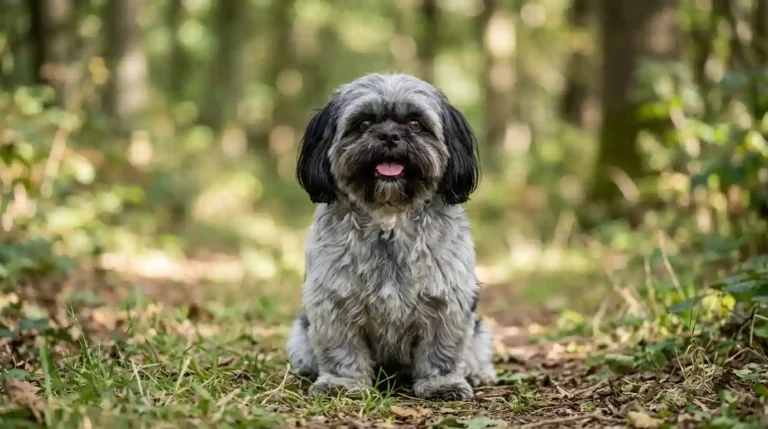
At its simplest, a black and tan Shih Tzu has a dark coat with some lighter hair that looks tan, warm brown, or gold. Those areas might be small and neatly placed, or they might spread across larger parts of the body. The phrase describes what you see, so it is a useful starting point even when the exact coat pattern is unclear.
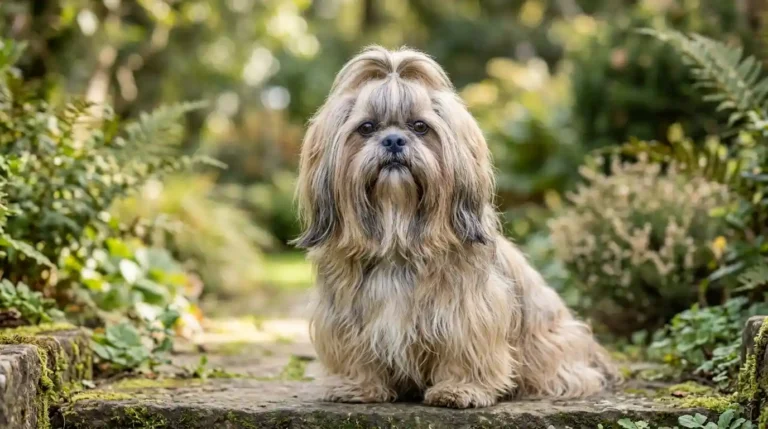
Long Shih Tzu hair can make identification surprisingly difficult. Hair from the ears may lie across the face; a darker outer layer can cover lighter growth; and a black-tipped coat may appear nearly solid black in a photograph. Look at the dog from the front and both sides, then gently separate the hair where the colors meet.
If you mainly see broad black and brown sections, the guide to a black and brown shih tzu offers a useful comparison. A black shih tzu with one small light patch can look similar in some photos. Neither description alone establishes the placement of tan points.
When “black and tan” means distinct tan points
In breeder language, Dobie markings or tan points describe a more particular arrangement: lighter markings in several predictable positions on a dark-coated dog. “Dobie” refers to the resemblance to a Doberman Pinscher’s familiar facial and leg markings. Some people also use phantom for this type of contrast.
You do not need every point to be equally bold before the pattern is worth examining. Long hair, white patches, and a puppy’s developing coat can obscure parts of it. Still, finding tan hair in the expected locations together is more persuasive than finding a random brown patch on the back.
This is the central distinction throughout the article: all Dobie-marked black Shih Tzus look black and tan, but not every black-and-tan-looking Shih Tzu has Dobie markings.
Where Should You Look for Dobie Markings?
Eyes, cheeks, muzzle, chest, legs, and under the tail
Begin with the face. Look for two lighter spots above the eyes, often described as tan “eyebrows.” Check the cheeks, jowls, and sides of the muzzle for additional lighter hair. Then inspect the chest and lower legs or paws. Finally, lift the tail gently and look at the hair beneath it. These are the areas repeatedly described in breed-color discussions of Dobie markings.
Use your hands to move long hair aside without pulling it. On a Shih Tzu with a full coat, the eyebrow points may disappear beneath the topknot, and lighter hair on the legs can be hidden by hair hanging from the body. A short haircut can make the arrangement easier to see, although it may also remove darker hair tips that previously changed the overall look.
Compare position as well as shade. Tan points may range from pale tan to deeper gold-looking hair. The question is whether the lighter areas form a recognizable pattern, not whether every spot matches one exact shade on a color chart.
A daylight photo checklist for puppies and adults
For your own dog, take a short set of photographs in bright, indirect daylight. A shaded outdoor spot works better than direct sun or a warm indoor lamp, both of which can distort the lighter color. Take a front-facing photo with the hair moved away from the eyes, plus photos of each side, the lower legs, the chest, and the area beneath the tail.
If you are considering a puppy, ask for the same views and a short, unfiltered video. Try this checklist:
- Are lighter spots visible above both eyes?
- Is tan hair present on the cheeks or sides of the muzzle?
- Are there lighter areas on the lower legs or paws?
- Can you see lighter hair beneath the tail?
- Are white patches hiding any of these areas?
- Do close-ups show tan hair at the roots, or only black-tipped ends?
A photo can support a visual description. It cannot prove a dog’s genotype, pedigree, health, or eventual adult color. If a seller relies on the word Dobie, ask them to point out the markings in current photos.

Tan Points or Another Black-and-Brown Pattern?
Dobie points versus a black mask
A black mask is dark facial hair concentrated around the muzzle and sometimes extending toward the eyes. Tan points are lighter markings on a dark background, often including spots above the eyes. The two descriptions refer to different arrangements of pigment.
Picture a dog with a mostly gold face and a black muzzle. It may look black and tan from a distance, yet the dark area is the face marking. Compare it with a dark-faced dog that has two lighter eyebrow spots and tan hair along the cheeks. Looking at which color forms the background often clears up the confusion.
Some dogs have a more complicated mix of markings, and long facial hair can blur their outlines. Describe the observable coat rather than insisting on a label after one photograph. For a closer comparison, see the black mask gold shih tzu coat guide.
Dobie points versus brindle, sable, and black-tipped hair
Brindle creates darker streaks through lighter areas. Depending on the hair length and contrast, those streaks may make the coat look black and brown without forming tan points. A black brindle shih tzu is therefore worth comparing with a dog whose lighter markings seem irregular or striped.
Sable and black-tipped hair produce another common mix-up. When the end of a hair is dark and the growth nearer the skin is lighter, a puppy can look black across much of its body. A haircut may remove the dark tips and suddenly make the dog look more tan or gold. Dobie points concern the placement of lighter areas on the dog; black tipping concerns color along individual hairs.
A broad dark area over the back, scattered gold hairs, or a changing brindle shih tzu coat should be described on its own terms. Several patterns can contribute to one dog’s appearance, so these comparisons are guides to observation rather than a diagnosis from a picture.
What white patches add to the description
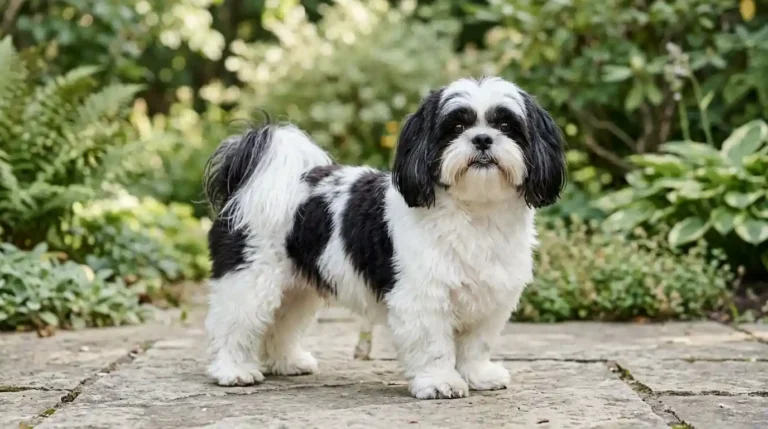
A black dog can have tan points and white hair. White on the chest, paws, or face may hide some tan markings or make the coat appear tricolor. Take separate notes on each visible color instead of assuming that white rules out tan points.
For example, a dog with black hair, tan eyebrows and cheeks, and a large white chest patch can reasonably be described in everyday language as black, tan, and white. Compare photographs of a brown black and white shih tzu when you need to distinguish three visible colors from a particular point pattern. White spotting describes where white hair occurs; it does not tell you whether the remaining black and tan areas are Dobie marked.
| Appearance | Look for | Useful next check |
| Possible tan points | Lighter eyebrows, cheeks, lower legs, and area beneath the tail | Photograph each location in daylight |
| Black mask | Dark muzzle over a lighter face | Identify which color forms the facial background |
| Brindle | Repeated dark streaks through lighter hair | Separate the hair to see the pattern |
| Black-tipped or sable-looking hair | Dark ends with lighter hair nearer the skin | Compare clipped and uncut areas |
| White spotting | Distinct white areas alongside other colors | Record the white patches separately |

Is the Lighter Hair Tan, Gold, or Liver?
Coat shade versus nose, lip, and eye-rim pigment
Owners may describe similar warm-colored hair as tan, gold, or brown. Those words are useful for communicating appearance, but coat shade and pigmentation of the nose, lips, and eye rims answer different questions.
The American Shih Tzu Club breed standard specifies black nose, lip, and eye-rim pigmentation for Shih Tzus except liver-pigmented dogs, which have liver pigment, and blue-pigmented dogs, which have blue pigment. This distinction helps when a puppy’s coat color is difficult to name. It does not mean that a quick glance at a shaded photograph is enough to make a genetic determination.
Look at these areas in natural light. If the nose and eye rims appear black, a patch of warm brown-looking hair does not automatically make the dog liver-pigmented. If the pigment looks brown or slate-toned, ask for clearer photos and a reliable explanation of the description.
Why a brown-looking patch does not establish liver pigmentation
Liver refers to a change in dark pigment that can be evident in the nose, lips, and eye rims. A black-pigmented dog can still have lighter tan or gold hair. Calling every brown-looking patch “liver” mixes up a visible coat shade with a pigment category.
The distinction matters especially for a puppy advertised as black and tan. Ask whether tan describes the lighter hair and whether black describes the dark coat and pigment. If a breeder uses “chocolate Dobie,” “liver and tan,” or another variation, ask which features they can show in current daylight photos. The liver shih tzu guide offers more context on that separate pigment description.
What Genetics Produce Tan Points?
Agouti patterning in plain English
Dogs make dark pigment called eumelanin and red-to-yellow pigment called phaeomelanin. Genes influence where and when those pigments appear in the hair. The agouti signaling protein gene, often called ASIP or the A locus, plays a major role in arranging dark and lighter areas.
That helps explain why tan points show up in particular places instead of appearing as random spots. UC Davis’s Veterinary Genetics Laboratory explanation of the A locus describes black-and-tan-related patterns and the interaction of agouti with other coat-color genes. Its updated testing framework also shows why an older, one-allele account does not explain every dog’s appearance.
“Dobie gene” is convenient shorthand, but it can suggest more certainty than a photograph or simple family story provides. The visible pattern reflects interactions among inherited traits.
Why other genes can hide or alter the visible pattern
A puppy can inherit variants relevant to a pattern without displaying every marking clearly. Genes affecting the expression of dark pigment, dominant black, masks, and white spotting can change what you see. Long hair and white patches can obscure markings even when the genetic situation is more complex than the photo suggests.
That is why “both parents carry it, so every puppy will be Dobie marked” is an unreliable promise. Inheritance depends on the variants each parent passes on and on how the puppy’s other coat-color genes interact. UC Davis specifically notes that other genes can conceal some agouti patterns from visual assessment.
Keep claims proportionate. A black-and-tan-looking coat suggests useful questions to ask, but it does not establish the exact alleles at the A, B, E, K, or S loci by sight. Nor does a particular coat pattern establish health, breed purity, or a puppy’s future personality.
What a coat-color DNA test can and cannot confirm
A coat-color test can report the variants that its laboratory actually tests. If the question concerns tan-point patterning, ask whether the test examines relevant ASIP variants and how it accounts for interactions with other coat-color genes. Ask for the laboratory’s explanation of the result, not just a screenshot or a seller’s interpretation.
A color test has limits. It does not replace documented parentage, veterinary health records, or observing the dog’s current coat. A result also cannot promise that long hair, white spotting, grooming, and age will leave every marking equally visible throughout life.
If testing will influence a breeding decision, discuss the report with a veterinarian or a genetics professional. For an owner simply trying to describe a pet, clear photographs and accurate notes about the markings may be enough.
Will a Black and Tan Puppy Keep Its Markings?
Changes between puppy and adult coats
Shih Tzu coats can look different as puppies mature. The distribution or contrast of dark and lighter hair may become more or less obvious as adult hair grows. Some tan points remain easy to see; others become harder to pick out because nearby hair changes shade, white areas interrupt the pattern, or longer hair covers the face and legs.
Avoid a fixed promise about the month when a coat will “finish” changing. Individual dogs differ. Dated photographs of a puppy and its parents can offer context, but they cannot guarantee the adult shade or the strength of each tan point.
If you are buying a puppy largely for its markings, ask to see the dog now, in good light, and request earlier dated photos. Note what is visible at each age. That record is more informative than an edited image paired with a prediction.
How trimming and fading affect what you see
Clipping can dramatically change the apparent pattern without changing a dog’s inherited traits. Dark hair tips may be cut away, making a warm base color look more prominent. Short hair can reveal tan spots previously hidden beneath a long fringe. After the coat grows again, its contrast may look different.
Natural fading can also soften the difference between black and tan areas. A haircut is therefore a poor moment to decide, on its own, that the breeder’s original description was right or wrong. Compare the same parts of the coat in similar light over time.
A dog whose dark hair has lightened toward grey may need a different everyday description later. The guide to a black and grey shih tzu explores that appearance. If coat change arrives with itching, hair loss, sores, or irritated skin, have a veterinarian examine the dog rather than treating those signs as ordinary fading.

Is Black and Tan Recognized, Rare, or More Expensive?
Breed-standard acceptance versus registration wording
A black and tan coat does not disqualify a Shih Tzu under the American Shih Tzu Club’s breed standard: all colors and markings are permissible and considered equally. Breed-standard acceptance is a different question from which words a registry offers in its color and marking fields.
That distinction is useful because one person may say black and tan, another black with tan markings, and another Dobie marked. These phrases may describe similar visible features without necessarily matching an exact current registration-menu option. If accurate paperwork matters, check the registry’s current choices directly rather than relying on a blog’s account of them.
Likewise, coat appearance does not prove pedigree. A purebred shih tzu can have tan points, but a seller’s purebred claim should be supported by parentage and records, not by how closely the puppy resembles a particular photograph.
How to assess rarity and premium-price claims
Dobie markings are often described as less commonly seen, but a seller’s word rare is not a measured frequency for a particular population or litter. Ask what the breeder means. Are they referring to distinct tan points, a specific pigment combination, or simply a puppy that looks black and brown?
Do not let a premium price end the conversation. Request clear photographs of the markings, parent information, veterinary records, relevant health-screening information, and details about how puppies are raised. Compare the whole offer, including support after adoption. A coat label says little about the puppy’s care or temperament.
Be particularly careful with guarantees of an exact adult pattern. A responsible seller can describe today’s puppy and share family photos while acknowledging that coat contrast may change. That answer is more useful than an unsupported promise tied to a higher price.
How Do You Choose and Care for This Shih Tzu?
Brushing, bathing, and preventing mats
Black and tan markings do not require a special shampoo or color-specific grooming routine. The Shih Tzu’s long double coat is the main consideration. Brush in sections so you reach beneath the top layer, particularly behind the ears, under the legs, around the collar, and near the tail. Those places can mat while the outside of the coat still looks tidy.
For a long coat, plan on daily brushing. Keep the hair around the eyes clean and comfortable, and gently comb the facial hair where tan points may otherwise be hidden. Bathe as needed for the individual dog, rinse and dry the coat thoroughly, and ask a groomer for help if tight mats have formed. The American Kennel Club recommends daily brushing for Shih Tzus kept in a longer coat.
A shorter puppy cut can make upkeep more manageable, but it still needs regular brushing and trimming. When photographing your dog’s markings, record whether the coat is freshly clipped: length can affect how prominent the points appear.
Health information and temperament to check before adoption
Choose the individual dog, not just the black-and-tan description. Observe how a puppy responds to gentle handling, people, and its surroundings. Ask what socialization it has received, how it is being fed and groomed, and what the breeder or rescue knows about its health.
Request veterinary records and relevant information about the parents when available. Ask how any concerns have been addressed. If you are new to the breed, the broader shih tzu Breed Information pages can help you assess its daily needs beyond coat color.
The appearance of tan points does not establish a distinct “Dobie personality.” Temperament depends on the dog and its experiences. Set aside time for patient training, coat care, and companionship, whichever shih tzu colors first caught your eye.
Frequently Asked Questions
Is a black and tan Shih Tzu purebred?
It can be; black and tan markings are allowed, but pedigree records—not coat color—support a purebred claim.
Are all black and brown Shih Tzus Dobie marked?
No; Dobie markings describe tan points in characteristic places, while black and brown can describe many arrangements of hair.
Can tan points fade or become less visible?
Yes; changing coat contrast, longer hair, white markings, and clipping can make points look less distinct.
Does the coat color affect personality?
Coat color does not establish personality; assess the individual dog’s behavior, socialization, and care history.
Final Takeaway
To identify a black and tan Shih Tzu, look beyond the two colors. Check for lighter hair above the eyes, along the cheeks and muzzle, on the lower legs, and beneath the tail. Together, those locations make a stronger case for Dobie tan points than a single brown patch. Compare the markings with a black mask, brindle, sable, and black-tipped hair before settling on a description. A puppy’s contrast may change, and no coat label replaces health records, responsible care, or time spent with the dog. Your next step: take clear daylight photos from several angles, note the markings you can actually see, and ask a breeder or rescue to explain any color, pedigree, or price claim with supporting information.