Shih Tzu Exercise Needs: Daily Activity, Walking, Play, and Safety
Summary
Understanding Shih Tzu exercise needs helps you give your dog enough activity without pushing a small, flat-faced companion beyond its limits. These dogs enjoy walks, games, and time with their people, but their breathing, age, fitness, and surroundings determine what is comfortable. Many healthy adults do well with short daily walks and indoor play; however, a puppy, senior, or dog with airway or joint problems needs a different approach. The most useful routine combines gentle movement, sniffing, mental stimulation, and uninterrupted rest. This guide explains how to plan that routine, recognize overexertion, and adjust activities for hot weather, apartment living, or a busy schedule. You will also find sample daily schedules, ideas for reluctant walkers, and an exercise log you can copy or print. Questions about running speed, jumping height, and five-mile walks receive practical answers without treating an unsupported number as a safe target. Start with your dog’s comfort, then use the sections below to build a routine that supports health, confidence, and an enjoyable life together.
Table of Contents
- Understanding the Shih Tzu Breed
- How Much Exercise Does a Shih Tzu Need?
- Benefits of Regular Exercise
- Shih Tzu Exercise Needs by Life Stage
- How Shih Tzu Anatomy and Health Affect Exercise
- Suitable Exercise and Enrichment Activities
- Walking Your Shih Tzu Safely
- Adjusting Exercise for Weather and Living Conditions
- Signs Your Shih Tzu Needs an Exercise Adjustment
- Training and Behavior Support
- Feeding and Nutrition for an Active Shih Tzu
- Grooming and Routine Care
- Practical Owner and Breeder Observations
- Key Takeaways
- Sources and Further Reading
- Frequently Asked Questions
- Final Thoughts
Understanding the Shih Tzu Breed
A Shih Tzu is a companion dog with a sturdy little body and a strong interest in family life. Understanding its background helps explain why companionship, gentle activity, and attention matter as much as walking distance.
Breed History and Origins
Shih Tzus have roots in Tibet and China and became closely associated with Chinese imperial households. Their history centers on companionship rather than endurance work. That background helps explain their preference for joining everyday family activities.
Breed Characteristics and Quick Facts
Their compact size makes them suitable for many homes, but small size does not eliminate the need for exercise, training, or veterinary care.
Adult Size, Height, and Weight
The American Kennel Club lists an adult weight of approximately 9–16 pounds and a height around 9–10.5 inches. Individual dogs vary, and body condition matters more than trying to match one number.
Coat Colors and Shedding
Shih Tzus have a long double coat in many colors. They shed relatively little, but loose hair and tangles still need attention. Coat maintenance helps prevent uncomfortable matting during movement.
Expected Lifespan
Published breed profiles commonly give a lifespan of 10–18 years, although this is a broad range rather than a prediction for an individual dog. Activity plans should change as health and mobility change.
Breed Popularity
The breed is well established in the United States. Its popularity does not mean every Shih Tzu has identical exercise tolerance, temperament, or medical needs.
Personality and Temperament
A typical Shih Tzu enjoys interaction and playful moments, followed by comfortable rest. Personality varies with genetics, learning, health, and experience.
Affection, Cuddling, and Companionship
Many enjoy staying close to their owners. A walk can provide valuable shared time, while quiet companionship helps balance an active day.
Compatibility with Children and Other Pets
Supervise play with children and larger animals. Gentle interaction protects a small dog from accidental falls, rough handling, and overwhelming games.
Barking Tendencies
Some bark at visitors or unfamiliar sounds. Exercise may support a settled routine, but barking can also reflect fear, excitement, or learned behavior.
Considerations Before Getting a Shih Tzu
Think beyond whether the breed needs long walks. Daily companionship, grooming, medical care, and safe exercise all require time.
Purchase Price and Ownership Costs
Prices vary widely. Budget for food, grooming, veterinary appointments, dental care, equipment, and unexpected treatment rather than focusing only on the purchase price.
Allergy Suitability
Low shedding does not make a dog allergen-free. People can react to proteins in saliva, skin flakes, or urine, so spend time with the breed before making a decision.
Health Concerns with Teacup Shih Tzus
“Teacup” is a marketing label rather than a separate recognized breed. Extreme smallness should never be treated as a health advantage or a reason to skip careful screening.
How Much Exercise Does a Shih Tzu Need?
Shih Tzu exercise needs are generally modest, but they remain individual. Short walks and gentle play are often appropriate, while breathing, weather, body condition, and recovery should guide adjustments.
Exercise Requirements at a Glance
Use this framework to plan activities, rather than treating it as a prescription:
| Dog’s situation | Starting approach | Main priority |
| Puppy | Brief, self-paced play and safe exploration | Growth, socialization, and rest |
| Healthy adult | Short walks with gentle play and enrichment | Comfortable breathing and consistency |
| Senior | Shorter outings with easier surfaces and breaks | Mobility and recovery |
| Dog with medical concerns | Individually prescribed activities | Veterinary guidance |
| Hot, humid, or smoky conditions | Comfortable indoor alternatives | Avoiding respiratory and heat stress |
Energy Levels and Mental Stimulation Needs
The Shih Tzu energy level is often described as low to moderate. However, a dog that does not need endurance exercise still benefits from sniffing, learning, and games.
People searching “are Shih Tzu lazy” may be seeing normal relaxation. A sudden drop in activity deserves more attention than a longstanding preference for naps.
Why One Daily Exercise Target Does Not Fit Every Dog
A shaded, flat route creates a different workload from stairs, hills, or deep sand. Heat, humidity, excitement, obesity, and airway disease can also make a familiar walk harder.
Therefore, measure success by comfort and recovery rather than minutes completed.
What Healthy Exercise Looks Like
Healthy movement should be willing, controlled, and appropriate for the dog’s ability. Your Shih Tzu should remain responsive and move without limping or obvious distress.
“Brisk walking” should mean a comfortable pace for your dog, not keeping up with an owner’s fitness workout.
How Many Walks Does a Shih Tzu Need Each Day?
One or two short exercise walks suit many adults, with additional bathroom outings as needed. Some dogs benefit from several smaller opportunities instead.
Bathroom breaks, sniffing outings, and exercise walks can overlap, but they do not always serve the same purpose.
Balancing Walks, Indoor Play, and Rest
Spread activity across the day. Alternate movement with quiet periods, and let your dog settle after exciting games.
For more help with rest routines, see Shih Tzu Sleeping. Sleep should remain protected rather than interrupted to meet an activity target.
Sample Daily Exercise Schedules for Shih Tzus
These are illustrative schedules, not medically validated targets. Shorten or change them when comfort, weather, or veterinary advice requires it.
Sample Puppy Activity Schedule
After waking, offer a bathroom opportunity and brief exploration. Later, introduce a tiny training session or gentle toy game. Repeat short activities between naps, meals, and bathroom breaks.
Let the puppy stop freely; avoid forced walking distances.
Sample Healthy Adult Activity Schedule
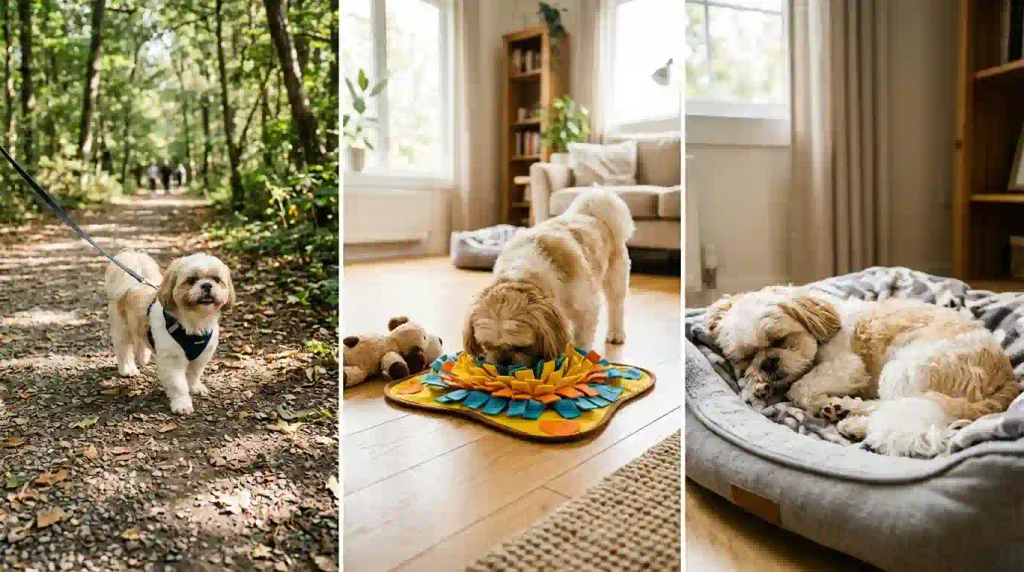
A comfortable adult might enjoy a short morning walk, a midday food puzzle, and another brief evening outing. For some dogs, walks of around 10–15 minutes are manageable; others need less.
Add gentle play only while the dog remains comfortable.
Sample Senior Activity Schedule
Begin with a slow bathroom and sniffing outing. Offer a simple scent game later, followed by another short walk if movement remains comfortable.
Choose easy footing and allow extra rest between activities.
Benefits of Regular Exercise
Appropriate activity supports everyday function and gives dogs opportunities to engage with their surroundings.
Physical Health and Weight Management
Movement helps maintain muscle strength, joint function, and physical fitness. However, weight management also depends on calorie intake and body condition.
An overweight dog needs a coordinated feeding and activity plan, not suddenly longer walks.
Mental Enrichment and Emotional Wellbeing
Sniff walks, exploration, and problem-solving games add variety. A short outing with interesting scents may offer more engagement than marching along an unchanged route.
Give your dog choices where possible, including opportunities to pause.
How Exercise Relates to Behavior
Activity can provide an outlet for energy and reduce boredom. However, anxiety, excessive barking, chewing, and destructive behavior may have causes that additional exercise cannot resolve.
Consider pain, fear, separation distress, and the home environment when behavior changes.
Shih Tzu Exercise Needs by Life Stage
Age influences activity, but health and individual tolerance remain essential.
Puppy Exercise Needs
Puppies need movement alongside substantial rest. Prefer brief play and exploration over repetitive, strenuous exercise.
The popular “five minutes per month of age” formula should not be treated as a universal scientific rule or used to push a tired puppy onward.
When Puppies Can Start Outdoor Walks
Ask your veterinarian which outdoor settings are appropriate for your puppy’s vaccination status and local disease risk. Controlled socialization can begin before the entire vaccine series is complete when suitable precautions are in place.
The question “when do Shih Tzu puppies start walking” can also refer to developmental first steps. That differs from readiness for public leash walks.
Safe Play, Exploration, and Early Socialization
Introduce surfaces, sounds, people, and gentle handling gradually. Avoid crowded dog parks or uncontrolled contact with unfamiliar dogs.
Positive experiences should remain short enough that the puppy can stay relaxed and recover afterward.
Healthy Adult Exercise Needs
Aim for consistent opportunities to walk, play, sniff, and learn. Adjust the Shih Tzu activity level to the dog in front of you rather than another owner’s schedule.
A comfortable adult can sometimes do more, but enthusiasm alone does not prove physical safety.
Senior Exercise Needs
Older dogs can still enjoy movement and exploration. Shorter routes, gentle pacing, and predictable surfaces may help.
New slowing, difficulty rising, stiffness, or reluctance to walk should prompt assessment rather than being dismissed as aging.
Exercise for Dogs with Existing Health Conditions
Heart disease, respiratory disease, joint pain, vision loss, and recent procedures can change exercise limits. Some dogs need rehabilitation or controlled movement prescribed by a veterinarian.
Questions to Ask Your Vet About Exercise Limits
Ask which activities are suitable, what signs mean you should stop, and how to judge recovery. Discuss whether rehabilitation, an airway assessment, or changes to equipment would help.
Bring notes about symptoms and the conditions in which they occur.
How Shih Tzu Anatomy and Health Affect Exercise
Health conditions influence how comfortably a dog moves, breathes, and recovers.
Flat-Faced Anatomy and Brachycephalic Airway Syndrome
Brachycephaly describes a shortened skull shape. Some affected dogs develop brachycephalic obstructive airway syndrome, or BOAS.
Problems can include stenotic nares, an elongated soft palate, and other airway abnormalities. Severe disease can involve secondary laryngeal collapse. Noisy breathing, exercise intolerance, and difficulty cooling deserve veterinary attention.
Obesity and Reduced Exercise Tolerance
Extra weight can make movement and breathing more demanding. Keep activity gentle while your veterinarian helps assess body condition and plan gradual weight loss.
Luxating Patella and Hip Dysplasia
Patellar luxation affects kneecap stability, while hip dysplasia affects the hip joint. Limping, skipping steps, or discomfort requires evaluation.
Avoid repeatedly jumping or chasing toys when movement appears painful.
Eye Conditions
Vision loss can change confidence, balance, and route choices. Use familiar paths and reduce obstacles.
“Shih Tzu lazy eye” is an imprecise search phrase, not a diagnosis. A changed eye position, squinting, redness, or apparent vision problem needs veterinary assessment.
Dental and Periodontal Disease
Dental pain can affect eating, mood, and willingness to interact. Exercise will not address an uncomfortable mouth.
Arrange an examination when chewing changes or oral discomfort develops.
Ear Infections
Painful ears can make handling or harness placement uncomfortable. A dog that shakes its head or resists touching may need treatment rather than more encouragement to walk.
Liver Shunts
A liver shunt can affect normal processing of substances in the blood. Dogs with diagnosed liver disease need individual guidance, especially if weakness or neurological signs occur.
Kidney Conditions
Kidney disease may affect hydration, appetite, and energy. Follow the treatment plan and ask how activity should change.
Do not assume every tired dog simply lacks fitness.
Suitable Exercise and Enrichment Activities
Choose activities that fit your dog’s interests, comfort, and surroundings.
Short Daily Walks and Sniffing
Sniffing provides information and mental engagement. Allow pauses on a loose leash while maintaining safe control.
For Shih Tzu walking, a pleasant route and manageable pace matter more than covering ground quickly.
Indoor and Backyard Play
Try short games on secure footing. Gentle tug, following a toy, and hide-and-seek can provide variety.
Supervise backyard activity and check fences, surfaces, and weather before play begins.
Does Backyard Time Count as Exercise?
It counts when your dog actually moves, explores, or plays. Simply sitting outside may provide stimulation but little physical activity.
A yard also does not replace supervision or suitable walks.
Playing Fetch
Use short throws and a lightweight toy. Avoid sharp turns on slippery floors or repeated leaps to catch a ball.
Finish while your dog is comfortable and interested, rather than waiting for exhaustion.
Training Sessions and Learning Tricks
Practice simple skills such as touching a hand, coming when called, or settling on a mat. Brief obedience training and trick training can enrich the day.
Choose movements that do not demand repeated jumping or awkward positions.
Scent Games and Food Puzzles
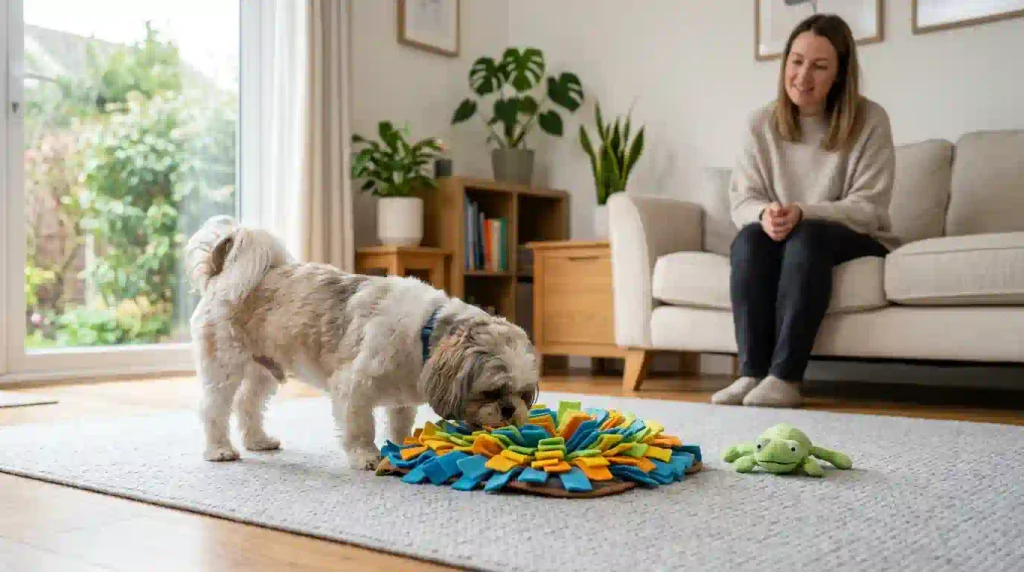
Hide a few pieces of the normal food allowance in a snuffle mat or easy puzzle. Increase difficulty gradually.
Supervise treat-dispensing toys and lick mats, and remove damaged items promptly.
Safe Exploration and Social Activities
A quiet new route or interaction with a compatible dog can add interest. Choose social settings with space to retreat.
Swimming needs separate precautions and is not an automatic low-impact solution for this breed. Read Can Shih Tzu Swim before planning water activities.
Grooming as Enrichment
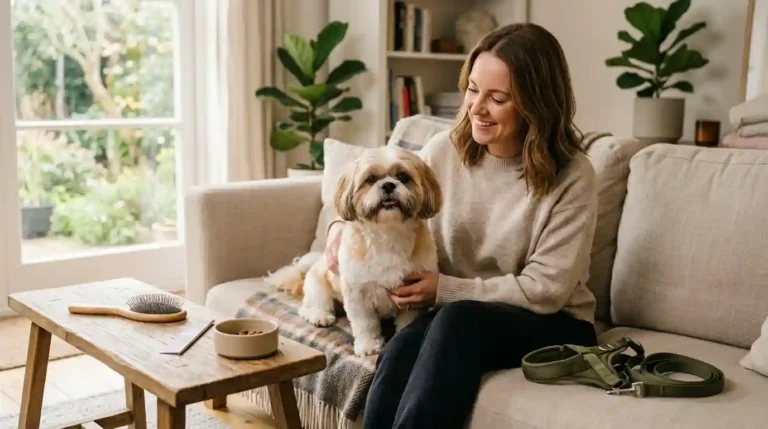
Comfortable, reward-based grooming can provide calm interaction. Introduce handling slowly and stop if your dog appears worried or sore.
It supports care and companionship but does not replace physical exercise.
Choosing Exercise Toys for a Small, Flat-Faced Dog
Select toys your dog can comfortably grasp without struggling to breathe around them. Avoid balls small enough to swallow, heavy objects, and damaged toys.
Tennis balls should be appropriately sized and used under supervision.
Walking Your Shih Tzu Safely
Good equipment and flexible expectations make outings more comfortable.
Establishing a Consistent Walking Routine
Choose approximate times that fit your household, then adjust for weather and health. Prepare equipment before bringing your dog to the door.
Consistency can build confidence, but a schedule should never override signs of distress.
Choosing a Harness and Controlling the Pace
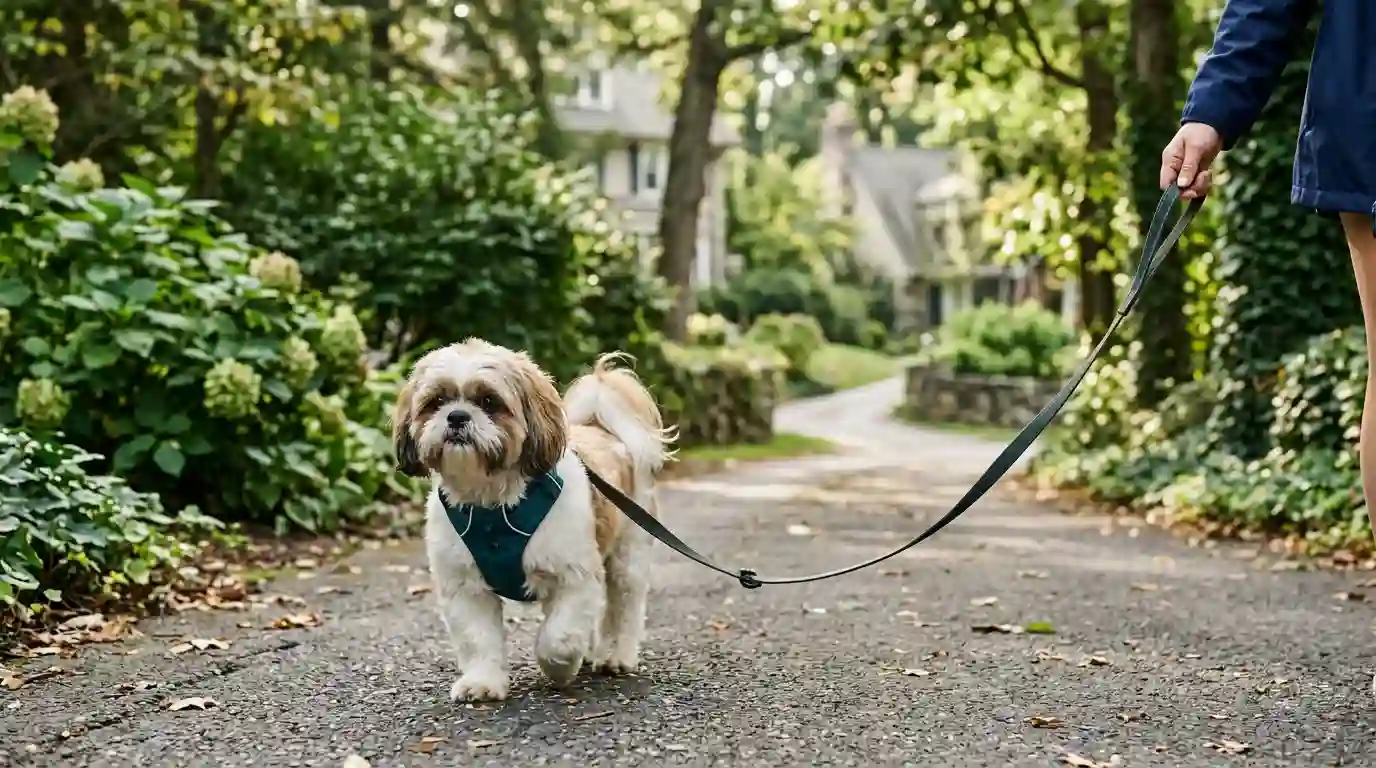
A properly fitted harness helps avoid leash pressure directly on the neck. Check that it does not rub or restrict shoulder movement.
When walking a Shih Tzu, use a loose leash and reward comfortable walking rather than pulling the dog forward.
Water, Rest Breaks, and Comfortable Routes
Carry a water bottle and offer breaks when appropriate. Choose flatter routes with shade and easy return points.
A longer distance from home makes stopping harder, so begin with short loops.
Can Shih Tzus Take Long Walks or Hikes?
There is no universal answer to how far can a Shih Tzu walk. Fitness, anatomy, terrain, temperature, and health all matter.
If you are asking, “can a Shih Tzu walk 5 miles?” do not treat five miles as a breed target. Seek individual veterinary advice before planning that distance.
Why Running, Repeated Jumping, and Strenuous Activity Can Be Risky
A dog’s brief playful sprint differs from sustained running beside an owner.
Questions such as how fast can a Shih Tzu run, how fast is a Shih Tzu, or Shih Tzu top speed do not have a well-established breed-wide figure that should guide exercise.
Likewise, how high can a Shih Tzu jump is less useful than whether landing is comfortable. Repeated Shih Tzu jumping can create unnecessary impact, especially with orthopedic problems.
What to Do When Your Shih Tzu Refuses to Walk
Stop and check the surroundings, paws, equipment, and breathing. Fear, heat, fatigue, pain, or an uncomfortable harness may explain refusal.
Try a quieter route only if your dog appears well. Sudden or persistent refusal, particularly with limping or breathing changes, needs assessment.
Adjusting Exercise for Weather and Living Conditions
The same activity can create very different demands under different conditions.
Exercise in Hot and Humid Weather
Heat and humidity can make thermoregulation harder for a flat-faced dog. Reduce outdoor exertion and use a comfortably cooled indoor space when conditions are unsuitable.
When to Skip Outdoor Exercise
Skip an exercise outing when heat, humidity, direct sun, or your dog’s condition makes comfortable activity doubtful. Essential bathroom trips may need to be brief.
No single temperature guarantees safety for every dog.
Choosing Cooler Times and Protecting Paws
Early morning walks and evening walks may offer cooler conditions, but check the actual weather. Choose shaded ground and avoid hot pavement.
Dog boots require gradual introduction. Paw wax should not be relied upon to prevent burns.
Exercise in Cold, Wet, or Icy Weather
A dog coat may improve comfort, but observe your dog’s response. Shivering, lifted paws, or seeking shelter means the outing should end.
Avoid slippery ice, and clean road salt from paws afterward.
Exercise During Poor Air Quality
Smoke and air pollution can make outdoor activity unsuitable. Follow local air-quality guidance and use indoor alternatives, especially for dogs with respiratory or heart disease.
Meeting Exercise Needs in an Apartment
Apartment living can work well when movement, bathroom access, and enrichment are planned. Several small activities may fit better than one long outing.
Use elevators where appropriate rather than expecting repeated stair climbing.
Indoor Alternatives During Unsuitable Weather
Combine gentle toy play, scent games, and brief training. A hallway can support short retrieval games when footing is secure.
Indoor dog daycare is only suitable when supervision, group size, temperament, and opportunities for rest match your dog’s needs.
Is Indoor Play Enough Exercise?
Indoor activity can cover physical movement on days when outdoor exercise is unsuitable. Safe outdoor exploration still offers different scents and experiences when circumstances allow.
Safe Play Surfaces and Home Setup
Use nonslip surfaces, remove sharp obstacles, and keep games away from stairs. Low obstacle courses can involve walking around objects rather than jumping over them.
Make water and a quiet resting space easy to reach.
Exercise Routines for Busy Owners
Pair short activities with regular household events: a sniffing outing before work, a food puzzle at lunch, and play in the evening.
A family member or suitable dog walker can help. Browse Shih tzu Daily Care for related routine ideas.
Signs Your Shih Tzu Needs an Exercise Adjustment
Watch your dog during activity and afterward. Changes matter more than labels such as “lazy Shih Tzu.”
Signs of Too Little Activity
Weight gain, boredom, or increased attention-seeking may suggest that the routine needs review. However, these signs can also reflect feeding, stress, or health problems.
A Shih Tzu lazy search should not lead you to overlook new lethargy.
Signs of Overexertion
Stop when effort becomes uncomfortable. Do not wait for severe symptoms to prove that an activity was excessive.
Heavy, Noisy, or Labored Breathing
Panting may occur during activity, but unusually heavy panting, worsening snorting, or visible breathing effort requires attention.
Familiar noisy breathing should not automatically be considered harmless.
Slowing Down, Lagging Behind, or Refusing to Continue
These behaviors may reflect fatigue, fear, pain, or heat. Pause and assess rather than pulling the leash or insisting on finishing the route.
Excessive Drooling or Changes in Gum Color
Unusual drooling, very red gums, or a bright red tongue can accompany heat distress. Blue or gray gums can indicate inadequate oxygenation and require emergency care.
Weakness, Poor Coordination, or Pain
Stumbling, collapse, altered gait, or obvious pain means activity must stop. Shih Tzu walking problems should be evaluated rather than managed through harder exercise.
When to Stop Activity and Seek Veterinary Help
Labored breathing, collapse, confusion, seizures, or blue-gray gums require urgent veterinary help.
If heatstroke is suspected, start cooling with cool water and airflow while arranging immediate transport and veterinary care. Do not delay treatment to see whether the dog improves.
Assessing Recovery After Exercise
Your dog should move toward its usual breathing, posture, and behavior after activity. Persistent panting, coughing, inability to settle, or later stiffness deserves attention.
There is no universal recovery time that proves an outing was safe.
Tracking Activity and Adjusting the Routine
Record enough detail to identify patterns. A dog may struggle only on humid days, hilly routes, or after an exciting game.
How to Build an Inactive Shih Tzu’s Exercise Routine
Ask your veterinarian about unexplained inactivity before increasing exercise. Begin with comfortable, manageable outings, and change one factor at a time.
Avoid simultaneously increasing duration, pace, and terrain difficulty.
A Printable Exercise and Recovery Log
Copy or print this table and complete one row per activity.
| Date and time | Activity and duration | Weather and terrain | Breathing and movement | Stops or symptoms | Recovery and later comfort |
Bring the log to an appointment if patterns or symptoms concern you.

Training and Behavior Support
Training helps make exercise predictable, cooperative, and enjoyable.
Training a Shih Tzu Puppy
Introduce the harness indoors, reward a few comfortable steps, and gradually build confidence. Practice recall in a secure area.
Avoid long lessons when the puppy is tired or distracted.
Using Positive Reinforcement
Reward behaviors you want with food, praise, or play. Keep rewards small and sessions brief.
Reward-based methods support learning without adding unnecessary fear or physical pressure.
Managing Barking and Other Behavioral Concerns
Identify triggers before choosing a solution. Provide distance from worrying situations and reward calm responses.
Persistent anxiety or destructive behavior may need help from a qualified trainer or veterinary behavior professional.
Feeding and Nutrition for an Active Shih Tzu
Food choices and portions should support health without overestimating calories burned during short activities.
Choosing Food for Adult Shih Tzus
Choose a complete and balanced diet appropriate for adult maintenance and the dog’s health. Brand, kibble shape, and marketing claims should not replace nutritional suitability.
Choosing Food for Shih Tzu Puppies
Puppies need a complete and balanced growth diet. Ask your veterinarian about feeding amounts and the timing of transition to adult food.
Feeding Frequency and Portion Sizes
Measure meals and adjust portions according to body condition, weight trends, and veterinary advice. Puppies may need more frequent meals than adults.
Avoid using a fixed cup amount for every Shih Tzu.
Treats, Supplements, and Nutritional Considerations
Treats and extras should generally provide no more than 10% of daily calories, with the main diet supplying complete nutrition. Use part of the daily food allowance for training when practical.
Supplements should address an identified need rather than compensate for an unsuitable diet.
Grooming and Routine Care
Comfortable movement depends partly on routine care. For a broader overview, see Shih Tzu Care.
Grooming Frequency and Professional Grooming
Grooming needs depend on coat length and condition. Arrange professional help when needed and maintain the coat between appointments.
Avoid treating a haircut as protection against unsafe heat.
Skin and Coat Care
Check for mats, irritation, and rubbing where the harness sits. Brush gently and investigate changes in the skin rather than repeatedly bathing without identifying the cause.
Eye Care
Keep hair from rubbing the eyes and monitor for discomfort. Squinting, redness, or sudden changes require prompt attention.
Choose play areas without thorny branches or sharp objects at face height.
Ear Care
Check for redness, odor, or discharge. Use cleaning products as advised and avoid routinely removing ear hair without discussing whether it is appropriate.
Dental Care
Regular toothbrushing with dog toothpaste and veterinary dental assessment support oral comfort. Chew toys and dry food should not be treated as substitutes for needed dental care.
Practical Owner and Breeder Observations
An owner’s observations are most useful when they are specific: the dog paused repeatedly on a sunny route, recovered poorly after fetch, or moved more comfortably on a rug.
Breeders can describe a puppy’s early experiences and familiar routines. However, their observations do not establish medical exercise limits.
Compare your dog with its own usual behavior. A change in willingness, breathing, gait, or recovery provides more useful information than another dog’s walking distance.
Key Takeaways
- Shih Tzu exercise requirements depend on health, age, fitness, weather, and recovery.
- Short walks, gentle play, and mental enrichment suit many dogs.
- Distance, speed, and jumping height are not useful safety targets.
- Comfortable breathing and willing movement should guide activity.
- New lethargy, limping, or reduced tolerance needs assessment.
- Heat distress, collapse, and labored breathing require urgent action.
- Keep activity consistent and adjust gradually.
Sources and Further Reading
For an authoritative explanation of breathing risks, read Cornell University College of Veterinary Medicine’s guide to brachycephalic obstructive airway syndrome.
The American Kennel Club, VCA Animal Hospitals, AAHA, and the American Veterinary Society of Animal Behavior also provide relevant breed, nutrition, training, and puppy-socialization guidance.
Frequently Asked Questions
How much exercise does a Shih Tzu need?
Many healthy adults enjoy short daily walks and gentle play, adjusted to breathing, health, weather, and recovery.
Are Shih Tzus lazy?
They often enjoy resting, but sudden inactivity or reduced tolerance may indicate a health problem.
How far can a Shih Tzu walk?
There is no universal safe distance; terrain, fitness, weather, and individual health determine tolerance.
Can a Shih Tzu walk five miles?
Five miles should not be assumed suitable; discuss long-distance plans with your veterinarian.
How fast can a Shih Tzu run?
There is no well-established breed-wide top speed that should be used to plan exercise.
How high can a Shih Tzu jump?
Jumping ability varies, and repeated jumping should not be encouraged as a fitness target.
When can a Shih Tzu puppy start outdoor walks?
Your veterinarian can advise based on vaccination status, development, and local disease risk.
Is indoor play enough for a Shih Tzu?
It can provide movement during unsuitable weather, while safe outdoor exploration adds different enrichment.
Why does my Shih Tzu stop during walks?
Possible causes include fatigue, fear, heat, equipment discomfort, pain, or breathing problems.
What signs mean exercise should stop?
Stop for breathing difficulty, repeated refusal, weakness, poor coordination, pain, or signs of overheating.
Final Thoughts
Meeting Shih Tzu exercise needs starts with noticing how your dog moves, breathes, and recovers. Build a day around comfortable walks, enjoyable games, mental enrichment, and protected rest. Use sample schedules as flexible ideas, and change plans when weather, age, or health affects tolerance. A dog that prefers shorter outings can still enjoy a fulfilling routine, while an enthusiastic dog may need your help to stop before activity becomes excessive. Start by reviewing one ordinary day: identify opportunities for gentle movement, check your walking equipment, and record any signs of discomfort. Bring persistent changes or symptoms to your veterinarian rather than trying to solve them with more exercise. Explore the linked care guides, then create a routine your Shih Tzu can enjoy consistently.