
Shih Tzu Care: A Complete Guide to Grooming, Feeding, Health, and Training
Good Shih Tzu care means more than keeping that beautiful coat tidy. Your dog needs balanced meals, gentle exercise, clean eyes and teeth, patient training, and a routine that makes home feel safe. The challenge is knowing which tasks belong on your daily checklist, which need professional help, and which changes could signal a health problem. This guide brings those decisions together so you can care for your Shih Tzu with greater confidence, whether you are welcoming a puppy, maintaining an adult dog’s routine, or supporting a senior companion. You will learn how to prevent painful mats, measure food without overfeeding, introduce grooming calmly, and adapt walks to your dog’s breathing and the weather. You will also find a practical care tracker, guidance on common breed concerns, and clear advice about when to contact a veterinarian. Start with the sections you need most, then use the checklist to build a manageable routine. Small, consistent actions can make a lasting difference to your dog’s comfort, health, and happiness.
Table of Contents
- Understanding the Shih Tzu Breed
- Shih Tzu Personality and Temperament
- Is a Shih Tzu Right for Your Household?
- Finding and Bringing Home a Shih Tzu
- Shih Tzu Care by Life Stage
- Daily, Weekly, Monthly, and Annual Care Checklist
- Feeding and Nutrition
- Exercise and Mental Stimulation
- Grooming Your Shih Tzu
- Training and Behavior
- How to Check Your Shih Tzu’s Health at Home
- Common Shih Tzu Health Concerns
- When to Call a Vet—and When to Seek Emergency Care
- Preventive Veterinary Care
- Caring for a Shih Tzu With Special Needs
- Seasonal Care and Household Safety
- Travel, Boarding, and Pet-Sitter Care
- Essential Shih Tzu Care Supplies
- Similar Breeds and Further Reading
- Frequently Asked Questions
- Final Thoughts on Shih Tzu Care
- Veterinary Disclaimer
Understanding the Shih Tzu Breed
Learning how to take care of a Shih Tzu starts with understanding the dog behind the flowing hair. This small companion breed enjoys close human contact, but its coat, prominent eyes, and short muzzle create specific care needs.
Our Shih Tzu resources can help you explore individual topics as your dog’s needs change.
Breed History and Origins
The Shih Tzu has roots in Tibet and a long association with Chinese imperial households. Its development centered on companionship rather than demanding physical work. That background helps explain why many Shih Tzus prefer staying near their people.
Breed history offers useful context, but it does not predict every dog’s personality. Early experiences, health, learning, and individual temperament also shape behavior.
Breed Characteristics and Quick Facts
A Shih Tzu typically has a sturdy body, a long double coat, floppy ears, and a short face. These features influence grooming, exercise, and health monitoring.
| Characteristic | Typical description |
| Breed group | Toy |
| Adult weight | About 9–16 pounds |
| Adult height | Roughly 9–10.5 inches at the shoulder |
| Coat | Long double coat that needs regular maintenance |
| Activity needs | Moderate, adjusted to health and weather |
| Main care priorities | Coat, eyes, teeth, weight, and breathing |
These measurements describe breed expectations rather than targets every individual must meet.
Adult Size, Height, and Weight
Judge healthy weight by body condition as well as the scale. A long coat can hide extra weight, so feel your dog’s ribs and ask your vet to demonstrate a body-condition assessment.
Do not restrict food simply because your dog weighs more than the breed range. A larger-framed dog may have different needs from a smaller companion.
Coat Types and Colors
Shih Tzus have a double coat with an undercoat beneath the outer hair. Coat texture varies, and some dogs tangle more readily than others.
Colors include black, white, gold, liver, brindle, and combinations. Color does not determine care quality: every coat needs skin checks, brushing, and attention to friction areas.
Energy Levels
Many Shih Tzus enjoy short walks and lively indoor play before settling beside their owner. They still need movement and mental stimulation, even when they appear content on the couch.
Avoid assuming that a quiet dog needs no exercise. Equally, do not push a dog that slows down, struggles to breathe, or appears uncomfortable.
Expected Lifespan
Many Shih Tzus live well into their teens, although individual lifespan varies. Genetics, health conditions, body weight, dental care, and preventive veterinary support all affect long-term well-being.
Plan for changing needs over time. A routine that works for a young adult may need adjustments when your dog develops stiffness, reduced vision, or lower exercise tolerance.
Shih Tzu Personality and Temperament
Shih Tzus are often affectionate, playful, and interested in household activity. Understanding these tendencies helps you build a routine that supports both emotional comfort and good manners.
Affection, Cuddling, and Companionship
Some Shih Tzus love sitting on a lap; others prefer resting nearby. Let your dog choose contact, especially during sleep, meals, or recovery from illness.
If you wonder how to make a Shih Tzu happy, begin with predictable companionship, comfortable rest, enjoyable walks, and opportunities to investigate their surroundings. Constant carrying is not a substitute for these needs.
Social Behavior With People and Other Pets
Introduce new people and animals gradually. Give your dog space to observe before expecting interaction, and reward relaxed behavior.
Separate feeding areas and resting places help reduce conflict in multi-pet homes. A friendly breed reputation does not guarantee that every Shih Tzu will welcome every dog, cat, or visitor.
Is a Shih Tzu Right for Your Household?
Before choosing this breed, consider your schedule, budget, and willingness to maintain regular grooming. Small size makes some tasks easier, but it does not remove the responsibility of daily care.
Suitability for Families With Children
Shih Tzus can suit gentle families when adults supervise interactions. Teach children to avoid pulling hair, touching eyes, chasing the dog, or disturbing meals and sleep.
Provide a resting area children cannot enter. A dog that moves away, freezes, or turns its head should be allowed to disengage without being followed.
Apartment Living and Small Homes
Apartment living can work well when your dog receives toilet breaks, exercise, enrichment, and companionship. A large yard is unnecessary, but access to a safe walking route is useful.
Consider neighbors when planning barking management. Practicing calm responses to hallway noises can make daily life easier for everyone.
Advantages and Challenges of Ownership
Advantages include manageable size, companionship, and relatively modest exercise requirements. Challenges include coat upkeep, dental maintenance, toilet training, and sensitivity to heat.
Are Shih Tzu high maintenance? They can be, particularly with a long coat. A shorter trim reduces grooming work, but it does not eliminate brushing, eye cleaning, or veterinary care.
Time, Attention, and Grooming Commitments
Allow time for meals, walks, short training sessions, brushing, and relaxed company. Spread tasks across the day instead of attempting a long grooming session after your dog becomes tired.
Arrange help if your work schedule leaves your dog alone for extended periods. Puppies need especially frequent attention and toilet opportunities.
Common Mistakes Shih Tzu Owners Make
Five things you should never do to your Shih Tzu are:
- Leave them in a parked car or expose them to unsafe heat.
- Pull through painful mats or cut skin-tight mats with scissors.
- Punish toilet accidents or fear-related behavior.
- Give human medication without veterinary instructions.
- Ignore breathing difficulty, eye pain, or sudden weakness.
Other mistakes include overfeeding, skipping dental care, and assuming a puppy cut requires no maintenance.
Finding and Bringing Home a Shih Tzu
A good start depends on preparation, honest information, and realistic expectations. Focus on health, temperament, and suitability rather than appearance alone.
Choosing a Responsible Breeder
Look for a breeder who explains health concerns openly, provides veterinary records, and discusses the parents’ health and temperament. Ask what screening was performed and request the results.
Be cautious about claims of guaranteed health or unusually tiny “teacup” dogs. Small size alone is not evidence of quality, and extreme miniaturization can introduce additional care challenges.
Adoption and Breed Rescue Options
An animal shelter or breed rescue may have adult dogs whose habits and care needs are already understood. Ask about grooming tolerance, house training, medical history, and behavior around other animals.
Allow time for adjustment after adoption. A dog may behave differently once it feels comfortable in a new home, so continue patient observation.
Questions to Ask Breeders and Rescue Organizations
Useful questions include:
- What food and feeding schedule does the dog follow?
- Which vaccinations and parasite treatments have been given?
- Are there known breathing, eye, skin, or dental concerns?
- How does the dog respond to brushing and handling?
- What happens if the placement does not work out?
Request written records rather than relying on verbal assurances.
Purchase Price and Ongoing Care Costs
Purchase or adoption fees are only the beginning. Budget for food, grooming, veterinary visits, parasite prevention, dental treatment, training, and unexpected illness.
Obtain local quotes before committing. Pet insurance may help with eligible veterinary expenses, but compare exclusions, deductibles, waiting periods, and coverage for hereditary conditions.
Your Shih Tzu’s First Week at Home
Keep the first week calm. Limit visitors, maintain familiar food initially, and introduce new experiences gradually. Your goal is to establish safety and predictability.
Setting Up Sleeping and Care Areas
Choose a quiet bed away from drafts, direct heat, and heavy foot traffic. Create a separate, well-lit place for brief grooming sessions.
Store brushes, toothpaste, towels, and cleaning supplies together. Preparation helps you finish small care tasks without leaving an unsettled dog waiting.
Establishing a Consistent Routine
Use predictable meal, toilet, activity, and rest periods. Take puppies outside after waking, eating, and play, with additional breaks according to age and needs.
For more guidance on settling and nighttime habits, explore Shih Tzu Sleeping.
Introducing Family Members and Other Pets
Introduce one person or animal at a time. Use barriers or separate rooms when necessary, and keep early meetings brief.
Do not force face-to-face contact. Reward calm observation and end the interaction before either animal becomes overwhelmed.
Arranging the First Veterinary Visit
Book an examination soon after bringing your dog home. Bring feeding information, vaccination records, medication details, and any questions about symptoms or behavior.
Ask the vet to review body condition, teeth, eyes, breathing, parasite protection, and the next steps in preventive care.
Shih Tzu Care by Life Stage
Caring for a Shih Tzu means adapting routines as development, activity, and health change.
Puppy Care and Development
Caring for a Shih Tzu puppy involves frequent meals, toilet breaks, supervision, and gentle introductions to handling. Puppy proofing is essential because small objects and electrical cords are easy to reach.
Among the most useful Shih Tzu puppy care tips is teaching calm handling early. Brief, pleasant experiences with paws, ears, brushes, and tooth care build a foundation for adulthood.
Maintaining an Adult Dog’s Care Routine
Adult routines should balance food intake, activity, coat care, and rest. Continue training beyond puppyhood so useful behaviors remain reliable.
Monitor changes rather than assuming the established routine will always suit your dog. Weight gain, increasing matting, or reduced willingness to walk may indicate that something needs adjustment.
Adjusting Care for Senior Shih Tzus
Senior dogs may benefit from shorter walks, more frequent toilet opportunities, supportive bedding, and easier access to food and water. Grooming sessions may need to become shorter.
Discuss increased screening with your veterinarian. Changes in appetite, sleep, movement, or behavior should not automatically be dismissed as normal aging.
Daily, Weekly, Monthly, and Annual Care Checklist
A schedule makes Shih Tzu maintenance easier to manage. Use the intervals below as planning categories, then adjust them to your dog’s coat, health, prescribed treatments, and veterinary advice.
Daily Care Tasks
Provide measured meals, clean drinking water, appropriate exercise, and companionship. Check the face and eyes, brush teeth, and inspect the coat for tangles.
Long coats usually need daily brushing. Add short training sessions and watch for changes in appetite, breathing, movement, and toilet habits.
Weekly Care Tasks
Check ears, paws, nails, and skin more closely. Wash bedding as needed, clean grooming tools, and review whether the coat-care routine is working.
Weekly checks do not mean every task requires weekly treatment. Healthy ears, for example, may need inspection without frequent cleaning.
Monthly and Scheduled Care Tasks
Review weight trends and upcoming appointments. Schedule coat trims and nail maintenance according to growth, rather than waiting for discomfort.
Give prescribed parasite prevention on its actual schedule. Some products are monthly; others use different intervals. Record each dose so another caregiver does not repeat it accidentally.
Annual Care Planning
Plan wellness examinations, vaccine reviews, heartworm testing, and dental assessment with your vet. Senior dogs and those with ongoing conditions may require more frequent visits.
Review your emergency budget, insurance, identification details, and care arrangements each year.
Printable Care Tracker
Copy or print this table and use checkmarks or dates to record completed tasks.
| Task | Planning frequency | Last completed | Notes |
| Meals, water, toilet breaks | Daily | ______ | ______ |
| Exercise and enrichment | Daily | ______ | ______ |
| Face and eye check | Daily | ______ | ______ |
| Toothbrushing | Daily | ______ | ______ |
| Coat brushing | Daily or coat-dependent | ______ | ______ |
| Ear, paw, and skin inspection | Weekly review | ______ | ______ |
| Weight review | Individual schedule | ______ | ______ |
| Nail trim and grooming | Growth-dependent | ______ | ______ |
| Parasite prevention | Product schedule | ______ | ______ |
| Veterinary examination | Vet-directed | ______ | ______ |
Explore our Shih Tzu Daily Care articles when you need more detail about individual routines.
Feeding and Nutrition
Good feeding supports healthy weight, growth, and daily comfort. Choosing food involves more than comparing ingredient lists or selecting a product labeled for the breed.
Choosing Quality Food and Understanding Ingredients
Choose a complete and balanced diet suitable for your dog’s life stage. Look for a nutritional adequacy statement referring to standards or feeding procedures from the Association of American Feed Control Officials, or AAFCO.
Protein, dietary fat, carbohydrates, fiber, vitamins, and minerals work together. Marketing terms such as “natural” do not establish nutritional quality. The FDA’s explanation of complete and balanced pet food helps clarify what the label means.
Feeding Shih Tzu Puppies
Feed a diet intended for growth, using portions suited to your puppy’s weight and development. Young puppies often need three or four meals daily, with an individualized schedule from the vet.
Very small puppies can be vulnerable to hypoglycemia. Weakness, trembling, collapse, or unusual sleepiness needs urgent attention rather than simply offering another meal and waiting.
Feeding Adult and Senior Shih Tzus
Many adults do well with two measured meals daily. Dry kibble, wet food, or a combination can work when the overall diet is complete and appropriate.
Senior dogs do not all need the same formula. Weight, muscle condition, dental comfort, and diagnosed disease matter more than the word “senior” on the package.
Meal Frequency and Portion Control
Use the feeding guide as a starting point, then adjust with veterinary advice and body-condition checks. A kitchen scale gives more consistent measurements than an overflowing cup.
Count training treats and dental chews within daily calorie intake. Keep treats to a small proportion—commonly no more than 10%—and avoid routinely supplementing meals with table scraps.
Providing Clean Drinking Water
Keep fresh water available and wash bowls regularly. Monitor whether your dog drinks noticeably more or less than usual.
Potable household tap water is often suitable. Filtered water may be useful where water quality is a concern, but bottled water is not a universal requirement for Shih Tzu care.
When Supplements May Be Needed
A complete diet usually provides the nutrients a healthy dog needs. Avoid automatically adding vitamin A, calcium, or multiple supplements.
Your vet may recommend omega-3 fatty acids, fish oil, probiotics, or a joint product for a specific reason. Glucosamine and chondroitin are not guaranteed treatments, and supplements should not replace assessment of pain or illness.

Exercise and Mental Stimulation
Exercise helps maintain fitness and provides opportunities to explore. The right amount depends on your dog’s health, age, breathing, and the conditions outside.
How Much Exercise Does a Shih Tzu Need?
For many healthy adults, roughly 30 minutes of comfortable walking across the day, plus gentle play, is a reasonable starting point. Some need less, while others enjoy more.
Treat this as a flexible guide rather than a quota. Stop or shorten activity when your dog slows, struggles, or shows heat discomfort.
Daily Walks and Indoor Play
Choose short walks with time for sniffing. Several manageable outings may suit your dog better than one demanding trip.
On hot or humid days, use a cool indoor space for activity. Gentle play and food-search games can provide stimulation without pushing breathing or temperature regulation.
Games, Tricks, and Enrichment Activities
Try finding kibble scattered in a safe room, learning a simple trick, or exploring a puzzle feeder. Supervise toys and choose pieces too large to swallow.
Adapt agility-style games to low-impact activities, such as walking around cones. Avoid repeated jumping, especially when your dog has joint or spinal concerns.
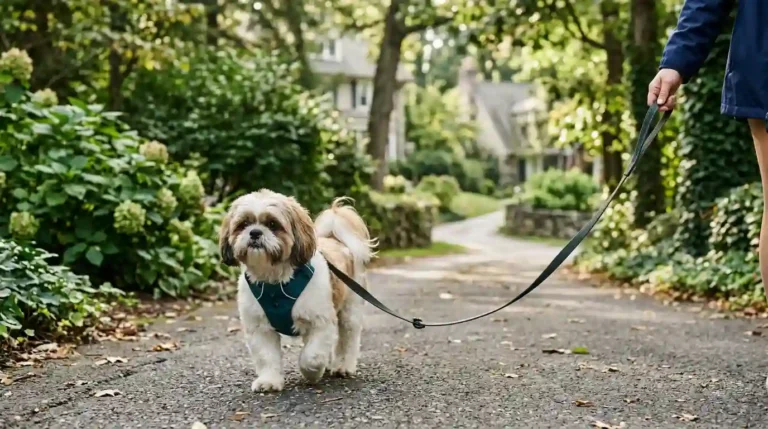
Choosing a Harness and Leash
A well-fitted harness can reduce pressure on the neck during walks. It should allow comfortable movement without rubbing behind the front legs.
A lightweight leash is usually easier for a small dog to manage. Check fit regularly, particularly while puppies grow or after a coat trim.
Grooming Your Shih Tzu
Grooming protects comfort as well as appearance. Good technique prevents painful pulling and helps you notice skin, eye, ear, or paw changes early.
Helping Your Shih Tzu Cooperate With Care
Teach your dog that handling predicts something pleasant. Begin when your dog is relaxed, and work in small steps before attempting a complete grooming session.
Introducing Brushing and Face Wiping
Let your dog investigate the brush, reward calm interest, and make one gentle stroke on an easy area. Build duration slowly.
For face wiping, introduce a soft damp cloth briefly. Avoid holding the head tightly or reaching toward the eyes while your dog is struggling.
Building Confidence With Toothbrushing and Nail Handling
Start with touching a paw or lifting the lip for a moment. Reward acceptance before introducing tools.
Move from looking at the toothbrush to brief contact with dog toothpaste. For nails, practice positioning and tool sounds before expecting a full trim.
Using Short Sessions and Rewards
Several short sessions can achieve more than one stressful attempt. Pause when your dog becomes tense, turns away repeatedly, or tries to escape.
Use small rewards and an easy finish. If necessary care consistently causes distress, ask a groomer or veterinary team for help.
Brushing Frequency and Techniques
Long coats generally need daily attention; shorter coats still require regular brushing. The American Kennel Club describes daily brushing for long-coated Shih Tzus, including working through layers rather than only brushing the surface.
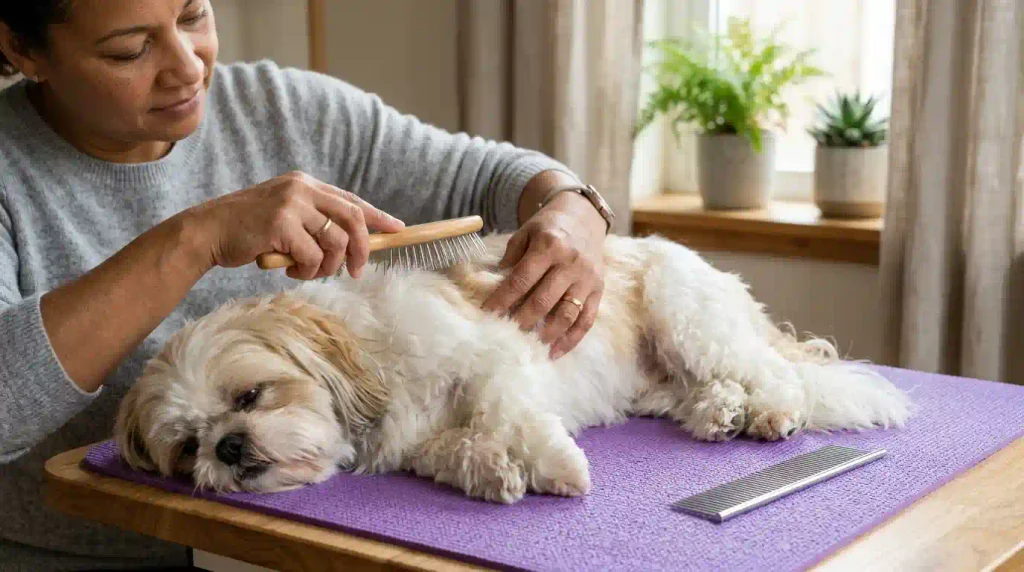
Work in small sections with a suitable pin brush, followed by a metal comb. Use light pressure and pay attention to the ears, armpits, chest, belly, and legs.
Removing Tangles and Preventing Mats
Hold the hair near the skin while gently working through a small loose tangle. Stop if the dog shows pain or the comb cannot pass comfortably.
Do not cut skin-tight mats with scissors. Skin can be pulled into the mat and injured. Extensive matting requires professional help, sometimes including veterinary support.
Maintaining a Long or Show Coat
A full-length coat demands careful brushing, combing, cleanliness, and thorough drying. Check hidden friction areas rather than focusing only on the visible back.
Keep facial hair away from the eyes and maintain sanitary areas. Discuss a realistic maintenance routine with a groomer before choosing a show-length style.
Puppy Cuts and Regular Hair Trimming
A puppy cut is a shorter pet trim, not a single standardized length. Explain the length you can maintain and ask the groomer to demonstrate it.
Many owners schedule professional grooming about every six to eight weeks, but growth and coat condition determine the best interval. Continue brushing between appointments.
Bathing Frequency and Thorough Drying
Many Shih Tzus are bathed around every three to four weeks, although activity, coat length, and skin treatment can change that schedule.
Brush out manageable tangles first, use lukewarm water, and rinse thoroughly. Dry the coat gently without hot airflow. Keep water away from the ears and avoid directing products into the eyes.
Choosing Shampoo, Conditioner, and Coat Products
Use dog-formulated products appropriate for your dog’s skin. Conditioner or a suitable leave-in spray may help with coat management.
Avoid selecting products by fragrance alone. Dogs with itching, redness, or recurrent skin irritation may need veterinary treatment rather than another cosmetic shampoo.
Using Dry Shampoo Between Baths
Canine dry shampoo can occasionally freshen a coat when used according to its label. It does not replace bathing, remove mats, or treat an infection.
Avoid applying it near the eyes and nose. A dog with persistent odor needs a check for skin, ear, dental, or sanitary problems.
Cleaning the Face, Muzzle, and Skin Folds
Wipe food residue from the muzzle with a soft damp cloth and dry the area afterward. If your dog has facial folds, gently check for trapped debris and moisture.
Do not scrub irritated skin. Redness, persistent odor, sores, or discomfort warrants veterinary advice.
Eye Cleaning, Tear Stains, and Topknot Maintenance
Gently remove discharge from the surrounding fur using a separate clean area of cloth for each eye. Avoid rubbing the eyeball.
Tear staining can accompany irritation or drainage problems, so consider the cause before using a tear stain remover. Keep a topknot loose, and never pull eyelids upward with tight hair ties.
Ear Cleaning and Monitoring
Inspect ears for redness, discharge, odor, or discomfort. Clean only as needed using a veterinarian-approved ear cleaner and the instructions provided.
Do not push cotton swabs into the canal or routinely pluck ear hair without advice. Hair removal can irritate some dogs, and painful ears need an examination.
Nail Trimming
Check nails regularly and trim according to growth and wear. Long nails can affect comfort, but a fixed calendar does not suit every dog.
Remove small amounts and avoid the quick, which contains blood vessels and nerves. If you cannot identify a safe trimming point or your dog struggles, ask a professional.
Teeth Brushing and Professional Dental Cleaning
Aim for daily toothbrushing with a dog toothbrush and dog toothpaste. Build acceptance gradually and focus on the outer surfaces without forcing the mouth open.
Ordinary dry kibble does not reliably replace brushing. Dental diets and suitable chews may help, but professional assessment and cleaning can still be necessary. AAHA identifies daily brushing as an effective way to reduce plaque accumulation.
Shedding and Allergy Considerations
Shih Tzus often shed relatively little, but no dog is reliably allergen-free. Allergens can come from skin, saliva, and urine as well as material carried on the coat.
A person with allergies should assess their reaction before bringing a dog home. Regular cleaning and grooming may help household hygiene but cannot guarantee tolerance.
When to Use a Professional Groomer
Seek help for extensive mats, difficult trims, repeated handling distress, or areas close to the eyes. Tell the groomer about medical conditions and previous reactions.
A groomer can also demonstrate brushing technique and suitable tools. Arrange veterinary assessment when the problem involves pain, wounds, infection, or a sudden change in grooming tolerance.
Training and Behavior
Training makes daily care easier and gives your dog understandable choices. Focus on practical behaviors such as walking calmly, settling, coming when called, and accepting handling.
Puppy Training and Early Socialization
Introduce your puppy to varied people, sounds, surfaces, and safe environments through positive experiences. Socialization means learning comfort, not greeting every dog.
Discuss suitable exposure with your vet while vaccinations are underway. Choose well-managed puppy training classes that use reward-based methods and appropriate hygiene.
Positive Reinforcement and Managing Stubbornness
Reward behavior you want to see again. Small food rewards, play, praise, or access to a sniffing spot can all be useful.
If your dog appears stubborn, simplify the task and reduce distractions. The American Veterinary Society of Animal Behavior recommends reward-based training for everyday skills and behavior problems.
House Training
Offer frequent toilet opportunities, supervise indoors, and reward immediately after your dog finishes in the chosen place. Clean accidents thoroughly with a suitable enzymatic cleaner.
Do not punish accidents. If a previously trained dog begins urinating indoors, consider health changes as well as schedule problems and contact your vet when appropriate.
Managing Barking and Reactions to Visitors
Identify what triggers barking: outside movement, door sounds, excitement, fear, or a learned request for attention. Reduce unnecessary triggers while teaching an alternative response.
For visitors, practice going to a mat away from the entrance. Reward quiet observation rather than waiting until your dog becomes overwhelmed.
Teaching Your Dog to Spend Time Alone
Begin with brief separations while your dog is comfortable. Return before distress develops, and increase time gradually.
A camera can help you see whether your dog rests or becomes unsettled. Provide safe enrichment, but remember that food toys alone will not resolve a dog’s fear of separation.
Recognizing and Managing Separation Anxiety
Repeated pacing, vocalizing, drooling, escape attempts, or destructive behavior during absence may indicate separation-related distress. Other causes should also be considered.
Avoid prolonged “cry it out” sessions. Consult your veterinarian and a qualified reward-based behavior professional; some dogs need a structured treatment plan and medication.
How to Check Your Shih Tzu’s Health at Home
Home observation helps you recognize changes. It supports veterinary care but does not replace an examination or establish a diagnosis.
Observing Eyes, Ears, Skin, and Coat
Notice your dog’s normal eye appearance, ear smell, skin condition, and coat texture. Brief daily checks make new discharge, redness, or sore areas easier to identify.
Handle gently and stop if the dog appears painful. Avoid applying leftover medication to a new problem without veterinary instructions.
Watching Appetite, Drinking, and Toilet Habits
Track unusual changes in food intake, thirst, stool, and urination. A missed meal may have different significance in a tiny puppy than in a healthy adult.
Repeated vomiting, diarrhea, increased thirst, or straining deserves attention. Note timing and any recent diet or medication changes.
Noticing Changes in Movement, Breathing, and Behavior
Watch how your dog rises, walks, uses steps, and settles. New limping, reluctance to move, or difficulty finding a comfortable position can signal pain.
Observe breathing during quiet rest. Increased effort, unusual noise, persistent panting at rest, or reduced tolerance for normal activity should be discussed with a vet.
Recording Changes to Discuss With Your Vet
Write down when the change began, how often it occurs, and whether it follows food, activity, or a particular situation. Record medication names and doses.
Short videos of walking or unusual behavior can help. Do not delay emergency care to obtain recordings.
Common Shih Tzu Health Concerns
Knowing breed-related concerns helps you ask better questions and notice symptoms. It does not mean your dog will develop every condition listed.
Brachycephalic Airway Syndrome and Breathing Difficulties
A short muzzle can be associated with narrowed nostrils, an elongated soft palate, and other airway abnormalities. Brachycephalic obstructive airway syndrome can affect breathing, exercise tolerance, and temperature regulation.
Do not dismiss loud or difficult breathing as simply normal for the breed. Veterinary assessment can determine whether monitoring, weight management, treatment, or surgery is appropriate.
Obesity and Weight Management
Extra body fat can worsen mobility and make activity more demanding. Measure meals, count treats, and review body condition regularly.
Weight-loss plans should protect nutrition and muscle. Ask the vet for an appropriate calorie target rather than making large cuts or substituting an unbalanced homemade diet.
Luxating Patella
Patellar luxation occurs when the kneecap moves out of its usual position. A dog may briefly skip, lift a hind leg, or develop persistent discomfort.
Treatment depends on severity, pain, and function. Repeated skipping deserves assessment even when the dog resumes walking normally.
Hip Dysplasia
Hip dysplasia involves abnormal hip development and can lead to arthritis or difficulty moving. Signs may include stiffness, reluctance to jump, and altered walking.
Your veterinarian may recommend an examination, X-rays, and a management plan. Do not choose supplements as a substitute for diagnosing the cause of discomfort.
Periodontal Disease
Plaque and tartar can contribute to inflammation and damage around teeth. Small mouths and crowded teeth can complicate oral hygiene.
Bad breath, bleeding gums, loose teeth, or difficulty eating need attention. Daily home care helps, but disease below the gumline requires professional assessment.
Eye Conditions
Shih Tzus can experience dry eye, corneal ulcers, cataracts, glaucoma, and other ocular disorders. Some inherited conditions include progressive retinal atrophy.
Squinting, rubbing, cloudiness, redness, or sudden visual difficulty needs prompt evaluation. Eye proptosis, where the eye is displaced from its socket, is an emergency.
Ear Infections
Ear infections may cause odor, discharge, head shaking, scratching, or pain. Moisture, inflammation, and underlying allergies can contribute.
A vet may examine the canal and sample debris to guide treatment. Repeatedly cleaning an infected ear without treating the cause can prolong discomfort.
Liver Shunts
A portosystemic shunt allows blood to bypass normal liver processing. Possible signs include poor growth, digestive problems, and neurological changes.
Diagnosis can require blood testing and imaging. Diet, medication, and sometimes surgery are considered according to the individual case.
Kidney and Urinary Conditions
Kidney or urinary disease may cause increased thirst, changes in urination, reduced appetite, or weight loss. Some Shih Tzus develop inherited renal disorders.
Glomerulonephritis affects kidney filtering structures, while urinary problems may have entirely different causes. Blood tests, urinalysis, and additional investigation help distinguish them.
Intervertebral Disc Disease
Intervertebral disc disease can cause neck or back pain and, in severe cases, weakness or paralysis. A dog may resist movement, cry when lifted, or walk abnormally.
Sudden weakness or inability to stand requires urgent care. Keep movement limited while arranging veterinary guidance, and avoid manipulating the painful area.
When to Call a Vet—and When to Seek Emergency Care
Severity, duration, age, and existing illness all affect urgency. If you are uncertain, call the clinic and describe what you see.
Concerns to Discuss at a Routine Appointment
Routine discussions may include gradual weight changes, grooming difficulties, diet selection, and preventive dental planning.
Only wait for a scheduled appointment when your dog is comfortable and the issue is stable. New pain or rapid deterioration changes the situation.
Changes That Need Prompt Veterinary Attention
Contact the vet promptly for a painful or red eye, new limping, persistent vomiting or diarrhea, marked appetite changes, or an uncomfortable ear.
Very young puppies, frail seniors, and dogs with chronic disease may need help sooner. Tell the clinic about these factors when calling.
Signs That Require Emergency Care
Seek emergency care for:
- Difficult breathing, collapse, or blue-gray gums.
- Suspected heatstroke.
- Seizures that persist or repeat.
- Sudden paralysis or inability to stand.
- A displaced eye or severe eye trauma.
- Suspected poisoning.
- Repeated attempts to urinate with little or no urine.
For suspected heatstroke, move the dog into a cooler area, begin wetting the body with cool tap water and provide airflow while arranging immediate veterinary care. Do not delay treatment to see whether your dog recovers.
Preventive Veterinary Care
Preventive care should reflect your dog’s life stage, medical history, and exposure risks. Keep records accessible so treatments are not missed or duplicated.
Routine Wellness Visits and Health Screening
Healthy adults commonly receive at least annual examinations, while seniors and dogs with medical conditions may need more frequent assessment.
Your vet may recommend blood testing, urinalysis, stool testing, or other screening. These decisions should follow the individual dog’s needs rather than a universal checklist.
Vaccinations
Follow a veterinarian-designed vaccination schedule. Puppies need a series of vaccinations, and later boosters depend on the vaccine, previous history, and local requirements.
Discuss boarding, travel, wildlife exposure, and contact with other dogs. AAHA guidance distinguishes vaccines needed broadly from those chosen according to individual risk.
Flea, Tick, and Heartworm Prevention
Use products appropriate for your dog’s age, current weight, and medical history. Do not divide doses unless the veterinarian and product instructions specifically support it.
The American Heartworm Society recommends year-round heartworm prevention and annual testing. Your vet can also tailor flea and tick protection to local exposure.
Caring for a Shih Tzu With Special Needs
Special-needs care works best when the environment supports the treatment plan. Small practical changes can improve independence and comfort.
Adapting the Home for Reduced Mobility
Place nonslip runners on slippery floors and provide supportive bedding. Keep essentials nearby and block unsafe stairs when needed.
Ask your vet whether a ramp, lifting aid, or rehabilitation program would help. Avoid forcing exercise through pain.
Supporting a Dog With Vision Loss
Keep furniture and walking routes consistent. Block access to stairs, pools, and other hazards, and use a calm voice before touching your dog.
Scent and sound can help orientation. Sudden vision loss still requires urgent assessment, even if your dog seems to adapt.
Adjusting Feeding for Missing Teeth
Dogs with missing teeth may manage softened kibble, wet food, or another suitable texture. The best choice depends on chewing comfort and medical needs.
Maintain nutritional balance and hygiene. A toothless dog still needs mouth checks because gum inflammation and other oral problems can occur.
Following an Individual Veterinary Care Plan
Keep a written record of medications, diet instructions, activity limits, and follow-up dates. Include who administers each treatment.
Report side effects or practical difficulties instead of changing doses independently. A plan that caregivers can follow consistently is more useful than one that becomes confusing.
Seasonal Care and Household Safety
Weather and household hazards can change quickly. Adapt your routine before discomfort develops.
Summer Care and Preventing Overheating
Walk during cooler periods, avoid hot pavement, and provide shade, drinking water, and a cool resting space. On extreme days, indoor enrichment may be the better choice.
Never leave your dog in a parked car. A cooling mat can support comfort, but it does not make unsafe heat exposure acceptable.
Winter Care and Keeping Your Dog Comfortable
Use a well-fitting dog sweater when your dog benefits from extra warmth. Remove wet clothing and dry the coat after outdoor trips.
Check paws for ice, salt, and irritation. Paw wax may provide some protection, but wipe or rinse residue away and prevent licking of deicing products.
Making Your Home and Yard Safe
Secure electrical cords, medications, cleaning chemicals, poisonous substances, and small choking hazards. Check household plants for pet toxicity.
Supervise yard access and block pools or open water. Before introducing water activities, read Can Shih Tzu Swim and plan for close supervision and suitable safety equipment.

Travel, Boarding, and Pet-Sitter Care
Good preparation helps preserve your dog’s routine when the environment or caregiver changes.
Preparing for Travel With Your Shih Tzu
Use a secure carrier or appropriate vehicle restraint, maintain comfortable ventilation, and plan toilet breaks. Carry familiar food, water, medication, and identification.
Discuss breathing concerns and travel suitability with your vet. Airline restrictions for short-faced dogs can differ, so verify requirements before booking.
Choosing Boarding or Pet-Sitting Arrangements
Ask about staff supervision, temperature control, small-dog separation, emergency procedures, and handling of medication. Visit the facility or meet the sitter beforehand.
A short trial can reveal whether the arrangement suits your dog. Explain grooming tolerance and any signs of distress the caregiver should watch for.
Creating a Care Handover Checklist
Provide meal quantities, toilet routines, walking preferences, grooming needs, and usual behavior. Include restrictions such as avoiding stairs or intense exercise.
Label food and equipment clearly. A concise written checklist reduces misunderstandings more effectively than a rushed verbal explanation.
Sharing Veterinary Contacts and Medication Instructions
Include your regular clinic, an emergency hospital, your contact details, and a backup decision-maker. Explain how treatment decisions and payment should be handled.
List exact medication names, prescribed doses, timing, and storage instructions. Have the caregiver record administration to prevent missed or repeated doses.
Essential Shih Tzu Care Supplies
Choose equipment that fits your dog and your routine. A small collection of suitable tools is more useful than many products you rarely use.
Brushes, Combs, and Grooming Tools
Start with a suitable pin brush, metal comb, and nonslip surface. Some coats benefit from a slicker brush used gently and correctly.
Ask a groomer to demonstrate tools before buying sharp equipment. Electric clippers and grooming scissors require care, especially around folds and delicate areas.
Face-Cleaning and Dental Supplies
Keep soft cloths, dog-safe wipes when appropriate, a small toothbrush, and canine toothpaste available. Store clean supplies separately from used items.
Choose dental chews according to size and chewing behavior. Avoid very hard items that may fracture teeth, and supervise use.
Cooling Mats and Comfortable Beds
A washable supportive bed helps with rest and hygiene. A cooling mat can be useful in a comfortable indoor environment.
Inspect both for damage. Remove products with exposed filling or gel if your dog chews them, and provide a choice of resting surfaces.
Slow Feeders and Puzzle Feeders
Choose designs suited to a small, short-faced dog. Your Shih Tzu should be able to reach food without frustration or rubbing the eyes against the feeder.
Begin with an easy setup and supervise. Use part of the normal meal allowance rather than adding extra food for enrichment.
Similar Breeds and Further Reading
The Lhasa Apso, Maltese, Havanese, and Toy Poodle may interest people exploring small companion breeds. Compare temperament, coat maintenance, exercise needs, and health concerns rather than selecting by appearance alone.
For current owners, focus further reading on the problem you need to solve: nighttime settling, grooming tolerance, measured feeding, safe walking, or preventive health care. A useful Shih Tzu care guide should help you make a practical decision.
Frequently Asked Questions
Are Shih Tzu high maintenance?
Their coat, eyes, and teeth need regular attention, even when their exercise requirements are modest.
How do I care for a Shih Tzu every day?
Provide measured meals, fresh water, gentle activity, grooming checks, toothbrushing, companionship, and suitable toilet breaks.
How often should I brush my Shih Tzu?
Brush long coats daily and shorter coats regularly according to how quickly they tangle.
How often should I bathe a Shih Tzu?
Many need bathing about every three to four weeks, adjusted for coat condition and veterinary advice.
How much should a Shih Tzu eat?
The correct amount depends on the food’s calories, body condition, age, activity, and health.
How can I make my Shih Tzu happy?
Offer predictable care, comfortable rest, enjoyable activities, patient training, and affection your dog welcomes.
Can Shih Tzus stay home alone?
They can learn manageable periods alone, but puppies and dogs with separation distress need additional support.
Are Shih Tzus hypoallergenic?
No dog is truly allergen-free, although Shih Tzus often shed relatively little.
Does a puppy cut remove the need for brushing?
No; shorter coats still need brushing, skin checks, and regular maintenance.
What are the most important puppy care priorities?
Prioritize appropriate meals, toilet training, safe socialization, gentle handling, and veterinary preventive care.
Final Thoughts on Shih Tzu Care
The most effective Shih Tzu care comes from a routine you can maintain and adjust as your dog’s needs change. Measured meals, comfortable exercise, regular coat care, daily toothbrushing, and patient training support everyday well-being. Just as important is noticing when something differs from your dog’s normal behavior, appetite, movement, or breathing. Start with the care tracker, choose a manageable grooming schedule, and ask your veterinarian to review any health concerns or preventive treatments. You do not need to master every task immediately; learning good techniques and seeking help when needed is part of responsible ownership. Save this guide, share the checklist with anyone who cares for your dog, and choose one improvement to make this week. Consistent attention helps your Shih Tzu stay comfortable, confident, and connected to family life.
Veterinary Disclaimer
This article provides general educational information and does not replace veterinary diagnosis or individualized treatment. Care schedules should reflect your dog’s age, health, coat, and prescribed care plan. Contact a veterinarian about concerning symptoms and seek emergency care for breathing difficulty, collapse, suspected heatstroke, poisoning, or other serious changes.