Can Shih Tzu Travel on Planes? Complete U.S. Guide
Summary: can shih tzu travel on planes? Yes, many Shih Tzus can travel on commercial planes, usually in the cabin inside an airline-approved carrier that fits under the seat. But being small enough to travel does not automatically mean flying is safe for every dog. Shih Tzus are a short-nosed breed, and breathing problems, heat sensitivity, age, health, stress, and the length of the trip can affect their ability to fly comfortably. Before booking, ask your veterinarian whether your dog is fit to travel, then confirm the operating airline’s carrier dimensions, pet limits, fees, and route restrictions. This guide explains how to assess your dog’s readiness, choose a carrier, prepare for airport security and boarding, plan domestic or international travel, and decide whether driving is a safer choice. It also includes a practical departure checklist. Airline rules and government requirements can change, so confirm them for your exact itinerary before buying a ticket.
Table of Contents
- Can a Shih Tzu travel on a plane? Quick answer
- Is your Shih Tzu ready to fly?
- Why flying can be challenging for Shih Tzus
- Cabin or cargo?
- U.S. airline policies
- Best airlines for flying with a Shih Tzu
- Choosing a travel carrier
- Preparing your Shih Tzu
- What to pack
- Airport timeline
- During the flight
- International travel
- Puppies, seniors, and dogs with health issues
- How much does it cost?
- Common mistakes
- Flying versus driving
- Alternatives if your dog cannot fly
- What flying with a Shih Tzu may be like
- Frequently asked questions
- Printable flight checklist
- Final thoughts
Can a Shih Tzu Travel on a Plane? Quick Answer
Are Shih Tzus allowed to fly on commercial airlines?
Often, yes. U.S. airlines commonly allow small dogs to travel in the cabin if the dog and carrier meet the airline’s rules. Your Shih Tzu usually must remain inside the closed carrier under the seat for the entire flight. Airlines limit the number of pets on each flight, so you need to reserve a pet spot and receive confirmation. A ticket for you does not automatically reserve space for your dog.
Rules differ by airline, aircraft, seat, route, and whether another airline operates part of the itinerary. Some destinations and aircraft do not accept cabin pets. A Shih Tzu’s short muzzle also matters: an airline may refuse to transport a snub-nosed dog as checked baggage or cargo. Check the rules for every flight segment before booking.
The safest way for a Shih Tzu to travel by air

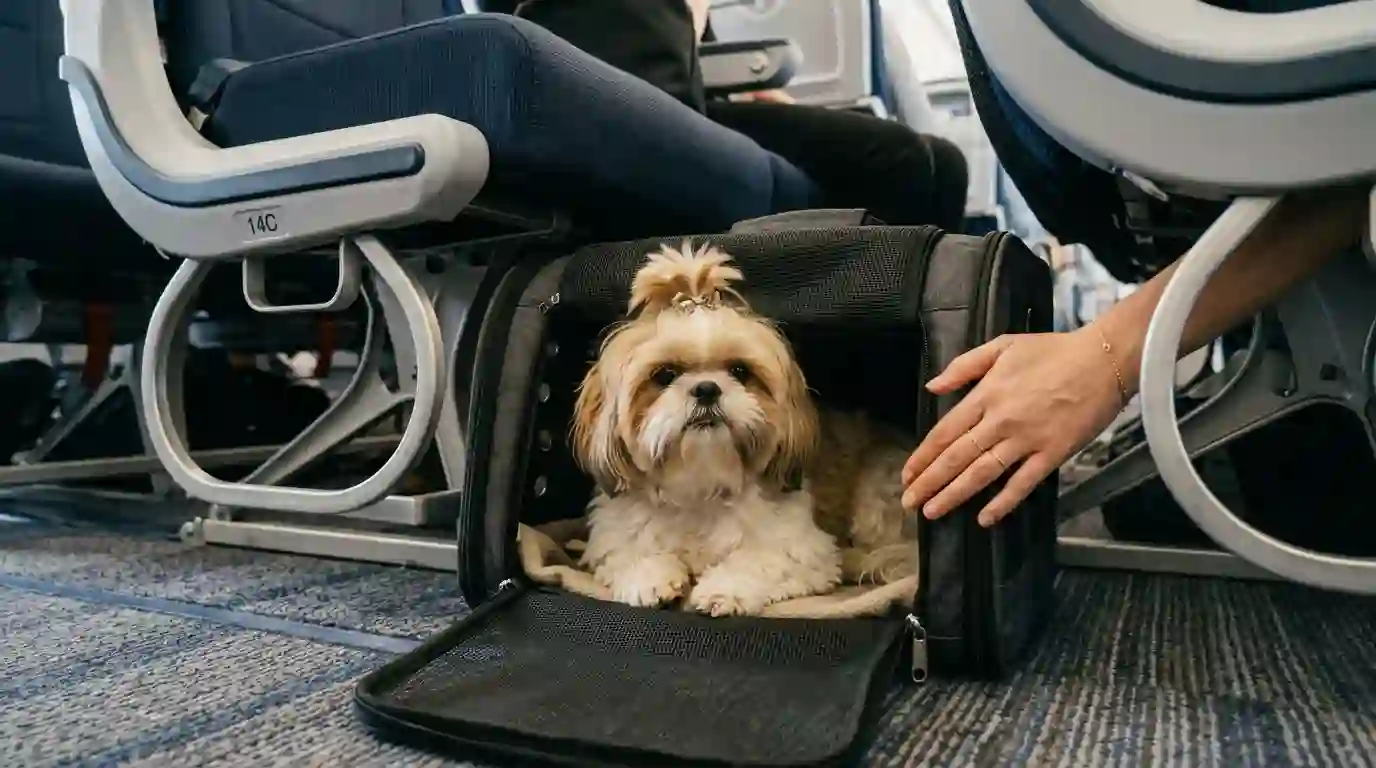
If your veterinarian agrees that your dog is fit to fly and the airline accepts the dog, traveling in the cabin with you is generally the preferred option. You can monitor your Shih Tzu and avoid placing them in a separate cargo area. Your dog must still stay in an approved, zipped carrier under the seat. Do not plan to hold them on your lap during takeoff, landing, or flight.
Important factors that decide if your Shih Tzu can fly
Consider these questions before buying a ticket:
- Has your veterinarian assessed your dog’s breathing and overall health?
- Can your Shih Tzu stand, turn around, and lie down comfortably in a carrier that fits under the seat?
- Is there space for a pet on every flight in your itinerary?
- Can you choose a suitable seat and avoid a tight connection?
- Does your destination allow your dog to enter, and do you have time to complete its document requirements?
- Can your dog manage the airport, carrier, and flight without severe distress?
A trip may be allowed by the airline and still be a poor choice for an individual dog. Your vet can help weigh the travel plan against your Shih Tzu’s health.
Is Your Shih Tzu Ready to Fly? Pre-Flight Suitability Checklist
Age and health requirements before flying
Airlines and destinations set their own minimum-age and health rules. For example, some domestic U.S. airline policies set a minimum age of eight weeks, while international journeys can have different requirements. A dog entering the United States from another country must meet current federal entry rules, which include age and identification requirements. Do not assume that one airline’s age rule applies to all routes.
Ask your veterinarian to review your dog’s breathing, heart and lung health, weight, mobility, medications, and any history of heat illness or anxiety. A routine checkup is not the same as a specific fitness-to-fly assessment. Share the full itinerary and expected travel time, including airport waiting and connections.
Can your Shih Tzu handle a long flight?
A flight’s scheduled duration is only part of the journey. Add the drive to the airport, check-in, security, boarding, possible delays, connections, and ground transport after landing. A short nonstop flight may be manageable for a dog that is comfortable in a carrier. A long itinerary with crowded terminals and extended waiting may be much harder.
Think about your dog’s normal routine, hydration, bathroom needs, and ability to settle in a confined space. If the trip is long, ask your veterinarian how to plan feeding, water, medication, and breaks. For some dogs, a long drive with stops is easier to manage.
Signs your Shih Tzu may not be ready for air travel
Talk with your vet before flying if your dog:
- Breathes noisily, struggles to breathe, or tires easily
- Has fainted, overheated, or had blue or pale gums
- Has a recent respiratory infection or surgery
- Has significant heart, lung, or other health problems
- Panics in a carrier or cannot settle after gradual training
- Is very young, frail, pregnant, or recovering from illness
These signs do not all mean a dog can never fly, but they do call for individual veterinary advice. Do not try to hide symptoms from the airline or use medication to make a dog appear calmer.
Vet approval checklist before booking
Ask your veterinarian:
- Is my Shih Tzu fit for this route and total travel time?
- Does their breathing or medical history increase the risk?
- Should I avoid flying during hot weather or busy travel periods?
- What should I do about food, water, and prescribed medication?
- Would a health certificate or examination be needed for this route?
- If my dog has anxiety, what safe behavior plan do you recommend?
A health certificate is not required for every domestic flight, and a vet’s certificate does not guarantee an airline will accept the dog. Check both the airline policy and destination requirements.
Why Flying Can Be Challenging for Shih Tzus
Understanding Shih Tzu brachycephalic breathing problems
Shih Tzus are brachycephalic, which means they have a short muzzle and a relatively shortened upper airway. Some dogs breathe comfortably, while others have narrowed nostrils, an elongated soft palate, or other airway problems. Stress, heat, exertion, and confinement may make breathing harder.
The American Veterinary Medical Association’s guidance on short-nosed dogs and air travel explains why brachycephalic dogs need particular care when flying. Ask your vet to evaluate your individual dog rather than relying on breed generalizations alone.
Heat sensitivity and air travel risks
Dogs that already have trouble breathing may be more vulnerable in hot, humid, or crowded conditions. Airport queues, warm vehicles, delays on the ground, and poor ventilation can add stress. Keep your Shih Tzu in a comfortable temperature range before leaving home, and do not leave them unattended in a vehicle.
Stress, anxiety, and breathing during flights
Airports bring unfamiliar sounds, people, smells, and movement. Some dogs settle when they are accustomed to their carrier; others become distressed. Watch for persistent panting, frantic scratching, drooling, trembling, or attempts to escape. Carrier training and practice trips can help, but severe fear needs professional guidance before travel.
Health conditions that may affect flying safety
Respiratory illness, heart disease, obesity, advanced age, recent surgery, and some medications can affect travel tolerance. A veterinarian can help you understand specific risks and whether travel should be postponed. For everyday routines that support a healthy dog, see our guides to Shih Tzu Care and Shih Tzu Daily Care.
Can Shih Tzus Fly in the Cabin or Cargo?
Why in-cabin travel is usually the best option
Cabin travel keeps your dog near you and lets you observe them. The carrier must fit fully under the seat in front of you, and your Shih Tzu must stay inside it while onboard. The exact space can vary by aircraft and seat. Bulkhead and exit-row seats often cannot be used with an under-seat pet carrier.
Risks of flying a Shih Tzu in cargo
The cargo area is separate from the passenger cabin, and you cannot check on your dog during the flight. Conditions and handling can differ from cabin travel. Because Shih Tzus are short-nosed, some airlines specifically restrict them from checked-pet or cargo travel. Never assume that a small dog is automatically eligible for cargo.
If a Shih Tzu cannot fit comfortably in an approved cabin carrier, ask your veterinarian and the airline about alternatives. Do not force your dog into a carrier that is too small or book cargo without confirming breed-specific restrictions.
When cargo travel should be avoided
Avoid cargo travel if your dog has breathing problems, heat sensitivity, significant anxiety, or a medical condition that needs monitoring. Even if a carrier or transport service says it can arrange the shipment, confirm the airline’s current restrictions and discuss the plan with your veterinarian.
Service dogs and special travel exceptions
A trained service dog that meets the applicable legal and airline requirements may travel under different rules from a pet. Emotional support animals are generally treated as pets by U.S. airlines. A pet cannot be labeled a service dog to avoid a fee or carrier requirement. Check the airline’s accessibility policies and documentation rules if you are traveling with a trained service animal.
Airline Policies for Flying With a Shih Tzu in the USA
Airlines that allow Shih Tzus in the cabin
Major U.S. airlines generally allow eligible small dogs in the cabin on at least some routes, subject to space, carrier, fee, and destination limits. Policies can change, and partner-operated flights may follow different rules. Confirm the specific operating carrier for each segment.
Airline size and weight restrictions
Most cabin policies focus on whether your dog can fit comfortably inside a carrier that fits under the seat. Some airlines specify maximum carrier dimensions; others say dimensions depend on the aircraft. A dog’s weight alone does not confirm eligibility. Measure your Shih Tzu and ask the airline about the actual aircraft and seat on your route.
Pet carrier requirements for different airlines
Common requirements include a secure, leak-resistant carrier with sufficient ventilation. Soft-sided carriers are often useful because they can flex slightly under a seat, but they still must fit without being crushed. Your dog should be able to move naturally inside. Review the airline’s latest carrier instructions before purchasing one.
Pet fees and additional travel costs
Pet fees are generally charged each way and are separate from your own ticket. As of October 2026, several airlines’ published policies list cabin pet fees around $150 each way on many routes; destination, ticket date, and airline can change the amount. Your total budget may also include a carrier, veterinary appointment, health certificate, vaccinations or tests, ground transport, and travel supplies.
How far in advance should you reserve a pet spot?
Reserve your dog’s space as soon as your travel dates are firm. Airlines limit the number of pets allowed in the cabin, and popular flights can fill their pet allotments. Get confirmation that the pet is added to the reservation, not just a note that you requested it.
Best Airlines for Flying With a Shih Tzu in the USA
“Best” depends on your route, the aircraft, available under-seat space, pet availability, and how easily the airline can confirm your dog’s reservation. Compare the operating carrier’s rules for every flight.
American Airlines pet policy
American allows eligible small dogs in the cabin in an approved carrier, but the carrier must fit beneath the seat and the dog must remain inside. Its current guidance provides different carrier dimensions for soft-sided and hard-sided carriers and limits pet availability by aircraft and cabin. American also restricts some snub-nosed breeds, including Shih Tzus, from checked-pet travel. Ask about the pet fee, route restrictions, and seat availability before purchasing.
Delta Air Lines pet policy
Delta allows eligible small dogs in the cabin on many routes. Its published policy says the carrier must fit under the seat and recommends a soft-sided kennel around 18 × 11 × 11 inches, while noting that actual space depends on the aircraft. Delta currently lists a fee of $150 each way for many U.S., Canada, and nearby routes for tickets issued under its current fee schedule. Check destination exclusions and cabin restrictions.
United Airlines pet policy
United permits eligible dogs in the cabin when space is available. Its published pet ticket price is $150 each way. The carrier must fit beneath the seat, and pet travelers should confirm the current dimensions, flight availability, and any limits associated with the aircraft or route.
JetBlue pet policy
JetBlue accepts eligible small dogs in the cabin on many flights, subject to its carrier size and route rules. Its current published fee is $150 each way. Check the limit on pets per flight and whether a pet carrier affects which other carry-on items you can bring.
Comparing airline rules for Shih Tzu owners
| Airline | What to confirm before booking |
| American Airlines | Carrier size for the aircraft, pet availability, eligible route, and fee |
| Delta Air Lines | Under-seat carrier fit, aircraft restrictions, route eligibility, and fee |
| United Airlines | Pet space, current carrier dimensions, route rules, and fee |
| JetBlue | Carrier dimensions, pet limit, route eligibility, and fee |
Policies may change after this guide is published. Verify the latest rules directly with the airline before paying for your ticket.
Choosing the Right Travel Carrier for Your Shih Tzu
What size carrier does a Shih Tzu need for flying?
The carrier needs to fit under your assigned seat while allowing your dog to stand, turn around, and lie down naturally. Because under-seat dimensions vary, first check the airline’s rules for your aircraft. A carrier that fits one plane may not fit another.
How to measure your Shih Tzu for an airline carrier
Measure your dog’s length from the chest to the base of the tail, height from the floor to the top of the head or ears, and width across the widest part of the body. Compare these measurements with the carrier’s internal space, then compare the carrier’s outside dimensions with the airline’s limit. When in doubt, contact the airline with the carrier’s measurements and flight number.
Soft-sided versus hard-sided dog carriers
Soft-sided carriers can be easier to place under a seat and are accepted by many airlines. Hard-sided carriers may be sturdier but can be harder to fit into limited cabin space. Neither type is automatically approved: follow the airline’s exact requirements.
Features of a safe airline carrier
Look for secure closures, sturdy seams, good ventilation, a leak-resistant base, and a comfortable washable liner. Your dog should not be able to push the door open or get a paw stuck in the mesh. Attach identification to the carrier and keep a tag on your dog.
Preparing Your Shih Tzu Before the Flight
Schedule a veterinary health checkup
Arrange a vet appointment well before departure, especially if your dog is older, has noisy breathing, or has never flown. Tell the veterinarian the route and total travel time, and bring your planned carrier measurements. A last-minute check may not leave time to address a health concern.
Required vaccinations and health certificates
Requirements depend on the airline, state, country, and destination. For international trips, use the U.S. Department of Agriculture’s pet travel guidance to check destination-specific documents, vaccinations, tests, and timing. Requirements can involve official endorsement and strict deadlines. Dogs entering the United States from another country are subject to current CDC entry rules; verify what applies to your dog’s travel history.
Training your Shih Tzu to stay comfortable in a carrier
Start carrier practice weeks ahead when possible. Leave the carrier open at home with bedding and treats inside. Encourage your Shih Tzu to enter voluntarily, then gradually practice closing the door for brief periods. Increase the time only while your dog remains calm. Do not use the airport as the first training session.
Practice trips before the actual flight
Take short car trips with your dog in the carrier. Practice carrying it through a quiet public area if your dog is comfortable. These trips help you notice motion sickness, fear, or trouble settling before travel day.
Managing anxiety before travel
Build a calm routine around the carrier and reward relaxed behavior. Ask your vet about anxiety if training alone is not enough. Do not give sedatives or tranquilizers without veterinary direction; sedation can affect breathing and balance, and some airlines may refuse a sedated animal.
What to Pack When Flying With a Shih Tzu

Essential travel documents
Pack your reservation confirmation, airline pet confirmation, vaccination records, health certificate if required, medication instructions, and destination documents. Keep paper copies and digital backups. Make sure the name and contact details on identification are current.
Food and water supplies
Bring your dog’s usual food, a small water supply, and a collapsible bowl. Pack enough food for delays and the first part of the trip. Changes in diet during travel can upset a dog’s stomach, so stick to familiar food unless your veterinarian advises otherwise.
Puppy pads and cleaning supplies
Pack a few absorbent pads, waste bags, paper towels, and pet-safe cleaning wipes. Use airport pet relief areas before boarding. Keep a spare pad accessible in case of an accident.
Comfort items, toys, and blankets
A familiar lightweight blanket or small comfort item can help your dog settle. Avoid bulky toys that take up too much carrier space or anything that could become a choking hazard. A short walk and normal rest routine may help your dog feel ready to travel; see our guide to Shih Tzu Exercise Needs.
Emergency items to carry
Bring prescribed medication in its original packaging, your veterinarian’s contact information, and a recent photo of your dog. A collar tag and microchip details can help identify your dog if you become separated.
Flying With a Shih Tzu: Complete Airport Timeline
48 hours before the flight
- Recheck the airline’s pet reservation and carrier rules.
- Confirm the operating carrier for every segment.
- Review weather and destination requirements.
- Pack documents, food, medication, and cleaning supplies.
- Keep your dog’s routine predictable and avoid introducing new foods.
The morning of your flight
Follow your veterinarian’s feeding and medication advice. Give your dog time to relieve themselves before leaving. Keep them cool and calm during the trip to the airport. Do not overfeed immediately before flying, but do not withhold food or water against veterinary advice.
Arriving at the airport with your dog
Allow extra time to check in with your Shih Tzu. Airline staff may inspect the carrier and confirm the reservation. Ask where the nearest pet relief area is, and give your dog a final bathroom break before heading to the gate.
Going through TSA security with a Shih Tzu
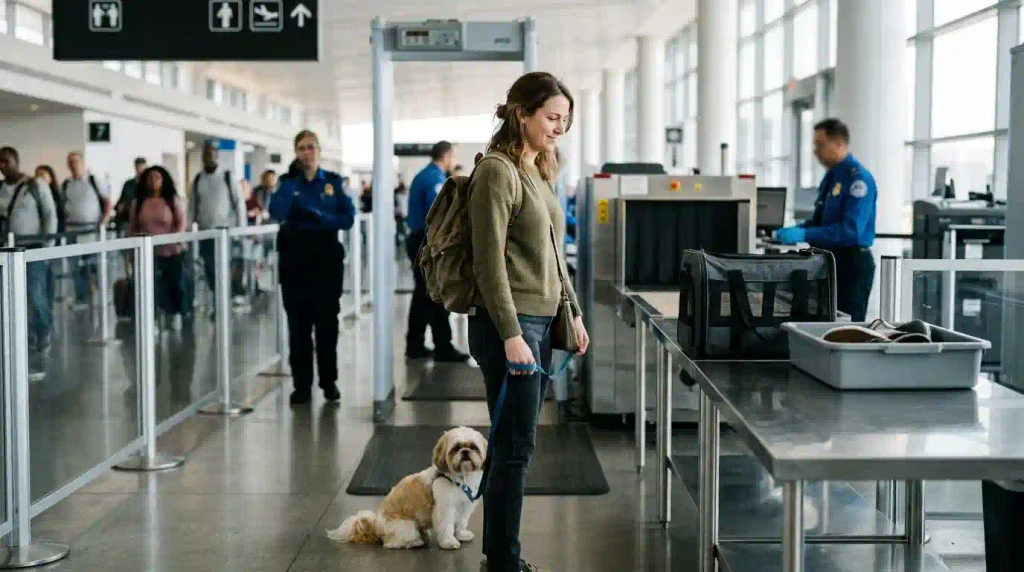
At many U.S. checkpoints, you will be asked to take your dog out of the carrier while the carrier goes through the X-ray machine. Hold your dog securely or use a leash while following the TSA officer’s directions. If you are concerned your dog may bolt, tell the officer before opening the carrier and ask how to proceed. After screening, place your dog back in the carrier.
Boarding the plane with your dog
Board when your group is called and stow the carrier under the seat as directed. Keep the carrier closed, stable, and unobstructed. Do not place it in an overhead bin or take your dog out during the flight unless airline staff instruct you otherwise.
After landing: first steps for your Shih Tzu
Keep your dog secured until you have exited the aircraft and reached an appropriate relief area. Offer water, allow a bathroom break, and give your dog time to decompress. Watch for unusual breathing, weakness, overheating, vomiting, or persistent distress. Contact a veterinarian if you are concerned.
During the Flight: Keeping Your Shih Tzu Safe and Comfortable
Managing temperature and breathing issues
Keep your dog inside the carrier under the seat and avoid covering the ventilation panels. Watch for labored breathing, excessive panting, weakness, or distress. If you notice a problem, alert a flight attendant promptly. You cannot control cabin conditions, so choose a route and season that your veterinarian considers appropriate.
Helping your dog handle noise and pressure changes
A familiar blanket and prior carrier practice may help your dog feel more secure. Speak calmly, but do not open the carrier during flight. The cabin’s noise and movement can be unsettling; preparation beforehand is more useful than trying to introduce new comfort aids onboard.
Bathroom breaks during air travel
Most dogs cannot leave the carrier to use a bathroom during the flight. Use airport relief areas before boarding and after landing. For longer trips, ask your veterinarian how to manage timing, water, and the possibility of an accident.
Should you give your Shih Tzu sedatives before flying?
Do not sedate your dog unless your veterinarian has specifically recommended a medication and explained how to use it. Sedatives can cause side effects and may be risky for short-nosed dogs. Some airlines prohibit or discourage sedated pets. Never use human medication or another pet’s prescription.
Can your Shih Tzu sit on your lap during a flight?
Usually, no. A pet traveling as a cabin pet must remain inside its approved carrier under the seat. A trained service dog follows different rules and must meet applicable requirements.
Flying Internationally With a Shih Tzu
Domestic flights versus international flights
An international trip adds destination entry rules, possible transit-country rules, and return-to-U.S. requirements. Some airlines do not accept cabin pets on certain international routes. Confirm rules for every country where the dog will land or transit.
International health certificates and documents
Depending on the destination, you may need a veterinary health certificate, vaccination records, microchip details, lab tests, treatments, and government endorsement. The timing can be strict, so start well in advance with a veterinarian familiar with international pet travel.
Import rules and destination restrictions
Check the destination country’s official rules and the airline’s policy. For dogs returning to the United States, CDC requirements depend in part on where the dog has been during the preceding six months and the dog’s vaccination history. Do not assume a U.S. vaccination record alone is sufficient.
Quarantine requirements for some countries
Some countries may require quarantine, advance permits, or specific arrival airports. Research these rules before booking flights or accommodation. If the requirements are too difficult for your dog or your schedule, consider leaving your Shih Tzu at home with a trusted caregiver.
Flying With Shih Tzu Puppies, Seniors, and Dogs With Health Issues
Can Shih Tzu puppies fly on planes?
A puppy may meet an airline’s minimum age and still not be ready for a flight. Ask your veterinarian about vaccination timing, immune protection, stress, and the puppy’s ability to settle in a carrier. International minimum ages and entry requirements can be higher than domestic airline rules.
Flying with an older Shih Tzu
Older dogs may have reduced mobility, chronic conditions, or less tolerance for stress. Have your veterinarian assess their health and comfort. Plan a shorter itinerary when possible, and make sure you can lift and carry the carrier safely.
When a Shih Tzu should avoid flying
Postpone or avoid air travel if your veterinarian believes the risks outweigh the benefits, your dog has active breathing problems, or the airline cannot accommodate the dog safely in the cabin. If the dog must travel, discuss safer transport arrangements with your veterinarian and a reputable pet transport professional.
How Much Does It Cost to Fly With a Shih Tzu?
Airline pet fees
Many U.S. airlines charge about $150 each way for an in-cabin pet as of October 2026, though fees depend on the airline, route, and ticket rules. Confirm the cost when adding the pet to your booking.
Travel carrier costs
An airline-compliant carrier can range from a basic budget option to a more expensive model with extra structure and storage. Fit and safety matter more than accessories. Buy early enough to practice with it.
Vet visit and health certificate expenses
Costs vary by clinic and destination. A simple exam may cost less than an international certificate involving tests, vaccinations, and government endorsement. Ask the clinic for an estimate after sharing the destination and travel dates.
Additional travel supplies budget
Budget for identification, food, waste bags, pads, medication, ground transport, and possible delays. Keep some funds available for unexpected veterinary care.
Common Mistakes When Flying With a Shih Tzu
Booking a flight before checking airline rules
A dog may be accepted on one flight but not another. Confirm the pet’s reservation and route eligibility before finalizing a nonrefundable itinerary.
Choosing the wrong carrier size
A carrier that is too large may not fit under the seat; one that is too small can make the trip uncomfortable. Check external dimensions and your dog’s internal space, then verify with the airline.
Feeding too much before flying
A large meal just before travel may cause discomfort or nausea. Ask your veterinarian when to feed your dog and follow their advice.
Using sedatives without veterinary guidance
Medication can affect breathing, alertness, and balance. Never administer a sedative or tranquilizer without veterinary direction.
Booking flights with too many connections
Each connection adds handling, noise, waiting, and the chance of a delay. Choose a nonstop flight when practical, or allow enough time between connections to manage your dog calmly.
Flying vs. Driving With a Shih Tzu: Which Is Better?
Advantages of flying with a Shih Tzu
Flying can shorten a long-distance journey and may be practical when the dog is healthy, comfortable in a carrier, and accepted in the cabin. A nonstop route can reduce time spent traveling.
Advantages of road travel
Driving gives you more control over breaks, temperature, and the pace of travel. You can stop for water and bathroom breaks, and your dog can remain in a familiar travel setup. It may take longer, and the dog should be secured safely in a carrier or restraint.
Choosing the right travel method for your dog
Consider your Shih Tzu’s breathing, health, temperament, and carrier comfort alongside the trip distance and weather. Review the best room temperature for Shih Tzu before planning travel in hot conditions. If flying creates more risk or distress than driving, choose the road when practical.
Alternative Options If Your Shih Tzu Cannot Fly
Professional pet transport services
A reputable ground transport provider may be an option for a dog that cannot travel by air. Ask how the company manages ventilation, rest stops, hydration, supervision, and emergency care. Request references and a written itinerary.
Pet travel companies and flight nannies
A pet travel specialist can help coordinate paperwork and transport, but the service does not remove airline or destination restrictions. A flight nanny may accompany a dog on an eligible flight, but the dog still needs to meet the airline’s requirements.
Finding a safe alternative arrangement
For some trips, a trusted sitter, family member, or boarding facility is the best choice. Keep your dog’s normal food, care instructions, medication details, and veterinarian contact information available for the caregiver.
Real Experience: What It Is Really Like Flying With a Shih Tzu
First-time flight challenges
A first flight can involve a carrier, airport security, crowds, and unfamiliar sounds all at once. Training at home and practicing short trips can help reveal how your dog handles confinement before travel day.
How Shih Tzus usually behave during travel
There is no single typical response. Some dogs sleep in the carrier; others remain alert or anxious. Breed tendencies cannot predict an individual dog’s reaction, so watch your own dog during practice sessions.
Lessons learned from traveling with a small-breed dog
Plan for the full journey, keep documents easy to reach, arrive early, and leave time for a bathroom break. Confirm the carrier and reservation with the airline rather than relying on a general policy summary. Most of all, let your veterinarian’s assessment guide the decision.
Frequently Asked Questions About Shih Tzu Air Travel
How long can a Shih Tzu stay on a plane?
There is no single safe maximum; it depends on your dog’s health, the route, and total travel time. Ask your veterinarian about your specific itinerary.
Do Shih Tzus need a health certificate to fly?
Not for every domestic flight, but airlines, states, and international destinations may require documents. Check the rules for your route.
Does my Shih Tzu count as a carry-on item?
The pet carrier is subject to the airline’s pet and baggage rules. Confirm whether it counts as your personal item or affects your other carry-on allowance.
Are Shih Tzus safe on long flights?
Some may travel safely in the cabin after veterinary assessment, but long flights add stress and time in a carrier. Discuss the full itinerary with your vet.
What happens if my dog needs to go to the bathroom during a flight?
Your dog generally must remain in the carrier. Use airport pet relief areas before boarding and after landing, and prepare for a possible accident.
Can a Shih Tzu fly internationally?
Often, but airline route rules and destination documents apply. Check entry, transit, and return requirements well in advance.
Can a Shih Tzu travel without an owner?
Possibly through an approved pet transport service, depending on the airline, route, and destination. Check the exact rules and discuss the dog’s health with your veterinarian.
Printable Shih Tzu Flight Checklist Before Departure
Documents checklist
- Airline pet reservation confirmed for every flight segment
- Identification tag and current contact details
- Vaccination records and health certificate, if required
- Destination and transit documents
- Copies saved on your phone and packed in your carry-on
Carrier checklist
- Carrier meets the airline’s current dimensions
- Dog can stand, turn, and lie down comfortably
- Zippers, seams, ventilation, and base are secure
- Familiar washable liner is packed
- Carrier is labeled with your contact information
Food and comfort checklist
- Usual food and treats
- Water and a collapsible bowl
- Puppy pads and waste bags
- Paper towels and pet-safe wipes
- Prescribed medication in original packaging
- Familiar blanket or small comfort item
Final safety checklist
- Vet has reviewed the route and your dog’s health
- Pet spot is confirmed, not merely requested
- You know where the airport relief area is
- Your dog has practiced resting in the carrier
- You have a plan for delays, connections, and post-flight care
Final Thoughts
A Shih Tzu can often travel on a plane, but the safest plan starts with your dog’s health and the specific airline rules for your route. Ask your veterinarian to assess breathing and travel tolerance, reserve a cabin pet spot early, and choose a carrier that fits both your dog and the aircraft. Allow time for carrier practice, airport relief breaks, and document checks. If your dog is uncomfortable, medically vulnerable, or cannot travel in the cabin, consider driving or arranging care at home. With careful preparation, you can make a better-informed decision about whether flying is right for your Shih Tzu.