Senior Shih Tzu Care: Aging, Health, Nutrition, and Comfort
Caring for a senior Shih Tzu means understanding how your dog’s needs change with age and making thoughtful adjustments to keep them healthy, comfortable, and happy. Although Shih Tzus often live well into their teens, they may begin showing signs of aging around 8–10 years old, including reduced energy, slower movement, changes in appetite, dental problems, and declining vision or hearing. The American Kennel Club lists the breed’s typical lifespan as 10–18 years, but every dog ages differently. Some remain active at 15, while others need additional support much earlier. Regular veterinary examinations, appropriate nutrition, gentle exercise, consistent grooming, and a safer home environment can make a meaningful difference during these later years. Because Shih Tzus are a small, short-muzzled breed, owners should pay particular attention to breathing, eye health, dental disease, joint comfort, and unexpected changes in behavior. This complete senior Shih Tzu care guide explains what to expect as your companion grows older, how to recognize potential health problems, and practical ways to maintain quality of life throughout your dog’s golden years.
Table of Contents
- When Is a Shih Tzu Considered a Senior?
- Senior Shih Tzu Health Checks and Veterinary Care
- Common Health Issues in Senior Shih Tzus
- Nutrition, Hydration, and Weight for an Older Shih Tzu
- Exercise, Mobility, and Joint Support
- Grooming and Daily Care for a Senior Shih Tzu
- Making Your Home Safer and More Comfortable
- Mental Stimulation and Emotional Well-Being
- End-of-Life Care and Quality-of-Life Decisions
- Frequently Asked Questions About Senior Shih Tzus
- Final Thoughts
When Is a Shih Tzu Considered a Senior?
Senior age, lifespan, and individual health
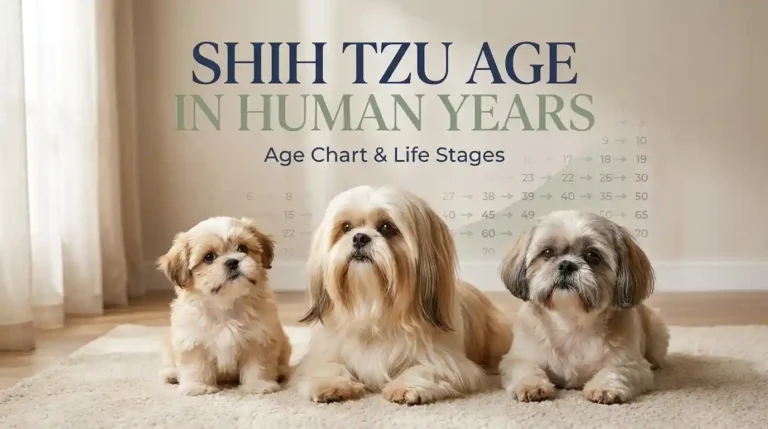
A Shih Tzu is often considered to be entering its senior years around 8–10 years of age, although this is a practical guideline rather than a fixed medical cutoff.
Shih Tzus belong to the toy breed group and generally have longer lifespans than many larger dogs.
The American Kennel Club (AKC) lists the breed’s life expectancy as approximately 10–18 years.
Research published by the Royal Veterinary College’s VetCompass program in 2024 reported an average age at death of 12.7 years among Shih Tzus in the UK veterinary population studied.
This doesn’t mean your dog will necessarily live for exactly 12 or 13 years. Individual lifespan depends on genetics, existing medical conditions, preventive care, nutrition, and other factors.
| Shih Tzu age | General life-stage considerations |
| 7–8 years | Mature adult; begin discussing age-related screening |
| 9–10 years | Common period for closer senior monitoring |
| 11–12 years | Established senior years for many Shih Tzus |
| 13–14 years | Advanced senior age; assess comfort and mobility carefully |
| 15–16 years | Very advanced age; individualized daily support may be needed |
| 17 years and older | Exceptional longevity; monitor health and quality of life closely |
These stages describe typical considerations, not a prediction that every dog will develop problems at a particular age.
Why there is no single age cutoff for every Shih Tzu
The American Animal Hospital Association (AAHA) describes the senior life stage in dogs as approximately the final 25% of their estimated lifespan.
Because expected lifespan differs between breeds and individuals, senior status cannot be defined by one universal birthday.
For example, a healthy 10-year-old Shih Tzu may still enjoy regular walks, play, and normal daily activities.
Another 10-year-old Shih Tzu with arthritis, heart disease, or vision problems may require more support.
Aging should be assessed through physical condition, function, and medical history—not age alone.
How a Shih Tzu’s lifespan compares with other breeds
Small breeds generally tend to live longer than large and giant breeds.
Shih Tzus, Maltese, Toy Poodles, and other small companion dogs often remain with their families into their teenage years.
Larger breeds may enter their senior life stage earlier because they frequently have shorter average lifespans.
However, being a small dog does not guarantee exceptional longevity.
A 20-year-old Shih Tzu is possible but highly unusual and should not be considered the expected lifespan.
Likewise, a 15-year-old Shih Tzu or 16-year-old Shih Tzu can still enjoy a good quality of life when pain, mobility, nutrition, and chronic conditions are appropriately managed.
Common physical and behavioral changes with age
As your Shih Tzu grows older, you may notice subtle differences.
Common changes include:
- Sleeping for longer periods
- Taking more time to stand after resting
- Reduced enthusiasm for long walks
- Mild changes in coat texture
- Gray or white fur around the muzzle
- Less interest in jumping or climbing
- Changes in hearing or vision
- Increased sensitivity to temperature
- Different eating or bathroom habits
Some changes reflect normal aging, but others may indicate treatable medical problems.
For example, reluctance to climb stairs may be caused by arthritis rather than simply being old.
A dog that suddenly becomes withdrawn may be experiencing pain, illness, or sensory loss.
If you notice a new behavior, don’t automatically dismiss it as part of old age.

Senior Shih Tzu Health Checks and Veterinary Care
How often to schedule senior wellness exams
Regular veterinary care becomes increasingly important as your Shih Tzu ages.
For most senior dogs, a veterinary wellness examination every six months is a useful starting point, even when they appear healthy.
Dogs with chronic conditions may need more frequent visits.
A senior wellness examination typically includes:
- Body weight and body condition assessment
- Muscle condition evaluation
- Heart and lung examination
- Dental and gum inspection
- Eye examination
- Joint and mobility assessment
- Skin and coat inspection
- Nutritional review
- Behavioral and cognitive health discussion
Your veterinarian may also review vaccinations, parasite prevention, medications, and changes in your dog’s home environment.
The objective is to identify potential problems early, when management may be easier and more effective.
Bloodwork, urinalysis, and other age-related screening
Senior wellness screening can help identify conditions before obvious symptoms develop.
Your veterinarian may recommend the following tests according to your dog’s health and risk factors.
| Screening test | What it helps evaluate |
| Complete blood count (CBC) | Red and white blood cells, anemia, and other blood abnormalities |
| Serum chemistry panel | Kidney and liver markers, glucose, electrolytes, and proteins |
| Urinalysis | Urine concentration, infection indicators, and other urinary abnormalities |
| SDMA | A kidney-function marker interpreted alongside other findings |
| BUN and creatinine | Blood markers commonly used in kidney assessment |
| Blood pressure | Hypertension and related concerns |
| Stool testing | Intestinal parasites when indicated |
| Thyroid testing | Possible thyroid disease |
| X-rays | Heart, lung, bone, or joint problems when clinically indicated |
| Ultrasound | Selected abdominal, urinary, or cardiac concerns |
AAHA guidance describes bloodwork and urinalysis at approximately 6–12-month intervals for many senior patients, with other investigations based on individual needs.
Not every dog needs every test at every appointment.
The frequency should depend on previous results, symptoms, medication use, and the veterinarian’s clinical assessment.
What to track and bring to a senior wellness visit
Small changes are often easier to recognize when recorded over time.
Before a veterinary appointment, make notes about your Shih Tzu’s:
- Appetite and daily food intake
- Drinking habits
- Urination and bowel movements
- Body weight
- Walking ability and stiffness
- Breathing patterns
- Sleep schedule
- Grooming tolerance
- Behavior and social interactions
- Current medications and supplements
Short videos can be particularly helpful.
For example, recording your dog walking, climbing a small step, or struggling to stand can show your veterinarian symptoms that may not appear during the appointment.
What changes to report to your veterinarian
Contact your veterinarian when you notice persistent changes in normal behavior or physical health.
Examples include increased thirst, frequent urination, reduced appetite, unexplained weight changes, coughing, new lumps, difficulty chewing, and changes in mobility.
A dog that begins having accidents indoors may have a urinary problem, pain, or cognitive changes rather than a training issue.
Similarly, increased nighttime restlessness can indicate discomfort or illness.
Early assessment is often more helpful than waiting for symptoms to become severe.
When a symptom needs prompt or emergency veterinary care
Certain symptoms require urgent attention.
Seek emergency veterinary care immediately if your Shih Tzu experiences:
- Severe breathing difficulty or respiratory distress
- Collapse or loss of consciousness
- Blue, gray, or unusually pale gums
- Repeated seizures
- A severely painful, bulging, or displaced eye
- A sudden inability to stand or walk
- Severe abdominal swelling with distress
- Major trauma or uncontrolled bleeding
An older Shih Tzu with a painful, red, or suddenly cloudy eye also needs urgent veterinary evaluation, because some eye problems can threaten vision quickly.
Repeated vomiting, inability to urinate, or marked weakness should be evaluated promptly.
Never assume emergency symptoms are harmless simply because your dog is elderly.
Common Health Issues in Senior Shih Tzus
Eye conditions and changes in vision
Shih Tzus have prominent eyes and relatively shallow eye sockets.
Their facial anatomy can make them susceptible to certain eye disorders throughout life, including their senior years.
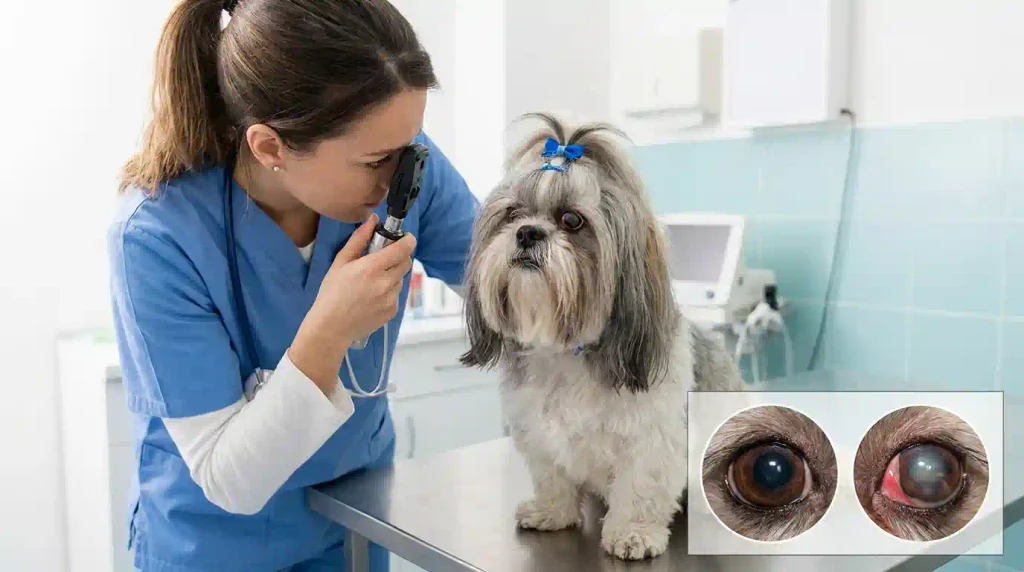
As your Shih Tzu gets older, you may notice cloudy eyes, increased discharge, squinting, or difficulty navigating unfamiliar areas.
Not every cloudy eye indicates blindness.
Age-related nuclear sclerosis, for example, can give the lens a bluish-gray appearance without causing the same visual impairment as advanced cataracts.
However, only a veterinary eye examination can distinguish these changes reliably.
Common senior Shih Tzu eye problems
Several conditions deserve particular attention.
Cataracts: Clouding of the lens can interfere with vision and may progress over time.
Glaucoma: Increased pressure within the eye can cause significant pain and rapid vision loss.
Dry eye: Keratoconjunctivitis sicca (KCS) occurs when tear production is inadequate. Symptoms may include thick discharge, redness, or irritation.
Corneal ulcers: Damage to the eye’s surface can cause squinting, watering, cloudiness, and pain.
Progressive retinal atrophy (PRA): Inherited retinal disease can cause gradual vision loss in affected dogs.
Distichiasis: Abnormally positioned eyelashes may irritate the cornea.
Epiphora: Excessive tearing can result from irritation, drainage abnormalities, or other eye conditions.
Proptosis: Displacement of the eyeball from its socket is a veterinary emergency.
These problems have different causes and treatments.
Any sudden change in eye appearance, apparent pain, or vision requires professional evaluation.
Daily eye checks and facial-hair care
Inspect your senior Shih Tzu’s eyes every day.
Look for redness, swelling, thick discharge, unusual cloudiness, or frequent rubbing.
Keep facial hair trimmed or secured so it doesn’t repeatedly touch the eyes.
For routine cleaning, use a clean, soft cloth or veterinary-approved wipe to remove discharge gently from the surrounding fur.
Avoid pressing on the eyeball.
Don’t use human eye drops, leftover veterinary medications, or home remedies without veterinary approval.
Eye pain can progress quickly, so prompt attention matters.
Dental disease, tooth loss, and difficulty eating
Dental disease is a major health concern for Shih Tzus.
A Royal Veterinary College VetCompass study identified periodontal disease as the breed’s most commonly recorded disorder, affecting 9.5% of the dogs studied within a year.
Small dogs can develop substantial plaque and tartar accumulation because of crowded teeth and other anatomical factors.
Signs of dental problems include:
- Persistent bad breath
- Red or bleeding gums
- Loose or missing teeth
- Dropping food while eating
- Chewing primarily on one side
- Pawing at the mouth
- Reluctance to eat hard kibble
- Facial swelling
Daily toothbrushing with dog-safe toothpaste is helpful when tolerated.
Dental chews may provide some support, but they cannot replace treatment for established periodontal disease.
A veterinarian may recommend a professional dental examination, cleaning, dental X-rays, or extractions when necessary.
Questions to ask before dental treatment or anesthesia
Some owners avoid dental procedures because their Shih Tzu is older.
However, advanced age alone does not automatically make anesthesia inappropriate.
The decision depends on overall health, airway anatomy, cardiac function, organ health, and the expected benefits of treatment.
Before a dental procedure, ask your veterinarian:
- What dental problems require treatment?
- What pre-anesthetic bloodwork or imaging is recommended?
- How will the team manage brachycephalic airway risks?
- Will blood pressure, oxygen levels, and other vital signs be monitored?
- How will pain be controlled during and after treatment?
- What recovery support will my dog need?
Painful dental disease can significantly affect quality of life, so decisions should balance the risks of anesthesia against the risks of leaving disease untreated.
Breathing changes and brachycephalic airway concerns
Shih Tzus have a brachycephalic, or short-muzzled, head shape.
Some develop brachycephalic obstructive airway syndrome (BOAS), which may involve narrowed nostrils (stenotic nares), an elongated soft palate, or other airway abnormalities.
Common warning signs include noisy breathing, reduced exercise tolerance, heat sensitivity, and excessive panting.
Aging, weight gain, and other illnesses can complicate existing breathing difficulties.
Keep your senior Shih Tzu cool, avoid strenuous activity during hot or humid weather, and use a comfortable harness when walking.
Persistent respiratory noise or new breathing changes deserve veterinary assessment.
Severe breathing difficulty, collapse, or blue-gray gums require emergency care.
Arthritis, luxating patella, and other mobility problems
Joint and spinal problems may become increasingly noticeable as your Shih Tzu ages.
Osteoarthritis causes joint pain, stiffness, and reduced mobility.
Luxating patella occurs when the kneecap moves out of its normal position, potentially causing skipping, limping, or discomfort.
Hip dysplasia can affect hip-joint stability and contribute to pain in affected dogs.
Intervertebral disc disease (IVDD) involves problems with the cushioning discs between vertebrae and may cause back pain, weakness, or neurological deficits.
Signs of mobility problems include hesitation before jumping, stiffness after sleeping, difficulty climbing stairs, or reluctance to exercise.
These changes should not be dismissed as normal aging.
Veterinary pain management, weight control, physical rehabilitation, and home modifications can improve comfort for many affected dogs.
Sudden paralysis, severe spinal pain, or an inability to walk warrants emergency veterinary care.
Kidney disease and changes in thirst or urination
Chronic kidney disease becomes an important consideration in older dogs.
The kidneys help regulate fluid balance, remove waste products, and maintain electrolyte levels.
Potential warning signs include increased thirst, more frequent urination, reduced appetite, nausea, and gradual weight loss.
Some Shih Tzus may also have kidney disorders associated with developmental or inherited abnormalities, including renal dysplasia.
Your veterinarian may use blood chemistry, creatinine, BUN, SDMA, urinalysis, blood pressure, and other tests to assess kidney function.
Treatment depends on the diagnosis and severity.
Do not restrict drinking water or introduce a kidney diet without veterinary guidance.
Heart disease, including mitral valve disease, can also become more relevant with age. New coughing, fainting, increased resting breathing rate, or reduced stamina deserves assessment. Thyroid and liver disorders are additional possibilities when weight, appetite, or energy changes unexpectedly.
Allergies, skin conditions, and ear problems
Shih Tzus have dense coats, facial folds, and ear canals that require regular attention.
Older dogs may experience worsening skin irritation or have greater difficulty tolerating grooming.
Watch for persistent scratching, redness, dry skin, unpleasant odors, recurrent ear discharge, or coat matting.
Allergies, bacterial infections, yeast overgrowth, and other dermatological conditions can cause similar symptoms.
Keep facial folds clean and dry, check the ears regularly, and use veterinary-approved grooming products.
Avoid inserting cotton swabs deeply into the ear canal.
Persistent itching, painful ears, or foul-smelling discharge requires veterinary examination.
Hearing loss and cognitive changes
Some older Shih Tzus gradually lose hearing or develop changes in cognitive function.
Hearing loss may become noticeable when your dog stops responding to familiar sounds or becomes startled when approached from behind.
Canine cognitive dysfunction syndrome (CDS), sometimes compared with dementia in humans, can cause changes in memory, awareness, sleep patterns, and behavior.
Signs may include:
- Becoming confused in familiar rooms
- Pacing or wandering
- Increased nighttime activity
- Staring at walls
- Changes in social interaction
- Forgetting established routines
- New house-soiling behavior
These symptoms can also result from pain, sensory decline, urinary disease, or other conditions.
A veterinary assessment is essential before assuming your dog has cognitive dysfunction.
Lumps, bumps, and other changes in the skin
Older dogs commonly develop skin masses, but their appearance alone cannot reliably establish whether they are harmless.
Some lumps are benign fatty growths, while others may require treatment.
Check your dog’s body during grooming and note any new swelling.
Record the lump’s location, approximate size, color, and whether it changes.
Seek veterinary attention for rapidly growing, bleeding, painful, ulcerated, or newly discovered masses.
Your veterinarian may recommend fine-needle aspiration or additional testing rather than relying on appearance alone.
Nutrition, Hydration, and Weight for an Older Shih Tzu
Choosing food for changing senior needs
Nutrition is a major part of senior Shih Tzu care.
As activity levels and muscle condition change, the ideal food and calorie intake may also change.
A suitable diet should provide complete and balanced nutrition while considering your dog’s weight, digestion, dental health, and existing medical conditions.
Important nutritional considerations include:
- Adequate high-quality protein
- Appropriate calorie density
- Essential fatty acids
- Vitamins and minerals in balanced amounts
- Good digestibility
- A texture your dog can comfortably eat
If your Shih Tzu has kidney disease, heart disease, urinary problems, or another condition requiring dietary management, your veterinarian may recommend a specific therapeutic diet.
Does every senior Shih Tzu need senior dog food?
No. Not every older Shih Tzu requires a food marketed specifically for seniors.
In the United States, the Association of American Feed Control Officials (AAFCO) does not establish a separate standardized nutritional adequacy life stage called “senior.”
Many senior dog foods are formulated for adult maintenance but differ in calorie density, protein, fiber, or other nutrients.
The best dog food for a senior Shih Tzu is therefore the food that meets that individual dog’s nutritional and medical needs.
For example:
| Senior Shih Tzu condition | Dietary consideration |
| Healthy weight and good muscle condition | Complete, balanced adult diet may remain suitable |
| Overweight | Carefully controlled calories with adequate nutrition |
| Losing muscle | Sufficient protein and calories based on veterinary assessment |
| Dental discomfort | Appropriate softer texture and dental treatment |
| Kidney disease | Veterinarian-directed renal nutrition when indicated |
| Poor appetite | Evaluate the cause and adjust feeding under guidance |
Avoid switching diets solely because your dog has reached a particular birthday.
How to monitor body condition and muscle condition
Body Condition Score (BCS) estimates body-fat coverage, while Muscle Condition Score (MCS) evaluates muscle mass.
Both are important in senior dogs.
An older Shih Tzu may lose muscle even while maintaining the same weight.
Look for:
- Ribs that are difficult or unusually easy to feel
- Changes in waist definition
- Reduced muscle around the shoulders or spine
- Prominent bones
- Loss of strength
- Unexplained weight gain or weight loss
A veterinarian can help establish a healthy target body condition.
If weight gain is becoming a concern, our guide to an overweight Shih Tzu explains body-condition scoring, feeding adjustments, and safe weight-management strategies.
Adjusting calories while preserving muscle and nutrition
Older dogs may need fewer calories as their activity decreases, but they still require adequate essential nutrients.
Muscle loss associated with aging is known as sarcopenia.
Simply feeding much less food can make nutritional deficiencies or muscle loss worse.
Protein requirements also depend on the dog’s health.
For example, a healthy senior with muscle loss may benefit from a diet providing appropriate high-quality protein, while certain medical conditions require specialized nutritional management.
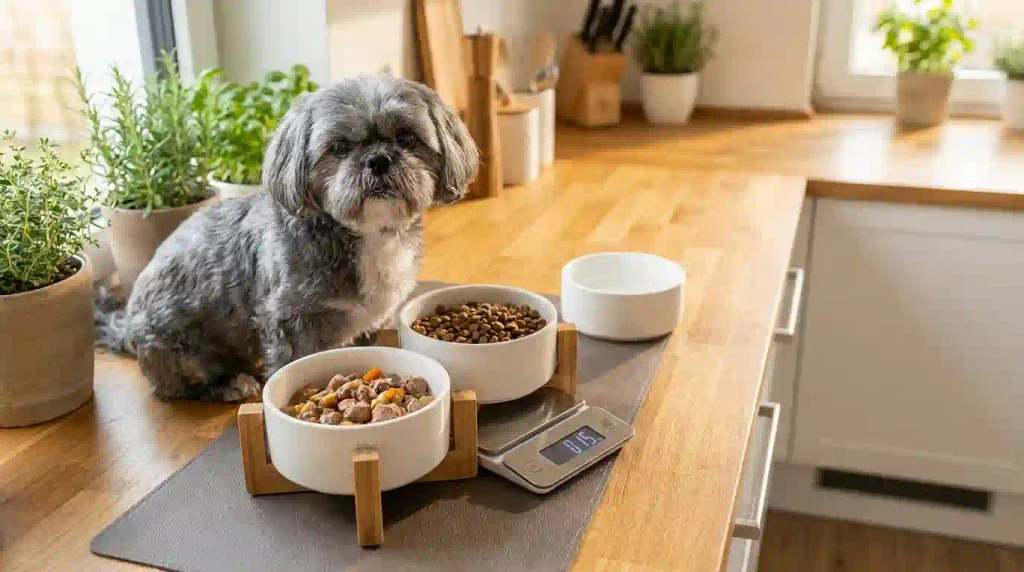
Measure food portions accurately and include treats, toppers, and dental chews in the total daily intake.
Avoid crash diets or severe food restriction.
Monitoring weight gain, weight loss, and appetite changes
Weigh your senior Shih Tzu regularly using a consistent scale.
Monthly monitoring may be appropriate for a stable dog, while dogs with medical conditions may require more frequent checks.
Keep a written record so gradual trends are easier to notice.
| Change | Possible considerations |
| Gradual weight gain | Excess calories, reduced activity, or illness |
| Unexpected weight loss | Dental pain, digestive disease, organ disease, or other illness |
| Increased appetite | Dietary changes, medications, or endocrine conditions |
| Reduced appetite | Pain, nausea, dental problems, or systemic illness |
| Difficulty chewing | Dental disease or oral discomfort |
These changes do not establish a diagnosis.
Unexpected or persistent appetite and weight changes should be assessed by your veterinarian.
Supporting hydration and noticing changes in drinking
Fresh drinking water should always be accessible.
Older dogs with mobility problems may struggle to reach distant water bowls.
Consider placing stable, shallow bowls in more than one convenient location.
Monitor whether your dog begins drinking noticeably more or less than usual.
Increased thirst can be associated with kidney disease, diabetes, medication effects, and several other conditions.
Dehydration can become serious, particularly when accompanied by vomiting, diarrhea, weakness, or poor appetite.
If your senior Shih Tzu is not drinking normally or appears unwell, contact your veterinarian promptly.
Feeding a senior Shih Tzu with dental problems
Dental discomfort can make hard kibble difficult to chew.
Depending on the dog’s needs, your veterinarian may recommend wet food, an appropriately softened diet, or a different food texture.
Adding a small amount of warm water to kibble can help soften it for some dogs, provided the food is handled safely and does not remain unrefrigerated for prolonged periods.
However, softer food does not treat infected teeth or painful gums.
A dog that suddenly refuses hard food needs an oral examination rather than only a permanent change in food texture.
Exercise, Mobility, and Joint Support
Adapting walks and activity to your dog’s abilities
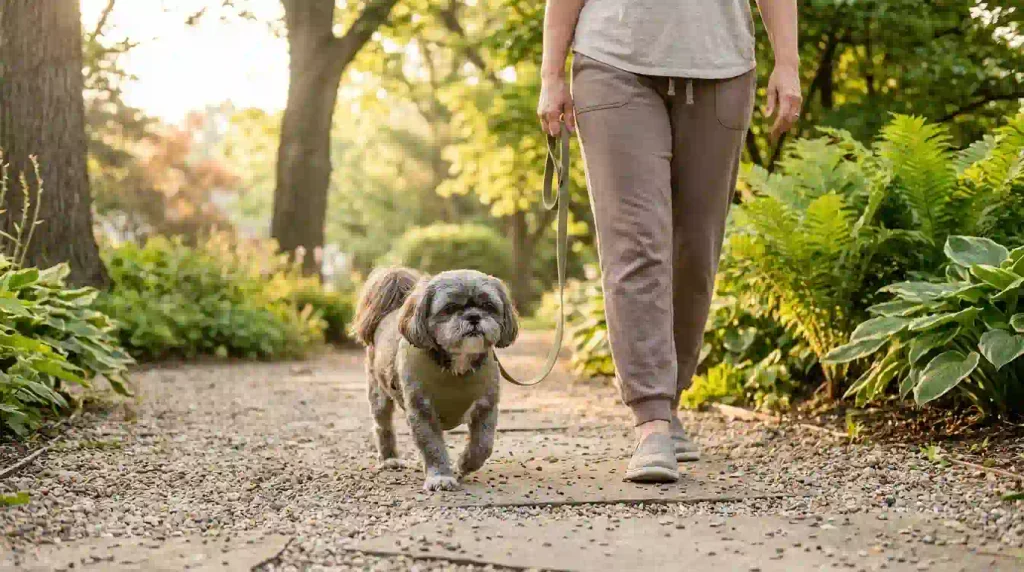
Senior Shih Tzus still benefit from physical activity, but exercise should match their individual abilities.
An older Shih Tzu that previously enjoyed long walks may now prefer shorter outings.
For a dog with good mobility and normal breathing, several comfortable walks throughout the day may be easier than one extended session.
A possible routine includes a gentle morning walk, a short afternoon outing, and a relaxed evening bathroom break.
These are examples, not fixed exercise requirements.
Monitor breathing, fatigue, weather conditions, and recovery after activity.
Avoid forcing your dog to continue when uncomfortable.
Maintaining muscle and movement with gentle exercise
Appropriate movement helps preserve muscle tone and supports joint function.
Low-impact activities may include:
- Short walks on level ground
- Gentle indoor play
- Slow exploration of familiar areas
- Comfortable movement around the home
- Veterinary-directed rehabilitation exercises
Physical therapy can be particularly useful for dogs recovering from injuries or managing chronic mobility conditions.
A veterinary rehabilitation professional may recommend exercises designed to improve balance, strength, and movement.
Avoid attempting difficult balance exercises or stretching painful joints without professional instruction.
Supporting joints and discussing supplements with your veterinarian
Joint supplements are widely marketed for senior dogs, but their effectiveness varies.
Common ingredients include:
Glucosamine and chondroitin: Popular joint-support ingredients, although clinical evidence for meaningful pain relief in canine osteoarthritis is inconsistent.
Omega-3 fatty acids: Marine-derived EPA and DHA have evidence supporting their use in some dogs with osteoarthritis when provided at appropriate veterinary-recommended amounts.
MSM: Methylsulfonylmethane is included in some joint products, but convincing clinical evidence for dogs remains limited.
Supplements should not replace diagnosis, appropriate pain medication, weight management, or rehabilitation.
Similarly, nutrients such as beta-carotene and vitamin A are important in normal nutrition, but adding extra doses has not been established as a routine treatment for canine aging or cognitive decline.
Excess vitamin A can be harmful.
Discuss all supplements with your veterinarian, particularly if your Shih Tzu takes prescription medications or has chronic kidney, liver, or heart disease.
Never give human pain relievers such as ibuprofen or naproxen without veterinary direction; they can be dangerous to dogs.
Recognizing pain, stiffness, and reduced exercise tolerance
Dogs don’t always cry or whine when they are uncomfortable.
Subtle pain signs may include:
- Sleeping more than usual
- Taking longer to stand
- Walking with a stiff gait
- Avoiding stairs
- Reluctance to jump
- Becoming irritable when handled
- Licking a painful area repeatedly
- Difficulty finding a comfortable sleeping position
- Reduced interest in favorite activities
A decrease in exercise tolerance can also reflect respiratory or heart disease.
Your veterinarian can help determine whether pain, breathing problems, or another condition is responsible.
Track changes in comfort, movement, and daily activities
Maintaining a simple mobility record makes it easier to recognize gradual changes.
| Activity | What to observe |
| Standing after sleep | Does your dog rise comfortably? |
| Walking | Any limping, stiffness, or hesitation? |
| Climbing steps | Does your dog avoid or struggle with them? |
| Resting | Can your dog settle and sleep comfortably? |
| Eating | Can your dog reach the food bowl easily? |
| Bathroom trips | Can your dog squat or posture without pain? |
| Playing | Does your dog still show interest? |
Record observations once or twice each week, or more frequently if advised.
Videos taken under similar conditions can be particularly useful when discussing treatment effectiveness with your veterinarian.
Grooming and Daily Care for a Senior Shih Tzu
Adapting brushing, bathing, and grooming sessions
A senior Shih Tzu still needs regular grooming, but the routine may need adjustment.
Long grooming sessions can become tiring for dogs with arthritis, breathing difficulties, or reduced stamina.
Try dividing brushing into shorter sessions.
Use gentle handling and allow frequent breaks.
A shorter puppy cut may make coat maintenance easier, although the ideal coat length depends on your dog’s comfort and the local climate.
When bathing, use lukewarm water, non-slip footing, and dog-safe shampoo.
Avoid overheating, prolonged restraint, and stressful grooming positions.
Caring for the skin, coat, face, and ears
The Shih Tzu’s double coat can trap tangles and debris.
Regular brushing helps prevent mats that pull on the skin and cause discomfort.
Pay attention to areas behind the ears, under the legs, and around the collar or harness.
Keep facial folds clean and dry.
Inspect the ears for redness, unusual discharge, or unpleasant odor.
Age-related changes in skin or coat quality may also reflect allergies, thyroid disease, poor nutrition, or other medical conditions.
Persistent skin irritation should be evaluated rather than repeatedly treated with different grooming products.
Checking paws and keeping nails at a comfortable length
Older dogs may wear down their nails less naturally because they walk shorter distances.
Overgrown nails can alter how a dog places its paws and may make walking uncomfortable.
Check nail length regularly and trim carefully with suitable clippers or a grinder.
If your dog dislikes nail trimming, ask a groomer or veterinary professional for assistance.
Also inspect the paw pads for cracks, irritation, and foreign material.
Keep excessive fur between the paw pads trimmed when necessary to improve traction.
Making daily routines easier for a dog with less stamina
Consider scheduling grooming after your dog has rested.
Offer water and a comfortable place to lie down.
Use padded, non-slip surfaces and avoid lifting your dog unnecessarily.
If lifting is required, support both the chest and hindquarters while keeping the spine comfortably aligned.
Senior grooming should prioritize health, cleanliness, and comfort rather than maintaining an elaborate coat style.
Making Your Home Safer and More Comfortable
Improving footing and access with ramps, steps, and gates
Many senior Shih Tzus begin struggling with slippery floors, high furniture, and stairs.
Simple home modifications can reduce physical strain.
Consider:
- Non-slip rugs or runners
- Secure pet ramps
- Low, stable steps where appropriate
- Safety gates near dangerous staircases
- Clear walking paths
- Raised or repositioned feeding areas when recommended
- Accessible resting areas on the main floor
Ramps should have a gentle slope and secure footing.
A dog with significant spinal or joint disease may still need help using a ramp.
Train your Shih Tzu gradually rather than assuming they will immediately understand new equipment.
Choosing supportive bedding and a comfortable sleeping area
A supportive bed can make resting easier for an elderly Shih Tzu.
Look for a bed with:
- Comfortable cushioning
- A low entrance
- Washable covers
- Stable, non-slip placement
- Enough space to stretch and change positions
- Appropriate temperature control
An orthopedic bed may help distribute pressure more comfortably for a dog with joint problems.
Avoid placing bedding directly beside strong heating sources or in areas that become excessively hot.
Brachycephalic dogs can be particularly sensitive to heat.
Helping a dog with vision or hearing loss navigate the home
Vision and hearing changes can make familiar surroundings more challenging.
If your older Shih Tzu has reduced vision, avoid frequently rearranging furniture.
Keep food, water, and sleeping areas in consistent locations.
Use gates to block stairs or unsafe areas.
Soft lighting or motion-sensing lights may help dogs with some remaining vision navigate at night.
For hearing loss, approach within your dog’s field of view and use predictable hand signals.
Avoid startling the dog with unexpected touching.
A stable environment can reduce confusion and anxiety.
Accommodating more frequent bathroom needs
Some senior dogs need more frequent opportunities to urinate or defecate.
Others may develop incontinence because of medical or neurological problems.
Offer predictable bathroom breaks and easy outdoor access.
For dogs that struggle with stairs, consider a convenient ground-level route.
Washable pads and appropriately fitted dog diapers may be useful in selected situations, but diapers must be changed promptly to avoid skin irritation.
New accidents should trigger veterinary assessment rather than punishment.
Urinary infections, diabetes, kidney disease, pain, and cognitive dysfunction are among the possible causes.

Mental Stimulation and Emotional Well-Being
Using gentle play, puzzle toys, and familiar routines
Mental stimulation remains valuable throughout a Shih Tzu’s senior years.
Even dogs with reduced mobility may enjoy activities that engage their senses and attention.
Try simple activities such as:
- Easy food puzzles
- Snuffle mats
- Gentle scent-finding games
- Short training sessions
- Exploring new but safe smells
- Familiar interactive toys
Choose activities that do not require excessive physical effort.
For dogs with dental pain, avoid hard chew toys.
For dogs with vision problems, select familiar, easy-to-locate toys.
If using food rewards, include their calories in the daily feeding plan.
Keeping a predictable daily routine can also support confidence and reduce stress.
Supporting social interaction and companionship
Shih Tzus are companion dogs, and many enjoy close contact with their families.
A senior dog may no longer want energetic play but still appreciate sitting nearby, gentle attention, and familiar interactions.
Allow your dog to choose when to participate.
Some elderly dogs become less tolerant of noise or rough handling because of pain or sensory changes.
Provide a quiet resting area where children and other pets won’t disturb them.
If your Shih Tzu suddenly becomes withdrawn, unusually anxious, or confused, discuss the change with your veterinarian.
Emotional well-being depends partly on physical comfort, so behavioral changes deserve the same attention as other symptoms.
End-of-Life Care and Quality-of-Life Decisions
Recognizing signs of declining comfort or quality of life
Caring for a very old Shih Tzu may eventually involve decisions about advanced illness, chronic pain, and quality of life.
The goal is to understand whether your dog can still experience comfort, enjoyment, and meaningful daily interactions.
Possible signs of declining quality of life include:
- Persistent pain despite treatment
- Severe or ongoing breathing difficulty
- Inability to eat adequately
- Repeated dehydration
- Inability to rest comfortably
- Major mobility limitations
- Loss of interest in previously enjoyed activities
- Significant anxiety or confusion
- Increasingly frequent difficult days
One symptom does not automatically mean that end-of-life care is necessary.
Many problems can be treated or managed.
However, a combination of persistent symptoms may signal that your dog’s care plan needs reassessment.
Use a quality-of-life log to guide care discussions
A daily quality-of-life log can provide a clearer picture than relying on memory alone.
One commonly used veterinary framework is the HHHHHMM scale, which considers hurt, hunger, hydration, hygiene, happiness, mobility, and whether there are more good days than bad.
You can also use a simple home tracking table.
| Area | Daily question |
| Pain and comfort | Does my dog appear comfortable at rest? |
| Appetite | Is my dog eating enough? |
| Hydration | Is my dog drinking and staying hydrated? |
| Hygiene | Can my dog remain clean and dry? |
| Mobility | Can my dog move or receive assistance comfortably? |
| Enjoyment | Does my dog still respond positively to favorite activities? |
| Overall day | Was today mostly good, mixed, or difficult? |
Record a short note each evening.
Look for patterns rather than judging the situation from a single bad day.
This log can support discussions with your veterinarian, but it is not a diagnostic tool or a substitute for professional assessment.
Discussing care options and decisions with your veterinarian
When a Shih Tzu develops a serious or progressive condition, veterinary support can help clarify available options.
These may include:
Medical management: Treatment for pain, breathing problems, infections, or chronic disease.
Palliative care: Care focused on symptom relief and comfort, even when a condition cannot be cured.
Hospice care: Individualized support for a dog approaching the end of life.
Humane euthanasia: A veterinary option when suffering can no longer be adequately controlled and a peaceful death is considered the most compassionate choice.
Ask your veterinarian about expected disease progression, treatment benefits, potential side effects, and signs that comfort is deteriorating.
There is no universal age at which a Shih Tzu should stop receiving treatment.
A 17-year-old Shih Tzu may still have treatable problems, while a younger dog may face a severe illness.
The most appropriate decisions consider the individual animal’s condition, comfort, and family circumstances.
Frequently Asked Questions About Senior Shih Tzus
At what age does a Shih Tzu become a senior?
Many Shih Tzus begin senior monitoring around 8–10 years old, although senior status depends on the individual’s health and expected lifespan.
How often should a senior Shih Tzu see the veterinarian?
Most senior Shih Tzus benefit from wellness examinations approximately every six months, with additional visits for chronic conditions or new symptoms.
What health changes should I watch for as my Shih Tzu ages?
Watch for appetite or weight changes, dental pain, vision loss, breathing difficulty, stiffness, increased thirst, confusion, or reduced mobility.
Should I switch my Shih Tzu to senior dog food?
Not automatically; the best diet depends on body condition, muscle mass, calorie needs, existing diseases, and your veterinarian’s recommendation.
How much exercise does an older Shih Tzu need?
Provide regular gentle activity that matches your dog’s breathing, comfort, and mobility, using shorter sessions and rest breaks when needed.
Final Thoughts
Caring for a senior Shih Tzu is about adapting to your dog’s changing needs while protecting the comfort, companionship, and daily routines that make life enjoyable. Whether your Shih Tzu is 10, 13, 15, or even 17 years old, age alone does not determine their health or quality of life.
Regular veterinary examinations, balanced nutrition, gentle exercise, attentive grooming, and a comfortable home can help you recognize problems early and support your dog’s well-being.
Pay attention to small changes, maintain familiar routines, and seek veterinary advice when something seems unusual.
For more practical information about Shih Tzu health and development, explore our Shih Tzu resources and visit Shih Tzu Growth & Life Stages for additional guidance through every stage of your companion’s life.