
Shih Tzu Lifespan: How Long Do Shih Tzus Live?
The Shih Tzu life span typically ranges from 10 to 18 years, making this affectionate toy breed one of the longer-lived companion dogs. But how long do Shih Tzus live on average, and what can you do to help yours enjoy a healthier life? According to research published by the Royal Veterinary College in 2024, the median age at death among Shih Tzus studied in the United Kingdom was 12.7 years. While some Shih Tzus live beyond 16 or even 18 years, their longevity depends on genetics, body condition, nutrition, preventive veterinary care, and individual health conditions. As a small, short-muzzled breed, the Shih Tzu also faces specific health concerns involving breathing, dental disease, eyes, and joints. Understanding these risks—and knowing when to seek veterinary attention—can help you protect your dog’s well-being at every age. Whether you’re welcoming a Shih Tzu puppy, caring for an adult dog, or supporting a senior companion, this guide explains lifespan statistics, common causes of death, signs of aging, and evidence-based ways to support a long, comfortable life.
Table of Contents
- Shih Tzu Lifespan at a Glance
- What Affects a Shih Tzu’s Lifespan?
- Which Lifespan Factors Have Strong Evidence?
- Health Conditions That Can Affect Shih Tzu Longevity
- Leading Causes of Death in Shih Tzus
- Shih Tzu Life Stages and Senior Age
- How to Assess Your Shih Tzu’s Health as They Age
- How to Help Your Shih Tzu Live a Longer, Healthier Life
- Estimating a Shih Tzu’s Age
- Frequently Asked Questions About Shih Tzu Lifespan
- Final Thoughts
Shih Tzu Lifespan at a Glance
Typical lifespan range and average age
Shih Tzus generally live longer than many medium-sized and large dog breeds. Their compact body size is one reason they are often associated with relatively long lifespans.
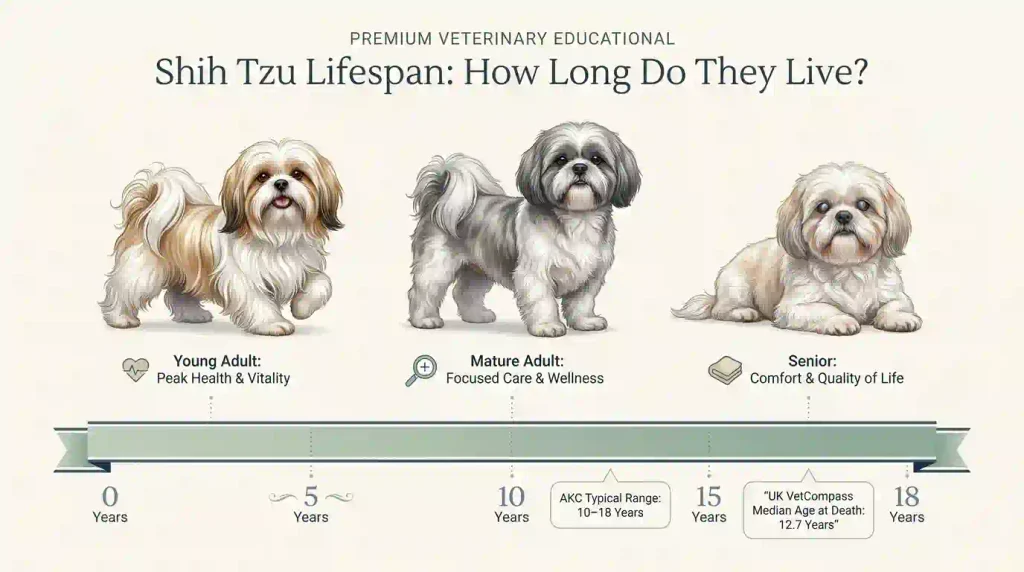
The American Kennel Club (AKC) lists the typical Shih Tzu lifespan as 10–18 years.
However, that range should not be confused with a scientifically measured average age at death.
A 2024 Royal Veterinary College (RVC) VetCompass study reported a median age at death of 12.7 years among Shih Tzus whose deaths were recorded in the study.
The table below summarizes important lifespan information.
| Shih Tzu lifespan factor | Information |
| Breed | Shih Tzu |
| Size classification | Small/toy breed |
| AKC typical lifespan | 10–18 years |
| UK VetCompass median age at death | 12.7 years |
| VetCompass middle 50% of recorded death ages | 8.7–14.3 years |
| Adult breed-standard weight | 9–16 lb (4.1–7.3 kg) |
| Common senior-monitoring age | Approximately 8–10 years, individualized |
| Lifespan beyond 18 years | Possible, but uncommon |
| Major health priorities | Dental, eye, respiratory, joint, and age-related health |
These figures provide a useful starting point, but no statistical estimate can tell you exactly how long your individual Shih Tzu will live.
Average lifespan versus median age at death
When researching the average lifespan of a Shih Tzu, you’ll often encounter the terms average lifespan, median lifespan, and life expectancy.
Although websites sometimes use them interchangeably, they have different statistical meanings.
Average age at death (mean)
The mean is calculated by adding the ages at death of all dogs in a study and dividing by the number of dogs.
For example, if five dogs died at ages 10, 11, 12, 13, and 19, their mean age at death would be 13 years.
Median age at death
The median is the middle value after arranging recorded death ages from youngest to oldest.
Using the same five dogs, the median would be 12 years.
Life expectancy at birth
Life expectancy at birth estimates how long a newborn is expected to live based on the mortality patterns observed in a population.
It is not necessarily the same as the average age at death among dogs recorded in a particular study.
Remaining life expectancy
Remaining life expectancy describes the estimated additional lifespan for an animal that has already reached a particular age.
This distinction matters for older dogs.
A healthy 14-year-old Shih Tzu has already survived beyond the median age at death reported in the UK study. That does not mean the dog has exceeded a predetermined lifespan or is expected to die immediately.
What lifespan studies and breed estimates tell us
Several authoritative sources provide valuable information about Shih Tzu longevity.
American Kennel Club
The AKC gives a broad expected lifespan range of 10–18 years.
This is useful for prospective owners who want a general understanding of how long the breed may live.
Royal Veterinary College VetCompass
A 2024 study by Dale and colleagues analyzed veterinary records from 11,082 Shih Tzus in the United Kingdom.
The researchers reported:
- Median age at death: 12.7 years.
- Interquartile range: 8.7–14.3 years.
- Recorded age-at-death range: 2.0–19.9 years.
- No statistically significant difference in median age at death between males and females.
Of the dogs included in the overall study population, 89 deaths were recorded, and 85 had a known age at death.
The research was published in Canine Medicine and Genetics and provides valuable breed-specific evidence.
You can examine the original Royal Veterinary College Shih Tzu mortality study for the study methods and detailed findings.
Dogs Trust longevity research
A separate large UK study published in 2024 examined longevity across numerous breeds and found that smaller dogs generally lived longer than larger dogs.
It also highlighted the importance of body size, skull shape, breed, and individual variation in canine longevity.
Together, these sources provide a stronger understanding of Shih Tzu life expectancy than personal anecdotes alone.
Why Shih Tzu lifespan estimates differ
You might see one source suggesting that Shih Tzus live approximately 11 years, another reporting 12.7 years, and another describing a lifespan range of 10–18 years.
These figures are not necessarily contradictory.
Differences may reflect:
Study populations: Some researchers analyze dogs attending veterinary practices, while others use insurance records, death registrations, or owner surveys.
Geographical differences: Dogs living in the United States, United Kingdom, Japan, or other countries may experience different environments, healthcare access, and population characteristics.
Study periods: Data collected in earlier decades may not reflect current veterinary care or breeding practices.
Statistical methods: A median age at death, a calculated life expectancy at birth, and a broad breed estimate measure different things.
Sample sizes: Small numbers of recorded deaths can produce less stable estimates than large, representative datasets.
For example, the RVC’s 12.7-year figure represents the median age at death among Shih Tzus with known death ages in that study, rather than an exact prediction for every dog born today.
What U.S. and UK lifespan data can—and cannot—tell you
For American readers, the AKC’s 10–18-year range is a convenient breed-level reference.
The UK VetCompass research provides more detailed statistical evidence about recorded deaths and health conditions.
However, a UK veterinary study should not automatically be treated as a direct measurement of Shih Tzu life expectancy in the United States.
Different populations may vary in:
- Veterinary access and preventive care
- Breeding practices
- Neutering patterns
- Environmental conditions
- Causes of injury and illness
- Owner decisions regarding medical treatment
- Reporting and recordkeeping methods
The University of Georgia also published an influential North American canine mortality study in 2011.
That research examined nearly 75,000 dog deaths recorded between 1984 and 2004 and investigated differences associated with age, size, and breed.
It provides useful information about broader mortality patterns, but its historical referral-based population should not be used as a direct modern estimate of the Shih Tzu’s average lifespan.
The most reliable interpretation combines breed-specific research with current veterinary recommendations and the health of the individual dog.
How Shih Tzu longevity compares with other dog breeds
Shih Tzus belong to the toy group and generally have a longer expected lifespan than many large and giant breeds.
Small dogs frequently live into their teens, while some large breeds have shorter average lifespans.
The following table provides a general breed comparison using commonly published AKC lifespan ranges.
| Dog breed | Typical lifespan |
| Shih Tzu | 10–18 years |
| Chihuahua | 14–16 years |
| Maltese | 12–15 years |
| Yorkshire Terrier | 11–15 years |
| Pomeranian | 12–16 years |
| Labrador Retriever | 11–13 years |
| Great Dane | 7–10 years |
These ranges are general breed estimates, not results from one standardized comparative study.
A particularly healthy large dog may outlive a Shih Tzu with serious inherited disease.
Likewise, some Shih Tzus may reach 18 years or more, while others develop life-limiting conditions much earlier.
Are reports of extremely long-lived Shih Tzus verified?
Stories about exceptionally old Shih Tzus often attract attention online.
One widely reported example is Smokey, a Shih Tzu from St. Petersburg, Florida, whose owners reported that he was 23 years old in 2009.
News reports stated that veterinary records supported his reported birth date of January 18, 1986.
However, historical news coverage and veterinary records are not the same as an independently verified Guinness World Records title.
Smokey should therefore be described as a notably long-lived, reported Shih Tzu rather than unquestionably the oldest Shih Tzu ever.
The RVC study also recorded Shih Tzus living to advanced ages, with the oldest recorded age at death reaching 19.9 years.
Exceptional longevity is possible, but dogs living beyond 20 years are unusual.
For most owners, the goal should be maintaining good health and quality of life rather than reaching a particular record-breaking age.
What Affects a Shih Tzu’s Lifespan?
Genetics and inherited health risks
Genetics influence a Shih Tzu’s physical structure, susceptibility to certain diseases, and overall health.
Some inherited conditions may affect comfort or longevity, particularly when they involve breathing, eyes, kidneys, or the spine.
Examples include:
- Brachycephalic airway abnormalities
- Certain inherited eye disorders
- Renal dysplasia
- Patellar luxation
- Some spinal and orthopedic conditions
However, a genetic predisposition does not guarantee that an individual dog will develop a particular disease.
Responsible breeding practices can help reduce avoidable inherited health problems.
Prospective owners should look for breeders who prioritize functional breathing, eye health, sound structure, veterinary screening, and the welfare of breeding dogs.
Ask about the health histories of both parents and whether relevant examinations have been completed.
A breeder who focuses only on extremely small size, exaggerated facial features, or appearance without discussing health deserves careful scrutiny.
Body size, weight, and body condition
The relationship between size and longevity is one of the most widely studied patterns in dogs.
Small breeds often live longer than larger breeds, although the reasons are complex.
Within the Shih Tzu breed, body condition is particularly important.
The AKC lists a standard adult weight of 9–16 pounds, but this range does not automatically define the ideal weight for every individual.
Some healthy Shih Tzus are naturally larger.
Others may be overweight despite falling within the breed-standard range.
A veterinarian can assess body fat using a nine-point Body Condition Score (BCS).
Dogs with ideal body condition generally have ribs that can be felt easily, a visible waist, and an abdominal tuck.
Excess body fat may worsen mobility difficulties and breathing problems, especially in a short-muzzled breed.
If your dog is gaining weight, our overweight Shih Tzu guide explains body-condition scoring, healthy weight assessment, and safe weight management.
Nutrition and daily activity
Balanced nutrition supports growth, muscle maintenance, immune function, and general health.
Shih Tzus should receive complete and balanced food appropriate for their life stage and medical needs.
Puppies require growth nutrition, while adult dogs need appropriate calories to maintain a healthy body condition.
Senior dogs may need adjustments based on appetite, activity, muscle loss, or chronic disease.
Regular physical activity also contributes to well-being.
Daily walks, gentle indoor games, and mentally engaging activities can help maintain muscle and prevent excessive weight gain.
Because Shih Tzus are brachycephalic, exercise must account for heat sensitivity and possible breathing limitations.
Longer or more intense exercise is not necessarily better.
Consistent, comfortable activity is more valuable than pushing your dog beyond its physical tolerance.
Living environment and preventive care
A safe home environment can reduce exposure to avoidable injuries.
Shih Tzus are small dogs and may be vulnerable to falls, accidental injury, and dangerous interactions with much larger animals.
Important preventive measures include:
- Keeping toxic foods and medications out of reach
- Preventing access to unsafe balconies and staircases
- Supervising interactions with children and larger pets
- Securing outdoor areas
- Providing protection from extreme heat
- Using appropriate vehicle restraints
- Preventing access to swimming pools without supervision
- Maintaining vaccinations and parasite prevention
Indoor living may reduce certain environmental risks, but simply keeping a dog indoors does not guarantee a longer life.
Dogs still need exercise, social interaction, mental stimulation, and appropriate veterinary care.
Differences between individual dogs
Two Shih Tzus raised in similar homes may have very different lifespans.
One might remain active at 16 years old, while another develops serious illness at eight.
Factors such as genetics, disease history, body condition, environment, and individual biological variation can all influence outcomes.
Even excellent care cannot eliminate every disease or guarantee longevity.
Rather than treating lifespan as something completely within an owner’s control, it is more useful to focus on reducing avoidable health risks and providing appropriate support when problems occur.
Which Lifespan Factors Have Strong Evidence?
Established health risks and preventive care practices
Some health recommendations are supported by stronger scientific evidence than others.
Maintaining appropriate body condition
Long-term canine research has linked lean body condition and controlled feeding with improved longevity.
One influential study involving Labrador Retrievers found that dogs receiving a controlled, lower-calorie diet had a median lifespan approximately 1.8 years longer than comparison dogs.
However, this result should not be interpreted as proof that every Shih Tzu will live exactly 1.8 years longer after losing weight.
The study involved another breed under controlled conditions.
Providing appropriate veterinary care
Vaccinations, parasite prevention, treatment of painful dental disease, and timely evaluation of illness are established components of canine healthcare.
Although individual interventions do not all have breed-specific lifespan estimates, they help prevent or manage recognized causes of illness and suffering.
Managing breed-specific health problems
Identifying airway disease, eye conditions, joint disorders, and other medical problems allows veterinarians to recommend appropriate treatment.
In some cases, early treatment may prevent serious complications.
Maintaining dental health
Research identifies periodontal disease as a common Shih Tzu health problem.
Regular oral examinations, appropriate dental treatment, and home toothbrushing can reduce discomfort and manage oral disease.
Claims about extending lifespan that need more evidence
Not every popular longevity recommendation has strong scientific support.
Be cautious of claims that:
- One particular supplement guarantees additional years of life.
- Grain-free food automatically increases Shih Tzu lifespan.
- Raw feeding prevents aging or cancer.
- A special vitamin combination reverses canine biological aging.
- Every neutered dog lives longer because of surgery alone.
- A specific breed haircut or grooming technique extends lifespan.
- An online lifespan calculator can predict a dog’s exact age at death.
Research on omega-3 fatty acids, antioxidants, glucosamine, and other supplements may support particular health applications, but this is different from proving that they extend lifespan in healthy Shih Tzus.
Similarly, dietary changes should be evaluated according to nutritional adequacy and the dog’s actual health needs.
A long life cannot be guaranteed through one food, supplement, procedure, or routine.
Health Conditions That Can Affect Shih Tzu Longevity
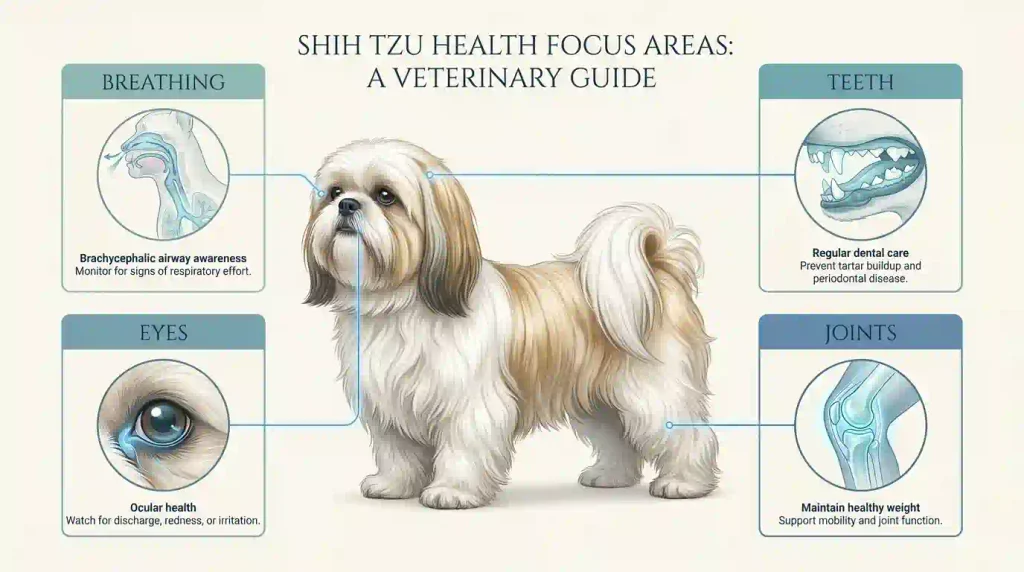
Brachycephalic airway problems and heat intolerance
Shih Tzus have short muzzles and relatively flat facial profiles.
This anatomy is described as brachycephaly.
Some dogs develop brachycephalic obstructive airway syndrome (BOAS), which can involve narrowed nostrils, excessive soft tissue within the upper airway, and other abnormalities.
Potential symptoms include:
- Noisy breathing
- Difficulty exercising
- Excessive panting
- Trouble recovering after activity
- Sleep-related breathing problems
- Heat intolerance
- Respiratory distress
Not every Shih Tzu has clinically significant BOAS.
However, the condition should not be dismissed as normal simply because noisy breathing is common in short-muzzled breeds.
Excess weight and hot weather may worsen existing breathing difficulties.
Use a well-fitting harness, provide cooling and shade, and avoid strenuous activity in hot or humid weather.
A veterinarian can assess whether airway treatment is appropriate.
Emergency warning: Severe breathing difficulty, blue or gray gums, collapse, or inability to recover from overheating requires immediate veterinary emergency care.
Dental and periodontal disease
Dental disease is one of the most important health concerns in Shih Tzus.
The 2024 RVC VetCompass study identified periodontal disease in 9.5% of the sampled Shih Tzus during the study period, making it the most frequently recorded specific disorder.
Small mouths and crowded teeth can contribute to plaque accumulation and periodontal problems.
Common symptoms include:
- Persistent bad breath
- Red or bleeding gums
- Loose teeth
- Difficulty chewing
- Dropping food
- Facial swelling
- Reduced appetite
Untreated periodontal disease can cause significant pain, infection, and tooth loss.
Daily brushing with dog-safe toothpaste helps reduce plaque.
However, established dental disease may require professional veterinary treatment, including dental cleaning under anesthesia, dental X-rays, and extractions when necessary.
Age alone should not automatically prevent a dog from receiving needed dental care; the veterinarian should assess anesthetic risk individually.
Eye conditions
Shih Tzus have prominent eyes, making eye health particularly important.
Some eye conditions can cause severe pain or threaten vision.
Dry eye (keratoconjunctivitis sicca or KCS): Reduced tear production can cause irritation, thick discharge, and corneal damage.
Corneal ulcers: Damage to the eye’s surface can cause squinting, cloudiness, redness, and discomfort.
Proptosis: Displacement of the eyeball from the socket is an emergency requiring immediate veterinary attention.
Cataracts: Clouding of the lens can interfere with vision.
Progressive retinal atrophy (PRA): Certain inherited retinal disorders can lead to gradual vision loss.
Retinal detachment: Separation of the retina from its supporting tissues can cause sudden visual impairment and requires prompt investigation.
Keep facial hair away from the eyes and inspect them regularly.
Sudden redness, pain, squinting, or a cloudy eye should never be treated as a minor cosmetic problem.
Joint and spinal problems
Orthopedic and spinal conditions can affect mobility and quality of life.
Patellar luxation occurs when the kneecap shifts from its normal position.
Affected dogs may skip while walking, limp intermittently, or develop chronic discomfort.
Hip dysplasia can cause abnormal hip-joint development and subsequent arthritis.
Intervertebral disc disease (IVDD) involves problems with the discs between vertebrae and may cause pain, weakness, or neurological deficits.
As Shih Tzus age, osteoarthritis may also contribute to stiffness and reduced activity.
Signs of problems include:
- Hesitation before jumping
- Difficulty using stairs
- Stiffness after resting
- Limping
- Reluctance to walk
- Sensitivity when lifted
- Sudden weakness or difficulty standing
Veterinary pain management, rehabilitation, appropriate weight control, and environmental modifications can improve comfort.
Sudden inability to walk, severe spinal pain, or paralysis requires emergency evaluation.
Kidney, heart, and other age-related conditions
Older Shih Tzus may develop health problems affecting internal organs.
Kidney disease
Chronic kidney disease can cause increased thirst, frequent urination, reduced appetite, vomiting, and weight loss.
Renal dysplasia is a developmental kidney disorder that can affect some Shih Tzus.
Veterinarians may use bloodwork, urinalysis, blood pressure screening, and imaging to evaluate kidney function.
Heart disease
Mitral valve disease and other cardiac disorders can affect small, aging dogs.
Signs may include coughing, reduced stamina, fainting, or increased breathing effort.
Not every heart murmur indicates heart failure, but a new murmur or concerning symptom deserves professional assessment.
Hypothyroidism
Reduced thyroid hormone production can contribute to weight gain, lethargy, and skin or coat changes.
The diagnosis requires appropriate veterinary testing.
Cancer
Cancer can occur in Shih Tzus as in other breeds.
New lumps, unexplained weight loss, unusual bleeding, persistent gastrointestinal symptoms, or significant behavioral changes should be investigated.
Other conditions
Liver disease, urinary disorders, infections, and chronic inflammatory conditions may also affect health and longevity.
A veterinarian can distinguish age-related changes from treatable diseases.
Leading Causes of Death in Shih Tzus
Common causes of death in puppies
Shih Tzu puppies have different health risks from adult and senior dogs.
Potential life-threatening problems during puppyhood include:
Congenital abnormalities: Some puppies are born with serious developmental defects affecting vital organs or body systems.
Infectious disease: Unvaccinated or incompletely vaccinated puppies can develop severe infections, including canine parvovirus and distemper.
Trauma: Falls, vehicle accidents, and injuries involving larger animals can have serious consequences for small puppies.
Dehydration and severe gastrointestinal illness: Persistent vomiting or diarrhea can rapidly become dangerous in a young puppy.
Hypoglycemia: Very young or unusually small puppies may be vulnerable to low blood glucose, particularly when ill or not eating adequately.
These are important puppy mortality risks, but available Shih Tzu-specific research does not establish a reliable nationwide ranking of their frequency.
The University of Georgia’s broader canine mortality research identified age-related differences in causes of death across dogs, including congenital and traumatic causes in younger age groups.
However, those findings should not be presented as exact current percentages for Shih Tzu puppies.
Protective measures include responsible breeding, appropriate neonatal care, vaccinations, parasite prevention, safe handling, and prompt treatment when a puppy becomes ill.
Young puppies that stop eating, become unusually weak, experience repeated vomiting, or have difficulty breathing need urgent veterinary assessment.
Common causes of death in adult Shih Tzus
The 2024 RVC VetCompass study provides some breed-specific information about recorded causes of death.
Among the 73 deaths with a classified cause, the most frequently recorded grouped categories were:
| Recorded cause or reason | Share of deaths with classified causes |
| Enteropathy (gastrointestinal disease) | 9.6% |
| Heart disease | 9.6% |
| Poor quality of life | 9.6% |
Each category involved seven recorded deaths.
The study’s abstract reports these same categories as 7.9% when calculated against all 89 recorded deaths. The percentages differ because the denominators are different.
Important context: The mortality sample was relatively small, and these results should not be interpreted as a definitive worldwide ranking of Shih Tzu causes of death.
Gastrointestinal disease
Enteropathy refers broadly to disease affecting the intestines.
Serious gastrointestinal illness can involve persistent vomiting, diarrhea, inflammation, or other digestive problems.
The severity and underlying causes vary considerably.
Not every episode of vomiting or diarrhea is life-threatening, but prolonged symptoms, blood in vomit or stool, collapse, or dehydration require prompt attention.
Heart disease
Heart conditions may become more important with increasing age.
Some dogs experience progressive disease that eventually affects circulation, breathing, and overall physical function.
Regular examinations can help detect heart murmurs or other abnormalities that warrant further testing.
Poor quality of life
“Poor quality of life” is different from a specific biological disease.
In veterinary mortality records, it may describe circumstances in which serious illness, disability, or persistent suffering contributed to an end-of-life decision.
Therefore, it should not be interpreted as a single medical cause comparable with heart disease.
Other causes
Cancer, kidney disease, infections, respiratory problems, neurological conditions, and trauma may also contribute to mortality.
The leading risks for one individual dog depend heavily on their health history.
For elderly Shih Tzus with progressive illness, veterinary quality-of-life assessments help guide treatment, palliative care, and compassionate decision-making.
Shih Tzu Life Stages and Senior Age
Puppy and adolescent stages
Shih Tzus develop rapidly during their first year.
Early life includes important changes in growth, behavior, nutritional requirements, and immune protection.
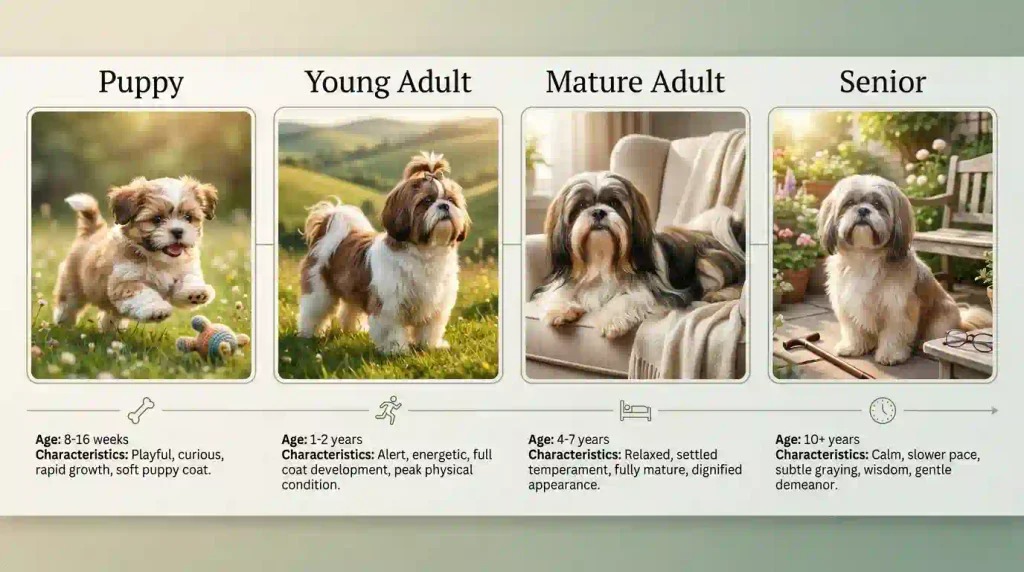
| Life stage | Approximate age | Main care priorities |
| Young puppy | Birth–6 months | Growth, nutrition, vaccination, socialization |
| Adolescent | 6–12 months | Training, development, safe exercise |
| Young adult | 1–3 years | Adult nutrition, weight management, routine care |
| Mature adult | Approximately 3–8 years | Preventive care, activity, dental health |
| Senior | Often around 8–10 years onward | Individualized screening and comfort |
| Advanced senior | Later teenage years | Mobility, chronic-disease care, quality of life |
These age categories overlap and are approximate rather than universally fixed.
Puppies should receive age-appropriate diets, vaccination schedules, parasite prevention, and positive socialization experiences.
Avoid excessive exercise and injuries during growth.
Adult and mature stages
Most Shih Tzus approach physical maturity during the first year, although individual development can continue beyond that point.
The adult years are an important opportunity to establish long-term healthy habits.
Regular dental care, balanced nutrition, routine veterinary examinations, and safe physical activity can support well-being over time.
Owners should also remain alert for early signs of eye irritation, breathing problems, allergies, and orthopedic discomfort.
An adult dog that seems healthy still benefits from preventive healthcare.
You can explore our Shih Tzu Growth & Life Stages section for more detailed developmental information.
When a Shih Tzu is considered a senior
There is no single birthday that marks the beginning of old age for every Shih Tzu.
The American Animal Hospital Association (AAHA) describes the senior stage as approximately the last 25% of a dog’s expected lifespan.
For Shih Tzus, senior-focused monitoring commonly becomes appropriate around 8–10 years old, although individual health and estimated longevity matter.
Some Shih Tzus remain active at 13 or 14 years old.
Others may need extra support much earlier.
For detailed guidance about age-related health changes, nutrition, exercise, and daily comfort, read our senior Shih Tzu care guide.
What a senior-age label does—and does not—mean
Calling a Shih Tzu a senior does not automatically mean that the dog is unhealthy.
Senior status is a practical way to identify dogs that may benefit from more frequent health monitoring.
It does not predict the exact onset of arthritis, cognitive decline, kidney disease, or other conditions.
Similarly, a dog does not suddenly become frail because it reaches a particular human-equivalent age.
For a general comparison between chronological dog age and estimated human age, see our Shih Tzu age in human years guide.
Human-age charts can help explain life stages, but they cannot determine biological age or remaining lifespan.
Changes to watch for as a Shih Tzu ages
Common age-related changes may include:
- Reduced activity
- Sleeping longer
- Stiffness after resting
- Gray fur around the face
- Decreased hearing
- Changes in vision
- Slower movement
- Changes in appetite
- Different bathroom habits
- Increased need for rest
However, these symptoms are not always caused by aging itself.
For example, reduced activity may indicate pain.
Increased thirst can suggest diabetes or kidney disease.
Nighttime restlessness may reflect discomfort, sensory changes, or cognitive dysfunction.
Keep track of new symptoms and discuss persistent changes with your veterinarian.
How to Assess Your Shih Tzu’s Health as They Age
Check weight and body condition
Regular weight monitoring helps identify changes that may otherwise go unnoticed.
Because Shih Tzus have dense double coats, body fat can be difficult to assess through appearance alone.
Use a consistent scale and record your dog’s weight periodically.
Also check body condition.
You should generally be able to feel the ribs beneath a thin layer of fat and notice a waist behind the rib cage.
The World Small Animal Veterinary Association’s nine-point Body Condition Score system provides a structured approach.
A score of four or five out of nine is generally considered ideal for most healthy adult dogs.
Body condition should be assessed alongside muscle condition, especially in senior dogs.
A dog can lose muscle while gaining body fat, sometimes without a major change on the scale.
Monitor breathing, teeth, eyes, and mobility
Shih Tzu owners should pay attention to several important body systems.
| Health area | What to monitor |
| Breathing | Noisy breathing, excessive panting, poor exercise tolerance |
| Teeth and gums | Bad breath, redness, loose teeth, difficulty chewing |
| Eyes | Redness, squinting, cloudiness, discharge |
| Mobility | Limping, stiffness, hesitation before jumping |
| Body condition | Weight changes, muscle loss, excessive fat |
| Skin and coat | New lumps, persistent itching, skin irritation |
| Heart and circulation | New coughing, fainting, abnormal breathing patterns |
Not all symptoms indicate serious disease, but new or persistent problems deserve professional evaluation.
For example, a Shih Tzu that starts struggling during familiar walks may have joint pain, an airway disorder, or a heart condition.
The cause cannot be determined reliably through age alone.
Track changes in appetite, activity, and behavior
Maintaining a simple health record can help owners recognize gradual changes.
Consider recording the following observations:
| What to track | Suggested frequency |
| Body weight | Monthly when stable, or as advised |
| Appetite | Daily |
| Water intake changes | Daily observation |
| Exercise tolerance | During walks and play |
| Breathing patterns | Daily observation |
| Dental and eye appearance | Regular checks |
| Mobility and stiffness | Weekly review |
| Veterinary results | After each appointment |
A small notebook or phone-based log is sufficient.
Record when a symptom started, whether it is getting worse, and what seems to trigger it.
Videos can also help veterinarians evaluate intermittent limping, unusual breathing, or behavior changes.
When to contact your veterinarian
Schedule a veterinary appointment when your Shih Tzu develops:
- Unexplained weight loss
- Persistent appetite changes
- Increased thirst or urination
- Recurrent vomiting or diarrhea
- New lumps or swelling
- Difficulty chewing
- Persistent coughing
- Limping or stiffness
- Changes in sleep or behavior
- Reduced exercise tolerance
Some situations require immediate attention.
Seek emergency veterinary care if your dog experiences severe breathing difficulty, collapse, seizures, uncontrolled bleeding, a severely painful eye, or sudden inability to stand or walk.
Early assessment may identify treatable conditions before they become more serious.
How to Help Your Shih Tzu Live a Longer, Healthier Life
Maintain a healthy weight and balanced diet
Maintaining appropriate body condition is one of the most practical ways to support your Shih Tzu’s health.
Choose a complete and balanced dog food suitable for your dog’s life stage.
Puppies need growth nutrition, while adults require appropriate calorie intake to maintain body condition.
Senior dogs may need individualized adjustments, particularly if they develop muscle loss or medical conditions.
Measure meals accurately rather than guessing portion sizes.
Treats, table scraps, toppers, and dental chews should be included in the total daily calorie intake.
Ask your veterinarian to recommend an appropriate feeding amount if your Shih Tzu is overweight or underweight.
Avoid crash diets and unnecessary food restrictions.
Support dental health
Daily dental care is particularly valuable for Shih Tzus.
Use a soft dog toothbrush and toothpaste specifically formulated for dogs.
Human toothpaste may contain ingredients that are unsafe for pets.
Gradually introduce brushing using positive reinforcement.
For example, start by allowing your dog to become comfortable with gentle handling around the mouth, then introduce the toothbrush in short sessions.
Regular veterinary dental examinations help identify periodontal disease that may not be visible at home.
Professional dental treatment may include cleaning, dental X-rays, and extractions when medically necessary.
Dental chews and certain dental diets may provide additional support, but they cannot replace treatment for established disease.
Protect breathing and prevent overheating
Because of their brachycephalic anatomy, Shih Tzus may have difficulty tolerating heat or strenuous activity.
Take walks during cooler periods of the day.
Provide shade and fresh water.
Avoid leaving your dog in parked vehicles, even briefly.
Use a well-fitting harness instead of placing unnecessary pressure on the neck.
Watch for excessive panting, weakness, or difficulty recovering after exercise.
Dogs with suspected BOAS should receive veterinary evaluation.
Airway problems may require medical or surgical management depending on severity.
Maintaining an appropriate body condition can also reduce physical demands on the respiratory system.
Provide regular exercise and a safe environment
Regular, low-impact exercise supports muscle strength, mobility, and overall well-being.
Many Shih Tzus enjoy short walks, gentle play, and simple training activities.
Adjust activity according to age, weather, physical condition, and breathing ability.
Indoor enrichment can include:
- Food puzzles
- Snuffle mats
- Gentle scent games
- Short positive-reinforcement training sessions
- Appropriate interactive toys
A safe living environment is equally important.
Prevent falls from furniture, supervise access to stairs, and keep dangerous household products out of reach.
For senior dogs, supportive bedding and non-slip flooring can improve comfort.
Avoid allowing your dog to become exhausted or overheated during exercise.
Keep up with veterinary visits, screening, and vaccinations
Preventive veterinary care should continue throughout your Shih Tzu’s life.
Healthy adults generally benefit from at least annual veterinary wellness examinations.
Senior dogs commonly benefit from examinations every six months, with more frequent visits when medical conditions require monitoring.
A senior veterinary checkup may include:
- Physical examination
- Weight and body-condition assessment
- Dental and eye evaluation
- Heart and lung assessment
- Joint and mobility examination
- Complete blood count (CBC)
- Serum chemistry testing
- Urinalysis
- Blood pressure measurement
- Other screening tests when indicated
AAHA senior-care guidance supports individualized screening based on age, symptoms, and medical history.
Maintain core vaccinations and appropriate parasite prevention according to your veterinarian’s recommendations.
Vaccination schedules should reflect the dog’s health, lifestyle, and local disease risks.
Discuss spaying or neutering and timing with your veterinarian
Spaying and neutering may influence certain health risks, but the relationship with lifespan is complicated.
Spaying eliminates the risk of pyometra, a potentially life-threatening uterine infection.
Neutering also prevents testicular cancer and may reduce some other reproductive problems.
However, surgery can have other health implications, and the most appropriate timing varies between dogs.
Some observational studies have found that sterilized dogs tend to live longer than intact dogs.
Yet those associations do not prove that the procedure itself is responsible for the entire difference.
Veterinary access, owner behavior, lifestyle, and underlying health may also influence the findings.
The American Veterinary Medical Association recommends individualized decision-making that considers breed, sex, age, reproductive plans, and health.
Ask your veterinarian about the benefits, risks, and timing rather than assuming one universal recommendation applies to every Shih Tzu.

Estimating a Shih Tzu’s Age
What teeth can reveal about a dog’s age
If you adopt a Shih Tzu without a known birth date, your veterinarian may estimate the dog’s age using physical development and dental findings.
Teeth are particularly useful during puppyhood because eruption follows a relatively predictable sequence.
A general developmental guide includes:
| Dental stage | Approximate age |
| Baby teeth beginning to appear | Around 3–6 weeks |
| Most baby teeth present | Approximately 6–8 weeks |
| Permanent teeth beginning to emerge | Around 3–5 months |
| Most permanent teeth present | Approximately 6–7 months |
| Adult dentition established | Usually by 7–8 months |
Individual variation is normal.
In adult dogs, veterinarians may consider tooth wear, tartar accumulation, gum condition, and tooth loss.
However, these signs are less reliable for precise age estimation.
For example, a young Shih Tzu with severe dental disease may appear older based on its teeth than a healthy older dog receiving excellent oral care.
When a veterinarian can help estimate age
A veterinarian can combine dental findings with other clinical observations to estimate an unknown age.
Possible indicators include:
- Physical development
- Dental eruption and condition
- Muscle mass
- Coat changes
- Eye appearance
- Mobility
- General body condition
- Medical history
In mature adult dogs, an exact age may be impossible to determine from physical examination alone.
A veterinarian might reasonably estimate that a rescued Shih Tzu is approximately 7–10 years old rather than assigning one exact birthday.
Some owners ask about DNA-based biological age tests.
Although research into canine epigenetic aging is developing, such tests should not be interpreted as definitive proof of chronological age or remaining lifespan.
For adopted dogs with uncertain histories, an estimated age range is often more useful than an unsupported exact number.
Frequently Asked Questions About Shih Tzu Lifespan
Do male or female Shih Tzus live longer?
A 2024 UK VetCompass study found no statistically significant lifespan difference, with median ages at death of 12.7 years for males and 12.6 years for females.
Do indoor Shih Tzus live longer?
Indoor living may reduce exposure to traffic, extreme weather, and some injuries, but it does not guarantee a longer lifespan; exercise, enrichment, and preventive care remain essential.
Can a Shih Tzu live longer than 18 years?
Yes. Some Shih Tzus live beyond 18 years, although such longevity is uncommon and cannot be guaranteed through any particular diet or routine.
Does spaying or neutering affect a Shih Tzu’s lifespan?
Spaying or neutering changes certain health risks, but its effect on lifespan varies, and the decision should be made with a veterinarian based on the individual dog’s needs.
Final Thoughts
The Shih Tzu life span typically ranges from 10 to 18 years, while veterinary research has reported a median age at death of approximately 12.7 years in a UK Shih Tzu population. These figures help explain what owners might expect, but they cannot predict an individual dog’s lifespan.
Genetics, body condition, nutrition, dental health, breathing function, and timely veterinary care all contribute to your Shih Tzu’s overall well-being. Recognizing health problems early and making appropriate adjustments as your dog ages can help support comfort and quality of life.
Whether your Shih Tzu is a playful puppy or a beloved senior, focus on keeping each life stage healthy and enjoyable.
For more practical breed information, explore our Shih Tzu guides covering health, nutrition, development, grooming, and lifelong care.