
Overweight Shih Tzu: Signs, Healthy Weight, Risks, and Safe Weight Loss
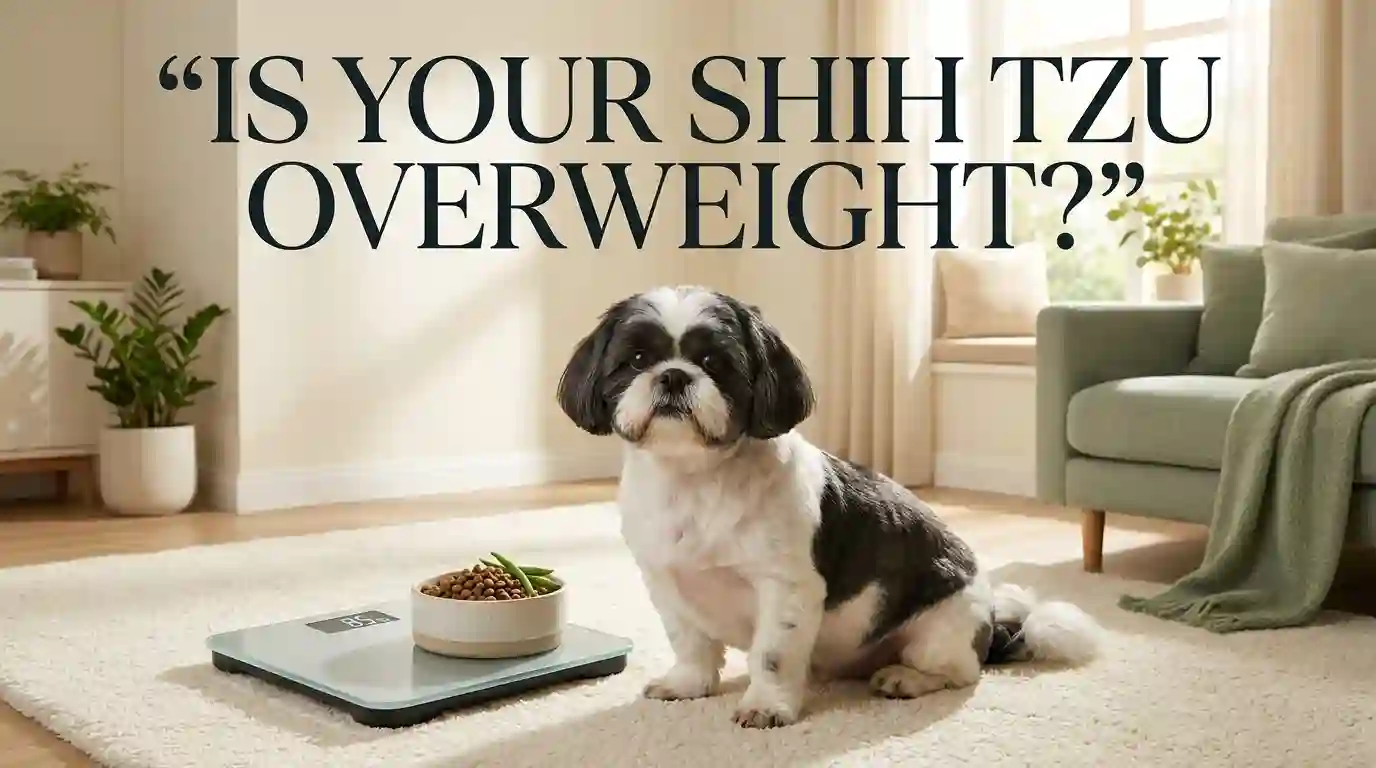
An overweight Shih Tzu may look adorable with a round belly and fluffy body, but carrying extra weight can affect your dog’s breathing, mobility, energy, and long-term health. If you’re wondering, “Is my Shih Tzu overweight?”, the most reliable starting point is to examine their body condition rather than relying on the scale alone. A healthy adult Shih Tzu typically weighs 9–16 pounds (4.1–7.3 kg), according to the American Kennel Club, although individual dogs can fall outside this range. You should generally be able to feel your dog’s ribs beneath a thin layer of fat, identify a waist behind the ribs, and notice a slight upward tuck of the abdomen. If the ribs are difficult to feel, the waist has disappeared, or your dog tires easily during walks, excess weight may be contributing. Because Shih Tzus have short muzzles and can be vulnerable to breathing problems, maintaining a healthy body condition is particularly important. This guide explains how to recognize weight problems, understand the health risks, and create a safe weight-management plan with your veterinarian.
Table of Contents
- Shih Tzu Healthy Weight at a Glance
- Why Shih Tzus Can Gain Excess Weight
- How to Tell If Your Shih Tzu Is Overweight
- Health Risks of Excess Weight in Shih Tzus
- How to Help an Overweight Shih Tzu Lose Weight Safely
- Monitoring Your Shih Tzu’s Weight-Loss Progress
- Frequently Asked Questions About Overweight Shih Tzus
- Final Thoughts
Shih Tzu Healthy Weight at a Glance
Typical adult weight range in pounds and kilograms
The American Kennel Club (AKC) lists the typical adult Shih Tzu weight range as 9–16 pounds (approximately 4.1–7.3 kilograms).
However, this is a breed-standard range, not a diagnostic test for obesity.
Some healthy adults may weigh more because of their skeletal structure, height, or muscular development. Conversely, a smaller Shih Tzu can carry too much fat while weighing within the standard range.
| Weight | What it may indicate |
| Under 9 lb (4.1 kg) | May be normal for a small individual or suggest low weight |
| 9–16 lb (4.1–7.3 kg) | Typical adult breed-standard range |
| 17–19 lb (7.7–8.6 kg) | Above the standard range; assess body condition |
| 20 lb (9.1 kg) | Noticeably above the standard range; veterinary assessment recommended |
| 22 lb (10 kg) or more | Well above the standard range; assess for excess fat and other causes |
These categories are not automatic classifications of healthy, overweight, or obese dogs.
A veterinarian should assess your Shih Tzu’s rib coverage, waistline, muscle condition, and overall build before determining an appropriate target weight.
Weight differences between male and female Shih Tzus
Male Shih Tzus may be slightly heavier on average than females, although there is substantial overlap between the sexes.
Research from the Royal Veterinary College’s VetCompass program reported the following average adult bodyweights in a UK veterinary population:
| Category | Observed average weight |
| Male Shih Tzus | 8.5 kg (18.7 lb) |
| Female Shih Tzus | 7.3 kg (16.1 lb) |
| All adult Shih Tzus | 7.9 kg (17.4 lb) |
These figures describe observed weights, not recommended healthy targets. They include dogs with different body conditions.
Therefore, an individual dog’s sex is less useful for identifying obesity than a proper physical examination.
Shih Tzu weight by age
Your dog’s age also affects how weight should be interpreted.
| Life stage | Weight considerations |
| Birth to 3 months | Rapid development; growth should be monitored regularly |
| 3–6 months | Steady weight gain as bones and muscles develop |
| 6–12 months | Growth begins to slow as adult size approaches |
| 12–18 months | Many Shih Tzus have reached or are completing physical maturity |
| Mature adulthood | Maintain an individualized ideal weight |
| Senior years | Monitor fat gain and muscle loss separately |
Puppies should not be placed on adult weight-loss diets simply because they look round or grow quickly.
Growth patterns vary considerably, so your veterinarian should evaluate a puppy’s weight alongside their age, development, and nutritional needs.
You can explore our Shih Tzu Growth & Life Stages section for more information about development from puppyhood through the senior years.
Is 10 kg or 20 pounds overweight for a Shih Tzu?
A Shih Tzu weighing 20 pounds (9.1 kg) or 10 kilograms (22 lb) is above the AKC’s typical adult weight range, but that alone does not prove obesity.
The important question is whether the extra weight comes primarily from body fat or reflects a naturally larger body frame.
For example, a broad-built Shih Tzu with an easily felt rib cage and defined waist may have a different ideal weight from a smaller dog with thick fat covering its ribs.
If your adult Shih Tzu weighs 20 pounds or more, schedule a veterinary body-condition assessment rather than assuming that 16 pounds is automatically the correct weight-loss target.
Why Shih Tzus Can Gain Excess Weight
Small calorie needs and portion sizes
Shih Tzus are small companion dogs, meaning their total daily energy needs are relatively modest.
A few extra spoonfuls of food may seem insignificant, but those additional calories can accumulate over weeks and months.
Different foods also contain different amounts of energy.
One cup of calorie-dense dry food may provide substantially more energy than a cup of another formula.
Consequently, portion control should be based on calories and measured quantities rather than the apparent size of the meal.
Treats, table scraps, and extra food from family members
Excess treats are a common reason dogs gain weight.
A Shih Tzu might receive its regular meals plus:
- Training treats during the day
- Small pieces of chicken or cheese
- Leftovers from family meals
- Dental chews
- Peanut butter in enrichment toys
- Food toppers added to kibble
- Extra biscuits from different family members
Even when each portion looks small, the combined calories may exceed your dog’s daily needs.
Sharing food among multiple caregivers creates an additional problem because nobody may realize how much the dog has eaten.
A shared feeding schedule can help prevent accidental overfeeding.
Low activity and changes in routine
Shih Tzus are affectionate companion dogs that often enjoy spending time indoors.
However, reduced activity can contribute to weight gain when calorie intake remains unchanged.
Common situations include spending more time indoors during bad weather, shorter walks after an injury, reduced play in old age, and changes in the owner’s daily schedule.
Regular movement supports cardiovascular health, mobility, and energy expenditure.
Nevertheless, increasing exercise alone rarely compensates for consistently excessive calorie intake.
How breed build, age, and coat affect weight checks
Shih Tzus have compact bodies, relatively short legs, and a long, dense double coat.
These characteristics can make their actual body shape difficult to judge.
A fluffy coat may create the appearance of a fat Shih Tzu when the dog is perfectly healthy. It can also conceal significant fat deposits.
Age introduces another challenge.
Senior dogs may lose muscle while gaining fat, meaning their weight can remain relatively stable even though body composition is changing.
This is why physical examination matters.
When a medical condition may contribute to weight gain
Overfeeding is common, but not every weight problem comes from food alone.
A veterinarian may investigate conditions such as:
- Hypothyroidism: Reduced thyroid hormone production can contribute to weight gain, lethargy, and coat changes.
- Cushing’s syndrome: Excess cortisol can cause abdominal enlargement and other characteristic symptoms.
- Arthritis or chronic pain: Discomfort may reduce activity and indirectly contribute to weight gain.
- Medication effects: Certain medications, including corticosteroids, can increase appetite or alter body composition.
Sudden abdominal enlargement may also reflect fluid accumulation, organ enlargement, or another condition rather than obesity.
If your Shih Tzu gains weight unexpectedly despite consistent feeding, arrange a veterinary examination before restricting food further.
How to Tell If Your Shih Tzu Is Overweight
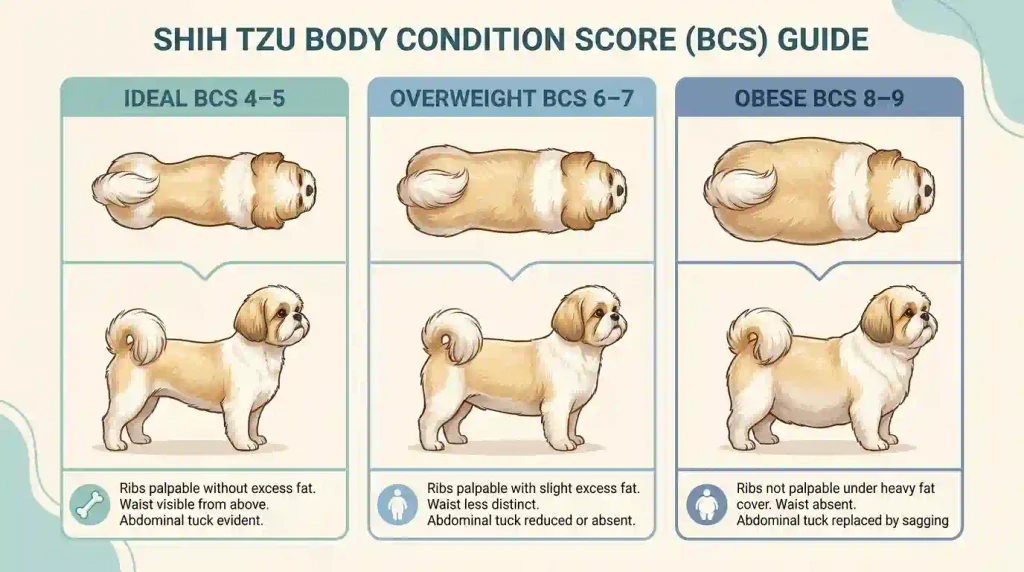
Check the ribs, waist, and abdominal tuck
Wondering how to tell whether your dog has gained too much fat?
Start with three simple physical checks.
1. Feel the ribs
Place your hands gently over the sides of your Shih Tzu’s chest.
You should be able to feel individual ribs beneath a thin layer of fat without pressing firmly.
If locating the ribs requires substantial pressure, your dog may be carrying excess body fat.
2. Look for a waistline
Stand above your Shih Tzu and look down at their body.
A dog in ideal condition usually has a noticeable inward curve behind the rib cage.
A broad, rounded body with little waist definition can suggest excess fat.
3. Examine the abdominal tuck
Look at your dog from the side.
The abdomen should generally rise slightly from the rib cage toward the hind legs.
A hanging belly or absence of abdominal tuck may indicate excess weight, although body shape and medical conditions can affect this appearance.
Perform these checks gently, without squeezing or pressing painfully.
Use a body condition score
Veterinarians commonly use a Body Condition Score (BCS) to estimate the amount of fat a dog carries.
The World Small Animal Veterinary Association (WSAVA) provides a widely used nine-point scoring system.
| BCS | Body condition | Typical findings |
| 1–3/9 | Under ideal | Ribs, spine, or pelvic bones may be prominent with insufficient fat coverage |
| 4–5/9 | Ideal | Ribs easily felt, visible waist, abdominal tuck |
| 6–7/9 | Overweight | Increased fat over ribs, reduced waist definition |
| 8–9/9 | Obese | Heavy fat deposits, poorly defined or absent waist and tuck |
For most healthy adult dogs, a score of 4 or 5 out of 9 is generally considered ideal.
A score of 6 or 7 suggests excess fat, while 8 or 9 indicates obesity.
You can compare your dog’s condition with the official WSAVA body condition scoring resources.
Remember that an at-home score is only an estimate. A veterinarian can confirm it and establish an appropriate goal.
Why the number on the scale may not tell the whole story
A dog’s weight measures total body mass, including fat, muscle, bone, water, and internal organs.
It does not reveal how much of that weight is excess fat.
Two Shih Tzus weighing 16 pounds can have noticeably different body conditions.
One might be muscular and healthy. The other might have less muscle and more body fat.
Consequently, breed weight charts should always be combined with a physical assessment.
Check muscle condition as well as body condition
Body Condition Score evaluates fat coverage, while Muscle Condition Score (MCS) assesses muscle mass.
Both are important, especially in older dogs.
Veterinarians evaluate muscle around areas such as the spine, shoulders, skull, and pelvic region.
A Shih Tzu can be overweight and still have muscle loss.
Weight-management diets should therefore provide appropriate nutrition while encouraging fat loss and preserving lean muscle.
Rapid dieting or inadequate protein intake can make muscle loss worse.
Signs such as tiring easily, difficulty moving, or heavy panting
Possible signs of excess weight include:
- Becoming tired earlier during familiar walks
- Difficulty jumping onto low furniture
- Reluctance to climb stairs
- Slower movement during play
- Reduced stamina
- Heavy panting after mild activity
- Difficulty grooming or reaching certain body areas
- A noticeably broader waist or abdomen
These signs are not specific to obesity.
For example, breathing difficulty can result from brachycephalic obstructive airway syndrome (BOAS), while reduced mobility may result from arthritis or other orthopedic disorders.
Important: Labored breathing at rest, collapse, blue or gray gums, or severe distress requires immediate emergency veterinary attention. Do not assume these symptoms are simply caused by excess weight.
How the long coat can hide weight gain
A Shih Tzu’s long double coat can make the dog appear much wider than its underlying body.
To assess body condition accurately, gently separate or smooth the fur and feel the body beneath it.
Pay particular attention to the ribs and waist.
You may find the dog’s shape easier to assess after grooming, but clipping is not required for a body-condition examination.
Never rely entirely on photographs of a fluffy dog to diagnose obesity.
When signs may point to an underweight Shih Tzu instead
Not every weight concern involves excess fat.
An underweight Shih Tzu may have prominent ribs, a sharply defined waist, visible pelvic bones, or noticeable loss of muscle.
Other warning signs include poor appetite, weakness, digestive problems, and unexplained weight loss.
If these symptoms appear, consult your veterinarian instead of reducing food portions.
Both overweight and underweight dogs need an individualized nutritional assessment.
Health Risks of Excess Weight in Shih Tzus
Breathing difficulty and heat intolerance
Shih Tzus have a brachycephalic skull shape, meaning they have relatively short muzzles.
Some develop brachycephalic obstructive airway syndrome (BOAS), which can cause noisy breathing, reduced exercise tolerance, and difficulty regulating body temperature.
Excess body fat can further complicate breathing by increasing physical demands on the respiratory system.
University of Cambridge research published in 2026 identified Shih Tzus among breeds at risk of BOAS and found associations between excess weight and increased breathing problems in the breeds studied.
However, not every Shih Tzu has BOAS, and breathing severity varies between individuals.
Warning signs may include pronounced respiratory noise, heavy panting, difficulty recovering after mild exercise, or struggling during hot weather.
Keep affected dogs cool, avoid strenuous activity, and seek veterinary assessment for persistent symptoms.
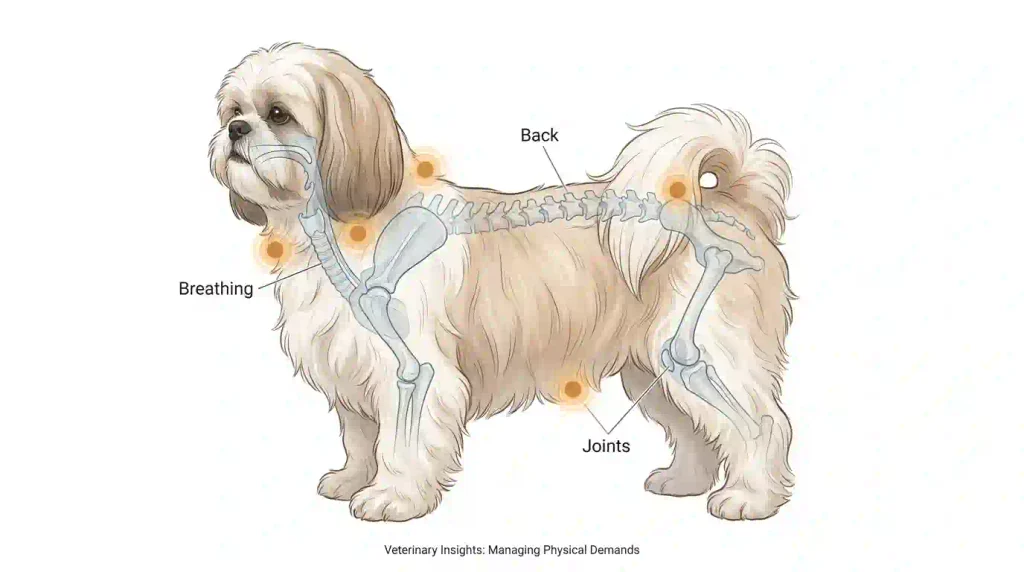
Joint, mobility, and back problems
Excess weight places additional mechanical demands on bones, muscles, and joints.
For small dogs such as Shih Tzus, this can complicate existing mobility conditions.
Potential concerns include:
Arthritis: Extra weight increases joint loading and may contribute to discomfort and reduced movement.
Luxating patella: This condition occurs when the kneecap moves out of its normal position. Excess weight can add stress to already vulnerable knees.
Spinal strain: Extra body mass may increase physical demands on the back and surrounding muscles, particularly in dogs with existing spinal problems.
Dogs experiencing pain may move less, potentially creating a cycle of inactivity and further weight gain.
Maintaining lean muscle and appropriate body condition is therefore an important part of mobility management.
Diabetes, heart problems, and other health concerns
Canine obesity is associated with several metabolic and systemic health problems.
These include increased risk or worsening of:
- Insulin resistance and diabetes mellitus
- Reduced exercise tolerance
- Cardiovascular strain
- Hypertension in some dogs
- Respiratory problems
- Orthopedic disease
- Certain skin and urinary health concerns
Excess weight can complicate management of existing heart disease, but obesity does not automatically cause every heart condition.
Urinary bladder stones are another concern sometimes discussed alongside Shih Tzu health. Their development depends on factors such as urine chemistry, infection, genetics, and diet; they should not simply be attributed to obesity.
If your dog has a history of bladder stones or another condition requiring a therapeutic diet, do not switch to an ordinary weight-loss food without veterinary approval.
How to Help an Overweight Shih Tzu Lose Weight Safely
Helping an overweight Shih Tzu lose weight requires a combination of appropriate nutrition, portion control, gentle physical activity, and consistent monitoring.
Do not start a crash diet or sharply reduce your dog’s food without veterinary guidance. Rapid restriction can lead to inadequate nutrition, muscle loss, or complications in dogs with underlying health problems.
Ask your veterinarian to set a target weight and calorie goal
The first step is establishing your dog’s actual ideal weight.
Your veterinarian may evaluate:
- Current body weight
- Body Condition Score
- Muscle Condition Score
- Age and reproductive status
- Existing medical conditions
- Daily food and treat intake
- Physical activity
- Breathing and joint function
The veterinary team can then recommend a target weight and daily calorie allowance.
Professionals sometimes use Resting Energy Requirement (RER) as a starting point for estimating calorie needs.
However, RER alone is not a complete feeding prescription.
Actual weight-loss calories depend on your dog’s ideal body weight, current intake, medical needs, and response to the program.
How to measure your Shih Tzu’s daily food accurately
Accurate portion measurement is one of the most useful steps in managing excess weight.
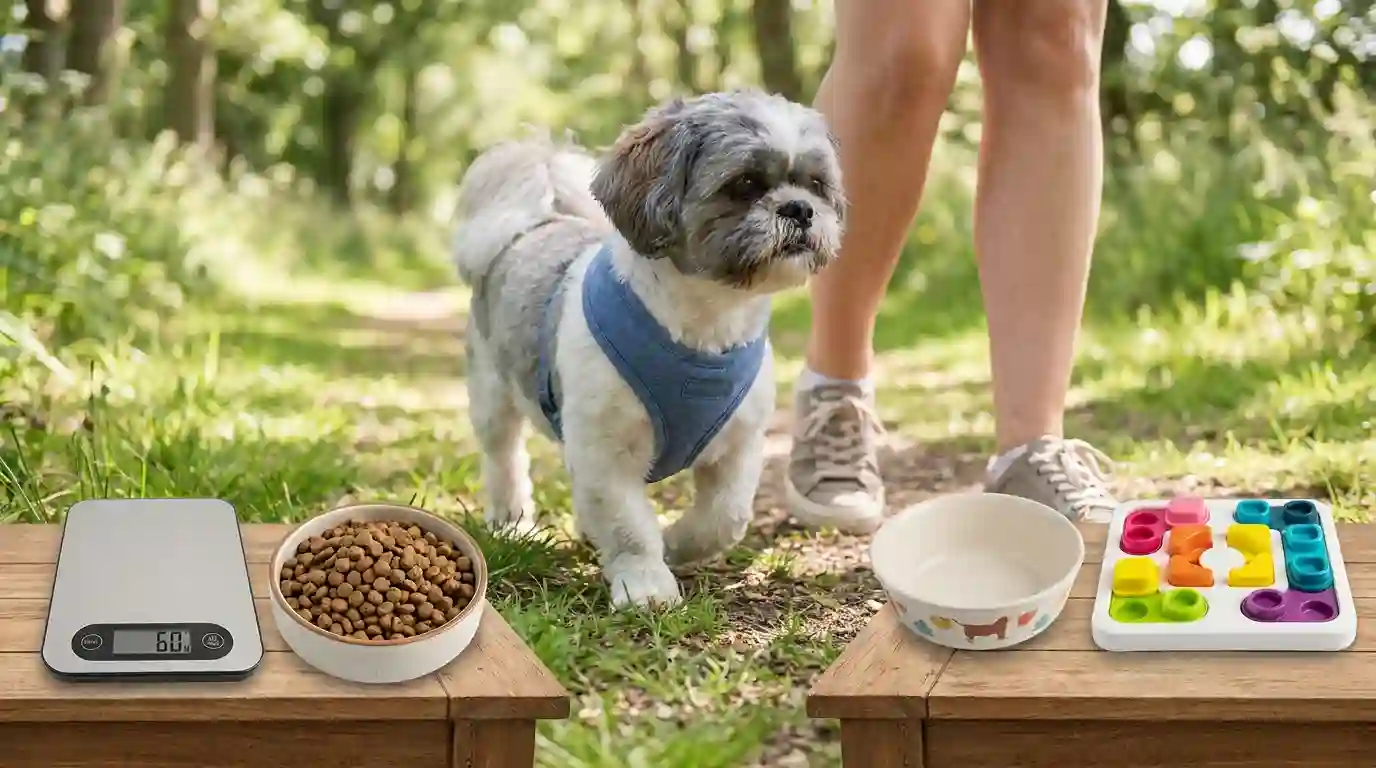
A digital kitchen scale is generally preferable to estimating portions using a measuring cup.
For example, one person’s loosely filled cup may contain substantially less kibble than another person’s tightly packed cup.
Use the following process:
- Check the food label for calorie density, usually expressed as kcal/kg, kcal/cup, or kcal/can.
- Ask your veterinarian how many calories your dog should receive daily.
- Weigh the appropriate amount of food in grams using a digital kitchen scale.
- Divide the daily portion into meals.
- Subtract calories used for treats and other extras from the day’s allowance.
If the food contains 350 kcal per 100 grams, a 50-gram serving provides 175 kcal. This is a calculation example, not a recommended Shih Tzu meal size.
Different foods require different portion weights, so never copy a gram amount from another dog’s feeding plan.
Track meals, treats, chews, toppers, and table scraps
Many owners carefully measure kibble but forget to count everything else their dog eats.
Keep track of:
- Breakfast and dinner
- Training treats
- Dental chews
- Table scraps
- Food toppers
- Peanut butter or other enrichment fillings
- Calorie-containing supplements, when applicable
A single high-calorie chew can represent a meaningful portion of a small dog’s daily allowance.
Ask your veterinary team how much of the daily calorie budget can safely come from treats. A common general recommendation is to keep treats at or below 10% of total daily calories while obtaining most nutrition from complete and balanced food.
Use a simple food and activity log for all caregivers
Household consistency helps prevent accidental overfeeding.
A shared log allows every family member to see what the dog has already eaten.
| Time | Food or activity | Amount | Caregiver |
| Morning | Measured breakfast | Vet-approved portion | Owner |
| Midday | Training rewards | Recorded amount | Family member |
| Afternoon | Comfortable walk | 10 minutes, if tolerated | Owner |
| Evening | Measured dinner | Vet-approved portion | Owner |
| Night | Food puzzle | Taken from daily allowance | Family member |
The sample activity duration is illustrative and should be adjusted to the dog’s breathing, mobility, and veterinary advice.
Recording all food is particularly important in households where several people feed the same Shih Tzu.
Choose a complete, balanced weight-management diet
A suitable weight-management diet should help reduce calorie intake while supporting essential nutrition.
Depending on the individual dog, your veterinarian may recommend a specifically formulated veterinary weight-loss diet.
Important considerations include:
Protein: Adequate high-quality protein helps support muscle preservation during weight loss.
Fiber: Appropriate dietary fiber can improve fullness in some weight-management formulas.
Calorie density: Lower-calorie food may allow an appropriate portion size without excessive energy intake.
Complete nutrition: The food should meet relevant nutritional requirements for your dog’s life stage.
Avoid selecting a food based solely on marketing labels such as “light,” “natural,” or “healthy.”
The nutritional composition and feeding amount matter more than the product’s name.
Transition to a new food safely
Suddenly changing your dog’s diet may cause vomiting, diarrhea, or digestive discomfort.
For many healthy adult dogs, a gradual transition over approximately 7–10 days is appropriate.
| Transition period | Old food | New food |
| Days 1–3 | 75% | 25% |
| Days 4–6 | 50% | 50% |
| Days 7–9 | 25% | 75% |
| Day 10 onward | 0% | 100% |
These percentages describe the gradual replacement of the old diet, not permission to increase the total daily calories.
Calculate portions using the calorie content of each food.
Dogs with sensitive digestion or medical conditions may need a slower plan.
If vomiting, persistent diarrhea, significant appetite loss, or other concerning symptoms occur, contact your veterinarian.
Limit treats and use lower-calorie rewards
Training and affectionate interactions do not need to stop during weight management.
Instead, adjust how rewards are delivered.
Possible options include:
- Small pieces of your dog’s regular kibble
- Tiny portions of plain, cooked, unseasoned lean meat, when appropriate
- Small pieces of dog-safe vegetables such as carrots or green beans
- Praise and petting
- A favorite toy or short play session
Any edible reward still contributes calories.
Some vegetables and human foods are unsafe for dogs, so check unfamiliar ingredients before feeding them.
Avoid offering grapes, raisins, onions, garlic, chocolate, xylitol-containing products, or other known canine toxins.
Add short, comfortable walks and indoor play
Gentle activity can complement dietary management.
For an overweight Shih Tzu, several short, comfortable sessions may be better tolerated than one long, demanding walk.
Suitable activities might include:
Short walks: Begin with durations your dog can comfortably manage and adjust gradually.
Indoor games: Hide a favorite toy or encourage your dog to find small food rewards taken from the daily food allowance.
Food puzzles: Puzzle feeders and slow feeders can provide mental stimulation while helping some dogs eat more slowly.
Gentle play: Low-impact toy games can encourage movement without requiring strenuous exercise.
Stop the activity if your dog begins struggling to breathe, shows pain, becomes excessively tired, or cannot recover comfortably.
Safe activity options for Shih Tzus with breathing or joint limits
Not every overweight Shih Tzu can safely tolerate the same exercise routine.
For dogs with BOAS, arthritis, luxating patella, or back problems, activity must be individualized.
Consider these precautions:
- Walk during cooler parts of the day.
- Avoid strenuous exercise in heat or humidity.
- Use a well-fitting harness rather than placing excessive pressure on the neck.
- Choose flat, comfortable walking surfaces.
- Avoid repetitive jumping and strenuous stair climbing if joints or back are painful.
- Provide frequent rest breaks.
- Increase activity only when your dog is comfortable.
Dogs with pronounced breathing problems should receive veterinary assessment before an exercise program begins.
For severely affected Shih Tzus, dietary management may initially be more important than increasing physical exertion.
Monitoring Your Shih Tzu’s Weight-Loss Progress
How often to weigh your dog and review the plan
Weight loss should be gradual and monitored consistently.
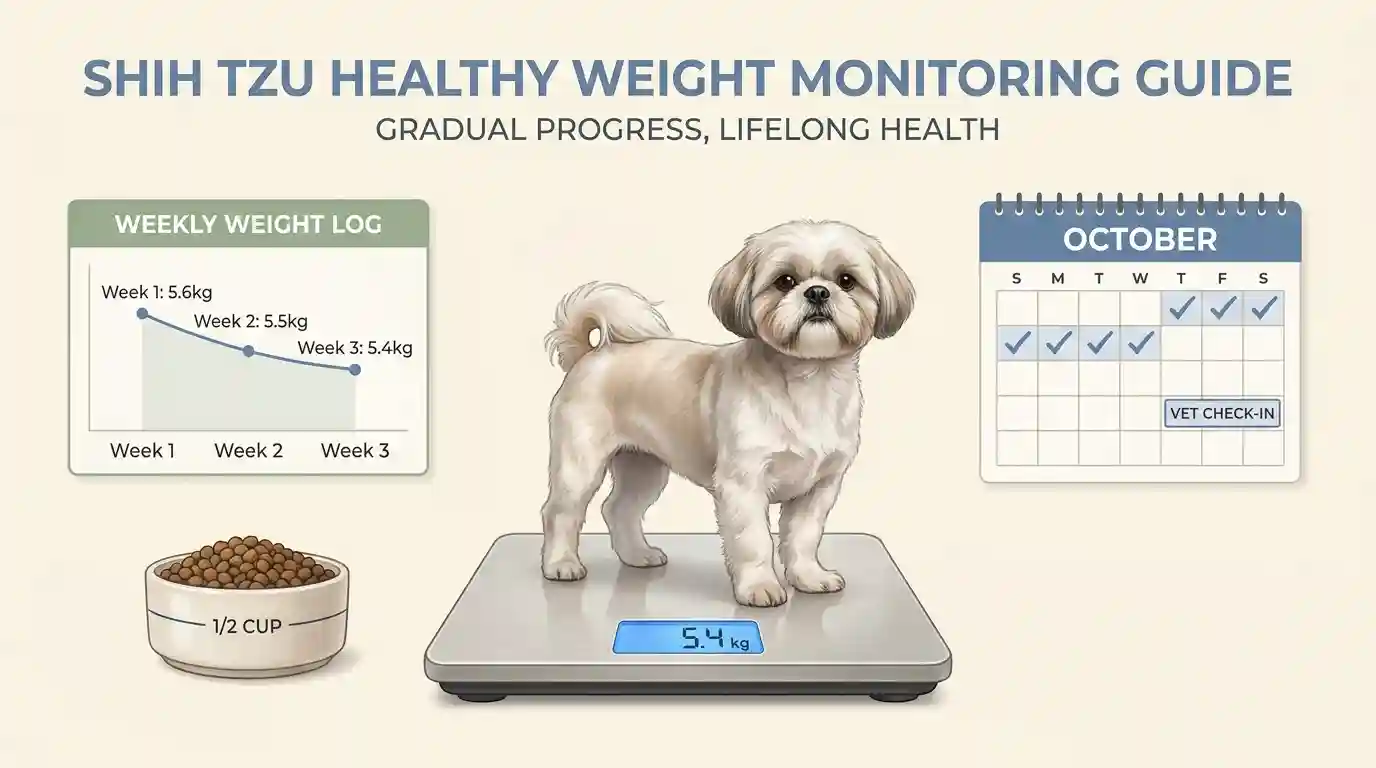
Many veterinary weight-management programs schedule follow-up weigh-ins approximately every two weeks during the initial phase, although the exact interval depends on the dog.
Use the same scale whenever possible.
For a small Shih Tzu, a precise pet scale can detect changes that may be difficult to measure accurately on a standard bathroom scale.
Record:
| Measurement | What to track |
| Body weight | Pounds or kilograms |
| Body Condition Score | Changes in fat coverage |
| Muscle Condition Score | Whether muscle is being maintained |
| Daily food intake | Total calories and measured portions |
| Treat intake | Calories from additional food |
| Activity | Type, duration, and tolerance |
| General health | Energy, breathing, appetite, stool quality |
Veterinary weight-loss guidance commonly describes approximately 1–2% of body weight per week as a possible target for suitable dogs under supervision.
For a 15-pound dog, 1% represents about 0.15 pounds, or 2.4 ounces, per week.
However, some dogs need a slower rate, particularly if they have medical problems, advanced age, or difficulty maintaining muscle.
Your veterinarian should determine the appropriate rate rather than applying the same target to every dog.
What to do if weight loss stalls or happens too quickly
Weight loss is rarely perfectly consistent.
Small fluctuations may reflect food intake, hydration, bowel movements, or differences in weighing conditions.
If your Shih Tzu stops losing weight, review the following:
- Are all meals being measured accurately?
- Have treats or dental chews increased?
- Has the food formula or calorie density changed?
- Are other household members providing extra food?
- Has activity decreased?
- Could an underlying medical condition be affecting progress?
Do not automatically cut portions further.
Your veterinarian may need to reassess calorie requirements, body condition, or medical status.
Likewise, unexpectedly rapid weight loss, weakness, muscle wasting, or reduced appetite requires veterinary attention.
How to prevent weight regain after reaching the goal
Reaching the target weight is only the beginning of long-term maintenance.
Once your Shih Tzu achieves an appropriate body condition, their calorie allowance may need adjustment to maintain rather than continue losing weight.
Keep using measured meals and record major changes.
Continue appropriate exercise, enrichment activities, and regular veterinary assessments.
If your dog begins regaining weight, review feeding amounts early instead of waiting until excess fat becomes obvious.
Frequently Asked Questions About Overweight Shih Tzus
How fast should a Shih Tzu lose weight?
A veterinarian may target approximately 1–2% of body weight per week for suitable dogs, but some Shih Tzus require slower, individualized weight loss.
Can I tell if my Shih Tzu is overweight by looking?
Appearance alone is unreliable because of the long coat; check rib coverage, waist definition, abdominal tuck, and veterinary Body Condition Score.
Why might my Shih Tzu gain weight despite measured meals?
Possible causes include excess treats, inaccurate calorie calculations, reduced activity, medication effects, or medical conditions such as hypothyroidism.
Can I help my Shih Tzu lose weight through walks alone?
Usually not; measured calorie intake and appropriate nutrition are central to weight management, while safe exercise provides additional benefits.
When should I contact a veterinarian about my dog’s weight?
Arrange an appointment for unexpected weight changes, loss of waist definition, reduced mobility, persistent panting, or difficulty losing weight; severe breathing distress requires emergency care.
Can a Shih Tzu be healthy above the typical breed weight range?
Yes, a naturally larger Shih Tzu may be healthy above 16 pounds, but only an individualized body-condition and muscle assessment can determine whether excess fat is present.
Final Thoughts
An overweight Shih Tzu needs more than a smaller food bowl or longer walks. Healthy weight management starts with understanding your dog’s individual body condition, measuring calorie intake accurately, and choosing safe activities that respect the breed’s breathing and mobility needs. Although the typical adult Shih Tzu weighs 9–16 pounds, the scale alone cannot determine whether your dog is overweight. Rib coverage, waist definition, muscle mass, and veterinary assessment provide a more complete picture.
With appropriate nutrition, consistent feeding habits, gentle exercise, and regular progress checks, many Shih Tzus can improve their body condition and comfort over time.
For more practical information about this affectionate companion breed, explore our Shih Tzu guides covering health, care, growth, and everyday wellbeing.